
Top 10 Successful Startups In India of 2024

Top Successful Indian Startups — Business Models, Funding, and What Founders Can Learn

India’s most successful startups didn’t just build great products — they understood capital, timing, and market positioning better than everyone else. Across fintech, healthtech, D2C, and B2B commerce, a new generation of Indian founders is proving that growth-stage startups from this market can compete globally, not just locally. At FundTQ, having advised 200+ transactions across sectors, we’ve had a front-row view of what separates businesses that scale from those that stall. This post breaks down the top successful Indian startups worth studying — and what founders building today can take from them.Top Indian Startups

Why Successful Indian Startups Are Built Differently

The structural tailwinds are real — UPI-led digital infrastructure, a mobile-first consumer base of 700M+, and maturing investor ecosystems from angel networks to PE. But what’s more interesting is the founder profile. The most successful Indian startups are increasingly founder-led, capital-efficient in their early stages, and built around defensible unit economics rather than pure growth metrics. Government programs like Startup India have helped, but the real driver is a generation of operators who’ve worked at Flipkart, Zomato, or global MNCs — and decided to build.

Snapshot: Top Indian Startups at a Glance (2025–2026)

Top Indian Startups

Approximate Funding Raised by Top Indian Startups (in USD)


Funding Raised by Top Indian StartupsWhat These Startups Have in Common — and What Founders Can Borrow

Each company below solved a real market gap, raised smart money, and built trust at scale. A few patterns stand out: clean cap tables early on, strong sector-specific investors, and founders who treated fundraising as a strategic function — not an afterthought.

Top Successful Indian Startups — And What Founders Can Learn From Them

1. FundTQ Digital – Empowering Early-Stage Founders

Industry: Fintech / SaaS
Founded: 2016

FundTQ — ranked among India’s Top 5 investment banks by Venture Intelligence — works with growth-stage founders to structure and close equity raises (₹35–300 Cr), M&A transactions, and strategic exits. Its recent advisory on the Emami–Axiom Ayurveda acquisition (₹200 Cr) reflects the kind of mid-market deal activity that’s defining India’s consumer sector consolidation. For founders thinking about their next raise or exit, FundTQ functions as the deal team most early-stage companies can’t afford to build in-house.

Key offerings include:

2. CRED – Redefining Credit Culture in India

Industry: Fintech
Founded: 2018

CRED does not reward users on spending too much but on paying credit card bills in time. In such a way, it will encourage financial discipline among the high-end users in India.

Key highlights:

  • More than 22 percent of credit card users in India.
  • Rewards, experiences, and financial products, which are exclusive.
  • Diversification into business and moneylending.

Real-life example:

CRED is used by high-income professionals not only to make bill payments but also to obtain curated luxury offers, as well as financial insights.

3. PharmEasy – Transforming Digital Healthcare

Industry: Healthtech
Founded: 2015

PharmEasy has turned into a household name during the pandemic and still controls online healthcare in India.

Core services:

  • Online medicine delivery
  • Diagnostic tests
  • Medical devices

Strategic growth:
The integration of Medlife made it stronger in the market than Amazon Pharmacy and Flipkart Health.

4. MyGST Refund – Simplifying GST for Businesses

Industry: Tax & Fintech
Founded: 2019

MyGST Refund can help resolve one of the most complicated compliance issues in India GST refund.

Key differentiators:

  • The first API based GST refund calculator in India.
  • Real-time refund tracking
  • Expert-backed tax advisory

Founder expertise:
Co-founded by 14+ years of experience in the field of tax professionals and providing solid trust and authority.

5. Digit Insurance – Making Insurance Simple

Industry: Insurtech
Founded: 2016

In a market where insurance has historically been sold, not bought, Digit made it simple enough that consumers actually sought it out.

Why customers trust Digit:

  • Paperless claims
  • Clear policy wording
  • Celebrity investors with credibility.

Digit has continued to grow aggressively in health, travel and motor insurance.

—————————————————————

Studying how India’s top startups raised capital?
If you’re a founder at a similar stage — thinking about your next equity raise, M&A, or exit — FundTQ’s advisory team has structured
200+ transactions across consumer, healthcare, and industrial sectors.
get funding for startuo

6. Meesho – Powering Bharat’s Entrepreneurs

Industry: Social Commerce
Founded: 2015

Meesho allows millions of homepreneurs and small sellers to sell their products on WhatsApp, Instagram, or Facebook.

Real-world impact:

Meesho gives an opportunity to over 13 million sellers, most of which are small-town women earning sustainable income.

7. Groww – Democratizing Investments

Industry: Fintech / WealthTech
Founded: 2016

Groww has simplified and made investment accessible to first time investors.

Key strengths:

  • User-friendly app
  • Zero commission mutual funds.
  • Close emphasis on the education of money.

Real-life example:

Financial inclusion is real because Groww has over 60 per cent users living in non-metro towns.

8. Nykaa – From Beauty to Lifestyle Empire

Industry: Beauty & Fashion
Founded: 2012

Nykaa is a company that combines the convenience of online shopping with the experience of the offline one, founded by a former banker Falguni Nayar.

Growth drivers:

  • Omnichannel presence
  • Private labels like Nykd
  • Nykaa Fashion expansion

Nykaa is also a good case of founder-led credibility and performance.

9. Udaan – Powering India’s B2B Commerce

Industry: B2B E-commerce
Founded: 2016

Udaan links manufacturers, wholesalers and retailers in India.

Scale:

  • Presence in 900+ cities
  • 25,000+ sellers
  • Strong logistics network

Udaan’s focus on the bottom of the retail pyramid — kirana stores, small wholesalers — gives it a defensible position that larger e-commerce players haven’t been able to replicate.

10. Dream11 – Leading Fantasy Sports in India

Industry: Sports Tech
Founded: 2008

Dream11 played on the Indian fascination with cricket and fantasy sports.

Key achievements:

  • 100+ million users
  • India’s first gaming unicorn
  • Backed by global investors

Real-life engagement:

Dream11 has high product-market fit, as it records high user activity during IPL seasons.

FAQs – Frequently Asked Questions

Q. What makes a startup “successful” in the Indian context — and how is it measured?
A startup in India is typically considered successful when it demonstrates sustainable unit economics, consistent revenue growth, and either profitability or a clear path to it. Beyond valuation, markers include investor quality (the caliber of VCs or PE funds backing them), team depth, and market share in a defensible category. For growth-stage companies in the ₹50–500 Cr revenue range, successful usually means having institutionalized operations, a clean cap table, and optionality — whether that’s a follow-on raise, strategic acquisition, or IPO readiness.

Q. Which sectors are attracting the most funding for Indian startups right now?
Consumer brands, healthcare, fintech, and B2B SaaS continue to see strong deal activity. Within consumer, the consolidation story is particularly active — established FMCG and personal care companies are acquiring D2C brands rather than building them. Deals like the Emami–Axiom Ayurveda acquisition (₹200 Cr) reflect this pattern: PE-backed or strategic buyers acquiring differentiated brands at the growth stage. For founders in these sectors, this creates both funding and exit optionality.

Q. How should a growth-stage Indian startup prepare for fundraising or an acquisition?
The preparation is the same whether you’re raising equity or running an M&A process: clean financials, a clear growth narrative, and an understanding of how investors or acquirers will value the business. Most founders underestimate how much of the deal outcome is determined before the first investor meeting — in how the business is structured, what metrics are tracked, and whether the cap table supports the kind of deal being pursued. Working with an experienced investment banking advisor early in the process (rather than after receiving an inbound offer) almost always results in better terms and a faster close.

Q. What are the most common funding options for early-stage Indian startups?
Early-stage Indian startups typically raise through angel networks, family offices, seed-stage VCs, or government schemes like SIDBI’s Fund of Funds. The right option depends on sector, ticket size, and founder profile. For companies in the ₹5–30 Cr range, angel rounds or revenue-based financing are most common. Beyond ₹30 Cr, institutional equity raises — structured with an investment banking advisor — tend to deliver better valuations and cleaner deal terms than founder-led processes.

Startup Success in IndiaSummary

What these startups have in common isn’t just scale — it’s intentionality. They raised smart, built defensible businesses, and treated capital as a tool rather than a goal. The startups above didn’t get there by accident. Behind almost every successful raise or exit is a team that understood the capital markets, ran a tight process, and walked into investor conversations fully prepared.

——————————————-
If you’re a founder thinking about your next equity raise, acquisition, or strategic exit — FundTQ’s advisory team has structured 200+ transactions across consumer, healthcare, and industrial sectors.
Talk to our team about what the right process looks like for your business.
CONTACT US

guide to investment banking services

Investment Banking Services: The Core of the Financial Industry Explained

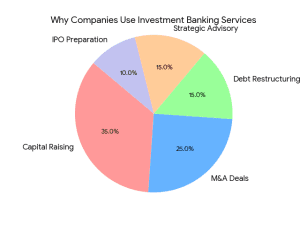
Investment banking services assist businesses in the capital-raising process, the merger and acquisition cycle, and in making highly deliberated financial decisions with confidence. From the entrepreneur to the start-up founder, to the mid-market business owner or anyone curious about the financial world — this guide explains it all.

What Is Investment Banking — and Why Does It Matter?

An investment bank is at the heart of all major business deals, whether it is an IPO, acquisition or a big debt offering. These are places where companies meet capital that they need to expand, and where they get the strategic advice that they need to make the best decisions. Large multinationals are not the only market for investment banks. Thousands of businesses, ranging from D2C consumer brands to healthcare companies to industrial manufacturers all rely on investment banking services to unlock funding opportunities, structure exits, and accelerate growth in India’s dynamic mid-market.

Quick Answer

Investment banking services include capital raising, M&A advisory, business valuations, debt and equity issuance, underwriting, and corporate restructuring. They are used by companies of all sizes to make complex financial decisions with expert support.

Core Investment Banking Services — Explained

Here is a breakdown of the most important services and what each one actually does for a business:

1. Mergers & Acquisitions (M&A) Advisory

M&A advisory is arguably the most visible investment banking service. From target identification, due diligence, structuring the deal, valuing the target, and negotiating, bankers are there to help both buyers and sellers.

FundTQ advised on the acquisition of Axiom Ayurveda by Emami Limited

2. Capital Raising — Equity and Debt

For businesses to grow, they need capital. It is raised with the support of investment banks, whether through equity financing (venture capital, private equity or public markets) or debt financing (bonds, term loans or structured credit). The right capital structure depends on stage, sector, and business model. A growth stage D2C brand is very different to a profitable manufacturing business looking to be acquired.

Secret Alchemist Funding

3. Business Valuation

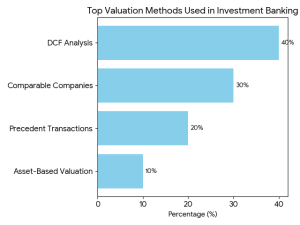
No matter whether you are raising a round, selling your business, adding in a co-investor or restructuring debt, valuation is the foundation of all financial decisions. Investment bankers employ techniques such as DCF (Discounted Cash Flow), comparable company analysis, and precedent transactions to reach an amply defensible and market-tested valuation. For founders, knowing your company’s valuation isn’t just about the number — it’s about knowing which levers move that number.

valuation methods chart

Business Valuation Advisory for mid-market companies

4. Underwriting

An investment bank that underwrites new shares or bonds sells the securities to individual investors and purchases any unsold shares or bonds, thus taking the risk of the securities. The underwriting of IPOs, follow-on issues, and huge debt raises are integral to the process.

5. Corporate Restructuring

They aren’t always a growth story. In some cases companies need to reorganize their assets, specially their debt, or to sell off non-core business, or to generate a return to profitability. In the execution of restructurings investment bankers can offer the strategic and financial skills necessary to preserve value and meet the needs of various parties.

6. Market Research & Industry Intelligence

Investment banks do extensive sector analysis before any deal is struck, covering competitive landscape, peer benchmarking, demand-supply analysis, and regulatory environment. This intelligence supports all recommendations that are provided to clients. 

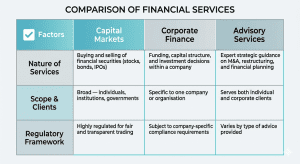
The Three Core Divisions of Investment Banking

Investment banking is organised around three primary functions. Understanding the difference helps founders and businesses know exactly what service they need.

investment banking services

How the Front Office Works — Where Deals Get Done

The front office is the part of an investment bank that is in front of the client, dealing with the business. This is where relationships are formed, mandates are gained and transactions are accomplished. 

Let’s face it, here’s what bankers in the front-office do: 

  • Client Relationship Management: Knowledge of each client’s financial objectives, business model, and market position.
  • Pitching and Advisory: Proposals to the right strategy: capital raise, M&A, restructuring, or a mix of all three.
  • Due Diligence: Detailed investigation of operations, finances and risks prior to any agreement.
  • Financial Modelling and Valuation: Analyzing the financial aspects of each transaction, including Forecast Models and Scenario Analysis.
  • Execution: The entire transaction process ranges from mandate to close, which encompasses investor outreach, documentation and regulatory filings.
  • Risk Assess: Identifying deal level risks and creating the structures to mitigate them on behalf of the client.

If you are a founder who is working with an investment bank for the first time, the front office is where you will deal with them from the beginning. 

——————————————

FundTQ’s deal team has closed transactions across consumer, healthcare, and industrials.
If you are exploring a fundraise or acquisition:


investment banking services

Key Stakeholders in Every Investment Banking Transaction

Every deal involves multiple parties working in co-ordination. Understanding who they are — and what they want — is essential for any founder or business owner going through a transaction.

1. Investment Banks

Act as the advisor and intermediary. In India’s mid-market, firms like FundTQ occupy the space between boutique advisors and large global banks — offering specialist expertise, a curated investor network, and hands-on deal execution.

2. Corporate Clients (Founders and Companies)

The businesses seeking to raise capital, complete an acquisition, or execute a strategic exit. Their goal is to maximise value while minimising risk and disruption to operations.

3. Institutional Investors

Private equity funds, venture capital firms, family offices, and sovereign wealth funds that deploy capital into deals. FundTQ’s network includes 7,000+ investors — covering the full spectrum from seed-stage VCs to large buyout funds.

5 Trends Reshaping Investment Banking Right Now

The industry is evolving fast. These are the five shifts every founder and business owner should be aware of:

1. AI and Data-Driven Deal-Making
Artificial intelligence is being applied to investment banks for risk assessment, portfolio analysis, due diligence, and even to investor matching. AI is not about replacing judgment, it’s about enhancing it.

2. The Fintech Challenge
Fintech companies are opening up new channels to access financial services, which are otherwise dominated by traditional banks. Investment banks are evolving – becoming more advisory.

3. ESG and Impact Investing
Environmental, social, and governance considerations are now central to institutional investor mandates. Companies with high ESG scores tend to have a larger pool of capital available and may enjoy higher valuations.

4. Blockchain and Transaction Transparency
The technology of distributed ledgers is helping to optimize transaction records, verify and audit transactions without friction in cross-border deals and improve regulatory compliance.

5. RegTech and Compliance Automation
The banks are increasingly turning to RegTech solutions to automate compliance functions, thereby holding up deal execution without compromising on regulatory integrity.

Top Challenges in Investment Banking — and What They Mean for Clients

  • Regulatory Complexity: Specialist knowledge is needed to meet the requirements of SEBI guidelines, RBI guidelines and FEMA norms for cross-border transactions, along with sector-specific rules. Knowing what you are looking for in a banker is essential: you don’t just pick anyone.
  • Market Volatility: Deal timing and valuations can be materially impacted by interest rate cycles, geopolitical events and macro uncertainty. All but the most novice bankers are familiar with what it takes to structure a deal that’s not as vulnerable to market timing risk.
  • Cybersecurity: Sensitive data is associated with financial transactions. The investment banks and their clients need to uphold stringent cybersecurity measures during the deal process.
  • Talent and Relationship Depth: A person’s deal outcome relies a lot on their network and execution capability — not their firm’s brand name.

The Global Impact of Investment Banking

Investment banking is not just about individual transactions — it shapes entire economies.

  • Cross-border capital flows enable companies to fund expansion in new markets and geographies.
  • M&A activity merges industries, eases inefficiencies, and makes category leaders.
  • FDI facilitation draws foreign investment to developing economies, jobs and infrastructure.
  • Capital market development results in greater liquidity and allows more and more companies to access the public markets.
  • Systemic risk is better managed by banks, particularly in times of downturn, which helps to build economic stability.

global capital flowsIn India specifically, mid-market investment banking is a key driver of the startup ecosystem — connecting high-growth companies with the institutional capital they need to scale, acquire, or exit.


——————————————-

FundTQ is ranked among India’s Top 5 Investment Banks by Venture Intelligence, with partners from IIT Delhi, KPMG, PwC, and EY.
Explore how we can support your transaction:

get startup funding

Careers in Investment Banking — What It Takes

For those interested in building a career in investment banking, here are the core competencies that matter most:

Technical Foundation

A solid background in finance, accounting, or economics builds the analytical foundation, and financial certifications such as CFA or FRM can further strengthen it. Professionals at all levels are expected to demonstrate expertise in financial modelling, including DCF, LBO, and merger models.

Analytical Thinking

One of the key skills needed to be a successful investment banker is being able to analyse vast quantities of information and present it in a way that is easy to understand and act on. This skill is honed in case study practice, real deal analysis and financial modelling exercises.

Interpersonal and Communication Skills

The sales are made or lost in the client talk. What sets the good bankers apart from the great ones is their ability to convey complex financial concepts in an easy-to-understand manner, deal with many stakeholders, and demonstrate trust in stressful situations.

Investment banking is challenging, but for the high-stakes problem solver, it’s also the best place to be for exposure, pay and career growth. 

How to Choose the Right Investment Banking Partner

This is the most important decision a founder makes when entering a transaction. Here is what to evaluate:

  • Do they have any closed deals in your industry? The domain knowledge has a direct impact on the quality of the deals and investor access.
  • Network of investors- How broad and relevant is their network? A bank having 7,000+ investors will give more opportunities than a bank having 200 investors.
  • Track record- Request similar transactions. While logos are important, deal size and complexity are more important.
  • Team quality- Who is working on your deal? The attention of the senior is important throughout the process.
  • Transparency and alignment- Do they charge transparently and in a way that is aligned with your results? Are they clear and frequent communicators?

Why Founders Choose FundTQ

FundTQ brings together partners from IIT Delhi, KPMG, PwC, and EY with a curated network of 7,000+ investors across VC, PE, family office, and strategic acquirer categories. Our focus on consumer, healthcare, and industrial sectors means we bring targeted expertise — not generic advisory. Recent transactions include the Emami–Axiom Ayurveda acquisition and the Secret Alchemist Growth Capital raise.

Frequently Asked Questions – FAQs

Q. What are investment banking services?
They help businesses raise capital, execute M&A, obtain valuations, and make strategic financial decisions with expert support.

Q. Why do companies need investment banks?
Investment banks bring financial expertise, investor networks, and deal execution capability — enabling businesses to close complex transactions efficiently and at better terms.

Q. What is the difference between capital markets, corporate finance, and advisory?
Capital markets handles securities issuance and trading. Corporate finance focuses on a company’s internal funding and structure. Advisory covers M&A, restructuring, and strategic guidance.

Q. What do investment bankers do day to day?
They model financials, meet clients, prepare investor materials, conduct due diligence, manage deal timelines, and negotiate on their client’s behalf — from mandate through to close.

Q. What skills are needed to work in investment banking?
Technical finance skills (modelling, valuation), analytical thinking, and strong interpersonal and communication ability. It rewards ambition and continuous learning.

Q. How do I choose the right investment banking partner in India?
Prioritise sector expertise, investor network depth, comparable deal track record, and team quality. Look for a firm that treats your transaction as a strategic partnership — not just a fee engagement.

Conclusion

Investment banking advisory are a combination of capital, strategy and execution. From your initial institutional round to an acquisition to a strategic exit — the right investment banking partner can make the difference between a good outcome and a great outcome. The mid-market in India is one of the hottest deal markets in the world today. Whether it’s consumer brands expanding nationally, healthcare companies becoming targets for PE interest or industrial companies being attractive strategic acquisition targets, the opportunity is there — and investment banking is the vehicle for unlocking it.

——————————————

Ready to explore what investment banking can do for your business?
FundTQ has advised on transactions across consumer, healthcare, and industrials.

CONTACT US

Reasons Why Business Valuation Is Important For Investors

7 Reasons Why Business Valuation Is Important For Investors?

Success in the dynamic world of banking and investments depends on making well-informed judgments. One of the most important aspects that plays a central role in these decisions is calculating company valuation. For investors, comprehending the true worth of a business goes beyond a mere number on a balance sheet – it’s a strategic necessity. In this blog post, we will delve into the Importance of calculating business valuation for investors, exploring what it entails and why it should be a critical consideration in their investment journey.

What is Business Valuation?

Before we start discussing the importance of business valuation for investors, let’s clarify what business valuation is and how it’s conducted.

Business valuation is essentially the process of determining the economic value of a business or company. This involves a comprehensive analysis of various factors, including financial statements, market trends, industry conditions, and the company’s overall performance. Valuation methods can vary, with common approaches including the discounted cash flow (DCF) method, comparable company analysis (CCA), and precedent transactions.

Understanding the intricacies of these valuation methods is crucial for investors seeking to make well-informed decisions. It goes beyond a simple assessment of assets and liabilities, providing a holistic view of a business’s potential for growth and profitability.

Why Calculating Company Valuation is Important for Investors?

Now, let’s explore the key reasons why company valuation is vital for investors:

1. Informed Investment Decisions:

Investors often face the challenge of choosing where to allocate their funds among various opportunities. Calculating valuation of a company provides a comprehensive view of a company’s financial health, helping investors make informed decisions based on solid data rather than speculation.

2. Risk Mitigation:

Assessing the true value of a business aids in identifying potential risks. A thorough calculation of company valuation can uncover hidden liabilities, weak financial structures, or unsustainable business models. Armed with this information, investors can mitigate risks and make strategic choices that align with their risk tolerance.

3. Negotiation Power:

In scenarios such as mergers and acquisitions or when buying/selling equity stakes, business valuation gives investors negotiation power. Understanding the fair value of a business ensures that investors don’t overpay or undersell, facilitating mutually beneficial deals.

4. Performance Benchmarking:

Company valuation serves as a benchmark for a company’s performance. Periodic valuations allow investors to track a business’s progress over time, assessing whether it meets growth expectations or if adjustments are needed to the investment strategy.

5. Portfolio Optimization:

For investors managing a diverse portfolio, calculating company valuation is instrumental in optimizing the allocation of resources. By understanding the relative value of each investment, investors can rebalance their portfolio to achieve a well-diversified and risk-adjusted mix.

6. Attracting Capital:

Companies seeking capital infusion often find that a well-documented and transparent calculation of company valuation can attract investors. It instills confidence by providing a clear picture of the company’s worth, potentially leading to better terms and conditions for both parties involved.

7. Strategic Planning:

Valuation is not only about the present; it plays a crucial role in strategic planning for the future. Investors can use valuation insights to develop growth strategies, anticipate challenges, and align their investment goals with the long-term prospects of a business.

Conclusion:

In conclusion, calculating company valuation is not just a financial exercise but a strategic imperative for investors. In a landscape where uncertainty and risk abound, having a clear understanding of a company’s value is akin to having a compass in uncharted territory. It guides investors in making sound decisions, mitigating risks, and optimizing their portfolios for sustained success.

As we navigate the complex world of investments, let us not underestimate the power of knowing – and truly understanding – the value that businesses bring to the table. In the end, it is this knowledge that empowers investors to unlock the full potential of their investment endeavors.

Also Read: Things You Should Know About Business Valuation

top 10 investment banking companies in India

Top 10 Investment Banking Companies in India (2026) – Fees, Deals & Market Presence

Investment banking plays a vital role in India’s capital markets, enabling companies to raise funds, execute mergers & acquisitions (M&A), and access strategic advisory services.

Get matched with the right investment bank for your fundraising or M&A in 24 hours → Free Advisory Now

India’s deal-making ecosystem has witnessed strong momentum in recent years:

• India recorded over $60 billion in M&A deal value in 2025
• Private Equity & Venture Capital investments crossed $36 billion in 2025
• Equity Capital Market (ECM) issuances touched $14.8 billion in Q1 2024 alone

This growth reflects rising corporate consolidation, startup funding, and capital market participation. In this guide, we analyze the top 10 investment banking companies in India, based on market presence, deal capabilities, sector expertise, and advisory strength.

Investment Banking Market in India – Industry Overview

India has emerged as one of the most active investment banking markets in Asia. Key growth drivers include:

• Strong IPO pipeline
• Increasing cross-border acquisitions
• Private equity participation
• Technology and BFSI sector expansion

top 10 investment banking companies in India


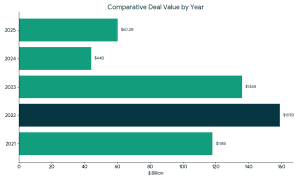
India M&A Deal Value Trend

India’s M&A market peaked in 2022, moderated in 2023–24 due to global uncertainty, and rebounded with renewed strategic activity.

About Investment Banks in India:

Investment banks in India serve as intermediaries between corporations and investors, offering a wide range of financial services such as underwriting, corporate finance, mergers and acquisitions, and advisory services. They play a pivotal role in facilitating capital market transactions, enabling companies to raise funds through equity or debt offerings and assisting in strategic decision-making processes.

Top 10 Investment Banking Companies in India

Here’s a closer look at the top players shaping the financial landscape in India for the year.

1. FundTQ:

Founded: India
Core Services: Fundraising advisory, M&A advisory, strategic financial consulting
Client Focus: Growth-stage startups, mid-market enterprises
Sector Expertise: Technology, Consumer, Fintech

Why It Stands Out:
FundTQ specializes in capital raising and strategic M&A advisory for emerging businesses. With a strong focus on execution efficiency and investor alignment, it supports companies through end-to-end transaction management.

Explore fundraising advisory for startups →

BUTTON


2. Avendus:

Core Services: M&A advisory, PE advisory, capital markets
Sector Focus: Technology, Healthcare, Consumer

Avendus is one of India’s leading financial advisory firms with strong private equity and cross-border deal experience.

3. J.P. Morgan:

J.P. Morgan is a global leader in investment banking and financial services, with a strong presence in India. Leveraging its extensive network and expertise, J.P. Morgan offers a wide array of services including mergers and acquisitions, capital raising, risk management, and asset management. Its deep industry knowledge and innovative solutions make it one of the top choices for clients seeking sophisticated financial services.

4. Axis Capital Ltd:

Axis Capital Ltd is a renowned investment bank in India, known for its expertise in equity capital markets, debt capital markets, and mergers and acquisitions. They focuses on delivering value-added services, establishing itself as a trusted partner for both corporates and investors. Its strong track record of successful transactions and commitment to excellence sets it apart in the competitive investment banking landscape.

5. Edelweiss Financial Services:

Edelweiss Financial Services is a diversified financial services firm in India, offering a wide range of services including investment banking, asset management, and insurance. With a focus on innovation and customer-centricity, Edelweiss has established itself as a prominent player in the investment banking sector. Its comprehensive suite of offerings and deep industry expertise make it a preferred choice for clients seeking tailored financial solutions.

6. JM Financial Institutions Securities:

JM Financial Institutions Securities is a leading investment banking firm in India, offering a wide range of services including equity capital markets, debt capital markets, and advisory services. They prioritizes client value, establishing a reputation for excellence and integrity within the industry through its strong focus. Its dedicated team of professionals and commitment to innovation make it a trusted partner for corporates and investors.

7. ICICI Securities Limited:

ICICI Securities is a leading investment bank in India, offering comprehensive financial services. With its strong focus on technology and innovation, has emerged as a leader in the Indian investment banking arena. With successful transactions and deep industry expertise, it’s the top choice for clients seeking strategic financial solutions.

8. IDBI Capital:

IDBI Capital prioritizes client value, earning a stellar reputation for excellence and integrity within the industry. They prioritizes client value, earning recognition for excellence and integrity, establishing a strong reputation within the industry. Its strong track record of successful transactions and commitment to innovation make it a trusted partner for corporates and investors.

9. O3 Capital Global Advisory Services:

O3 Capital Global Advisory Services is a leading investment banking firm in India, offering a wide range of services including mergers and acquisitions, private equity advisory, and debt syndication. Focused on delivering value, O3 Capital is renowned for excellence and integrity, earning trust in the industry. Its deep industry expertise and global network make it a preferred choice for clients seeking strategic financial solutions.

10. Veda Corporate Advisors:

Veda Corporate Advisors is a boutique investment banking firm in India, specializing in providing advisory services to mid-market companies. With a focus on delivering personalized solutions and value-added services, Veda Corporate Advisors has established itself as a trusted partner for businesses seeking strategic financial guidance. Its team of seasoned professionals and commitment to client success make it a preferred choice for mid-market companies in India.

Comparison of Top Investment Banks in India

Top Investment Banks in India

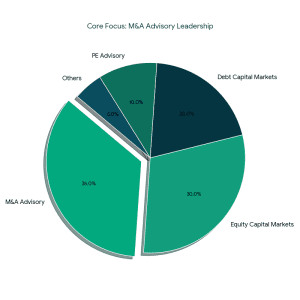
Investment Banking Revenue Distribution in India

Investment Banking Revenue Distribution in IndiaConclusion:

India’s investment banking industry continues to evolve, driven by IPO momentum, cross-border M&A, and private equity inflows. Whether a company seeks capital raising, strategic acquisition, or restructuring support, choosing the right advisory partner is critical for transaction success. As deal activity strengthens in 2026, investment banks will play an even more strategic role in India’s economic expansion.

Also Explore: How to Raise Funding for Startups in India

Frequently Asked Questions

1. What does an investment bank do in India?
Investment banks help companies raise capital, manage IPOs, structure mergers and acquisitions, provide debt advisory, and offer strategic financial consulting.

2. Which is the largest investment bank operating in India?
Global banks like J.P. Morgan and major domestic players such as Axis Capital and ICICI Securities have strong market presence in India.

3. How do investment banks earn revenue?
They earn through advisory fees, underwriting commissions, deal success fees, and structured finance charges.

4. Which investment bank is suitable for startups?
Boutique advisory firms and growth-focused advisors are often preferred by startups due to specialized fundraising expertise.

Get business Funding