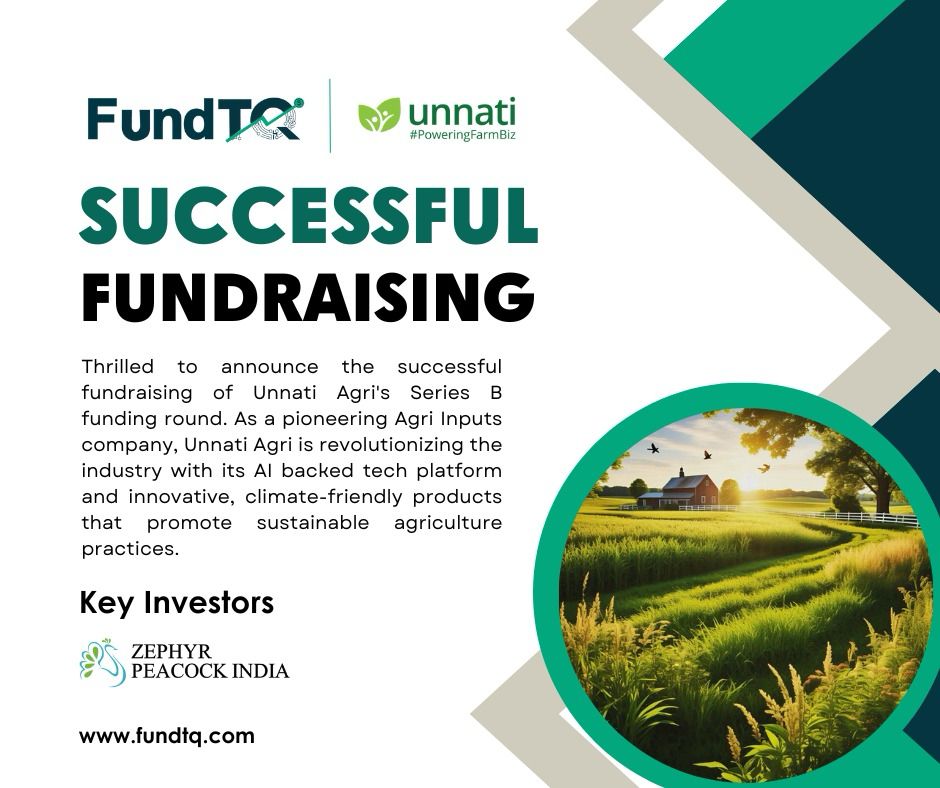

Top 10 Successful Startups In India of 2024

Top Indian Startups to Watch in 2026: Business Models, Funding Lessons & Founder Insights

India’s most successful startups are not just product stories — they are capital, timing, distribution, and market-positioning stories. Across fintech, healthtech, D2C, B2B commerce, SaaS, insurtech, and consumer technology, Indian founders are building companies that can compete at both domestic and global scale. At FundTQ, we have advised 200+ fundraising, M&A, and strategic transaction mandates across sectors. This gives us a practical view of what separates startups that scale from businesses that stall: strong unit economics, clean financials, investor-ready storytelling, and disciplined capital strategy.

This guide breaks down leading Indian startups to study in 2026, their business models, funding lessons, and the practical takeaways founders can use while preparing for fundraising, M&A, or strategic growth.

Top Indian StartupsQuick Answer: Which Are the Top Indian Startups to Watch in 2026?

Some of the top Indian startups and scale-ups to study in 2026 include CRED, Meesho, Groww, Nykaa, Digit Insurance, Udaan, Dream11, PharmEasy, and other category leaders across fintech, consumer, healthtech, B2B commerce, and insurtech. These companies stand out because they solved large market gaps, built strong distribution, raised institutional capital, and created defensible business models.

For founders, the real lesson is not just who raised the most funding. The bigger lesson is how these startups built trust, improved unit economics, used capital strategically, and created investor confidence at the right stage.

Why Successful Indian Startups Are Built Differently

India’s startup ecosystem is being shaped by UPI-led digital infrastructure, affordable mobile internet, a young digital consumer base, and a deeper investor network across angels, family offices, venture capital, private equity, and strategic acquirers. As of 2026, India has more than 2 lakh DPIIT-recognised startups, making the ecosystem broader and more competitive than ever. The best Indian startups are no longer judged only by valuation or growth-at-any-cost metrics. Investors are now paying closer attention to revenue quality, contribution margins, customer retention, governance, compliance, and the ability to build a sustainable path to profitability. 

Government initiatives such as Startup India have supported the ecosystem through recognition, tax benefits, easier compliance, and access to startup-focused schemes. But the larger driver is the rise of experienced operators, second-time founders, domain specialists, and finance-aware entrepreneurs who understand both execution and capital markets.

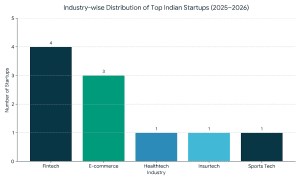
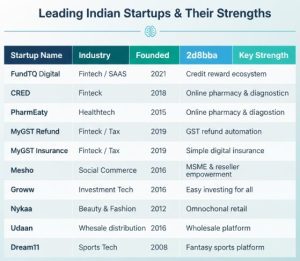
Snapshot: Top Indian Startups at a Glance in 2026

Startup Sector Founded Core Business Model Founder Lesson
CRED Fintech 2018 Rewards, lending, payments, financial products Build trust before monetisation
Meesho E-commerce / Social Commerce 2015 Marketplace for small sellers and value-conscious consumers Solve for Bharat-scale distribution
Groww WealthTech 2016 Investment platform for retail investors Simplify complex financial products
Nykaa Beauty & Fashion 2012 Omnichannel beauty and lifestyle commerce Use content, trust, and brand depth
Digit Insurance Insurtech 2016 Digital-first insurance products Reduce friction in a low-trust category
Udaan B2B Commerce 2016 Marketplace and supply chain platform for retailers Build infrastructure for underserved businesses
Dream11 SportsTech / Gaming 2008 Fantasy sports platform Build around high-frequency user engagement
PharmEasy Healthtech 2015 Online pharmacy and diagnostics Combine convenience with regulated healthcare access
MyGST Refund TaxTech / Fintech 2019 GST refund support and compliance technology Use automation to simplify complex compliance

Top Indian Startups

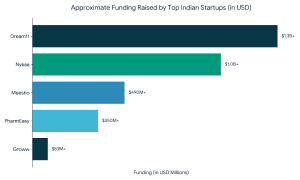
Approximate Funding Raised by Top Indian Startups (in USD)

Funding Raised by Top Indian StartupsWhat These Startups Have in Common — and What Founders Can Borrow

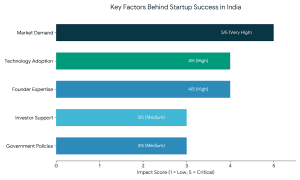
Each company below solved a real market gap, built trust at scale, and used capital as a strategic tool. The strongest patterns are clear: category focus, sharp customer insight, strong distribution, clean cap tables, sector-specific investors, and founders who treated fundraising as a structured process rather than a last-minute activity.

Top Indian Startups to Watch in 2026 — Business Models and Founder Lessons

1. FundTQ View: What These Startups Help Founders About Capital Strategy

Before looking at individual startups, it is important to understand the capital strategy behind scale. Successful startups do not raise funds only because capital is available. They raise when their numbers, narrative, market timing, and investor fit are aligned. At FundTQ, we work with growth-stage founders on equity fundraising, M&A transactions, and strategic exits. Based on our experience across 200+ transactions, the strongest founders usually prepare early: they clean up financials, build investor-ready decks, map relevant investors, understand valuation drivers, and run a structured process instead of approaching investors randomly.

Founder lesson: Treat fundraising as a strategic process, not an emergency activity.

Useful founder resources from FundTQ:

  • Pitch deck templates for fundraising preparation
  • Business plan and financial model support
  • Startup valuation tools for founder readiness
  • Fundraising and M&A advisory for growth-stage companies

2. CRED – Building Trust in India’s Premium Fintech Market

CRED built a premium fintech brand around a simple behaviour: rewarding users for paying credit card bills on time. Instead of targeting every consumer, CRED focused on a high-trust, high-credit-quality user base and expanded gradually into payments, lending, rewards, and financial products.

Key highlights:

  • Premium user positioning in India’s credit card ecosystem
  • Rewards-led engagement model
  • Expansion into lending, payments, and merchant products

Founder lesson: CRED shows that strong positioning can be more powerful than mass-market reach. By building trust with a focused user segment first, startups can expand into adjacent financial services later.

3. PharmEasy – Transforming Digital Healthcare

Industry: Healthtech
Founded: 2015

PharmEasy has turned into a household name during the pandemic and still controls online healthcare in India.

Core services:

  • Online medicine delivery
  • Diagnostic tests
  • Medical devices

Strategic growth:
The integration of Medlife made it stronger in the market than Amazon Pharmacy and Flipkart Health.

4. MyGST Refund – Simplifying GST for Businesses

Industry: Tax & Fintech
Founded: 2019

MyGST Refund can help resolve one of the most complicated compliance issues in India GST refund.

Key differentiators:

  • The first API based GST refund calculator in India.
  • Real-time refund tracking
  • Expert-backed tax advisory

Founder expertise:
Co-founded by 14+ years of experience in the field of tax professionals and providing solid trust and authority.

5. Digit Insurance – Making Insurance Simple

Industry: Insurtech
Founded: 2016

In a market where insurance has historically been sold, not bought, Digit made it simple enough that consumers actually sought it out.

Why customers trust Digit:

  • Paperless claims
  • Clear policy wording
  • Celebrity investors with credibility.

Digit has continued to grow aggressively in health, travel and motor insurance.

—————————————————————

Studying how India’s top startups raised capital?
If you’re a founder at a similar stage — thinking about your next equity raise, M&A, or exit — FundTQ’s advisory team has structured
200+ transactions across consumer, healthcare, and industrial sectors.
get funding for startuo

6. Meesho – Powering Bharat’s Entrepreneurs

Industry: Social Commerce
Founded: 2015

Meesho allows millions of homepreneurs and small sellers to sell their products on WhatsApp, Instagram, or Facebook.

Real-world impact:

Meesho gives an opportunity to over 13 million sellers, most of which are small-town women earning sustainable income.

7. Groww – Democratizing Investments

Industry: Fintech / WealthTech
Founded: 2016

Groww has simplified and made investment accessible to first time investors.

Key strengths:

  • User-friendly app
  • Zero commission mutual funds.
  • Close emphasis on the education of money.

Real-life example:

Financial inclusion is real because Groww has over 60 per cent users living in non-metro towns.

8. Nykaa – From Beauty to Lifestyle Empire

Industry: Beauty & Fashion
Founded: 2012

Nykaa is a company that combines the convenience of online shopping with the experience of the offline one, founded by a former banker Falguni Nayar.

Growth drivers:

  • Omnichannel presence
  • Private labels like Nykd
  • Nykaa Fashion expansion

Nykaa is also a good case of founder-led credibility and performance.

9. Udaan – Powering India’s B2B Commerce

Industry: B2B E-commerce
Founded: 2016

Udaan links manufacturers, wholesalers and retailers in India.

Scale:

  • Presence in 900+ cities
  • 25,000+ sellers
  • Strong logistics network

Udaan’s focus on the bottom of the retail pyramid — kirana stores, small wholesalers — gives it a defensible position that larger e-commerce players haven’t been able to replicate.

10. Dream11 – Leading Fantasy Sports in India

Industry: Sports Tech
Founded: 2008

Dream11 played on the Indian fascination with cricket and fantasy sports.

Key achievements:

  • 100+ million users
  • India’s first gaming unicorn
  • Backed by global investors

Real-life engagement:

Dream11 has high product-market fit, as it records high user activity during IPL seasons.

FAQs – Frequently Asked Questions

Q. What makes a startup “successful” in the Indian context — and how is it measured?
A startup in India is typically considered successful when it demonstrates sustainable unit economics, consistent revenue growth, and either profitability or a clear path to it. Beyond valuation, markers include investor quality (the caliber of VCs or PE funds backing them), team depth, and market share in a defensible category. For growth-stage companies in the ₹50–500 Cr revenue range, successful usually means having institutionalized operations, a clean cap table, and optionality — whether that’s a follow-on raise, strategic acquisition, or IPO readiness.

Q. Which sectors are attracting the most funding for Indian startups right now?
Consumer brands, healthcare, fintech, and B2B SaaS continue to see strong deal activity. Within consumer, the consolidation story is particularly active — established FMCG and personal care companies are acquiring D2C brands rather than building them. Deals like the Emami–Axiom Ayurveda acquisition (₹200 Cr) reflect this pattern: PE-backed or strategic buyers acquiring differentiated brands at the growth stage. For founders in these sectors, this creates both funding and exit optionality.

Q. How should a growth-stage Indian startup prepare for fundraising or an acquisition?
The preparation is the same whether you’re raising equity or running an M&A process: clean financials, a clear growth narrative, and an understanding of how investors or acquirers will value the business. Most founders underestimate how much of the deal outcome is determined before the first investor meeting — in how the business is structured, what metrics are tracked, and whether the cap table supports the kind of deal being pursued. Working with an experienced investment banking advisor early in the process (rather than after receiving an inbound offer) almost always results in better terms and a faster close.

Q. What are the most common funding options for early-stage Indian startups?
Early-stage Indian startups typically raise through angel networks, family offices, seed-stage VCs, or government schemes like SIDBI’s Fund of Funds. The right option depends on sector, ticket size, and founder profile. For companies in the ₹5–30 Cr range, angel rounds or revenue-based financing are most common. Beyond ₹30 Cr, institutional equity raises — structured with an investment banking advisor — tend to deliver better valuations and cleaner deal terms than founder-led processes.

Startup Success in IndiaSummary

What these startups have in common isn’t just scale — it’s intentionality. They raised smart, built defensible businesses, and treated capital as a tool rather than a goal. The startups above didn’t get there by accident. Behind almost every successful raise or exit is a team that understood the capital markets, ran a tight process, and walked into investor conversations fully prepared.

——————————————-
If you’re a founder thinking about your next equity raise, acquisition, or strategic exit — FundTQ’s advisory team has structured 200+ transactions across consumer, healthcare, and industrial sectors.
Talk to our team about what the right process looks like for your business.
CONTACT US

sell my business India

How to Sell Your Business in India: A Founder’s Step-by-Step Guide to M&A

When founders search “sell my business India”, they’ve already made up their mind. They just don’t know how to do it, and that costs them months, money, and sometimes a sale. Here’s a step-by-step guide to every phase of the M&A process: whether you’re ready to sell, valuations, and how to close with the right buyer.

When is the right time to sell your business in India?

The best time to sell a business in India is when the company is growing, financials are clean, and sector investor appetite is high — not after growth has plateaued or under financial distress.

Many people believe the myth: that you sell when you have to. The best exits happen when you don’t have to — when you have leverage. People will pay a premium for a company on the up, not one on the down.

There are three main reasons for timing:

  1. Growth trajectory: If you are at an inflection point – continuous revenue growth, growing margins, a strong market position – that’s the time. After the inflection, you’ll receive lower multiples.
  2. Market conditions: Sector multiples fluctuate. In the past five years, consumer brands, D2C, health and manufacturing have experienced distinct multiple cycles. An advisor can tell you where your sector is today.
  3. Owner readiness: Selling when burnt out is not a good idea You’ll get more for your business if you are selling it by choice, rather than necessity.

How to sell a business in India: step-by-step process

business sale process India timeline
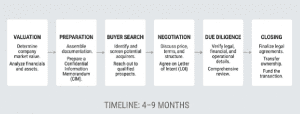
Selling a business in India typically involves 6 stages: valuation, deal preparation, buyer identification, negotiation, due diligence, and final closing — spanning 4 to 9 months end-to-end.

  1. Valuation & financial cleanup – Establish a realistic range using DCF, EBITDA multiples or market comps. Get your books in good shape.
  2. Develop pitch deck / CIM – A Confidential Information Memorandum is what buyers view your business through. It must be a credible growth story – not just numbers.
  3. Target the right buyers – Strategic vs financial buyers (competitors, conglomerates, niche players, private equity funds, family offices). They have different motives, time frames, and discounting.
  4. Negotiate the term sheet – Price, structure (cash, equity, earnout), board rights, founder lock-in. All parts affect price.
  5. Due diligence – Acquirers will deeply review financials, legal, IP, contracts and cap table. Be ready – surprises here can terminate the deal or significantly reduce price.
  6. Final agreements & close – Share Purchase Agreement (SPA), filings, payment transfer, and integration plans.

Business valuation in India — How Much is your Company Worth?

Valuation is where founder and buyer expectations differ. Knowing the three main methods helps you start a discussion from a place of knowledge.

Business valuation in India

In India, the industry is a critical factor. A D2C-focused consumer brand might be valued differently to a manufacturing SME with the same EBITDA. Healthcare and technology-enabled companies are currently more in favour. Ask your advisor for real comps – not benchmarks.

Founder sin: getting stuck on a number someone suggested 3 years ago. Markets move. Do a proper valuation before you talk to investors.

Preparing your Business for Sale

The 6-12 months leading up to buyers’ inquiries is more important than you think. A 6x exit is one of preparation, an 8x exit is one of execution.

> Most importantly, get financials in order: three years of audited accounts, clear GST history, normalised EBITDA (no founder expenses). Then, legal structure: is your cap table clean? Any disputes, lawsuits or unregistered IP?

> Structurally, acquirers don’t like founders. If the company can’t operate without you for 30 days, they’ll give you a discount for that. Develop the management team first.

> Finally, tighten the pitch. Your plan for TAM, unit economics, moat, expansion, etc., needs to be articulate before it’s asked.

How to Sell Your Business in India

Who can Help You Sell Your Business In India?

Three types of professionals operate in this space, and they are not interchangeable.

> Business brokers typically handle smaller ticket transactions (under ₹5–10 Cr) with a matchmaking model. They list your business and find buyers, but don’t manage the process or negotiate on your behalf.

> Chartered Accountants handle compliance and tax structuring exceptionally well but aren’t equipped to run a competitive buyer process or build the deal narrative.

> Investment bankers / M&A advisors manage the entire exit process — valuation, CIM, buyer outreach, term sheet negotiation, due diligence management, and deal closure. For mid-market deals (₹10 Cr+), this is where value creation happens. The right advisor doesn’t just find a buyer — they create competitive tension between buyers, which is what moves price.

Fee structures typically include a retainer (signals seriousness and funds the process) and a success fee tied to deal value — usually 1–3% depending on deal size.

Emami acquires majority stake in Axiom Ayurveda

Legal Requirements To Sell A Company In India

Legal aspects of a business sale in India vary based on deal structure (share sale or asset/slump sale) and the presence of foreign acquirers.

Key documents are the Share Purchase Agreement (SPA) that covers the reps & warranties, indemnities and conditions precedent. There will also be resolutions passed by the board and shareholders of the target company, and possibly regulatory approvals from the Reserve Bank of India (if a foreign company is involved) or SEBI (if a listed company).

Your M&A advisor should engage a transaction lawyer – it’s not worth skimping on. A bad SPA can leave you with post-closing liability that eats up all the deal proceeds you’ve worked so hard to secure.

Tax implications of selling a business in India

Selling a business in India attracts capital gains tax — long-term (20% with indexation) if shares held over 24 months, short-term (slab rate) if under. Deal structure (share sale vs slump sale) significantly affects the tax outcome.

This section is more important than most founders expect. Pre-deal tax planning may enhance the net proceeds.

In a share sale, the seller is liable for capital gains tax on the gain between the sale value and the share’s cost of acquisition. Long-term (shares held for 24+ months) is taxed at 20% with indexation. Short-term is taxed at the person’s income tax rate.

For a slump sale (sale of business as a going concern), the gain is based on net worth, not value of assets. This can be more or less tax-efficient.

Tax planning strategies – such as sales via a holding company, within a financial year, or Section 54F exemptions – should be discussed with a CA with M&A transaction experience before you enter into an agreement. 

Common Mistakes Founders Make When Selling Their Business

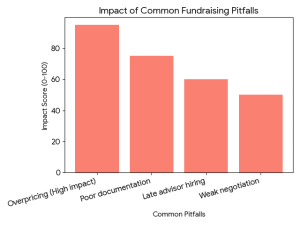
  • business sale mistakes India Anchoring high – Listing for a price that is not supported by financials or market comparable (comps) information. It’s a sign of inexperience to savvy buyers.
  • Poor documentation – Buyers will find holes. Fixing them before buyers do – and do – preserves valuations.
  • Hiring an advisor too late – Founders who seek advice after having initial discussions with buyers lose their negotiating power. Process, don’t respond to inbound.
  • Being impulsive – Selling to “friends”, without a process, is expensive. Buyers know this, and unsophisticated sellers pay for it.
  • Overlooking deal structure – A big headline deal with a huge earnout, rollover and deferred cash is not a cash deal. Do the math on the term sheet.

How long does it take to sell a business in India?

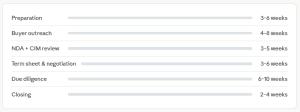
Selling a business in India typically takes 4 to 9 months from advisor engagement to deal closure, depending on deal complexity, buyer type, and diligence depth.

Selling a business in India

Deals with foreign buyers, regulatory complexity, or distressed situations take longer. Running a tight, well-managed process with an experienced advisor compresses timelines — because buyers know you’re organized and serious.

Frequently Asked Questions – FAQs

1. How do I sell my business in India quickly?
Speed comes from preparation, not luck. Fast-selling businesses have clean financials, a CIM, and a broker with a buyer list. Knowing who to sell to – strategic and financial buyers – shortens the time. FundTQ has a 7,000+ network of investors and acquirers.

2. What documents are needed to sell a company in India?
Critical documents include: 3 years audited financials, MoA/AoA, cap table, GST returns, IP registrations, customer and vendor contracts, board/shareholder resolutions, existing investor agreements. Your advisor will prepare a data room list for your business.

3. Do I need an investment banker to sell my business?
Yes, definitely for deals of ₹10-15 Cr or more. An investment banker conducts a competitive process, deals with information asymmetry to your advantage, and negotiates on your behalf for terms you may not be aware of. In most cases, the fee is many times recouped in value and structure.

4. What is the minimum valuation for selling a business in India?
There’s no regulatory minimum. But M&A consultancy is viable for deals over ₹5-10 Cr Enterprise value. Less than that, use a business broker or referral. For deals above ₹10 Cr, a formal process with an investment banker is preferable.

5. Can a foreign company acquire my Indian business?
Yes, as per FDI policy and industry caps. Some require RBI or govt approval. Your M&A advisor works with lawyers to navigate the regulatory process – it’s normal in cross-border deals.

—————————————————————————-

Ready To Explore Your Exit Options?

FundTQ is a top-ranked India investment bank with partners from IIT Delhi, KPMG, PwC, and EY — and a track record of closing deals across consumer, healthcare, and industrial sectors. Most recently, FundTQ advised on Emami’s majority stake acquisition in Axiom Ayurveda, end-to-end.

Whether you’re 6 months from a decision or 6 years, the right time to start the conversation is now.

sell my business in India quickly

Consumer Brand Funding

How Consumer Brands Are Raising Capital in India’s New Funding Era

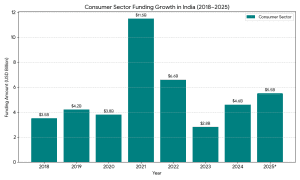
India’s consumer market is one of the most actively funded segments in private equity and venture capital right now. From D2C beauty to ayurvedic wellness, from pet care to home goods — capital is flowing. But most consumer brand founders we speak to still ask the same question: “How do we actually get funded?

This guide breaks down how consumer brand funding works in India, what investors expect, and what separates the deals that close from the ones that stall.

get funding for startup
What Is Consumer Brand Funding?

Consumer brand funding is external capital that is collected by companies that make direct sales to end consumers – either directly via their own channels, via retail or via a marketplace. These are equity rounds (seed, Series A, strategic), PE buyouts, and acquisition-based results. 

It is different as compared to general startup funding in India since consumer brands are not only tested based on growth, but also brand equity, repeat purchase behaviour, gross margins and scalability of distribution.

Why Consumer Brands Are Attracting Serious Capital

A few structural tailwinds are driving this:

  1. Rising premiumisation: The Indian consumers are trading up across categories, especially in Tier 1 and Tier 2 cities. This is benefiting directly on personal care, wellness, food, and lifestyle brands.
  2. D2C as a validation layer: The brands establishing a direct connection with consumers have more information about retention and cohorts, which facilitates more concrete due diligence discussions.
  3. Strategic buyers are present: Increasingly, large FMCG conglomerates are acquiring high-growth challenger brands instead of developing them internally. This is providing exit lines that are more expeditious to investors, making consumer deals at an early stage more fundable.
  4. Global investors are paying attention: Vehicles such as Unilever Ventures, L Catterton and others that are consumer-oriented are already in operation in India.

What Investors Actually Evaluate in a Consumer Brand
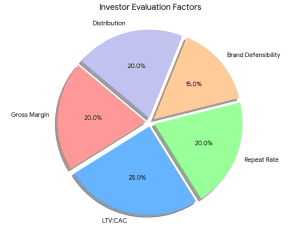
Before you build your deck or reach out to investors, understand that consumer brand evaluation has its own framework.

  • Gross Margins: Consumer brands require healthy gross margins: 55-70 +% D2C, a bit less B2B marketplace-heavy. In case your COGS structure is unable to bear this, the pricing or supply chain work must come first.
  • Repeat Purchase Rate and LTV: The early stages often have a high CAC. The more important thing is the return of customers. Investors desire to spend on LTV:CAC ratios greater than 3x and they will demand cohort information to confirm this.
  • Brand Defensibility: What is not easy to duplicate about you? This may be formulation IP, a sourcing story that is unique, a personal brand of a founder, a community, or a niche leadership. Investable brands and those that will lose to bigger budgeted incumbents are separated by defensibility.
  • Distribution Footprint: Are you expanding on a single channel or developing a multi channel presence? Investors are apprehensive of brands that are wholly reliant on a single market place or a single region.
  • Founder-Market Fit: Particularly in the initial phases, investors are supporting the knowledge of the founder in terms of the consumer and the category more than the product itself.

investor evaluation factorsOur Recent Deals: What Successful Consumer Brand Transactions Look Like
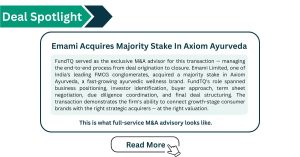
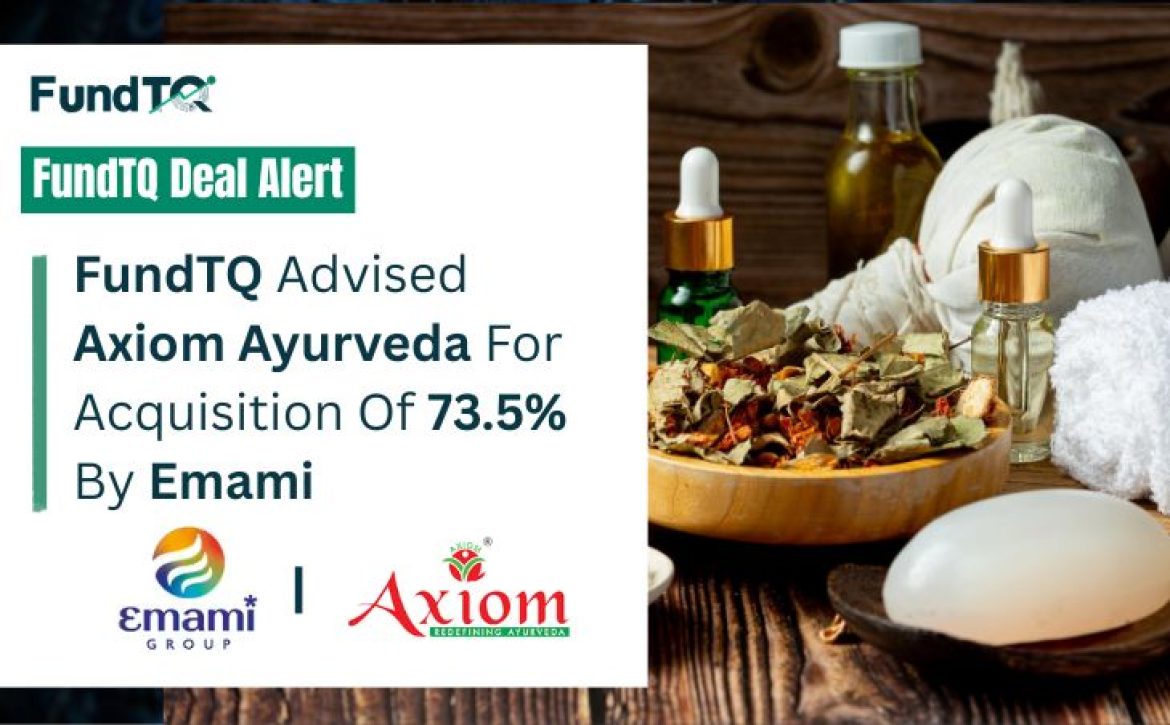
Emami Acquires Majority Stake in Axiom Ayurveda [Read Now]

FundTQ was an adviser on the acquisition of Axiom Ayurveda by Emami, one of the most recognised FMCG conglomerates in India. Axiom Ayurveda had developed a robust product range in the herbal and Ayurveda wellness sector with deep distribution in the offline channels.

This acquisition is indicative of a larger trend: big incumbents buying challenger brands that have already taken a targeted niche of a consumer market. Instead of creating competing products. In the case of Axiom, the strategic acquisition gave it the capital, distribution and brand halo it needed, to grow much more quickly than it would have done had it grown organically.

What founders can learn: A strong niche position, even without massive revenue scale, can attract strategic acquirers if the brand is differentiated and the consumer relationship is real.

Secret Alchemist on Successful Fund raise Led by Unilever Venturesu [Read Now]

Secret Alchemist — the beauty brand by actress and entrepreneur Samantha Ruth Prabhu — has been able to raise funds through Unilever Ventures as the principal investor with FundTQ serving as the sole financial advisor.

There are several reasons why this deal is important. Unilever Ventures is among the most discriminative consumer-oriented funds in the world. Their leadership of this round is indicative of the strength of the brand, the consumer relationship, and the potential of the category in the long run. To Secret Alchemist, this was not capital per se, but the Unilever world manual on how to create beauty brands.

What founders can learn: Investor-brand fit is as important as the size of the cheque. An investor with a strategic approach and knowledge of your category can speed up growth in a manner not possible to financial only investors.

How FundTQ Works With Consumer Brand Founders

FundTQ is a mid-market investment banking and advisory firm with a dedicated focus on consumer, healthcare, and industrial sectors. Our team has backgrounds from IIT Delhi, KPMG, PwC, and EY — and more importantly, we’ve closed transactions across brand categories, which means we understand what investors in this space actually need to see.

As investment banking advisors for consumer brands, we work with founders at different stages:

  • Pre-raise: Positioning your brand, building the financial model, and preparing investor-ready materials. If you need a starting point, we also offer startup financial model frameworks and free pitch deck templates for consumer brands.
  • During the raise: Investor identification, outreach, and managing the process so founders can stay focused on the business.
  • Transaction advisory: For founders exploring acquisitions, strategic investments, or equity funding for retail businesses.

We’ve been ranked among India’s top investment banks by Venture Intelligence. Our investor network spans domestic PE/VC funds, family offices, and global strategic investors.

Ready to explore your funding options? Write to us at deals@fundtq.com or visit fundtq.com.

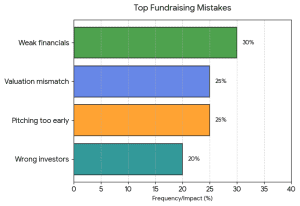
Common Mistakes Consumer Brand Founders Make When Raising Capital

  1. Pitching too early: Investors in consumer brands desire to have evidence not merely a great story. When untested in your repeat rates or unclear in your margin structure, invest more time in product-market fit before formal raise processes.
  2. Underprepared financials: The majority of founders do not realise the extent to which investors question unit economics. Before your first investor meeting, know your contribution margin, your payback period, and your channel-wise CAC.
  3. Wrong investor targeting: The difference between a generalist fund and a consumer-oriented fund is not the same. Before outreach, align your stage, sector, and geography to the mandate of the investor.
  4. Valuation mismatch: Brand valuation is dependent on revenue multiples and brand potential, not only growth rates. Being aware of similar deals assists in setting realistic expectations.
fundraising mistakesFAQs: Consumer Brand Funding in India

  1. How much funding can a consumer brand raise at the seed stage?
    Consumer brand seed rounds in India typically fall between ₹2 crore and 10 crore. This will be based on traction – that is, revenue run rate, repeat-buy data and the ability to illustrate unit economics clearly. Strong D2C metrics and differentiated positioning lead to higher brands increasing on the upper part of this spectrum.
  2. What financial metrics do investors look for in a consumer brand?
    The non-negotiables include gross margin (5570%+ when dealing with D2C) and LTV:CAC ratio (3x or higher), repeat purchase rate, and month-on-month revenue growth. Payback period and contribution margin are also other factors that investors will consider to determine whether the business can expand without ablaze unwarranted capital.
  3. Is it possible to raise funding without a formal pitch deck?
    Technically yes – warm introductions and conversations may sometimes come before official materials. Practically, however, any investor serious about a deal will desire a deck and a financial model ahead of term sheets. Consider the pitch deck as the instrument that will allow investors to say yes sooner rather than a formality.
  4. What’s the difference between strategic and financial investors for consumer brands?
    A financial investor (VC, PE fund) is maximising mainly the capital. A strategic investor (such as a group of FMCGs or a worldwide brand house such as Unilever Ventures). Also seeking synergies – distribution leverage, category adjacency, or talent. Strategic investors usually come along with non-capital value that can speed up growth tremendously.
  5. Do I need an investment banker to raise a consumer brand funding round?
    Not necessarily- but advisory becomes more valuable with increased deal size. In rounds above ₹1015 crore, an established investment banking advisory service can get you access to a larger pool of investors. Deal more favourable terms and structural errors are difficult to correct once closed.

—————————————————————————-

FundTQ is an investment banking and advisory firm focused on consumer, healthcare, and industrial sectors.We’ve advised on transactions including the Emami–Axiom Ayurveda acquisition and the Secret Alchemist fundraise led by Unilever Ventures. To discuss your raise, reach out at deals@fundtq.com 

Get business Funding

Startup Funding News

Startup Funding News India – April 20, 2026

FundTQ Business News Highlights

India’s startup ecosystem is showing a mix of strong entrepreneurial momentum and cautious investor behaviour, with AI emerging as the dominant theme and funding strategies becoming more disciplined.

Top Funding & Strategic Moves:

1. Sarvam AI is reportedly in talks to raise $320–350 million in a new funding round, with Glade Brook Capital likely to participate. The round could value the company at around $1.5 billion, signaling strong investor interest in India’s AI ecosystem.

2. Razorpay is preparing to file confidentially for an IPO, aiming to raise $600–700 million. However, its expected valuation has dropped to about $5–6 billion from its earlier $7.5 billion peak, reflecting changing market conditions.

3. India’s startup ecosystem is witnessing a strategic shift as investors move away from large deals toward smaller, diversified investments. While total funding has dipped, deal activity has increased, indicating cautious but active participation from investors.

4. A growing number of senior IT professionals are leaving corporate roles to launch AI startups, contributing to the rapid expansion of India’s artificial intelligence sector across industries like healthcare, finance, and education.

5. Y Combinator hosted its first Startup School event in India, attracting a large number of aspiring founders and strengthening engagement with the Indian startup ecosystem despite minor logistical challenges.

6. The Indian startup ecosystem recorded over 55,200 new recognized startups in FY26, marking the highest annual growth since the launch of Startup India and highlighting strong momentum in entrepreneurship and job creation.

7. Weekly startup funding in India has slowed significantly, with around $60.4 million raised across 15 deals between April 13–18, showing a sharp decline but continued investor focus on high-quality and AI-driven startups.

8. Swiggy is reportedly expanding its quick commerce segment Instamart into more Tier-2 and Tier-3 cities, aiming to strengthen last-mile delivery and compete aggressively with Blinkit and Zepto in the fast-growing instant delivery market.

9. Tata Electronics is accelerating its semiconductor manufacturing plans in India, with fresh investments expected in its chip fabrication and assembly units as part of the country’s broader push for self-reliance in electronics.

Key Highlights:

  • AI continues to dominate both funding and new startup creation
  • Capital deployment becoming more selective and structured
  • Startup formation hitting record highs despite funding slowdown
  • Global accelerators increasing focus on India

FundTQ Insight:

India’s startup ecosystem is not slowing down — it is maturing. While funding volumes have moderated, the increase in deal count, rise of experienced AI founders, and record-breaking startup registrations suggest a structural transformation toward long-term value creation rather than aggressive capital expansion. This is less a downturn and more a capital discipline phase, where execution quality matters more than fundraising speed.

Looking to raise funds for your startup?

Connect with FundTQ to access a curated investor network and discover funding opportunities aligned with your startup stage and sector.

Get business Funding

stepout-funding

FundTQ Leads Advisory for StepOut’s Fundraise Backed by Rainmatter

AI Sports Tech StepOut Funding: FundTQ Advises Rainmatter-Led Round

stepout-funding
StepOut
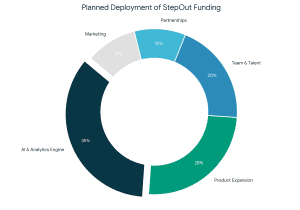
, an AI-driven sports technology platform redefining football analytics and talent development, has successfully closed its recent funding round led by Rainmatter by Zerodha, with participation from SucSEED Ventures, Misfits Capital, and Marwah Sports Pvt. Ltd. FundTQ acted as the exclusive deal advisor to StepOut, supporting the company across the entire business fundraising process. StepOut is building a data-first football ecosystem using artificial intelligence to enable smarter performance analysis, talent identification, and scouting solutions for academies, clubs, coaches, and athletes. By combining deep football domain knowledge with scalable technology. The platform addresses a critical gap in objective decision-making within grassroots and professional football. The successful fundraise marks a key milestone in StepOut’s growth journey. The newly raised capital will be utilized to strengthen its AI and analytics engine, expand product offerings, scale operations, and build deeper relationships across football academies and leagues. The round also reflects strong investor confidence in StepOut’s fundamentals, market opportunity, and long-term vision—underpinned by disciplined financial planning and robust business valuation frameworks.

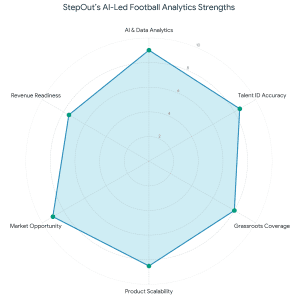
StepOut’s AI-Led Football Analytics StrengthsDuring the transaction, FundTQ worked closely with the StepOut founding team on multiple aspects of the raise. Including refining the equity narrative, preparing investor-ready pitch deck templates, validating financial models, and engaging with aligned strategic and institutional investors. The focus remained on building long-term value rather than short-term capital, ensuring the right fit between founders and investors.
The participation of Rainmatter by Zerodha brings strategic depth to StepOut’s cap table. Offering not just capital but also long-term guidance in building scalable, technology-led businesses. The investor consortium is expected to support StepOut. It accelerates product innovation and expands its footprint within India’s rapidly growing sports tech ecosystem.

Stepout Funding Round

Reflecting on the engagement, the FundTQ team shared that their early interactions with StepOut stood out due to the founders’ clarity of purpose, execution discipline, and strong understanding of both technology and the football landscape.

“StepOut represents the next generation of sports technology platforms—deeply analytical, mission-driven, and scalable. Working with founders who are open to feedback, data-oriented, and focused on long-term impact makes the fundraising journey highly collaborative. We are excited to have partnered with StepOut and look forward to seeing the platform transform football analytics and talent development.”

Planned Deployment of StepOut FundingThis transaction reinforces the idea that effective fundraising goes beyond capital infusion. It is about trust, alignment, execution quality, and founders who consistently show up to build enduring businesses. With a strong investor base and a clear growth roadmap. StepOut is well-positioned for its next phase of scale and impact.

About FundTQ

Founded in 2016, FundTQ is a full-service investment banking firm providing a wide range of investment banking services, including M&A advisory, VC/PE syndication, tax advisory, due diligence, and strategic capital raising. The firm follows a founder-first approach, focusing on seamless execution, long-term value creation, and outcome-driven advisory.

Recognized among the Top 10 Investment Banks, FundTQ has advised startups and MSMEs across their lifecycle. From early-stage business fundraising to growth capital, strategic investments, and acquisitions. Backed by deep industry expertise, strong investor relationships, and structured use of financial modeling. Business valuation software frameworks. FundTQ continues to be a trusted partner in high-impact transactions across sectors.

Get business Funding

FundTQ acted as the deal advisor to Axiom Ayurveda

Transaction Spotlight: Emami Acquires Majority Stake in Axiom Ayurveda

FundTQ Advises Axiom Ayurveda
Some deals are transactions. Some are journeys.
This one was both. FundTQ Advises on Emami Acquisition of Axiom Ayurveda

FundTQ Investment Advisory is proud to have acted as the exclusive deal advisor to Axiom Ayurveda on Emami’s acquisition of a 73.5% majority stake in the brand — one of the most significant Ayurveda M&A transactions in recent years, and one of the most personally meaningful mandates the FundTQ team has been part of.

About Axiom Ayurveda

Axiom Ayurveda is a purpose-driven Ayurvedic brand that has built genuine consumer trust over the years through science-backed formulations, authentic positioning, and a deep commitment to the wellness category. The brand’s growth story is not just one of revenue — it is one of conviction, consistency, and category leadership in a space that demands both authenticity and agility.

About the Transaction

FMCG major Emami Limited — one of India’s most respected consumer goods companies with a strong legacy in health and wellness — acquired a 73.5% majority stake in Axiom Ayurveda, signalling a strong strategic bet on the premium Ayurveda segment.

For Emami, this acquisition represents a meaningful addition to its wellness portfolio. For Axiom Ayurveda, it marks the beginning of a new chapter — one backed by institutional strength, distribution muscle, and the kind of long-term support that allows a brand to truly scale.

FundTQ’s Role in the Transaction

FundTQ’s involvement with Axiom Ayurveda spans nearly 2–3 years — long before the deal was on the table.

That is the nature of transactions at this level. They require relationship-building, patient positioning, financial narrative development, and the kind of ongoing strategic alignment that does not happen in a few months.

The FundTQ team worked alongside the Axiom Ayurveda leadership through every stage — understanding the brand’s DNA, sharpening the investor and acquirer story, identifying the right strategic fit, and navigating the full complexity of a majority stake transaction from first conversation to final close.

Reflecting on the journey, the FundTQ team shared:

“Axiom Ayurveda is a brand built on real conviction. From our very first interaction, it was clear this wasn’t just a business — it was a purpose. Transactions of this nature demand patience, precision, and complete trust between all parties. We’re grateful to have been chosen as partners on this journey and are excited about what lies ahead for the brand under Emami’s leadership.”

A Founder Who Made the Difference

No deal of this nature closes without the right person at the helm.

Rishabh Gupta stands out as one of the most remarkable founders FundTQ has had the privilege of working with. His clarity of thought, depth of understanding of his own business, and the composure with which he navigated every stage of this multi-year process was exceptional.

The kind of founder energy that makes advisors want to give their absolute best — because you know the person across the table deserves nothing less.
Working alongside him was not just professionally enriching. It was genuinely inspiring.

What This Deal Reflects

The Axiom Ayurveda–Emami transaction is a strong signal for the Indian Ayurveda and wellness category. It validates what the best founders in this space have always known — that authentic brands, built with purpose and patience, attract the right partners at the right time.

It also reflects a truth that FundTQ carries into every mandate: great outcomes don’t happen overnight. They happen because someone kept showing up, every single day — refining, aligning, and never losing sight of the end goal.

To the entire Axiom Ayurveda team — congratulations. You earned every bit of this.
To Emami — welcome as partners. The best is yet to come.
And to every founder reading this — if you are building something real, with conviction, the right outcome will find you. Stay the course.

FundTQ Investment Advisory is a leading investment banking firm advising growth-stage consumer brands on M&A, fundraising, and strategic transactions. To explore how FundTQ can support your next deal, write to us at deals@fundtq.com

Get business Funding

Unnati Funding

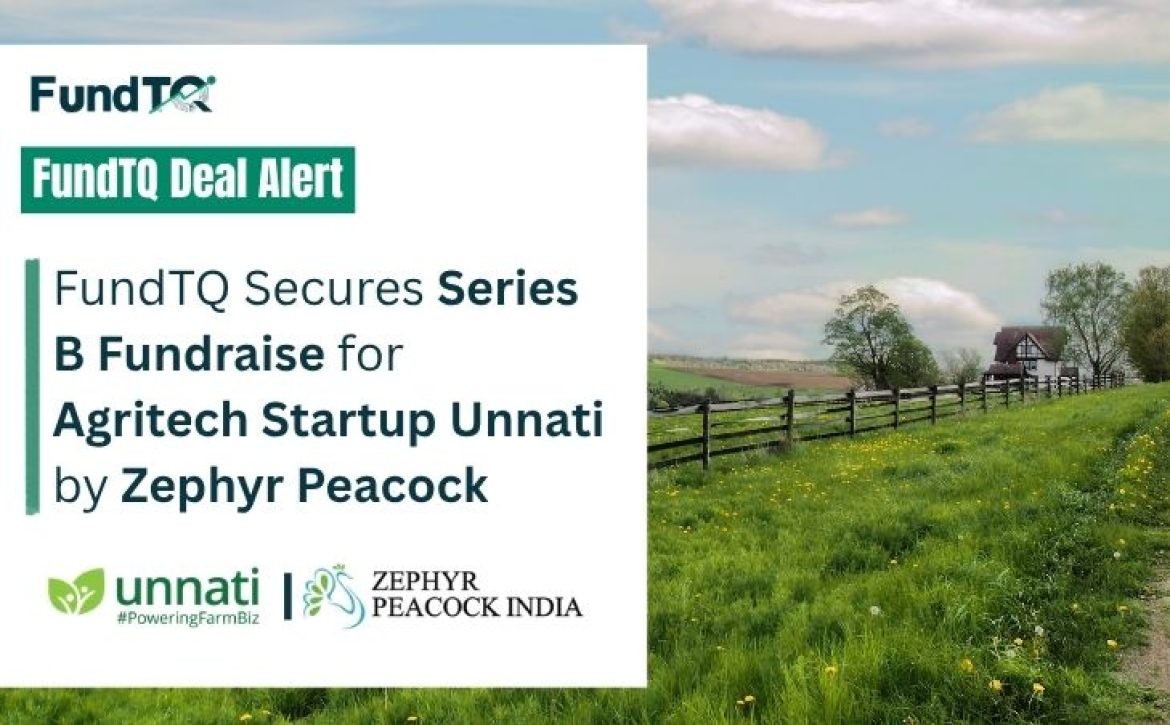
Fueling Agritech Growth: FundTQ Secures Series B for Unnati from Zephyr Peacock


Unnati Agri (Akshamala Solutions Pvt Ltd), a leading player in the Agri-Input tech space, has successfully raised a part of their Series B Round. This investment is announced as a part of the Rs. 100Cr, which they are currently raising. The amount was invested with a participation from Zephyr Peacock along with participation of some other investors. Zephyr Peacock is a Mumbai-based investor renowned for its commitment to sustainable and high-growth businesses.. This fundraise will help Unnati to further strengthen its operations through their own brands portfolio and by acquiring companies in a similar space. Currently, the Company is aggressively working on launching their own portfolio of organic products.

Unnati Agri has established itself as one of the Leading players in the agricultural landscape with its focus on agri-inputs supply with climate sustainability. The company specializes in seeds, fertilizers, and agrochemicals, with a strong focus on environmentally conscious solutions that foster long-term agricultural growth. Unnati’s products cater to the needs of farmers, ensuring high-quality, sustainable, and efficient solutions that contribute to better yields while promoting ecological balance. The AI-based platform assists in managing inventory and mentions the appropriate mix of various formulations based on crop needs.

The funds raised will be directed towards driving Unnati’s organic growth with increasing contribution of its own brand products combined with the strategic acquisitions of other agri-input companies to expand its product portfolio and market reach. The Company is now openly looking for new companies to acquire in agri-inputs category which can help Unnati grow inorganically. This combination of organic growth and acquisition strategy is expected to boost Unnati’s position in the rapidly evolving agri-tech sector and accelerate its impact in promoting climate-resilient agricultural practices.

FundTQ is acting as an exclusive advisor to this Transaction and for acquisitions of the companies by Unnati.

Commenting on this growth initiative, Aanchal Mahani, Growth Partner at FundTQ said, “Unnati Agri’s move of successful fundraise is not just a transaction; it’s a strategic investment that positions the company for a bright and sustainable future. By capitalizing on the funds generated, Unnati is poised to make a significant impact in the agritech space, while simultaneously enabling Farmers To Always Make The Right Choice. Unnati is not just a platform, however it is helping India to become self-sustainable in terms of its agri inputs rather than depending on China”

This strategic move reinforces Unnati Agri’s mission to revolutionize the agriculture sector, create value for its stakeholders, and contribute to the global movement toward climate-smart agricultural solutions. As the agri-tech industry continues to evolve, Unnati’s commitment to growth and sustainability positions it for long-term success in both the Indian and global markets.


About FundTQ

FundTQ, established in 2016, operates as an Investment Banking firm, offering a comprehensive range of services encompassing M&A, VC/PE syndication, Tax Advisory, and Due Diligence Support. The company is driven by a success-oriented approach and places a strong emphasis on the successful conclusion of each transaction in its portfolio.

FundTQ is positioned amongst the Top 10 Investment Banks, due to its profound expertise in various diversified industries and an exceptional track record in both domestic and cross-border transactions. The diverse client base that FundTQ serves stands as a testimony to its capability to support startups and MSMEs at every stage of their journey, from securing growth stage funding to facilitating substantial transactions and providing expert M&A advisory services.

In last years FundTQ closed Alofut Beverages investment by Emami, NautiNati acquisition by Aditya Birla, among others


Unnati Funding

FundTQ Executes Series B Transaction for Unnati with Zephyr Peacock Participation


Unnati Agri (Akshamala Solutions Pvt Ltd), a leading player in the Agri-Input tech space, has successfully raised a part of their Series B Round. This investment is announced as a part of the Rs. 100Cr, which they are currently raising. The amount was invested with a participation from Zephyr Peacock along with participation of some other investors. Zephyr Peacock is a Mumbai-based investor renowned for its commitment to sustainable and high-growth businesses.. This fundraise will help Unnati to further strengthen its operations through their own brands portfolio and by acquiring companies in a similar space. Currently, the Company is aggressively working on launching their own portfolio of organic products.

Unnati Agri has established itself as one of the Leading players in the agricultural landscape with its focus on agri-inputs supply with climate sustainability. The company specializes in seeds, fertilizers, and agrochemicals, with a strong focus on environmentally conscious solutions that foster long-term agricultural growth. Unnati’s products cater to the needs of farmers, ensuring high-quality, sustainable, and efficient solutions that contribute to better yields while promoting ecological balance. The AI-based platform assists in managing inventory and mentions the appropriate mix of various formulations based on crop needs.

The funds raised will be directed towards driving Unnati’s organic growth with increasing contribution of its own brand products combined with the strategic acquisitions of other agri-input companies to expand its product portfolio and market reach. The Company is now openly looking for new companies to acquire in agri-inputs category which can help Unnati grow inorganically. This combination of organic growth and acquisition strategy is expected to boost Unnati’s position in the rapidly evolving agri-tech sector and accelerate its impact in promoting climate-resilient agricultural practices.

FundTQ is acting as an exclusive advisor to this Transaction and for acquisitions of the companies by Unnati.

Commenting on this growth initiative, Aanchal Mahani, Growth Partner at FundTQ said, “Unnati Agri’s move of successful fundraise is not just a transaction; it’s a strategic investment that positions the company for a bright and sustainable future. By capitalizing on the funds generated, Unnati is poised to make a significant impact in the agritech space, while simultaneously enabling Farmers To Always Make The Right Choice. Unnati is not just a platform, however it is helping India to become self-sustainable in terms of its agri inputs rather than depending on China”

This strategic move reinforces Unnati Agri’s mission to revolutionize the agriculture sector, create value for its stakeholders, and contribute to the global movement toward climate-smart agricultural solutions. As the agri-tech industry continues to evolve, Unnati’s commitment to growth and sustainability positions it for long-term success in both the Indian and global markets.

About FundTQ

FundTQ, established in 2016, operates as an Investment Banking firm, offering a comprehensive range of services encompassing M&A, VC/PE syndication, Tax Advisory, and Due Diligence Support. The company is driven by a success-oriented approach and places a strong emphasis on the successful conclusion of each transaction in its portfolio.

FundTQ is positioned amongst the Top 10 Investment Banks, due to its profound expertise in various diversified industries and an exceptional track record in both domestic and cross-border transactions. The diverse client base that FundTQ serves stands as a testimony to its capability to support startups and MSMEs at every stage of their journey, from securing growth stage funding to facilitating substantial transactions and providing expert M&A advisory services.

In last years FundTQ closed Alofut Beverages investment by Emami, NautiNati acquisition by Aditya Birla, among others


FundTQ acted as the deal advisor to Axiom Ayurveda

FundTQ Advises Axiom Ayurveda on Emami’s 73.5% Majority Stake Acquisition | Deal Alert

FundTQ Advises Axiom Ayurveda
Some deals are transactions. Some are journeys.
This one was both. FundTQ Advises Axiom Ayurveda on Emami’s 73.5% Majority Stake Acquisition

FundTQ Investment Advisory is proud to have acted as the exclusive deal advisor to Axiom Ayurveda on Emami’s acquisition of a 73.5% majority stake in the brand — one of the most significant Ayurveda M&A transactions in recent years, and one of the most personally meaningful mandates the FundTQ team has been part of.

About Axiom Ayurveda

Axiom Ayurveda is a purpose-driven Ayurvedic brand that has built genuine consumer trust over the years through science-backed formulations, authentic positioning, and a deep commitment to the wellness category. The brand’s growth story is not just one of revenue — it is one of conviction, consistency, and category leadership in a space that demands both authenticity and agility.

About the Transaction

FMCG major Emami Limited — one of India’s most respected consumer goods companies with a strong legacy in health and wellness — acquired a 73.5% majority stake in Axiom Ayurveda, signalling a strong strategic bet on the premium Ayurveda segment.

For Emami, this acquisition represents a meaningful addition to its wellness portfolio. For Axiom Ayurveda, it marks the beginning of a new chapter — one backed by institutional strength, distribution muscle, and the kind of long-term support that allows a brand to truly scale.

FundTQ’s Role in the Transaction

FundTQ’s involvement with Axiom Ayurveda spans nearly 2–3 years — long before the deal was on the table.

That is the nature of transactions at this level. They require relationship-building, patient positioning, financial narrative development, and the kind of ongoing strategic alignment that does not happen in a few months.

The FundTQ team worked alongside the Axiom Ayurveda leadership through every stage — understanding the brand’s DNA, sharpening the investor and acquirer story, identifying the right strategic fit, and navigating the full complexity of a majority stake transaction from first conversation to final close.

Reflecting on the journey, the FundTQ team shared:

“Axiom Ayurveda is a brand built on real conviction. From our very first interaction, it was clear this wasn’t just a business — it was a purpose. Transactions of this nature demand patience, precision, and complete trust between all parties. We’re grateful to have been chosen as partners on this journey and are excited about what lies ahead for the brand under Emami’s leadership.”

A Founder Who Made the Difference

No deal of this nature closes without the right person at the helm.

Rishabh Gupta stands out as one of the most remarkable founders FundTQ has had the privilege of working with. His clarity of thought, depth of understanding of his own business, and the composure with which he navigated every stage of this multi-year process was exceptional.

The kind of founder energy that makes advisors want to give their absolute best — because you know the person across the table deserves nothing less.
Working alongside him was not just professionally enriching. It was genuinely inspiring.

What This Deal Reflects

The Axiom Ayurveda–Emami transaction is a strong signal for the Indian Ayurveda and wellness category. It validates what the best founders in this space have always known — that authentic brands, built with purpose and patience, attract the right partners at the right time.

It also reflects a truth that FundTQ carries into every mandate: great outcomes don’t happen overnight. They happen because someone kept showing up, every single day — refining, aligning, and never losing sight of the end goal.

To the entire Axiom Ayurveda team — congratulations. You earned every bit of this.
To Emami — welcome as partners. The best is yet to come.
And to every founder reading this — if you are building something real, with conviction, the right outcome will find you. Stay the course.

FundTQ Investment Advisory is a leading investment banking firm advising growth-stage consumer brands on M&A, fundraising, and strategic transactions. To explore how FundTQ can support your next deal, write to us at deals@fundtq.com

Get business Funding

Investment Banking Advisors for Consumer Brands

Top Investment Banking Advisors for Consumer Brands in India [2026]

If you’re a founder or CEO of a consumer brand looking to raise capital, explore a merger, or prepare for a strategic exit — the investment bank you choose can make or break your outcome. Not every bank understands consumer businesses. Unit economics, brand equity, multichannel presence, DTC margins, retail expansion timelines — these are things a generalist banker might overlook entirely. A specialist advisory who lives and breathes consumer deals? They’ll know exactly how to position your business to the right investors before the first deck goes out.

This guide breaks down what investment banking advisors for consumer brands actually do, what to look for, and who the leading names are in 2026.

Exploring a fundraise or exit for your consumer brand? Get a free 30-minute advisory call with FundTQ

get funding for business

What Does an Investment Banking Advisor Do for Consumer Brands?

A consumer brands investment banking advisor assists firms in making high-stakes financial deals, such as capital raises, mergers and acquisitions, partnerships with private equity and strategic exits.

“investment banking advisory process for consumer brands including fundraising, M&A and deal execution stepsIn the case of consumer businesses in particular, this implies:

  • Converting brand narrative and growth path into investor-friendly financial reports.
  • Finding and targeting the appropriate strategic or financial buyers/investors.
  • Running structured deal processes that generate competitive tension and better valuations
  • Deal structure, earn-out, working capital, and terms of advice.
  • Balancing the expectations of the founders with reality in the market.

Most advisors do not simply get you a deal. They construct the narrative that makes you get the deal you desire.

Why Consumer Brands Need Sector-Specialist Advisors

One of the most subtle areas of investment banking is consumer. Valuations are not financial in nature but are based on brand momentum, customer retention statistics, category tailwinds, and channel mix. Any generalist banker selling your D2C skincare brand in the manner in which they would sell a SaaS company is a red flag.

comparison of generalist vs consumer specialist investment bankers showing valuation and deal efficiency differencesA sector-specialist can offer the following:

  1. Deep buyer relationships: They understand which PE funds are actively investing into consumers, which strategies are acquisitive, and which family offices closed consumer deals in the recent past.
  2. Benchmarking fluency: They are able to position your EBITDA margins, CAC:LTV ratios and repeat purchase rates as opposed to the right comps, not generic industry averages.
  3. Narrative expertise: They know how to turn a base of loyal customers, high NPS, or regional cult following into a thesis that will drive valuation.
  4. Speed and credibility: An established consumer banking consultant receives a faster reply from senior investors. It is important that access is important when time is of the essence.

If you’re speaking to generalist bankers right now, you might be leaving valuation on the table.
Speak to a consumer-focused advisor before you commit to a process.

get funding button

Recent transaction: FundTQ advised Axiom Ayurveda on Emami Limited’s 73.5% majority stake acquisition — one of the most significant consumer brand M&A deals in India .

Types of Investment Banking Services for Consumer Companies

distribution of investment banking services for consumer companies including M&A, fundraising and strategic advisoryThese are the typical things that these advisors will provide depending on your stage and objectives:

  1. Sell-Side M&A Advisory – Assisting owners of consumer brand businesses to sell all or a portion of their business to an acquirer or financial sponsor. Composed of complete process management, buyer outreach, and negotiation.
  2. Buy-Side Advisory – Assistance to consumer companies in the identification and acquisition of target businesses to drive growth or venture into new categories.
  3. Growth Capital Raises — Organized fundraising events to brands that are seeking Series B, Series C, or growth equity – specifically applicable to brands with 50Cr to 500Cr of revenue.
  4. Private Equity Recapitalisation – Assisting founders to partially exit and a PE partner to scale-up further.
  5. Strategic Advisory and Investor Readiness – Pre-deal preparation, such as financial model cleanup, story development, pitch deck preparation, and due diligence preparation.
  6. Debt Advisory – Structured debt to fund inventory, capex growth or working capital requirements.

What the Best Investment Banking Firms for Consumer Brands Have in Common

The leading investment banking advisors to consumer sector companies across global markets and emerging markets are generally characterized by a couple of traits:

top investment banking advisors for consumer brands

  1. Proven deal track record in consumer: Not only one or two deals – but an ongoing flow of closed deals in food and beverage, beauty, clothing, retail, pet care and lifestyle.
  2. Availability of appropriate sources of capital: It can be consumer-oriented PE funds, category conviction family offices, or strategic acquirers actively constructing portfolios.
  3. Founder-first communication style: Top consultants simplify complicated financial terms using simple language. When your banker is unable to explain to you how to structure a deal, that is an issue.
  4. Full-process discipline: They do not drop the ball between the initial NDA and final close as they handle the schedules, follow-ups, investor inquiries, and legal arrangements.
  5. Good regional and international networks: Of particular significance when you are a brand that has cross-border intentions or you are seeking to attract foreign capital.

Leading India-Focused Advisors for Consumer Brands in 2026

FundTQ Investment Advisory, backed by partners from EY, KPMG, and PwC, works specifically with growth-stage consumer founders across D2C, FMCG, retail, and lifestyle categories. The firm’s focus is investor readiness, financial modelling, deal structuring, and connecting founders with the right global and domestic investors at the right stage — without the noise of a large bank process that prioritises mid-market mandates.

Global Bulge-Bracket and Mid-Market Banks:

Goldman Sachs, Morgan Stanley, and JPMorgan do the biggest consumer M&A deals in the world – billion-dollar brand acquisitions, FMCG megadeals, and IPOs of existing consumer conglomerates. These companies are normally contracted by high-end consumer companies with revenues of more than 500M+.

Lazard and Evercore are self-governing consultants that are robust in consumer and retail practices. Their reputation is doing good deals and they are usually called upon when it comes to cross-border consumer M&A which is a complicated one.

Harris Williams, William Blair, Lincoln International occupy the sweet spot between the market and are known to be especially effective in consumer and retail deals in the 50M to 500M enterprise value. Harris Williams specifically has a rich consumer goods and retail team boasting of high deal flow.

Houlihan Lokey is a restructuring and M&A practice that is becoming more and more active in consumer deals, especially in distressed retail scenarios and carve-outs.

Emerging Market and India-Focused Consumer Advisors

For growth-stage consumer brands in India — particularly those targeting PE fundraises or strategic exits in the ₹25Cr–₹500Cr range — the relevant landscape looks different.

Firms like Avendus Capital, o3 Capital, and Equirus have historically been active in Indian consumer brand transactions. More recently, boutique investment advisory firms with deep sector expertise have stepped in to serve the undeserved mid-market — founders who are too large for angel networks but too small for large bulge-bracket attention.

How to Evaluate an Investment Banking Advisor for Your Consumer Brand

These are some questions to ask before signing an engagement letter:

1. What number of consumer deals have you closed within the past 24 months?

Request particular examples -type of company, deal size, buyer profile. A good counselor will possess an obvious answer.

2. Who will be working on my deal at your place?

In big banks, business is pitched by senior partners and junior analysts are operating the process. You know who is running your mandate on a daily basis.

3. Who are your investors or buyers that you would target with my business?

A trustworthy adviser must be in a position to name certain funds or strategies on the spot – not to respond vaguely on account of a broad spectrum of investors.

4. What is your average deal time?

The average time between mandate and close (consumer brand transactions) is between 4 to 9 months. Be cautious of those advisors that boast of abnormally quick results.

5. What do you consider to be the primary risks or challenges in my deal?

The most good counselors are those who tell the truth about the difficult ones. When an advisor simply tells you what you want to hear, it is a danger sign.

6. What is your fee structure?

Normal engagement is a retainer and a success fee (usually 2 to 5 percent of deal value in mid-market deals). Get both of these parts straight.

Common Mistakes Consumer Brand Founders Make When Choosing an Advisor

  • Selection based on brand name. Your 100Cr consumer brand might not receive the attention of a top-tier global bank. Prioritisation of mandates is a reality.
  • Failure to verify sector specificity. Request deals that are specific to your vertical and not simply consumer. Some bankers with closed food deals may not have any insight into beauty or pet care dynamics.
  • Skipping reference checks. Interview at least two or three founders who have been with the advisor in the past. Enquire about responsiveness, honesty, and what they would have done differently.
  • Signing too early. Do not make a commitment to an advisor until you are investor-ready. Premature process may scald ties with investors that you will require at a later stage.
  • Overlooking investor preparedness disparity. Most founders come to investment banks with dirty financials, a good use of money story, or a revised cap table. This significantly slows down the process and may impact on valuation.

Frequently Asked Questions – FAQ

Q. What is an investment banking advisor for consumer brands?
An investment banking advisory for consumer brands is a financial intermediary that helps consumer companies raise capital, execute mergers and acquisitions, or manage strategic exits. They bring sector expertise, investor relationships, and deal structuring skills specific to the consumer sector.

Q. When should a consumer brand engage an investment banker?
Ideally 6 to 12 months before you need capital or want to close a deal. This gives time for investor readiness work, process preparation, and building investor interest without pressure.

Q. How do I find an investment banker for my consumer startup in India?
Look for a banker with consumer sector experience, strong investor network, and end-to-end support (pitch, valuation, fundraising). FundTQ fits well as it focuses specifically on consumer startups and works closely with founders.

Q. What size of company needs an investment banking advisor?
There’s no hard threshold, but most investment banking advisors engage companies with revenues of ₹10Cr or above, or those seeking to raise ₹5Cr or more. Below this, the economics of a full banking mandate may not make sense and alternative fundraising routes are more appropriate.

Q. What is the typical fee for investment banking advisory in India?
Fees usually include:
Retainer: ₹2–10 lakhs/month
Success fee: 1%–5% of funds raised

FundTQ follows a founder-aligned, success-driven model, keeping incentives tied to successful fundraising.

Q. How much do investment banking advisors charge for consumer deals?
Fee structures vary but typically include a monthly retainer (₹2–5 lakhs per month for mid-market) and a success fee of 2–5% of the total deal value upon closing.

Q. What’s the difference between a financial advisor and an investment banker for consumer brands?
A financial advisor typically offers ongoing financial planning or wealth management services. An investment banker is transaction-focused — engaged specifically to execute a deal such as a fundraise, acquisition, or exit.

Q. Which is the best investment bank for D2C brands in India?
The best investment bank depends on your stage and needs, but for D2C brands, a consumer-focused firm is ideal. FundTQ is a strong choice as it specializes in consumer and retail startups, offering tailored fundraising and strategic support.

Still have questions about your situation?

Reach out with your specifics — we’ll give you a clear, honest perspective.

Talk to expert

The Bottom Line

The right investment banking advisor for your consumer brand isn’t necessarily the biggest name in the room. It’s the advisor who understands your category, knows the right investors, can tell your story compellingly, and will stay fully engaged through every stage of the process. Consumer brands live or die by relationships — with customers, with retailers, and yes, with investors. Your banking advisor is an extension of that relationship.
Choose someone who treats your deal like their most important mandate. Because for you, it is.

Are you a consumer brand founder exploring a fundraise or strategic transaction?

FundTQ Investment Advisory works with growth-stage consumer companies across D2C, FMCG, retail, and lifestyle — helping founders get investor-ready, build compelling financial narratives, and connect with the right capital partners globally.

Get business Funding