
9 Ways of Fundraising for Startups in India

Fundraising for Startups in India: 9 Methods That Actually Work in 2026

Every founder eventually asks the same question: “How do I raise funds for my startup?” The answer depends on your startup stage, business model, revenue, and investor readiness. In India, founders can raise capital through angel investors, venture capital firms, government schemes, crowdfunding, bank finance, incubators, or strategic investors—but choosing the wrong funding route can cost months of effort and unnecessary equity dilution. This guide explains how startup fundraising works in India, which funding option fits your stage, and what investors actually evaluate before investing.

Who should read this guide?

This guide is designed for:

  • First-time startup founders raising their first round.
  • Businesses looking for ₹25 lakh to ₹100 crore in growth capital.
  • Startups deciding between angel investors, venture capital, debt, or government funding.
  • Founders preparing for investor meetings or due diligence.

If your goal is to raise funding in the next 6–12 months, this guide will help you understand which funding route best matches your business stage.

Startup fundraising process

Step What founders should do
Step 1 Validate the business idea and customer demand
Step 2 Prepare a pitch deck and financial model
Step 3 Choose the right funding option
Step 4 Build an investor list and begin outreach
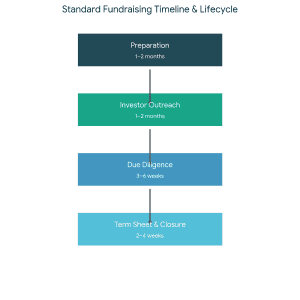
Step 5 Complete due diligence and close funding

While every fundraising journey is different, founders who complete these five steps before approaching investors usually have a more structured and efficient fundraising process.

Not sure which funding option is right for your startup?

Choosing the right funding source isn’t only about finding investors—it’s about selecting the option that matches your startup’s stage, growth plans, and long-term goals. If you’re planning to raise funds within the next 6–12 months, an early fundraising strategy review can help you identify the right funding route before approaching investors.

get funding for startuo

What Is Fundraising for Startups in India?

Fundraising refers to the process of raising money to enable startups to develop products, recruit talent, get customers, and grow operations. There are equity, debt, grants and hybrid financing models of startups in India, depending on the stage, traction, and business model.

Before choosing a funding option, it helps to understand how investors evaluate startups. While every investor has different priorities, most assess the same core business fundamentals before making an investment decision.Ways of Fundraising for Startups
What do investors look for before funding a startup?

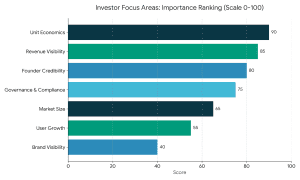
Before investing in a startup, most investors evaluate more than just the business idea. They want to understand whether the founders can execute the plan, whether there is real market demand, and whether the business has the potential to grow sustainably.

In our experience, investors usually evaluate the following factors before making an investment decision:

What Investors Evaluate Why It Matters
Founder & Team Investors back founders who can execute their vision.
Market Opportunity A large and growing market increases growth potential.
Product or Service The solution should solve a real customer problem.
Customer Traction Revenue, users, or customer growth prove market demand.
Financial Model Investors want realistic projections and a clear use of funds.
Unit Economics Healthy margins and sustainable growth improve investor confidence.
Governance & Compliance Proper legal and financial records reduce investment risk.

Expert Insight from FundTQ:
One pattern we consistently observe while supporting fundraising transactions is that founders often focus on finding investors before preparing investor-ready financials. In reality, a strong financial model, realistic valuation, and clear use of funds usually have a bigger impact on investor conversations than the size of the investor network.

9 Ways of Fundraising for Startups in India

Fundraising for Startups in India
1. Angel Investors
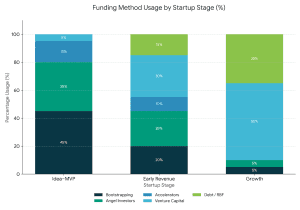
Angel investors are individuals of high net worth who take part in the early startup companies as equity investors. In addition to capital, they too tend to be mentors, open networks, and strategists. Angel networks such as Indian Angel Network and Mumbai Angels are organized groups of people in India that assist seed and pre-seed startups.

Best for:

  • Idea to MVP stage
  • First external funding
  • Founder-led businesses

Founder Tip:
In 2026, founders will need a track record of successful execution as well as articulate go-to-market plans. In our experience advising 200+ deals, angel rounds are most effective when the founder has a clear 18-month milestone plan to show the next funding trigger — not just a pitch deck.

2. Venture Capital (VC) Funding

Venture capital firms make investments in high traction and scalability opportunities. VC financing promotes aggressive expansion but contains governance, reporting, and exit demands. Best VC funds that finance Indian startups are Peak XV Partners (formerly Sequoia Capital India) and Accel.

Best for:

  • Seed to Series C stages
  • Scalable, tech-enabled models.
  • Rapid market expansion

What VCs expect in 2026:

In 2026, Indian VC firms are prioritizing clean cap tables, strong unit economics, and either predictable revenue growth or clear usage momentum. Governance matters more than it did three years ago — founders who have never managed investor reporting often get caught off guard. FundTQ has advised equity fundraising mandates across consumer and healthcare sectors, and the single biggest pattern we observe: founders who arrive with investor-ready financials consistently close faster than those who don’t — in our experience across 200+ transactions, the difference is often measured in months.

3. Government Schemes for Startup Funding

The Government of India still contributes significantly to startup financing with grants, credit facilities, and equity. Most of the major programs involve Startup India, Atal Innovation Mission, and SIDBI.

Advantages:

  • Lower dilution
  • Subsidized loans or grants
  • Founder-friendly terms

Best for:
Deeptech, industrial, social impact, and innovation startups.

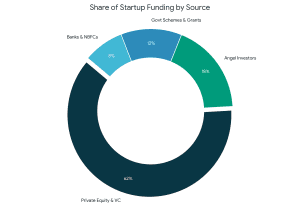
Funding Sources for Indian Startups
4. Crowdfunding Platforms

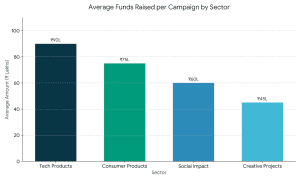
Crowdfunding enables startups to obtain small sums of money with a vast following using the web. It is effective with consumer brands, social ventures and creative products. Popular Indian platforms are Ketto, Wishberry and FuelADream.

Best for:

  • Product validation
  • Community-driven brands
  • Early customer acquisition

Crowdfunding Performance by Startup Type
5. Startup Accelerators and Incubators
Accelerators and incubators offer seed capital, mentoring, and access to investors. These programs are very selective and at the same time very valuable to the first-time founders. Global programs like Y Combinator and Techstars are open to Indian founders; notable India-based options include T-Hub, NASSCOM 10000 Startups, and iCreate.

Best for:

  • Pre-seed startups
  • Founders in need of organization.
  • Early investor visibility

6. Bank Loans and NBFC Financing

Finance via banks and NBFCs provides the founders with the opportunity to finance their businesses without dilution of capital. By 2026, there will be increased financial institutions that have startup-specific products. ICICI Bank and NBFCs are institutions that offer working capital and growth loans.

Best for:

  • Revenue-generating startups
  • Asset-light businesses
  • Short-term capital needs

————————————————-
Need help structuring a debt or hybrid raise?

FundTQ works with revenue-generating businesses on non-dilutive and blended capital mandates.

CONTACT US

7. Bootstrapping

Bootstrapping refers to starting a business with self-funds or company income. Most of the successful Indian startups such as Zerodha started in the same manner.

Advantages:

  • Full ownership
  • Good financial discipline.
  • Increased trust with future investors.

Best for:

SaaS, services, and profitable models.

8. Revenue-Based Financing (RBF)

Revenue-based funding enables start ups to pay back capital with a percentage of monthly revenue without equity dilution. D2C and SaaS startups are fond of Indian platforms, such as Klub and GetVantage.

Best for:

  • Predictable cash flows
  • Growth marketing spend
  • Founder-friendly funding

9. Corporate Venture Funds

Strategic venture arms are ventures that are invested in by large corporations to foster innovation and partnerships. They are Reliance Jio, Tata Capital, and Google (via Gradient Ventures).

Best for:

  • Strategic alignment
  • Market access
  • Enterprise credibility

Which fundraising option is right for your startup?

Startup Stage Recommended Funding Option
Idea Stage Bootstrapping
MVP Angel Investors
Early Revenue Seed Funding
High Growth Venture Capital
Profitable Business Debt or Revenue-Based Financing
Expansion Growth Capital or Corporate Investors

How to Choose the Right Fundraising Option:

Questions every founder should answer before raising funds:

Before approaching investors, ask yourself:

  • Why am I raising funds?
  • How much capital do I actually need?
  • What milestone will this funding achieve?
  • Can my business repay debt?
  • Am I comfortable giving up equity?
  • Do I have investor-ready financials?

Answering these questions before speaking with investors helps founders choose the right funding strategy and avoid unnecessary fundraising delays.
Frequently Asked Questions – FAQs

 Q. What are the most effective ways of fundraising for startups in India in 2026?
The most effective fundraising routes in 2026 depend on stage. Pre-revenue startups typically access angel investors, government grants (Startup India, SIDBI), or accelerator programs. Revenue-generating businesses have a broader set of options: venture capital for high-growth models, revenue-based financing (RBF) for D2C and SaaS companies with predictable cash flows, and bank or NBFC debt for asset-light businesses seeking non-dilutive capital. Founders at the ₹5 Cr–₹100 Cr revenue range increasingly benefit from investment banking advisory to access structured fundraises rather than relying on warm introductions alone.

Q. How long does startup fundraising take in India?
A typical fundraising cycle in India runs between 3 and 9 months from initial outreach to term sheet. Angel rounds at the pre-seed stage can close faster — sometimes in 6–8 weeks with the right network. Series A and beyond typically take 4–6 months minimum, accounting for due diligence, legal structuring, and regulatory filings. Founders who arrive with investor-ready financials, a clear data room, and a well-structured pitch deck consistently close faster than those who prepare on the fly.

Q. Can Indian startups raise capital without giving up equity?
Yes. Non-dilutive funding options for Indian startups include government grants under schemes like Startup India and the Atal Innovation Mission, working capital loans from banks and NBFCs, revenue-based financing platforms such as Klub and GetVantage, and in some cases, strategic corporate partnerships that provide capital without equity transfer. The suitability of non-dilutive funding depends on revenue stability and the startup’s ability to service repayment — it works best for companies with 12+ months of consistent cash flow.

Key Takeaways
  • Startup fundraising in India takes time, planning, and commitment.
  • The investors of 2026 appreciate sustainability and not hype.
  • Founders are expected to combine sources of funds at various phases of growth.
  • Good fundamentals draw in improved capital on improved terms.

Need Expert Fundraising Support?

Most founders who come to FundTQ have already spent 3–6 months in the market with limited traction. The issue is rarely the business — it is positioning, investor targeting, or pitch structure. FundTQ has advised over 200 transactions in India’s mid-market, including the Emami–Axiom Ayurveda acquisition (up to ₹200 Cr) and multiple growth capital raises in consumer, healthcare, and industrial sectors.

—————————————————-

Planning to Raise Funds for Your Startup?

Successful fundraising starts well before the first investor meeting. Founders who prepare early are usually better positioned to secure funding on favourable terms. At FundTQ, we support startups with:

  • Fundraising strategy
  • Investor-ready financial models
  • Business valuation
  • Pitch deck reviews
  • Investor outreach planning
  • Due diligence preparation

If you’re planning to raise funds in the next 6–12 months, schedule a confidential discussion with our fundraising advisors to assess your investor readiness.

get business funding

Seed Funding Process A Step by step guide

Seed Funding Process – A Step-by-Step Guide

For early-stage startups, securing the right type of financing is critical to launching and scaling a business. One of the first major funding milestones for many startups is seed funding. This initial capital infusion helps founders bring their ideas to life, develop products, and grow their teams. But what exactly is the Seed Funding process, and how can startups navigate it successfully?

In this blog, we’ll break down the seed funding process step-by-step, giving you a clear understanding of how to raise capital and position your startup for success.

What is Seed Funding?

Seed funding is the initial round of capital raised by a startup to help develop its product or service and move toward market validation. Unlike later-stage funding, seed funding is typically used for early-stage business activities, such as market research, product development, and building a small team.

Seed investors can include angel investors, venture capital firms, or even friends and family. In exchange for capital, these investors often receive equity (ownership) in the company. The Seed Funding process can provide the essential resources your startup needs to grow from an idea to a fully functioning business.

Step-by-Step Seed Funding Process

Step-by-step process of raising seed funding:

1. Prepare Your Business Plan

Before seeking seed funding, you need a solid business plan. This document will outline your startup’s vision, mission, business model, target market, and revenue potential. A well-written business plan makes it easier for investors to comprehend your objectives and your strategy for achieving them.

In your business plan, focus on these key areas:

– Problem and Solution: Define the problem your startup solves and how your solution is unique.
– Market Opportunity: Present data on the size of your target market and the demand for your product or service.
– Revenue Model: Explain how your startup will make money, including pricing, sales channels, and customer acquisition strategies.

2. Create a Strong Pitch Deck

A pitch deck is an essential tool in the Seed Funding process. This presentation provides potential investors with a high-level overview of your business and why it’s worth investing in. A strong pitch deck should include:

– Executive Summary: A brief overview of your company, product, and team.
– Market Analysis: Data on market size, growth potential, and key trends.
– Traction: Any existing progress, such as product development, customer acquisition, or partnerships.
– Financial Projections: Forecasts for revenue, expenses, and profitability over the next few years.
– Funding Needs: Clearly state how much capital you are raising and how it will be used.

3. Identify Potential Investors

Finding the right investors is a critical step in the seed funding process. Seed investors come from a variety of sources, including:

– Angel Investors: High-net-worth individuals who invest personal funds in startups.
– Venture Capital Firms: Some VC firms specialize in seed-stage investments, often focusing on high-growth industries.
– Crowdfunding Platforms: Online platforms like SeedInvest and Crowdcube allow startups to raise small amounts of money from a large number of individual investors.
– Friends and Family: In some cases, entrepreneurs turn to close connections for initial funding.

Make sure to target investors who have experience in your industry and are aligned with your vision. Personal introductions and networking can also play a significant role in securing meetings with potential investors.

4. Negotiate the Terms

Once you’ve secured interest from investors, the next step in the Seed Funding process is negotiating the terms of the deal. These terms typically include the amount of equity (ownership) you are offering in exchange for the capital. Other key aspects include:

– Valuation: How much your startup is worth before the investment.
– Investment Amount: The total capital investors will provide.
– Equity Stake: The percentage of ownership you’re offering in exchange for the investment.
– Board Involvement: Whether investors will take an active role in company decisions by joining your board.

It’s essential to work with a lawyer experienced in startup financing to ensure the terms are fair and legally sound.

5. Due Diligence

After negotiating the terms, investors will likely conduct due diligence to verify your claims and assess the potential risks of the investment. The due diligence process typically involves:

– Financial Review: Investors will review your financial statements, projections, and tax filings.
– Legal Review: Investors will want to see any contracts, intellectual property filings, and shareholder agreements.
– Business Model: Investors may evaluate your business model’s scalability and market fit.

Being transparent and prepared during due diligence can help expedite the process and build trust with potential investors.

6. Secure the Investment

Once due diligence is completed and both parties agree on the terms, the final step in the Seed Funding process is closing the deal. This involves signing the investment agreement, transferring the funds, and issuing shares to the investors.

At this point, you officially have the capital you need to execute your business plan and grow your startup. Make sure to communicate regularly with your investors and provide updates on your progress, as they can be valuable partners in your company’s growth.

Get funding advice from industry experts

Benefits of Seed Funding

– Access to Capital: Seed funding provides the capital needed to bring your product to market and grow your business.
– Mentorship: Many seed investors offer valuable guidance and industry expertise, helping you navigate challenges and scale effectively.
– Networking Opportunities: Investors often connect founders with other entrepreneurs, potential customers, and partners, accelerating growth.

Conclusion

Understanding the Seed Funding process is essential for any startup seeking early-stage capital. By preparing a strong business plan, creating a compelling pitch deck, identifying the right investors, and negotiating fair terms, you can successfully raise the funds needed to fuel your startup’s growth.

Seed funding is not just about money it’s about finding the right partners who believe in your vision and can help your business thrive.

Read Also: Ways of Fundraising

Equity vs Debt Financing what's right for your startup

Equity vs Debt Financing: What’s Right for Your Startup?

As a founder of a startup, few decisions are as important as how to finance your venture. Be it building a technology platform or scaling up a product, growth requires financing at the right time. When raising finances, you usually have two key options: Equity vs. Debt Financing.

In this blog, we are going to outline the critical differences between equity and debt financing, their relative advantages, and disadvantages, and how to arrive at the best option for your startup.

What is Equity Financing?

The only way to obtain equity financing is by selling part of your company in exchange for investor capital. These investors become shareholders, thus proportionate owners in your business. In that light, they will share your business profits or be a participant in the board in certain business decisions.

Advantages of Equity Financing:

  • No Debt Obligations: Unlike debt, equity financing also does not require the funds to be repaid. You get capital without the pressure of monthly payments, which could definitely help your startup conserve cash in the beginning.
  • Access to Expertise and Networks: Most equity investors, including angel investors and venture capitalists, possess good experience, mentorship, and business connections that might be helpful in the faster growth of your startup.
  • Shared Risk: The investors, in turn, take a percentage of risk for investing in your company. This is advantageous because you are not going to take the losses all by yourself if the company has problems.

Read About: How to Raise Series A Funding in India 

Disadvantages of Equity Financing

  • Loss of Ownership: You will be giving away some portion of ownership when you sell equity. Thus, this may reduce your influence in business decisions or, in certain instances, the ability to decide on the direction of the startup.
  • Profit Sharing: Equity investors expect a return on the investment in your company. This may mean that when your company grows and becomes profitable, you will then be required to share some of those profits with shareholders, thus reducing your own earnings.

What is Debt Financing?

Basically, debt financing is all about borrowing money, which generally comes from banks or private lenders, and is returned along with the due interest in due course of time. Debt does not involve giving up ownership in your business.

Advantages of Debt Financing

  • Ownership Retained: One of the most attractive advantages of debt financing pertains to you retaining full ownership of your business. Since lenders are not growing as shareholders in your organization, you will not be called upon to give up equity or decision-making power.
  • The interest paid on the loan is generally tax-deductible, This means you can potentially subtract it from the overall tax liability.
  • Predictable Payments: In most cases, debt financing requires a clearly defined repayment schedule. You know with complete certainty how much you owe and when enabling you to better plan your finances.

Disadvantages of Debt Financing:

  • Repayment Pressure: The need to repay the debt, irrespective of your startup’s cash flow, strains finances especially when your business has not yet reached its profitability stage. Delays in payment further dent your credit and business reputation.
  • Collateral Requirements: Most lenders ask for collateral, such as property or equipment, which they can use in the event of a default. If you fail to repay, the lender will seize these assets, posing a substantial risk to your startup.
  • Interest Costs: There is always a cost of borrowing in terms of interest. The interest accrues over time, and debt financing thus turns out to be quite expensive if one doesn’t pay off the loan as soon as possible.

Get Fundraising services for your business now

Equity vs Debt Financing: Which is Appropriate for Your Startup?

The choice between Equity and Debt Financing is based on several factors peculiar to your business:

  1. Startup Stage: Early-stage startups, with no revenues, in particular, tend to look more highly at equity financing. Unable to generate the cash flow necessary to make regular payments on the debt burden, they’re able to offer equity investors capital without placing burdens on the business.
  2. Business Growth Rate: Fast-growing companies favor equity financing since they require large amounts to invest and scale up rapidly. A company will give away more significant ownership to increase more substantial amounts and take advantage of the high growth rates. Conversely, a stable company with predictable revenue streams may favor debt to retain ownership and minimize dilution.
  3. Risk Tolerance: If you are the kind of person who does not like taking risks and would not want to be in debt, then equity financing could be the way to go. On the other hand, if you desire complete ownership and are confident in your ability to generate cash flow in order to repay the loan, debt financing may just be the right path.
  4. Investor Involvement: In the case of equity investment, the investor would want to be more involved in running your business. In the case of debt finance, it gives you more independence. If strategic advice and mentorship attract you then equity may be highlighted as an option for you. In contrast, if one desires complete decision-making power, debt could suit them more.

Know your startup’s value & pitch like a pro—use our free business valuation calculator & pitch deck template before fundraising!

Hybrid Approach: Combination of Equity and Debt

This is why many startups get the best of both worlds by combining equity with debt financing. You might raise one round of equity for growth and expansion, then take on debt for operational costs or plant and equipment without giving away more ownership than you have to. One can pursue a hybrid approach that provides greater flexibility while optimising a financing strategy.

Conclusion

There is no one-size-fits-all answer when weighing Equity vs Debt Financing. The optimal financing method will depend on your particular needs as a startup, the stage of growth and development in which your enterprise finds itself, and the trajectory toward growth. In equity financing, one often gives up ownership for capital and experience. On the other hand, debt financing may be an important means of retaining control, even as added financial burdens attach themselves. Carefully weighing the pros and cons of all these will help you in your main quest to protect the eventual and long-term success of your startup. In any case, however, whether through equity, debt, or a combination of the two, what’s most critical is to have the right financing strategy that will perfectly align with the goals of your business and your actual financial position.

Get business Funding

Startup Due Diligence -Things Entrepreneurs Should Know

Startup Due Diligence-Things Entrepreneurs Should Know

Due diligence is a crucial step in the ever-changing startup funding landscape that has the power to make or destroy an investment agreement. Knowing the details of due diligence is crucial for confidently navigating the funding route, regardless of experience level or level of inexperience with startups. We’ll cover what company founders need to know about due diligence in this extensive guide, including its goal, when it happens, what investors look for, and how well-prepared businesses can be.

Understanding Due Diligence: A Fundamental Overview

In the startup space, due diligence refers to the meticulous audit process undertaken by potential investors before committing to funding a business.Due diligence’s main goal is to confirm that the startup’s information matches real facts in order to protect investors from danger and provide transparency.

Investors use due diligence in search for any hidden issues or warning signals that could impact the investment, in addition to ensuring that a company is speaking the truth about what it says. Two factors that can influence how extensive and rigorous the due diligence process is are the stage of development at which a startup is in and the amount of capital involved.

When Does Due Diligence Occur?

Due diligence typically occurs after a startup has presented to an angel or venture capital firm. After investors express interest in the plan, it seems sense to begin the process of researching the company. This process is comparable to conducting a thorough survey before purchasing real estate, which is a crucial stage for investors to feel safe and confident in the venture.

The duration of the due diligence process might vary, ranging from a post-pitch in-person discussion to a more drawn-out investigation involving attorneys, accountants, and a thorough evaluation of all supporting material. Consequently, investors use this crucial stage to verify the startup’s claims, evaluate its financial standing, and investigate the operational and legal elements of the company.

What Will Investors Ask for During Due Diligence?

During due diligence, investors usually use a basic checklist that is customized to meet their needs. Even while each investor may have a different checklist, companies can expedite the process by ahead of time creating standard documentation. To assist startups in successfully navigating the due diligence evaluation, consider the following eight points:

1. Financial Information and Business Plan:

Present financial statements and a well-developed business plan outlining revenue streams, cost structures, and growth projections for investor assessment.

2. Intellectual Property Rights:

Submit copyright, patent and trademark to protect assets and ensure legal protection of intellectual property.

3. Minutes and Business documents:

Provide corporate records, meeting minutes, and legal documents to demonstrate regulatory compliance, corporate governance, and transparency in business operations.

4. Lawsuit Transparency:

To reduce risks and give prospective investors transparency, disclose information about any pending or settled legal disputes, settlements, or litigations.

5. Team Interviews and Background Checks:

Facilitate interviews with key team members and allow investors to conduct thorough background checks to assess team competence and reliability.

6. Supply Chain Contracts and client Data:

To assess market reach and scalability, share with suppliers contractual agreements and information into client demographics, retention tactics, and acquisition methods.

7. Revenue and Sales Numbers:

Provide comprehensive revenue reports, sales projections, and customer acquisition metrics to showcase business growth potential and financial performance.

8. Market Analysis:

To show that you understand the market, see growth prospects, and evaluate the positioning of your competitors, provide comprehensive market research, competition analysis, and industry insights.

How to Prepare a Startup for Due Diligence?

Preparing for due diligence is a strategic opportunity for startups to conduct an internal audit, optimize formalities, and verify their growth plans. Consequently, it entails transparent organization and careful attention to detail, making sure that every documentation is correct and consistent with the investment pitch.

Preparing the following ahead of time can help startups:

Articles of incorporation, ownership structure specifics, organizational chart, and other corporate information and structure.

  • Material Importance Agreements including overview of marketing, service, and distribution agreements and Documentation of agreements with major customers and suppliers.
  • Intellectual Property and Technology like copies of intellectual property agreements and invention agreements. Overview of owned and developed items, including patents and trademarks.
  • Documents pertaining to labor and employment, such as conventional employment contracts, personnel data, pension policy details, and any unpaid balances.
  • Financial projections, reports comparing the budget to the actual, and financial statements. details about capital commitments, mortgages, and debt securities.

Startups can give prospective investors a strong and transparent profile by carefully arranging these elements, which will inspire trust and make the due diligence process go more smoothly.

Why Should Startups Be Grateful for Due Diligence?

While due diligence may seem like a rigorous and meticulous process, startups should view it as a valuable opportunity for improvement. Due diligence can reveal areas for optimization, enabling businesses to strengthen any areas of weakness and improve their operations. Additionally, the due diligence procedure gives companies an opportunity to demonstrate their dedication to accuracy and transparency—qualities that are critical to winning over investors.

Due diligence is essentially a two-way street where investors learn everything there is to know about the startup and entrepreneurs learn important things about possible places to improve. Startups that embrace due diligence as a cooperative and advantageous process have a better chance of obtaining capital and progressing to the next stage of development.

Conclusion

Due diligence is a crucial milestone that necessitates planning, openness, and a dedication to accuracy in the cutthroat world of startup fundraising. Consequently, startups that handle due diligence with honesty and diligence will have an easier time getting funding and starting a lucrative new stage of development.

It’s critical for startup founders to view due diligence as a strategic opportunity rather than a barrier. Startups can boost their chances of getting the money required for success by proactively compiling the relevant documentation, understanding investor expectations, and exhibiting a transparent and well-organized profile. These actions will help them negotiate the due diligence landscape with confidence.

Due diligence serves as more than just a gatekeeper—rather, it opens doors for development, advancement, and successful collaborations between investors and businesses. Accept it, get ready for it, and allow it to spark the beginning of the next phase of your business ventures.

Seed Funding For Startups

Seed Funding For Startups- Strategies Entrepreneur Should Know

Entrepreneurship is an exciting journey filled with promises of innovation, disruption, and success. The climb is indeed challenging and demands resilience and perseverance, in addition to resources and network. While arranging resources can be a challenging task, arranging one for a new startup can be even more challenging. Hence, FundTQ has come up with this step-by-step guide to help your startup procure its seed funds, ensuring a strong foundation for growth. Explore our comprehensive insights and strategies customized for securing seed funding for startups.

What is a Seed Fund?

A seed fund is a type of private fund that provides initial capital to startups in their early stages of development. Seed funding is crucial for fledgling businesses, helping them go from concept to a more mature stage where they can attract larger investments. Raising seed capital is a long and complex process, hence a thorough understanding of the same is necessary to undertake a successful fund-raise. Explore our comprehensive insights and strategies customized for securing seed funding for startups.

Plan Your Business

A strong business is like well-oiled machinery with a combination of several levers, interacting with each other efficiently to form a well-oiled machinery. Building one requires a careful understanding of one’s customer, market, industry and Unique Value proposition.

You can always use an MVP (Minimum Viable Product) to test your product’s competitiveness. This would give you an idea as to where your product stands in the industry, and the improvements required thereon to suit the customer’s needs.

Build Your Financial Plan

Seed funds can be arranged both internally (i.e. founder’s past savings) as well as from external investors. While arranging funds from external investors, you must build a clear and concise financial plan. Building a financial plan has three major components:

1) Plan your fund requirements– Calculate your operational costs, product development costs, talent costs and other costs to estimate the total fund requirement.

2) Planning fund utilization- Identify the areas that would require fund allocation. Prioritize areas that will drive growth and prove your business model, such as product development, hiring, marketing, sales and business operations.

3) Creating financial projections- Financial projections for the next three to five years, including revenue, expense and profitability projections, as well as cash flow statements. Despite being estimates, these ought to be reasonable and predicated on reliable information.

Creating An Investor Deck

Once the financial projections have been made, an investor deck or a pitch deck is prepared to garner investor interest. A pitch deck is a presentation that startups use to explain to investors their business model and its evolution in the upcoming years. A successful pitch must contain:

1. The Business Problems that your startup intends to solve and the solutions it offers
2. Market Analysis i.e. how big is the industry and how much you aim to capture
3. Your product and business model
4. Marketing and Sales Strategy
5. Your team signifies their strengths and expertise
6. Financial Projections and how much are you looking to raise

Reach Out To Investors

Once the investor deck is ready, one may leverage one’s professional network to reach out to investors. Startups can either be bootstrapped (i.e. self-financed) or funded by external investors. While both are efficient mechanisms for building a profitable venture, if you want to raise capital from a VC, ensure that your startup satisfies the high return benchmarks set up by VCs (typically 10x returns). You may strengthen your network by visiting industry events and conferences and using online networking platforms, and social media engagement. Hiring an investment banker typically helps in this stage.

Preparing For Investor Due Diligence

Due Diligence is the financial, legal and operational analysis of your business helping investors validate the information presented by you in the previous discussions. They can also evaluate your startup’s growth and possible return on investment, as well as confirm that it complies with all applicable rules and regulations.

Preparing for due diligence can be long and intense. Hence, it is always advisable to keep all the necessary documents ready. You may go through our previous blog Things startups should know about Due Diligence to learn more about DD.

Deal Negotiation And Closure

Negotiating with investors requires a careful balancing act. It requires a thorough understanding of the business’s worth in addition to the perspective of your investor. Be open to discussions and potential changes in terms. However, also know your non-negotiables — the terms you’re unwilling to budge on because they might jeopardize your startup’s interests. Hiring a legal counsel typically helps in this stage.

Conclusion

In the entrepreneurial journey, securing support from diverse investors is vital. Effective communication is pivotal—whether pitching to investors, building your team, or pursuing grants. Articulate your vision, progress, and potential clearly. Be adaptable, refining your strategy based on feedback, and continuously improving as your startup progresses. Remember, fundraising is just one aspect; maintaining transparent and effective communication throughout is key to long-term success.

How To Raise Funds For A Business

Raising funds for a startup is a common challenge, as even the most innovative ideas often require financial support to thrive. For entrepreneurs seeking ways to secure funding, various channels can be explored. Here’s a list of options to consider:

1. Crowdfunding:

Leverage the internet’s power by utilizing crowdfunding platforms. Craft a compelling fundraiser description to attract support from a global audience. Additionally, seeking contributions from friends and family can be a reliable source of funding due to their familiarity with your dedication.

2. Angel Investors:

Secure capital from angel investors who invest in startups in exchange for equity or convertible debt. Many successful tech companies, such as Google and Yahoo, have benefitted from angel investors.

3. Bootstrapping:

Maintain ownership and independence by using personal resources, such as savings or assets, through a method known as bootstrapping.

4. Venture Capitalists:

Seek funding from venture capitalists who provide capital to high-growth potential startups. Unlike angel investors, venture capitalists typically offer financing with higher return rates, often without taking ownership stakes.

5. Microloans:

Explore microloan options with fewer constraints, shorter payment periods, and, in some cases, lower interest rates compared to traditional loans.

6. Small Business Administration (SBA):

Investigate government programs, such as SBA grants or lending, as potential sources of funds. Be aware that SBA grants are competitive, and SBA lending may involve slightly higher interest rates.

7. Purchase Order Financing:

Utilize purchase order financing for businesses with consistent large product orders but insufficient cash flow. This involves a financing company paying the supplier to produce the product until payment is received from the customer.

8. Contests:

Participate in business contests offering prize money with minimal conditions. These contests often target creative businesses and social enterprises.

9. Product Pre-Sales:

Emulate successful tech companies by offering customers the option to pre-order products, generating funds to fulfill orders and gauging product demand.

10. Strategic Partners:

Collaborate with strategic partners, including suppliers, distributors, and customers, to obtain credit and supplement your budget until the business achieves financial stability. While not direct funding, this support can be instrumental.

future of fundraising

Future of Fundraising: Tech Innovations and Trends

Today, with technology advancing at an unprecedented rate, fundraising is undergoing a revolution of its own. Conventional fundraising methods included direct mail campaigns, phone calls, and in-person events. Today, these methods are replaced by a range of tech-dependent services designed to maximize efficiency, broaden donor reach, and improve donor experience. Developments in blockchain technology, such as programmatic crowdfunding, reciprocity-based barter fundraising, artificial intelligence (AI) blockchain fundraising, and others, point to the beginning of a new phase of digitalization in the financing industry.

This blog explores the key technological trends that are changing fundraising and enabling firms, startups, and nonprofits land, to fund their business is otherwise low in a global market like today.

Following are the Tech Innovations and Trends for the Future of Fundraising:-

Tech innovations and trends for fundraising

1. Online Crowdfunding Platforms

Crowdfunding platforms such as Kickstarter, Indiegogo, and GoFundMe have revolutionized the way individuals and organizations raise funds. These platforms allow users to pitch their projects or causes directly to the public, leveraging the power of social networks to generate financial support. What was once considered a niche method for raising capital has now become mainstream, with billions of dollars raised annually through these platforms.

The future of crowdfunding looks even more promising, as emerging technologies like blockchain are being integrated into these platforms. Blockchain can provide enhanced transparency and security for transactions, allowing donors and investors to track where their money is going. The tokenization of assets, made possible through blockchain, will also allow for new ways of structuring crowdfunding campaigns, making them more flexible and accessible to a global audience.

2. Security Token Offerings (STOs)

Security Token Offerings (STOs) are poised to revolutionize the way companies raise capital. Unlike traditional Initial Public Offerings (IPOs), STOs use blockchain technology to issue tokens that represent legal ownership in an asset. These tokens can then be sold to investors worldwide, allowing companies to raise capital without going through the lengthy and costly process of an IPO.

One of the main advantages of STOs is their compliance with regulatory frameworks like the SEC in the United States. This ensures that companies raising funds through STOs are doing so in a legal and transparent manner, reducing the risk of fraud and other illegal activities. As more businesses adopt this cutting-edge technology, STOs are expected to become a major force in the fundraising world, offering a faster, cheaper, and more secure way to raise capital.

3. Initial Coin Offerings (ICOs) and Initial Exchange Offerings (IEOs)

Initial Coin Offerings (ICOs) took the cryptocurrency world by storm a few years ago, allowing companies to raise funds by selling digital tokens to investors. However, ICOs have come under increased regulatory scrutiny in recent years, as concerns over fraud and market manipulation have grown.

In response to these concerns, Initial Exchange Offerings (IEOs) have emerged as a more secure alternative. IEOs are conducted through cryptocurrency exchanges, which vet the projects and ensure that they meet certain standards before allowing them to list their tokens. This added layer of security has made IEOs a more attractive option for investors, and they are expected to play a significant role in the growth of the cryptocurrency and blockchain space in the coming years.

4. Social Media Engagement

Social media has become an indispensable tool for fundraising, allowing organizations to reach a wider audience and connect with donors and investors in real time. Platforms like Facebook, Twitter, Instagram, and LinkedIn offer businesses the ability to run targeted ad campaigns, create engaging content, and build strong relationships with their followers.

In particular, social media allows for the amplification of fundraising efforts through organic reach. By encouraging followers to share campaigns with their networks, organizations can exponentially increase their visibility and attract more donors. Moreover, social media platforms are continually evolving, offering new features like live video, stories, and interactive polls that can enhance engagement and drive donations.

As digital marketing becomes increasingly important in the fundraising world, leveraging social media to its fullest potential will be critical for organizations looking to secure capital in the future.

5. Decentralized Finance (DeFi)

Decentralized Finance (DeFi) is one of the most exciting and disruptive innovations in the financial world. By using blockchain technology and smart contracts, DeFi platforms offer financial services such as lending, borrowing, and trading without the need for traditional intermediaries like banks.

For fundraising, DeFi presents a unique opportunity to raise capital outside of the traditional banking system. Businesses can use DeFi platforms to borrow funds, issue tokens, or even create new forms of digital assets that can be traded on decentralized exchanges. The transparency, security, and accessibility offered by DeFi make it an attractive option for companies looking to raise funds in a more efficient and cost-effective manner.

As DeFi technology matures, we can expect more businesses to explore its potential for fundraising, particularly in industries where traditional financing options may be limited.

6. Artificial Intelligence (AI) in Fundraising

AI is becoming an indispensable tool for organizations looking to optimize their fundraising efforts. From automating administrative tasks to analyzing data and segmenting donors, AI can dramatically improve the efficiency and effectiveness of fundraising campaigns.

One of the most valuable applications of AI in fundraising is the ability to create highly personalized donor experiences. By analyzing donor data, AI can help organizations identify patterns and trends, allowing them to tailor their messaging and outreach efforts to specific donor segments. This not only increases the likelihood of securing donations but also helps build stronger relationships with donors over time.

Moreover, AI can be used to predict donor behavior, allowing organizations to proactively engage with donors who are most likely to contribute to their campaigns. By automating these tasks, organizations can focus their resources on high-impact activities, ultimately improving their fundraising outcomes.

7. ESG Funds: Environmental, Social, and Governance

Environmental, Social, and Governance (ESG) investing is rapidly gaining popularity among investors who want to align their financial goals with their values. ESG fundraising focuses on companies and organizations that prioritize sustainability, social responsibility, and ethical governance practices.

As more investors seek to make a positive impact through their investments, organizations that embrace ESG principles are likely to attract greater funding. This trend is particularly relevant for nonprofits and businesses with a strong commitment to social and environmental causes, as they can leverage their mission-driven focus to appeal to socially conscious investors.

In addition to attracting new sources of funding, ESG fundraising can also enhance an organization’s reputation and credibility, making it a valuable strategy for long-term success.

8. Non-fungible Tokens (NFTs)

Non-fungible tokens (NFTs) have taken the digital world by storm, offering a new way to create and sell unique digital assets. Unlike cryptocurrencies, which are interchangeable, NFTs are one-of-a-kind and can be attached to digital or real-world objects, such as art, music, or experiences.

In the fundraising world, NFTs have been used in innovative ways to raise funds for various causes. For example, organizations can create limited-edition NFTs that donors can purchase, with proceeds going towards the organization’s mission. NFTs offer a way to engage donors in a more interactive and immersive manner, making fundraising campaigns more exciting and memorable.

As the use of NFTs continues to grow, we can expect to see more organizations leveraging this technology to enhance their fundraising efforts and appeal to a tech-savvy donor base.

9. Augmented and Virtual Reality (AR/VR)

Augmented reality (AR) and virtual reality (VR) technologies are creating new possibilities for immersive fundraising experiences. With AR and VR, organizations can offer donors the ability to explore projects, interact with beneficiaries, and experience the impact of their donations in real time.

For example, a nonprofit working on building schools in remote areas could use VR to give donors a virtual tour of the construction site, showing them the progress being made and the lives being changed by their contributions. This type of emotional connection can be a powerful motivator for donors, increasing their willingness to give and their sense of involvement in the cause.

As AR and VR technologies become more accessible, we can expect to see them play a larger role in fundraising events and campaigns, offering donors a deeper, more meaningful connection to the causes they support.

10. Mobile Fundraising Apps

Mobile technology has made fundraising more accessible than ever before. With mobile apps like GoFundMe, JustGiving, and Facebook Fundraisers, individuals and organizations can create and share crowdfunding campaigns directly from their smartphones, allowing donors to contribute with just a few taps.

These apps have streamlined the donation process, making it easier for people to support causes they care about. Moreover, mobile apps allow for real-time updates and notifications, keeping donors engaged and informed throughout the campaign.

As mobile technology continues to evolve, we can expect to see more innovative fundraising apps that offer new ways to connect with donors and raise funds on the go.

Know more about tech and innovation trends in fundraising

The Future of Fundraising

The future of fundraising is undoubtedly digital, with technology playing an increasingly important role in shaping how organizations connect with donors, raise capital, and achieve their goals. From blockchain and AI to AR/VR and NFTs, the possibilities for innovation are endless.

As businesses and nonprofits continue to adapt to this new fundraising landscape, moreover, those that embrace these emerging technologies will be well-positioned to succeed in the competitive world of fundraising. Ultimately, the key to success lies in staying ahead of the curve, leveraging technology to enhance donor engagement, streamline operations, and maximize the impact of every dollar raised.

In this new era of tech-driven fundraising, the opportunities for growth and innovation are limitless — and the future is brighter than ever.

Get Fundraising services for business now