
Fundraising for Healthcare in 2026: Data-Driven Strategies, Funding Sources & Growth Blueprint
Fundraising for healthcare is expected to grow by 14–18% annually through 2026 as digital health, AI diagnostics, and preventive care expand globally. Yet over 62% of healthcare startups fail due to poor capital planning. This guide breaks down data-driven fundraising strategies that convert donors and investors.
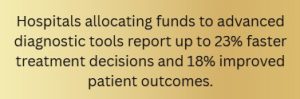
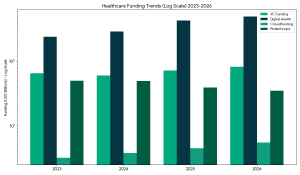 One of the success points of fundraising lies in an understanding of all the financial metrics driving investment. Studies show that hospitals investing in upgraded diagnostic tools improve patient response time by nearly 20%, strengthening investor confidence in measurable outcomes. Investors typically evaluate healthcare startups based on burn rate, projected revenue growth, patient acquisition cost, and long-term sustainability.

Harness the Power of Digital Crowdfunding
Leverage social media to amplify the reach of your campaign. Eye-catching visuals, videos of patient testimonials, and live updates encourage them to share the campaign, making it viral. Transparency is the key: provide regular updates on fund utilisation to build trust.
Crowdfunding in the digital world has a bigger impact than just raising a lump sum of money. It helps build up your community of supporters-for example, through personal thanks or news updates or inviting small rewards to create a sense of inclusion for supporters. Show them what’s happening because of their support: progress like product concepts or important events. Transparency and openness generate trust and convert supporters into fans, willing to spread the word about your company and help it grow.
Important Note: Crowdfunding platforms are unauthorized within the geographic boundaries of India if one allows businesses or startups to raise funds in exchange for equity. Such platforms are not cleared by the Securities and Exchange Board of India (SEBI) and are illegal for raising funds for businesses in India. Always observe the local laws when exploring the various crowdfunding possibilities.
How to Raise Funds for Healthcare Startups in 2026
Raising funds for healthcare startups requires a strategic approach that is specific to the problems and opportunities available in the healthcare industry. From identifying funding sources to crafting compelling pitches, here are actionable steps to ensure successful fundraising for healthcare initiative:
Understand Your Financial Needs and Goals
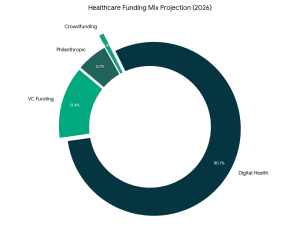
What Are the Best Funding Sources for Healthcare in 2026?
Include:
- Venture Capital
- Angel Investors
- Government Grants
- Crowdfunding
- Strategic Hospital Partnerships
 1. Understand Your Financial Needs and Goals
Highlight your startup’s financial demands before seeking funding. How much investment is needed and what for? It is important to have a very clear budget whether developing new medical devices, opening a clinic, or creating a digital healthcare platform. Those who provide funds-mostly donors and investors-would prefer an organization that defines all the financial needs and shows how resources will be spent towards specific results.
2. Identify Your Target Audience and Funding Sources
The audience that you shall consider will mainly depend on the nature of the startup. For instance:
- Venture Capitalists (VCs): Best matched for the startups developing new therapies or technologies and have a very high growth potential.
- Philanthropic Organizations: Applicable to non-profit or startup enterprises focusing on health-related or underserved community populations.
- Crowdfunding Platforms: The platform works best for raising small to moderate amounts from a broad base of supporters.
The more funding sources you consider, the better your options and lower your risks.
This mix may include grants, individual donations, partnerships with health facilities, or government funding programs.
Also Read: Ways of Fundraising for Startups
3. Leverage Digital Crowdfunding
Earlier, it has been mentioned that the emergence of digital crowdfunding platforms has made a breakthrough in raising funds for health facilities and start-ups. These platforms have earned huge credibility. Here are a few tips for making one successful:
- Share a story-the story that paints the picture of your startup mission and impact.
- Support the story using visuals, such as a patient testimonial or prototype of your innovations to build credibility.
- Set small and achievable milestones, triggering further support.
Share-your crowdfunding campaign on social media, email newsletters, and health networks. Such an online presence will ensure better visibility and engagement.
4. Develop a Professional Pitch
Your vision must inspire confidence among a range of investors and donors. This is perhaps best achieved with a polished pitch deck. The Pitch Deck Templates display another benefit with creating presentations and they shows
- Showing the healthcare startup’s purpose.
- Identify the problem as well as your unique solution.
- Present financial forecast key milestones as well as impacts.
- Highlight your team’s expertise and track record in healthcare or related fields.
Focus the pitch very tight on the value and priorities of your audience.
5. Build Partnerships and Networks
Forming alliances with credible healthcare organizations, research institutions, or even industry influencers can work wonders in enhancing credibility. It can also help tap into many sources of funding and mentorship.
Attend these healthcare conferences, pitch competitions, and even networking events; they can connect you to potential investors and collaborators. You never know when a good relationship will grow to provide you with long-term support.
6. Demonstrate Accountability and Outcomes
Healthcare-related funders are discerning. Welfare donors and stakeholders demand assurance that the contributions are appropriately expended. Periodical reports to indicate cash usage – for instance, in the provision of patient care and to a larger extent into services and health improvements – build trust towards future donations.
Specific impact profiles which detail and outline proof such as development in patient outcomes, technology advancement, or health-related improvements, among others, would further enrich. By referencing such parameters, you prove, to an extent, that a donor contribution is making a direct difference, hence reinforcing the worth of their contribution.
7. Legal & Compliance Considerations in Healthcare Fundraising
- SEBI regulations (India)
- Equity crowdfunding restrictions
- Healthcare data privacy laws
- Investor disclosure norms
Conclusion
Fundraising for healthcare in 2026 requires more than storytelling. It demands financial clarity, measurable impact, regulatory compliance, and strategic communication. Organizations that combine data-driven planning with transparent reporting are more likely to attract long-term investors and sustainable funding.
Also Read: Ways of Fundraising for Startups
Need Help With Fundraising for Healthcare?

Frequently Asked Questions about Fundraising for Healthcare
With the use of social media, the outreach is widened, and it is easy for campaigns to become viral. It is through Instagram and Facebook that the most compelling stories, videos, and live updates are shared for fundraising for healthcare facilities.
The winning pitch deck is crucial for healthcare organizations that raise funds. Similar to any startup, a healthcare organisation will want to identify what value is being delivered, to whom, and the problem being solved. Learn how to build a winning pitch deck from an expert with these 10 tips for creating fundraising pitch decks.
To convince an investor, knowing their priorities and giving your pitch accordingly is probably the most critical aspect involved in selling an idea. Additionally, you can use some professional tools, like a valuation calculator or a pitch deck template, to showcase your business plan efficiently. Be specific when it comes to discussing your mission, your financial projections, and, importantly, how measurable the impact will be from your startup to convince the investor.
Indeed, numerous challenges are for healthcare startups, including intense competition during fundraising, convincing stakeholders that the startup is viable and disclosing information to all parties involved. These are surmountable challenges with a good, clear plan, compelling storytelling, and leveraging partners and networks in health care.
