10 Things Every Startup Should Know About Business Valuation

10 Things Every Startup Should Know About Business Valuation

Hey there! Ever wondered about the secret code to figuring out how much your business is worth? Well, you’re in the right place. Welcome to our easy-to-understand guide, “Navigating Business Valuation: 10 Crucial Insights for Smart Decisions.” Whether you’re thinking of selling your business, buying out a partner, or just curious about its value, we’ve got your back.

Think of this blog as your friendly map through the business valuation jungle. We’ll talk about costs, different reasons you might need a valuation, and how experts figure out the price tag using approaches like the Income, Market, and Asset methods. We’ll also chat about important standards and how to pick the right expert.

So, if you’ve ever felt lost in the world of business numbers, join us as we break it down into plain language. Let’s unlock the mysteries of business valuation and make your business journey a whole lot clearer!

10 Thing You Need To Know About Business Valuation

Lets see the top 10 important things about business valuation that every business owner should know:

1. What is Business Valuation?

Business valuation is like figuring out how much your business is worth. Experts, called appraisers, look at things like how much money the business makes, what it owns, and what it owes. They use this info to estimate its value. People do this for different reasons, like  planning for the future, sorting out taxes, or selling the business.

There are a few ways to do it. One way is by looking at how much money the business could make (Income Approach). Another way is by checking what similar businesses are worth (Market Approach). And there’s also a way to look at what the business owns and owes (Asset Approach).

The result is a report that tells you how much your business might be worth. This helps when making big decisions about the business. Whether you’re selling it, planning for the future, or dealing with legal stuff, knowing the value is key.

2. What is Cost Consideration of Business Valuation?

Typically, business valuation costs fall within the range of $6,000 to $20,000, influenced by the project’s complexity. Before starting, a thorough discussion outlines the project’s scope, determining the project fee. However, discovering your business’s value is now more accessible, with valuations available for as little as none. Thanks to advanced valuation software, you can obtain a quick and affordable assessment within just 10 minutes, streamlining the process and making it cost-effective. This alternative ensures that even businesses with budget constraints can access essential valuation insights promptly.

3. Needs Of Business Valuation

Understanding the needs of business valuation is essential for informed decision-making. Whether planning a sale, estate, or tax strategies, valuations are crucial. They aid in transactions, tax reporting, financial reporting, and litigation. Accurate valuation ensures fair market value, vital for strategic planning, risk assessment, and financial performance comparisons. Comprehensive business appraisals by accredited professionals adhere to standards like USPAP, reinforcing credibility. Business owners benefit from valuable insights, enhancing operational efficiency and long-term planning.

4. What are Business Valuation Approaches?

Business valuation approaches are methodologies to assess a company’s worth. Three main approaches include the Income Approach, evaluating expected earnings against associated risks; the Market Approach, comparing the business to similar ones in the market; and the Asset Approach, determining the value of a company’s net assets. These approaches guide experts in determining the fair market value of a business, crucial for strategic decision-making, mergers, acquisitions, and legal matters. Accredited professionals follow these approaches using recognized standards like USPAP, ensuring accurate and credible business valuations that empower informed decision-making.

5. Significance of Valuation Date

The significance of the valuation date lies in capturing a precise snapshot of a business’s value at a specific point in time. As with any equity investment, a company’s worth evolves over time due to internal and external factors. An up-to-date business valuation is crucial for supporting future decisions, providing an accurate reflection of the business’s current market value. This ensures that stakeholders have the most relevant information, facilitating strategic decision-making, and addressing the dynamic nature of business value over time.

6. Multiplicity of Business Values

The multiplicity of business values acknowledges that a company can have different values at the same time. These values depend on buyer-seller dynamics and perceived synergistic benefits. A business might have a lower value to one buyer but a higher value to another who sees additional benefits. Majority ownership often holds more value than a minority position. Recognizing these varied perspectives is crucial in negotiations, mergers, and acquisitions. Understanding the multiplicity of business values enables strategic decision-making that considers diverse stakeholder perceptions, optimizing outcomes in transactions and enhancing the overall market positioning of the business.

7. Understanding USPAP and Valuation Standards

Understanding USPAP (Uniform Standards of Professional Appraisal Practice) and valuation standards is crucial for credible business appraisals. These standards, set by organizations like the Institute of Business Appraisers (IBA) and the American Society of Appraisers (ASA), ensure adherence to recognized appraisal practices. Following USPAP reinforces an appraiser’s expertise and the credibility of their work. Appraisers with designations like ASA, CBA, CVA, or ABV signal accredited expertise. Adherence to these standards is essential to uphold the integrity of valuation reports, providing stakeholders with reliable insights for strategic decision-making and legal purposes.

8. Evaluating Appraiser Qualifications

Evaluating appraiser qualifications is crucial to ensure reliable business valuations. Professionals in various fields may claim to be appraisers, but only accredited individuals possess the necessary training. Accredited business appraisers hold designations like Accredited Senior Appraiser (ASA), Certified Business Appraiser (CBA), Certified Valuation Analyst (CVA), or Accredited in Business Valuation (ABV). These designations signal expertise and adherence to recognized standards. Engaging services from an accredited entity guarantees a level of proficiency necessary for providing defensible valuation reports. By evaluating appraiser qualifications, businesses secure credible insights, essential for strategic decision-making, legal matters, and overall business transparency.

9. Documentation Requirements

Documentation requirements for business valuation involve essential records like financial statements, forecasts, and operational details. Accredited appraisers rely on comprehensive documentation, including the company’s services, products, operations, customers, suppliers, and competitors. Financial statements from the past five years, interim financial statements, and any business planning materials contribute to a credible valuation. These documents aid in understanding the business’s financial health and future potential, providing stakeholders with valuable insights for strategic decision-making. Meeting these documentation requirements ensures a thorough and accurate assessment, reinforcing the integrity of the valuation process.

10. Beyond Transactions: The Holistic Use of Valuations

Beyond transactions, valuations serve as versatile tools for holistic business understanding. Business owners leverage valuations to measure risks, compare financial performance, and identify key value drivers. These insights empower long-term planning, enhancing both operational efficiency and financial performance. Valuations go beyond a one-time assessment, aiding in strategic decision-making, risk assessment, and benchmarking against industry peers. The holistic use of valuations is instrumental in guiding businesses toward sustained growth and resilience. Recognizing valuations as ongoing tools allows businesses to adapt, strategize, and capitalize on opportunities, ensuring a dynamic approach to value optimization.

Conclusion

In conclusion, this comprehensive guide unveils the intricacies of business valuation, offering 10 crucial insights for intelligent decision-making. From understanding valuation costs, the significance of valuation dates, and the multiplicity of business values to evaluating appraiser qualifications and documentation requirements, we’ve navigated the realm of business numbers in plain language. Business owners can now grasp the holistic use of valuations beyond transactions, leveraging them as indispensable tools for strategic decision-making and long-term planning. With accessible valuation tools, affordable assessments, and expert insights, this guide ensures businesses unlock the mysteries of valuation, paving the way for a clearer and more informed business journey.

Also Read – Top Investment Banking Companies

top 10 investment banking companies in India

Top 10 Investment Banking Companies in India (2026) – Fees, Deals & Market Presence

Investment banking plays a vital role in India’s capital markets, enabling companies to raise funds, execute mergers & acquisitions (M&A), and access strategic advisory services.

Get matched with the right investment bank for your fundraising or M&A in 24 hours → Free Advisory Now

India’s deal-making ecosystem has witnessed strong momentum in recent years:

• India recorded over $60 billion in M&A deal value in 2025
• Private Equity & Venture Capital investments crossed $36 billion in 2025
• Equity Capital Market (ECM) issuances touched $14.8 billion in Q1 2024 alone

This growth reflects rising corporate consolidation, startup funding, and capital market participation. In this guide, we analyze the top 10 investment banking companies in India, based on market presence, deal capabilities, sector expertise, and advisory strength.

Investment Banking Market in India – Industry Overview

India has emerged as one of the most active investment banking markets in Asia. Key growth drivers include:

• Strong IPO pipeline
• Increasing cross-border acquisitions
• Private equity participation
• Technology and BFSI sector expansion

top 10 investment banking companies in India


India M&A Deal Value Trend

India’s M&A market peaked in 2022, moderated in 2023–24 due to global uncertainty, and rebounded with renewed strategic activity.

About Investment Banks in India:

Investment banks in India serve as intermediaries between corporations and investors, offering a wide range of financial services such as underwriting, corporate finance, mergers and acquisitions, and advisory services. They play a pivotal role in facilitating capital market transactions, enabling companies to raise funds through equity or debt offerings and assisting in strategic decision-making processes.

Top 10 Investment Banking Companies in India

Here’s a closer look at the top players shaping the financial landscape in India for the year.

1. FundTQ:

Founded: India
Core Services: Fundraising advisory, M&A advisory, strategic financial consulting
Client Focus: Growth-stage startups, mid-market enterprises
Sector Expertise: Technology, Consumer, Fintech

Why It Stands Out:
FundTQ specializes in capital raising and strategic M&A advisory for emerging businesses. With a strong focus on execution efficiency and investor alignment, it supports companies through end-to-end transaction management.

Explore fundraising advisory for startups →

BUTTON


2. Avendus:

Core Services: M&A advisory, PE advisory, capital markets
Sector Focus: Technology, Healthcare, Consumer

Avendus is one of India’s leading financial advisory firms with strong private equity and cross-border deal experience.

3. J.P. Morgan:

J.P. Morgan is a global leader in investment banking and financial services, with a strong presence in India. Leveraging its extensive network and expertise, J.P. Morgan offers a wide array of services including mergers and acquisitions, capital raising, risk management, and asset management. Its deep industry knowledge and innovative solutions make it one of the top choices for clients seeking sophisticated financial services.

4. Axis Capital Ltd:

Axis Capital Ltd is a renowned investment bank in India, known for its expertise in equity capital markets, debt capital markets, and mergers and acquisitions. They focuses on delivering value-added services, establishing itself as a trusted partner for both corporates and investors. Its strong track record of successful transactions and commitment to excellence sets it apart in the competitive investment banking landscape.

5. Edelweiss Financial Services:

Edelweiss Financial Services is a diversified financial services firm in India, offering a wide range of services including investment banking, asset management, and insurance. With a focus on innovation and customer-centricity, Edelweiss has established itself as a prominent player in the investment banking sector. Its comprehensive suite of offerings and deep industry expertise make it a preferred choice for clients seeking tailored financial solutions.

6. JM Financial Institutions Securities:

JM Financial Institutions Securities is a leading investment banking firm in India, offering a wide range of services including equity capital markets, debt capital markets, and advisory services. They prioritizes client value, establishing a reputation for excellence and integrity within the industry through its strong focus. Its dedicated team of professionals and commitment to innovation make it a trusted partner for corporates and investors.

7. ICICI Securities Limited:

ICICI Securities is a leading investment bank in India, offering comprehensive financial services. With its strong focus on technology and innovation, has emerged as a leader in the Indian investment banking arena. With successful transactions and deep industry expertise, it’s the top choice for clients seeking strategic financial solutions.

8. IDBI Capital:

IDBI Capital prioritizes client value, earning a stellar reputation for excellence and integrity within the industry. They prioritizes client value, earning recognition for excellence and integrity, establishing a strong reputation within the industry. Its strong track record of successful transactions and commitment to innovation make it a trusted partner for corporates and investors.

9. O3 Capital Global Advisory Services:

O3 Capital Global Advisory Services is a leading investment banking firm in India, offering a wide range of services including mergers and acquisitions, private equity advisory, and debt syndication. Focused on delivering value, O3 Capital is renowned for excellence and integrity, earning trust in the industry. Its deep industry expertise and global network make it a preferred choice for clients seeking strategic financial solutions.

10. Veda Corporate Advisors:

Veda Corporate Advisors is a boutique investment banking firm in India, specializing in providing advisory services to mid-market companies. With a focus on delivering personalized solutions and value-added services, Veda Corporate Advisors has established itself as a trusted partner for businesses seeking strategic financial guidance. Its team of seasoned professionals and commitment to client success make it a preferred choice for mid-market companies in India.

Comparison of Top Investment Banks in India

Top Investment Banks in India

Investment Banking Revenue Distribution in India

Investment Banking Revenue Distribution in IndiaConclusion:

India’s investment banking industry continues to evolve, driven by IPO momentum, cross-border M&A, and private equity inflows. Whether a company seeks capital raising, strategic acquisition, or restructuring support, choosing the right advisory partner is critical for transaction success. As deal activity strengthens in 2026, investment banks will play an even more strategic role in India’s economic expansion.

Also Explore: How to Raise Funding for Startups in India

Frequently Asked Questions

1. What does an investment bank do in India?
Investment banks help companies raise capital, manage IPOs, structure mergers and acquisitions, provide debt advisory, and offer strategic financial consulting.

2. Which is the largest investment bank operating in India?
Global banks like J.P. Morgan and major domestic players such as Axis Capital and ICICI Securities have strong market presence in India.

3. How do investment banks earn revenue?
They earn through advisory fees, underwriting commissions, deal success fees, and structured finance charges.

4. Which investment bank is suitable for startups?
Boutique advisory firms and growth-focused advisors are often preferred by startups due to specialized fundraising expertise.

Get business Funding

FEATURED DEALS

Featured Deals
FundTQ acts as an exclusive advisor for Alo Frut.

FundTQ proudly serves as the exclusive advisor for Alo Frut, offering strategic guidance and expertise to propel the company’s growth. Together, we navigate opportunities, ensuring Alo Frut’s success in the competitive landscape of the business world.

startup funding

#8th Rank

FundTQ, a leading investment banking company, secures the impressive #8 spot on Venture Intelligence League Tables. This ranking underscores our commitment to innovation and success in the dynamic world of venture capital, reinforcing our position as a key player in the industry.

what is wealth management service

What is Wealth Management Services & Why Should You Go For it?

Wealth management is the strategic arrangement of both possessions and finances to foster growth and preserve value. It involves a consultative process where financial advisors collaborate with clients to decipher their financial goals. In this blog, we will learn about the concept of wealth management services and shed light on why individuals should consider embracing this nuanced approach to financial planning.

Understanding Wealth Management Services

Now , we will learn what is wealth management service and what are it’s primary goal:

Defining Wealth Management:

Wealth management is the meticulous process of assessing and making informed decisions about assets, often facilitated by a certified professional known as a wealth manager. This comprehensive approach extends beyond traditional investment advice, encompassing various financial disciplines like tax planning, estate planning, and investment strategies.

The Primary Goal:

The fundamental objective of wealth management is to facilitate financial security, nurturing the growth and protection of one’s wealth over the long term. Wealth managers, armed with certifications and expertise, offer a spectrum of services designed to cater to the unique needs of their clientele.

What is The Role of Wealth Managers

Let’s see what is the exact role of wealth managers:

A Multifaceted Role:

Private wealth managers, a subset of wealth management professionals, extend similar services but typically cater to high-net-worth individuals or accredited investors. These services include:

1. Investment Management:

Collaborating with clients to develop personalized investment strategies aligned with their goals and risk tolerance.

2. Financial Planning:

Crafting comprehensive financial plans covering savings, investments, and spending goals, with periodic revisions as circumstances evolve.

3. Tax Advice:

Providing strategic advice on structuring finances to minimize tax liabilities, especially crucial for those with diverse income streams.

4. Estate Planning:

Assisting in developing plans for the seamless transition of assets after the client’s demise, involving the creation of wills, trusts, and designated beneficiaries.

How Much Is Needed to Hire a Wealth Manager:

Financial planning services benefit a broad spectrum of individuals, but more complex wealth management services typically become pertinent when an individual reaches a certain net worth. While various firms have different fee structures and minimum asset requirements, a general rule of thumb is that wealth management becomes a consideration when assets reach a few hundred thousand dollars.

Why Should You Hire a Wealth Manager?

The decision to enlist a wealth manager hinges on individual financial situations, goals, and expertise. If confident in navigating financial decisions independently, some may not require the services of a wealth manager. However, when faced with complex questions or specific needs that demand specialized insights, a wealth manager can offer informed guidance and support throughout the financial decision-making process.

How to Choose a Good Wealth Manager:

Selecting a reputable and qualified wealth manager is paramount. Considerations should include:

1. Reputation:

Seek reviews on local firms or utilize resources like FINRA Brokercheck or the SEC’s Investment Advisor Public Disclosure database.

2. Client History:

Ensure the advisor has a track record of working with clients in circumstances similar to your own.

3. Investment Philosophy:

Align with the advisor’s decision-making approach and strategies proposed for your portfolio.

4. Service Offerings:

Confirm that the wealth manager offers the specific products or services you require, whether proprietary or non-proprietary.

5. Fees:

Understand the investment-related or advisory fees and their tie-ins to specific products or services.

Before finalizing a decision, ensure the wealth manager aligns with your comfort level and instils confidence. This partnership is pivotal, as the wealth manager will be entrusted with decisions shaping your financial future.

Wealth Management Strategies:

Strategies employed by wealth managers vary but commonly include:

  • Asset Allocation:
    Diversifying investment portfolios among different asset categories.
  • Diversification:
    Investing in various assets to minimize the impact of losses in any single asset.
  • Rebalancing:
    Realigning portfolio assets to maintain the original risk/reward ratio.
  • Tax-Loss Harvesting:
    Minimizing capital gains taxes by strategically selling securities that have experienced losses.

Alternatives to Wealth Management:

For those comfortable managing their finances independently, alternatives include:

1. Robo-Advisors:

Automated trading systems with predefined investment strategies, ideal for those seeking a hands-off approach.

2. Index Funds:

Simple, low-cost investment options tracking specific market indexes, providing broad market exposure.

In Conclusion:

Wealth management is a pivotal component of financial well-being, and the decision to enlist a wealth manager should align with individual needs and goals. This nuanced approach offers a tailored strategy for navigating the complexities of wealth with confidence and foresight. Whether choosing a wealth manager or exploring alternative avenues, the key lies in selecting an approach that resonates with individual aspirations and financial objectives.

Also Read: Effective Tools for Valuation

Urban Company Funding

Urban Company Raised Funding Worth $193 Million In April 2021

Urban Company revolutionizes home services through its innovative platform connecting customers with skilled professionals. Founded in 2014 by Abhiraj Singh Bhal, Raghav Chandra, and Varun Khaitan, it offers a range of services from spa and salon to plumbing and photography. With revenue streams including commissions, lead generation, and ads, it rapidly expanded post-pandemic, catering to diverse market segments. With $380 Mn raised over 11 rounds, including a significant investment from Prosus Ventures, Urban Company’s exponential growth and valuation of $2Bn showcase its trajectory as a leader in the home services industry. Explore the latest on Urban Company funding.

Urban Company Overview

  • Urban Company is a pioneering developer of a home service platform facilitating seamless connections between customers and skilled professionals.
  • Founded in 2014 by Abhiraj Singh Bhal, Raghav Chandra, and Varun Khaitan, it has transformed the landscape of home services.
  • The platform offers a diverse range of services including spa and salon treatments, plumbing, professional photography, servicing, repairs, and more.
  • Revenue streams primarily include commissions from service providers, lead generation, platform advertising, and reverse auction mechanisms.
  • Urban Company experienced rapid growth, particularly in the Post-Pandemic Period, by offering various price points to cater to a wide market spectrum.
  • Their strategic approach of accommodating different price segments contributed to tapping into a market valued at around $12 Bn. This showcases their adaptability and market penetration capabilities.

Funding History

  • Urban Company’s Remarkable Growth: Over the course of more than 8 years and 11 rounds, Urban Company has secured a total funding of $380 Mn, showcasing its impressive journey in the home services industry.
  • Major Investments: In April 2021, Urban Company attracted significant investment from Prosus Ventures, raising a staggering $193 Million. This influx of capital underscores the confidence investors have in Urban Company’s business model and growth prospects.
  • Financial Milestones: Urban Company’s financial performance has been remarkable, with its revenue doubling from $17.7 Mn in FY 19 to $35.2 Mn in FY 20. Additionally, it has set its sights on achieving a valuation of $2Bn, indicating its trajectory towards becoming a market leader.
  • Diverse Investor Base: Urban Company has attracted support from a diverse array of investors. Notable names include Bessemer Venture Partners, Tiger Global Management, Vy Capital, Trifecta Capital Advisors, and Steadview Capital, among others. These lead investors have played a crucial role in fueling Urban Company’s growth and expansion initiatives.
urban company raised funding
Various Funding Round

Also Read: Adani Renewable Portfolio

Pine Labs Funding

Pine Labs Raised $285 Million In Their Venture Round In May 2021

In the dynamic landscape of financial technology, Pine Labs emerges as a beacon of innovation and reliability. With a steadfast commitment to technological advancement and customer-centric solutions, Pine Labs has carved a niche for itself as a leading provider of fintech solutions. Founded in 1998 by Lokvir Kapoor, Tarun Upaday, and Rajul Garg, Pine Labs boasts a formidable legacy of expertise and leadership in the fintech domain. From its humble beginnings to its current stature, Pine Labs has continuously evolved, leveraging its diverse revenue streams and strategic acquisitions to stay ahead of the curve in the Pine Labs funding ecosystem.

In a strategic move aimed at expanding its market presence, Pine Labs recently acquired Qwikcilver in 2020, signaling its broader focus on the South East Asian Market. Furthermore, Pine Labs’ impressive funding track record, highlighted by a significant $285 Mn Venture Round in May 2021, reflects investor confidence in its vision and potential. Despite challenges in profitability, Pine Labs has maintained a robust revenue performance, underpinning its impressive valuation of $3 Bn. Bolstered by support from leading investors such as Flipkart, Sequoia Capital India, Paypal Ventures, and Actis, Pine Labs stands poised to continue its journey as a key player in the fintech landscape. Join us as we delve deeper into the remarkable story and achievements of Pine Labs, a true pioneer in the world of financial technology.

Pine Labs Overview

  • Leading Fintech Solutions Provider: Pine Labs stands at the forefront of the fintech industry, offering cutting-edge solutions driven by technological innovation and a commitment to problem-solving.
  • Established Roots: Founded in 1998 by Lokvir Kapoor, Tarun Upaday, and Rajul Garg, Pine Labs boasts a rich history of expertise and leadership in the fintech domain.
  • Diverse Revenue Streams: Pine Labs generates revenue primarily through the sale of products such as its PoS payment devices, complemented by a range of other services tailored to meet the evolving needs of its customers.
  • Strategic Acquisition: In a strategic move aimed at bolstering its market presence, Pine Labs acquired Qwikcilver in 2020 for $110 Mn (INR 801 Cr). This acquisition underscores Pine Labs’ broader focus on the South East Asian Market and its commitment to enhancing its offerings through strategic partnerships.

Funding History

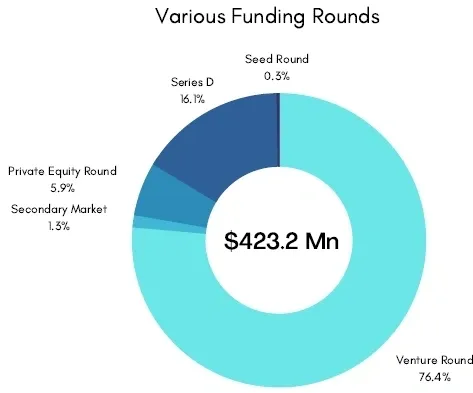
  • Impressive Funding Track Record: Pine Labs has successfully secured funding totaling $423.2 Mn over the course of 12 years and 8 rounds, reflecting investor confidence in its vision and potential.
  • Significant Venture Round: A major milestone was reached on 17th May 2021, when Pine Labs raised a substantial $285 Mn in their Venture Round. This injection of capital underscores the continued growth trajectory and market demand for Pine Labs’ offerings.
  • Financial Performance: Despite fluctuations in profitability, Pine Labs has exhibited a strong revenue performance, registering $173 Mn in revenue in 2018. While it achieved profitability in 2014 and 2017, maintaining profitability has been a challenge in recent years.
  • Robust Valuation: Despite profitability challenges, Pine Labs has managed to achieve an impressive valuation of $3 Bn, highlighting its market potential and investor appeal.
  • Diverse Investor Base: Pine Labs has attracted investment from leading names in the industry, with Flipkart, Sequoia Capital India, Paypal Ventures, and Actis among its prominent lead investors. This diverse support network underscores Pine Labs’ position as a key player in the fintech landscape.
Pine Lab Funding Rounds

Also Read: Urban Company Funding

Adani Green Energy Funding

Adani Green Funding: Powering India’s Renewable Future

Founded in 1988, Adani Green Energy (AGEL) is a leading player in India’s renewable energy sector, specializing in solar and wind farm projects. With a focus on sustainability, AGEL’s portfolio spans 87 locations in 11 states, supplying electricity to government entities. AGEL’s recent acquisition of a 5 GW renewable power portfolio from SB Energy India for $3.5 billion reinforces its commitment to sustainable energy development, positioning the company as a key player in India’s renewable energy landscape. Learn more about Adani Green funding journey.

Adani Green Energy Company Overview

  • Founded in 1988 by Gautam Adani, Adani Green Energy (AGEL) stands as a prominent player in the renewable energy sector, dedicated to shaping a cleaner and greener future for India. Specializing in the development, construction, operation, and maintenance of solar and wind farm projects, AGEL exemplifies the Adani Group’s commitment to sustainability.
  • AGEL’s portfolio encompasses utility-scale grid-connected solar and wind farm projects, reflecting its comprehensive approach to renewable energy generation. Moreover, by harnessing solar and wind resources across 87 locations in 11 states, the company has made significant strides in electricity production.
  • A key aspect of AGEL’s operations is its focus on supplying electricity to central and state government entities as well as government-backed corporations. This strategic alignment with government entities underscores AGEL’s role in advancing India’s renewable energy agenda while contributing to national energy security and sustainability goals.
  • AGEL’s impact extends beyond electricity generation, with its projects contributing to substantial environmental benefits. To date, the company has generated over 4,373 million units of electricity and facilitated a reduction of 4 million tonnes of equivalent CO2 emissions, highlighting its pivotal role in combating climate change and promoting a greener energy landscape.

Acquisition Overview

  • Adani Green Energy has announced its acquisition of a 5 GW renewable power portfolio from SB Energy India, marking a significant stride towards expanding its renewable energy footprint. The acquisition, valued at $3.5 billion, underscores AGEL’s commitment to sustainable energy development.
  • Signed on May 19, the share purchase agreement entails the acquisition of a 100 percent stake in SB Energy from SoftBank Group and Bharti Group, previously holding 80 percent and 20 percent ownership, respectively. This strategic move further solidifies AGEL’s position as a key player in the renewable energy sector.
  • This acquisition marks AGEL’s fourth successive deal in the solar segment, reflecting its aggressive growth strategy. Previous deals include the acquisition of domestic assets of Sterling and Wilson and Toronto-based SkyPower Global. The momentum behind these acquisitions has been reflected in AGEL’s stock surge of nearly 13 percent in the last month.
  • The deal is expected to accelerate AGEL’s progress towards its renewable portfolio target of 25 GW, four years ahead of schedule. With this acquisition, AGEL’s total renewable capacity will reach 24.3 GW, with an operating capacity of 4.9 GW, further solidifying its position as a leader in the renewable energy landscape.

Also Read: Pine Labs Funding

Edtech Startup upGrad Set To Acquire Impartus

In the dynamic realm of online education, UpGrad stands as a beacon of innovation. Founded in 2015 with a vision to revolutionize higher education, UpGrad offers a diverse range of quality programs in Data Science, Technology, Management, and Law. Its comprehensive curriculum includes digital marketing, product management, entrepreneurship, and data analytics, providing learners with industry-relevant skills. Backed by robust student support services, UpGrad ensures an enriching learning experience. The recent acquisition of Impartus, rebranded as ‘upGrad Campus’, further strengthens its presence in HigherEd institutions. As a pioneer in online learning, UpGrad continues to shape the future of education, catering to evolving industry demands.

upGrad Company Overview

  • Founding and Vision: UpGrad was founded in 2015 by Mayank Kumar, Phalgun Kompalli, Ravijot Chugh, and Ronnie Screwvala with a vision to provide quality online higher education.
  • Program Offerings: UpGrad offers a diverse range of programs in Data Science, Technology, Management, and Law, catering to various career paths and industries.
  • Program Variety: Its programs include digital marketing, product management, entrepreneurship, data analytics, data-driven management, and digital technology management, providing comprehensive learning opportunities.
  • Industry Insights: UpGrad’s programs are designed to provide industry insights, ensuring that students receive relevant and up-to-date knowledge and skills.
  • Student Support Services: The platform offers robust student support services, including mentorship, career guidance, and networking opportunities, to enhance the learning experience.
  • Acquisition of Impartus: Bengaluru-based Impartus, founded by Amit Mahensaria, Alok Choudhary, and Manish Kumar, was acquired by UpGrad and rebranded as ‘upGrad Campus’, enriching its offerings.
  • Online Education Pioneer: Impartus played a crucial role in facilitating the transition of schools and colleges to online platforms, attracting over 280 higher education institutes, 50,000 teachers, and 6 lakh learners in just seven years.

Acquisition Overview

  • Acquisition Details: Mumbai-based edtech startup upGrad has acquired Impartus, a video-enabled learning solutions provider, in a deal worth INR 150 Crore.
  • Strengthened Presence: With this acquisition, upGrad aims to strengthen its presence among HigherEd institutions and learners, expanding its reach beyond working professionals.
  • Market Opportunity: upGrad anticipates adding 50,000 paid learners in the first year post-acquisition, capitalizing on the growing demand for online education.
  • Business Verticals: The acquisition results in upGrad Campus having two business verticals: B2C and B2B, catering to individual learners and institutional clients, respectively.
  • Course Offerings: Under the B2C vertical, upGrad will offer job-oriented courses in areas such as Full Stack Development, Artificial Intelligence, Digital Marketing, and Business Analytics, aligning with industry demands.

Startup Funding 101

Starting a new venture is an exhilarating journey filled with endless possibilities and potential for success. However, one of the most critical aspects of turning your idea into reality is securing adequate funding. While it may seem daunting, navigating the world of startup funding can be manageable with the right approach and knowledge. In this blog, we will provide you with a comprehensive guide on how to get started with startup funding.

  1. Define Your Business Idea and Validate It: Before seeking funding, it is essential to have a clear understanding of your business idea and its potential in the market. Validate your idea by conducting market research, identifying your target audience, and assessing the competitive landscape. This groundwork will help you refine your business plan and make it more appealing to potential investors.
  2. Bootstrap and Self-Funding: At the initial stages, consider bootstrapping your startup by using personal savings or seeking funds from friends and family. This self-funding approach demonstrates your commitment and confidence in your venture, making it more attractive to external investors later on. Bootstrapping also gives you greater control over your business decisions and equity.
  3. Craft a Solid Business Plan: A well-structured business plan is crucial for attracting investors. It should include an executive summary, market analysis, competitive advantage, marketing and sales strategy, financial projections, and a clear funding request. A comprehensive business plan showcases your understanding of the market and demonstrates the viability and growth potential of your startup.
  4. Explore Funding Options: There are various funding options available for startups, depending on their stage of development and specific needs. Some popular options include:
    a. Angel Investors: Angel investors are individuals who provide capital in exchange for equity. They often bring industry expertise and valuable connections along with their investment.
    b. Venture Capitalists (VCs): Venture capitalists invest in high-growth startups in exchange for equity. They typically fund businesses with significant potential and often provide mentorship and guidance.
    c. Crowdfunding: Crowdfunding platforms allow you to raise funds from a large number of individuals who believe in your idea. It is essential to create a compelling campaign and engage with your backers to maximize your chances of success.
    d. Government Grants and Programs: Research local, regional, and national government grants, loans, and programs that support startups. These initiatives often focus on specific industries or social impact ventures.
    e. Incubators and Accelerators: Joining an incubator or accelerator program can provide funding, mentorship, networking opportunities, and access to resources. These programs often have a competitive application process, so ensure your startup aligns with their focus areas.
  5. Build Relationships and Network: Networking plays a pivotal role in securing funding. Attend industry events, startup meetups, and conferences to connect with potential investors, mentors, and other entrepreneurs. Leverage social media platforms and professional networking sites to expand your network and establish relationships that can lead to funding opportunities.
  6. Prepare a Compelling Pitch: Craft a concise and compelling pitch to communicate your business idea effectively. Your pitch and pitch deck should highlight the problem your startup solves, the market opportunity, your unique value proposition, and your growth strategy. Tailor your pitch to different types of investors and be prepared to answer questions and address concerns.
  7. Due Diligence and Negotiation: Once you find potential investors, they will conduct due diligence on your startup. Be prepared to provide detailed financial information, legal documents, and any other relevant documentation. Negotiate terms that are favorable to both parties, ensuring you protect your interests while demonstrating flexibility.

Conclusion: Securing funding for your startup is a crucial step towards transforming your entrepreneurial vision into reality. By following the steps outlined in this guide, you can navigate the startup funding landscape with confidence.

When Should you raise funding for Startup

When Should a Startup Consider Seeking Fundraising?

Embarking on the entrepreneurial journey is an exhilarating experience, filled with boundless possibilities and daunting challenges. One pivotal question that often looms over every startup founder is when to take the leap into the world of funding for startups and fundraising. While the decision to seek external capital is multifaceted and deeply influenced by the unique circumstances of each venture, there are several key considerations that can guide entrepreneurs in making this critical decision.

Startup Consider Seeking Fundraising

Let’s see when a startup should consider seeking fundraising

1. Product Validation and Traction:

Before setting out to raise funds, it’s crucial for startups to validate their product or service in the market. Investors are more likely to be interested in a venture that has a proven concept and, ideally, gained some traction. Demonstrating a growing customer base, positive user feedback, or early revenue streams can significantly enhance a startup’s attractiveness to potential investors.

2. Market Opportunity:

Understanding the market dynamics and the scalability of the business idea is fundamental. A startup with a compelling value proposition in a sizable and growing market is more likely to attract investor interest. Investors seek ventures that have the potential for substantial returns, and a clear market opportunity is a key indicator of this potential.

3. Timing is Everything:

The timing of fundraising efforts is critical. While it might be tempting to secure funding as soon as possible, premature fundraising can lead to unnecessary dilution for the founders. On the other hand, waiting too long might cause missed opportunities or hinder the startup’s growth. Striking the right balance and assessing the optimum timing for fundraising for business is a delicate yet crucial task for founders.

4. Milestones and Growth Plans:

Founders should consider fundraising for startups when there are significant milestones to achieve or ambitious growth plans to execute. Whether it’s expanding the team, launching in new markets, or investing in product development, having a clear roadmap for utilizing the funds instills confidence in potential investors. Fundraising should align with the strategic goals of the startup.

5. Financial Health and Runway:

Analyzing the financial health of the startup is paramount. It’s crucial to have a clear understanding of the company’s runway—the time it can operate without additional funding. Startups should initiate fundraising efforts well in advance of running out of cash to ensure they have the negotiating power and avoid desperate fundraising situations.

6. Network and Relationships:

Building a strong network within the industry and fostering relationships with potential investors can be advantageous. Sometimes, the right time to seek funding is when a startups has cultivated relationships with investors who understand the business, believe in the founders, and align with the company’s vision.

Conclusion:

Determining when to seek fundraising is a nuanced decision that requires a thoughtful evaluation of the startup’s progress, market dynamics, and future goals. While there’s no one-size-fits-all answer, aligning fundraising efforts with validated milestones, market opportunities, and strategic growth plans can significantly enhance a startup’s chances of securing the capital it needs to thrive in the competitive business landscape.