
Key financial metrics every startup should track

Key Financial Metrics Every Startup Should Track

Financial metrics are essential for assessing the performance and health of any business. For any organization to be evaluated for health and success, financial measurements are critical. There are some of the key financial metrics that every business should manage and evaluate regularly, ranging from revenue and profitability to the expenses you pay to draw in new clients.

By keeping a close eye on these financial metrics, you can identify valuable insights into your business’s financial health, identify potential areas where you can make improvements, and make data-driven decisions that drive your business toward growth and success.

Though there are a ton of financial metrics that you can track, including the ones that are listed below, we recommend finding the KPIs that are the most important and relevant to your business based on your unique strategic goals.

Financial Key Metrics
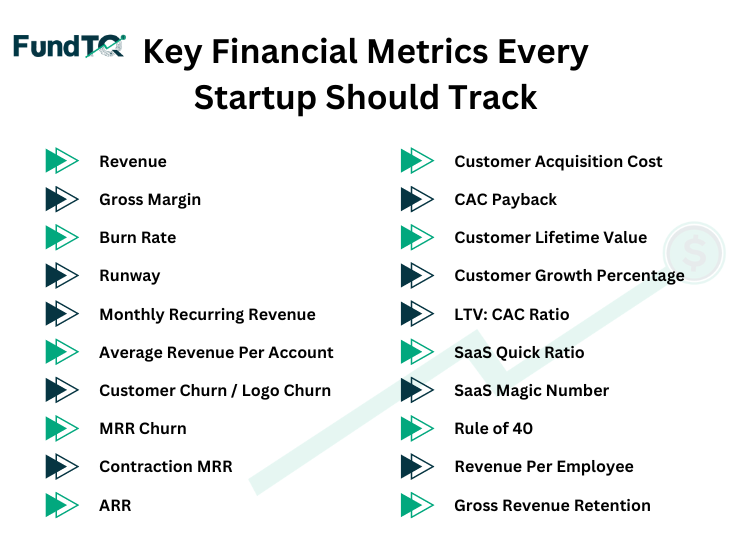
Key financial metrics

Let’s dive right in. Here are some of the important financial metrics that your business can track.

1. Revenue

The total amount of money your business makes from the sale of its goods or services over a specific period is known as revenue or sales.

Formula

Price of Goods/Services * Quantity Sold

Why it’s Important?

  • Any firm needs to be able to produce sales to function.
  • Monitoring this indication over time will help you determine if your company is expanding, contracting, or declining.
  • Even if revenue differs from the real profit your company makes, you may still learn a lot by analyzing the sales volumes of individual products and services and segmenting your revenue based on the types of income (recurring or non-recurring).

2. Gross Margin

The percentage of income your company keeps after deducting all costs associated with producing your good or service is known as its gross margin.

Formula

(Revenue – Cost of Goods Sold)/Revenue

Why it’s Important?

  • One of the financial indicators that matters the most to investors is gross margin, which will show you how well you are allocating your resources.
  • It’s a metric for profitability that shows you how much money your business makes for every dollar that is sold for products or services.
  • A high gross margin indicates that you are making enough money on the inside to support potential future expansion. Additionally, if a company expands, its gross margin will often rise with time.
  • However, a smaller margin can indicate that you need to raise the pricing of your good or service to better offset the expenses you pay to deliver it.

3. Burn Rate

The rate at which your business uses cash to fund operations is called its burn rate.

Formula

Cash payments – cash collections

Why it’s Important

  • Your burn rate will show you how much money your business is “burning” over a given length of time.
  • Your organization is using its cash more quickly the greater its burn rate.
  • The sustainability of your operations may be significantly impacted by this, and a persistently high burn rate may indicate that you may require outside funding in order to maintain your company.

4. Runway

Runway (a.k.a cash runway) is how many months your business has before it runs out of cash.

Formula

Cash in Hand / Projected Burn Rate

Why it’s Important

  • Your startup will have more time to develop and expand if its runway is longer.
  • Your revenue and expenses define your runway. You will eventually run out of money if your monthly spending exceeds your monthly income. Your runway indicates when “eventually” will happen.
  • This financial measure can provide you with a wealth of business insights, aside from the obvious—your firm physically needs a runway to stay in business.

5. Monthly Recurring Revenue (MRR)

The total amount of recurring money you receive from subscription clients each month is represented by monthly recurring revenue (MRR), a financial statistic used by SaaS companies.

Formula

Average Revenue per Account (Monthly) * Total # of Customers

Why it’s Important

  • Based on the monthly cost you charge your clients, the monthly revenue ratio (MRR) provides subscription-based businesses with a reliable indicator of how much money they may expect to produce each month.
  • When combined with other indicators that are significant to SaaS companies, such as potential growth, churn rate, and other variables, MRR can be a useful tool for projecting future monthly income and assisting with future decision-making.

6. Average Revenue Per Account (ARPA)

A SaaS company uses average revenue per account (ARPA) as a metric to calculate the average revenue per paying account.

Formula

MRR / # of Total Accounts

Why it’s Important

  • With ARPA, you may get a more thorough understanding of your profitability and growth by objectively comparing yourself to others in the industry.
  • Despite their similarities, average revenue per unit (ARPU) and this measure should not be confused.
  • You can gain insights from ARPA on client retention, pricing strategy, and total revenue growth. Generally speaking, a rising ARPA indicates that your marketing and sales initiatives are paying off.
  • You may identify monthly customer patterns, the goods that generate the most money, and the most popular subscription level among your customers by monitoring this metric over time.

7. Customer Churn / Logo Churn

Customer churn (a.k.a. customer attrition or logo churn) is the percentage of customers your business lost during a set period of time.

Formula

(# of Churned Customers / Total # of Customers at the Beginning of the Period) * 100

Why it’s Important

  • Every SaaS company will eventually lose clients, so you should ensure you’re maximizing your churn rate and gaining more clients than you lose over a specific time frame.
  • Your long-term business performance will benefit from a lower churn rate, achieved by retaining a larger customer base.
  • Higher churn rates make it more difficult for you to expand your clientele because you will always need to find new ones to replace the departing ones before you can concentrate on expansion.

8. MRR Churn

The amount of monthly recurring revenue (MRR) that you lose from current clients is known as MRR churn.

Formula

Customers at the Beginning of the Month * Churn Rate * ARPA

Why it’s Important

  • Knowing your MRR churn is just as crucial for SaaS companies as knowing what their MRR is.
  • Once more, some level of churn is unavoidable for your company, but to make wise judgments, you must be well-informed about it.
  • When taking into account lost clients, MRR churn can be utilized to anticipate monthly revenue increases over time, which can aid in your financial planning efforts. Additionally, this will improve your visibility on your financial runway.

9. Contraction MRR

The amount of predictable money your business will receive from clients each year is known as annual recurring revenue.

Formula

Downgrade MRR + Churn MRR

Why it’s Important

  • Even though it’s unavoidable, customers will downgrade or cancel subscriptions each month, therefore it’s critical to track and optimize this measure.
  • Understanding your contraction margin ratio (CRR) is important, but you can go deeper into the data to gain additional insights into things like whether your product is overpriced in the market, whether you’re not providing enough value, or whether you’re not communicating the value you offer well enough.
  • Naturally, you would rather a client downgrade than cancel entirely, so be sure to identify the factors influencing your contraction MRR so you can quickly resolve any problems and further your growth goals.

10. ARR

Annual recurring revenue is the amount of predictable revenue your company will generate from customers in a year.

Formula

MRR * 12

Why it’s Important

  • If your company is subscription-based, you can benefit greatly from using ARR, the annualized form of MRR.
  • Your firm will dry up if you can’t rely on your subscribing clients to provide a steady stream of predictable revenue every year.
  • As a result, keeping an eye on your annual revenue ratio (ARR) over time will enable you to make well-informed budgetary decisions, guarantee that your firm is growing, and generate realistic revenue projections.

Get financial advice from industry experts

11. Customer Acquisition Cost (CAC)

The customer acquisition cost (CAC) represents the amount of money your business must pay to acquire a new client.

Formula

Sales & Marketing Expenses / # of New Customers Acquired

Why it’s Important

  • It is incredibly helpful to know how much money your firm needs to spend on attracting new customers.
  • Your CAC will tell you how successful your marketing and sales activities are as well as how much money you need to spend on marketing to close a new customer.
  • The marketing department’s responsibility to optimize your customer acquisition cost (CAC) is crucial since underspending on client acquisition might hinder your ability to grow while overspending on the acquisition can prevent you from turning a profit.

12. CAC Payback

The term “CAC payback,” also known as “months to recover CAC,” describes how long it will take your company to recoup the costs associated with acquiring new customers.

Formula

Sales & Marketing Expenses / (New MRR * Gross Margin)

Why it’s Important

  • The shorter the CAC payback period, the faster you’ll be ‘breaking even’ on your client acquisition costs and recuperating your investment.
  • You can determine the kind of return on investment (ROI) and overall effectiveness of your sales and marketing campaigns by knowing your CAC payback.
  • It is crucial to evaluate your CAC payback duration in conjunction with other financial indicators, such as your LTV, since a low LTV and a lengthy CAC payback period may render you bankrupt if new clients leave before you have recovered all of your client acquisition expenses.

13. Customer Lifetime Value (CLV)

The customer lifetime value (CLV) represents the average revenue you can expect to receive from a customer before they leave.

Formula

(ARPA * Gross Margin) / Churn Rate

Why it’s Important

  • Since your consumers are the lifeblood of your company, your lifetime value (LTV) shows how much each new client is worth in the long run.
  • Your LTV may tell you several things about your clients, such as how long they remain loyal to you and how much they value your goods.
  • Because you want to keep consumers satisfied for as long as possible and raise the amount of money they spend with you, enhancing this financial indicator requires multiple approaches.

14. Customer Growth Percentage

Customer growth percentage, or new logo growth, measures the proportion of new customers acquired during the current period relative to the total number of customers from the previous period.

Formula

((New Customer this Period – New Customers Last Period) / New Customers Last Period) * 100

Why it’s Important

  • This is a crucial sign of your capacity to grow your clientele and increase your market share.
  • If your organization is a software as a service (SaaS) provider, which usually depends on customer acquisition for business growth, then customer growth % is an excellent KPI to track.
  • A strong new customer growth rate usually means that your marketing and sales activities are working to help you expand your business and attract new clients.
  • But, you should also evaluate other metrics like customer churn rates, client lifetime value, and more to get a full insight into your business’s customer acquisition strategy.

15. LTV: CAC Ratio

The LTV: CAC ratio displays the relationship between your client lifetime value and your customer acquisition expenses.

Formula

Customer Lifetime Value / Customer Acquisition Cost

Why it’s Important

  • By comparing LTV and CAC, you may determine whether you’re paying too much or not enough on client acquisition, depending on whether the CAC is higher than the LTV.
  • While gaining new clients is expensive, you must balance the LTV and CAC correctly to make sure your marketing initiatives will benefit your company in the long run.

16. SaaS Quick Ratio

The SaaS fast ratio measures the proportion of MRR gained through new business and expansion compared to that lost through churn and contraction.

Formula

(New MRR + Expansion MRR) / (Churn MRR + Contraction MRR)

Why it’s Important

  • Growing MRR may seem like a generally positive indicator, but to make sure it’s sustainable, you need to take into account both the growth and the amount of MRR you’re losing each month to churn and contraction.
  • Startups often regard a decent SaaS fast ratio as 4, but you should also consider the other financial indicators to get a more complete picture of your company’s health.

17. SaaS Magic Number

The SaaS magic number compares the growth in revenue of your business to the costs associated with acquiring new customers.

Formula

(New MRR + Expansion MRR) / (Contraction MRR + Churned MRR)

Why it’s Important

  • You may find out whether you’re overspending on client acquisition and how much revenue growth you produce for each dollar spent on sales and marketing by using your SaaS magic number.
  • A high magic number indicates to potential investors that your organization can grow its income significantly while spending less on sales and marketing, which is a positive indication for the long-term viability of your enterprise.

18. Rule of 40

The Rule of 40 assesses how well your company performs when it comes to profitability and growth in recurring revenue.

Formula

Revenue Growth Rate + Gross Margin

Why it’s Important

  • Many investors will use this straightforward guideline to assess the financial stability of your company, especially if it offers software as a service.
  • When your company’s growth rate plus profitability are at or above 40, the statistic indicates “good” performance. This indicates that your business is making profits and expanding at a healthy rate, which is often encouraging to investors.
  • Should the total of these two figures be less than 40, it may suggest that your business is expanding rapidly while maintaining poor profitability, or expanding profitably but at a sluggish pace.
  • It’s crucial to remember that although the Rule of 40 may not be a complete indicator of your company’s financial health, investors may rely on it as a quick benchmark value.

19. Revenue Per Employee

The money generated by each employee for your company is displayed as revenue per employee.

Formula

TTM Total Company Revenue / Current # of Full-Time Employees

Why it’s Important

  • Although your staff is essential to your organization, they also come at a significant cost.
  • Although you might not use revenue per employee as your only indicator when making critical business decisions, it does provide you with an objective means of gauging your team’s productivity.
  • By integrating additional significant financial data and evaluating it against industry standards, you may plan for future expansion and make sure that the output of your staff will help you reach these goals.

20. Gross Revenue Retention

The percentage of your revenue that is kept over a specific period is known as gross revenue retention.

Formula

1 – [(Churned MRR + Downgrade MRR) / MRR at the End of the Previous Month]

Why it’s Important

  • Keeping an eye on your gross revenue retention is essential for any expanding SaaS company looking to gauge how satisfied your clients are with your offerings.
  • Your gross revenue retention rate should rise over time as a reflection of your commitment to your clients and a strong product/market fit.
  • You may obtain a strong understanding of your profitability by evaluating your revenue retention rate in conjunction with other financial indicators such as LTV and CAC. A greater revenue retention rate indicates that you are sustaining sales with the clients you have previously paid to acquire.
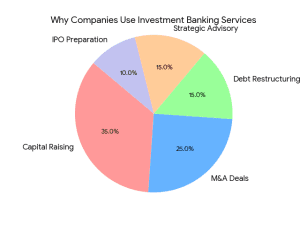
guide to investment banking services

Investment Banking Services: The Core of the Financial Industry Explained

Investment banking services assist businesses in the capital-raising process, the merger and acquisition cycle, and in making highly deliberated financial decisions with confidence. From the entrepreneur to the start-up founder, to the mid-market business owner or anyone curious about the financial world — this guide explains it all.

What Is Investment Banking — and Why Does It Matter?

An investment bank is at the heart of all major business deals, whether it is an IPO, acquisition or a big debt offering. These are places where companies meet capital that they need to expand, and where they get the strategic advice that they need to make the best decisions. Large multinationals are not the only market for investment banks. Thousands of businesses, ranging from D2C consumer brands to healthcare companies to industrial manufacturers all rely on investment banking services to unlock funding opportunities, structure exits, and accelerate growth in India’s dynamic mid-market.

Quick Answer

Investment banking services include capital raising, M&A advisory, business valuations, debt and equity issuance, underwriting, and corporate restructuring. They are used by companies of all sizes to make complex financial decisions with expert support.

Core Investment Banking Services — Explained

Here is a breakdown of the most important services and what each one actually does for a business:

1. Mergers & Acquisitions (M&A) Advisory

M&A advisory is arguably the most visible investment banking service. From target identification, due diligence, structuring the deal, valuing the target, and negotiating, bankers are there to help both buyers and sellers.

FundTQ advised on the acquisition of Axiom Ayurveda by Emami Limited

2. Capital Raising — Equity and Debt

For businesses to grow, they need capital. It is raised with the support of investment banks, whether through equity financing (venture capital, private equity or public markets) or debt financing (bonds, term loans or structured credit). The right capital structure depends on stage, sector, and business model. A growth stage D2C brand is very different to a profitable manufacturing business looking to be acquired.

Secret Alchemist Funding

3. Business Valuation

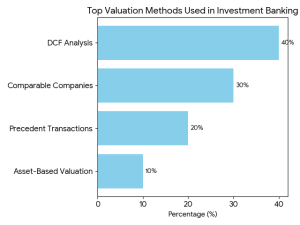
No matter whether you are raising a round, selling your business, adding in a co-investor or restructuring debt, valuation is the foundation of all financial decisions. Investment bankers employ techniques such as DCF (Discounted Cash Flow), comparable company analysis, and precedent transactions to reach an amply defensible and market-tested valuation. For founders, knowing your company’s valuation isn’t just about the number — it’s about knowing which levers move that number.

valuation methods chart

Business Valuation Advisory for mid-market companies

4. Underwriting

An investment bank that underwrites new shares or bonds sells the securities to individual investors and purchases any unsold shares or bonds, thus taking the risk of the securities. The underwriting of IPOs, follow-on issues, and huge debt raises are integral to the process.

5. Corporate Restructuring

They aren’t always a growth story. In some cases companies need to reorganize their assets, specially their debt, or to sell off non-core business, or to generate a return to profitability. In the execution of restructurings investment bankers can offer the strategic and financial skills necessary to preserve value and meet the needs of various parties.

6. Market Research & Industry Intelligence

Investment banks do extensive sector analysis before any deal is struck, covering competitive landscape, peer benchmarking, demand-supply analysis, and regulatory environment. This intelligence supports all recommendations that are provided to clients. 

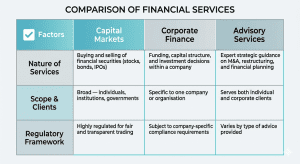
The Three Core Divisions of Investment Banking

Investment banking is organised around three primary functions. Understanding the difference helps founders and businesses know exactly what service they need.

investment banking services

How the Front Office Works — Where Deals Get Done

The front office is the part of an investment bank that is in front of the client, dealing with the business. This is where relationships are formed, mandates are gained and transactions are accomplished. 

Let’s face it, here’s what bankers in the front-office do: 

  • Client Relationship Management: Knowledge of each client’s financial objectives, business model, and market position.
  • Pitching and Advisory: Proposals to the right strategy: capital raise, M&A, restructuring, or a mix of all three.
  • Due Diligence: Detailed investigation of operations, finances and risks prior to any agreement.
  • Financial Modelling and Valuation: Analyzing the financial aspects of each transaction, including Forecast Models and Scenario Analysis.
  • Execution: The entire transaction process ranges from mandate to close, which encompasses investor outreach, documentation and regulatory filings.
  • Risk Assess: Identifying deal level risks and creating the structures to mitigate them on behalf of the client.

If you are a founder who is working with an investment bank for the first time, the front office is where you will deal with them from the beginning. 

——————————————

FundTQ’s deal team has closed transactions across consumer, healthcare, and industrials.
If you are exploring a fundraise or acquisition:


investment banking services

Key Stakeholders in Every Investment Banking Transaction

Every deal involves multiple parties working in co-ordination. Understanding who they are — and what they want — is essential for any founder or business owner going through a transaction.

1. Investment Banks

Act as the advisor and intermediary. In India’s mid-market, firms like FundTQ occupy the space between boutique advisors and large global banks — offering specialist expertise, a curated investor network, and hands-on deal execution.

2. Corporate Clients (Founders and Companies)

The businesses seeking to raise capital, complete an acquisition, or execute a strategic exit. Their goal is to maximise value while minimising risk and disruption to operations.

3. Institutional Investors

Private equity funds, venture capital firms, family offices, and sovereign wealth funds that deploy capital into deals. FundTQ’s network includes 7,000+ investors — covering the full spectrum from seed-stage VCs to large buyout funds.

5 Trends Reshaping Investment Banking Right Now

The industry is evolving fast. These are the five shifts every founder and business owner should be aware of:

1. AI and Data-Driven Deal-Making
Artificial intelligence is being applied to investment banks for risk assessment, portfolio analysis, due diligence, and even to investor matching. AI is not about replacing judgment, it’s about enhancing it.

2. The Fintech Challenge
Fintech companies are opening up new channels to access financial services, which are otherwise dominated by traditional banks. Investment banks are evolving – becoming more advisory.

3. ESG and Impact Investing
Environmental, social, and governance considerations are now central to institutional investor mandates. Companies with high ESG scores tend to have a larger pool of capital available and may enjoy higher valuations.

4. Blockchain and Transaction Transparency
The technology of distributed ledgers is helping to optimize transaction records, verify and audit transactions without friction in cross-border deals and improve regulatory compliance.

5. RegTech and Compliance Automation
The banks are increasingly turning to RegTech solutions to automate compliance functions, thereby holding up deal execution without compromising on regulatory integrity.

Top Challenges in Investment Banking — and What They Mean for Clients

  • Regulatory Complexity: Specialist knowledge is needed to meet the requirements of SEBI guidelines, RBI guidelines and FEMA norms for cross-border transactions, along with sector-specific rules. Knowing what you are looking for in a banker is essential: you don’t just pick anyone.
  • Market Volatility: Deal timing and valuations can be materially impacted by interest rate cycles, geopolitical events and macro uncertainty. All but the most novice bankers are familiar with what it takes to structure a deal that’s not as vulnerable to market timing risk.
  • Cybersecurity: Sensitive data is associated with financial transactions. The investment banks and their clients need to uphold stringent cybersecurity measures during the deal process.
  • Talent and Relationship Depth: A person’s deal outcome relies a lot on their network and execution capability — not their firm’s brand name.

The Global Impact of Investment Banking

Investment banking is not just about individual transactions — it shapes entire economies.

  • Cross-border capital flows enable companies to fund expansion in new markets and geographies.
  • M&A activity merges industries, eases inefficiencies, and makes category leaders.
  • FDI facilitation draws foreign investment to developing economies, jobs and infrastructure.
  • Capital market development results in greater liquidity and allows more and more companies to access the public markets.
  • Systemic risk is better managed by banks, particularly in times of downturn, which helps to build economic stability.

global capital flowsIn India specifically, mid-market investment banking is a key driver of the startup ecosystem — connecting high-growth companies with the institutional capital they need to scale, acquire, or exit.


——————————————-

FundTQ is ranked among India’s Top 5 Investment Banks by Venture Intelligence, with partners from IIT Delhi, KPMG, PwC, and EY.
Explore how we can support your transaction:

get startup funding

Careers in Investment Banking — What It Takes

For those interested in building a career in investment banking, here are the core competencies that matter most:

Technical Foundation

A solid background in finance, accounting, or economics builds the analytical foundation, and financial certifications such as CFA or FRM can further strengthen it. Professionals at all levels are expected to demonstrate expertise in financial modelling, including DCF, LBO, and merger models.

Analytical Thinking

One of the key skills needed to be a successful investment banker is being able to analyse vast quantities of information and present it in a way that is easy to understand and act on. This skill is honed in case study practice, real deal analysis and financial modelling exercises.

Interpersonal and Communication Skills

The sales are made or lost in the client talk. What sets the good bankers apart from the great ones is their ability to convey complex financial concepts in an easy-to-understand manner, deal with many stakeholders, and demonstrate trust in stressful situations.

Investment banking is challenging, but for the high-stakes problem solver, it’s also the best place to be for exposure, pay and career growth. 

How to Choose the Right Investment Banking Partner

This is the most important decision a founder makes when entering a transaction. Here is what to evaluate:

  • Do they have any closed deals in your industry? The domain knowledge has a direct impact on the quality of the deals and investor access.
  • Network of investors- How broad and relevant is their network? A bank having 7,000+ investors will give more opportunities than a bank having 200 investors.
  • Track record- Request similar transactions. While logos are important, deal size and complexity are more important.
  • Team quality- Who is working on your deal? The attention of the senior is important throughout the process.
  • Transparency and alignment- Do they charge transparently and in a way that is aligned with your results? Are they clear and frequent communicators?

Why Founders Choose FundTQ

FundTQ brings together partners from IIT Delhi, KPMG, PwC, and EY with a curated network of 7,000+ investors across VC, PE, family office, and strategic acquirer categories. Our focus on consumer, healthcare, and industrial sectors means we bring targeted expertise — not generic advisory. Recent transactions include the Emami–Axiom Ayurveda acquisition and the Secret Alchemist Growth Capital raise.

Frequently Asked Questions – FAQs

Q. What are investment banking services?
They help businesses raise capital, execute M&A, obtain valuations, and make strategic financial decisions with expert support.

Q. Why do companies need investment banks?
Investment banks bring financial expertise, investor networks, and deal execution capability — enabling businesses to close complex transactions efficiently and at better terms.

Q. What is the difference between capital markets, corporate finance, and advisory?
Capital markets handles securities issuance and trading. Corporate finance focuses on a company’s internal funding and structure. Advisory covers M&A, restructuring, and strategic guidance.

Q. What do investment bankers do day to day?
They model financials, meet clients, prepare investor materials, conduct due diligence, manage deal timelines, and negotiate on their client’s behalf — from mandate through to close.

Q. What skills are needed to work in investment banking?
Technical finance skills (modelling, valuation), analytical thinking, and strong interpersonal and communication ability. It rewards ambition and continuous learning.

Q. How do I choose the right investment banking partner in India?
Prioritise sector expertise, investor network depth, comparable deal track record, and team quality. Look for a firm that treats your transaction as a strategic partnership — not just a fee engagement.

Conclusion

Investment banking advisory are a combination of capital, strategy and execution. From your initial institutional round to an acquisition to a strategic exit — the right investment banking partner can make the difference between a good outcome and a great outcome. The mid-market in India is one of the hottest deal markets in the world today. Whether it’s consumer brands expanding nationally, healthcare companies becoming targets for PE interest or industrial companies being attractive strategic acquisition targets, the opportunity is there — and investment banking is the vehicle for unlocking it.

——————————————

Ready to explore what investment banking can do for your business?
FundTQ has advised on transactions across consumer, healthcare, and industrials.

CONTACT US

challenges-in-valuing-start-up-ventures-key-factors-to-consider

Challenges in Valuing Startup Ventures: Key Factors to Consider

Valuing new businesses is one of the most challenging tasks in finance. Unlike established companies, startups often lack historical data, have uncertain business models, and face high failure rates. These factors make traditional valuation methods less effective. However, understanding these challenges and adapting conventional techniques can help investors and entrepreneurs estimate a startup’s potential worth. This guide delves into the unique difficulties of valuing startups and explores strategies to navigate these complexities, ensuring that both the business and investors can agree on a fair valuation for successful fundraising.

How Should New Businesses Be Valued?

Perhaps the most fascinating and difficult valuation task is valuing fledgling companies. This is a problem that many investors, including venture capitalists, startup funds, and business angels, encounter when attempting to assess if a new initiative has the potential to be an attractive investment opportunity.

The conventional methods for valuing reasonably established enterprises have been extensively discussed in Firm Valuation. This section’s goal is to help you comprehend the unique difficulties that come with valuing startup companies and explore ways to modify conventional valuation methods so that they may at least roughly estimate the prospective financial worth of a new endeavor.

The valuation of firms is not a precise science. This is particularly valid for new businesses. Nevertheless, the process of carefully evaluating a startup’s financial viability will provide us a better grasp of the business case and, ideally, assist us in identifying the critical success determinants and value drivers that investors and management should pay particular attention to.

Challenges in Valuing Startup Ventures

When trying to value startup companies, we are typically confronted with a set of additional challenges such as:

1. No Historical Data:

Without a financial history, it is more challenging to make meaningful judgments about significant value drivers like growth, efficiency, cost structure, etc.

2. Tangible Assets (if any):

A startup’s value is mostly based on potential future investment prospects. There aren’t many, if any, valuable tangible assets.

3. No Revenues, Negative Earnings:

Without representative sales and earnings, standard relative valuation measures like the P/E ratio and the EV/EBITDA ratio are useless.

4. Lots Of Uncertainty In The Business Model:

The future of the business model is far from obvious. The company does not yet have a comprehensive plan for marketing and advertising, despite having a beta version and a small number of test clients in place.

5. High Probability Of Failure:

The majority of new businesses fail. Failure must so be taken into account while valuing.

6. Positive Free Cash Flows Are Years Away:

Anticipated break even and positive free cash flows are frequently in the relatively far future, regardless of the sales and marketing plan. If predicting the sources and uses of finances for the upcoming month might be difficult for startups, making long-term estimates that extend beyond break even is a more formidable task.

Check your business valuation in just 10 minutes

7. No Comparable Firms:

Finding publicly traded companies with a comparable business strategy will also be difficult for a startup with a truly novel idea. The lack of similar companies makes it more difficult to validate the business strategy and estimate important valuation characteristics like a fair growth rate of the pertinent cost of capital.

8. Additional Risks:

Startups frequently face other “systematic” risks as well, like finance issues, survival issues, and technical difficulties. These extra risks are usually not taken into account in full when assessing the cost of capital with comparable enterprises.

9. Hockey Sticks:

Startup companies’ revenue projections usually look like a hockey stick: flat for a few years, then sharply rising after that. Regretfully, most businesses never reach the stage where their earnings begin to rise. When they do, the growth period is frequently shorter and less dramatic than expected.

10. Management Flexibility:

The management has freedom in how the firm is launched because the majority of significant investments are made in the far future. For instance, if demand is not as strong as anticipated, it might invest less or promote an alternative sales channel. Such adaptability in management may represent worthwhile actual choices. Nevertheless, the majority of conventional valuation techniques have difficulty accurately capturing these genuine options.

11. Dependence on Funding Rounds:

Start-ups sometimes require many investment rounds to finance their expansion. The valuation process can become more complex as a result of valuation changes that occur between fundraising rounds, contingent upon investor opinion, market conditions, and the company’s progress.

12. Subjective And Biases:

Start-up valuation is subjective in that it relies heavily on assumptions, market trends, and investor sentiment. Divergent growth projections and varying degrees of risk tolerance among investors might lead to divergent value.

These difficulties make it more difficult to put together a business or financial strategy, estimate capital costs, use relative valuation, and employ discounted cash flow techniques. Or, to put it another way, they complicate corporate value.

Still, in order to acquire capital, a business needs a financial plan. It must specify in this plan how much money it needs, when it needs it, when capital suppliers can anticipate receiving their first payments, and when they can expect to withdraw their investment. Pro forma income statements, cash flow statements, and balance sheets are among the documents needed for this financial strategy. This financial strategy can serve as a foundation for our company’s valuation.

The main focus of this module is to discuss the application of standard valuation techniques in the context of startup firms. In particular, we discuss:

  • How to modify the DCF-approach to obtain a very approximate potential valuation of the business in order to facilitate acquisitions.
  • How venture capitalists typically value companies
  • How to calculate the issue price of an equity offering based on its prospective valuation
  • How to guard against “dilution” in upcoming funding rounds for investors
  • How option pricing can be used to capture the true option value of fledgling companies and when it cannot.

The business and the investors must also agree on a price in order to raise capital. It’s implied from the difficulties raised above that this won’t always be simple. Most of the time, an entrepreneur has far higher expectations for his business than do possible investors. Finding a transaction structure that takes into account the varying tastes and expectations of both sides will therefore be essential. The “Deal Structuring” module provides detailed instructions on how to identify these structures and subsequently enable deals.

Also Read: Business Continuity Plan

business-continuity-plan-expect-the-unexpected-and-prepar-effectively

Business Continuity Plan: Expect the Unexpected and Prepare Effectively

In managing and growing their companies, seasoned entrepreneurs prepare for unforeseen circumstances. Operations disruptions could cost your firm a lot of money or cause serious losses. But when issues emerge, business owners and entrepreneurs who create a business continuity plan (BCP) can be ahead of the game.
Discover the definition, potential uses, and operation of business continuity plans (BCPs) in our overview.

What’s a Business Continuity Plan?

Any company may have disruptions in its operations. Occasionally, a calamity strikes without warning and does more damage than anticipated to corporate operations. Being ready for these interruptions can help you reduce risks and protect yourself from unfavorable circumstances.
A business continuity plan (BCP) is a collection of procedures and actions that are typically documented in a document and serve to maintain stability in the event of operational disruptions. In the event of an unanticipated disruption, this paper assists in proactively solidifying systems and procedures to keep things operating.

Companies should write business continuity plans to encompass a wide variety of unexpected occurrences. These may include:

  • Natural disasters
  • Power outages
  • Public health emergencies
  • Civil unrest
  • Cyberattacks
  • Supply chain issues
  • Reputational damage
  • Acts of terror

How to Create a Business Continuity Plan?

Plans for business continuity might vary greatly from firm to company. Business continuity plans should, however, generally include explicit policies, recovery plans, and backup plans for promptly resuming regular business operations and restoring vital business functions.

Key steps to creating your plan:

1. Assess And Identify Vulnerabilities.

Assemble your teams to produce an analysis of the business impact. The analysis ought to encompass potentially catastrophic disruptions and their potential effects on finances and operations. Think about discussing:
– Essential business operations a summary of the essential company functions that must continue in the case of an unforeseen interruption.
– Potential dangers to essential company operations a list of the most plausible dangers unique to the company. Potential hazards can be found with the aid of a risk assessment and business impact analysis.

2. Create And Prepare Your Plan.

Enterprises must concentrate on their recovery procedures, reaction, correspondence, and the duties and responsibilities of team members carrying out strategies. BCPs ought to contain:

– Accountable parties: a personnel and team roster called the continuity team, which is in charge of carrying out the business continuity strategy.
– Strategies for preventing and regaining business disruptions: The strategies and procedures for resuming vital business operations are described in these policies’ particular operational and backup plans.
– Key personnel, emergency personnel, suppliers, etc. can be reached at: a directory of people to contact on the business continuity team for assistance in implementing backup plans and resuming operations.

3. Test And Train.

Once your plan has been created, test it and train continuity teams. If staff members haven’t rehearsed carrying out the strategy, even a carefully designed one may not succeed. You ought to:
Describe the procedures used to test business continuity plans a summary of the steps involved in ensuring that a company’s emergency or disaster plans will function as intended.

4. Update Your Plan.

These policies can and ought to be “living, breathing” documents that are routinely examined and revised as necessary. Make sure a plan is in place for routinely testing, evaluating, and reevaluating plans.
Depending on the type of business, a continuity plan’s actual contents will change. In order to determine the biggest and most likely threats to their operations and to choose the best course for business recovery, businesses frequently conduct risk assessments and business impact analyses.

Business Continuity Plans vs. Disaster Recovery Plans

“People frequently discuss business continuity and disaster recovery planning together. The two ideas complement one other. Even though the terms are occasionally used synonymously, it’s crucial to understand their distinctions.

Here are some key differences between the plans:

1. Business Continuity Plans

  • Plans that are specific and proactive about how a company will respond in the event of a disaster or other unforeseen business interruption.
  • Address a variety of situations, both little and large.
  • These programs may concentrate more on holistic prevention and preparation.

2. Disaster Recovery Plans

  • Outline procedures in advance for reacting to emergencies.
  • Record a company’s response to a significant incident so that it may resume safe, regular operations.
  • Discusses information technology, data security, and strategies for recovering data access and backup data in the event of a disaster.

Why are Business Continuity Plans Important?

Plans for business continuity play a crucial role in an organization’s entire risk-management approach. They serve as the cornerstone for a company’s strategy for emergency management and disaster preparedness in all situations. Building your company’s resilience in the face of future unpredictability starts with a business continuity plan, or BCP.

If a firm doesn’t have a solid business continuity plan—and related paperwork, such a catastrophe response plan—it can find itself in a precarious situation when an unforeseen incident occurs. Plans for business continuity are in place to assist mitigate both short- and long-term risks and to offer a route back to stability.

Supplement business continuity plans with other risk-management documents, like succession plans, to ensure comprehensive proactive protection. Businesses can reduce risk more successfully the more ways they can support their operations in the case of an emergency or disaster. In fact, in the event of a disaster, doing so can assist safeguard your company’s revenue.

Wealth Management vs Asset Management

Wealth Management vs Asset Management – Key Differences

It’s important to manage your money with long-term objectives in mind, but doing so alone can be challenging. However, there are two main services that a financial professional can provide for you: wealth management vs asset management. Although both offers share many characteristics, their primary objectives and aims are not the same. A complete service, wealth management may handle all aspects of your finances, including investments, retirement, college savings, and estate planning. However, asset management is more closely centered around your portfolio of investments. Use Smart Asset’s free matching tool to discover a financial advisor in your region if you need assistance.

What Is Asset Management?

The management of your assets is precisely what asset management entails. All of your financial possessions are considered assets, although asset management typically concentrates on your investments. Investing in stocks, bonds, mutual funds, exchange-traded funds (ETFs), and other assets to increase your wealth and plan for the future falls under this category.

Your financial condition will determine which investments are most appropriate for you, according to an asset manager. This implies that they will assist you in making decisions about how to allocate your investable assets among various asset classes, or in other aspects of asset allocation. This basically means figuring out how much of your portfolio should be made up of fixed-income securities like bonds and how much should be made up of growth goods like equities.

Typically, asset managers get paid as a percentage of the assets they oversee. Rates are frequently progressive, meaning that they are smaller the more money an investor has an asset manager supervise.

What Is Wealth Management?

Wealth management has a far wider perspective than asset management, which is primarily focused on investments. Examining a person’s or family’s entire financial status and taking action to protect and grow their money over time is known as wealth management.

This might include a variety of services and take many different forms. Among the services a wealth manager could provide are:

  • Tax planning
  • Education planning
  • Legacy planning
  • Estate planning
  • Insurance
  • Charitable giving
  • Retirement planning

Wealth management services takes a more comprehensive approach to a client’s entire financial condition, whereas asset management concentrates on increasing an investor’s capital. It then takes action to guarantee the long-term safety of their capital.

Although some are paid a flat or hourly fee, wealth managers are also frequently compensated as a proportion of the assets they manage. However, each advisor has their own charges and price schedule.

Asset Management vs Wealth Management: Which Is Right for You?

Your aims will ultimately determine whether you require wealth management or asset management services. If your needs are limited to assistance with investing, an asset manager is probably the best option. An asset manager will assist you in selecting the optimal investments for your portfolio, but they will mostly hand off the remaining aspects of your finances to you.

Conversely, a wealth manager is the person you should hire if you want assistance setting up and managing your finances in a more comprehensive manner. Wealth managers may assist with a wide range of issues, including estate and education planning.

However, there’s a strong possibility you’ll require both wealth management and asset management, and many financial advisor businesses do both. For both services, you might need to pay different costs, nevertheless. In certain firms, custodial and other expenses are included in a wrap price that includes both services.

How to Find Wealth Management and Asset Management Services

Finding a wealth manager or asset manager can be done in a variety of ways. The tried-and-true method is to ask a family member or acquaintance who uses a professional for assistance. There are benefits to this kind of advice, too, since it comes from a reliable source. But just because an advisor works well for one individual doesn’t guarantee it will work well for you as well.

For example, many people inherit an advisor from their parents, but this manager may not be the most appropriate one for their circumstances. Naturally, your parents are in a totally different stage of life than you are. Seek out a financial advisor that focuses on helping others in similar financial conditions to your own.

Additionally, SmartAsset offers a complimentary service for matching you with up to three local financial experts.

Conclusion

The choice between wealth management and asset management ultimately boils down to your expectations from a working relationship with a financial advisor. Selecting and overseeing investments is the focus of asset management. Wealth management takes a broader view of an individual’s entire financial situation and holdings. Certain experts perform both tasks, enabling you to select just one candidate for the position. All of the professionals that you will probably hire can be broadly classified as “financial advisors.”

pitching investors how to know if you’re truly ready

Pitching Investors: How to Know if You’re Truly Ready

Getting funding can be crucial in today’s cutthroat market if you want to grow your firm. However, it’s crucial to determine whether you have what it takes to pique investors’ interest in your idea before you enter that high-stakes meeting. This post will go over the fundamentals of pitching to investors, what makes a pitch effective, how to prepare for your pitch, and real-world examples of successful pitches that you can learn from. Let’s explore the world of investing together and see whether you’re cut out for it.

Understanding The Basics Of Pitching To Investors

Prior to delving into the particulars and tactics of crafting an effective sales pitch, it’s critical to comprehend the role of an investor. Essentially, an investor pitch is a presentation meant to persuade possible investors to contribute money to your venture. It gives you the opportunity to present your product or service, outline your business model and show why your startup has the potential to generate significant financial returns.

The strength of your presentation can make or break your chances of receiving funding. A strong pitch not only highlights business opportunities, but also addresses investor concerns and demonstrates your ability to deliver on your plan.

What is an Investor Pitch?

A well-crafted, succinct presentation that highlights the salient features of your enterprise to prospective financiers is known as an investment pitch. A strong opening, a thorough explanation of your goods or services, a synopsis of your target market, an introduction to your competitive edge, an analysis of your financial projections, and a strong conclusion are typically included in Pitching Investors. It’s critical to customize a presentation for your intended audience. Conducting in-depth research on possible investors is crucial since various investors have different goals and interests.

pitching investors

The Importance of a Strong Pitch

Making a compelling pitch can make the difference between receiving cash and failing to receive any. Impressive sales pitches not only draw in investors, but they also give them faith that you can fulfill your commitments. An effective pitch captures the attention of potential investors and persuades them that your firm is worthwhile to support by showcasing your vision, enthusiasm, and experience.

Additionally, a solid resume demonstrates your communication, strategic thinking, and problem-solving skills. These are qualities that investors value not only in a company, but also in its management.

When putting together a good presentation, there are a number of important things to take into account. Your presentation should be visually appealing and captivating first. From the beginning, you want to attract investors’ attention and spark interest in your business.

After you’ve captured their interest, it’s critical to give a thorough explanation of your offering. Describe how it operates, what issue it resolves, and why it is superior to or different from other products already on the market. This is your opportunity to highlight your ideas and demonstrate why customers should pick your product over rivals.

Your target market should be described in addition to your product. Investors want to know who your consumers are, how many you have, and how you intend to reach them. You can bolster your argument by using facts and market research to back up your claims.

Using your competitive edge to your advantage is a crucial component of a compelling proposal. Moreover, investors are looking for proof that your company has a differentiator or a barrier to entry that sets it apart from the competition. Exposing your competitive advantage—be it patented technology, exclusive alliances, or a potent brand presence—gives investors faith in your ability to succeed.

An essential component of any presentation are your financial estimates. Moreover, investors want to know that you have a realistic growth plan and a clear understanding of the financial status of your firm. Demonstrating a meticulously planned financial model that incorporates revenue, expenses, and profit targets demonstrates to potential investors your firm’s financial acumen.

Finally, your closing statement should leave a lasting impression on investors. Summarize the main points of your presentation and reiterate why your company is an attractive investment opportunity. Finish strong, which gets investors excited and eager to learn more.

In conclusion, a successful pitching to investors requires careful planning, research and attention to detail. You may boost your chances of receiving investment and growing your firm by crafting an engaging and organized pitch.

Self-Assessment: Do You Have What It Takes?

After discussing the fundamentals of pitching to investors, let’s move on to you. It’s critical for entrepreneurs to evaluate if they possess the essential traits that great pitchers frequently possess. Together, we’ll examine these characteristics and evaluate your personal advantages and disadvantages.

It’s important to be enthusiastic and confident while speaking with investors. Pitchers who are successful radiate these traits with ease. They have the capacity to share their belief in their company with others in addition to having a strong belief in it themselves. Their steadfast faith in their good or service spreads to others, increasing the likelihood that investors will share their vision.

Another important characteristic of successful pitchers is their deep market knowledge. They have done extensive research and have extensive knowledge of the industry in which they operate. They can use this information to pinpoint market gaps and present their company as a solution provider. It also gives them a competitive edge by assisting them in foreseeing future obstacles and rivals.

Pitchers that are successful not only have expertise, but they also have a gift for narrative. They are skilled at telling an engrossing tale that draws in and holds the attention of investors throughout the presentation. They are aware of the ability of narrative to evoke strong feelings in listeners, which may be the determining element in receiving money.

In addition to these qualities, successful pitchers are flexible and determined. They understand that rejection is part of the game and do not let it easily discourage them. They possess the capacity to overcome obstacles and grow from their mistakes. Quick to respond and able to modify their tone in response to challenging inquiries or concerns. They stand out from the crowd because of their flexibility and capacity to endure stress.

Assessing Your Own Strengths and Weaknesses

You need to be honest with yourself and decide if you possess the information required to handle investors. Additionally, examine your communication abilities for a moment. Are you able to clearly state your ideas and communicate them in a clear, succinct manner? Do you feel at ease engaging with and speaking to a group of people in public?

Analyze your subdata after that. To what extent do you comprehend the market you are going into? Have you thoroughly investigated your target market, rivals, and possible obstacles? Are you aware of the most recent advancements and trends in your field?

And lastly, you can develop the skill of making a pitch to investors. You can become an effective incubator that draws investors and raises the capital required to realize your entrepreneurial aspirations if you are committed, persistent, and eager to learn from both successes and disappointments.

Preparing Your Pitch: Essential Steps

After evaluating your ability to attract and keep investors, it’s time to be ready for some major occasions. Thorough planning and close attention to detail are essential for successful trade exhibits. While you’re getting ready for your presentation, keep these crucial procedures in mind. And lastly, you can develop the skill of making a pitch to investors.

1. Researching Potential Investors

Before contacting potential investors, it is important to do thorough research on their investment habits, past investments and specialties. Not only will this knowledge help you tailor your presentation to their interests, but it will also demonstrate your commitment and preparedness.

Investors want to know that you are aware of their objectives and how your business fits into their overall investment plan. You can better customize your pitch to your potential investors the more you know about them.

2. Tailoring Your Pitch to Your Audience

Although the core elements of your presentation will remain the same, it is important to adapt your presentation to suit different audiences. Every investor is unique and has their own priorities. By tailoring your presentation, you show that you value their time and are committed to building a mutually beneficial partnership.

When planning the presentation, consider the investor’s background, industry experience and investment preferences. Highlight elements that align with their interests and take into account any reservations or worries they might have.

Get an automated Pitch deck templates created specially for your industry

3. The Art of Delivering a Compelling Pitch

After you have a polished presentation, it’s time to concentrate on delivering it in a way that makes it stand out from the crowd. Effective diners employ narrative strategies and have no trouble responding to inquiries and objections. Let’s examine these crucial elements of delivering an effective speech.

4. Storytelling Techniques for Engaging Investors

Investors are more likely to remember and engage with calls that tell a compelling story. Storytelling humanizes your business and allows investors to become emotionally invested in your vision. Create a story that resonates with your target audience and highlights the problem your product or service solves and how it can change the world.

Use pictures, anecdotes and case studies to effectively illustrate your point.  A sales-driven pitch helps investors see your company’s potential and creates a lasting impression.

5. Handling Questions and Objections

Without responding to queries and concerns raised by possible investors, a presentation cannot be considered comprehensive. Proficient suppliers foresee investor apprehensions and formulate considerate solutions.

Remain composed and self-assured when addressing challenging inquiries or criticisms. Be receptive to advice and see opposition as a chance to show off your problem-solving abilities. Answer each question directly and back up your response with facts or examples.

Also Read: Tip to create a Pitch Deck

investment memorandum a guide for startup founders

Investment Memorandum: A Guide for Startup Founders

The path from ground-breaking concepts to successful fundraising rounds can be intimidating for many business founders. The investment memorandum is a crucial document that forms the basis of this journey. This document is a powerful instrument that informs investors about the potential of your startup and presents a strong case for their investment in your vision; it is not just a formality.

What Is An Investment Memorandum?

An investment memorandum is a document prepared by a start-up company targeting potential investors and outlines the main aspects of the business and the investment opportunity. It is a detailed introduction to your company and provides an overview of your market, product, team and finances. It’s a narrative that highlights your business’s potential for expansion and success by fusing data, analytics, and its own story.

Role And Importance Of Investment Bonds

Investment bonds play a key role in the investment decision making process. They help investors understand the nature of your business, the problem you are solving, and how you plan to earn a return on your investment. A well-crafted note can set your startup apart from the competition, highlight your strengths, and address potential issues. This is an opportunity to generate investor interest and lay the groundwork for in-depth discussions and due diligence.

Main Audiences For Investment Memorandum

Investment memorandum serve a wider audience, even if their primary target audience is potential investors like angel and private equity investors. Advisory boards, possible partners, and even important staff members who wish to know the startup’s financial situation and strategic orientation may find them helpful. You can make sure your pitch resonates with these audiences and achieves its goals of obtaining money and assisting your startup’s growth demands by customizing it for them.

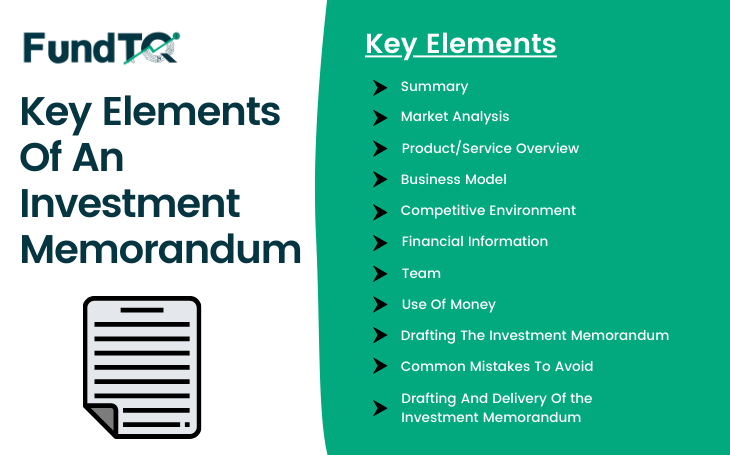
Key Elements Of An Effective Investment Memorandum

Creating an investment memorandum that describes the nature of your startup and attracts potential investors requires careful consideration of its content. Here’s what to add to make your note stand out.

Key elements of Investment Memorandum

1. Summary

The summary is your first (and sometimes only) chance to get an investor interested.It should precisely outline the value proposition, primary goal, and distinctive solution that your startup provides through its goods or services. Make sure you convey the potential for development and profit, and emphasize the market opportunity and your plan for taking advantage of it.

2. Market Analysis

A thorough market analysis shows that you understand the market you are entering. This should include the size of your target market, growth trajectory and key trends supported by reliable data. This section is crucial to convince investors of the significant opportunity your startup is ready to take advantage of.

3. Product/Service Overview

Find out what the startup provides, what issues it resolves, and why it performs better than current options. Provide details regarding the level of development, intellectual property, and any traction or client feedback obtained. This section shows the profitability and scalability of your product or service.

4. Business Model

Your business model describes how your startup plans to make money. Describe your revenue streams, pricing strategy, sales and distribution channels, and partnerships that drive your business forward. The clear and logical explanations presented here will convince investors of the sustainability and profitability of your company.

5. Competitive Environment

Understanding your competition is just as important as knowing your business. Analyze your competitors, their strengths and weaknesses, and how the startup differentiates itself. Highlighting your competitive advantage shows investors why your startup is a better bet.

6. Financial Information

Provide a clear picture of your financial situation and projections. Include current financial data, when available, and detailed projections showing revenue, costs and profitability over time. This section should also explain the assumptions behind your projections and provide a realistic view of your financial planning.

7. Team

Investors invest in both people and ideas. Introduce your team by highlighting their backgrounds, expertise and roles within the startup. Demonstrating a strong and competent team will increase investors’ confidence in your startup’s ability to execute its business plan.

8. Use Of Money

Clearly indicate how you intend to use the investment. Learn how finances drive growth by determining how much to allocate to product development, marketing, sales and other critical areas. Clear and well-founded plans for the use of money can significantly strengthen your desire to invest.

9. Drafting The Investment Memorandum

With the components in mind, it is time to draft the memorandum. The goal is clarity, brevity and impact. Investors are busy; your note should adopt them quickly and strongly support your startup. Use images such as charts and graphs to complement your story, making complex information easy to digest. Above all, tell a compelling story that connects with the reader emotionally and financially.

10. Common Mistakes To Avoid

Avoid common pitfalls such as neglecting the story, underestimating the competition or providing unclear financial information. Each part of your note should build on the last and create a cohesive and compelling argument for the success of your startup.

11. Drafting And Delivery Of the Investment Memorandum

Before drafting the memorandum, seek feedback from mentors, advisors and colleagues. Tailor your pitch to your audience and understand that different investors may prioritize different aspects of your business. When presenting, include a confident verbal or visual presentation in the memo that reinforces your key messages.

Summary

An investment memorandum is more than just a document; it’s a strategic tool that can catalyze your startup’s growth by securing critical funding. By understanding its importance, focusing on the most important parts and avoiding common mistakes, you can create an attractive note that stands out in the eyes of investors. Remember that the goal is to inform, persuade and instil confidence in your vision and your team.

Check out some of our Information Memorandum Templates

what is a business model in pitch deck

What is a Business Model Called In A Pitch Deck?

A successful startup platform is one of the most important materials founders can use to raise money. In a series of articles on all important slides, we found the perfect formula, provided examples of successful keynotes, and shared expert insights. We’ve already covered more than half of the storyboard components, including problem, solution, product, market, competition, and marketing strategy. Today it’s time to dig into the business model in pitch deck, covering everything from monetization to pricing.

So, let’s see how you can create a winning business model image to pitch your startup to investors.

Business Model On The Startup Pitch Deck For Investors?

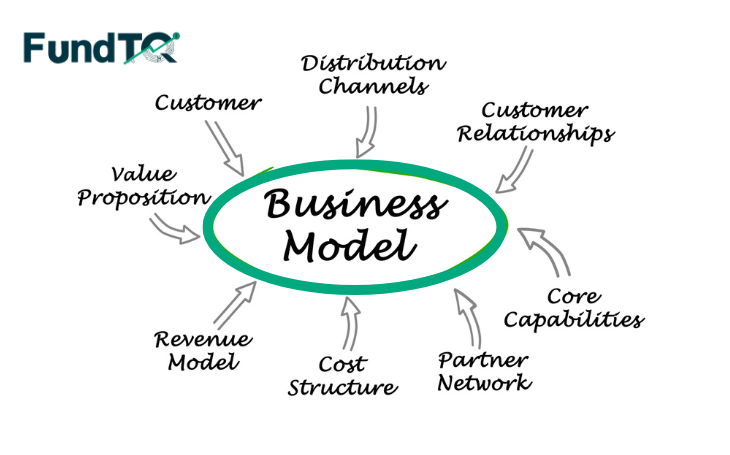
The business model slide is one of the cornerstones of your entire presentation package because it contains information about how the startup makes money. This slide should provide a clear and concise overview of all your company’s revenue streams and the value it creates in the market. This is the place to elaborate on the financial aspects of your startup.

Remember that while your monetization and pricing models may change as your business matures, this slide should focus on your overall strategy—how you monetize your products or services and where your revenue streams will come from.

business model in pitch deck
business model

Why Is Business Model Slippage Important To Investors?

Making this slide is very important in the fundraising process. This allows investors to see your current income and provide insight into your future financial prospects. Investors want to know if you can expand and introduce new revenue streams as your business grows, ensuring the safety of their capital and potential returns. They also evaluate whether they can add value and productivity to your business and whether your monetization model matches their interests and experience. It is important to target your sales success package and business model to the profile of potential investors, as many funds have specific criteria for the startups they invest in, whether B2C or B2B.

What To Include In A Business Case Slide For Investors?

This section contains information about your revenue streams, pricing models and monetization strategies. When evaluating your offering, consider factors such as the value it provides to customers, their willingness to pay, frequency of use, and the monetization model and pricing strategy most commonly used by your competitors.

The in-depth content of this slide will vary greatly depending on the type of business you run. If you are a SaaS company developing software solutions, consider focusing on pricing models and versions. You can also share your customer lifetime value (LTV), customer acquisition cost (CAC), additional services, monthly customer growth figures and other key metrics that are important to demonstrate your business performance. If you offer physical products, you may want to choose a different strategy—for example, consider sharing gross margin, average selling price (ASP), sales and distribution channels, and information related to those channels.

Be sure to also include information about “natural frequency of use,” i.e., how often users typically encounter the challenges or problems your product solves. This can vary greatly depending on the features you offer. Understanding user engagement patterns provides companies with valuable information to create targeted marketing and sales methods. This is one of the most important data that is very useful for setting achievable and effective KPIs. Since usage of a particular product varies with individual users and their requirements, setting KPIs by focusing on user behavior will certainly improve overall user retention.

If your startup has multiple revenue streams, show them and try to explain why you prefer to diversify.

Questions To Help You Create The Perfect Business Model Slide:

Q1. What are your sales channels? (Highlight unique or innovative competitive advantage strategies.)

Q2. How much revenue is each channel generating now and over the next 1-2 years?

Q3. How do these revenue streams fit into your product or service offering?

Q4. What is the cost of customer acquisition? can you read it

Q5. What is your monetization model (e.g. freemium, ad-based, subscription, consumption-based, one-time payment, purchase rate, etc.)?

Q6. Do you have just one model or do you mix them by market segment?

Q7. How often do you use your product?

Q8. How does your pricing strategy compare to the industry standard?

Q9. How do market trends affect your business model?

Q10. What are the KPIs for your business model?

Q11. How to increase lifetime value?

Q12. How do you balance growth with profitability?

How To Create A Business Model Slide Before Making Money?

There are situations where your launch may not monetize yet. This may be due to being in the early stages of development or operating in areas such as biotechnology or aerospace, where it usually takes years before a product can be marketed and generate revenue. In such cases, however, it is important to include this slide in light of the narrative aspect that we emphasized in our presentation package articles. In fundraising, storytelling can make or break your idea; this slide is no exception. Show how you plan to generate income and convince investors that you can quickly turn to profitability and implement your monetization strategy if necessary.

Get Automated Pitch Deck Templates

Tips And Tricks For A Successful Business Model:

Remember that there is no golden rule for monetization and pricing models. If you have multiple customer segments, you need a different template for each customer segment (eg market).

Remember that frequency of use is important. This is one of the key factors to consider when setting company goals and KPIs.

Avoid ambiguity; clearly describe your value proposition and future revenue streams.

Create a sense of urgency for investors – explain why your solution is needed now, as time is of the essence for business success.

Business Model Slide in the Startup Pitch Deck for Investors – The business model slide is the central basis for presenting how the startup plans to generate revenue, what the revenue streams and sales channels are, and what the price is.

Also Read: Pitch Deck Structure

what is the purpose of business valuation

What Is The Purpose Of Business Valuation?

In the dynamic world of business, understanding the value of a company is essential for various stakeholders. Business valuation is not just about determining the monetary worth of a company but also about assessing its potential and performance. In this blog, we delve into the purpose and significance of business valuation in today’s corporate landscape.

Definition of Business Valuation:

Business valuation is the process of determining the economic value of a business or company. It involves assessing various factors such as assets, liabilities, cash flows, market trends, and industry conditions to arrive at an accurate valuation figure.

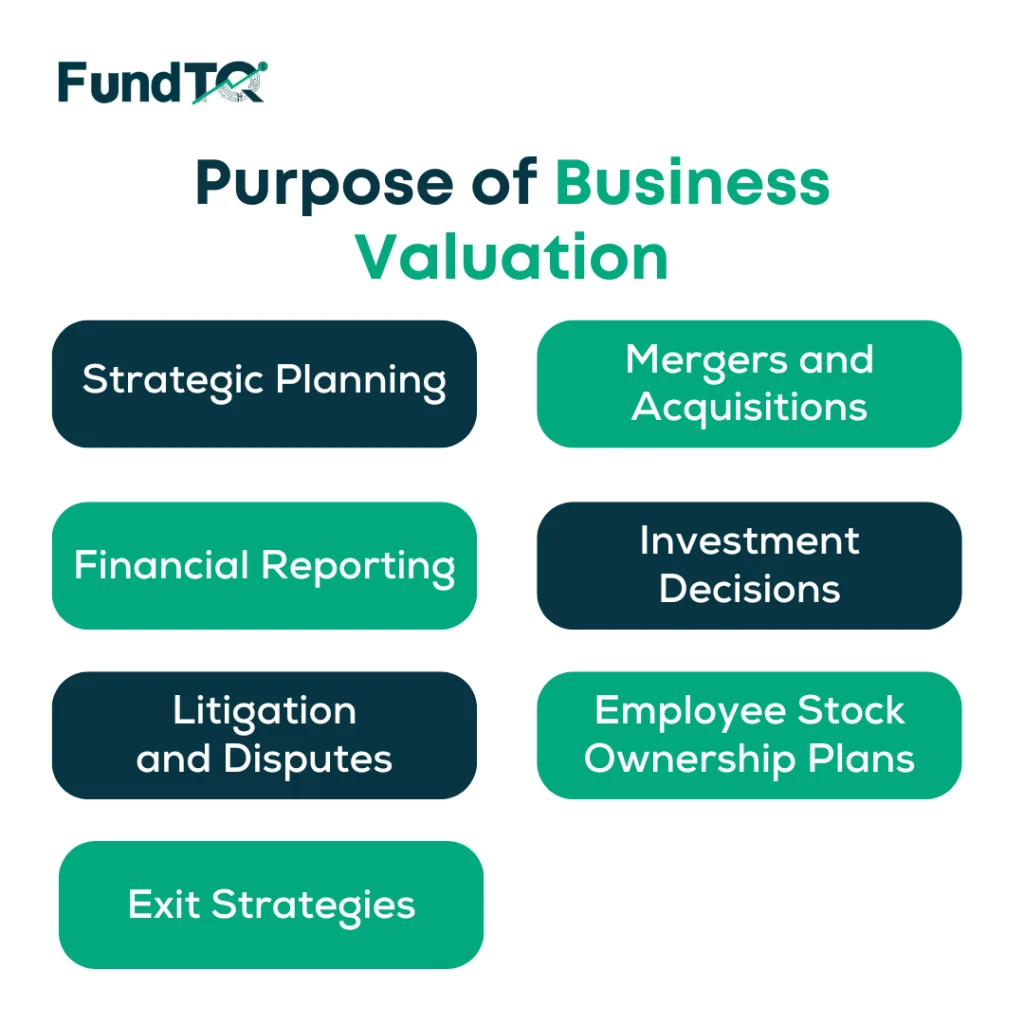
Purpose of Business Valuation:

Following are the purposes of business valuation:

Purpose of Business Valuation

a. Strategic Planning:

Business valuation is integral to strategic planning, offering insights into a company’s strengths, weaknesses, opportunities, and threats. By assessing its value, businesses can set realistic goals, allocate resources effectively, and plan for growth and expansion. Understanding the company’s worth enables informed decision-making, facilitating the identification of areas for improvement and investment. Moreover, it allows businesses to adapt to market dynamics, seize opportunities, and mitigate risks effectively. In essence, business valuation serves as a compass, guiding strategic decisions and ensuring the long-term success and sustainability of the organization.

b. Mergers and Acquisitions:

In mergers and acquisitions, business valuation is pivotal for establishing the fair market value of the target company. It facilitates negotiations between buyers and sellers by providing an objective assessment of the company’s worth. This transparency ensures fair deals and minimizes risks associated with overvaluation or undervaluation. Additionally, business valuation helps in identifying synergies between the merging entities, enabling informed decision-making and strategic planning. Overall, it ensures the success and sustainability of mergers and acquisitions by aligning expectations and maximizing value for all stakeholders involved.

c. Financial Reporting:

Business valuation plays a critical role in financial reporting, ensuring accuracy and compliance with regulatory standards. By assessing a company’s worth, it provides stakeholders with vital information for decision-making, including investors and regulatory authorities. Whether for annual audits, tax filings, or regulatory compliance, a precise valuation offers transparency and confidence in financial reporting. It enables stakeholders to evaluate the company’s performance, make informed investment decisions, and ensure adherence to regulatory requirements, thereby enhancing trust and credibility in the financial markets.

d. Investment Decisions:

Business valuation is pivotal for investment decisions, guiding investors in assessing potential returns and determining investment viability. By evaluating a company’s worth and growth prospects, investors can make informed decisions aligned with their financial goals. Whether considering a startup, established company, or project, understanding its valuation aids investors in gauging risk and reward. This process enhances investment decision-making by providing clarity on the company’s financial health, market position, and growth potential. Ultimately, accurate valuation fosters prudent investment strategies, optimizing returns and mitigating risks in the dynamic landscape of financial markets.

e. Litigation and Disputes:

Business valuation plays a crucial role in legal matters like shareholder disputes, divorce settlements, and estate planning. It aids in resolving conflicts by determining the fair value of the business and its assets. This assessment ensures equitable distribution of assets among shareholders, spouses, or beneficiaries, facilitating smooth transitions and minimizing disputes. Moreover, accurate valuation provides clarity and transparency, strengthening the legal proceedings’ integrity and ensuring fair outcomes for all parties involved. By adhering to established valuation methodologies and industry standards, stakeholders can navigate legal complexities with confidence and achieve satisfactory resolutions.

f. Employee Stock Ownership Plans (ESOPs):

Business valuation is crucial for companies offering Employee Stock Ownership Plans (ESOPs) to determine the fair market value of their stock. It ensures that employees receive equitable compensation for their equity participation, fostering a sense of ownership and incentivizing performance. Accurate valuation enhances transparency and trust between employers and employees, aligning their interests and promoting long-term growth. By valuing the company’s stock fairly, ESOPs empower employees to share in the company’s success and contribute to its overall prosperity, driving motivation, loyalty, and engagement within the workforce.

g. Exit Strategies:

Business valuation serves as a crucial tool for entrepreneurs planning their exit strategies. Whether selling the business, transferring ownership to family members, or going public via an initial public offering (IPO), valuation aids owners in maximizing their investment’s value and attaining their financial objectives. By assessing the business’s worth accurately, owners can make informed decisions, negotiate favorable deals, and secure optimal returns. Valuation enables strategic planning, ensuring a smooth transition while safeguarding the interests of all stakeholders involved in the process.

Check out your business valuation now with FundTQ’s business valuation software for free

Methods of Business Valuation:

a. Asset-Based Approach: This approach focuses on the company’s tangible and intangible assets, such as property, equipment, inventory, intellectual property, and goodwill.

b. Income Approach: This approach assesses the company’s future earning potential based on its current and projected cash flows, discounted to present value.

c. Market Approach: This approach compares the company’s valuation to similar businesses in the market, using multiples such as price-to-earnings (P/E) ratio, price-to-sales (P/S) ratio, and price-to-book (P/B) ratio.

Challenges and Considerations:

a. Subjectivity: Business valuation involves subjective judgments and assumptions, which can lead to discrepancies in valuation estimates.

b. Market Volatility: Market fluctuations and economic uncertainties can impact the valuation of businesses, making it challenging to determine an accurate valuation.

c. Data Availability: The availability and reliability of data, especially for privately-held companies, can pose challenges in conducting a thorough valuation.

d. Regulatory Changes: Changes in accounting standards, tax regulations, and legal requirements can affect the valuation process and its outcomes.

Conclusion:

Business valuation is a critical tool for stakeholders to assess the worth of a company and make informed decisions. Whether it’s for strategic planning, investment analysis, or legal compliance, understanding the purpose and significance of business valuation is essential for navigating the complexities of the business world. By employing the right valuation methods and considering various factors, businesses can unlock value, mitigate risks, and achieve long-term success.

Also Read: Importance of business valuation for investors

Pitch Deck Structure- To Impress Your Investors

Pitch Deck Structure: To Impress Your Investors

A startup’s pitch deck structure is what secures funding for the business. A pitch deck, which usually consists of 10–20 slides, is a short business presentation that highlights the business strategy, traction, and roadmap of your company. It can be used for a variety of purposes, such as setting up investor meetings or giving presentations on demo days, but in most cases, it will determine whether you will be able to obtain capital from investors or not.

Basic Pitch Deck Structure

The core framework stays the same, but different scenarios and time limits allow for the addition of more or less slides and content. The introduction, the status quo part, the product section, the market section, the why us section, and the ask are the six key elements that make up a pitch deck structure.

The 3 main objectives of pitch deck that strive to achieve

  • It must communicate the story of your business.
  • The investor must be convinced that they can profit from this.
  • It has to be finished in less than four minutes.

This reasoning relates to the three-act narrative framework: It’s important to attract your audience, grab their interest, and establish the current quo in the first act. Your narrative should be expanded upon in the second act to generate interest in the business opportunity by presenting figures that are both appealing and unquestionable. The third act is when things really get serious and you deliver the decisive blow, arguing that investing in your business is an incredible opportunity.

A compelling story that follows the above pattern, with a payoff that showcases your company and product and an end result that will convince investors to back your idea, is how a pitch deck structure may become extremely effective. You can even get the structured pitch deck templates of live deals.

Company Stage

When pitching investors, time is of the essence, so it’s critical to consider whether a slide belongs in your deck. This largely addresses the current state of your business, the amount you hope to raise, and who you plan to ask for funding.

The Cover slide and the Traction Teaser slide are located in the Intro Section. The slides including the problem, remedy, and business opportunity make up the status quo section. The Product, Features or Benefits, How It Works, Tech Infrastructure, Market Validation, Business Model, Roadmap, and Target Audience slides comprise the Product Section. The Traction, Go-to-Market or Customer Acquisition, Market Size or TAM, and Possible Outcomes slides are all included in the Market segment. Competitors, Benefits, Case Studies or Testimonials, and Team Slides are all included in the “Why Us” section. The Financials and Fundraising slides are finally included in The Ask.

Once more, not every pitch deck has to contain same pitch deck structure. You will lack traction, testimonial slides, and comprehensive financials if you are just starting out and getting funding from friends and family.

Intro Section

Cover

A brief (five to seven words) description of what you do should be on the cover slide. It should be easy to read and self-explanatory. The tagline serves as a very basic explanation of what your business performs rather than being a marketing slogan.

While it’s usual to add the presenter’s name and some contact information, it’s not really required. Nobody will bother to write them down at the outset if you’re pitching in person. They will already have your contact information if you are giving the deck to them by email.

Traction Teaser

You might include a brief Traction slide that confirms your company and gets people interested about what’s to come if you want to grab their attention right away.

Recall that people are entering your firm with no prior knowledge of its context, therefore the information you provide here must be easily understood by all visitors without regard to the specifics of your industry. This is where you may take pride in your greatest successes to date, the ones that are clear to all and require no additional explanation.

Status Quo Section

Problem/Business Opportunity

Most great companies solve global problems:

  • Uber resolved inconsistent cab services.
  • Excess emails and meetings were resolved with Slack.
  • File syncing between devices was resolved by Dropbox.
  • FundTQ is solving the problem of finding the business valuation, with the help of FundTQ’s automated valuation software.

If you get this slide right, you’ll have a little “aha!” moment when you identify a problem that people encounter frequently but haven’t seen because it’s right in front of them and so apparent.

This slide can also be the final straw in your pitch if you make unsupportable claims that the investor finds hard to believe in. You could lose them here if they ‘disagree’ with you on this point.

Some businesses are taking advantage of newly presented economic opportunities rather than necessarily solving problems. Mobile games are one example of this; they are merely capitalizing on a financial opportunity that they have found, not really solving a problem.

Solution

Consider the solution slide to be the problem slide’s reflection. Recall that this is the primary story point. This is the moment to challenge the current status.

Fantastic resolution Additionally, slides are short & crisp. They have nothing to do with features or technology; now is not the time to discuss the product. We are introducing our thesis: what if we used this new strategy in place of doing things the way they are now done? Concentrate on just one powerful statement. The ultimate outcome, the primary advantage of your service or product. The what, not the how.‍

Keeping with the prior example, consider Uber’s offering: a quick and easy on-demand automobile service that provides you with accurate details on the time of pickup, arrival, and cost.

Product Section

How does it work?

This will be the most distinctive section of your pitch deck structure because it highlights what makes your product or service special. This slide can be used in a variety of ways, such as a how-it-works flowchart, a brief video demo, or even a collection of product screenshots. These slides can serve as a source of inspiration as they are likely to resemble your marketing landing pages.

Features

Consider this slide as a summary of the advantages your product offers to the user, as opposed to a description of its features and methods. Just like FundTQ provides the structured pitch deck templates& financial model templates, which you can edit easily. Consider it from the opposite angle: consider the convenience or significant shift your product represents for your intended market rather than what it accomplishes.

It’s critical that this part be effective and efficient. Although the product is important to investors, their first concern is the numbers.

Product Details (Demo video, screenshots, tech infrastructure, etc)

This section also heavily depends on your particular product. An ‘Underlying Magic’ slide that describes in simple terms how the technology works to offer the ultimate benefit to the target customer is also crucial for goods with a significant technological component or when the tech infrastructure is one of their key differentiators. If you are pitching in person and your offer is a physical good, you may certainly show the thing yourself on a blank “demo” slide.

Videos may be effective in certain situations, but keep in mind that investors want to be able to watch the entire deck in less than five minutes, so be clear and direct.

Market Validation

We attach a ‘Market Validation’ slide to assist items for which adoption can be difficult. For instance, Airbnb included a market validation slide in their 2009 pitch deck to support their claim that travelers would be open to staying on strangers’ couches.

Target Audience

Presenters frequently eliminate this slide from presentation decks, especially those of later-stage startups. This one could be crucial if you’re just getting started or if it’s one of your early rounds.

The purpose of a Target Audience slide is to demonstrate that you understand the target market for the product. Too many businesses fail to address this issue, which is frequently a deal-breaker. Working backwards from an understanding of the end user makes great market acceptance easier.

Business Model

Let’s move on to the Business Model. This is one of the most straightforward presentations to understand, yet it’s also one that many business owners misunderstand.

It’s easy: how do you generate income?

Is it a subscription? If so, please describe every plan in detail. From what I’ve seen, these details should change frequently as you try out various combos. Just let us know if it’s a $XX subscription. either in a trial or not.

Tell us if it’s a service or a product, what the cost is, perhaps the size of the typical order, and an estimate of the margin. What is the margin on this product—30% or 60%? That also holds true for online shopping.

Make it easy. This presentation is all about how you make money; it has nothing to do with forecasts or hypothetical profits from a million consumers.

Of course, some businesses combine multiple  business models, but it’s usually unnecessary to list everything here. Try to keep this to no more than two or three sources of income, and avoid going into too much detail about the specifics. Your goal is to provide something straightforward and understandable and respond to any follow-up queries that this pitch deck structure may raise throughout the meeting.

Roadmap

An ideal Roadmap presentation covers some of the key moments in the development of your product and the history of your firm before discussing the direction you want to take the product in the next months.

This roadmap slide becomes crucial for hardware and medical enterprises, as they are unlikely to make any money until after an extended and lengthy research and development process.

Remember that since this is the product part, we are talking about the product vision rather than the numbers just yet. We are not yet doing financial estimates. Don’t mix in sales estimates with this.

Market Section

Go-to-Market Strategy

The most frequent errors made while creating Go-To-Market slides include being unfocused, dispersing the company’s marketing efforts too thin, and spending money on channels that are overly crowded or don’t produce returns right away unless you are an authority in them. It’s possible that attempting to market through numerous channels at once is just as ineffective as doing none at all.

A fantastic go-to-market slide should cover two or maybe three really distinct, targeted channels that you are currently and will stay using to expand your client base.

  • How did you get to be here?
  • What actions do you take that seem promising?
  • Next, what are you going to do?

Keep in mind that rounds of money typically cover 18 to 24 months of operating expenses, so what we’re looking for is a growth plan, or a strategy for marketing the company to reach the next fundable milestone.

Market Size/TAM

“How big does this company get?” is the question this slide attempts to answer.

Total Addressable Market, or TAM, is the idea behind that, but many of us are not very familiar with it. What is TAM? Once more, the question is how big this business is and how much money it could produce if it had all of its target clients. That is what TAM.

In order to calculate TAM, you must estimate the number of consumers or businesses who would be willing to purchase your product.

Here, two earlier slides become crucial: the business model comes first, of course. You need to be aware of the revenue that each of your clients will bring in. The target audience slides come in second. This TAM number might rise rapidly if you are unsure about your consumer base, which is often not a good thing.

You need to be really certain about both your target market and your pricing.

Why Us Section

Competitors

Most businesses will face rivals. Presenting a competitor slide that declares that you have none at all is typically cause for concern. The deadly error that many founders commit is thinking that they are the only ones doing what they do.

You can pretty well abandon up on a lead if, during your pitch, you claim to have no competitors and an investor happens to know of a business that does. Nothing is more detrimental than a dearth of research.

You can use this slide as a straightforward business grid chart, a table that compares characteristics, or a condensed list of your main rivals.

Team

A startup’s founding team must possess the abilities to grow the business to $1 million in revenue.

If you are developing an app, business/operations, UX, development, and marketing are necessary to reach $1 million in revenue. You require engineers, business development, and sales if you are developing a B2B SaaS platform aimed at enterprises.

Secret Sauce

The title of this slide is Competitive Advantages more often. You can use this slide to discuss anything that makes you unique, including patents, distinctive elements of your technology, distinctive supply chain participants, and more.

When discussing competitors, the goal should be to demonstrate that you grasp a part of the market that others don’t appear to appreciate, rather than just comparing features and prices.

The Ask Section

Financial Projections

The Financials slide is simple: if your business has been in operation, we would want to see statistics from the most recent fiscal year. After that, everyone should have three to five years’ worth of financial estimates for their business.

SG&A, COGS, CAPEX, revenue, and a final profit margin and percentage figure are usually included by founders in a straightforward table, which necessitates basic financial modeling.

The Ask

The fundraising presentation should clearly outline the next fundable milestone we discussed and include the amount of money you are raising.

The goal of a Seed round is to continue till a Series A. This round should last long enough for you to get Series A status plus an additional six months to close that round, as it takes roughly six months to close a round.

A common slide in decks is “this round funds 18 months of operations,” which isn’t always a terrible thing as long as the calculation underlying that figure relates to a fundable milestone. It’s all about measurements, not time.

Tips For Pitching

For many business entrepreneurs, creating a pitch deck for their first investor can be an intimidating task. We understand how many entrepreneurs just give up midway through the process of determining their market, go-to-market strategy, and finances.

The first difficulty here is that a pitch deck is meant to provide a brief yet captivating overview of a business possibility. occasionally the founders haven’t had a chance to sit down and work out some crucial business elements, or occasionally the idea isn’t fully developed.

The key takeaway from this is that you are solving a number of important strategic business decisions by addressing your pitch deck. Pitch decks tell the story of the company. When you see a deck as a story, you can begin to create a story arc that includes adversaries, climaxes, developments, and plot elements.

This is an outline for a pitch deck structure that converts into an amazing tale for MOST organizations.

Storytelling is what our team of seasoned experts excels at. Together, we will analyze your company’s operations and develop a proposal that highlights your special selling point.

Our pitch deck templates can assist you in obtaining the necessary money, regardless of whether you’re trying to expand an existing company or raise capital for a brand-new venture. Talk to us right now to find out more.