
Raise Series A Funding

How to Raise Series A Funding in India (2025 Guide)

The Raise Series A Funding is an important step in the life of a startup that wants to grow beyond its initial momentum. Although seed funding assists to prove the fit of your product-market, Series A is regarding growth through expansion, gaining more customers, and maintaining sustainability.

The Indian startup ecosystem is also very competitive and data-driven in 2025. The investors are not just focusing on revenue anymore, they desire scale business models, clear unit economics, strong leadership teams, and robust growth strategies.

Composing a detailed FundTQ (one of the leading investment banking and fundraising advisory firms in India) guide takes founders through the preparation process to close off your Series A round, trends, important documents and timelines.

What Is Series A Funding?

The initial major institutional round of venture capital is Series A financing that a start-up company receives following demonstration of a sound concept and momentum.

Investors in Series A expect:

  • A clear problem-solution fit
  • Existence of market demand and traction.
  • A repeatable and scalable business model.
  • An effective and creative founding team.

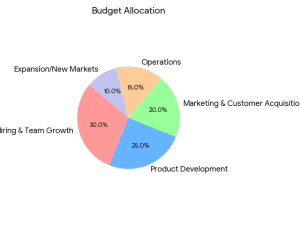
Purpose of Series A funding:

  • Hire and scale your team
  • Expand products or services
  • Enter new markets
  • Improve operational abilities.

Concisely, Series A converts an idea that has been tested into a business that is ready to grow.

Series A Funding Size and Valuation in India

Series A funding amounts vary by sector, traction, and investor appetite. Typical ranges are:
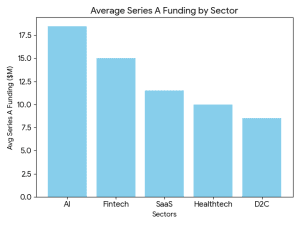
Series A Funding Size

Tip: FundTQ helps startups determine realistic Raise Series A Funding amounts and optimal valuations using data-driven financial modeling.

Step-by-Step Guide to Raising Series A Funding
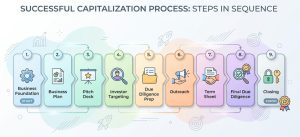
Step 1: Strengthen Your Business Foundation
Make sure your fundamentals are good before approaching investors:

  • Market Opportunity: Identify your TAM, SAM, and SOM.
  • Business Model Clarity: Show how to make money and keep it going.
  • Traction Metrics: User growth, revenue, retention rates, CAC, LTV, engagement metrics.
  • Unit Economics: Focus on gross margins, burn rate and profitability potential.

FundTQ optimises financial forecasts and business models to fulfil the expectations of investors.

Step 2: Build a Comprehensive Business Plan

Your business plan must narrate the facts about your startup story:

  • Executive summary & vision
  • Problem-solution analysis
  • Market research/competitive environment.
  • Business model & revenue plan.
  • Financial estimates (35 years)
  • Risk analysis & mitigation
  • Scaling and expansion road-map.

FundTQ prepares investor-ready business plans that are in line with VC and PE requirements.

business valuation software

Step 3: Create a Winning Pitch Deck

The first thing people see is your pitch deck. Essential slides include:

  • Issue and marketing need.
  • Solution (product/service)
  • Product demo or screenshots
  • Traction & milestones
  • Market Strategy and Competitive Advantage.
  • Financials & projections
  • Team and advisors
  • Financing needs and expenditure.

The FundTQ produces brief, attractive decks that are compliant with the international VC standards.

pitch deck templates for Raise Series A Funding
Step 4: Identify and Target the Right Investors
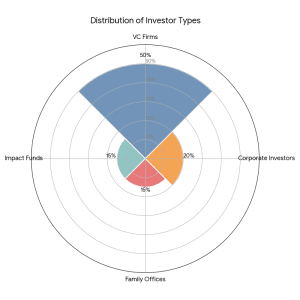
Not every investor fits so perfectly. Focus on:

  • Venture Capital Firms: Accel, Sequoia, Nexus, Chiratae.
  • Corporate Investors: Google for start-ups, Reliance Ventures.
  • Family Offices & HNIs: Best in niche and first mover.
  • Impact Funds: climate tech, healthtech and education ESG funds.

FundTQ offers selective access to investors in India and elsewhere in the world.

Step 5: Prepare for Due Diligence
Investors will verify:

  • Legal documents and registration of the company.
  • Tax filing and financial statements.
  • Cap table and equity structure.
  • IP ownership & customer contracts.
  • Regulatory compliance.

In order to facilitate due diligence, FundTQ performs pre-investment audits and establishes a virtual data room to facilitate the audit.

Step 6: Outreach and Investor Meetings

  • Provide a brief preview or summary.
  • Deliver your pitch deck through safe links.
  • Organize schedule and product demos.
  • Track follow-ups using a CRM

FundTQ deals with investor outreach and meetings in order to optimize interaction.

Step 7: Term Sheet Negotiation

A term sheet outlines:

  • Valuation and dilution of equity.
  • Board organization and control.
  • Rights & obligations
  • Exit terms

FundTQ gets good terms while ensuring that the founders maintain control.

Step 8: Investor-Led Due Diligence

Investors carry out intensive audits:

  • Card-related reviews and revenue recognition.
  • IP validation and legal audits.
  • Customer & vendor references
  • Compliance checks

FundTQ manages the coordination of all the teams in smooth due diligence.

Step 9: Closing the Round

Final steps:

  • Sign definitive agreements
  • Transfer of funds and allocation of shares.
  • Regulatory filings
  • Public announcement

FundTQ warrants conformity and smooth integration of post-funding.

Key Documents Required for Series A
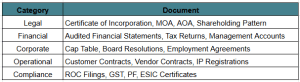
Key Documents Required for Series A

Timeline to Close Series A
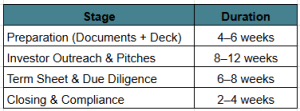
Timeline to Close Series A


Trends in Series A Funding (2025 & Beyond)

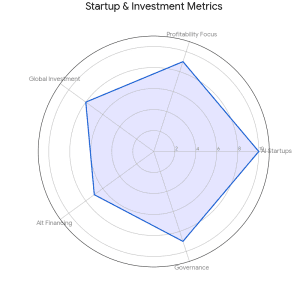
  • AI-based Startups: AI and automation have high investor interest.
  • Profitability & Sustainable Growth: Healthy unit economics a priority.
  • Alternative Financing Models: Equity + Debt or revenue based financing.
  • International Investment Preference: US and SE Asian VCs are making more investments in India.
  • Corporate Governance & Transparency: Clean cap tables and reporting is compulsory.

 Why Partner with FundTQ

FundTQ provides the entire ecosystem of startups in need of funding:

  • End-to-end fundraising consultancy (Series A to and past)
  • Investment banking services (valuation, deal structuring, due diligence)
  • M&A advisory (sell side and buy side)
  • Support of pitch deck and financial modeling.
  • Investor relations and introductions.

Why FundTQ?

  • Successful history of Series A funding.
  • Availability of the best investors in India and around the world.
  • Professional financial and legal consultation of the closures.
  • Evidence-based decision-making and valuation.

FundTQ enables the founders to work on growth and handle the complexities of fundraising.

Ready to Raise Series A Funding?

For founders scaling their business in 2025, FundTQ makes the fundraising journey seamless. From financial modeling and pitch deck creation to curated investor introductions and deal closure, FundTQ provides end-to-end fundraising and investment banking support.


Contact us

Angel Investors vs Venture Capital

Angel Investors vs Venture Capital- Choosing The Right Path

Doing a startup can be a challenging task. From building an idea to testing one to launching the same in the market, it requires rigor and making the right decisions. These decisions range from marketing and operations to strategy and fund-raising, and having all weapons on a founder’s bandwagon can be difficult. While the importance of each decision is paramount, this blog attempts to clear one major confusion in the minds of early-stage founders i.e. Angel Investors vs Venture Capital which one to choose

Lack of capital and mentorship is a common problem among several startup founders. Capital can be arranged from a variety of sources viz. Friends, family, relatives, etc., Angel Investors and Venture Capitalists are two important capital providers for any startup.

Who is an Angel Investor?

Angel Investors are high-networth individuals known for providing initial seed capital in a company. They generally invest in smaller cheque sizes and that too from their own personal money. Angel investors can be found among an entrepreneur’s friends and family or they can be involved in a number of initiatives only on a professional basis. An investor’s participation can take the form of a one-time seed investment or a continuous flow of funds to bring a product to market. Angel investors aren’t usually in the loan business. They are investing in an idea they find appealing, with the understanding that they will only get paid if and when the company succeeds.

Who is a Venture Capitalist?

A venture capitalist (VC) is a private equity investor who provides capital to companies with high growth potential in exchange for an equity stake. They are generally formed as limited partnerships (LPs) where the partners invest in the VC fund, with a committee being formed tasked with making investment decisions. Once a promising emerging growth company comes, the pooled investor capital is deployed to fund these companies, in exchange for a sizable stake of equity.

VCs are willing to risk investing in such companies because they can earn a massive return on their investments if these companies are a success. However, VCs experience high rates of failure due to the uncertainty that is involved with new and unproven companies.

Angel Investors vs Venture Capital

Though there is no hard and fast rule related to choosing between the two, there are some general thumb rules that are followed while deciding the right set of investors.

Angel InvestorsVenture Capital
Right Choice For:1. Early-stage startups looking forward to market entry and late-stage technical development.
2. Startups looking for a cheque size of $25,000- $100,000
3. Startups looking forward to gain  little or no strategic expertise from angels on different aspects for their business.
4. Startups which expect to generate a return of 25%-35%.
1. Relatively more mature companies who have some track record of success.
2. Startups looking for a relatively larger cheque size. 
3. Startups are looking forward to getting more expertise for their business.
4. Startups which expect to generate a return of 30%-40%.
Advantages1. More flexible terms of investment.
2. Faster decision making w.r.t investment making or not
3. Might connect you with industry experts helping you in your faster business growth.
4. Deploy relatively less pressure to scale quickly
1. Typically invests money with a larger cheque size
2. Generally, provide more experience and expertise
Disadvantages1. Provide access to limited funding
2. May not be as experienced in running the business
Deploy more pressure to scale quickly
Have a more formalisd investment process, hence decision making is quite slow.
Relatively less flexible terms of investments.
Deploy more pressure to generate high returns

Conclusion

Both Angel Investors and Venture Capitalists come up with relatively high expectations of returns, while joining the cap table. The choice between the two would significantly affect any startup’s future returns and even business trajectory. Therefore, making the decision of whether to seek funding from angel investors or venture capitalists after carefully analyzing specific business needs and goals is important. Additionally, taking fundraising services can provide valuable insights and guidance throughout the fundraising process, helping startups make informed decisions aligned with their objectives.

what is aif what are the types of aif

What Is AIF? What Are The Types of AIF?

In the dynamic landscape of financial markets, investors are constantly seeking avenues that offer diversification and attractive returns beyond traditional investment options. One such domain that has gained prominence is Alternate Investment Funds (AIFs). AIFs are investment vehicles that pool funds from investors to invest in a variety of asset classes, going beyond conventional stocks and bonds. In this blog, we will delve into the intriguing world of AIFs, exploring their definition, significance, and the three distinct types of AIF categories they fall under.

What is Alternate Investment Funds (AIFs):

Alternative Investment Funds (AIFs) are pooled investment vehicles that collect funds from investors, whether individuals or institutions, to invest in assets beyond traditional stocks and bonds. AIFs offer diversification and access to various asset classes such as real estate, private equity, hedge funds, and commodities. They are regulated by securities regulators in many jurisdictions and are managed by professional fund managers. AIFs often cater to sophisticated investors seeking higher returns or unique investment opportunities not typically available through conventional investment avenues.

Types of AIF:

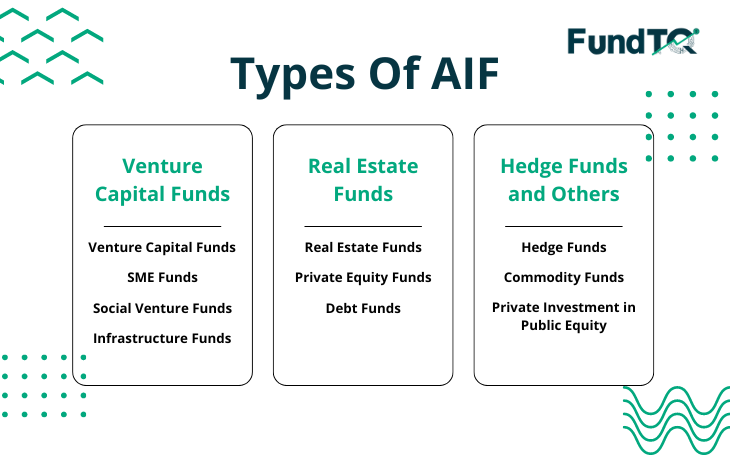
The types of Alternative Investment Funds (AIFs) can be broadly categorized into three categories based on their investment strategies and objectives:

types of aif
Types Of AIF

Type 1: Venture Capital Funds

Following are the types of Venture Capital Funds:

1. Venture Capital Funds

Venture Capital Funds are AIFs that focus on investing in startups and early-stage companies with high growth potential. These funds provide capital to fuel innovation, support entrepreneurship, and generate returns by participating in the success of these ventures.

2. SME Funds

SME Funds target small and medium-sized enterprises (SMEs). These funds aim to provide financial support and guidance to SMEs, fostering their growth and expansion. By investing in SMEs, these funds contribute to job creation and economic development.

3. Social Venture Funds

Social Venture Funds combine financial returns with social impact. These AIFs invest in businesses that address social and environmental challenges. By aligning financial goals with societal benefits, social venture funds play a crucial role in promoting sustainable and responsible investing.

4. Infrastructure Funds

Infrastructure Funds focus on investing in physical assets like roads, bridges, energy projects, and other essential infrastructure. These funds provide long-term capital to support the development and maintenance of critical infrastructure projects.

Category 2: Real Estate Funds

Following are the types of Real Estate Funds:

1. Real Estate Funds

Real Estate Funds invest in various real estate projects, including residential, commercial, and industrial properties. Investors benefit from the potential appreciation of property values and rental income, making real estate funds an attractive option for diversification.

2. Private Equity Funds

Private Equity Funds invest in privately held companies. These funds acquire significant ownership stakes in companies with the aim of improving operations, enhancing value, and eventually exiting through strategies like IPOs or mergers and acquisitions.

3. Debt Funds

Debt Funds focus on fixed-income securities and debt instruments. Investors in debt funds receive regular interest payments, providing a stable income stream. These funds are considered lower risk compared to equity-focused alternatives.

Category 3: Hedge Funds and Others

Following are the types of Hedge Funds And Others:

1. Hedge Funds

Hedge Funds employ various strategies, including leverage and derivatives, to generate returns. These funds are known for their flexibility in asset allocation and risk management, making them suitable for sophisticated investors seeking alternative investment strategies.

2. Commodity Funds

Commodity Funds invest in commodities like gold, silver, oil, and agricultural products. These funds provide investors exposure to the price movements of physical commodities, allowing for diversification beyond traditional asset classes.

3. Private Investment in Public Equity (PIPE)

PIPE Funds invest in publicly traded companies by purchasing newly issued shares directly from the company. This form of private investment allows companies to raise capital without going through traditional public offerings.

Conclusion

Alternate Investment Funds play a pivotal role in providing investors with diverse investment opportunities, catering to various risk profiles and investment objectives. Whether it’s supporting startups, fostering social impact, or participating in real estate and hedge fund strategies, AIFs offer a rich tapestry of options for those looking to go beyond traditional investments. As with any investment, it’s essential for investors to conduct thorough research, understand the risks involved, and align their investment choices with their financial goals. In the ever-evolving world of finance, AIFs stand as a testament to the innovation and adaptability of investment strategies.

Also Read: Angel Investors vs Venture Capital