The Indian ecosystem of startups still remains to be one of the most active and influential in the world. Fintech, healthtech, e-commerce, and SaaS are just some of the examples of Indian startups in 2025 2026 that do not only address local issues but create the business on a global scale. The difference between these startups is that they are able to integrate innovation, technology, sustainability, and high performance. With innovative and pioneering founders, experienced investors, and a digital economy that is growing swiftly, India has emerged as a worldwide startup superpower.
This blog discusses the Top 10 Successful Indian Startups of 2025-2026 and its business models, real-life application, and the reasons behind its significance in an economy today.
Why Indian Startups Are Thriving in 2025–2026
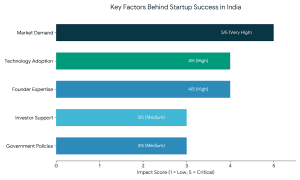
The fast increase in successful startups in India has been due to several reasons:
Good digital infrastructure (UPI, Aadhaar, GST)
More investor confidence and international funding.
High population of mobile-first consumers.
State programs such as Startup India.
Increasing popularity of entrepreneurship as a profession.
They are impact-driven, technology-based, and scalable startups making them the leaders in their respective industries.
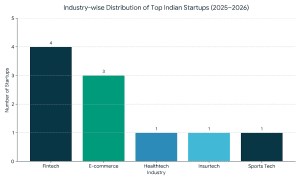
Snapshot: Top Indian Startups at a Glance (2025–2026)
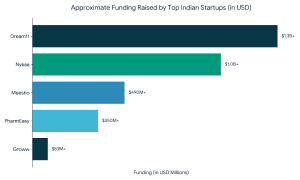
Approximate Funding Raised by Top Indian Startups (in USD)
Top 10 Successful Indian Startups of 2025–2026
1. FundTQ Digital – Empowering Early-Stage Founders
Industry: Fintech / SaaS Founded: 2016
FundTQ Digital has become a potent early-stage fundraising facilitator to founders of start-ups with poor fundraising. One of the most difficult roles in entrepreneurship is made easier through the platform, raising capital.
Using investor-ready tools offered by FundTQ, several first-time founders have been able to successfully complete an angel round and seed round, and save time, cost, and energy.
Why it stands out in 2025–2026:
As more and more startups appear in Tier 2 and Tier 3 cities, FundTQ will efficiently match founders to investors.
2. CRED – Redefining Credit Culture in India
Industry: Fintech Founded: 2018
CRED does not reward users on spending too much but on paying credit card bills in time. In such a way, it will encourage financial discipline among the high-end users in India.
Key highlights:
More than 22 percent of credit card users in India.
Rewards, experiences, and financial products, which are exclusive.
Diversification into business and moneylending.
Real-life example:
CRED is used by high-income professionals not only to make bill payments but also to obtain curated luxury offers, as well as financial insights.
3. PharmEasy – Transforming Digital Healthcare
Industry: Healthtech Founded: 2015
PharmEasy has turned into a household name during the pandemic and still controls online healthcare in India.
Core services:
Online medicine delivery
Diagnostic tests
Medical devices
Strategic growth: The integration of Medlife made it stronger in the market than Amazon Pharmacy and Flipkart Health.
4. MyGST Refund – Simplifying GST for Businesses
Industry: Tax & Fintech Founded: 2019
MyGST Refund can help resolve one of the most complicated compliance issues in India GST refund.
Key differentiators:
The first API based GST refund calculator in India.
Real-time refund tracking
Expert-backed tax advisory
Founder expertise: Co-founded by 14+ years of experience in the field of tax professionals and providing solid trust and authority.
5. Digit Insurance – Making Insurance Simple
Industry: Insurtech Founded: 2016
Digit Insurance is transparent and user-friendly, which is attractive to the Indian consumer in the present times.
Why customers trust Digit:
Paperless claims
Clear policy wording
Celebrity investors with credibility.
Digit has continued to grow aggressively in health, travel and motor insurance.
6. Meesho – Powering Bharat’s Entrepreneurs
Industry: Social Commerce Founded: 2015
Meesho allows millions of homepreneurs and small sellers to sell their products on WhatsApp, Instagram, or Facebook.
Real-world impact:
Meesho gives an opportunity to over 13 million sellers, most of which are small-town women earning sustainable income.
7. Groww – Democratizing Investments
Industry: Fintech / WealthTech Founded: 2016
Groww has simplified and made investment accessible to first time investors.
Key strengths:
User-friendly app
Zero commission mutual funds.
Close emphasis on the education of money.
Real-life example:
Financial inclusion is real because Groww has over 60 per cent users living in non-metro towns.
8. Nykaa – From Beauty to Lifestyle Empire
Industry: Beauty & Fashion Founded: 2012
Nykaa is a company that combines the convenience of online shopping with the experience of the offline one, founded by a former banker Falguni Nayar.
Growth drivers:
Omnichannel presence
Private labels like Nykd
Nykaa Fashion expansion
Nykaa is also a good case of founder-led credibility and performance.
9. Udaan – Powering India’s B2B Commerce
Industry: B2B E-commerce Founded: 2016
Udaan links manufacturers, wholesalers and retailers in India.
Scale:
Presence in 900+ cities
25,000+ sellers
Strong logistics network
The attention of Udaan to small retailers renders it essential to the supply chain environment of India.
10. Dream11 – Leading Fantasy Sports in India
Industry: Sports Tech Founded: 2008
Dream11 played on the Indian fascination with cricket and fantasy sports.
Key achievements:
100+ million users
India’s first gaming unicorn
Backed by global investors
Real-life engagement:
Dream11 has high product-market fit, as it records high user activity during IPL seasons.
FAQs – Frequently Asked Questions
Q. What is the most successful Indian start up in 2025? No individual victor is present but start-ups such as CRED, Dream11 and Nykaa are at the top of their industries.
Q. Are Indian startups competitive across the world? Yes. There are numerous Indian startups that are functioning on the international level and attract foreign investors.
Q. Which sectors are booming in 2025–2026? The most growing industries are Fintech, Healthtech, SaaS, E-commerce, and Gaming.
Q. What are the ways of new startups to raise funds? With such tools as FundTQ Digital, founders are able to create investor-ready documents and valuations.
Summary
The list of Top 10 Successful Indian Startups of 2025-2026 reflects the power of Indian entrepreneurs, their innovative, and their ability to withstand. These companies do not only build businesses; they are creating new jobs and resolving practical issues, and they are defining the future economy. In case you are a startup that wants to be listed as one of the top companies in India and you have growth or fundraising problems, preparing to become investor ready is essential.
Gain access to industry-specific pitch decks, financial models, and valuation tools to find the right investors and raise with confidence.
Investment banking services help businesses raise capital, manage mergers and acquisitions, and make strategic financial decisions.
Do you know what lies at the heart of the financial industry?
The financial sector comprises of the insurance sector, real estate agencies, consumer financing firms, and mortgage lending firms. Nonetheless, there is one participant that can be considered as particularly influential, which is the investment bankers.
These professionals play significant roles in the world economy and can be regarded as the financial superheroes. They are at the centre stage of key financial activities and they affect both businesses and individuals.
In a case in point, imagine a multinational corporation intending to grow, a government intending to get money to finance a project, or an owner of a business undertaking a merger and acquisition. That is the niche that the corporate investment banking services play, serving as the mediator between companies and the financial system.
This guide will help you maximise the opportunities in financial services and/or know how this world works in case you are interested or want to know more about it.
Gain expert perspectives
Learn key skills and methods
Manage complicated financial scenarios with ease.
Keep up with the trend and opportunities in the industry.
So, let’s get down to it and discuss the importance of investment banking services – and their influence on the worldwide financial arena.
An Overview of Investment Banking Services
Corporate investment banking can be likened to a financial giant in the corporate world. It links the businesses with the financial system that assists them to tap into capital that allows them to develop and grow. It also comes with strategic guidance which not only creates markets but also encourages innovation and economic growth.
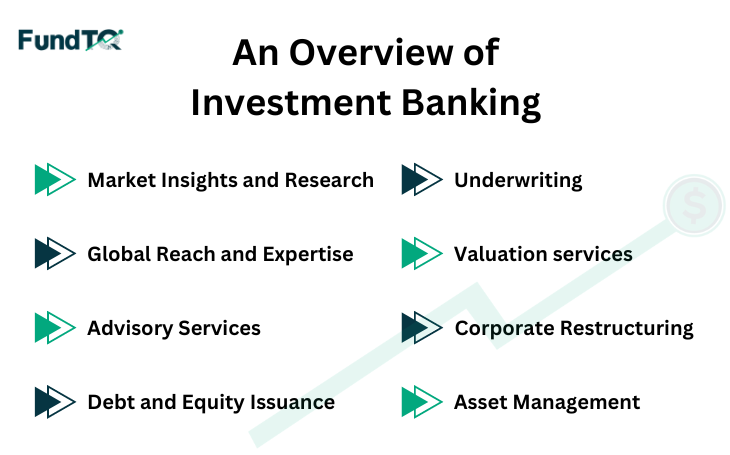
The following are some of the base investment banking services and their significance:
1. Market Insights and Research
In finance, expertise is authority. To enable clients to make informed decisions, investment banks conduct thorough research to provide them with the insights about the market.
2. Global Reach and Expertise
As global financial institutions, corporate investment banks find it easy to cross-border, with all the experiences of diverse markets and regulations.
3. Advisory Services
The investment bankers provide expert advice to companies about mergers, acquisitions, capital structure and financial strategies- hence allowing business owners to make sound decisions.
4. Debt and Equity Issuance
They assist firms to raise capital through issuance of debt (bonds) or equity (shares).
5. Underwriting
Investment banks as underwriters assume risk when they buy securities of a company and sell them to the investors.
6. Valuation Services
They ensure the fair value of a company or an asset – a major process when making decisions on mergers and acquisitions or investing in a company or asset.
7. Corporate Restructuring
The investment bankers help organizations to restructure the debt, assets, and operations in order to increase efficiency and profitability.
8. Asset Management
There are those investment banks that handle investment portfolios of both institutional as well as individual clients and assist them in building and preserving wealth.
Simply put, investment banking services are the brains of financial success.
In this article, I am going to give you a short brief of the major stakeholders in the finance industry.
Every one of these players has their role and all they do collectively to foster company growth, success in business while keeping investors profitable.
Major Stakeholders in the Finance Industry
The finance ecosystem is composed of all players, whose functions are tailored to achieve the success of business and investor prosperity. The three most important stakeholders are:
1. Investment Banks FundTQ, Goldman Sachs or Morgan Stanley are financial institutions that provide mergers and acquisitions advice and capital raising services.
Example: FundTQ assists a software company to become a publicly traded company by means of an IPO ( Initial Public Offering).
2. Corporate Clients These are the companies who are dependent on investment banks on how to raise capital and give strategic advice on merger or acquisition processes.
3. Institutional Investors Such institutions as HDFC Asset Management Company gather funds from investors and invest them in stocks, bonds and other securities to increase wealth.
These players collectively contribute towards the growth and innovation of the investment bank sector.
Major Units of Investment Banking
Whether you’re studying finance or just curious, understanding the core divisions of investment banking services is essential. These include:
Accordingly, in this module we will review main corporate investment banking products: capital markets, corporate finance and advisory services.
The basics of the investment banking industry are vital for anyone interested in finance — from those who aspire to work on Wall Street one day, all the way down to a casual bystander curious about how things function within the realm of high Finance.
Thus, this article will explore the major building blocks of Capital Markets, Corporate Finance and Advisory Services that have an impact on the corporate investment banking universe.
Factors
Capital Markets
Corporate Finance
Advisory Services
Nature of Services
Deals with buying and selling financial securities like stocks, bonds, etc.
Focuses on financial activities within funding and investment decisions.
It provides expert guidance and recommendations to various companies, including financial matters to individuals and businesses.
Scope and Clients
It involves a broad range of investors, including individuals, institutions, and governments.
Specific to a single company or organization.
Serves both individual and corporate clients.
Regulatory Framework
Highly regulated to ensure fair and transparent trading.
Subject to regulations, particularly regarding regulations based on the company operations.
Subject to a specific type of advice offered.
Front Office: The Action Zone of Investment Banking
The client-facing and deal-making portion of the organisation, where strategic consulting, relationship management, and capital-raising activities flourish, is referred to as the investment banking front office.
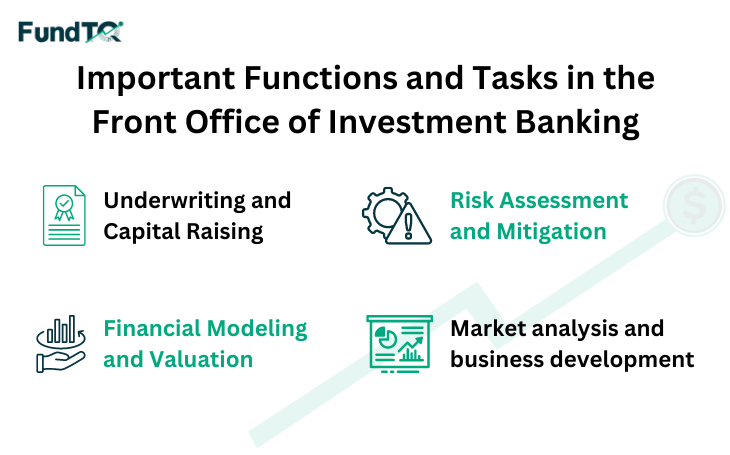
The front office is the client-facing, deal-making part of an investment bank — where relationship management and capital-raising thrive. 1. Client Relationship Management Front-office bankers establish and sustain good relations with their clients by knowing their financial objectives and market positions.
2. Pitching and Advisory They offer personalized financial services and recommend capital raise, restructuring or acquisitions and mergers.
3. Execution and Due Diligence The bankers conduct a thorough due diligence analysis of the target company operations, finances, and risks before any merger or acquisition.
4. Underwriting and Capital Raising
Underwriting is assisting an organization to raise new shares or bonds. The process involves:
Evaluating the finances of the company.
Setting the offering price
Reporting to the regulators (such as SEC)
Making sales to investors.
After offering prices are to be stabilized.
5. Financial Modeling and Valuation Valuation is an actual worth in a company and financial modeling is a forecast of a future performance of the business, and therefore it enables a banker to make informed decisions in regards to a deal.
6. Risk Assessment and Mitigation The investment bankers are always on the lookout of risks in a deal and designing a plan that safeguards the client as well as the bank.
7. Market Analysis and Business Development Knowing the trend in the market will assist bankers to spot new opportunities and reinforce portfolios of clients.
Trends and Challenges in Investment Banking Services
In this guide, it’s important to look at the trends and challenges in Corporate investment banking firm. Let’s have a peek at it then-
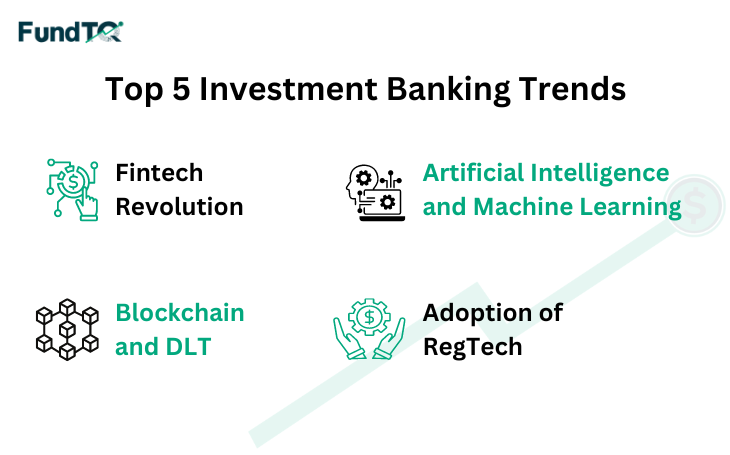
Top 5 Investment Banking Trends:
1. Fintech Revolution:
Fintech businesses are using creative ways to challenge established banking models. These technologies, which include online payment systems and robo-advisors, are continuously altering the way financial services are rendered.
2. Artificial Intelligence and Machine Learning:
These two powerful technologies are transforming data analysis and decision-making. Investment banks are using AI for risk assessment, portfolio optimization, and fraud detection.
3. Blockchain and DLT:
These technological advancements are revolutionizing the safe recording and verification of transactions. Investment firms are investigating the potential benefits of blockchain technology for increased transparency and efficiency.
4. Adoption of RegTech:
RegTech gives banks the ability to more skillfully negotiate changing regulatory environments. Thus, in order to guarantee optimal regulatory conformance, compliance operations are automated.
5. ESG considerations are incorporated into plans for socially concerned clients through sustainable and impact investing.
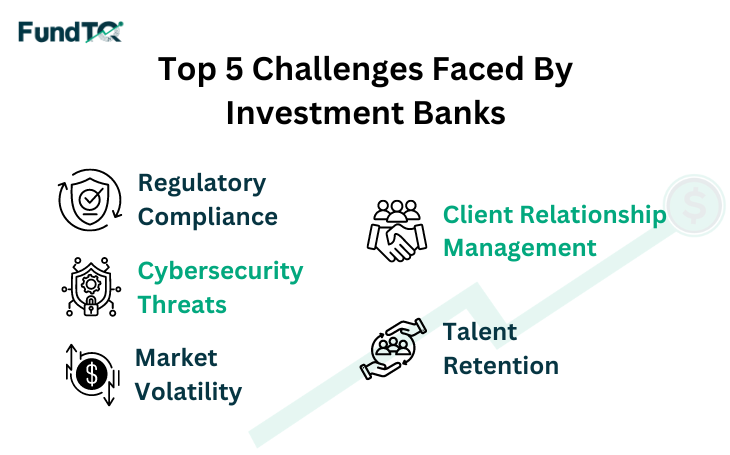
Top 5 Challenges Faced by Investment Banking Services Firm:
There are inevitably and probably will be issues as technology trends continue to emerge.
Let’s examine a couple of them:
1. Regulatory Compliance:
It can be difficult to ensure compliance with the many financial regulations. Anti-money laundering (AML) regulations put banks under more scrutiny in an effort to stop illegal activity.
2. Cybersecurity Threats:
It’s a never-ending struggle to keep private financial information safe from hackers. Large-scale data breaches at financial institutions, such as the Equifax attack, make it abundantly evident that strong cybersecurity measures are essential.
3. Market Volatility:
Managing erratic shifts in the market presents difficulties for investment plans. Investment choices were significantly impacted by the COVID-19 epidemic and resulted in significant market fluctuations.
4. Client Relationship Management:
It takes skill to satisfy a wide range of client expectations and establish lasting bonds. Example: Managing disparate clients’ competing investing goals can be difficult.
5. Talent Retention:
High employee turnover in investment businesses may result from the need for qualified quant analysts.
Top 5 Global Impacts of Investment Banking
Let’s now examine the worldwide influence of corporate investment banking, having previously examined the new trends and obstacles.
1. Cross-Border Capital Flows:
Investment banks have a major impact on the global flow of capital by assisting with cross-border investments. For instance, an investment bank helps a US company get money from abroad investors to develop internationally.
2. Mergers and Acquisitions (M&A):
This department plays a key role in facilitating cross-border mergers and acquisitions services between foreign corporations. Investment banking services contributes to the shaping of the global corporate landscape as a result of this partnership.
3. Foreign Direct Investment (FDI):
Banks that support FDI make sure that it occurs, which in turn encourages global corporations to make economic investments in other nations. For instance, an investment bank assists a multinational company from Asia in business fundraising services the construction of a new manufacturing facility in Europe, thereby promoting economic expansion and job creation.
4. Capital Market Development:
It generates funding possibilities and liquidity while assisting in the expansion and efficiency of the world’s capital markets.
5. Economic Stability:
Global economic stability is ensured in part by investment banks’ prudent risk management procedures and investment strategies. For example, an investment bank’s risk management strategies can reduce losses and stabilize global financial markets during a financial crisis.
You should be keen to learn more about investment banking and look into career options after realizing its broad breadth. So let’s move on to the following part to learn more about this fascinating area of study and your career options.
Careers and Skills in Investment Banking
Recall that there are excellent prospects for advancement and influence in both front- and back-office job routes if you want to leave your mark in the banking industry. To climb the success ladder, you must continue studying, networking, and improving professionally because this is a competitive field!
The last part of this extensive book will cover some important skills you can pick up to help you on your way.
Skills for Advancement in the Competitive Investment Banking Industry
1. Technical Expertise:
Pursue degrees in accounting, finance, economics, or other relevant discipline to ensure that you have a solid educational foundation. To improve your technical abilities, you should also think about taking specialist courses or obtaining certifications like CFA or FRM. To find out more about industry trends, check out the courses offered by IMS Proschool, including the CFA Program and Financial Modeling.
2. Analytical skills:
Improve your analytical abilities via case studies, financial modeling activities, and hands-on data analysis. Examine financial data to hone your analytical skills, evaluate prospects for investments, and carry out assessments. Never be afraid to ask mentors for input in order to improve your strategy and sharpen your critical thinking skills.
3. Interpersonal Skills:
To improve your leadership, conflict-resolution, and teamwork abilities, make sure to work together on group projects. In addition, take on jobs that require interaction with clients to hone crucial client relations abilities.
Keep in mind that you’ll need a combination of excellent technical askills, analytical aptitude, and strong interpersonal relationships to succeed in corporate investment banking.
Conclusion:
Now let’s conclude with a brief summary of this guide!
In order to better understand the importance of financial modeling, risk assessment, and relationship management, we have examined the fascinating field of corporate investment banking in this blog.
We now know that having a solid foundation is essential for anyone entering the exciting field of corporate investment banking, and that it can be compared to a compass in navigating this new and exciting environment.
Corporate investment banking offers a rewarding job that rewards ambition, effort, and adaptability. To succeed in this field, look for guidance from industry leaders and consider lateral movements for a variety of skills. Never be afraid of obstacles since they guarantee lifelong learning. As a candidate, make an effort to remain current, strike a balance between technical and people skills, and make an investment in your own growth to boost your self-assurance.
So take use of these chances to enhance value in your corporate investment banking journey by making use of our thorough guidance.
Prepare yourself to take advantage of this opportunity and begin a fulfilling career in corporate investment banking. Awaiting you is your success tale!
6 Frequently Asked Questions (FAQ)
1. What exactly are investment banking services?
Answer: Investment banking services are all about helping businesses grow, raise money, and make smart financial moves. Think of investment banks as expert advisors and connectors between companies and the financial markets. They assist with things like raising capital, underwriting securities, mergers and acquisitions (M&A), valuations, and restructuring. In short, they make complex financial decisions easier and more strategic.
2. Why do companies need investment banking services?
Answer: Companies turn to investment banks for their deep financial knowledge and experience in executing big, high-stakes deals. Whether a business wants to raise funds, sell a division, merge with another company, or simply understand its market value — investment bankers bring the right mix of strategy, analysis, and connections to make it happen smoothly and efficiently.
3. What are the main areas within investment banking?
Answer: Investment banking typically has three key divisions:
Capital Markets: Focused on issuing and trading securities.
Corporate Finance: Advises companies on raising funds and managing their capital structure.
Advisory Services: Helps with M&A, restructuring, and other strategic moves. Each area plays a unique role, but together, they help companies access capital and unlock growth opportunities.
4. What do investment bankers actually do day to day?
Answer: Investment bankers are hands-on problem solvers. They meet clients, build financial models, prepare proposals, research industries, negotiate deals, and manage the entire transaction process. From valuation and underwriting to closing complex deals, they’re involved in every step of turning a company’s vision into financial success.
5. What skills do you need to work in investment banking?
Answer: It’s a mix of numbers, people, and problem-solving. You’ll need strong technical skills in finance and valuation, analytical thinking to model complex scenarios, and communication skills to manage client relationships. Investment banking is fast-paced and demanding — but it’s equally rewarding for those who enjoy challenges and continuous learning.
6. How can a startup or enterprise choose the right investment banking partner?
Answer: Choosing the right investment banking partner comes down to trust and expertise. Look for a firm that understands your industry, has a solid track record, and aligns with your business goals. Transparency, communication, and cultural fit also matter — the right partner isn’t just a service provider; they’re a strategic ally who supports your long-term vision.
Success in the dynamic world of banking and investments depends on making well-informed judgments. One of the most important aspects that plays a central role in these decisions is calculating company valuation. For investors, comprehending the true worth of a business goes beyond a mere number on a balance sheet – it’s a strategic necessity. In this blog post, we will delve into the Importance of calculating business valuation for investors, exploring what it entails and why it should be a critical consideration in their investment journey.
What is Business Valuation?
Before we start discussing the importance of business valuation for investors, let’s clarify what business valuation is and how it’s conducted.
Business valuation is essentially the process of determining the economic value of a business or company. This involves a comprehensive analysis of various factors, including financial statements, market trends, industry conditions, and the company’s overall performance. Valuation methods can vary, with common approaches including the discounted cash flow (DCF) method, comparable company analysis (CCA), and precedent transactions.
Understanding the intricacies of these valuation methods is crucial for investors seeking to make well-informed decisions. It goes beyond a simple assessment of assets and liabilities, providing a holistic view of a business’s potential for growth and profitability.
Why Calculating Company Valuation is Important for Investors?
Now, let’s explore the key reasons why company valuation is vital for investors:
1. Informed Investment Decisions:
Investors often face the challenge of choosing where to allocate their funds among various opportunities. Calculating valuation of a company provides a comprehensive view of a company’s financial health, helping investors make informed decisions based on solid data rather than speculation.
2. Risk Mitigation:
Assessing the true value of a business aids in identifying potential risks. A thorough calculation of company valuation can uncover hidden liabilities, weak financial structures, or unsustainable business models. Armed with this information, investors can mitigate risks and make strategic choices that align with their risk tolerance.
3. Negotiation Power:
In scenarios such as mergers and acquisitions or when buying/selling equity stakes, business valuation gives investors negotiation power. Understanding the fair value of a business ensures that investors don’t overpay or undersell, facilitating mutually beneficial deals.
4. Performance Benchmarking:
Company valuation serves as a benchmark for a company’s performance. Periodic valuations allow investors to track a business’s progress over time, assessing whether it meets growth expectations or if adjustments are needed to the investment strategy.
5. Portfolio Optimization:
For investors managing a diverse portfolio, calculating company valuation is instrumental in optimizing the allocation of resources. By understanding the relative value of each investment, investors can rebalance their portfolio to achieve a well-diversified and risk-adjusted mix.
6. Attracting Capital:
Companies seeking capital infusion often find that a well-documented and transparent calculation of company valuation can attract investors. It instills confidence by providing a clear picture of the company’s worth, potentially leading to better terms and conditions for both parties involved.
7. Strategic Planning:
Valuation is not only about the present; it plays a crucial role in strategic planning for the future. Investors can use valuation insights to develop growth strategies, anticipate challenges, and align their investment goals with the long-term prospects of a business.
Conclusion:
In conclusion, calculating company valuation is not just a financial exercise but a strategic imperative for investors. In a landscape where uncertainty and risk abound, having a clear understanding of a company’s value is akin to having a compass in uncharted territory. It guides investors in making sound decisions, mitigating risks, and optimizing their portfolios for sustained success.
As we navigate the complex world of investments, let us not underestimate the power of knowing – and truly understanding – the value that businesses bring to the table. In the end, it is this knowledge that empowers investors to unlock the full potential of their investment endeavors.
Investment banking plays a vital role in India’s capital markets, enabling companies to raise funds, execute mergers & acquisitions (M&A), and access strategic advisory services.
India’s deal-making ecosystem has witnessed strong momentum in recent years:
• India recorded over $60 billion in M&A deal value in 2025 • Private Equity & Venture Capital investments crossed $36 billion in 2025 • Equity Capital Market (ECM) issuances touched $14.8 billion in Q1 2024 alone
This growth reflects rising corporate consolidation, startup funding, and capital market participation. In this guide, we analyze the top 10 investment banking companies in India, based on market presence, deal capabilities, sector expertise, and advisory strength.
Investment Banking Market in India – Industry Overview
India has emerged as one of the most active investment banking markets in Asia. Key growth drivers include:
India’s M&A market peaked in 2022, moderated in 2023–24 due to global uncertainty, and rebounded in 2025 with renewed strategic activity.
About Investment Banks in India:
Investment banks in India serve as intermediaries between corporations and investors, offering a wide range of financial services such as underwriting, corporate finance, mergers and acquisitions, and advisory services. They play a pivotal role in facilitating capital market transactions, enabling companies to raise funds through equity or debt offerings and assisting in strategic decision-making processes.
Top 10 Investment Banking Companies in India
Here’s a closer look at the top players shaping the financial landscape in India for the year.
Why It Stands Out: FundTQ specializes in capital raising and strategic M&A advisory for emerging businesses. With a strong focus on execution efficiency and investor alignment, it supports companies through end-to-end transaction management.
2. Avendus:
Core Services: M&A advisory, PE advisory, capital markets Sector Focus: Technology, Healthcare, Consumer
Avendus is one of India’s leading financial advisory firms with strong private equity and cross-border deal experience.
3. J.P. Morgan:
J.P. Morgan is a global leader in investment banking and financial services, with a strong presence in India. Leveraging its extensive network and expertise, J.P. Morgan offers a wide array of services including mergers and acquisitions, capital raising, risk management, and asset management. Its deep industry knowledge and innovative solutions make it one of the top choices for clients seeking sophisticated financial services.
4. Axis Capital Ltd:
Axis Capital Ltd is a renowned investment bank in India, known for its expertise in equity capital markets, debt capital markets, and mergers and acquisitions. They focuses on delivering value-added services, establishing itself as a trusted partner for both corporates and investors. Its strong track record of successful transactions and commitment to excellence sets it apart in the competitive investment banking landscape.
5. Edelweiss Financial Services:
Edelweiss Financial Services is a diversified financial services firm in India, offering a wide range of services including investment banking, asset management, and insurance. With a focus on innovation and customer-centricity, Edelweiss has established itself as a prominent player in the investment banking sector. Its comprehensive suite of offerings and deep industry expertise make it a preferred choice for clients seeking tailored financial solutions.
6. JM Financial Institutions Securities:
JM Financial Institutions Securities is a leading investment banking firm in India, offering a wide range of services including equity capital markets, debt capital markets, and advisory services. They prioritizes client value, establishing a reputation for excellence and integrity within the industry through its strong focus. Its dedicated team of professionals and commitment to innovation make it a trusted partner for corporates and investors.
7. ICICI Securities Limited:
ICICI Securities is a leading investment bank in India, offering comprehensive financial services. With its strong focus on technology and innovation, has emerged as a leader in the Indian investment banking arena. With successful transactions and deep industry expertise, it’s the top choice for clients seeking strategic financial solutions.
8. IDBI Capital:
IDBI Capital prioritizes client value, earning a stellar reputation for excellence and integrity within the industry. They prioritizes client value, earning recognition for excellence and integrity, establishing a strong reputation within the industry. Its strong track record of successful transactions and commitment to innovation make it a trusted partner for corporates and investors.
9. O3 Capital Global Advisory Services:
O3 Capital Global Advisory Services is a leading investment banking firm in India, offering a wide range of services including mergers and acquisitions, private equity advisory, and debt syndication. Focused on delivering value, O3 Capital is renowned for excellence and integrity, earning trust in the industry. Its deep industry expertise and global network make it a preferred choice for clients seeking strategic financial solutions.
10. Veda Corporate Advisors:
Veda Corporate Advisors is a boutique investment banking firm in India, specializing in providing advisory services to mid-market companies. With a focus on delivering personalized solutions and value-added services, Veda Corporate Advisors has established itself as a trusted partner for businesses seeking strategic financial guidance. Its team of seasoned professionals and commitment to client success make it a preferred choice for mid-market companies in India.
Comparison of Top Investment Banks in India
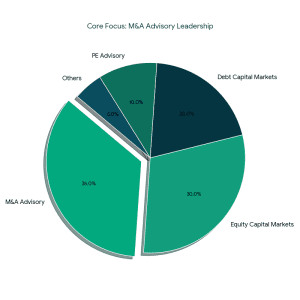
Investment Banking Revenue Distribution in India
Conclusion:
India’s investment banking industry continues to evolve, driven by IPO momentum, cross-border M&A, and private equity inflows. Whether a company seeks capital raising, strategic acquisition, or restructuring support, choosing the right advisory partner is critical for transaction success. As deal activity strengthens in 2026, investment banks will play an even more strategic role in India’s economic expansion.
1. What does an investment bank do in India? Investment banks help companies raise capital, manage IPOs, structure mergers and acquisitions, provide debt advisory, and offer strategic financial consulting.
2. Which is the largest investment bank operating in India? Global banks like J.P. Morgan and major domestic players such as Axis Capital and ICICI Securities have strong market presence in India.
3. How do investment banks earn revenue? They earn through advisory fees, underwriting commissions, deal success fees, and structured finance charges.
4. Which investment bank is suitable for startups? Boutique advisory firms and growth-focused advisors are often preferred by startups due to specialized fundraising expertise.




 Summary








 Conclusion: