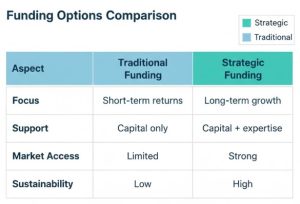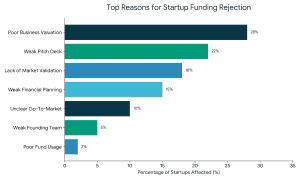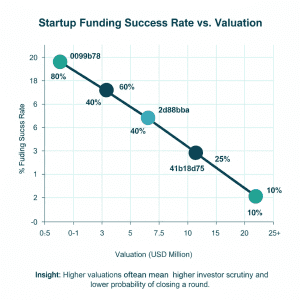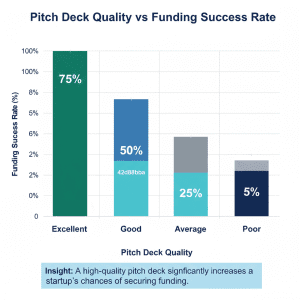

Equity Funding For Retail Business

Struggling With Retail Business Funding? Here’s How Equity Funding Really Works

Retail firms do not fail due to bad ideas but they fail due to the pressure of cash flow and lack of growth capital. Increasing rent, inventory expenses, marketing expenses, and expansion plans require financing that conventional loans are usually incapable of financing.

Equity funding of the retail business comes into play here.

Rather than worrying about EMIs, equity funding enables retail founders to attract strategic investors who invest to grow the business, distribute risk, and can commonly accelerate the brand growth. This is the guide that will guide you through the process of getting the funding to grow your small business without debt in a step-by-step manner.

What Is Equity Funding for Retail Business?

Equity funding refers to selling a part of retail business ownership to investors. You are not repaying a loan, instead you share in future profits and growth.

Key Highlights:

  • No monthly repayments
  • Reduced financial cost than loans.
  • Availability of investor experience and relationships.
  • Perfect for growth in retail companies.

Investment banking services and fundraising advisory services usually aid the equity funding by matching the retail founders to the appropriate investors.

Why Do Retail Businesses Choose Equity Funding?

Retail is capital-intensive. Inventory, rentals, marketing and staff costs increase rapidly. Numerous founders prefer equity financing since equity financing is associated with long-term expansion and not short-term survival.

Benefits of Equity Funding:

  • Small business funding is provided.
  • Enables faster expansion
  • Enhances the stability of cash flow.
  • Establishes a reputation with business associates and suppliers.

When Is Equity Funding the Right Choice?

Equity funding is suitable where:

  • You have consistent revenue
  • Your business model can be scaled.
  • You are expanding (new stores, omnichannel, franchising)
  • You do not require money only, but strategic investors.

Types of Equity Investors for Retail Businesses

retail investor landscape

This is where business fundraising expertise becomes crucial—matching your retail brand with the right investor type.

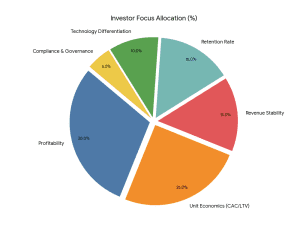
What Investors Look for in Retail Businesses?

Investors do not just finance ideas, they finance implementation.

Core Evaluation Criteria:

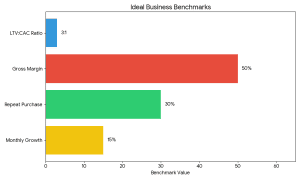
  • Strong revenue traction
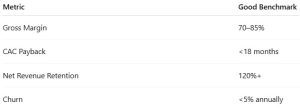
  • Healthy gross margins
  • Repeat customers
  • Clear expansion strategy
  • Experienced founding team
  • Unit economics (store level profitability)

Investors Look for in Retail Businesses

Step-by-Step Process to Get Equity Funding for Retail Business:

Step 1: Get Your Business Investment Ready.

  • Clean financial statements
  • Clear growth roadmap
  • Defined use of funds

Step 2: Develop a Retail-Centric Pitch Deck.

Include:

  • Business overview
  • Market opportunity
  • Store economics
  • Growth strategy
  • Financial projections

Step 3:Select the Appropriate Fundraising Path.

You can:

  • Get to the investors directly.
  • Experience with fundraising advisory services.
  • Formal deals should be done using investment banking services.

The professional advisors play a significant role in increasing the success rates of funding.

How Much Equity Should You Give Away?

The usual methods of raising capital used by most retail businesses include:

  • 10%–25% equity in early rounds
  • 15%–30% equity in growth stages

The idea is to make an adequate amount of capital without losing control.

raising capital for retail business

Common Mistakes Retail Founders Make

  • Overvaluing the business
  • Weak financial reporting.
  • No clear expansion plan
  • Selecting the wrong investors.
  • Bypassing professional advice on fundraising.

This is the reason why most successful founders use business fundraising agencies and investment banks.

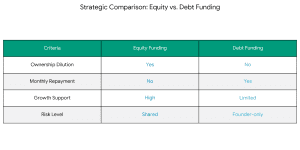
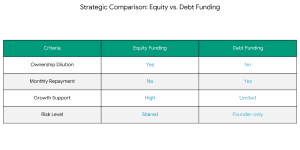
Equity Funding vs Loan Funding (Quick Comparison)

Common Mistakes Retail Founders Make

Final Thoughts:

Equity funding of retail business can be the most cunning decision to make in case you want to grow faster, build a strong brand, and remove the financial pressure. Having the appropriate plan, definite figures, and the assistance of a reliable fundraising consultancy, you will easily have funds to develop small businesses and create value over time.

Get business Funding
Quick FAQ [Frequently Asked Questions]

Q: Will small retail businesses receive equity funding?

Yes. Numerous investors make active investments in small retail outlets that have good unit economics and grow.

Q: Am I required to make profits to raise equity funding?

Not always. What is more important is revenue traction and scalability.

Q: Is the employment of a fundraising advisor justified?

Yes. Statistics indicate a lot more success with professional advisory support.

WorkIndia Series B funding

WorkIndia Secures Rs 97 Cr in Series B Led by Aavishkaar Capital

WorkIndia Raises Rs 97 Cr After 3-Year Gap

WorkIndia Series B funding

Image Source: Entrackr

WorkIndia, the blue- and grey-collar recruitment app in India, has collected Rs 97 crore in a Series B round, headed by Aavishkaar Capital (WorkIndia Series B Funding). The current investor BEENEXT Capital was also a participant of the round. Contributing Rs 22 crore, and Aavishkaar contributed Rs 75 crore.

It is the first funding round of WorkIndia in almost three years, and it underscores the increased investor confidence in the Indian employment-tech sector.

How WorkIndia Plans to Use the Funds

The new capital will be utilized to build the technology platform of WorkIndia. It improve the systems of employer-candidate matching and penetrate the areas where hiring is high. Product innovation will also be included in the company investment to better serve the job seekers. Those businesses seeking efficient work force solutions.

WorkIndia, which has its co-founders Kunal Patil, Nilesh Dungarwal, and Moiz Arsiwala. Specializes in blue- and grey-collar work in over 50 categories such as delivery, field sales, tele-calling, and other frontline jobs.

Strong Growth Signals for the Hiring Platform

According to the industry statistics, to date, WorkIndia has already earned nearly 30 million and has such clients as BEENEXT, Xiaomi, and SBI Holdings among its supporters. In FY25, the company has recorded an annual growth rate of 25 percent in operating revenue to Rs 78.7 crore, and its losses have been greatly minimized.

On the whole, the WorkIndia Series B funding confirms the increased role of technological-based hiring solutions in the Indian labor market. It sets the startup on the track of its further development.

Get business Funding

Get funding for pharma Sector

How to Get Funding for Pharma Industry Sector – From Idea to Expansion

The pharma industry ranks as one among the most capital-intensive industries throughout the globe. Many stages, drug discovery and clinical trials, regulatory approvals and commercialization, require substantial investments. However, there is a reluctance of many founders to dilute ownership at an early stage. Need a guide to get funding in pharma sector without equity, this guide steps down funding channels, funding strategies, and investment banking knowledge specific to pharma, biotech, and medical device startups.

Why Funding Is Critical in the Pharma Industry

Pharma businesses are characterised by:

  • High R&D costs
  • Long development cycles
  • Compliance with regulations.
  • Infrastructure that is capital-intensive.

This renders the process of business funding of small businesses in pharma totally different as compared to tech or consumer startups. Proven founders and healthcare investment banking consultants either concur that the selection of the funding structure is as crucial as the funding amount itself.

Stages of Pharma Funding: From Idea to Expansion

Stages of Pharma Funding

Stages of Pharma Funding

1. Idea & Research Stage

Funding is available to support:

  • Drug discovery
  • Proof of concept
  • Pre-clinical research

Non-dilutive sources of funds:

  • Government grants
  • Research subsidies
  • Academic partnerships

With free pitch deck templates, many founders are able to present early research to grant committees and institutional partners.

2. Clinical & Validation Stage

It is here that expenses are highly inflated by:

  • Clinical trials
  • Regulatory documentation
  • IP protection

Intelligent financing sources not based on equity dilution:

  • Venture debt
  • R&D tax credits
  • Strategic partnerships

At this point, it is important to use a highly organized startup financial model to show the cash flow planning and trial timelines.

3. Manufacturing, Commercialisation Level.

When approvals are close, funds are directed towards:

  • Manufacturing scale-up
  • Distribution
  • Marketing

This is the point at which Investment Banking Advisory Services are more relevant in the structuring of large, non-equity financing rounds.

4. Expansion & Global Scaling

Pharma companies raise capital to fund at maturity:

  • New product lines
  • International expansion
  • M&A opportunities

Investment banking services that are offered by the professionals are used in negotiating the favourable debt instruments and structured funding solutions.

How to Get Funding for Pharma Sector Without Giving Up Equity

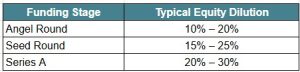
Equity Dilution Comparison

Equity Dilution Comparison

1. Venture Debt and Structured Loans.

The venture debt enables the pharma companies to raise capital on the basis of:

  • IP valuation
  • Future revenue potential
  • Regulatory milestones

This is gaining popularity in the Fundraising for Healthcare companies that desire to maintain founder control.

2. Government/ Institutional Grants.

  • Active support of many governments is:
  • Drug innovation
  • Rare disease research
  • Improvement of medical technology.

This qualifies as one of the best methods of obtaining business funding to small business in pharma without dilution.

3. Strategic Co-Development and Strategic licensing.

Alternatives to the sale of equity in pharma startups include:

  • License molecules
  • Share development rights
  • Sign revenue-sharing contracts.

It is normally recommended by experts of healthcare investment banking services to mid-stage companies.

4. Asset-Backed Financing

Funding can be done on your patents, IP, and manufacturing facilities, this works better with:

  • Medical device startups
  • Manufacturers of specialty pharma.

The pathway has been common in medical device startup ecosystem financing across the world.

Medical Device & Healthcare Startup Funding Insights

Average Capital Requirement (USD Million)

Average Capital Requirement

Although pharma and medtech are similar, medical device startup funding can be advantageous due to:

  • Faster regulatory pathways
  • Earlier revenue generation
  • Lending facilities that are secured by hardware.

Healthcare investment banking investment banks are often organized to provide blended financing plans of such startups.

Role of Investment Banking in Pharma Fundraising

Professional Investment Banking Advisory Services assist founders:

  • Recognize non-dilutive sources of capital.
  • Create institutional pitch decks.
  • Develop defensible financial projections.
  • Negotiate better debt terms

Most pharma founders do not adequately realise the value that experienced investment banking services can add in complicated fundraising rounds.

Top Ways to increase funding success.
  1. Prepare an actual Startup Financial Model.
  2. Professional Free Pitch Deck Templates.
  3. Underline regulatory preparedness.
  4. Display fund milestone utilization.
  5. Collaborate with specialists in Fundraising healthcare, Ex. FundTQ.
Final Thoughts:

Founders need to go beyond the conventional VC funding in order to successfully secure funding to grow the pharma sector. The proper combination of grants, debt, strategic partnerships, and professional investment banking advisory services will enable the pharma firms to grow sustainably without loss of ownership and control.

Whether you are a drug discovery startup or you are trying to raise some startup capital to fund a medical device, it is all about aligning your funding strategy with your level of development and future vision.

Get business Funding

investment-banking-services-in-delhi-ncr

Get Funding for Business: Top Investment Banking & Fundraising Services in Delhi NCR

In the current competitive and capital-intensive business world, the availability of the right funding at the right time may either make a company grow or get stuck. Investment Banking Services in Delhi NCR come into the limelight at this point, to assist in raising capital, conducting strategic transactions, and achieving a maximization of enterprise value by startups, SMEs, and large enterprises.

Investment Banking Services in Delhi NCR
Delhi NCR has become one of the strongest financial and starting ecosystems in India. Global investors, PE/VC firms and multinational corporations are located close to them meaning that businesses here have a unique chance to get big wins- so long as they engage the appropriate investment banking partner.

Why Delhi NCR Is a Hub for Investment Banking & Fundraising

Delhi NCR is home to:

  • 1000+ startups and growth companies.
  • Top PE & VC firms.
  • Institutional investors, family offices, and NBFCs.
  • Good legal, regulatory, and financial environment.

This renders Investment Banking Services in Delhi NCR essential to businesses that require:

  • Growth capital
  • Strategic partnerships
  • Mergers & acquisitions
  • Debt restructuring or structured finance.

What Are Investment Banking Services?

Investment banking services are professional financial advisory and fundraising solutions that aim at assisting businesses to raise funds and to carry out complicated financial operations.

The main services in investment banking are:

  1. Equity Raise (VC, PE, Angel Investors)
  2. Debt Syndication/ Structured Finance.
  3. Mergers and acquisitions (merger and acquisition advisory).
  4. Financial Modeling and Business Valuation.
  5. Structuring of transactions and Negotiation.
  6. Regulatory Support and Due Diligence Support.

These services can greatly enhance the rates of funding and valuation when provided by a team of professionals.

Get Funding for Business with Expert Investment Banking Services in Delhi NCR

Fundraising is not a pitching game, it is a game of strategy, storytelling, financial fidelity, and investor fit.

How the Investment Bankers Assist you to Raise Capital:

  • Find the correct investors in your industry and phase.
  • Develop investor-ready research documents and financial models.
  • Maximum valuation positioning of your business.
  • Coordinate the full process of fundraising, outreach to close.
  • Make the best interest negotiation of term sheets.

You may be a startup with seed funding needs or a well-established business that is intending to raise Series B or PE financing, Investment Banking Services in Delhi NCR offer a structured and professional implementation.

Industries Served by Investment Banking Firms in Delhi NCR

Industries Served by Investment Banking Firms

Main investment banks in the region serve a broad variety of industries such as:

  • Technology & SaaS
  • Fintech & NBFCs
  • Healthcare & Pharma
  • Production and Engineering.
  • Real Estate & Construction
  • Consumer & Retail Brands
  • Renewable Energy & EV

This is a sector experience that increases investor trust and speed quickens the closing of a deal.

Why Choose Professional Investment Banking Services in Delhi NCR?

  1. Local Expertise and Global Reach.

The investment bankers of Delhi NCR have a great local market knowledge and the ability to access international sources of capital.

  1. Higher Funding Success Rate

Deals arranged professionally appeal to long-term investors who are serious.

  1. Time & Cost Efficiency

Bankers are in charge of the full fund raising process whereas founders are concerned with operations.

  1. Compliance & Risk Mitigation

Secures compliance with SEBI, RBI, FEMA, and laws.

Why Trust Professional Investment Banking Advisors?

Investment Banking Services in Delhi NCR1. Experience
Leading companies have implemented hundreds of fundraising and M&A deals in industries.

2. Expertise
These teams consist of chartered accountants, MBAs, former bankers and finance specialists.

3. Authoritativeness
Good contacts with the VCs, PEs, banks, and institutional investors.

4. Trustworthiness
Clear fee system, secrecy, and client centric advisory.

All these aspects have rendered Investment Banking Services in Delhi NCR a reliable growth partner, and not a service provider.

Why Trust Professional Investment Banking Advisors

  • Faster access to capital
  • Improved valuations
  • Strategic investor relationships.
  • Long term sustainable growth.
  • Effective exits or expansions.

Frequently Asked Questions (FAQs)

1. What are Investment Banking Services in Delhi NCR?

Investment banking services in Delhi NCR are fundraising, M&A advisory, debt syndication, valuation, and strategic financial consulting of the business in various fields.

2. How can investment banking services help me get funding for my business?

They assist in finding the right investors, drafting financial reports, making an official (professional) pitch of your business, discussing terms, and closing a funding source effectively.

3. Who should use investment banking services?

Startups, SMEs, mid sized companies, and big business seeking:

  • Growth capital
  • Strategic investors
  • Mergers or acquisitions
  • Debt restructuring

4. How long does it take to raise funds through investment banking services?

Usually, 3-6 months, which is based on the business preparedness, sector, and capital.

5. What is the cost of investment banking services in Delhi NCR?

Typical costs are retainer fee + success-based fee, which are appropriately determined by deal size and complexity.

6. Are investment banking services only for large companies?

No. There are numerous companies that operate in the business of startups and SMEs, providing tailored fundraising and advisory services.

7. How do I choose the right investment banking firm in Delhi NCR?

Look for:

  • Experience in handling transactions.
  • Sector expertise
  • Strong investor network
  • Transparent fee structure
  • End-to-end execution capability.
Conclusion:

When you want to have your business financed, expand operations, or make strategic deals, it would be a prudent, expansion-oriented move to team with professionals who provide Investment Banking Services in Delhi NCR.

Through the appropriate advisory assistance, business organizations can access capital, create value and make big wins in the competitive market.

Get business Funding

funding for ai startup

I Asked 50 Investors How to Get Funding for an AI Startup—Their Answers Shocked Me.

Starting up an AI company might be akin to attempting to scale Everest without a rope. You only possess an innovative idea, a vision, no connections, no network, and zero funds. The good news? You can find funding of AI startups, even when you are starting with nothing.

We interviewed 50 leading investors in the field of venture capital, technology investment banking services, and fintech investment banking. Their advice showed trends, approaches, and untapped opportunities that can significantly transform your success in raising funds.

How to Get Funding for AI Startup

Understanding the Funding Landscape for AI Startups

It is important to know how AI startups are funded before immersing into the strategies:

  • Seed Funding: Capital to be used in the initial stages to develop prototypes or test the market.
  • Venture Capital: Greater funding of startups with scale and momentum.
  • Strategic Investors: Investors are corporations and fintech companies seeking to invest in emerging AI technology.
  • Government Grants and Incubators: This is often neglected but this type of funding may be non-dilute.

Hint: The use of technology investment banking services and fintech investment banking expertise can be used to offer a road-map on how to structure deals and find investors effectively.

7 Proven Ways ot Get Funding for Your AI Startup With Zero Connections

1. Pitch Your Pitch with Free Pitch Deck Templates.

Shareholders desire transparency, perspective, and expansiveness. A refined pitch deck can be the difference. Use AI- and tech startup-optimized templates of free pitch deck to describe:

  • Market opportunity
  • AI product differentiation
  • Business model and monetisation strategy.
  • Traction and milestones

2. Use the Power of Online Media and Community.

Platforms such as AngelList, LinkedIn, and Crunchbase enable startups to meet with investors even without any personal ties. Join AI-related communities, communicate your vision, and seek advice from experienced professionals.

3. Think about Investment Banking Advisory Services.

Investment banking services in the field of technology are able to assist in structuring your round of financing, identifying the right investors, and offering credibility. A large number of investors like startups that are guided by advisory services as they are signs of professionalism and minimisation of risk.

4. Cultivate Strategic Partnerships.

Connect with fintech investment bank companies or technology accelerators. They are able to open the doors to funding networks, which you could not otherwise access.

5. Show Traction Early

Investors are more concerned with outcomes more than relationships. Show early adoption, prototype success, or pilot programs. This may contain customer testimonials, AI model accuracy rates or small revenue streams.

6. Pitch to AI & Tech Accelerators.

Funding and mentorship can be offered by such programs as Y Combinator, Techstars and AI-centered incubators. Your startup is also justifiable in future investors when you are an accelerator.

7. Take advantage of Content and Thought Leadership.

By posting AI insights, case studies, or technical blogs, you position your startup as a self-assured, well-educated member of the AI ecosystem. Investors will be more willing to invest in startups that have apparent expertise.

How Investment Banking Can Amplify Your Fundraising

Working with technology investment banking services or fintech investment banking experts can: Even as an early-stage AI company, you can:

  • Referrals to high-value investors.
  • Maximize your valuation and term sheets.
  • Grant due diligence support.
  • Place your startup with strategic value within the AI investment ecosystem.
  • Imagine that they act like a force multiplier on your fundraising efforts.

Key Takeaways From 50 Investors

Here’s what we learned after interviewing multiple investors:

Key Takeaways From 50 Investors

FAQs – Frequently Asked Questions

Q1: Is this possible to raise money in an AI startup with no network?
Absolutely. Platforms, accelerators, and advisory services eliminate the need to make connections at the initial phase in case you are concentrating on traction and a good pitch.

Q2: What can investment banking do to assist an AI start-up?
They offer tactical advice, assist in organising the deals, introduce startups to investors, and make your business valid to get more trust.

Q3: Do free pitch deck templates work in raising funds?
Yes. The templates assist in making your AI startup look professional and summarised. Ensure that you tailor them in order to present your own distinctive AI solution.

Q4: What kind of investors are ideal AI startups?
The AI startups are usually of interest to seed investors, venture capitalists, corporate strategic investors, and fintech-oriented investors.

Q5: What do I do to show traction when there is no revenue?
Present prototype success, pilot projects, user base, AI model precision, or initial collaborations. Revenue is not as convincing as metrics.

Conclusion

It is not easy but not impossible to get business funding on your AI start-up without previous connections. With a powerful pitch, preliminary traction, online networking, accelerator program, and advisory services of investment banks, a first-time founder may be able to get capital and grow the AI innovations.

Bear in mind: investors do not invest in a Rolodex alone but the vision supported by the results. The proper approach can make your AI company raise money and flourish in the modern technology industry.

Get business Funding

Free Pitch Deck Templates

Free Pitch Deck Templates for Startups: Download Now

Hello founders, entrepreneurs and startup enthusiasts! It probably means that you are here on the search to find a free pitch deck template, pitch deck template free download, or pitch deck templates free on Google Slides. You may also be considering pitch deck template PPT free download, or just a free pitch deck template download next time you need to raise new capital in India. Fortunately, you are at the right place.

In this all-inclusive guide you will find:

  • Why a free pitch deck template is a good idea (and what to be wary of).
  • What are some of the important slides and format of your pitch (so that your deck matches what the investors would want)
  • Where to find the quality of free pitch deck templates (including Google Slides / PPT variations)
  • The way the deck connects to the business fundraising services, investment banking services, and the overall startup funding in India.
  • Ideas and advice to make your free template personal so that you do not simply download the so-called nice slide but create a powerful story to the investor.

Let’s dive in.

Why Use Free Pitch Deck Templates?

#1 Speed & Professionalism

Time is money when it comes to a start-up. The presence of a pitch deck template free or a free pitch deck template gives you the freedom to start your presentation with a pitch deck template. Effective slide layouts, uniform colour scheme and investor friendly structure is already implicated in good templates.

In the case of early stage founders in particular, this allows you to invest in content (story, traction, financials) instead of design.

#2 Cost-Effective

In different parts of the world such as India where most of the startups are bootstrapped or at an early stage, it is not always possible to spend large amounts of money on design. Granting free access to good design can be done using a free pitch deck template download or free pitch deck template Google Slides version where the money saved can be allocated to other important things (tech, staff, marketing).

#3 Investor Expectations Congruence.

Structures embedded in templates provided by experienced providers tend to be the ones that meet the expectations of the investors. For example, what is going to slide, storytelling, displaying the size of the market, problem/solution, traction etc. With a good template you increase your odds of your deck being investor-ready and not just pretty.

#4 Risk of Over-Reliance

But, there is a catch, though — applying a free template does not imply that the work is over. You still need to be able to make the existing content about your startup, your market in India (or wherever you are operating), your funding request, your metrics. When you just plunk your numbers in a standard format and hope, it will not work. One investor in a forum said:

A deck is meant to arrange a face-to-face meeting, it is not your complete resume.

Then select a template carefully, then personalise intensively.

What Should Your Pitch Deck Contain?

When the pitch deck free template or pitch deck free startup template is in use, ensure it contains the essential items that investors would require more so considering the environment of investing in India and dealing with business fundraising or investment banking services.

The major slides/sections are the following with a short explanation:

1. Cover / Introduction

  • Startup name, tagline, logo.
  • A single sentence value proposition that simply tells what you do, to whom, and why it is important.
  • First, ensure that your opening slide is powerful. Additionally, the initial slide should tell the story of the business in easily comprehended, straightforward language, as highlighted in one of the articles.

2. Problem

  • What is the pain/need in the market?
  • Who suffers from it? How big is the issue?
  • It is preferable to use actual stories or data.

3. Solution

  • What your product/service solves the problem.
  • Use images or screenshots where necessary.
  • Why is your solution unique?

4. Market Opportunity / Size

  • What is the Total Addressable Market (TAM), Serviceable Available Market (SAM), Serviceable Obtainable Market (SOM)?
  • In India, it assists in localising the numbers (India TAM + global provided you have global ambition).
  • Investors are interested in determining that the opportunity mattered.

5. Business Model

  • How you make money.
  • Sources of revenue, prices, channels of sale.
  • Connect this to actual measurements, not a we will charge it later.

6. Traction / Metrics

  • What you have already accomplished: users, revenue, growth rate, partnerships.
  • At least when you are still in the early stages, demonstrate something (pilot results, customer testimonials, etc).
  • One of the founders of Reddit pointed out:
    Demand some evidence that you are going the right way… No vanity metrics.”

7. Competitive Landscape

  • Who does the same? How do you compare?
  • Showcase your strengths (team, technology, go-to-market, cost structure).
  • Competition that is not discussed can be a cause of concern: “Unless other people are doing it, is the market there?

8. Go-To-Market Strategy

  • What will be your strategy of getting customers?
  • What are your marketing/sales channels? What are the costs?
  • Local context (distribution, regulation, partnerships) is useful to outline, particularly in India.

9. Team

  • Who are the founders? Their background. Why are they the right team?
  • Mention key advisors (let go lost) in case you have an advisory board.

10. Funding Ask & Financial Projections.

  • Level 3-5 years projection: sales, expenses, profitability (or trend).
  • Upon funding request: what you require, how you will utilise it (milestones).
  • When it comes to investors, this is what they want to know: how you are going to use the money, when it will be the next milestone.

11. Closing / Call to Action

  • Thanks slide, contact details, action plan.
  • Keep it crisp.

Where to Find the Best Free Pitch Deck Templates

When looking to find a free pitch deck template, pitch deck template free download, or free Google Slides pitch deck templates, these are effective ways to find one:

  • Sites where PPT/Google Slides can be downloaded (verify that licence is free).
  • Specific startup / fundraising templates. As an example, the cited resources include 35+ best pitch deck startups + free PDF downloads.
  • Make sure the template has layouts that can be edited, content and designed.

Tips when choosing:

  • Find PPT + Google Slides (then you can edit in Google Drive, in case you want to).
  • Make sure that the number of slides is not too many (10-20 slides is a typical case) but not too many.
  • Ensure that the style of design is professional but not complicated (not too many details, few words, clear images).
  • Ensure that the call to action or funding ask slide is present (significant in preparing investors).
  • Check that the template is easily customised to your brand (colours, logo, fonts).
  • Do not use templates that appear too generic or badly free in appearance – investors can detect this.

free pitch deck templates
How This Links to Investment Banking Services & Business Fundraising Services in India

When you are in India and considering raising funds to start your startup, it is worth knowing how your free pitch deck templates fit in the larger ecosystem.

Investment Banking Services Role.

Although we tend to think of investment banking services to be offered to large companies, in the case of most startups the services encompass: preparing the investor materials, valuation advice, fund round structuring, institutional investor/VC introduction, due diligence support. Having a good pitch deck (created using a free pitch deck template but modified), puts you in a better position when undertaking such processes.

For instance:

  • Your deck leads to the first investor outreach (the teaser).
  • Investment banking advisors can refreeze the deck, rehearse you, polish the numbers, structure the task.
  • They can assist in wrapping your fundraising proposal in a way that would be attractive to the local Indian investors as well as foreign investors.
  • Therefore: you start with a powerful free pitch deck template; you can add value to that by using professional fundraising services.

Business Fundraising Services

Same concept: various start-ups request agencies or consultants to assist in business fundraising (preparing financial models, investor presentations, term sheets, etc). The pitch deck is the key element of that material set. Therefore: the more the better you tailor your free startup pitch deck template, the easier your fundraising is.

Startup Funding in India

When in the Indian context, you should make your deck reflect market realities: regulatory environment (fintech, edtech etc), distribution and logistics issues, domestic costs of user acquisition, domestic competition (India vs global). When you are downloading a business pitch deck template free, you should make it an Indian one: state Indian market size, Indian case studies or pilots, your India-specific go-to-market. That will be well received by investors in India.

Free download of pitch deck templates will allow you to concentrate on the Indian content and not the design. So, when you are looking to fund (seed, angel, Series A), your deck will be next to term sheets, communication to your investors: therefore you want templates that are clean, flexible, and transformer friendly.

Best Free Pitch Deck Templates: What to Look For

When comparing several pitch deck templates that are free:

  • Is it investor-centric (problem 2 solution market business model traction team ask)?
  • Can it be edited in Google Slides (to work collaboratively) and PowerPoint?
  • Does it have a visual appearance of modernity, simplicity and legibility (on screen and PDF)?
  • Does it have specific financial and funding ask slides (not generic)?
  • Is the template too generic to be adapted but too specific to be pointless (not 100 slides of fluff)?
  • Is it easy to export (PDF, share link) since most Indian investors demand PDF decks?

When selecting the best free pitch deck templates you can compare a few; the one you can customise easily, you can make your story clear and the one that does not draw attention to itself.

Step-by-Step: Using a Free Pitch Deck Template

It has a simple workflow of how to download a free pitch deck template, making it a mission-ready investor deck.

1. Download & Review the Template

Select a nice free pitch deck template or free Google Slides pitch deck templates version. Open it, review all slides. Add or delete slides according to the needs of your business.

2. Customise Branding & Style

Insert blanked out logo, use your brand colours (where applicable). Make fonts readable on-screen and off.

3. Craft the Story Content

  • Issue: applicable to your target market (India/global).
  • Problem: what you make, how it is special.
  • Market: TAM/SAM/SOM (Include Indian context where relevant).
  • Business Model: the way you make a profit.
  • Traction: measurements, initial users, collaborations.
  • Team: emphasize founder credibility.
  • Questions: Amount raised, fund use, milestones.

Make every slide have one-line titles to ensure even when an investor is in a hurry to look through the presentation, he/she understands the message.

4. Visuals & Data

Use charts, icons, screenshots where possible. Effort to demonstrate actual data or be what you say. Avoid large blocks of text. As referenced by the guide:

“Be straightforward… Prioritise story over stats. Pitch decks should be short and informative.

5. Customize to your Audience/ Market.

When you are trying to raise money in India, make sure that the deck has references to Indian market size, local regulatory or competitive environment, Indian go-to-market plan. Also note how your startup is or will be linked or utilize local talent, cost structure, distribution, etc.

6. Collaborate & Iterate

Send the deck to mentors or advisors (or your business fundraising / investment banking services team). Get feedback, iterate, refine. You can use the initial investor surveys to enhance it significantly.

7. Export & Prepare for Presentation

Complete layout, export to PDF and retain editable version (Google Slides or PPT). Check all fonts, graphics are good. Ready to make it part of your fundraising package (in addition to the executive summary, business plan, term sheet), to investors in India or overseas.

8. Rehearse the Pitch

Your pitch is facilitated by the deck. It should be able to be presented within approximately 10-15 minutes, which should focus on the key slides and tell the story as opposed to slide reading. As one article pointed out: Various investors operate in various structures … What you need to be trying to do is to make the investor believe that some of his money needs to be invested in your business because it will multiply…

FAQs & Common Mistakes to Avoid

Q: Is it possible to use any free pitch deck template?
A: Yes, but make sure that it matches your business stage (seed, angel, Series A), and your market (India/global). Other templates are generic; they will still need to be customised on a profound level.

Q: How many slides is too many?
A: There is no strict guideline, but most investors would like it to be between 10-20 slides. Longer decks will be dilutive to concentration. One of the sources suggests that there might be enough slides (12).
Medium

Q: Is detailed financial modelling required?
A: Add top-level projections and important measures; you will not need 100 pages of spreadsheet in the pitch deck, but you must be ready to provide detailed models as needed.

Q: What are the errors founders commit?
A: Some common ones:

  • Overloading the slides with text, rendering it illegible.
  • Applying a generic template without personalising it to their story.
  • Lacking Indian sensitivity in bringing up in India (or local market)Failure to specify funding seek and milestones.
  • Lacking traction or plausible figures.

Q: What is the relationship between this and business fundraising or investment banking services?
A: Your deck is the main document you are going to use in fundraising. If you use professional services (such as business fundraising or investment banking), then they will analyse, polish, and match your deck with investor market expectations—whether in India or globally. Therefore, visualise the deck as your ticket to investor meetings. Moreover, the more beautiful and polished it is, the more likely you are to get into meetings with quality investors and, consequently, get good terms.

Summary

To conclude: no matter how many times you have sought free pitch deck templates, pitch deck template PPT free download, free Google Slides pitch deck templates or even a pitch deck free template to raise funding on your startup in India, the trick here is to pick a robust template, tailor it to your narrative and market, match it with investor expectations, and back it up with good content, numbers and visuals. In this way, you will fit seamlessly into the larger fundraising ecosystem. For example, by documenting in front of your future investors and by using business fundraising services or investment banking services to structure your round. Moreover, use the deck to clearly answer why your startup, why now, why you, and why me (the investor). Then you have the base of the next step, outreach, negotiations, closing.

Ready to get started? I can also point you to some of the best free pitch deck templates (Google Slides + PPT) on the market today, and can even go as far as to customise one to your Indian-startup situation.

Get business Funding

Tech Startup Funding

How to Get Tech Startup Funding: A Practical Guide for Founders

Launching a tech start up is fun- but to bring an idea into a successful business needs funding. Be it a new AI tool or SaaS solution, or a hardware solution, funding is necessary to grow operations, recruit talent, and roll out your product. This manual demonstrates how to raise money through tech startup funding, and has steps to follow that are relevant to the current tech ecosystem.

Why Tech Startups Need Funding?

Technology startups have a higher initial expense than traditional businesses because of:

  • Software development, hardware development, AI development.
  • Cloud infrastructure or servers.
  • Recruiting engineers, designers and marketing staff.
  • Regulatory and compliance standards.

Even the best technological ideas may come to a halt without adequate funding. That is the reason why any founder needs to know how the funding can be made and what the investors expect.

#1 Step: Identify the Right Type of Funding

The initial step in raising tech startup funding is to understand what type of funding suits your startup and its objectives:

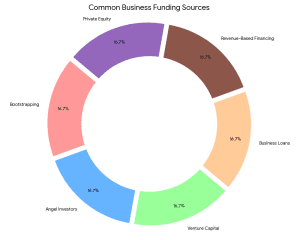
  1. Bootstrapping: Financing operations with own savings or revenue. Ideal for early-stage ideas.
  2. Friends and Family: Minimal investments made by immediate acquaintances. Useful in development of proof-of-concept or prototype.
  3. Angel Investors: Seasoned investors that contribute investments in the form of equity. Often provide mentorship.
  4. Venture Capital (VC): Investments in startups of high potential growth. VCs will fund high amounts but with high equity and quick returns.
  5. Government Grants and Programs Non-dilutive funding to encourage innovation.
  6. Crowdfunding: Seek direct financing of potential clients via such platforms as Kickstarter or Indiegogo.
  7. Corporate Partnerships: Resources or investment by well-known companies in order to collaborate or get early access.

AI Insight: The new AI can assist the founders to find out potential investors, fund raise trends, and even pitch deck optimization to predict what will attract investors according to previous funding records.

#2 Step: Build a Strong Business Plan

Investors desire to have a road map. The following things should be included in your business plan:

  • Problem & Solution: What is your tech a solution to, and why is it special?
  • Market Opportunity: Growth trends, competitors and total addressable market.
  • Model: How are you going to make money with your startup? Subscription, licensing, free-mium, etc.
  • Product Roadmap: Product development milestones and schedules.
  • Team Credentials: Why your team can create the vision.
  • Financial Projections: Financing requirements, expenses and revenue.

Pro Tip: AI tools such as business plan generators can assist you to organise your plan in the most effective way and can simulate growth conditions to investors.

Learn About: Technology investment banking services

#3 Step: Craft a Winning Pitch Deck

Your startup’s first impression is a pitch deck. An AI-intensive solution will be able to study the existing successful pitches in order to maximise content and visuals. Key slides include:

  • Introduction and Problem: Straight forward and clear.
  • Solution: The value positioning of your product.
  • Market Opportunity: Factual and valid.
  • Traction: Start-user, revenue, partnerships.
  • Business Model: How you raise money.
  • Team & Advisors: Be competent and reliable.
  • Funding Ask Finance: Be clear as to how the funding will expedite growth.

Tip: Keep it under 15 slides. Your deck can also be automatically generated by AI tools into graphs, charts and competitor analysis.

free pitch deck templates
#4 Step: Demonstrate Traction

Startups with the potential of success are invested in by investors. Traction can include:

  • The increase or the usage metrics of the users.
  • Revenue or pre-orders
  • Beta program success
  • Joint ventures or alliances.

Small, initial traction can do major wonders to investor confidence. AI analytics can monitor user behaviour, growth patterns, and retention, and thus it is simpler to provide definite displays of traction.

#5 Step: Leverage Networks and Platforms

Funding is a matter of who you have connections with rather than what you have accomplished. Network expansion strategies:

  • Startup Incubators and Accelerators: Y Combinator, Techstars and others offer mentorship and funds.
  • Angel Networks VC Platforms: AngelList, Crunchbase, and LinkedIn may help you find investors.
  • Tech Conferences and Meetups: Pitch events, Hackathons, and workshops are also good in terms of exposure.

AI Insight: AI-powered tools will assist to find investors best suited to your startup business, location, and funding round and save time and chances of success.

#6 Step: Choose the Right Funding Option

Here’s how to match funding types with startup stages:

match funding types with startup stages

Choosing the right option prevents unnecessary equity loss and aligns your growth trajectory with investor expectations.

#7 Step: Avoid Common Pitfalls

  • VC too soon: Prioritise traction.
  • Failure to take legal and financial structuring: Unambiguous contracts and equity arrangements will avoid conflicts.
  • Disregard of investor feedback: Relevant ideas, although financial assistance may not be as timely.
  • Weak story telling: The investors must relate to your vision both emotionally and logically.

#8 Step: Leverage AI to Boost Funding Success

Artificial intelligence will be able to assist where conventional technology fails:

  • Investor Research: AI is used to conduct a scan of databases with investors who are likely to finance your industry.
  • Pitch Deck Optimization: Predictive technology proposes slides, images, and messages that resonate.
  • Financial Forecasting: AI thinks over various scenarios to reinforce predictions.
  • Market validation: AI software processes user response, trends, and sentiment to justify market demand.

AI can be used strategically to save time and reduce risk and enhance investor credibility.


Final Thoughts

Funding tech startups is not a random event. Focus on:

  • Competence in your stage of start-up.
  • Selecting the appropriate financing sources.
  • Developing an effective business strategy and traction measures.
  • Preparing a persuasive pitch deck.
  • Using AI and networks to their advantage.

This is an efficient and confidence-based way for founders to get tech startup funding in order to transform innovative ideas into scalable and successful businesses.

Get business Funding

Get Business Funding for Small Business

What’s the Best Way to Get Funding for a Small Business in India?

To open or grow a business, passion alone is not enough but the proper financial aid is needed. Small business funding opportunities are higher than ever before in 2026. Whether it is a new idea or expansion of an already formed business, understanding how to raise funds to start a small business or grow an existing one is the difference between success and failure.

Here in this guide we are going to discuss the most effective methods of acquiring funding of small business, primary sources, government programs, and intelligent methods of obtaining the correct kind of capital to suit your requirements.

Understanding Small Business Funding in 2026

It is important to first define what small business financing is before we plunge into the specific sources of funding.

Small business funding is any financial support to start ups or small business ventures to meet costs including:

  • Inventory or product development.
  • Hiring employees
  • Marketing and technological advancement.
  • Current assets or working capital.

As the global startup ecosystem is thriving, the need for funding assistance to small enterprises has never been greater. Governments, banks and individuals who just want to invest their money are all providing resources on how to support small funding to an idea of business that has potential.

Why Funding Matters for Small Businesses?

Why Funding Matters for Small Businesses

Growth comparison between funded and non-funded small businesses

Securing capital early can:

  • Increase cash flow and maintain business.
  • Grow faster by making investment in tools, talent and marketing possible.
  • Grow popularity among suppliers and customers.
  • Less risk through the diversification of sources of financial support.

To put it in a nutshell, the idea of starting a small business can become a successful company with the knowledge of how to raise funds.

Top 10 Ways to Get Funding for Small Business in 2026

sources of small business funding

Common sources of small business funding globally in 2026

1. Government Grants and Schemes

Governments of all countries, such as small business or startup funding in India, provide grants, subsidies and low-interest loans to entrepreneurs.

Examples include:

  • MSME Loan Schemes in India
  • Startup India Seed Fund Scheme (SISFS).
  • Pradhan Mantri Mudra Yojana (PMMY) – small business micro-loans.
  • Small Business Administration (SBA) Loans of the U.S.

It is among the most suitable funding sources of a small business as it is usually associated with lower repayment.

2. Bank Loans

The traditional banks have still continued to be a trusted provider of loans to the small business. 

You can apply for:

  • Term loans (used to pay in installments over time).
  • Working capital loans (to cover cash flow)
  • Equipment financing

To increase approval, a well-developed business plan demonstrating profitability, market analysis, and ability to repay should be prepared.

3. Microfinance and NBFCs

Microfinance institutions and Non-Banking Financial Companies (NBFCs) will provide assistance in the event that you do not have collateral or a good credit history. They issue small financing business loans on flexible conditions, particularly in the developing markets.

This suits those entrepreneurs who want to get financial assistance to develop small businesses in the rural or semi-urban environment.

4. Angel Investors

Angel investors are also individual investors who risk using their personal funds in startups that have potential. By 2026, it is only a few clicks to find investors that focus on your industry by using digital platforms such as LetsVenture, AngelList, and SeedInvest.This is among the most effective small business funding choices in the case of a startup.

5. Venture Capital (VC)

In case your business has high growth potential, VC firms can provide huge funding rounds. They usually invest in the areas of technology, fintech, healthcare, and sustainability.

Although it implies relinquishing part of the ownership, the mentorship and exposure VCs will offer may accelerate the process of growth, and it is one of the most effective methods of obtaining funds to run a small business with scalability in mind.

6. Crowdfunding Platforms

Crowdfunding is a popular alternative source of funding. There are platforms such as Kickstarter, Indiegogo or GoFundMe that enable you to fundraise through the crowd.

You can provide first-time availability of products or benefits to supporters. It is a creative and democratic method of securing small funding business assistance without conventional loans or investors.

free pitch deck templates
7. Business Incubators and Accelerators

There are numerous incubators and accelerators that provide funding assistance to the small business ventures as well as mentoring, network, and space. Cash-based investor programs such as Y Combinator, Techstars, and Startup India Hub are business development programs.

Becoming an accelerator may be a game-changer to startups that want to obtain small business financing and develop.

8. Corporate Partnerships and Mutual Funds

Investment programs or small business mutual funds are managed by some large corporations to foster innovation. As an example, businesses can invest in startups that do not cannibalize their product ecosystem.

Not only can these partnerships provide funding to small businesses, they can also include technical expertise and market access.

9. Trade Credit and Supplier Financing

In case your business is dependent on suppliers, you can enter into a trade credit agreement which will enable you to pay after selling goods. It is a less known but efficient source of small business funds that can be used to handle stock without the initial expenses.

10. Bootstrapping

Bootstrapping refers to funding your business with personal savings / revenue. Though it restricts start-up capital, it provides complete control and eliminates debt.

This is an ideal choice in small business entrepreneurs that would wish to remain lean and autonomous and only seek outside business capital later.

Types of Funding for Small Businesses

Understanding the types of funding for small businesses helps you choose the right one:

Types of Funding for Small Businesses

Choosing the right type depends on your stage, risk tolerance, and repayment capacity.

How to Prepare Before Applying for Funding?

These are the main steps to follow before you can apply any type of small business funding:

  • Develop a powerful business strategy- Prepare your vision, market size, competition and financial predictions.
  • Develop your credit history- Good credit increases your loan chances.
  • Prepare financial records – Have tax returns, invoices and bank statements on hand.
  • Find the appropriate source of funds to use- You cannot use any blindly; you must find what suits you.
  • Show traction Evidence of customers, revenue/social proof increases investor confidence.

With proper preparation, you will be the best among the applicants who are in need of business finance to start small businesses.

Small Business Funding in India: 2026 Outlook

Growth of Small Business Funding in India

The line graph visualizing the projected funding volume index for fintech lenders like Razorpay Capital and KredX (2022–2026) has been created.

The startup environment in India is still booming amidst a boom in financing small business in India.

Key trends include:

  • E-loan services that have immediate approval.
  • Innovation grants and seed funds that are supported by the government.
  • The emergence of new fintech lenders, such as Razorpay Capital and KredX.

These advancements have rendered funding of small business easier than ever before with or without the conventional banking relations.

Challenges in Securing Funding

The opportunities are high but the entrepreneurs encounter struggles like:

  • Limited credit history
  • Insufficient collateral
  • Strong competition in terms of grants and VC funding.
  • Complex documentation

To overcome these, it needs to be persistent, have a network and learn the language of investors. Keep in mind, however, that it is not only about securing funds, but securing the right kind of funds to your small business.

business valuation software
Tips to Increase Funding Success

  • Network: Partake business and pitch events.
  • Use social proof: Focus on testimonials or awards.
  • Small and Big: Firstly get microfunding, and then grow.
  • Expand digital capabilities: Razorpay, ClearTax, Khatabook will assist in financial management and credit development.

As much as you might be starting afresh, these tips can help in streamlining your small funding business venture.

Conclusion: Choose Smart, Start Strong

It is not that there is a single best way of funding a small business in 2026; it is all based on what you want to achieve and the industry you are in and the level of risk you are ready to undertake. There are dozens of options of small business funding, starting with government grants and mutual funds and going to crowdfunding and angel investment. It is all about preparation: create a great plan, network, and strategize. And with the proper strategy, you will be able to attract business funding to grow your small business and make your dream of becoming an entrepreneur a real thing.

Learn about 9 Ways of Fundraising for Startups in India

Key Takeaway

Funding your small business is no longer about luck — it’s about strategy, research, and choosing the right mix of financing sources.

Raise Series A Funding

How to Raise Series A Funding in India (2025 Guide)

The Raise Series A Funding is an important step in the life of a startup that wants to grow beyond its initial momentum. Although seed funding assists to prove the fit of your product-market, Series A is regarding growth through expansion, gaining more customers, and maintaining sustainability.

The Indian startup ecosystem is also very competitive and data-driven in 2025. The investors are not just focusing on revenue anymore, they desire scale business models, clear unit economics, strong leadership teams, and robust growth strategies.

Composing a detailed FundTQ (one of the leading investment banking and fundraising advisory firms in India) guide takes founders through the preparation process to close off your Series A round, trends, important documents and timelines.

What Is Series A Funding?

The initial major institutional round of venture capital is Series A financing that a start-up company receives following demonstration of a sound concept and momentum.

Investors in Series A expect:

  • A clear problem-solution fit
  • Existence of market demand and traction.
  • A repeatable and scalable business model.
  • An effective and creative founding team.

Purpose of Series A funding:

  • Hire and scale your team
  • Expand products or services
  • Enter new markets
  • Improve operational abilities.

Concisely, Series A converts an idea that has been tested into a business that is ready to grow.

Series A Funding Size and Valuation in India

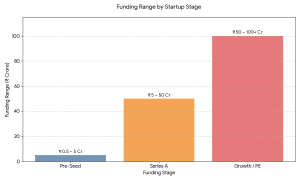
Series A funding amounts vary by sector, traction, and investor appetite. Typical ranges are:

Series A Funding Size

Tip: FundTQ helps startups determine realistic Raise Series A Funding amounts and optimal valuations using data-driven financial modeling.

Step-by-Step Guide to Raising Series A Funding

Step 1: Strengthen Your Business Foundation
Make sure your fundamentals are good before approaching investors:

  • Market Opportunity: Identify your TAM, SAM, and SOM.
  • Business Model Clarity: Show how to make money and keep it going.
  • Traction Metrics: User growth, revenue, retention rates, CAC, LTV, engagement metrics.
  • Unit Economics: Focus on gross margins, burn rate and profitability potential.

FundTQ optimises financial forecasts and business models to fulfil the expectations of investors.

Step 2: Build a Comprehensive Business Plan

Your business plan must narrate the facts about your startup story:

  • Executive summary & vision
  • Problem-solution analysis
  • Market research/competitive environment.
  • Business model & revenue plan.
  • Financial estimates (35 years)
  • Risk analysis & mitigation
  • Scaling and expansion road-map.

FundTQ prepares investor-ready business plans that are in line with VC and PE requirements.

business valuation software

Step 3: Create a Winning Pitch Deck

The first thing people see is your pitch deck. Essential slides include:

  • Issue and marketing need.
  • Solution (product/service)
  • Product demo or screenshots
  • Traction & milestones
  • Market Strategy and Competitive Advantage.
  • Financials & projections
  • Team and advisors
  • Financing needs and expenditure.

The FundTQ produces brief, attractive decks that are compliant with the international VC standards.

pitch deck templates for Raise Series A Funding
Step 4: Identify and Target the Right Investors

Not every investor fits so perfectly. Focus on:

  • Venture Capital Firms: Accel, Sequoia, Nexus, Chiratae.
  • Corporate Investors: Google for start-ups, Reliance Ventures.
  • Family Offices & HNIs: Best in niche and first mover.
  • Impact Funds: climate tech, healthtech and education ESG funds.

FundTQ offers selective access to investors in India and elsewhere in the world.

Step 5: Prepare for Due Diligence
Investors will verify:

  • Legal documents and registration of the company.
  • Tax filing and financial statements.
  • Cap table and equity structure.
  • IP ownership & customer contracts.
  • Regulatory compliance.

In order to facilitate due diligence, FundTQ performs pre-investment audits and establishes a virtual data room to facilitate the audit.

Step 6: Outreach and Investor Meetings

  • Provide a brief preview or summary.
  • Deliver your pitch deck through safe links.
  • Organize schedule and product demos.
  • Track follow-ups using a CRM

FundTQ deals with investor outreach and meetings in order to optimize interaction.

Step 7: Term Sheet Negotiation

A term sheet outlines:

  • Valuation and dilution of equity.
  • Board organization and control.
  • Rights & obligations
  • Exit terms

FundTQ gets good terms while ensuring that the founders maintain control.

Step 8: Investor-Led Due Diligence

Investors carry out intensive audits:

  • Card-related reviews and revenue recognition.
  • IP validation and legal audits.
  • Customer & vendor references
  • Compliance checks

FundTQ manages the coordination of all the teams in smooth due diligence.

Step 9: Closing the Round

Final steps:

  • Sign definitive agreements
  • Transfer of funds and allocation of shares.
  • Regulatory filings
  • Public announcement

FundTQ warrants conformity and smooth integration of post-funding.

Key Documents Required for Series A

Key Documents Required for Series A

Timeline to Close Series A

Timeline to Close Series A


Trends in Series A Funding (2025 & Beyond)

  • AI-based Startups: AI and automation have high investor interest.
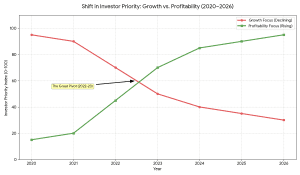
  • Profitability & Sustainable Growth: Healthy unit economics a priority.
  • Alternative Financing Models: Equity + Debt or revenue based financing.
  • International Investment Preference: US and SE Asian VCs are making more investments in India.
  • Corporate Governance & Transparency: Clean cap tables and reporting is compulsory.

 Why Partner with FundTQ

FundTQ provides the entire ecosystem of startups in need of funding:

  • End-to-end fundraising consultancy (Series A to and past)
  • Investment banking services (valuation, deal structuring, due diligence)
  • M&A advisory (sell side and buy side)
  • Support of pitch deck and financial modeling.
  • Investor relations and introductions.

Why FundTQ?

  • Successful history of Series A funding.
  • Availability of the best investors in India and around the world.
  • Professional financial and legal consultation of the closures.
  • Evidence-based decision-making and valuation.

FundTQ enables the founders to work on growth and handle the complexities of fundraising.

Ready to Raise Series A Funding?

For founders scaling their business in 2025, FundTQ makes the fundraising journey seamless. From financial modeling and pitch deck creation to curated investor introductions and deal closure, FundTQ provides end-to-end fundraising and investment banking support.

Contact us

Startup Funding in India

Startup Funding in India: A Complete Guide for New Entrepreneurs (Updated)

Funding a startup in India has swiftly transitioned into something both competitive and accessible. The ecosystem has turned into an ever-evolving and competitive sector, investing in anything to support innovation across sectors. Accessing the right funding is very important before your startup can be applied to scale, but understanding how the funding process starts can be overwhelming, particularly for first-time founders.

This is a full guide on how to navigate the startup funding in India in 2025. We will explain the significance of funding, the different ways funding has become available, outline the leading funds, and provide everything you need to successfully raise funding in a step-by-step manner. This guide is intended for those new to raising startup funding and those on their fundraising checklist.

Why Startup Funding is Crucial in India?

The Indian startup ecosystem is among the most rapidly developing ones in the world, but many efforts are left in vain, as very few start-ups manage to last more than a few years. The Capital funding is the key towards overcoming early operational obstacles, getting skilled talent, reaching out to markets, as well as increasing product development pace. Venture capital in India is not merely the provision of funds, but also the verification of the business model, and a stamp of credibility to other investors, partners, customers, and so on. Indian startups got themselves at the right time, where spectators and corporate benefactors have never been in short supply before.

Types of Startup Funding in India

Founders should choose the type of funding that best matches their goals and startup stage. Here is a breakdown:

  • Bootstrapping: Self-funding through the use of personal savings or recent revenue. Great for very early validation. 
  • Angel Investment: Wealthy individuals looking to invest capital for equity. Useful for pre-seed / seed round capital.
  • Venture Capital (VC): The professional financing of a startup with potential for growth and expansion at a high rate.
  • Government grants and schemes: There are schemes or grants that are given by the government so that the start-up can be supported.
  • Debt Financing: Loans, borrowing, or credit lines without the loss of equity often used by startups generating revenue.
  • Crowdfunding: Raising small amounts of money from a large number of people using platforms, as the public interest is essential. Good method for B2C types of products with a large appeal to mass consumers.
  • Corporate Funding: Considerations by corporations for investment opportunities and partnerships based on their familiarity with your version of an innovation or M&A possible structure.

The various funding routes also have trade offs, in matters of control, risk, and scalability, and those entrepreneurs must match them to their business model.

Top Sources of Indian Startup Funding in 2025

In 2025, several of the biggest names are working with promising Indian startups across verticals: 

  • FundTQ – A rising platform providing full-stack fundraising solutions, smarter match-making, and AI-driven pitch assessments. Willing to help first-time founders get their pitch ready, they are on their way up the rankings fast. 
  • Sequoia Capital India – One of the largest VCs with a track record of hugely successful high-growth startups like Zomato and BYJU’S.
  • Blume Ventures – Provide support for early-stage startups with a founder-first mindset and operational support mentoring.
  • Accel India – A name to reckon with as an investor in Flipkart, Freshworks, and has numerous other successful investments, predominantly scaling tech products. 
  • Venture Catalysts – The biggest co-integrated incubator of Asia that primarily invests in the Tier 2 and Tier 3 towns and cities of India.
  • 100X.VCVC takes interest in pre-seed and seed VC investments, especially ones that are fast-tracked with a mentorship component.

How to Get Startup Funding in India?

Startups in India require adequate planning, effective networking, and documentation to get funding.
The following are the steps to be followed :

1. Prepare Your Pitch
Crafting a compelling pitch is essential. There are platforms available to assist startups in the preparation of pitch decks that are investor-ready and reflect on business potential, the size and opportunity of the market, and the vision of the founders. A clear narrative and visuals improve engagement significantly.

2. Build a Business Plan
A comprehensive business plan must describe the problem that the business intends to solve in the market, the solution it will be offering, the competitive environment, and the revenue model, as well as the financial projections. Shareholders are also able to understand in-depth the execution strategy of the business based on the document.

3. Find the Right Investor
Approach the investors with interests in your type of industry, stage of company, and geography of operation. You can also research portfolios on websites like FundTQ. For example, startup fundraising in Gurugram may be more suited to early-stage VCs active in Delhi-NCR.

4. Network and Pitch
Appear on the pitch days, attend the demos, accelerators, and online forums. The benefit of networking is that it gets you noticed and increases better chances of earning funding. Change your pitch to the different investors based on his/her portfolio and taste.

5. Due Diligence and Term Sheet
When an investor has expressed interest, they will go into due diligence to check the financials, intellectual property rights, compliance, etc. Upon successful due diligence, a term sheet is signed, and it contains details of the terms of investment, equity, as well as the right to govern. At this stage, it would be highly advisable to have legal counsel.

Common Mistakes Founders Make

You can avoid the following mistakes to increase your chances of funding:

  • Setting your company valuation too high at an early stage scares off investors who are realistic about funding.
  • Overlooking any compliance or legal issues can delay diligence.
  • Generic pitches that do not explain your unique value or scalability can be unpersuasive.
  • Inability to communicate how your funds will be spent signals you have not considered financial planning.
  • Chasing every investor, rather than discerning who is the best fit for your business based on relevant domain expertise.

By staying investor-ready with a thorough fundraising checklist (which will help you avoid most of the above pitfalls), you can be more perceptive to deal flow for interested investors.

Also Read About: Fundraising mistakes

Key Documents You’ll Need

Being organized with the following documents increases investor confidence:

  • Pitch Deck (optimized for mobile and web)
  •  Business Plan and Executive Summary
  • Cap Table and Shareholding Structure
  • Financial Projections (3–5 years)
  • Customer Testimonials or Product Demos
  • Incorporation Certificate, GST, and legal registrations
  • IP Ownership Documents
  • Founder’s Resume and Team Backgrounds

Some platforms, like FundTQ, offer document storage and sharing tools to simplify the process.

The Trends of the Indian Start-ups (2025)

These are the main trends that are going to impact the funding this year:

  • The latest AI and Climate Tech: Investors have been putting emphasis on environment-friendly and sustainable technology start-ups.
  • Rise of Tier 2 and 3 Cities: More funds are actively searching for startups in other cities outside of metros to discover previously untapped areas of innovation.
  • Micro VC and Syndicates: Small check-size investors are willing to support ideas pre-revenue and make quick decisions to promote growth and innovation into the ecosystem.
  • Fundraising Automation Tools: Fundraising automation tool companies like FundTQ are reducing the cycle time of funding through automation, investigation, and discovery of the investor.
  • Equity + Revenue Share Models: Hybrid investment models are emerging from cautious investors.

Collectively, these trends demonstrate greater access to top Indian startups that are aligned with the new investor trend framework.

 Tips for First-Time Founders

  • Start small, focus on early validation, and grow with traction.
  • Investor fit is much more important than cheque size. Pick investors that align with your mission and can add value.
  • Focus on building and not pitching: The best pitch is a product that can be a pitch in itself.
  • Practice due diligence hygiene from day one: Keep your records neat and updated.
  • Stay coachable by being open to feedback so that it can elevate you in those competitive investor conversations.

By following structured SME growth strategies make the job of building a sustainable business model easier.

Conclusion

Funding for startups in India is not just for well-networked founders in metropolitan cities in 2025. The ecosystem now has greater access to more structured support, a greater number of domestic and international VCs are showing interest, and with platforms like FundTQ, the ecosystem is more resource-rich and inclusive than ever. Ready to start your funding journey? Explore tools like FundTQ or connect with local VCs to take the next step.

Get business Funding