
Five Top Funding Sources for Medical Device Startups

Five Top Funding Sources for Medical Device Startups

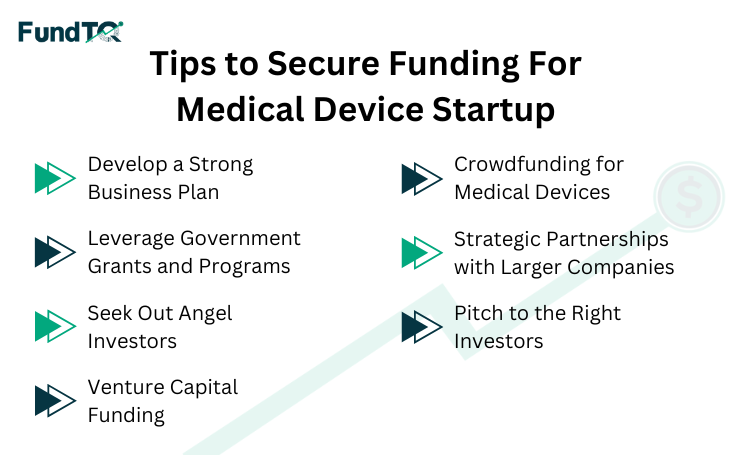
One of the most important challenges facing a medical device startup is securing funding. Depending on how inventive, it may take millions of dollars to develop, research, prototype, comply with regulations, and go through scaling phases in creating a new medical device. This article will examine five top medical device startup funding sources available to medical device startups-from which you might determine the best fit for your venture. 

Why Funding is Crucial for Medical Device Startups

The process of medical device startup funding is complicated. It needs the right suites and resource applications to reach targets such as regulatory approval, market entry, and profitability. For start-ups, the most vital aspect is availability of sound and reliable funding, the platform upon which its case may be successfully built in the future.

1. Angel Investors

Angel investors are individuals who tend to early-stage funding in medical device startups as they venture financing in trade for an equity stake. They do not only provide financing but are usually involved in mentoring and often have deep connections in the industry. Angel funding is exciting because it helps close the gap between an initial idea and a minimum viable product (MVP).

Take, for instance, the famous angel investor Esther Dyson, who has invested in several medical devices and calls for investing in health innovation. Angel investors generally look for start-ups that have an excellent business model and a good potential for scaling.

Pro Tip: AngelList does a nice job of linking your startup to potential investors. Emphasize your business plan, especially addressing unmet healthcare needs with your device.

2. Venture Capital (VC) Firms

Once a medical device startup has shown considerable promise, venture capital is typically considered the next step. These are investor groups that are high risk and high return proponents, which makes them valuable for any medical device startup ready for scaling.

New Enterprise Associates (NEA) is an example of a firm with a very large portfolio of investments in healthcare as well as medical technology companies. VCs are generous with the offerings but require previously negotiated equity and control over business decisions.

Key Insight: VCs will invest in the start-up if the business has shown promise in a route to regulatory approval and has a large addressable market. Clinical trial results or early revenues will help increase chances.

Also Read: Private Equity vs Venture Capital: Key Difference

3. Government Grants

Grants in India by the government are assimilated as a source of funding that is non-dilutive in nature since startups do not give up equity for the support that they can get from such grants. Apart from these, there are many agencies that provide grants for health and medical innovations; the major agencies include the Department of Biotechnology (DBT), the Ministry of Health and Family Welfare, and the Science and Engineering Research Board (SERB). The initiative is supposed to drive improvements in public health while making it easier on the pockets of startups.

So, the time would be wasted while applying for a government grant; however, taking this subsidy would mean your startup is credible and trustworthy. It shows the promise of your project, which, in turn, leads to attracting other investments and opportunities as well.

The Small Business Innovation Research (SBIR) program provides a steady stream of grants for healthcare startups. To dive deeper into government funding strategies, read our blog on fundraising for healthcare startups.

4. Crowdfunding Platforms

Crowdfunding has turned out to be the most common and most reachable Funding for medical device startups. In fact, there are many well-known platforms like Kickstarter, Indiegogo, and MedStartr which allow such startups to showcase their brilliant creations for an audience as wide as possible, especially to potential customers moving as sparingly as small investors.

Most influenced by the consumers would be devices like those ‘home-use medical instruments’ or the wearable health monitors/cards. Crowdfunding campaigns do more than provide the cash; they also help determine favorable market conditions for their products.

Success Story: Scanadu has thus far raised more than $1.6 million on Indiegogo in its effort to develop health diagnostics tools. The point is demonstrated by the very successful case of a great crowdfunding pitch.

Pro Tip: Make a powerful story for your campaign to convince funders. Present a critical medical challenge and visualize the solution on a prototype of your device to attract potential supporters.

5. Strategic Partnerships with Industry Players

So this can be a very important thing for startups to ally with some established medical device company or healthcare provider; such partnerships usually come with funding opportunities, access to manufacturing resources, and market knowledge.

For example, Johnson & Johnson’s Innovation arm, JLABS, has put together some funding, mentoring, and office space into the mix of incentivizing startups to indulge with a partner. Most of the time, these partnerships would blanket towards aligning your innovation with that of the partner’s strategic goals-

Key Tip: As you begin to approach potential partners, emphasize how your technology’s development will fit into their existing portfolio and open new markets.

Navigating the Challenges of Medical Device Startup Funding

Every source of financing has associated inconveniencies: Angel investors and VCs want equity; government grants bring in huge amounts of paperwork; and citizen participation is the life of crowdfunded projects. Each phase of development and each specific need of the startup must be considered to arrive at a proper mix for funding.

Medical device startups are faced with heavy regulation, making both costs and timescales blow up even further. It is therefore imperative that some funding be set aside for steering through those obstacles.

Whether applying for a grant or pitching to a VC, the right tools can make all the difference. FundTQ contains a business valuation calculator that can assist you in determining what your startup would be worth, making funding discussions that more interesting. In addition, pitch deck templates guarantee that each of your presentations is professional and captivating, increasing your chances of securing funding for medical device startups. 

Find such resources and many more on FundTQ.

Navigating differently strategically will enable funding medical devices to get financial stability and make lifesaving innovations available to the market. With every funding you disburse in this journey, ensure it aligns with the end vision of the organization.

FAQs on Medical Device Startup Funding

Q1. What is the best source for funding medical devices in their early stages?

Angel investors, along with crowdfunding, make early-stage startups more comfortable. They typically don’t just fund, but mentor. Crowdfunding helps validate the product and build a customer base.

Q2. How do I qualify for government grants for my medical device startup?

The qualifying factor would be that your startup must fit into the funding priorities of that agency. The NIH, for example, is concerned with projects that will further public health. You must describe in a strong application the technical plans, projected outcomes, and how your device meets the unmet health need.

Q3. What factors do venture capital firms consider when investing in medical device startups?

Usually, it would be a startup with good team credentials, a clear regulatory pathway, large addressable markets, and a strong business model. Clinical evidence or initial traction in the market is often key.

Q4. How much funding can I realistically raise through crowdfunding for a medical device?

The figure depends wholly on the extent of the engagement of your campaign as well as the audience. However, an effective campaign raises from ₹40 lakh to ₹8 crore. Providing a clear vision, creative visuals, and honest use of funds can do wonders for the results.

Q5. Can I combine multiple funding sources for my medical device startup?

Certainly the case and advisable to do so. You may start with angel funding, apply for a government R&D grant, and then move to venture capital for scaling up. Diversification in funding provides risk mitigation and enhanced financial stability.

How to do Fundraising For Healthcare Startup

Fundraising for Healthcare in 2026: Data-Driven Strategies, Funding Sources & Growth Blueprint

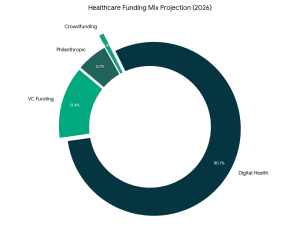
Fundraising for healthcare is expected to grow by 14–18% annually through 2026 as digital health, AI diagnostics, and preventive care expand globally. Yet over 62% of healthcare startups fail due to poor capital planning. This guide breaks down data-driven fundraising strategies that convert donors and investors.

Healthcare Funding TrendsOne of the success points of fundraising lies in an understanding of all the financial metrics driving investment. Studies show that hospitals investing in upgraded diagnostic tools improve patient response time by nearly 20%, strengthening investor confidence in measurable outcomes. Investors typically evaluate healthcare startups based on burn rate, projected revenue growth, patient acquisition cost, and long-term sustainability.

Hospitals allocating funds
Harness the Power of Digital Crowdfunding

Leverage social media to amplify the reach of your campaign. Eye-catching visuals, videos of patient testimonials, and live updates encourage them to share the campaign, making it viral. Transparency is the key: provide regular updates on fund utilisation to build trust.

Crowdfunding in the digital world has a bigger impact than just raising a lump sum of money. It helps build up your community of supporters-for example, through personal thanks or news updates or inviting small rewards to create a sense of inclusion for supporters. Show them what’s happening because of their support: progress like product concepts or important events. Transparency and openness generate trust and convert supporters into fans, willing to spread the word about your company and help it grow.

Important Note: Crowdfunding platforms are unauthorized within the geographic boundaries of India if one allows businesses or startups to raise funds in exchange for equity. Such platforms are not cleared by the Securities and Exchange Board of India (SEBI) and are illegal for raising funds for businesses in India. Always observe the local laws when exploring the various crowdfunding possibilities.

How to Raise Funds for Healthcare Startups in 2026

Raising funds for healthcare startups requires a strategic approach that is specific to the problems and opportunities available in the healthcare industry. From identifying funding sources to crafting compelling pitches, here are actionable steps to ensure successful fundraising for healthcare initiative:

Understand Your Financial Needs and Goals


What Are the Best Funding Sources for Healthcare in 2026?

Include:

  • Venture Capital
  • Angel Investors
  • Government Grants
  • Crowdfunding
  • Strategic Hospital Partnerships

Funding Sources1. Understand Your Financial Needs and Goals

Highlight your startup’s financial demands before seeking funding. How much investment is needed and what for? It is important to have a very clear budget whether developing new medical devices, opening a clinic, or creating a digital healthcare platform. Those who provide funds-mostly donors and investors-would prefer an organization that defines all the financial needs and shows how resources will be spent towards specific results.

2. Identify Your Target Audience and Funding Sources

The audience that you shall consider will mainly depend on the nature of the startup. For instance: 

  • Venture Capitalists (VCs): Best matched for the startups developing new therapies or technologies and have a very high growth potential. 
  • Philanthropic Organizations: Applicable to non-profit or startup enterprises focusing on health-related or underserved community populations. 
  • Crowdfunding Platforms: The platform works best for raising small to moderate amounts from a broad base of supporters. 

The more funding sources you consider, the better your options and lower your risks. 

This mix may include grants, individual donations, partnerships with health facilities, or government funding programs.

Also Read: Ways of Fundraising for Startups 

3. Leverage Digital Crowdfunding

Earlier, it has been mentioned that the emergence of digital crowdfunding platforms has made a breakthrough in raising funds for health facilities and start-ups. These platforms have earned huge credibility. Here are a few tips for making one successful:

  • Share a story-the story that paints the picture of your startup mission and impact. 
  • Support the story using visuals, such as a patient testimonial or prototype of your innovations to build credibility.
  • Set small and achievable milestones, triggering further support.

Share-your crowdfunding campaign on social media, email newsletters, and health networks. Such an online presence will ensure better visibility and engagement.

4. Develop a Professional Pitch

Your vision must inspire confidence among a range of investors and donors. This is perhaps best achieved with a polished pitch deck. The Pitch Deck Templates display another benefit with creating presentations and they shows

  • Showing the healthcare startup’s purpose.
  • Identify the problem as well as your unique solution.
  • Present financial forecast key milestones as well as impacts.
  • Highlight your team’s expertise and track record in healthcare or related fields.

Focus the pitch very tight on the value and priorities of your audience.

5. Build Partnerships and Networks

Forming alliances with credible healthcare organizations, research institutions, or even industry influencers can work wonders in enhancing credibility. It can also help tap into many sources of funding and mentorship. 

Attend these healthcare conferences, pitch competitions, and even networking events; they can connect you to potential investors and collaborators. You never know when a good relationship will grow to provide you with long-term support.

6. Demonstrate Accountability and Outcomes

Healthcare-related funders are discerning. Welfare donors and stakeholders demand assurance that the contributions are appropriately expended. Periodical reports to indicate cash usage – for instance, in the provision of patient care and to a larger extent into services and health improvements – build trust towards future donations.

Specific impact profiles which detail and outline proof such as development in patient outcomes, technology advancement, or health-related improvements, among others, would further enrich. By referencing such parameters, you prove, to an extent, that a donor contribution is making a direct difference, hence reinforcing the worth of their contribution.

7. Legal & Compliance Considerations in Healthcare Fundraising

  • SEBI regulations (India)
  • Equity crowdfunding restrictions
  • Healthcare data privacy laws
  • Investor disclosure norms

Conclusion

Fundraising for healthcare in 2026 requires more than storytelling. It demands financial clarity, measurable impact, regulatory compliance, and strategic communication. Organizations that combine data-driven planning with transparent reporting are more likely to attract long-term investors and sustainable funding.

Also Read: Ways of Fundraising for Startups 

Need Help With Fundraising for Healthcare?

BUTTON

Frequently Asked Questions about Fundraising for Healthcare

Q1: What role does social media play in healthcare fundraising?

With the use of social media, the outreach is widened, and it is easy for campaigns to become viral. It is through Instagram and Facebook that the most compelling stories, videos, and live updates are shared for fundraising for healthcare facilities.

Q2: How can you make the pitch deck interesting for healthcare fundraising?

The winning pitch deck is crucial for healthcare organizations that raise funds. Similar to any startup, a healthcare organisation will want to identify what value is being delivered, to whom, and the problem being solved. Learn how to build a winning pitch deck from an expert with these 10 tips for creating fundraising pitch decks.

Q3. How do I approach investors for my healthcare startup?

To convince an investor, knowing their priorities and giving your pitch accordingly is probably the most critical aspect involved in selling an idea. Additionally, you can use some professional tools, like a valuation calculator or a pitch deck template, to showcase your business plan efficiently. Be specific when it comes to discussing your mission, your financial projections, and, importantly, how measurable the impact will be from your startup to convince the investor.

Q4. What are some common challenges in fundraising for healthcare organizations?

Indeed, numerous challenges are for healthcare startups, including intense competition during fundraising, convincing stakeholders that the startup is viable and disclosing information to all parties involved. These are surmountable challenges with a good, clear plan, compelling storytelling, and leveraging partners and networks in health care.

Get business Funding

What Are The Different Types of Private Equity

What Are The Different Types of Private Equity?

Funds invested in privately held businesses are known as private equity (PE). Businesses with equity structured as stock shares are considered public firms. Following an initial public offering (IPO), these businesses are listed for trading on a stock exchange. The phrase also describes the fund methods, including different types of private equity, that investors employ to generate returns on their assets.

Opportunities for private equity investing are many. Investors can revive a flagging brand or put money into promising enterprises. Investors seeking higher returns than those possible from stock investments are drawn to private equity.

To learn more about types of private equity investing and its main investment strategies, continue reading.

9 Types of Private Equity

In contrast to purchasing stocks, real estate, and other assets with the potential for long-term growth, private equity funds are seen as “alternative” investing options. The nine types of private equity funds are described in further detail below.

1. Leveraged Buyout (LBO)

Investment capital and borrowed funds are combined in a leveraged buyout fund approach. The fund’s objective is to purchase businesses and turn them into lucrative ventures. The fund management has more money to purchase larger businesses by combining the borrowed funds with the investor’s money. In these kinds of transactions, businesses are either bought outright or the purchasing corporation acquires a majority ownership in the company to influence its direction and objectives.

Because the purchasing business uses the funds of investors and creditors to finance larger buyouts, it is known as a leveraged buyout. If the tactics are successful, the larger buyouts may result in higher profits for investors.

2. Venture Capital (VC)

One type of private equity and finance that focuses on backing new and early-stage enterprises is venture capital. Venture capitalists make investments in businesses they think have a lot of room to grow. Additionally, they provide funding to start-up businesses that have experienced rapid growth and are poised for further expansion.

Venture capital firms typically take a minority interest, in contrast to leveraged buyout funds. The management of the company is now in charge of running the company. Given that the businesses are start-ups with no proven track record of profitability, venture capital investing is somewhat riskier.

This kind of finance is typically created and managed by venture capital firms. Usually, wealthy individuals, investment banks, angel investors, and other financial organizations provide the funding. Investors don’t always make financial contributions. We also accept offers of management or technical assistance.

Numerous accounts exist of venture capital investments yielding substantial profits. For instance, when Facebook purchased WhatsApp in 2014, Sequoia Capital’s $60 million investment in the firm had grown to at least $3 billion. Sequoia’s tale is unique, yet it is what draws venture capitalists to the company.

3. Growth Equity

Businesses use growth equity to raise money to support expansion. Growth equity, sometimes referred to as expansion equity or growth capital, functions similarly to venture capital but is less risky. To ensure that the businesses getting the investment are already profitable, have a better valuation, and have little to no debt, the firms will conduct due diligence.

Growth capital makes investments in established businesses that want to expand by joining new markets or acquiring other businesses. Preferred shares are typically distributed to investors as minority ownership in growth equity transactions. Investors can still earn large returns with this kind of finance, but the risk is moderate.

4. Real Estate Private Equity (REPE)

Private equity funds for real estate use a variety of tactics when making property investments. A portion of the capital are prudently allocated to rental properties with steady, predictable income that poses little risk. Other funds make investments in speculative development transactions or land, which carry a higher risk and a higher possible return.

This kind of fund is managed by real estate PE firms. They raise money from limited partners (LPs), who are outside investors. Properties are purchased, developed, and run with the capital. Additionally, the businesses will upgrade their real estate holdings in order to sell them for a profit. The majority of funds primarily manage rental residential real estate and concentrate on commercial real estate.

5. Infrastructure

Private equity for infrastructure functions similarly to that of real estate. Private equity investors provide funds to businesses. They then purchase assets, manage them, and ultimately sell them for a profit using that money. Infrastructure funds differ in that they make investments in resources that supply necessary services or utilities. This covers industries such as:

  • Water, gas, and electricity are examples of utilities.
  • Roads, bridges, airports, and rail travel are examples of transportation.
  • Social infrastructure, such as schools and hospitals
  • Energy (such as pipes and power plants)
  • Renewable energy (such as wind farms and solar power facilities)

Businesses in the infrastructure sector are reliable and typically last for decades. Certain corporations, such as energy companies and airports, have monopolies in their services, which makes them extremely valuable. Because of all of this, investment in infrastructure is comparatively low risk.

6. Fund of Funds

Although it does not make investments in private businesses or assets, a private equity fund of funds raises money from investors. Rather, it purchases shares in a portfolio of other private equity funds in the role of an investor. A fund-of-funds corporation might invest in a leveraged buyout fund, venture capital firm, or real estate private equity firm, for instance. The fund is managed by professional investors, who also collect a management fee.

Investors can profit from diversification with this kind of vehicle. Additionally, it gives access to capital that ordinary investors might not have previously had. Funds of funds give investors access to specialist funds with greater returns because they operate in all spheres of private equity. Fund of funds investors typically include endowments, high-net-worth individuals, pension funds, and accredited investors.

7. Mezzanine Capital

A building’s mezzanine floor is located midway between floors. Because mezzanine money lies in between of debt financing and equity capital raising, this form of the fund is appropriately titled. Usually, businesses use it to collect money for particular initiatives.

Preferred stocks or subordinated notes are used to issue mezzanine capital to investors. An unsecured debt asset with a higher interest rate is called a subordinated note. It ranks behind creditors but above preferred and common shares in terms of who gets paid first. This kind of private equity is a hybrid financing method that seeks to reduce risk compared to equity financing while generating a greater rate of return than debt.

8. Distressed Private Equity

Lending to businesses in financial difficulties is the area of expertise for distressed private equity funds, sometimes referred to as special situations. The funds’ goal when investing in businesses is to seize control of the enterprise while it is going through bankruptcy or restructuring procedures in order to purchase the business at a reduced price. After that, they’ll try to make the businesses better before selling them. They will occasionally even list the business on a stock exchange and take it to the public markets.

Distressed private equity organizations raise money from outside investors, hold the investment for extended periods of time, and use it to purchase properties or businesses, just like the majority of businesses on our list. High-net-worth individuals, institutional investors, and hedge funds are examples of distressed PE fund investors.

9. Secondaries

Although it’s not their main purpose, secondary funds occasionally purchase businesses or assets and make investments in the portfolios of other private equity firms. Rather, the secondary market is there to purchase committed investments in a fund.

To start, the majority of the private equity funds on this list are usually set up as limited partnerships. Investors must make financial commitments during the fundraising process on behalf of the limited partners. General partners are members of the fund’s management team.

The initial period of a typical private equity fund is between 10 and 12 years. An investment phase is defined as the first five years. Investors can sell their investments during the harvesting phase, which occurs in the years that follow.

The secondary market is the only avenue for an investor to sell their investment if they need or wish to withdraw their money before the harvesting time has passed.

Let FundTQ Help You Manage Your Small Business Equity

In place of conventional long-term investments in stocks, real estate, or other assets, private equity funds are seen as “alternative” investing options. If you’re seeking to raise money for your company or are searching for ways to diversify your sources of income, private equity firms might be the best option for you.

With FundTQ’s accounting software, you can determine and monitor your owner’s equity for your company. Whenever you require financial statements, create balance sheets, income statements, and cash flow statements. You can truly understand the worth and long-term profitability of your company when you have up-to-date, trustworthy information. You can run and expand your business more intelligently if you know how your company is going.

Private Equity vs Venture Capital - key difference

Private Equity vs Venture Capital: Key Difference

When it comes to funding businesses, Private Equity (PE) and Venture Capital (VC) are two prominent forms of investment. While they share similarities in providing financial backing to companies, their approaches, target businesses, and investment strategies differ significantly. Understanding private equity vs venture capital is essential for entrepreneurs, investors, and businesses seeking funding.

What is Private Equity (PE)?

Private equity refers to investments made in mature companies that are not publicly traded. These companies may require funding for restructuring, expansion, or improving operational efficiency. Private equity firms pool funds from institutional investors or high-net-worth individuals to acquire controlling stakes in companies.

Key Characteristics of Private Equity (PE):

The following are the key features of Private Equity:

1. Target Companies

Private equity firms focus on mature, well-established companies that have demonstrated consistent cash flow over time. These businesses often operate in stable industries, but they may require fresh capital to overcome operational inefficiencies, execute expansion plans, or undergo strategic restructuring. Unlike startups, these companies have a proven track record and significant market presence.

2. Investment Stage

Private equity investments typically occur in the later stages of a company’s lifecycle. These firms are not interested in funding startups or small-scale businesses but instead target enterprises that need capital for significant transitions, such as mergers, acquisitions, or operational overhauls. In some cases, private equity firms engage in leveraged buyouts (LBOs), acquiring companies with a combination of equity and debt financing.

3. Ownership

Private equity firms often acquire majority or full ownership stakes in the companies they invest in. This gives them substantial control over the business’s strategic direction, allowing them to implement changes designed to enhance operational efficiency, profitability, and overall value. Their active role can include restructuring management teams, streamlining operations, or introducing new processes and technologies.

4. Objective

The ultimate goal of private equity investments is to maximize returns. Private equity firms aim to enhance the profitability of the companies they acquire, often through cost-cutting, operational improvements, or growth strategies. Once the business achieves a higher valuation, the private equity firm exits by selling the company or taking it public through an Initial Public Offering (IPO), securing a significant return on investment.

What is Venture Capital (VC)?

Venture capital involves funding early-stage or high-growth potential startups. VC firms provide financial support in exchange for equity, focusing on innovation-driven businesses with scalability potential. These firms often take minority stakes but aim for significant returns when the startup achieves success.

Key Characteristics of Venture Capital (VC):

The following are the key features of Venture Capital:

1. Target Companies

Venture capital firms primarily focus on startups and early-stage businesses that exhibit high growth potential. These companies are typically in the initial stages of development, often with innovative products, disruptive technologies, or unique business models. Unlike mature businesses targeted by private equity, startups usually lack steady revenue streams but show significant promise for scalability and market impact. Venture capitalists look for businesses that can grow rapidly and capture substantial market share in emerging or niche industries.

2. Investment Stage

Venture capital investments occur across various stages of a startup’s lifecycle:

– Seed Stage: This is the earliest phase where startups seek funding to develop a prototype, validate their idea, or conduct initial market testing.
– Series A: At this stage, startups require capital to scale their operations, grow their customer base, or enhance their product offering.
– Growth Stage: Later-stage funding rounds focus on businesses that have established a foothold in the market and need funding to expand, whether through marketing, hiring, or entering new geographies.

Venture capitalists strategically invest in multiple rounds, supporting startups as they progress through different phases of development.

3. Ownership

Venture capital firms usually take minority ownership stakes in the companies they fund, typically ranging from 10% to 40%, depending on the funding amount and the startup’s valuation. Unlike private equity, which seeks majority control, venture capitalists prefer to partner with founders, providing guidance and resources while allowing them to retain control over their business’s vision and operations. This collaborative approach ensures that founders stay motivated and aligned with long-term goals.

4. Objective

The primary goal of venture capital is to fuel growth and innovation. Venture capital firms provide not just financial support but also mentorship, industry connections, and strategic insights. They aim to help startups achieve significant milestones, such as expanding their market presence, achieving profitability, or preparing for an Initial Public Offering (IPO). Successful exits, whether through acquisitions or IPOs, enable venture capitalists to realize substantial returns on their investments.

Private Equity vs Venture Capital

Key Differences Between Private Equity and Venture Capital:

1. Investment Stage

– Private Equity focuses on mature businesses needing restructuring or expansion capital.  

– Venture Capital supports early-stage startups that lack cash flow but have high growth potential. 

2. Risk Profile

– Private Equity invests in relatively stable companies, reducing risk by acquiring control and driving operational improvements.
– Venture Capital takes on higher risk by investing in unproven startups with uncertain market success.

3. Ownership Stake

– Private Equity usually involves majority or full ownership, granting control over the company.
– Venture Capital often takes minority stakes, partnering with founders to grow the business.

4. Capital Source and Size

– Private Equity firms raise large funds from institutional investors and focus on significant buyouts.
– Venture Capital firms rely on smaller pools of capital targeting multiple startups.

5. Exit Strategy

– Private Equity firms aim for higher returns through mergers, acquisitions, or public offerings after improving profitability.
– Venture Capital firms exit when startups scale up or go public, capitalizing on their growth trajectory.

How to Decide Between PE and VC for Your Business

Considering the following points you can choose the between Private Equity vs Venture Capital:

Choose Private Equity If:

– Your business is established with consistent revenue and cash flow.
– You are open to restructuring or selling a majority stake.
– You require significant capital for acquisitions, expansions, or turnarounds.

Choose Venture Capital If:

– You’re an early-stage startup with innovative ideas but limited resources.
– You need mentorship and networking opportunities along with funding.
– You’re willing to share equity and grow collaboratively with investors.

Why It Matters?

For businesses, understanding the Private Equity vs. Venture Capital distinction helps in aligning funding strategies with long-term goals. For investors, choosing between PE and VC depends on risk tolerance, desired returns, and investment timelines.
Conclusion

Both private equity and venture capital play vital roles in driving business growth, but their approaches and objectives differ significantly. While private equity focuses on stabilizing and scaling mature companies, venture capital thrives on nurturing innovation and early-stage growth. By understanding the difference between private equity and venture capital, businesses and investors can make informed decisions to achieve their financial and strategic goals.

Optimize your funding strategy today by choosing the right investment model tailored to your business needs.

9 Ways of Fundraising for Startups in India

Raise Funds for Your Startup in India | Trusted Fundraising Support

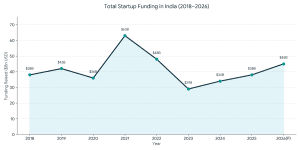
The fundraising of startups in India in 2026 will not be about finding capital anymore, but rather about making the right decisions of funding at the right stage and source. As the world has one of the largest startup ecosystems in India, the competition has become brutal, the scrutiny in the eyes of investors is aroused, and the focus on sustainable growth is increased.

Total Startup Funding in India
Be it validating an idea, growing revenue, or going international, knowing the options of modern fundraising methods can have a direct effect on the survival and long-term success of a startup. It is a start-up fundraising guide that details how to fund your startup in India with 9 time-tested fundraising strategies, when to apply them, and how founders can approach investors in 2026.

What Is Fundraising for Startups in India?

Fundraising refers to the process of raising money to enable startups to develop products, recruit talent, get customers, and grow operations. There are equity, debt, grants and hybrid financing models of startups in India, depending on the stage, traction, and business model.

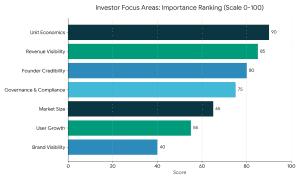
Quick Insight: 2026 investors are less focused on growth metrics and more on unit economics, founder credibility, governance, and revenue visibility.

Ways of Fundraising for StartupsWays of Fundraising for Startups in India (2026 Guide)
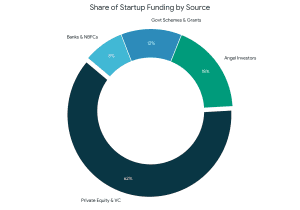
Fundraising for Startups in India
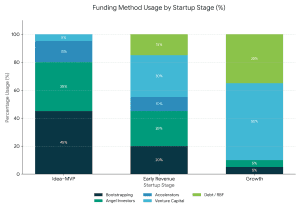
1. Angel Investors

Angel investors are individuals of high net worth who take part in the early startup companies as equity investors. In addition to capital, they too tend to be mentors, open networks, and strategists. Angel networks such as Indian Angel Network and Mumbai Angels are organized groups of people in India that assist seed and pre-seed startups.

Best for:

  • Idea to MVP stage
  • First external funding
  • Founder-led businesses

Founder Tip:
In 2026, founders will need a track record of successful execution as well as articulate go-to-market plans.

2. Venture Capital (VC) Funding

Venture capital firms make investments in high traction and scalability opportunities. VC financing promotes aggressive expansion but contains governance, reporting, and exit demands. Best VC funds that finance Indian startups are Sequoia Capital India and Accel.

Best for:

  • Seed to Series C stages
  • Scalable, tech-enabled models.
  • Rapid market expansion

What VCs expect in 2026:

  • Clean cap table
  • Strong unit economics
  • Stable revenue or usage increase.

3. Government Schemes for Startup Funding

The Government of India still contributes significantly to startup financing with grants, credit facilities, and equity. Most of the major programs involve Startup India, Atal Innovation Mission, and SIDBI.

Advantages:

  • Lower dilution
  • Subsidized loans or grants
  • Founder-friendly terms

Best for:
Deeptech, industrial, social impact, and innovation startups.

Funding Sources for Indian Startups
4. Crowdfunding Platforms

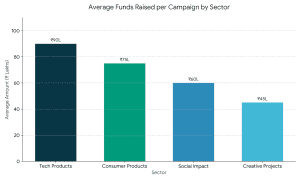
Crowdfunding enables startups to obtain small sums of money with a vast following using the web. It is effective with consumer brands, social ventures and creative products. Popular Indian platforms are Ketto, Wishberry and FuelADream.

Best for:

  • Product validation
  • Community-driven brands
  • Early customer acquisition

Crowdfunding Performance by Startup Type
5. Startup Accelerators and Incubators

Accelerators and incubators offer seed capital, mentoring, and access to investors. These programs are very selective and at the same time very valuable to the first-time founders. Such programs as Y Combinator, Techstars, and T-Hub are notable.

Best for:

  • Pre-seed startups
  • Founders in need of organization.
  • Early investor visibility

6. Bank Loans and NBFC Financing

Finance via banks and NBFCs provides the founders with the opportunity to finance their businesses without dilution of capital. By 2026, there will be increased financial institutions that have startup-specific products. ICICI Bank and NBFCs are institutions that offer working capital and growth loans.

Best for:

  • Revenue-generating startups
  • Asset-light businesses
  • Short-term capital needs

7. Bootstrapping

Bootstrapping refers to starting a business with self-funds or company income. Most of the successful Indian startups such as Zerodha started in the same manner.

Advantages:

  • Full ownership
  • Good financial discipline.
  • Increased trust with future investors.

Best for:

SaaS, services, and profitable models.

8. Revenue-Based Financing (RBF)

Revenue-based funding enables start ups to pay back capital with a percentage of monthly revenue without equity dilution. D2C and SaaS startups are fond of Indian platforms, such as Klub and GetVantage.

Best for:

  • Predictable cash flows
  • Growth marketing spend
  • Founder-friendly funding

9. Corporate Venture Funds

Strategic venture arms are ventures that are invested in by large corporations to foster innovation and partnerships. They are Reliance Jio, Tata Capital, and Google Ventures.

Best for:

  • Strategic alignment
  • Market access
  • Enterprise credibility

How to Choose the Right Fundraising Option:

Ask yourself:

  1. What stage is my startup at?
  2. Is equity or non-dilutive capital required?
  3. Am I able to control investor expectations?
  4. What is my 3–5 year growth plan?
  5. No one best funding route exists, just the one that suits your start-up objectives.

startup fundraising timeline in India

Frequently Asked Questions – FAQs

  1. How can a startup in India be best funded easily?
    There are typically angel investors, government grants or bootstrapping in the early stage of startups.
  2. Are startups able to raise funds without the issue of equity?
    Yes. These can be through bank loans, revenue-based funding and government grants.
  3. What is the duration of start up fund raising in India?
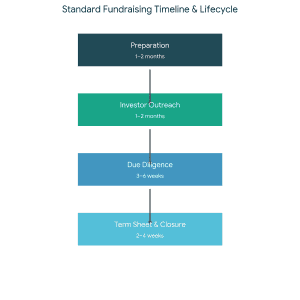
    Usually 3-6 months, provided there is readiness, traction and alignment of the investor.
Key Takeaways
  • Startup fundraising in India takes time, planning, and commitment.
  • The investors of 2026 appreciate sustainability and not hype.
  • Founders are expected to combine sources of funds at various phases of growth.
  • Good fundamentals draw in improved capital on improved terms.

Need Expert Fundraising Support?

In case you need valuation, pitch decks, or investor strategy assistance, professional fundraising advisory can greatly increase your win rate.

Get business Funding

Seed Funding Process A Step by step guide

Seed Funding Process – A Step-by-Step Guide

For early-stage startups, securing the right type of financing is critical to launching and scaling a business. One of the first major funding milestones for many startups is seed funding. This initial capital infusion helps founders bring their ideas to life, develop products, and grow their teams. But what exactly is the Seed Funding process, and how can startups navigate it successfully?

In this blog, we’ll break down the seed funding process step-by-step, giving you a clear understanding of how to raise capital and position your startup for success.

What is Seed Funding?

Seed funding is the initial round of capital raised by a startup to help develop its product or service and move toward market validation. Unlike later-stage funding, seed funding is typically used for early-stage business activities, such as market research, product development, and building a small team.

Seed investors can include angel investors, venture capital firms, or even friends and family. In exchange for capital, these investors often receive equity (ownership) in the company. The Seed Funding process can provide the essential resources your startup needs to grow from an idea to a fully functioning business.

Step-by-Step Seed Funding Process

Step-by-step process of raising seed funding:

1. Prepare Your Business Plan

Before seeking seed funding, you need a solid business plan. This document will outline your startup’s vision, mission, business model, target market, and revenue potential. A well-written business plan makes it easier for investors to comprehend your objectives and your strategy for achieving them.

In your business plan, focus on these key areas:

– Problem and Solution: Define the problem your startup solves and how your solution is unique.
– Market Opportunity: Present data on the size of your target market and the demand for your product or service.
– Revenue Model: Explain how your startup will make money, including pricing, sales channels, and customer acquisition strategies.

2. Create a Strong Pitch Deck

A pitch deck is an essential tool in the Seed Funding process. This presentation provides potential investors with a high-level overview of your business and why it’s worth investing in. A strong pitch deck should include:

– Executive Summary: A brief overview of your company, product, and team.
– Market Analysis: Data on market size, growth potential, and key trends.
– Traction: Any existing progress, such as product development, customer acquisition, or partnerships.
– Financial Projections: Forecasts for revenue, expenses, and profitability over the next few years.
– Funding Needs: Clearly state how much capital you are raising and how it will be used.

3. Identify Potential Investors

Finding the right investors is a critical step in the seed funding process. Seed investors come from a variety of sources, including:

– Angel Investors: High-net-worth individuals who invest personal funds in startups.
– Venture Capital Firms: Some VC firms specialize in seed-stage investments, often focusing on high-growth industries.
– Crowdfunding Platforms: Online platforms like SeedInvest and Crowdcube allow startups to raise small amounts of money from a large number of individual investors.
– Friends and Family: In some cases, entrepreneurs turn to close connections for initial funding.

Make sure to target investors who have experience in your industry and are aligned with your vision. Personal introductions and networking can also play a significant role in securing meetings with potential investors.

4. Negotiate the Terms

Once you’ve secured interest from investors, the next step in the Seed Funding process is negotiating the terms of the deal. These terms typically include the amount of equity (ownership) you are offering in exchange for the capital. Other key aspects include:

– Valuation: How much your startup is worth before the investment.
– Investment Amount: The total capital investors will provide.
– Equity Stake: The percentage of ownership you’re offering in exchange for the investment.
– Board Involvement: Whether investors will take an active role in company decisions by joining your board.

It’s essential to work with a lawyer experienced in startup financing to ensure the terms are fair and legally sound.

5. Due Diligence

After negotiating the terms, investors will likely conduct due diligence to verify your claims and assess the potential risks of the investment. The due diligence process typically involves:

– Financial Review: Investors will review your financial statements, projections, and tax filings.
– Legal Review: Investors will want to see any contracts, intellectual property filings, and shareholder agreements.
– Business Model: Investors may evaluate your business model’s scalability and market fit.

Being transparent and prepared during due diligence can help expedite the process and build trust with potential investors.

6. Secure the Investment

Once due diligence is completed and both parties agree on the terms, the final step in the Seed Funding process is closing the deal. This involves signing the investment agreement, transferring the funds, and issuing shares to the investors.

At this point, you officially have the capital you need to execute your business plan and grow your startup. Make sure to communicate regularly with your investors and provide updates on your progress, as they can be valuable partners in your company’s growth.

Get funding advice from industry experts

Benefits of Seed Funding

– Access to Capital: Seed funding provides the capital needed to bring your product to market and grow your business.
– Mentorship: Many seed investors offer valuable guidance and industry expertise, helping you navigate challenges and scale effectively.
– Networking Opportunities: Investors often connect founders with other entrepreneurs, potential customers, and partners, accelerating growth.

Conclusion

Understanding the Seed Funding process is essential for any startup seeking early-stage capital. By preparing a strong business plan, creating a compelling pitch deck, identifying the right investors, and negotiating fair terms, you can successfully raise the funds needed to fuel your startup’s growth.

Seed funding is not just about money it’s about finding the right partners who believe in your vision and can help your business thrive.

Read Also: Ways of Fundraising

Equity vs Debt Financing what's right for your startup

Equity vs Debt Financing: What’s Right for Your Startup?

As a founder of a startup, few decisions are as important as how to finance your venture. Be it building a technology platform or scaling up a product, growth requires financing at the right time. When raising finances, you usually have two key options: Equity vs. Debt Financing.

In this blog, we are going to outline the critical differences between equity and debt financing, their relative advantages, and disadvantages, and how to arrive at the best option for your startup.

What is Equity Financing?

The only way to obtain equity financing is by selling part of your company in exchange for investor capital. These investors become shareholders, thus proportionate owners in your business. In that light, they will share your business profits or be a participant in the board in certain business decisions.

Advantages of Equity Financing:

  • No Debt Obligations: Unlike debt, equity financing also does not require the funds to be repaid. You get capital without the pressure of monthly payments, which could definitely help your startup conserve cash in the beginning.
  • Access to Expertise and Networks: Most equity investors, including angel investors and venture capitalists, possess good experience, mentorship, and business connections that might be helpful in the faster growth of your startup.
  • Shared Risk: The investors, in turn, take a percentage of risk for investing in your company. This is advantageous because you are not going to take the losses all by yourself if the company has problems.

Read About: How to Raise Series A Funding in India 

Disadvantages of Equity Financing

  • Loss of Ownership: You will be giving away some portion of ownership when you sell equity. Thus, this may reduce your influence in business decisions or, in certain instances, the ability to decide on the direction of the startup.
  • Profit Sharing: Equity investors expect a return on the investment in your company. This may mean that when your company grows and becomes profitable, you will then be required to share some of those profits with shareholders, thus reducing your own earnings.

What is Debt Financing?

Basically, debt financing is all about borrowing money, which generally comes from banks or private lenders, and is returned along with the due interest in due course of time. Debt does not involve giving up ownership in your business.

Advantages of Debt Financing

  • Ownership Retained: One of the most attractive advantages of debt financing pertains to you retaining full ownership of your business. Since lenders are not growing as shareholders in your organization, you will not be called upon to give up equity or decision-making power.
  • The interest paid on the loan is generally tax-deductible, This means you can potentially subtract it from the overall tax liability.
  • Predictable Payments: In most cases, debt financing requires a clearly defined repayment schedule. You know with complete certainty how much you owe and when enabling you to better plan your finances.

Disadvantages of Debt Financing:

  • Repayment Pressure: The need to repay the debt, irrespective of your startup’s cash flow, strains finances especially when your business has not yet reached its profitability stage. Delays in payment further dent your credit and business reputation.
  • Collateral Requirements: Most lenders ask for collateral, such as property or equipment, which they can use in the event of a default. If you fail to repay, the lender will seize these assets, posing a substantial risk to your startup.
  • Interest Costs: There is always a cost of borrowing in terms of interest. The interest accrues over time, and debt financing thus turns out to be quite expensive if one doesn’t pay off the loan as soon as possible.

Get Fundraising services for your business now

Equity vs Debt Financing: Which is Appropriate for Your Startup?

The choice between Equity and Debt Financing is based on several factors peculiar to your business:

  1. Startup Stage: Early-stage startups, with no revenues, in particular, tend to look more highly at equity financing. Unable to generate the cash flow necessary to make regular payments on the debt burden, they’re able to offer equity investors capital without placing burdens on the business.
  2. Business Growth Rate: Fast-growing companies favor equity financing since they require large amounts to invest and scale up rapidly. A company will give away more significant ownership to increase more substantial amounts and take advantage of the high growth rates. Conversely, a stable company with predictable revenue streams may favor debt to retain ownership and minimize dilution.
  3. Risk Tolerance: If you are the kind of person who does not like taking risks and would not want to be in debt, then equity financing could be the way to go. On the other hand, if you desire complete ownership and are confident in your ability to generate cash flow in order to repay the loan, debt financing may just be the right path.
  4. Investor Involvement: In the case of equity investment, the investor would want to be more involved in running your business. In the case of debt finance, it gives you more independence. If strategic advice and mentorship attract you then equity may be highlighted as an option for you. In contrast, if one desires complete decision-making power, debt could suit them more.

Know your startup’s value & pitch like a pro—use our free business valuation calculator & pitch deck template before fundraising!

Hybrid Approach: Combination of Equity and Debt

This is why many startups get the best of both worlds by combining equity with debt financing. You might raise one round of equity for growth and expansion, then take on debt for operational costs or plant and equipment without giving away more ownership than you have to. One can pursue a hybrid approach that provides greater flexibility while optimising a financing strategy.

Conclusion

There is no one-size-fits-all answer when weighing Equity vs Debt Financing. The optimal financing method will depend on your particular needs as a startup, the stage of growth and development in which your enterprise finds itself, and the trajectory toward growth. In equity financing, one often gives up ownership for capital and experience. On the other hand, debt financing may be an important means of retaining control, even as added financial burdens attach themselves. Carefully weighing the pros and cons of all these will help you in your main quest to protect the eventual and long-term success of your startup. In any case, however, whether through equity, debt, or a combination of the two, what’s most critical is to have the right financing strategy that will perfectly align with the goals of your business and your actual financial position.

Get business Funding

Gaudium IVF Partners with FundTQ for Fundraising Success

More than 15% of married couples in India struggle to conceive, making infertility a serious health concern. Over 40 million couples in a nation of over 1.4 billion people deal with this issue. Infertility can result from a number of problems, including pollution, smoking, drinking alcohol, erectile dysfunction, damaged sperm ducts, and disorders related to genes. Infertility is also caused by endometriosis, PCOS, postponed marriages, hectic lifestyles, and other conditions, particularly in women.

About IVF Industry

One of the fastest-growing sectors in India is IVF, which was valued at an astounding $793 million in 2020 and is projected to rise at a rate of 16% per year to reach $3.7 billion by 2030. The business is severely under-penetrated in India, with addressable demand being nine to twelve times higher than the present market, according to a private analysis by FundTQ, the country’s top mid-market investment bank. In addition, India remains a preferred destination for medical tourism due to the nation’s abundance of first-rate hospitals and knowledgeable reproductive specialists.

Branded IVF chains are expanding as a result of heightened regulatory scrutiny, such as that brought about by the Assisted Reproductive Technology (ART) Bill. Many small IVF clinics around the nation closed when the ART Bill was passed, which allowed controlled PAN India IVF chains to grow.

More than 2,500 IVF facilities are already operating in India in an effort to meet the rising demand. While the number is gradually increasing in both tier-1 and tier-2 cities, the unmet demand is being addressed by specialized IVF chains like Indira IVF, Gaudium IVF, Nova IVF, and Oasis Fertility in addition to multi-speciality hospital chains like Cloud9, Apollo, and CK Birla Hospital. To ensure that the entire IVF process is kept a secret from society and because of the social stigma associated with IVF, couples seeking treatment prefer specialized IVF chains over multi-speciality hospital chains.

A number of sizable, specialized IVF leaders have succeeded in making a mark on the market. In this category, Indira IVF is the frontrunner, operating over 115 centers throughout India and completing 45,000 cycles yearly. With more than 60 locations around India, Nova IVF performs 13,000 cycles a year. With more than 30 locations across six states, Gaudium IVF is among the top 5 IVF chains in the US. It executes more than 2500 cycles annually with an industry-leading success rate of 65%. The organization has a proven track record of managing high-profile cases, including one involving renowned Bollywood actress Ms. Shilpa Shetty, and complicated Multiple Attempt Patients (MAP). Furthermore, the majority of locations serve the nation’s poorer classes, but Gaudium is one of the few chains with a PAN India presence that serves the country’s upper middle class.

The founder and CEO of Gaudium IVF, Dr. Manika Khanna, said, “We are doing a fund-raise of over INR 100 crores to help couples address the challenge of infertility,” in response to a question regarding the company’s future expansion plans. Through this fundraiser, we will be able to assist infertile couples in realizing their dream of becoming parents by opening many new centers in important Indian cities and expanding our pan-Indian reach. In order to make our services more inexpensive and accessible to a larger number of patients, we have also introduced a flexible payment plan that enables customers to make payments in convenient installments.

FundTQ has been designated as the fundraising’s exclusive advisor.

India is increasingly being chosen as a destination for IVF treatments due to the country’s expanding medical tourism industry. The only chain with numerous foreign accreditations and a sizable patient base from outside is Gaudium.

Dr. Manika goes on to say, “We want to position India as a desirable location for these specialized procedures, and the country has a far higher success rate than other nations.” The Gaudium brand connects strongly with global standards, superior medical care, and success rates, enabling us to positively impact the lives of childless couples everywhere. India’s IVF market is expected to grow because its costs are a tenth of those of other countries.

Due to the potential for future growth, the IVF industry has seen a rise in consolidations. Examples of these transactions include the majority acquisition of Indira IVF by Baring PE Asia EQT, the acquisition of IVIRMA, a Spanish IVF center, by PE giant KKR, and an investment in Ovation Fertility by Morgan Stanley Capital Partners. In a similar vein, Prelude Fertility, which has had Lee Equity support since 2016, collaborated with Inception Fertility to establish what it claims to be the biggest supplier of all-inclusive reproductive therapies in the United States.

India is raising the fertility flag in a world where it can be difficult to determine whether to use family planning. With worldwide recognized art facilities and jaw-droppingly successful lab equipment, India is quickly becoming as the world’s IVF hotspot.

check out our Investment Banking Service

Startup Due Diligence -Things Entrepreneurs Should Know

Startup Due Diligence-Things Entrepreneurs Should Know

Due diligence is a crucial step in the ever-changing startup funding landscape that has the power to make or destroy an investment agreement. Knowing the details of due diligence is crucial for confidently navigating the funding route, regardless of experience level or level of inexperience with startups. We’ll cover what company founders need to know about due diligence in this extensive guide, including its goal, when it happens, what investors look for, and how well-prepared businesses can be.

Understanding Due Diligence: A Fundamental Overview

In the startup space, due diligence refers to the meticulous audit process undertaken by potential investors before committing to funding a business.Due diligence’s main goal is to confirm that the startup’s information matches real facts in order to protect investors from danger and provide transparency.

Investors use due diligence in search for any hidden issues or warning signals that could impact the investment, in addition to ensuring that a company is speaking the truth about what it says. Two factors that can influence how extensive and rigorous the due diligence process is are the stage of development at which a startup is in and the amount of capital involved.

When Does Due Diligence Occur?

Due diligence typically occurs after a startup has presented to an angel or venture capital firm. After investors express interest in the plan, it seems sense to begin the process of researching the company. This process is comparable to conducting a thorough survey before purchasing real estate, which is a crucial stage for investors to feel safe and confident in the venture.

The duration of the due diligence process might vary, ranging from a post-pitch in-person discussion to a more drawn-out investigation involving attorneys, accountants, and a thorough evaluation of all supporting material. Consequently, investors use this crucial stage to verify the startup’s claims, evaluate its financial standing, and investigate the operational and legal elements of the company.

What Will Investors Ask for During Due Diligence?

During due diligence, investors usually use a basic checklist that is customized to meet their needs. Even while each investor may have a different checklist, companies can expedite the process by ahead of time creating standard documentation. To assist startups in successfully navigating the due diligence evaluation, consider the following eight points:

1. Financial Information and Business Plan:

Present financial statements and a well-developed business plan outlining revenue streams, cost structures, and growth projections for investor assessment.

2. Intellectual Property Rights:

Submit copyright, patent and trademark to protect assets and ensure legal protection of intellectual property.

3. Minutes and Business documents:

Provide corporate records, meeting minutes, and legal documents to demonstrate regulatory compliance, corporate governance, and transparency in business operations.

4. Lawsuit Transparency:

To reduce risks and give prospective investors transparency, disclose information about any pending or settled legal disputes, settlements, or litigations.

5. Team Interviews and Background Checks:

Facilitate interviews with key team members and allow investors to conduct thorough background checks to assess team competence and reliability.

6. Supply Chain Contracts and client Data:

To assess market reach and scalability, share with suppliers contractual agreements and information into client demographics, retention tactics, and acquisition methods.

7. Revenue and Sales Numbers:

Provide comprehensive revenue reports, sales projections, and customer acquisition metrics to showcase business growth potential and financial performance.

8. Market Analysis:

To show that you understand the market, see growth prospects, and evaluate the positioning of your competitors, provide comprehensive market research, competition analysis, and industry insights.

How to Prepare a Startup for Due Diligence?

Preparing for due diligence is a strategic opportunity for startups to conduct an internal audit, optimize formalities, and verify their growth plans. Consequently, it entails transparent organization and careful attention to detail, making sure that every documentation is correct and consistent with the investment pitch.

Preparing the following ahead of time can help startups:

Articles of incorporation, ownership structure specifics, organizational chart, and other corporate information and structure.

  • Material Importance Agreements including overview of marketing, service, and distribution agreements and Documentation of agreements with major customers and suppliers.
  • Intellectual Property and Technology like copies of intellectual property agreements and invention agreements. Overview of owned and developed items, including patents and trademarks.
  • Documents pertaining to labor and employment, such as conventional employment contracts, personnel data, pension policy details, and any unpaid balances.
  • Financial projections, reports comparing the budget to the actual, and financial statements. details about capital commitments, mortgages, and debt securities.

Startups can give prospective investors a strong and transparent profile by carefully arranging these elements, which will inspire trust and make the due diligence process go more smoothly.

Why Should Startups Be Grateful for Due Diligence?

While due diligence may seem like a rigorous and meticulous process, startups should view it as a valuable opportunity for improvement. Due diligence can reveal areas for optimization, enabling businesses to strengthen any areas of weakness and improve their operations. Additionally, the due diligence procedure gives companies an opportunity to demonstrate their dedication to accuracy and transparency—qualities that are critical to winning over investors.

Due diligence is essentially a two-way street where investors learn everything there is to know about the startup and entrepreneurs learn important things about possible places to improve. Startups that embrace due diligence as a cooperative and advantageous process have a better chance of obtaining capital and progressing to the next stage of development.

Conclusion

Due diligence is a crucial milestone that necessitates planning, openness, and a dedication to accuracy in the cutthroat world of startup fundraising. Consequently, startups that handle due diligence with honesty and diligence will have an easier time getting funding and starting a lucrative new stage of development.

It’s critical for startup founders to view due diligence as a strategic opportunity rather than a barrier. Startups can boost their chances of getting the money required for success by proactively compiling the relevant documentation, understanding investor expectations, and exhibiting a transparent and well-organized profile. These actions will help them negotiate the due diligence landscape with confidence.

Due diligence serves as more than just a gatekeeper—rather, it opens doors for development, advancement, and successful collaborations between investors and businesses. Accept it, get ready for it, and allow it to spark the beginning of the next phase of your business ventures.

Seed Funding For Startups

Seed Funding For Startups- Strategies Entrepreneur Should Know

Entrepreneurship is an exciting journey filled with promises of innovation, disruption, and success. The climb is indeed challenging and demands resilience and perseverance, in addition to resources and network. While arranging resources can be a challenging task, arranging one for a new startup can be even more challenging. Hence, FundTQ has come up with this step-by-step guide to help your startup procure its seed funds, ensuring a strong foundation for growth. Explore our comprehensive insights and strategies customized for securing seed funding for startups.

What is a Seed Fund?

A seed fund is a type of private fund that provides initial capital to startups in their early stages of development. Seed funding is crucial for fledgling businesses, helping them go from concept to a more mature stage where they can attract larger investments. Raising seed capital is a long and complex process, hence a thorough understanding of the same is necessary to undertake a successful fund-raise. Explore our comprehensive insights and strategies customized for securing seed funding for startups.

Plan Your Business

A strong business is like well-oiled machinery with a combination of several levers, interacting with each other efficiently to form a well-oiled machinery. Building one requires a careful understanding of one’s customer, market, industry and Unique Value proposition.

You can always use an MVP (Minimum Viable Product) to test your product’s competitiveness. This would give you an idea as to where your product stands in the industry, and the improvements required thereon to suit the customer’s needs.

Build Your Financial Plan

Seed funds can be arranged both internally (i.e. founder’s past savings) as well as from external investors. While arranging funds from external investors, you must build a clear and concise financial plan. Building a financial plan has three major components:

1) Plan your fund requirements– Calculate your operational costs, product development costs, talent costs and other costs to estimate the total fund requirement.

2) Planning fund utilization- Identify the areas that would require fund allocation. Prioritize areas that will drive growth and prove your business model, such as product development, hiring, marketing, sales and business operations.

3) Creating financial projections- Financial projections for the next three to five years, including revenue, expense and profitability projections, as well as cash flow statements. Despite being estimates, these ought to be reasonable and predicated on reliable information.

Creating An Investor Deck

Once the financial projections have been made, an investor deck or a pitch deck is prepared to garner investor interest. A pitch deck is a presentation that startups use to explain to investors their business model and its evolution in the upcoming years. A successful pitch must contain:

1. The Business Problems that your startup intends to solve and the solutions it offers
2. Market Analysis i.e. how big is the industry and how much you aim to capture
3. Your product and business model
4. Marketing and Sales Strategy
5. Your team signifies their strengths and expertise
6. Financial Projections and how much are you looking to raise

Reach Out To Investors

Once the investor deck is ready, one may leverage one’s professional network to reach out to investors. Startups can either be bootstrapped (i.e. self-financed) or funded by external investors. While both are efficient mechanisms for building a profitable venture, if you want to raise capital from a VC, ensure that your startup satisfies the high return benchmarks set up by VCs (typically 10x returns). You may strengthen your network by visiting industry events and conferences and using online networking platforms, and social media engagement. Hiring an investment banker typically helps in this stage.

Preparing For Investor Due Diligence

Due Diligence is the financial, legal and operational analysis of your business helping investors validate the information presented by you in the previous discussions. They can also evaluate your startup’s growth and possible return on investment, as well as confirm that it complies with all applicable rules and regulations.

Preparing for due diligence can be long and intense. Hence, it is always advisable to keep all the necessary documents ready. You may go through our previous blog Things startups should know about Due Diligence to learn more about DD.

Deal Negotiation And Closure

Negotiating with investors requires a careful balancing act. It requires a thorough understanding of the business’s worth in addition to the perspective of your investor. Be open to discussions and potential changes in terms. However, also know your non-negotiables — the terms you’re unwilling to budge on because they might jeopardize your startup’s interests. Hiring a legal counsel typically helps in this stage.

Conclusion

In the entrepreneurial journey, securing support from diverse investors is vital. Effective communication is pivotal—whether pitching to investors, building your team, or pursuing grants. Articulate your vision, progress, and potential clearly. Be adaptable, refining your strategy based on feedback, and continuously improving as your startup progresses. Remember, fundraising is just one aspect; maintaining transparent and effective communication throughout is key to long-term success.