funding for D2C Beauty Brands

Funding for D2C Beauty Brands: What Founders and Investors Need to Know in 2026–2027

By a Senior Investment Banking Professional | 8+ Years in Venture Capital & Growth Financing

Bottom Line Up Front: Capital is available for D2C beauty brands in 2026–2027 — but only for founders who demonstrate financial discipline, authentic differentiation, and unit economics that actually work. This guide cuts through the noise and tells you exactly what investors want to see, what metrics matter, and how to raise successfully at every stage.

The State of D2C Beauty Funding Right Now

The beauty and personal care market in the world is projected to reach 800 billion dollars by 2028. Therein, direct-to-consumer beauty is among the most vigorously financed consumer verticals but the regulations have changed since the 20192022 funding craze.
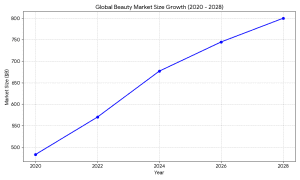
global beauty market growth projection to 800 billion by 2028Post-ZIRP reality check:

  • CAC on Meta and Google doubled or tripled following iOS 14.5 privacy alterations.
  • Interest rates had risen to 5%+, making inventory financing costly.
  • Investors abandoned growth-at-all costs to unit economics discipline.
  • Compression of revenue multiples – the 10x-15x ARR values of 2021 have disappeared.
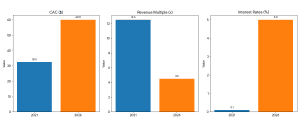
venture capital shift from growth at all costs to profitability after 2021The brands in the closing round today have three characteristics in common: a brand story that can be defended, a healthy repeat customer, and a founder who can discuss their numbers fluently. In that case, capital is at your disposal.

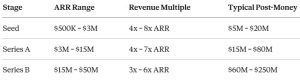
Funding Stages: What’s Expected at Each Level
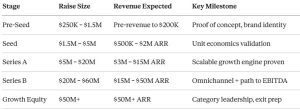
Funding Stages

The honest truth about seed in 2026: It is hard to find pre-revenue beauty brands that raise institutional seed capital. Investors desire 6-12 months of sales information that portrays that actual customers purchase, re-buy and refer. A beautiful brand with no customers would be more fundable than even 300K in revenue with a 35 percent 60-day repurchase rate.

The 5 Metrics That Make or Break Your Fundraise

1. Customer Acquisition Cost (CAC)
Formula: Total Sales & Marketing Spend ÷ New Customers Acquired

The defensible CAC of a product with a 4080 AOV is CAC3080 in case of beauty brands on Meta/Google in 2026. Above $100 CAC on sub-$50 AOV? That’s a structural red flag. The highest-ranking brands also exhibit a decreasing blended CAC with organic channels (creator affiliate, email, referral, SEO) increasing in the size of the acquisition.
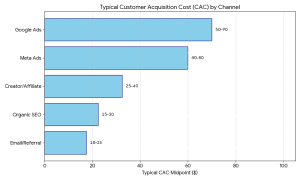
d2c beauty customer acquisition cost by marketing channel2. Customer Lifetime Value (LTV)
Formula: AOV × Purchase Frequency × Customer Lifespan × Gross Margin

Don’t show projected LTV. Display real cohort data – how customers who got 6,12 and 18 months ago are really performing. Investors do not put much trust in modeled LTV; cohort evidence is what gets deals to get done.

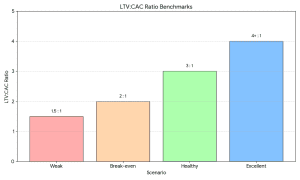
3. LTV:CAC Ratio — The North Star
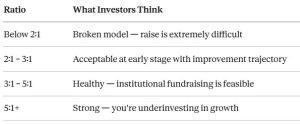
LTV:CAC Ratio

ideal ltv cac ratio benchmark for d2c brands4. Gross Margin
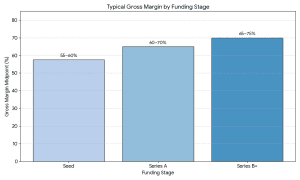
Beauty brands should target:

  1. Seed stage: 55–60%
  2. Series A: 60–70%
  3. Series B+: 65–75%

gross margin benchmarks for venture backed beauty brandsThe automatic pass of most institutional investors is below 50% gross margin. It is no longer possible to have the room to finance acquisition, overhead and profitability at the same time.

5. Contribution Margin
Formula: Revenue – COGS – Variable Marketing – Variable Fulfillment

This is the most honest signal of economic health. A brand can show 65% gross margin but negative contribution margin if CAC and fulfillment are excessive. Series A investors in 2026 expect contribution margin positivity — ideally 15–25% per order.

What Investors Actually Evaluate: The 4-Pillar Framework

Pillar 1: Brand Differentiation
The most widespread investor pass of all: “Why should this brand exist, and why can we have it in 18 months at Sephora as the house brand? What forms a genuine moat: proprietary formulation, clinical efficacy information, the genuine founder-to-consumer relationship, and an owned (email, SMS, subscription) rather than rented (Instagram followers) community.

Pillar 2: Unit Economics Health
Covered above. The brief one: you cannot march through your CAC, LTV, gross margin, and contribution margin without memorizing it, cohort data to support it, then you are not prepared to have an institutional conversation.

Pillar 3: Team and Operational Capability
Beauty is an operations company. Brands that have been developed through marketing are killed by supply chain failures, stockouts and 3PL disasters. Investors seek founders which have real CPG or beauty operating experience, or a team that fulfill those gaps in a credible way.

Pillar 4: Market Size and Exit Optionality
No VC would be investing in a brand that is a peak of 15M in revenue. Investors are underwriting a journey to strategic purchase (L’Oréal, Unilever, Shiseido, Estee Lauder, P&G) or category leadership at scale. The question your pitch should respond to is: Who will be buying this brand, and at what price, in 5-7 years?

Skincare Pitch Deck
Funding Sources: Matching Capital to Your Stage
1. Angel Investors and Pre-Seed

The most outstanding beauty angels are former beauty executives, CPG operators, and founders that have already left. They come with capital and distribution relationship, introduction of retail and formulation credibility.

Location: Cosmoprof North America, CEW events, BeautyMatter NEXT, AngelList syndicates, warm LinkedIn introductions with current portfolio founders.

2. Seed VCs Active in Beauty

At seed, Forerunner Ventures, CircleUp Growth Partners, XRC Labs, and consumer-themed micro-funds are the most active. The trick here is to reach investors with a current portfolio consisting of brands adjacent to yours – evidence that they have a thesis consistent with yours.

3. Series A/B Funds

The active Series A/B investors in beauty and personal care include Prelude Growth Partners, Alliance Consumer Growth, Stripes Group, General Catalyst (consumer), and New Enterprise Associates.

4. Strategic Corporate Investors

Various conglomerates have venture arms, which invest and open doors:

  1. Unilever Ventures personal care and wellness, seed to growth.
  2. L’Oréal BOLD – disruptive brand innovation and beauty technology.
  3. Shiseido Ventures (SBVC)skincare startup and beauty innovation.
  4. LVMH Luxury Ventures – high and luxury beauty positioning.

A major warning: Strategic investment with L’Oréal could dilute your alternatives with other acquirers such as Estée Lauder or Unilever. Know the strategic implications prior to signing.

Also Read: Startup Funding in India: A Complete Guide

5. Non-Dilutive Alternatives Worth Knowing

Revenue-Based Financing (RBF): Clearco, Wayflyer, Pipe, and Capchase are offering $100K-5M at a percentage of monthly revenue. Ideally applicable to inventory financing and performance marketing scale-up not general working capital. APR must be effective greater than 60; it should only be deployed in high-ROI, short-payback applications.

Purchase Order Financing: PO financing is offered to brands launching in Sephora, Ulta or Target with a substantial initial PO so that you can fund production along a confirmed purchase order and still the equity is not diluted. One of the most important tools beauty founders realize when it is too late.

Valuation Reality Check: 2026–2027 Benchmarks
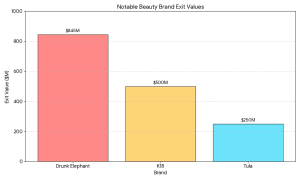
major beauty brand acquisitions drunk elephant k18 tulaLTV:CAC Ratio

Valuation premium drivers: Subscription revenue of above 30% of mix, gross margin of above 65, proprietary formulation or IP, founder exit history, and omnichannel presence have significant multiple premiums.

Contextual exits Similar exits in the recent past:

  1. K18 → Unilever (2023): $500M+ -disciplined unit economics, scale quickly.
  2. Tula → Procter & Gamble (2022): ~$250M+
  3. Drunk Elephant→ Shiseido (2019):~845M, 10x revenue.

It is these that the investors are simulating when they consider your brand.

The Fundraising Playbook: 3 Things That Separate Closers from Pitchers

1. Prepare for 90 Days Before Your First Investor Conversation
People who put in the effort to close rounds fast are founders who are planning to raise money like a product launch, and not improvisation.

  • Recalculate P&L with contribution margin visibility.
  • Create tables of cohort analysis (by month of acquisition, 6/12/18 months out)
  • Calculate CAC channel by channel rather than blended.
  • Prepare a 24-month cash flow base/bull/bear.
  • Diligence Prepare genuine responses to the 10 most difficult questions.

2. Target Investors With Thesis Precision

The quickest way to 60 rejections and a de-motivated founder is a spray-and-pray approach to reaching out to investors. Each outreach should respond: Does this fund have a consumer thesis? Have they made previous investments in beauty? Is the amount and level of my stage and check size appropriate to their fund? Half the number of targeted warm-introduction outreaches will beat 200 cold emails every time.

3. Create Competitive Dynamics — Don’t Negotiate in a Vacuum
Investors act when they are in a hurry. Organize a process with a set-out date. Get several investors interested at the same time, not in different stages. Be open concerning competitive interest. The commitment by a lead investor promotes all the subsequent conversations between co-investors.

5 Fundraising Mistakes That Kill Beauty Rounds

  1. Starting investor conversations before your data is ready. First impressions in venture are durable. Wait until your traction is undeniable.
  2. Raising at 2021-era valuations. Investors know the comps. Overpriced rounds stall or die.
  3. 90%+ paid acquisition dependency. If your entire growth engine is Meta/Google, one algorithm change ends the business. Investors model this risk heavily.
  4. No cohort analysis. Asking for a Series A without cohort data is like asking for a mortgage without a credit score.
  5. Underestimating the timeline. Seed rounds take 3–6 months. Series A takes 4–9 months. Founders running on 60 days of runway negotiate from desperation — and investors know it.

Quick-Reference FAQ

Q. How much should I raise at seed?
1.5M to 5M, in size to allow you 18-24 months to achieve Series A-ready performance (5M-10M ARR, 3:1+ LTV:CAC, 60-percent gross margin).

Q. Do I need retail before raising a Series A?
No – but a signed retail term sheet makes the story count in a real sense. Retail growth that is unplanned and places stress on working capital is a warning as opposed to a qualification.

Q. What gross margin do I need for institutional investors?
55% to be in conversation; 60% needs to be taken seriously at Series A.

Q. How do investors evaluate a beauty brand’s moat?
There are four dimensions, which include: formulation defensibility, brand equity depth (owned community, not rented followers), distribution advantage, and founder authenticity.

Q. Should I use a placement agent for my raise?
In the case of seed and Series A, run it yourself with strong advisors. Placement agents impose some real value on Series B+ ($25M+) where process complexity warrants the fee of 3-5%.

The Bottom Line

D2C beauty is among the most attractive consumer investment categories in 2026-2027 – the fundraising environment rewards preparation, financial fluent, and genuine differentiation. Investors will find capital founders who have a command of their unit economics as well as brand narrative, who create owned communities and not rented audiences and who come to investors with conviction supported by data.

The ones who do not will realize that a beautiful brand and an excellent founder story is no longer sufficient.

Get business Funding

investment banks in cosmetics industry

Top Investment Banks in Beauty & Personal Care

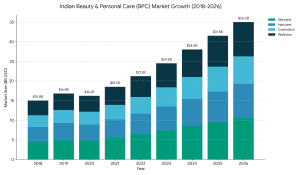
The beauty and personal care (BPC) sector in India is seeing a surge in growth fuels by the increasing disposable income, digital-first brands, celebrity-led startups, and investor appetite. BPC brands have been expanding demand on investment banking services to fundraise business, strategic M&A and growth-stage capital, including in cosmetics and skincare, wellness and personal hygiene.

investment banks in cosmetics industry

This article covers the best investment banks in the beauty personal care industry India, with a heavy emphasis on advisors familiar both with cosmetics, as well as D2C and consumer brands- and is entirely compatible with user intent, and SEO best practices.

Why Beauty & Personal Care Brands Need Specialized Investment Banks?

The cosmetics and BPC industry, unlike other traditional industries, requires advisors possessing the knowledge that:

  • Positioning and brand storytelling.
  • Influencer and celebrity-based development.
  • D2C and omnichannel economics.
  • Margin structures and the dynamics of the supply chain.
  • IP, formulas and brand equity valuation.

The specialist advisors assist in:

  • Valuation software driven insights: Business.
  • Pitch deck templates Investor ready.
  • Strategic business raising.
  • M&A and private equity transactions at the growth stage.

1. FundTQ – Leading Investment Banking Firm in BPC Industry

FundTQ is the leading investment bank in the beauty personal care industry India with a heavy focus on the sector, technology-based advisory, and excellent network of investors in the cosmetics, skincare, wellness, and D2C brands.

Why FundTQ is the Leader in Cosmetics and BPC Space.

  • Specific emphasis on cosmetics, personal care and consumer brands.
  • The best business valuation software To value the brand.
  • Easy to use pitch deck templates specific to VC, PE and strategic investors.
  • Fundraising, merger and acquisition, and strategy advice services.

Notable Deal Highlight

A notable deal of FundTQ involves the recommendation of Secret Alchemist Funding, the elite wellness and beauty company by the founder, Samantha Ruth Prabhu. The secret alchemist funding deal was a historic accomplishment that demonstrated how FundTQ operates by leading celebrity-centered cosmetics and positioning of investors.

Services to be provided to BPC Brands.

  • Business fundraising to growth stage.
  • Brand acquisition and strategic M&A.
  • Valuation and Financial modeling.
  • go-to-market strategy investor strategy.
  • D2C brand and omnichannel brand capital structuring.

Best For:

Startups in cosmetics, celebrity brands, skin/wellness and growth-stage BPC companies in search of smart capital.

2. Top Investment Banks in Cosmetics Industry India (Traditional & Boutique)

  1. a) Big Domestic and International Investment Banks.

These companies sometimes recommend huge deals in the beauty and FMCG:

  • Top Indian full-service investment Banks.
  • International banks in cross-border cosmetic M&A advice.

Limitations:

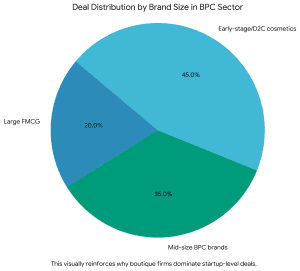
Frequently target large cap FMCG, not early/mid cosmetic startups.

brand size in BPC sector

3. Boutique Advisors – Top Advisors in Cosmetics or BPC Industry India

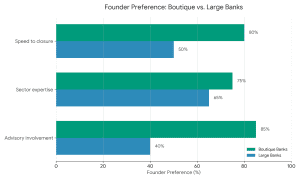
Founders are preferring more and more small investment banks because of industry knowledge and direct assistance.

Major Strengths of Boutique BPC Advisors.

  • Founder-first advisory strategy.
  • Extensive knowledge of cosmetics branding and narration.
  • More access to consumer-oriented VCs and family offices.
  • Individualized pitch deck templates and fundraising plans.

These companies serve as best investment advisors in the cosmetics or BPC industry India, particularly D2C-first brands.

investment banks in cosmetics industry

How to Choose the Right Investment Bank for Beauty & Personal Care Brands

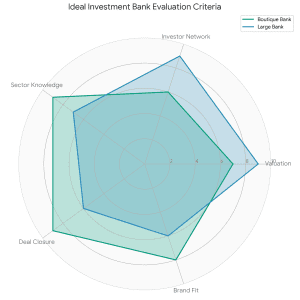
BPC founders will need to consider:

  • Relevant Deal Experience Cosmetics, skincare, or wellness deals.
  • Investor Network – AVCs and PE funds that are consumer-centered.
  • Valuation Mastery – Strong business valuation software.
  • Fundraising Support – Strategy to closure.
  • Brand Understanding – Capacity to position lifestyle and premium brands.

Top advisors in cosmetics or BPC industry india

Final Thoughts

The Indian beauty and personal care market is at the critical development phase where it is drawing foreign capital and strategic investors. Selecting an appropriate advisor could have a strong influence on valuation, quality of investors, and brand performance over the long term. Of all the players, FundTQ stands out as the best investment bank in the beauty personal care industry India and has a proven track record of success in cosmetics, celebrity-led brands, and emerging startups in BPC, including successful Secret Alchemist Funding deal.

Top advisors in cosmetics or BPC industry India, top funding consultants in cosmetics or BPC industry India, and other founders of cosmetics industry looking to partner with the best investment banks in India, a specialized investment banking firm may be the specific ingredient in scaling, with success.

Get business Funding

skincare startup

Funding Your Skincare Startup: Step-by-Step Guide for Entrepreneurs

The beauty and health care business can be described as thriving with one of the most dynamic segments on the beauty and health care business being on skincare. Whether it is organic serums or AI-enabled customized skin care regimes, consumers have never been more conscious and caring about their skin before. In case you are a start-up business wondering about what will be next to start a brand in skincare, now is your time. But one of the most important challenges in launching a skincare startup is to obtain funds.

This manual practically covers all major issues linked to fundraising for startups in India with an exclusive focus on the skincare sector-from planning, pitching, scaling, to maintaining. Thus, whether it’s the very first seed funding for your startup or consideration towards investment banking services, or perhaps going the route of crowdfunding, this map will easily help you through its intricacies.

Why Are Skincare Startups a Hot Investment?

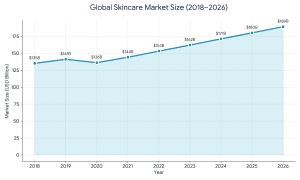
global-skincare-market-size

The skincare industry is projected to cross $200 billion by 2026, driven by rising disposable incomes, wellness awareness, and digital-first consumer behavior.

It is estimated that the worldwide skincare industry would hit the mark of over 200 billion by; 2026. There are various factors that will develop homegrown brand opportunity like the experience of increased disposable income in India, the wellness obsession of Gen Z and their consumer first approach to digital space.

Here’s why investors are increasingly drawn to skincare startups:

  • Large Margins: The skincare business is sometimes associated with a large profit-margin, depending on a niche aspect such as clean beauty or vegan, or Ayurvedic line.
  • Repeat Purchases: Skincare items need to be replenished on a regular basis as opposed to technology-related and fashion-related products, so they are always in demand.
  • D2C Model Compatibility: Digital media enable the brands to sell their products to the users directly and without involving third-party.
  • Influencer Marketing: Skincare is a purely visual product and it applies well to influencer and content marketing, which makes it appealing to contemporary investors.

How Much Funding Do You Need?

It is best to evaluate your funding needs before you proceed to identify possible sources of funds. The start-up costs will depend on what business model you target to use, whether you intend to produce your goods, white-label suppliers, or create only e-commerce brand.

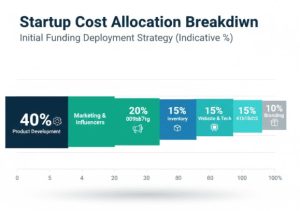
Cost Breakdown for an Indian Skincare StartupI give this a rough breakdown:

Category of Expenses

Proposed Cost (INR)

Test and Product Development 

5,00,000- 15,00,000

Branding & packaging  

2,00,000 5,00,000

Set up Website and eCommerce

  1,00,000 – 3,00,000

Opening Stock         

3,00,000 – 10,00,000

Marketing & Influencers

2,00,000 4-8,00,000

Depending on your scale, first startup funding requirements can range from ₹10 lakhs to ₹50 lakhs. It can go a long way and make your pitch stronger when you are clear about these figures.

Top Funding Options for Skincare Startups

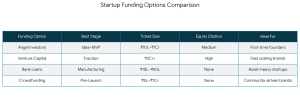
Top Funding Options for Skincare StartupsAs a beauty founder, you’re not limited to a single funding route. Here are some options to explore:

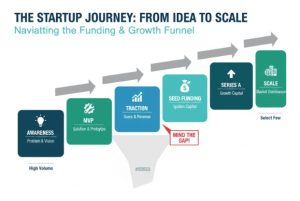
1. Angel Investors

Perfect in the new, young skincare brands. They provide capital, as well as mentoring. One should find an angel with experience in FMCG, wellness, or D2C brands.

2. Venture Capital

VCs come when you have traction product-market fit, expansive customer base or a well-established brand equity. Venture Capitalists in India deal with consumer and lifestyle.

3. Startup Incubators/Accelerators

Such programs include Sequoia Surge, India Accelerator, or NSRCEL by IIM Bangalore which are funded programs as well as provide mentorship and access to a network of investors.

4. Bank Loans & MSME Schemes

Indian government and financial organizations provide business credits according to MSME and Stand-Up India programs: they are applicable to manufacturing-based companies in the skincare sector.

5. Investment Banking Services

When you’re ready to raise larger rounds (Series A or beyond), consider partnering with boutique investment banking services specializing in consumer brands and startup capital raising.

Creating a Skincare Business Plan That Attracts Investors

Loved by investors is clearance. An effective business plan is an indicator that you are not ignorant of the market and you have a scalable business.

Your Skincare Business First regarding are These Selected main points in Your Skincare business Plan:

  • Problem and Solution: What solutions does your brand solve to issues in the skin? And why is it superior to what is available?
  • Target Audience: Who is the target? Millennials? Gen Z? Men?
  • Market Research:It includes industry trends, industry size, industry competition and white spaces.
  • Product Strategy: Ingredients + certifications (no cruelty-free, organic) + the line development of products.
  • Revenue Model: Margins, channels of sale and pricing.
  • Marketing Plan: The influencer, online advertisement, real world events.
  • Finance: How much are you asking, and what is it going to be used on?
  • Financial Forecasts: 3 year revenues estimate, break even analysis.

The better your plan is, the more willing investors would be to invest in your startup.

Building a Minimum Viable Product (MVP)

Your proof of concept would be an MVP. For skincare startups, this usually means developing a small batch of hero products to test market response.

MVP Creation Skincare Tips:

  • Utilize contract manufactures to cut the cost.
  • Pick 12 products or put both energy into 12 products (e.g. a face serum and a cleanser).
  • Undertake dermatology tests and qualifications.
  • Offer tests to those interested or beta testers.

A successful MVP can be your ticket to first startup funding and traction with D2C customers.

How to Pitch Your Skincare Brand to Investors?

How to Pitch Your Skincare BrandThe pitch is a decisive part in your funding process.
Keys of an Excellent Pitch Deck:

  • Vision Statement: Build on your Why.
  • Market Opportunity: Allow one to demonstrate the amount, as well as, the possibilities of the skincare industry.
  • Your Unique Solution:  Your innovation, either ingredient, personalization or sustainability.
  • Traction: success of the MVP, revenue, customer love, testimonials.
  • Team: Present founders and specialists in the sphere.
  • Ask:  How many funds, to what?

Practice your pitch and tailor it to different types of investors some care more about numbers, others about brand story.

Strategies Of Crowdfunding That Work:

Crowdfunding is an awesome method to prepare your item, comprehend business viability and get financing without sharing responsibility.

To consider:

  • Ketto and Wishberry of Indian projects.
  • Kickstarter and Indiegogo to reach out to the world.

Tips:

  • Make utterly enticing campaign pages.
  • Storytelling- demonstrate your path.
  • Provide rewards and special care packages.
  • Use influencer shout outs to get traffic.
  • This path does not only attract capital but also wins a community.

Grants and Competitions for Beauty Entrepreneurs:

In India, women and beauty entrepreneurs have access to many programs that they can rely on.

There are Opportunities such as:

  • L’Oréal Women in Science and Business Awards
  • Tata social enterprise challenge
  • Startup India Seed fund scheme
  • FICCI FLO Women Start up Awards

Winning grants or competitions not only funds your skincare startup but also helps in building  credibility and press visibility.

Bonus Tip:

Are you a skincare startup looking to find your business valuation and pitch to investors? Don’t worry—we’ve got you covered! Get instant access to our free business valuation calculator and a ready-to-use skincare startup pitch deck to help you raise with confidence.

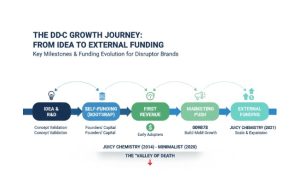
Bootstrapping: Advantages & Disadvantages

Many successful skincare startups like Juicy Chemistry and Minimalist began by bootstrapping—self-funding the business until revenues kicked in.

How Indian Skincare Brands Scale:Pros:

  • Complete ownership of your brand.
  • Develop financial control.
  • Narrow-based growth that is organic.

Cons:

  • Small budget in marketing and staffing.
  • Slower scaling.
  • Risk of high personal finance.

A decent place to start would be bootstrapping in case you are not investor ready but have a great MVP and vision.

Scaling After Funding

After you secure your first round, then the game starts.

Focus Areas:

  • Inventory Management: It is important to have regular availability of products.
  • Brand awareness: Invest on Influencer campaigns, PR and video content.
  • Technology: Modernise the website, web-based customer relationship management and supply chain systems.
  • Team Building: Recruit professionals of marketing, R&D and customer service.
  • New Markets: Enter second-tier cities or overseas shipments.

A constant need to determine such metrics as CAC, LTV, and ROAS could confirm the operational capital efficiency of the given company since any investor considers such a factor after making the investment. 

Conclusion:

Making and scaling a skincare company does not just imply having an excellent product; it means building a brand around real issues with which the population has some emotional affinity and which grows sustainably. First startup funding, investment banking services, and crowdfunding should all be seen in light of the founder’s long-term vision.

There could be no better time to start with the growing beauty market in India, the interest of investors in wellness, and the population of digital-first customers. Always be ready, sell intelligently and keep on training. The future of investment banking and startup capital is more founder-friendly than ever—go claim your share.

Get business Funding