
funding-for-edtech-startup

Secure Investment for Your Coaching Institute | EdTech Platform Funding [2026]

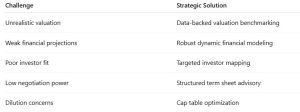
Funding for an EdTech platform refers to raising capital from angel investors, venture capital firms, private equity funds, or strategic investors to scale technology, marketing, operations, and student acquisition for an online learning or coaching business in India.

Funding typically ranges from ₹50 lakh (early stage) to ₹100+ crore (growth stage) depending on revenue, traction, and profitability.

Why EdTech Funding in India Is Rebounding in 2026

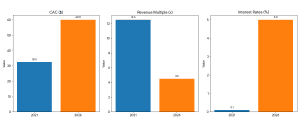
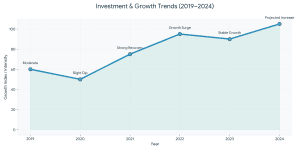
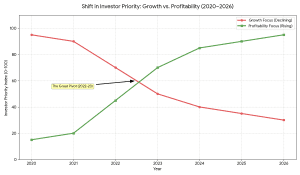
EdTech investor trend India 2020 to 2026The education technology market in India has reached a disciplined development level. Following aggressive growth by competitors such as:

Traders have ceased to focus on growth at all costs and:

  • Profitability
  • Sustainable CAC
  • Strong retention
  • Hybrid learning models
  • AI-powered personalization

This opens the doors to serious coaching institutes and the organised online learning start ups.

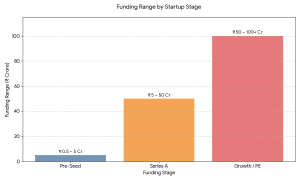
How Much Funding Can an EdTech Startup Raise in India?

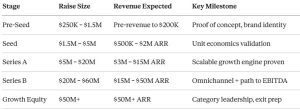
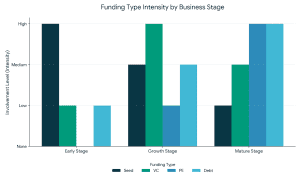
EdTech Startup Funding Stages in India 2026Early Stage (Pre-seed / Seed)
₹50 lakh – ₹5 crore
Focus: MVP, first traction, content creation.

Series A
₹5 crore – ₹50 crore
Focus: Tech + marketing up-scaling.

Growth / PE Stage
₹50 crore – ₹100+ crore
Focus: Growth, buy-overs, profitability.

How Investors Evaluate EdTech Startups (2026 Framework)

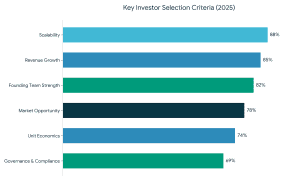
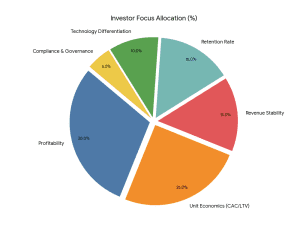
Investor criteria for EdTech startup funding IndiaInvestors assess:

  1. Revenue Model Stability
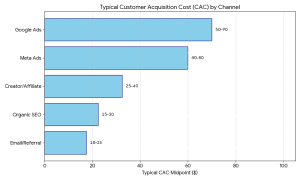
  2. Student Acquisition Cost (CAC)
  3. Lifetime Value (LTV)
  4. Monthly Recurring Revenue (MRR).
  5. EBITDA Margins
  6. Retention Rate (More than 60% desirable)
  7. Technology Differentiation
  8. Regular compliance in the Securities and Exchange Board of India (structured investments).

How to Calculate Valuation of an EdTech Platform

What Is the Valuation Multiple for EdTech in India?

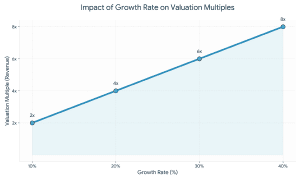
The EdTech startups usually sell at a multiplier of 3x-8x based on profitability and growth rate. The institutes of coaching that are EBITDA-positive are able to get a higher structured valuation.

Initial estimates can be done using a business valuation calculator – however, institutional investors will need:

  • Discounted cash flow (DCF) analysis.
  • Similar transaction analysis.
  • Benchmarking of revenue multiple.
  • Cap table structuring

Professional investment banking services guarantee alignment of valuation with the market comparables.

EdTech startup investmentHow to Prepare a Winning Pitch Deck for EdTech Funding

A pitch deck with high conversion should have:

  1. Problem & Market Gap
  2. Solution & Differentiation
  3. Market Size (TAM, SAM, SOM)
  4. Traction Metrics
  5. Unit Economics
  6. Revenue Model
  7. Technology Stack
  8. Competitive Positioning
  9. Financial Projections (35 years)
  10.  Fund Utilization

Institutional-grade pitch deck templates enhance clarity and confidence of the investor.

Role of Investment Banking Services in Startup Funding in India

Self-equity raises dilute valuation and slows down the process. Structured investment banking services include:

  1. Identification of strategic investors.
  2. Valuation advisory
  3. Financial modeling
  4. Term sheet negotiation
  5. Due diligence management
  6. Deal closure execution

It usually leads to valuation increase and accelerated funding cycles (3-6 months).

Who Should Raise Funding?

You should consider funding when:

  1. You are an online-expanding coaching institute.
  2. You are earning 1 crore and above in a year.
  3. You are EBITDA positive
  4. You want to scale nationally
  5. It is a LMS constructed using AI.
  6. You plan acquisitions

Step-by-Step Process to Secure EdTech Funding

Step 1: Financial Structuring
Prepare projections, clean financials, audit accounts.

Step 2: Valuation Strategy
Compared to EdTech counterparts in India.

Step 3: Investor Targeting
PE, strategic buyers, Angels, VCs.

Step 4: Data Room Preparation

  1. Financials
  2. Cap table
  3. Compliance documents
  4. KPI dashboards

Step 5: Term Sheet Negotiation

 6: Due Diligence & Fund Closure.

Common Mistakes EdTech Founders Make

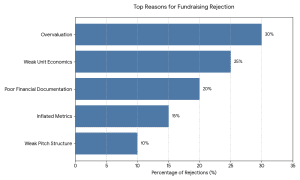
Common mistakes in EdTech startup funding India

  • Overvaluation expectations
  • Weak unit economics
  • Inflated user metrics
  • Poor pitch structure
  • There was no distinct roadmap of profitability.

The investors in 2026 are more interested in cash flow discipline than vanity growth.

FAQs – Funding for EdTech Platform

Q. What is the minimum revenue required to raise funding?

No definite qualification exists, but serious investors are attracted to startups with ₹50 lakh and higher annual revenue and good growth rates.

Q. How long does it take to raise startup funding in India?
As short as 360 days in case financial records and pitching materials are available.

Q. Can a coaching institute get private equity funding?

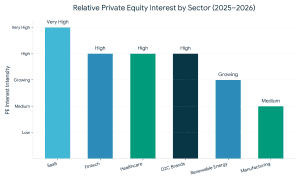
Yes. Potential investors like the private equity are usually interested in profitable coaching institutes with scalable hybrid models.

Q. Is valuation negotiable?
The valuation would be based on the growth rate, profitability, investor demand, and strength of negotiations.

Why 2026 Is the Right Time to Raise EdTech Funding

  • Attention to sustainable models by investors.
  • Valuation augmented with AI.
  • Acquisition exits are formed through consolidation.
  • Better regulatory transparency.

India is also among the most dynamic markets in digital education in the world.

Final Strategic Insight

Being investment banking advisors in the education and digital platform business in India, we see that investors have today begun to reward profitability, disciplined growth, and well-organized governance. The founders of EdTech that develop institutional grade financial models and strategy positioning get much more favorable funding conditions.

Ready to Secure Funding for Your EdTech Platform?

Strategic funding is not just capital — it’s valuation optimization, negotiation leverage, and scalable growth positioning. If you’re planning startup funding in India, ensure your financials, valuation strategy, and investor approach are institutionally structured.

Because in 2026 — only disciplined EdTech platforms get premium funding.

Get business Funding

Funding For Food Sector

How to Get Strategic Funding for Food Sector Businesses (Complete Guide)

Food is one of the most robust and fast-growing sectors across the world. Organic agriculture and food processing, D2C brands and cloud kitchens: entrepreneurs are actively looking to raise funds in the Food Sector Businesses to grow operations, scale distribution, and better brand positioning.

As someone with 8+ years of experience in the investment banking services sector and consulting startups in food, FMCG, and agribusiness sectors, I have personally observed what makes fund-able food businesses and those that can never raise capital.

This complete guide will walk you through:

  • Types of funding available
  • How investors evaluate food businesses
  • Strategic startup fundraising process
  • Documents you must prepare
  • Common mistakes to avoid
  • Expert insights on valuation & scaling

Types of Funding AvailableWhy the Food Sector Attracts Strategic Investors
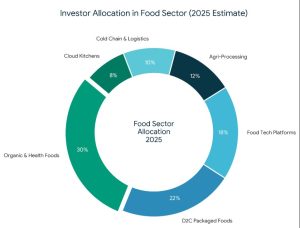
The food industry offers:

  • Consistent consumer demand
  • High scalability potential
  • Good exit (M&A and IPO) opportunities.
  • Increase in the demand of organic and health products.

Specifically, Investment in organic Food Industry has also grown considerably with the growing health consciousness and sustainability trend.

Investors are now investing in more than restaurants they are:

  • Organic food brands
  • Plant-based startups
  • Food tech platforms
  • Cold chain logistics
  • Agri-processing units
  • D2C packaged food brands

Investor Interest by Food SegmentWhat Is Strategic Funding For The Food Sector?
Strategic funding refers to capital raised by investment by investors who do not just bring money.

They bring:

  • Distribution networks
  • Industry expertise
  • Operational support
  • Market access
  • Brand positioning support

In contrast to the traditional loans, the strategic investors are interested in equity, long-term growth, and value creation.

1. Seed & Angel Investment

Best for:

  • Early-stage startups
  • MVP stage food brands
  • D2C organic food companies

The amount of startup fundraising that is usually backed by angels is 25L-2Cr (depending on location).

2. Venture Capital (VC Funding)

Suitable for:

  • Brands of growing packaged foods.
  • Food tech platforms
  • Organic food startups that are scalable.

VCs typically invest when:

  • Revenue traction is visible
  • Unit economics are becoming better.
  • There is a high fit of a founder-market.

3. Private Equity (PE)

Best for:

  • Mature food processing factories.
  • Local brands are expanding in the country.
  • Companies that have 20Cr+ turnover (varying).

PE firms give much attention to profitability and growth potential.

4. Bank & Institutional Debt

Ideal for:

  • Machinery purchase
  • Working capital
  • Factory expansion

Debt however needs fixed cash flow and security.

Step-by-Step Process to Raise Funding For Food Sector

Step 1: Validate Product-Market Fit

Prior to pitching investors, inquire:

  • Is there repeat purchase?
  • Are premium prices being charged to customers?
  • Is gross margin sustainable?

Businesses that fail in the food industry do not fail due to lack of funds instead of them failing in market validation.

Step 2: Prepare Financial Projections

Investors expect:

  • 3–5 year projections
  • Revenue model clarity
  • EBITDA margin roadmap
  • Working capital cycle analysis.

Estimate: Use a professional business valuation calculator to estimate:

  • Pre-money valuation
  • Equity dilution
  • Investment requirement

This prevents unrealistic valuation viewpoints in the context of startup money-raising.

Step 3: Prepare an Investor Ready Pitch Deck.

Your pitch deck must include:

  1. Problem statement
  2. Solution
  3. Market size (TAM/SAM/SOM)
  4. Business model
  5. Revenue traction
  6. Unit economics
  7. Competitive landscape
  8. Growth strategy
  9. Financial projections
  10. Funding ask & utilization

The pitch deck templates that are of high quality with a focus on food startups enhance rates of conversion by investors significantly.

Step 4: Due Diligence Preparation.

Investors will verify:

  1. FSSAI licenses
  2. Supply chain agreements
  3. Vendor contracts
  4. Founder background
  5. Compliance & taxation
  6. Financial statements

Due diligence is simplified and the probability of deal closures is enhanced with the help of professional investment banking services.

How Investors Evaluate Food Businesses

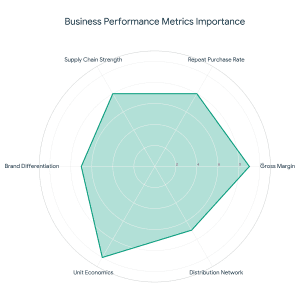
How Investors Evaluate Food BusinessesAs an adviser to food startups, investors are interested in:
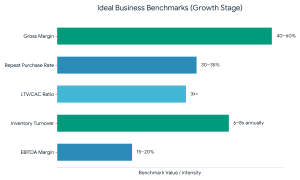
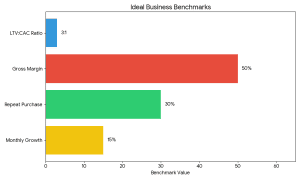
1. Gross Margin
The average gross margins of healthy food brands are 40-60% (depending on models).

2. Repeat Purchase Rate
Repeat rate of 3035 or more in D2C brands will be appealing.

3. Distribution Strategy

  • Offline retail presence
  • Modern trade partnerships
  • Positioning based on online marketplace.

4. Supply Chain Strength
Of particular importance in Funding in Organic Food Companies, which is a place where the authenticity of the sources counts.

5. Brand Differentiation
Premium Valuation Organic, preservative-free, plant-based, gluten-free positioning tend to appeal to higher values.

Funding in Organic Food Companies: Why Investors Love It

As an adviser to food startups, investors are interested in:

1. Gross Margin
The average gross margins of healthy food brands are 4060% (depending on models).

2. Repeat Purchase Rate
Repeat rate of 3035 or more in D2C brands will be appealing.

3. Distribution Strategy
Offline retail presence
Modern trade partnerships
Positioning based on online marketplace.

4. Supply Chain Strength
Of particular importance in Funding in Organic Food Companies, which is a place where the authenticity of the sources counts.

5. Brand Differentiation
Premium Valuation Organic, preservative-free, plant-based, gluten-free positioning tend to appeal to higher values.

Common Mistakes While Raising Funding For Food Sector

  • Overestimating valuation
  • Weak unit economics
  • Poor inventory management
  • Not taking into account the working capital cycles.
  • Standard pitch deck templates which are not customized.
  • Attacking investors without warm introductions.

How Investment Banking Services Add Value

Professional investment banking can:

  • Plan the fundraising process.
  • Prepare financial models
  • Conduct valuation analysis
  • Find the suitable investor type.
  • Negotiate term sheets
  • Deal execution.

Food sector fundraising is relationship based. It does not have the same importance as strategic positioning compared to mass investor outreach.

Key Metrics You Must Track Before Fundraising

The most important metrics that you should monitor prior to fundraising.

  • Cost of Acquiring Customer (CAC)
  • Lifetime Value (LTV)
  • Gross margin
  • Burn rate
  • Inventory turnover ratio
  • Break-even timeline

How Much Equity Should You Dilute?Even the most effective startup fundraising will not work without a powerful grip on these numbers.
How Much Equity Should You Dilute?

The founders at an early stage tend to dilute:

  • 10–20% in seed round
  • 15–25% in Series A

A business valuation calculator is a tool to consider with care so as not to over dilute the company to the point that future funding round is restricted.

Final Thoughts:

You should raise funding if:

  • You have validated demand
  • Margins are scalable
  • You want rapid expansion
  • You must have strategic alliances.

Avoid funding if:

  • Unit economics are broken
  • You have no operational control.
  • Cash flow is unstable
Conclusion:

Finding Money in Food Sector companies will not be as simple as a thought. It demands:

  • Financial discipline
  • Market validation
  • Strategic positioning
  • Professional documentation
  • Strong negotiation

As more people are interested in Funding in Organic Food Companies and scalable D2C food brands, it is a good moment to raise capital now, assuming your fundamentals are sound.

When you go about the startup fundraising process in a strategic manner, utilise investment banking services appropriately, and make all the necessary preparation in terms of proper valuation tools and pitch deck templates, your food business will be able to attract the right investors and grow in a sustainable manner.

Frequently Asked Questions (FAQs)

1. What is the best way to get funding for food sector startups?
The best way to secure Funding For Food Sector startups is by validating product-market fit, preparing financial projections, building investor-ready pitch deck templates, and targeting strategic investors aligned with your food category.

2. How do investors evaluate food businesses?
Funding For Food Sector startups can be obtained best when you validate product-market fit, develop financial predictions, create investor-ready pitch deck templates and identify strategic investors who fit your food category.

3.Is funding available for organic food companies?

Investors evaluate:

  • Gross margin
  • Repeat purchase rate
  • Supply chain efficiency
  • Unit economics
  • Brand differentiation
  • Scalability potential

Professional investment banking facilitates the finances appropriately in advance of meetings with investors.

4. Is funding available for organic food companies?
Organic Food Companies are increasing their funding because of the increasing demand in sustainable and health oriented products. Certification authenticity, margin sustainability and traceable sourcing are the priorities of investors.

5. Do I need a pitch deck to raise funds?

Yes. Strong pitch deck templates significantly increase startup fundraising success rates by presenting financial clarity, growth road-map, and competitive advantage.

Get business Funding

Equity Funding For Retail Business

Struggling With Retail Business Funding? Here’s How Equity Funding Really Works

Retail firms do not fail due to bad ideas but they fail due to the pressure of cash flow and lack of growth capital. Increasing rent, inventory expenses, marketing expenses, and expansion plans require financing that conventional loans are usually incapable of financing.

Equity funding of the retail business comes into play here.

Rather than worrying about EMIs, equity funding enables retail founders to attract strategic investors who invest to grow the business, distribute risk, and can commonly accelerate the brand growth. This is the guide that will guide you through the process of getting the funding to grow your small business without debt in a step-by-step manner.

What Is Equity Funding for Retail Business?

Equity funding refers to selling a part of retail business ownership to investors. You are not repaying a loan, instead you share in future profits and growth.

Key Highlights:

  • No monthly repayments
  • Reduced financial cost than loans.
  • Availability of investor experience and relationships.
  • Perfect for growth in retail companies.

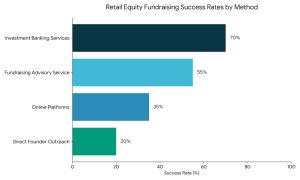
Investment banking services and fundraising advisory services usually aid the equity funding by matching the retail founders to the appropriate investors.

Why Do Retail Businesses Choose Equity Funding?

Retail is capital-intensive. Inventory, rentals, marketing and staff costs increase rapidly. Numerous founders prefer equity financing since equity financing is associated with long-term expansion and not short-term survival.

Benefits of Equity Funding:

  • Small business funding is provided.
  • Enables faster expansion
  • Enhances the stability of cash flow.
  • Establishes a reputation with business associates and suppliers.

When Is Equity Funding the Right Choice?

Equity funding is suitable where:

  • You have consistent revenue
  • Your business model can be scaled.
  • You are expanding (new stores, omnichannel, franchising)
  • You do not require money only, but strategic investors.

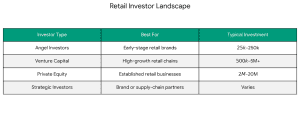
Types of Equity Investors for Retail Businesses

retail investor landscape

This is where business fundraising expertise becomes crucial—matching your retail brand with the right investor type.

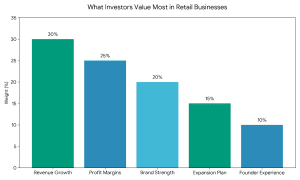
What Investors Look for in Retail Businesses?

Investors do not just finance ideas, they finance implementation.

Core Evaluation Criteria:

  • Strong revenue traction
  • Healthy gross margins
  • Repeat customers
  • Clear expansion strategy
  • Experienced founding team
  • Unit economics (store level profitability)

Investors Look for in Retail Businesses

Step-by-Step Process to Get Equity Funding for Retail Business:

Step 1: Get Your Business Investment Ready.

  • Clean financial statements
  • Clear growth roadmap
  • Defined use of funds

Step 2: Develop a Retail-Centric Pitch Deck.

Include:

  • Business overview
  • Market opportunity
  • Store economics
  • Growth strategy
  • Financial projections

Step 3:Select the Appropriate Fundraising Path.

You can:

  • Get to the investors directly.
  • Experience with fundraising advisory services.
  • Formal deals should be done using investment banking services.

The professional advisors play a significant role in increasing the success rates of funding.

How Much Equity Should You Give Away?

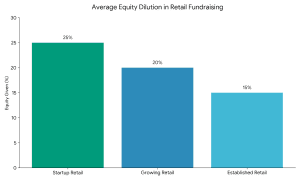
The usual methods of raising capital used by most retail businesses include:

  • 10%–25% equity in early rounds
  • 15%–30% equity in growth stages

The idea is to make an adequate amount of capital without losing control.

raising capital for retail business

Common Mistakes Retail Founders Make

  • Overvaluing the business
  • Weak financial reporting.
  • No clear expansion plan
  • Selecting the wrong investors.
  • Bypassing professional advice on fundraising.

This is the reason why most successful founders use business fundraising agencies and investment banks.

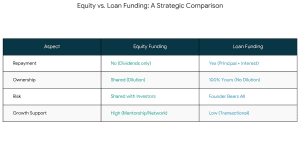
Equity Funding vs Loan Funding (Quick Comparison)

Common Mistakes Retail Founders Make

Final Thoughts:

Equity funding of retail business can be the most cunning decision to make in case you want to grow faster, build a strong brand, and remove the financial pressure. Having the appropriate plan, definite figures, and the assistance of a reliable fundraising consultancy, you will easily have funds to develop small businesses and create value over time.

Get business Funding
Quick FAQ [Frequently Asked Questions]

Q: Will small retail businesses receive equity funding?

Yes. Numerous investors make active investments in small retail outlets that have good unit economics and grow.

Q: Am I required to make profits to raise equity funding?

Not always. What is more important is revenue traction and scalability.

Q: Is the employment of a fundraising advisor justified?

Yes. Statistics indicate a lot more success with professional advisory support.

funding for ai startup

I Asked 50 Investors How to Get Funding for an AI Startup—Their Answers Shocked Me.

Starting up an AI company might be akin to attempting to scale Everest without a rope. You only possess an innovative idea, a vision, no connections, no network, and zero funds. The good news? You can find funding of AI startups, even when you are starting with nothing.

We interviewed 50 leading investors in the field of venture capital, technology investment banking services, and fintech investment banking. Their advice showed trends, approaches, and untapped opportunities that can significantly transform your success in raising funds.

How to Get Funding for AI Startup

Understanding the Funding Landscape for AI Startups

It is important to know how AI startups are funded before immersing into the strategies:

  • Seed Funding: Capital to be used in the initial stages to develop prototypes or test the market.
  • Venture Capital: Greater funding of startups with scale and momentum.
  • Strategic Investors: Investors are corporations and fintech companies seeking to invest in emerging AI technology.
  • Government Grants and Incubators: This is often neglected but this type of funding may be non-dilute.

Hint: The use of technology investment banking services and fintech investment banking expertise can be used to offer a road-map on how to structure deals and find investors effectively.

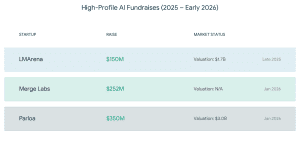
Venture Capital Funding for AI Startups7 Proven Ways ot Get Funding for Your AI Startup With Zero Connections

Major AI funding rounds1. Pitch Your Pitch with Free Pitch Deck Templates.

Shareholders desire transparency, perspective, and expansiveness. A refined pitch deck can be the difference. Use AI- and tech startup-optimized templates of free pitch deck to describe:

  • Market opportunity
  • AI product differentiation
  • Business model and monetisation strategy.
  • Traction and milestones

2. Use the Power of Online Media and Community.

Platforms such as AngelList, LinkedIn, and Crunchbase enable startups to meet with investors even without any personal ties. Join AI-related communities, communicate your vision, and seek advice from experienced professionals.

3. Think about Investment Banking Advisory Services.

Investment banking services in the field of technology are able to assist in structuring your round of financing, identifying the right investors, and offering credibility. A large number of investors like startups that are guided by advisory services as they are signs of professionalism and minimisation of risk.

4. Cultivate Strategic Partnerships.

Connect with fintech investment bank companies or technology accelerators. They are able to open the doors to funding networks, which you could not otherwise access.

5. Show Traction Early

Investors are more concerned with outcomes more than relationships. Show early adoption, prototype success, or pilot programs. This may contain customer testimonials, AI model accuracy rates or small revenue streams.

Late-stage rounds dominated AI funding in 2025

Late-stage rounds dominated AI funding in 2025

6. Pitch to AI & Tech Accelerators.

Funding and mentorship can be offered by such programs as Y Combinator, Techstars and AI-centered incubators. Your startup is also justifiable in future investors when you are an accelerator.

7. Take advantage of Content and Thought Leadership.

By posting AI insights, case studies, or technical blogs, you position your startup as a self-assured, well-educated member of the AI ecosystem. Investors will be more willing to invest in startups that have apparent expertise.

How Investment Banking Can Amplify Your Fundraising

Working with technology investment banking services or fintech investment banking experts can: Even as an early-stage AI company, you can:

  • Referrals to high-value investors.
  • Maximize your valuation and term sheets.
  • Grant due diligence support.
  • Place your startup with strategic value within the AI investment ecosystem.
  • Imagine that they act like a force multiplier on your fundraising efforts.
AI startups dominated investment

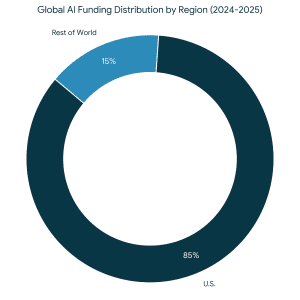
U.S. AI startups dominated investment flows in 2025 — capturing the majority of global funding.

Key Takeaways From 50 Investors

Here’s what we learned after interviewing multiple investors:

Key Takeaways From 50 Investors

FAQs – Frequently Asked Questions

Q1: Is this possible to raise money in an AI startup with no network?
Absolutely. Platforms, accelerators, and advisory services eliminate the need to make connections at the initial phase in case you are concentrating on traction and a good pitch.

Q2: What can investment banking do to assist an AI start-up?
They offer tactical advice, assist in organising the deals, introduce startups to investors, and make your business valid to get more trust.

Q3: Do free pitch deck templates work in raising funds?
Yes. The templates assist in making your AI startup look professional and summarised. Ensure that you tailor them in order to present your own distinctive AI solution.

Q4: What kind of investors are ideal AI startups?
The AI startups are usually of interest to seed investors, venture capitalists, corporate strategic investors, and fintech-oriented investors.

Q5: What do I do to show traction when there is no revenue?
Present prototype success, pilot projects, user base, AI model precision, or initial collaborations. Revenue is not as convincing as metrics.

Conclusion

It is not easy but not impossible to get business funding on your AI start-up without previous connections. With a powerful pitch, preliminary traction, online networking, accelerator program, and advisory services of investment banks, a first-time founder may be able to get capital and grow the AI innovations.

Bear in mind: investors do not invest in a Rolodex alone but the vision supported by the results. The proper approach can make your AI company raise money and flourish in the modern technology industry.

Get business Funding

Tech Startup Funding

How to Get Tech Startup Funding: A Practical Guide for Founders

Launching a tech start up is fun- but to bring an idea into a successful business needs funding. Be it a new AI tool or SaaS solution, or a hardware solution, funding is necessary to grow operations, recruit talent, and roll out your product. This manual demonstrates how to raise money through tech startup funding, and has steps to follow that are relevant to the current tech ecosystem.

Why Tech Startups Need Funding?

Technology startups have a higher initial expense than traditional businesses because of:
  • Software development, hardware development, AI development.
  • Cloud infrastructure or servers.
  • Recruiting engineers, designers and marketing staff.
  • Regulatory and compliance standards.

Even the best technological ideas may come to a halt without adequate funding. That is the reason why any founder needs to know how the funding can be made and what the investors expect.

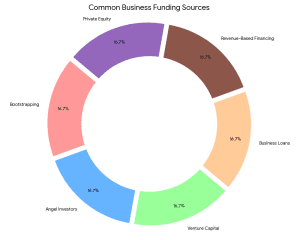
#1 Step: Identify the Right Type of Funding

The initial step in raising tech startup funding is to understand what type of funding suits your startup and its objectives:

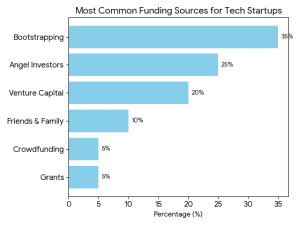
  1. Bootstrapping: Financing operations with own savings or revenue. Ideal for early-stage ideas.
  2. Friends and Family: Minimal investments made by immediate acquaintances. Useful in development of proof-of-concept or prototype.
  3. Angel Investors: Seasoned investors that contribute investments in the form of equity. Often provide mentorship.
  4. Venture Capital (VC): Investments in startups of high potential growth. VCs will fund high amounts but with high equity and quick returns.
  5. Government Grants and Programs Non-dilutive funding to encourage innovation.
  6. Crowdfunding: Seek direct financing of potential clients via such platforms as Kickstarter or Indiegogo.
  7. Corporate Partnerships: Resources or investment by well-known companies in order to collaborate or get early access.

AI Insight: The new AI can assist the founders to find out potential investors, fund raise trends, and even pitch deck optimization to predict what will attract investors according to previous funding records.

#2 Step: Build a Strong Business Plan

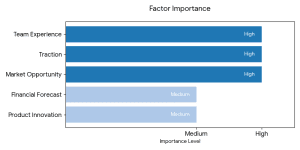
Investors desire to have a road map. The following things should be included in your business plan:

  • Problem & Solution: What is your tech a solution to, and why is it special?
  • Market Opportunity: Growth trends, competitors and total addressable market.
  • Model: How are you going to make money with your startup? Subscription, licensing, free-mium, etc.
  • Product Roadmap: Product development milestones and schedules.
  • Team Credentials: Why your team can create the vision.
  • Financial Projections: Financing requirements, expenses and revenue.

Pro Tip: AI tools such as business plan generators can assist you to organise your plan in the most effective way and can simulate growth conditions to investors.

Learn About: Technology investment banking services

#3 Step: Craft a Winning Pitch Deck

Your startup’s first impression is a pitch deck. An AI-intensive solution will be able to study the existing successful pitches in order to maximise content and visuals. Key slides include:

  • Introduction and Problem: Straight forward and clear.
  • Solution: The value positioning of your product.
  • Market Opportunity: Factual and valid.
  • Traction: Start-user, revenue, partnerships.
  • Business Model: How you raise money.
  • Team & Advisors: Be competent and reliable.
  • Funding Ask Finance: Be clear as to how the funding will expedite growth.

Tip: Keep it under 15 slides. Your deck can also be automatically generated by AI tools into graphs, charts and competitor analysis.

free pitch deck templates
#4 Step: Demonstrate Traction

Startups with the potential of success are invested in by investors. Traction can include:

  • The increase or the usage metrics of the users.
  • Revenue or pre-orders
  • Beta program success
  • Joint ventures or alliances.

Small, initial traction can do major wonders to investor confidence. AI analytics can monitor user behaviour, growth patterns, and retention, and thus it is simpler to provide definite displays of traction.

#5 Step: Leverage Networks and Platforms

Funding is a matter of who you have connections with rather than what you have accomplished. Network expansion strategies:

  • Startup Incubators and Accelerators: Y Combinator, Techstars and others offer mentorship and funds.
  • Angel Networks VC Platforms: AngelList, Crunchbase, and LinkedIn may help you find investors.
  • Tech Conferences and Meetups: Pitch events, Hackathons, and workshops are also good in terms of exposure.

AI Insight: AI-powered tools will assist to find investors best suited to your startup business, location, and funding round and save time and chances of success.

#6 Step: Choose the Right Funding Option

Here’s how to match funding types with startup stages:

match funding types with startup stages

Choosing the right option prevents unnecessary equity loss and aligns your growth trajectory with investor expectations.

#7 Step: Avoid Common Pitfalls

  • VC too soon: Prioritise traction.
  • Failure to take legal and financial structuring: Unambiguous contracts and equity arrangements will avoid conflicts.
  • Disregard of investor feedback: Relevant ideas, although financial assistance may not be as timely.
  • Weak story telling: The investors must relate to your vision both emotionally and logically.

#8 Step: Leverage AI to Boost Funding Success

Artificial intelligence will be able to assist where conventional technology fails:

  • Investor Research: AI is used to conduct a scan of databases with investors who are likely to finance your industry.
  • Pitch Deck Optimization: Predictive technology proposes slides, images, and messages that resonate.
  • Financial Forecasting: AI thinks over various scenarios to reinforce predictions.
  • Market validation: AI software processes user response, trends, and sentiment to justify market demand.

AI can be used strategically to save time and reduce risk and enhance investor credibility.


Final Thoughts

Funding tech startups is not a random event. Focus on:

  • Competence in your stage of start-up.
  • Selecting the appropriate financing sources.
  • Developing an effective business strategy and traction measures.
  • Preparing a persuasive pitch deck.
  • Using AI and networks to their advantage.

This is an efficient and confidence-based way for founders to get tech startup funding in order to transform innovative ideas into scalable and successful businesses.

Get business Funding

Funding Readiness Checklist

Funding Readiness Checklist: Prepare Your Business for Investment in 2025 & Beyond

One of the most transforming moves that a business can make is the act of raising capital. Yet the brutal truth is: most of the startups and middle market businesses do not raise funding not because their idea is not a good idea but because they are not an investable company. It is here that the funding readiness checklist comes in. It is a step by step guide that will make your business ready to impress investors, raise funds effectively, and grow successfully not just in 2025 but in 2026.

You will find a realistic, practical checklist in this guide, which includes financials, legal preparedness, team, market strategy, fundraising planning, and others. You will have just the answer to know how to get your business ready to be invested in without fear.

Why a Funding Readiness Checklist Critical?

Hundreds of pitch decks are received by investors on a monthly basis. It is the matter of preparation that is the difference between success and rejection.

A Funding Readiness Checklist can assist you:

  • State your business professionally.
  • Present all the required documents and information investors require.
  • Don’t make expensive errors to cripple funding.
  • Develop investor confidence and trust.

Imagine it as a pre-flight checklist – one step will result in postponement or risk of funding.

Pro Tip: Start preparing early. Investors notice when founders are proactive about 2025–2026 funding

business valuation software
Key Sections of a Funding Readiness Checklist

There are six important areas that a solid Funding Readiness Checklist must cover. Let’s break them down:

1. Financial Preparedness

Numbers are important to investors. Your finances should also be correct, open as well as proactive.

Checklist items:

  • Financial statements ( Income Statement, Balance Sheet, Cash Flow) audited or reviewed.
  • Projections and forecasts of 2025 and 2026.
  • Unit economics and burn rate (startups).
  • Equity structure and cap table.
  • Debt obligations and liabilities.

Why it is important: Clean and well-organised finances are a source of confidence and show that your business is able to grow sustainably.

2. Business Model Clarity

Shareholders would like to know how your company generates value.

Checklist items:

  • Clear value proposition
  • Pricing strategy and revenue model.
  • Market and customer acquisition.
  • Differentiation and competitive landscape.
  • Potential to expand threefold between 2025 and beyond.

3. Legal & Compliance Readiness

No other thing can destroy the confidence of the investors as much as the legal or regulatory problem.

Checklist items:

  • Registration and licenses of businesses. (Check Now)
  • Ownership of intellectual property and patent.
  • Hiring agreements and contracts.
  • Impending litigation or regulation issues.

4. Management Team & Governance

Investors are not investing in ideas only.

Checklist items:

  • Relevant experienced key team members.
  • Advisory board or mentors
  • Governance structure
  • Clearly defined roles and responsibilities.

Tip: Spotlight accomplishments, past exits or industry experience – this develops competence and power.

5. Market & Growth Strategy

Investors desire to see that your business can grow.

Checklist items:

  • Total Addressable Market (TAM) and Serviceable Available Market (SAM).
  • Go-to-market (GTM) strategy for 2025–2026
  • Customer Acquisition Cost (CAC) and Lifetime Value (LTV).
  • New markets, or new product lines expansion.

6. Fundraising Strategy

Lastly, your checklist must describe your fundraising strategy.

Checklist items:

  • Type and amount of targeted investment (equity, debt, convertible notes)
  • Optimal types of investors (VC, angel, PE, strategic)
  • Investor pitch and investor presentation.
  • Timeline and milestones
  • Contingency plans

Common Mistakes Founders Make

Founders are known to trip even with a checklist.

Avoid these pitfalls:

  • Unfinished or dishevelled financials – destroys credibility.
  • Excessive projecting of market size – investors like real projections.
  • Ignoring legal preparation IP or compliance can come to a halt.
  • Overlooking deadlines -The raising of funds will consume more time than anticipated.
  • Poor team presentation- investors emphasise on how things are done rather than what is said.

Hint: Your checklist will help you to cover every area and avoid such mistakes when approaching investors.

Read About: How to Raise Series A Funding in India (2025 Guide)

How to Use Your Funding Readiness Checklist Effectively

  • Timing is everything – Now preparing 20252026 funding rounds.
  • Check all the parts- Do not omit any part.
  • Seek professional consultation – It may be advisable to seek professional advice such as FundTQ to figure out the gaps.
  • Communicate frequently – Markets, finances and strategy change; revisit on a quarterly basis.
  • Get your team in line – distribute the checklist across the team and make sure everyone is on board.

free pitch deck templates
Bonus Tips for 2025–2026 Funding Success

  • Storytelling with data: Investors are obsessed with graphs and numbers.
  • Online presence: Have a professional LinkedIn and Web site.
  • Scenario planning: “Make best-case and worst-case funding estimates.
  • Know your numbers: Be prepared to tell financials in a comprehensive fashion.
  • Regular follow-ups: Reflective follow-up messages are a sign of professionalism.

Learn About: 9 Ways of Fundraising for Startups in India

FAQs

Q1: What is a Funding Readiness Checklist?

A: It is a guide on how founders should make their business investable, including financials, legal preparation, team, market plan, and fundraising.

Q2: At what time do I begin preparing a funding round?

A: 6-12 months before you are having the fundraising. This checklist will be useful in 20252026 planning.

Q3: Is it possible to operate with the same checklist with equity and debt financing?

A: Yes, the core readiness items are applicable to both, however, your section of fundraising strategy can vary.

Q4: What is the frequency of checking the checklist?

A: Quarterly changes will be recommended to capture financial changes, market trends and staff growth.

Bottom Line

Like in business, relying on raising capital, it is preparation and not a matter of luck. A Funding Readiness Checklist is a way to make sure that your business is organized, believable and that it is investor-ready by 2025 and 2026. This guide will help you minimise risks, speed up your startup funding process, and come out as a confident, credible founder before investors.

Next Step: Download our complete Funding Readiness Checklist (2025-2026) and determine your company investor readiness in the present.

Get Your Funding Readiness Checklist

Raise Series A Funding

How to Raise Series A Funding in India (2025 Guide)

The Raise Series A Funding is an important step in the life of a startup that wants to grow beyond its initial momentum. Although seed funding assists to prove the fit of your product-market, Series A is regarding growth through expansion, gaining more customers, and maintaining sustainability.

The Indian startup ecosystem is also very competitive and data-driven in 2025. The investors are not just focusing on revenue anymore, they desire scale business models, clear unit economics, strong leadership teams, and robust growth strategies.

Composing a detailed FundTQ (one of the leading investment banking and fundraising advisory firms in India) guide takes founders through the preparation process to close off your Series A round, trends, important documents and timelines.

What Is Series A Funding?

The initial major institutional round of venture capital is Series A financing that a start-up company receives following demonstration of a sound concept and momentum.

Investors in Series A expect:

  • A clear problem-solution fit
  • Existence of market demand and traction.
  • A repeatable and scalable business model.
  • An effective and creative founding team.

Purpose of Series A funding:

  • Hire and scale your team
  • Expand products or services
  • Enter new markets
  • Improve operational abilities.

Concisely, Series A converts an idea that has been tested into a business that is ready to grow.

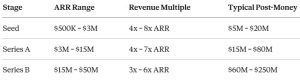
Series A Funding Size and Valuation in India

Series A funding amounts vary by sector, traction, and investor appetite. Typical ranges are:

Series A Funding Size

Tip: FundTQ helps startups determine realistic Raise Series A Funding amounts and optimal valuations using data-driven financial modeling.

Step-by-Step Guide to Raising Series A Funding

Step 1: Strengthen Your Business Foundation
Make sure your fundamentals are good before approaching investors:

  • Market Opportunity: Identify your TAM, SAM, and SOM.
  • Business Model Clarity: Show how to make money and keep it going.
  • Traction Metrics: User growth, revenue, retention rates, CAC, LTV, engagement metrics.
  • Unit Economics: Focus on gross margins, burn rate and profitability potential.

FundTQ optimises financial forecasts and business models to fulfil the expectations of investors.

Step 2: Build a Comprehensive Business Plan

Your business plan must narrate the facts about your startup story:

  • Executive summary & vision
  • Problem-solution analysis
  • Market research/competitive environment.
  • Business model & revenue plan.
  • Financial estimates (35 years)
  • Risk analysis & mitigation
  • Scaling and expansion road-map.

FundTQ prepares investor-ready business plans that are in line with VC and PE requirements.

business valuation software

Step 3: Create a Winning Pitch Deck

The first thing people see is your pitch deck. Essential slides include:

  • Issue and marketing need.
  • Solution (product/service)
  • Product demo or screenshots
  • Traction & milestones
  • Market Strategy and Competitive Advantage.
  • Financials & projections
  • Team and advisors
  • Financing needs and expenditure.

The FundTQ produces brief, attractive decks that are compliant with the international VC standards.

pitch deck templates for Raise Series A Funding
Step 4: Identify and Target the Right Investors

Not every investor fits so perfectly. Focus on:

  • Venture Capital Firms: Accel, Sequoia, Nexus, Chiratae.
  • Corporate Investors: Google for start-ups, Reliance Ventures.
  • Family Offices & HNIs: Best in niche and first mover.
  • Impact Funds: climate tech, healthtech and education ESG funds.

FundTQ offers selective access to investors in India and elsewhere in the world.

Step 5: Prepare for Due Diligence
Investors will verify:

  • Legal documents and registration of the company.
  • Tax filing and financial statements.
  • Cap table and equity structure.
  • IP ownership & customer contracts.
  • Regulatory compliance.

In order to facilitate due diligence, FundTQ performs pre-investment audits and establishes a virtual data room to facilitate the audit.

Step 6: Outreach and Investor Meetings

  • Provide a brief preview or summary.
  • Deliver your pitch deck through safe links.
  • Organize schedule and product demos.
  • Track follow-ups using a CRM

FundTQ deals with investor outreach and meetings in order to optimize interaction.

Step 7: Term Sheet Negotiation

A term sheet outlines:

  • Valuation and dilution of equity.
  • Board organization and control.
  • Rights & obligations
  • Exit terms

FundTQ gets good terms while ensuring that the founders maintain control.

Step 8: Investor-Led Due Diligence

Investors carry out intensive audits:

  • Card-related reviews and revenue recognition.
  • IP validation and legal audits.
  • Customer & vendor references
  • Compliance checks

FundTQ manages the coordination of all the teams in smooth due diligence.

Step 9: Closing the Round

Final steps:

  • Sign definitive agreements
  • Transfer of funds and allocation of shares.
  • Regulatory filings
  • Public announcement

FundTQ warrants conformity and smooth integration of post-funding.

Key Documents Required for Series A

Key Documents Required for Series A

Timeline to Close Series A

Timeline to Close Series A


Trends in Series A Funding (2025 & Beyond)

  • AI-based Startups: AI and automation have high investor interest.
  • Profitability & Sustainable Growth: Healthy unit economics a priority.
  • Alternative Financing Models: Equity + Debt or revenue based financing.
  • International Investment Preference: US and SE Asian VCs are making more investments in India.
  • Corporate Governance & Transparency: Clean cap tables and reporting is compulsory.

 Why Partner with FundTQ

FundTQ provides the entire ecosystem of startups in need of funding:

  • End-to-end fundraising consultancy (Series A to and past)
  • Investment banking services (valuation, deal structuring, due diligence)
  • M&A advisory (sell side and buy side)
  • Support of pitch deck and financial modeling.
  • Investor relations and introductions.

Why FundTQ?

  • Successful history of Series A funding.
  • Availability of the best investors in India and around the world.
  • Professional financial and legal consultation of the closures.
  • Evidence-based decision-making and valuation.

FundTQ enables the founders to work on growth and handle the complexities of fundraising.

Ready to Raise Series A Funding?

For founders scaling their business in 2025, FundTQ makes the fundraising journey seamless. From financial modeling and pitch deck creation to curated investor introductions and deal closure, FundTQ provides end-to-end fundraising and investment banking support.

Contact us

Healthcare Investment Banking

The Best Healthcare Investment Banking Firms [Updated List]

The global healthcare sector is one of the most dynamic and complex industries, shaped by innovation, regulation, and demographics. This blog outlines a comprehensive guide through healthcare investment banking, the specialised financial world that drives changes and why it holds vital importance in today’s economy.

Global investment in healthcareWhat is Healthcare Investment Banking?

Healthcare Investment Banking or HIB is a special segment of investment banking sectors that specialises exclusively in providing financial advisory services to organisations working within the diverse healthcare industry. These include pharmaceutical companies, biotech firms, regulatory services, medical device manufacturers, healthcare service providers (hospitals, clinics, nursing homes), and healthcare IT firms.

healthcare investment banking servicesLife sciences investment banking provides a varied area of services. Key services include:

  1. Mergers and Acquisitions (M&A) Advisory: Advising the healthcare sector on buying, selling or merging with other entities to achieve strategic goals, expand market presence or acquire new technologies/products.
  2. Capital Growth: Investment Banks help healthcare companies raise capital through debt and equity markets including Initial Public Offering (IPOs). Follow-on offerings, private placements and debt financing to fund overall growth, to fund overall growth and Research and Development (R&D) expansion.
  3. Strategic Advisory: Provides able guidance on critical corporate finance matters like financial restructuring, joint ventures, spin-offs and divestitures.
  4. Valuation Services: Conducting a detailed financial analysis to evaluate the fair value of assets, businesses or intellectual property for transactional or reporting purposes.
Healthcare Investment Banking

Core reasons healthcare IB is sought after: high deal value and diversified deal flow.

Why Healthcare Investment Banking Matters?

The support and strategic planning that investment banking provides is crucial for the continued evolution and stability of the global healthcare system.

  1. Innovation and R&D: When a company decides to bring a new medical device or a new drug to the market, it requires a huge amount of financial commitment. Investment Banks in this regard helps raise capital and fund extensive, high-risk R&D pipelines, and clinical trials. Without this funding, life saving innovations would stall.
  2. Mergers and Acquisitions (M&A): M&A is an important characteristic of the healthcare sector. Investment banks advise on these critical deals.
  3. Regulatory Complexity: Investment Banks bring with them special knowledge and expertise to structure deals that comply with the complex rules of the healthcare industry. The healthcare industry is heavily scrutinised and regulated by bodies like FDA, CMS, and other international equivalents. This makes sure that transactions don’t run afoul of antitrust laws or healthcare-specific regulations.
  4. Global Growth: Investment Banking Firms help the healthcare sector in cross-border deals and capital flows. It globalises access to new medical technologies and care models.

How to get into Healthcare Investment Banking: Prerequisites and Background

For a successful career in Healthcare financial advisory firms strategic planning and effective decision making is the key to success. 

Educational Background

  • For undergraduate majors, the most common and preferred subjects are finance, accounting, economics or business as they help develop a basic foundation and understanding of corporate finance, valuation and statement analysis.
  • A post graduate background with an MBA for professionals changing careers or are from non-traditional backgrounds from top tier b-schools is helpful. Programs like Masters in Finance (MFin) are also relevant alternatives, equally resourceful and helpful.

Internships

  • Internships are arguably the most important and critical factor in securing a full-time position in healthcare investment banking. They serve practical experience, corporate exposure and a training period.
  • Seeking summer analyst programs at specific healthcare boutique firms is specifically important.

Specified Knowledge

  • Specialised knowledge about the field is necessary. Both technical and industry knowledge are essential. Nuanced technical expertise and practical industrial experience help handle the sector’s unique assets and business models.
  • A person who is well versed in advanced financial modeling, who is proficient in all standard valuation methodologies (DCF, comparables, precedent transactions) who has an understanding of effectively applying them is always preferred.
  • In depth industrial knowledge of the healthcare ecosystem is equally crucial.
  • Understanding the four main HIB sub-sectors is also important in dealing with the overall HIB dynamics.
      1) Biopharma
    2) Medical Devices and Diagnostics (MedTech)
    3) Healthcare Services
    4) Healthcare IT

The Top Healthcare Banking Firms in 2025

The future of investment banking in healthcare in 2025 is an ever-changing story, as technology advances in biotech, digital health, and worldwide calls to medical technologies keep growing. The investment banks that have an experience of the sector. Have become very important in the future of healthcare financing, mergers, and offering to the public. The following is a closer examination of the leading companies that will dominate Biotech deal advisory in 2025 each with an excellent advisory service, deal execution and strategic insight.

Also Read: 7 Effective Tips to Secure Funding for Medical Device Startup

#1 Goldman Sachs

Goldman Sachs, being one of the largest investment banks across the world, continues to hold a dominating position in the healthcare industry. The company still consults on billion-dollar biotech mergers, pharmaceutical IPOs, and acquisitions of enormous healthcare technology firms. Goldman Sachs is highly preferred by healthcare companies to grow strategically and raise capital due to its international network, advanced market intelligence, and investor relations.

#2 FundTQ – Healthcare Investment Banking Division

FundTQ is a unique healthcare investment banking company that is focused solely on life sciences and the health system ecosystem. The division offers strategic partnerships, venture capital, and growth capital deals along with expert advisory service in M&A. What distinguishes FundTQ is its robust understanding of the industry, data-driven valuation models, and close partnership with healthcare innovators, both small biotech startups and established medtech businesses. The emphasis on precision, partnership, and performance has made FundTQ a trusted company as far as healthcare investment banking is concerned, at least, in 2025 and beyond.

#3 Morgan Stanley

With its strategic precision and innovative approach, Morgan Stanley continues to provide excellent solutions for healthcare clients around the world. The firm’s healthcare investment banking practice is expert in equity and debt financing, cross-border mergers and strategic restructuring. By combining cutting-edge analytics and insights into the global market, Morgan Stanley empowers healthcare companies to navigate the complexities of the financial landscape with clarity and confidence.

#4 Bank of America Merrill Lynch

A world leader in corporate finance, Bank of America provides a robust portfolio of healthcare advisory services spanning the spectrum from capital raising to mergers & acquisitions. Its specialized healthcare business specializes in pharmaceuticals, healthcare services and biotechnology, offering clients unmatched access to capital markets and financial structuring expertise. The company’s combination of banking expertise and industry knowledge makes it a leading player in the field of healthcare investment banking in 2025.

#5 Lazard

With a long standing history and an independent model of advice. Lazard provides high value strategic advice to healthcare companies around the globe. Its healthcare practice deals with intricate M&A, restructuring, and capital advisory deals. Enabling clients to make well-informed decisions that fuel sustainable growth. Lazard’s reputation for trust, independence and analytical depth continue to make it one of the most admired names in medTech capital markets banking.

#6 Evercore Partners

As one of the world’s leading independent advisory firms, Evercore Partners has elite sector expertise in healthcare. The firm’s healthcare financial advisory firms group is consistently ranked as one of the most active in biotech and life sciences deal activity. Evercore’s client-centric approach, coupled with analytical depth and senior-level involvement, guarantees exceptional results for clients seeking transformative healthcare deals.

#7 Centerview Partners

Centerview’s healthcare team continues to be a leader in advising on some of the largest and most complex dealings in the global healthcare industry. With a deep focus on long-term strategy and operational excellence. Centerview’s senior bankers provide unparalleled advisory services in pharmaceuticals, biotechnology and healthcare services. Their commitment to precision and collaborative solutions distinguishes them in a competitive market.

Trends Driving Healthcare Investment Banking in 2025

The five major trends that are significantly shaping the healthcare Investment Banking sector are 

  1. Telemedicine and Digital Health
    The shift to the hybrid care models and the massive investment in AI driven solutions like diagnostics,workflow automation, and other AI-driven tools. Are consolidating the fragmentation of the digital health market. Deals which focus on integrating technology for greater efficiency and value based care are preferred.
  2. Biotech Innovation
    This is driven by the want to replenish pipelines, big pharma companies are pursuing a “string of pearls”  strategy. Acquiring early to mid stage biotech assets in high growth areas like oncology, immunology and rare diseases. IPO activity for quality, differentiated biotech firms is expected to gradually pick up.
  3. Aging population
    Demographics are boosting demand and investment in the sectors that cater to the needs of elderly and senior citizens. Home health services, senior living facilities and specialised medical devices and pharmaceuticals for chronic conditions.
  4. Global M&A Activity
    Following a period of volatility, M&A is set for a strong comeback exaggerated with corporate cash reserves and a need for strategic scaling. Mid-sized deals and cross border transactions are highly concentrated as companies seek to optimize portfolios and mitigate supply chain risk.
  5. Healthcare IT
    Technology cuts production costs and improves the experience of patients. This drives investment in cybersecurity, revenue cycle management (RCM) automation and data analysis to achieve efficiency in operations for providers and payers.

business valuation software
Choosing the Right HIB

Selection of the right HIB for your company is critical to maximising transaction value and success.

Key Criteria include 

  1. Sector Expertise
    Banks with deep, specialised focus with able sub-sector experience in the past. Recent relevant deal history demonstrates an understanding of nuanced industry drivers and valuation benchmarks.
  2. Deal History
    A strong expert history of successful transactions that are similar to what a company is looking for provides credibility and confidence. Analysing the bank’s ability to secure favorable valuations and structure complex deals.
  3. Investor Network
    The overall network of investors or relevant strategic buyers, private equity firms and institutional investors is paramount. A strong network ensures competitive tension and increases the pool of potential partners or acquirers.
  4. Global reach
    For companies with cross border aspirations an investment bank with global reach and proven experience is essential. Presence and relevant experience it is essential to navigate regulatory and geopolitical complexities in different markets.
get medical startup funding
Final Thoughts

The Life sciences investment banking scenario in 2025 is defined by innovation and consolidation. As technology develops, care delivery and large multinational corporations and large multinational corporations seek to secure future revenue streams. Companies must ally with an investment bank that possesses deep sector knowledge, an efficient team, extensive investor network, and technology-driven services.

To learn more about FundTQ’s Healthcare investment banking services, visit FundTQ’s Services Page or contact our advisory team.

Financial Model for BPO Company

What Is a Financial Model for a BPO Company? A Beginner’s Guide

The contemporary data-driven economy requires Business Process Outsourcing (BPO) companies to constantly ensure that they are cost-efficient, scalable, and profitable. A Financial Model for BPO Company helps clarify key financials, whether you’re raising funds, budgeting, or projecting returns.

This user-friendly guide analyses everything you need on how to build one, how to avoid some of its pitfalls, in a manner that you can concentrate on operating a high-performance BPO business.

What Is a Financial Model for a BPO Company?

The Financial Model is an extensive tool made to assist call centres and outsourcing firms in helping estimate income, control costs, and assess valuation. They are usually constructed with the help of Excel or financial modeling software, and can serve as a guide for both start-ups and mature BPO companies. They comprise the basics of financial statements, including the Profit & Loss Statement, Cash Flow Statement, and Balance Sheet, and industry-specific operating assumptions in line with the requirements of the BPO industry.

Why Do BPO Companies Need a Financial Model?

The BPO Financial Model Template is an extensive tool made to assist in precisely estimating income, controlling operating costs, and determining business valuation. The objective of financial modeling is to combine accounting, finance, and business metrics to create and predict a company’s future results and make smarter decisions. 

That is why every BPO should have one:

  1. Investor Readiness
    The investors desire to get evidence of sustainability and growth potential. A healthy financial model will prove that you have good knowledge of the market, unit economics, and your profitability schedule, and as a result, you will be seen as more appealing to the venture capitalists, angel investors, and private equity firms.
  2. Strategic Decision-Making
    A financial model is useful when planning a capacity addition, recruitment requirements, market entry, or diversification of services offered. It helps the CEOs and CFOs to compare the scenarios, what-if, and select the most strategic choice of direction.
  3. Cost Management
    Cost optimization in BPOs is crucial. BPOs are required to keep the fixed costs and variable costs in check with staff-heavy operations. A model can be used to identify the cost leakages and to optimise the operational costs, such as seat cost, infrastructure, payroll, and tech subscriptions.
  4. Profit Forecasting
    A properly constructed model can give you an idea of how altering the headcount, pricing, or client turnover will impact your bottom line. It provides intuitive predictions in case profitability benchmarks are lost.

Key Components of a BPO Financial Model

Understanding the building blocks of a financial model makes it easier to create and interpret. Here are the key components:

1. Revenue Assumptions
Revenue is typically based on per-agent, per-hour, or per-seat billing. The assumptions should be made on the basis of the pricing model and the expansion of the service lines.

2. Cost Assumptions
Salaries, infrastructure (rent, utilities), hiring, training, and software are among the costs incurred. Analysis of variable vs fixed costs is essential for scenario planning.

3. Track Metrics
Track metrics such as the amount of revenue per agent, the attrition rate, and the average handling time. These inputs drive operational efficiency projections.

4. Profit and loss statement
An organization’s profit and loss statement consolidates its income and expenditures within a specific period, reflecting on business productivity and effectiveness.

5. The Cash Flow Forecast
Since BPOs will deal with slow-paying clients, planning how much cash will come in and out of the company each month can guide the liquidity of the company and financing against a line of credit.

6. Balance Sheet
A balance sheet refers to the list of a company’s assets, liabilities, and shareholders’ equity for an operating period. Balance sheets provide the basis for computing rates of return for investors and evaluating a company’s capital structure.

How to Build a Financial Model for a BPO Company?

Step 1: Know  Your Company
It is extremely important in understanding how the company, whose financial model is being prepared, earns revenue and incurs costs, and what its business model is based on, publicly available information, data through internal reports, and/or through official filings.

Step 2: Understand the Industry Dynamics
Find out the industry trend, benchmark, and key performance indicators that the business can use

Step 3: Insert Audited Financials
Audit 3 to 4 years of audit Profit & Loss, balance sheet, and cash flows into an Excel sheet in a clear and clean format.

Step 4: Define Assumptions
The future growth rates and margins, and the workings of the work cycle and cost pattern, should be calculated and projected. Create an assumptions tab.

Step 5: Forecast the Income Statement
Calculate project revenues, direct costs, and operating costs to reach the EBITDA (depreciation, interest, and tax are not left to be answered at this point).

Step 6: Build Supporting Schedules
Develop depreciation, tax, equity, and debt schedules as well as working capital schedules in order to aid in the projections of the financial statements..

Step 7: Complete P&L and Balance Sheet
The next step is used to complete the P&L after linking Depreciation, Finance Cost, and Income tax from respective schedules. Similarly, you can complete the balance sheet by linking subsequent schedules, except for the Cash & Bank Balance.

Step 8: Complete the Cash Flow Statement

Once the P&L and Balance sheet are ready, then it only leaves the task of incorporating formulas and doing the linking with P&L and BS for Cash Flow Completion. Compare the latter with the amount of cash and the Balance Sheet.

Step 9: Calculate Free Cash Flows
Derive Free Cash Flow to Firm (FCFF) and Free Cash Flow to Equity (FCFE) for valuation.

Step 10: Perform DCF Valuation
The second step is to identify the Cost of Equity through CAPM (Capital Asset Pricing Model) using Market rate of Return, Risk-Free Rate, and Beta. Moreover, you will calculate the Cost of Debt using the interest rate and tax rate, which helps determine the Weighted Average Cost of Capital (WACC).

Step 11: Run Sensitivity Analysis
Important assumptions (growth rate, margin, WACC) that are required to be verified. This helps in drawing more accurate conclusions about the authenticity of the assumptions made.

Step 12: Perform Ratio Analysis
Pay a little bit more attention to estimate profitability, solvency, and liquidity ratios for investors to make better judgments on the investing decisions.

Step 13: Use Charts and Graphs
Create visuals to highlight revenue trends, cost breakdowns, and valuation results.

Step 14: Final Touch – Formatting & Indexing
As the model is completed, the only thing needed is to format the file, add hyperlinks for navigation, and polish the model for a professional look.

Common Mistakes in BPO Financial Modeling and How to Avoid Them:

BPO Financial Modeling is an essential skill for finance professionals. However, some common mistakes can lead to lead to wrong financial models.

 Here are some pitfalls to watch out for as you prepare your financial modeling:

Mistake

How to Avoid

Overestimating revenue Always use conservative growth projections and consider time lags in client onboarding.
Ignoring client churn Clients don’t stay forever. Not accounting for the churn rate could harm long-term revenue projections. 
Underestimating salary costs Always include full compensation packages and hiring cycle timelines.
No buffer for infrastructure scaling Include future CAPEX for expansion, like new office setups, software licenses, or server upgrades.
Not modeling cash flow Predict when money comes in versus when expenses go out to avoid liquidity shocks.

Business Valuation for BPO Companies: Why It Matters

One of the most effective methods of finding out the financial position is business valuation calculator for outsourcing companies.

The benefits of Business Valuation are as follows: 

– Discounted Cash Flow:

Discounted cash flow (DCF) refers to an analysis procedure used to value investments by discounting the estimated future cash flows. Analysts use DCF analysis to value a stock, company, project, and many other assets or activities, making it widely used in both the investment industry and corporate finance management

– EBITDA Multiple

EBITDA (Earnings Before Interest, Taxes, Depreciation, and Amortisation) is a financial metric that can measure the cash and operational performance of the company. It helps investors to focus on the business operations because it excludes items affected by accounting methods and government policies. 

– Revenue Multiple

Revenue Multiple (EV/Sales) is a valuation metric that compares the ratio between an enterprise value and total revenue, the amount of money that investors are ready to spend to use one unit of revenue. Analysts can also value early-stage or high-growth BPOs using revenue, especially when profits are slender.

The Key Features

  • Input revenue, EBITDA, cash flows, and growth rate
  • Compare multiple valuation methods (DCF, EBITDA, Revenue)
  • AI-assisted guidance for early-stage and mature BPOs
  • Free downloadable report for investors sharing

Conclusion:

The financial model of a BPO company may be a daunting process, but it is one worth creating. Starting from investor readiness to internal cost control, a good model entails that your business has both the structure and the prospects that it requires to be able to sustain itself on a long-term basis.

Whether you are in this guide helps to generate a model that reflects your strategy, flavors, and revenue fits. 

Pro Tip: Try the FundTQ Business Valuation Calculator today and see what your BPO company might be worth.

FAQs

Q1: What is a financial model for a BPO?
A financial model for a BPO is a spreadsheet-based tool that projects revenues, costs, and profitability based on the company’s business assumptions.

Q2: What is the requirement of Financial Modeling for the BPO companies?
It helps in making money, managing costs, attracting investors, also to enable one to make decisions strategically.

Q3: How can I value my BPO company?
You can use methods like DCF, EBITDA multiples, or revenue multiples, depending on your company’s maturity and growth.

Q4: Can I use a free template to build a BPO financial model?
Yes. Free Excel templates and tools like FundTQ can speed up your modeling process and reduce errors.

Q5: How do I find the valuation of my BPO company?
Use FundTQ’s Business Valuation Calculator to get quick, reliable estimates using industry-standard methods.

Fundraising Checklist

Fundraising Checklist: What You Need Before Approaching Investors

One of the most defining moments to a startup is the process of raising capital. Although passion and an innovative idea is the key, affectionately, cash is the reason that idea can become a successful company. But investors do not only invest in ideas, they investing with businesses that are ready, organised, and persuasive. Therefore, before you start reaching out to investors, you must have a thorough fundraising checklist.

This post provides a thorough fundraising checklist to make sure you have everything ready before meeting with possible investors, including data, documents, clarity, and confidence.

Why Do You Need a Fundraising Checklist?

Going to investors unprepared sends a message to investors that you are not ready and well prepared to get investments as well as create a bad image to your startup within the ecosystem. A fundraising checklist helps you:

  • Perpetuate start up fundraising blunders by one better prepared than others on tiny bits of advice
  • Increase documentation order to improve investor confidence
  • Eliminate holes in your business plan
  • Make your company look professional with a convincing power
  • Accelerate the due diligence process after interest of investor is generated

Regardless of the funding process you are approaching (seed funding, angel investment, and Series A funding), the checklist will make your effort stand out among the crowd and make it easier to find a way into the bigger picture.

1. Define Your Fundraising Goals

Begin by simply stating how much funds you desire to raise and why. You should base your target in fundraising on:

  • The stage the startup is VM pre-revenue, MVP, scaling
  • The amount of capital needed to achieve one mile point (e.g. product launch, user acquisition, break-even point)
  • A 12 months, 18 month runway

Checklist Items:

  • Amount you are raising
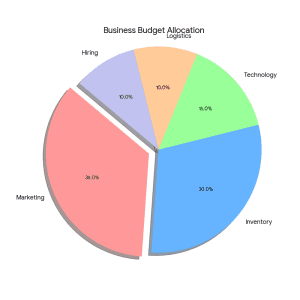
  •   Use of funds breakdown (tech, marketing, hiring, etc.)
  • Categories for spending money (tech, marketing, hiring, etc.)
  •  Types of fundraising include debt, SAFEs, convertible notes, and equity.

2. Get Your Financials in Order.

No startup is going to receive funding when the investors cannot support the business with reasonable financial arguments. Make elaborate financial records and forecasts.

Checklist Items:

  • Profit & Loss (P&L) statement (the previous 12-24 months, where applicable)
  • Cash flows statement
  • Balance sheet
  • The 3-5 year budgeted financial statements
  • Unit economics (CAC, LTV, gross margin etc.)
  • Break even analysis

Use startup tools such as FundTQ or projections templates to make them as accurate and investor ready.

3. Build a Solid Business Plan

A business plan is your blueprint. It shows investors that you understand your market, customers, competition, and growth potential.

Checklist Items:

  • Executive summary
  • Market size and opportunity
  • Problem and solution overview
  • Product/Service details
  • Revenue model
  • Go-to-market strategy
  • Competitive analysis
  • SWOT analysis
  • Team structure

Remember, the business plan is not just a formality—it’s a decision-making tool for investors.

4. Write a Winning Pitch Deck

A strong pitch is your golden card to an even meeting with investors. It ought to be brief, graphic and convincing.

Checklist items (usually 10-12 slides):

  • Overview and mission
  • Solving the problem and the issue
  • Market opportunity
  • Printed product demo/screenshots
  • Business model
  • Traction and milestones
  • Marketing and sales strategy
  •  Team
  •  Financials
  • Question (how much money and use)

Some of the pitch deck errors to avoid include having too many on-screen words, omitting the traction or being ambiguous about your finances.

5. Provide a Legislation Base

Investors are going to demand legal compliance within your startup. Make sure that your business is incorporated and does have the necessary registrations.

Checklist Items:

  • Company incorporation documents (MoA, AoA, PAN, TAN)
  • Goodwill, founders agreement and equity dividing
  • Cap table (realistic and actualized)
  • Licensing and ownership of IPs
  • Contracts of employees and NDA

6. Present Traction and Metrics

Investors are not only interested in how to validate your growth, but they want to see some indicators of growth or validation even though you are at the MVP or early revenue stage.

Checklist Items:

  • Active monthly users (MAU) / Daily active users (DAU)
  • Sales or preorders
  • Case studies or testimonies made by customers
  • Retention/churn
  • The downloading of apps or visits to websites
  • Collaboration or test customers

These measurements validate that you fit within your market and eliminate the perceived risk in the eyes of the investor.

7. Understand Your Strategy on Valuation

A practical sense of the value of your startup is what you must have (at least in the case of equity financing).

Checklist Items:

  • Present Fair valuation (based on revenue, number of users or similar startups)
  • Post-money and pre-money valuation knowledge
  • Rate of equity you are offering
  • Option pools (in case of any)
  • Rationale of valuation

It is recommended to consider a startup valuation software or even valuation experts to develop a possible solution to defend.

8. Get ready to conduct Due Diligence

After a term sheet has been provided, investors will get down to the bone. Preparation of due diligence materials is time-saving and creates trust.

Checklist Items:

  • Due diligence data room (Google drive or dropbox)
  • Having all financial documents at one place
  • Access to product demo
  • KYC Founders
  • Trademarks or patent registrations
  • Minutes and board resolutions
  • Previous fundraising records (in case of any)

Another pro tip is to put testimonials, pitch videos, and product roadmap to make a difference.

9. Develop Target Investor List

Just don’t spray and pray. Find investors who have invested in startups or sectors of the same stage of development. Make your story match their interests.

Checklist Items:

  • Angel investments and VCs in the same business sphere
  • Local ecosystem actors (e.g. incubators, accelerators in India)
  • Mentors or advisors to carry out warm introductions
  • CRM, or tracking sheet (with the contact status, feedback, etc.) of the investor

Check out other platforms (AngelList, LetsVenture, or LinkedIn) to research and find relevant investors.

10. Practice Your Pitch to Investors

You can get the best documents but poor delivery can screw you up. Practice is the right way to go.

Checklist Items:

  •  Pitch script of 10 12 minutes
  •  Expected Q and A (market, financial and gaps in the team)
  •  Backup deck of deep-dive sessions
  •  Pitch sessions to mentor or startup communities
  •  Storytelling device, Why you, Why now, Why this product?

The investors will invest in teams as much as they will invest in ideas. Be self assured, articulate and teachable.

FundTQ? A Smart Tool for Modern Startup Fundraising

As non-professional investors get more choice in what they invest in, and especially when you need to attempt a preliminary test of investment, it is not enough to have a nice pitch, but rather, data, structure and strategic positioning. That’s where FundTQ comes in.

FundTQ is a next-generation fundraising intelligence platform built specifically for startups looking to raise capital in a smarter, faster, and more organized way. It is a digital fundraising assistant that helps its founders manage not just their fundraising materials but also finds them the correct investors, better tells their valuation story, and tracks their whole funding process.

Who Should Use FundTQ?

  • First-time startups still in the early stage
  • Founders having some problems in creating the pitch deck or valuation
  • Startups in the growth stage seeking focused access to investors
  • Indian startups that want to raise funds aligned with compliance

Conclusion:

FundTQ transforms how founders approach fundraising—from confusion to confidence. By integrating financial insights, investor targeting, and structured preparation in one platform, FundTQ equips startups to raise capital like pros.

If you’re starting your fundraising journey, adding FundTQ to your toolkit is one of the smartest moves you can make.

Making money is not all there is to fundraising, there is relationship, preparedness, and consideration.Investors and shareholders want structure, vision, and dedication.

FAQs 

Q1: What is a startup fundraising checklist?

A fundraising checklist is a step-by-step list of key items (documents, metrics, strategies) a startup should prepare before reaching out to investors.

Q2: Why is a fundraising checklist important?

It provides the preparedness, builds up the investor confidence, prevents legal/financial errors, and accelerates the fundraising process.

Q3: What are some of the documents that I need to prepare in order to meet investors?

These will include your pitch deck, your business plans, your financials, the cap table, legal documents and traction data.

Q4: What will be the amount of funding requested?

Raise sufficient to last 12-18 months runway or to your next milestone (a product, revenue or team milestone).

Q5: Which are the common pitfalls to avoid when fundraising a startup?

One of the pitfalls is overestimation of valuation, underdeveloped financials, poor articulation of funds use, and ineffective pitch deck.