stepout-funding

FundTQ Leads Advisory for StepOut’s Fundraise Backed by Rainmatter

AI Sports Tech StepOut Funding: FundTQ Advises Rainmatter-Led Round

stepout-funding
StepOut
, an AI-driven sports technology platform redefining football analytics and talent development, has successfully closed its recent funding round led by Rainmatter by Zerodha, with participation from SucSEED Ventures, Misfits Capital, and Marwah Sports Pvt. Ltd. FundTQ acted as the exclusive deal advisor to StepOut, supporting the company across the entire business fundraising process. StepOut is building a data-first football ecosystem using artificial intelligence to enable smarter performance analysis, talent identification, and scouting solutions for academies, clubs, coaches, and athletes. By combining deep football domain knowledge with scalable technology. The platform addresses a critical gap in objective decision-making within grassroots and professional football. The successful fundraise marks a key milestone in StepOut’s growth journey. The newly raised capital will be utilized to strengthen its AI and analytics engine, expand product offerings, scale operations, and build deeper relationships across football academies and leagues. The round also reflects strong investor confidence in StepOut’s fundamentals, market opportunity, and long-term vision—underpinned by disciplined financial planning and robust business valuation frameworks.

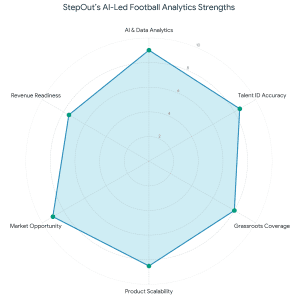
StepOut’s AI-Led Football Analytics StrengthsDuring the transaction, FundTQ worked closely with the StepOut founding team on multiple aspects of the raise. Including refining the equity narrative, preparing investor-ready pitch deck templates, validating financial models, and engaging with aligned strategic and institutional investors. The focus remained on building long-term value rather than short-term capital, ensuring the right fit between founders and investors.

The participation of Rainmatter by Zerodha brings strategic depth to StepOut’s cap table. Offering not just capital but also long-term guidance in building scalable, technology-led businesses. The investor consortium is expected to support StepOut. It accelerates product innovation and expands its footprint within India’s rapidly growing sports tech ecosystem.

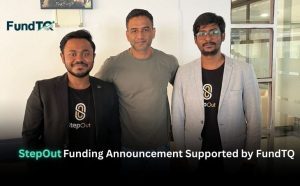
Stepout Funding Round

Reflecting on the engagement, the FundTQ team shared that their early interactions with StepOut stood out due to the founders’ clarity of purpose, execution discipline, and strong understanding of both technology and the football landscape.

“StepOut represents the next generation of sports technology platforms—deeply analytical, mission-driven, and scalable. Working with founders who are open to feedback, data-oriented, and focused on long-term impact makes the fundraising journey highly collaborative. We are excited to have partnered with StepOut and look forward to seeing the platform transform football analytics and talent development.”

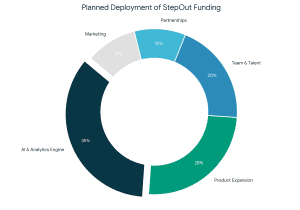
Planned Deployment of StepOut FundingThis transaction reinforces the idea that effective fundraising goes beyond capital infusion. It is about trust, alignment, execution quality, and founders who consistently show up to build enduring businesses. With a strong investor base and a clear growth roadmap. StepOut is well-positioned for its next phase of scale and impact.

About FundTQ

Founded in 2016, FundTQ is a full-service investment banking firm providing a wide range of investment banking services, including M&A advisory, VC/PE syndication, tax advisory, due diligence, and strategic capital raising. The firm follows a founder-first approach, focusing on seamless execution, long-term value creation, and outcome-driven advisory.

Recognized among the Top 10 Investment Banks, FundTQ has advised startups and MSMEs across their lifecycle. From early-stage business fundraising to growth capital, strategic investments, and acquisitions. Backed by deep industry expertise, strong investor relationships, and structured use of financial modeling. Business valuation software frameworks. FundTQ continues to be a trusted partner in high-impact transactions across sectors.

Get business Funding

FundTQ acted as the deal advisor to Axiom Ayurveda

Transaction Spotlight: Emami Acquires Majority Stake in Axiom Ayurveda

FundTQ Advises Axiom Ayurveda
Some deals are transactions. Some are journeys.
This one was both. FundTQ Advises on Emami Acquisition of Axiom Ayurveda

FundTQ Investment Advisory is proud to have acted as the exclusive deal advisor to Axiom Ayurveda on Emami’s acquisition of a 73.5% majority stake in the brand — one of the most significant Ayurveda M&A transactions in recent years, and one of the most personally meaningful mandates the FundTQ team has been part of.

About Axiom Ayurveda

Axiom Ayurveda is a purpose-driven Ayurvedic brand that has built genuine consumer trust over the years through science-backed formulations, authentic positioning, and a deep commitment to the wellness category. The brand’s growth story is not just one of revenue — it is one of conviction, consistency, and category leadership in a space that demands both authenticity and agility.

About the Transaction

FMCG major Emami Limited — one of India’s most respected consumer goods companies with a strong legacy in health and wellness — acquired a 73.5% majority stake in Axiom Ayurveda, signalling a strong strategic bet on the premium Ayurveda segment.

For Emami, this acquisition represents a meaningful addition to its wellness portfolio. For Axiom Ayurveda, it marks the beginning of a new chapter — one backed by institutional strength, distribution muscle, and the kind of long-term support that allows a brand to truly scale.

FundTQ’s Role in the Transaction

FundTQ’s involvement with Axiom Ayurveda spans nearly 2–3 years — long before the deal was on the table.

That is the nature of transactions at this level. They require relationship-building, patient positioning, financial narrative development, and the kind of ongoing strategic alignment that does not happen in a few months.

The FundTQ team worked alongside the Axiom Ayurveda leadership through every stage — understanding the brand’s DNA, sharpening the investor and acquirer story, identifying the right strategic fit, and navigating the full complexity of a majority stake transaction from first conversation to final close.

Reflecting on the journey, the FundTQ team shared:

“Axiom Ayurveda is a brand built on real conviction. From our very first interaction, it was clear this wasn’t just a business — it was a purpose. Transactions of this nature demand patience, precision, and complete trust between all parties. We’re grateful to have been chosen as partners on this journey and are excited about what lies ahead for the brand under Emami’s leadership.”

A Founder Who Made the Difference

No deal of this nature closes without the right person at the helm.

Rishabh Gupta stands out as one of the most remarkable founders FundTQ has had the privilege of working with. His clarity of thought, depth of understanding of his own business, and the composure with which he navigated every stage of this multi-year process was exceptional.

The kind of founder energy that makes advisors want to give their absolute best — because you know the person across the table deserves nothing less.
Working alongside him was not just professionally enriching. It was genuinely inspiring.

What This Deal Reflects

The Axiom Ayurveda–Emami transaction is a strong signal for the Indian Ayurveda and wellness category. It validates what the best founders in this space have always known — that authentic brands, built with purpose and patience, attract the right partners at the right time.

It also reflects a truth that FundTQ carries into every mandate: great outcomes don’t happen overnight. They happen because someone kept showing up, every single day — refining, aligning, and never losing sight of the end goal.

To the entire Axiom Ayurveda team — congratulations. You earned every bit of this.
To Emami — welcome as partners. The best is yet to come.
And to every founder reading this — if you are building something real, with conviction, the right outcome will find you. Stay the course.

FundTQ Investment Advisory is a leading investment banking firm advising growth-stage consumer brands on M&A, fundraising, and strategic transactions. To explore how FundTQ can support your next deal, write to us at deals@fundtq.com

Get business Funding

Unnati Funding

Fueling Agritech Growth: FundTQ Secures Series B for Unnati from Zephyr Peacock


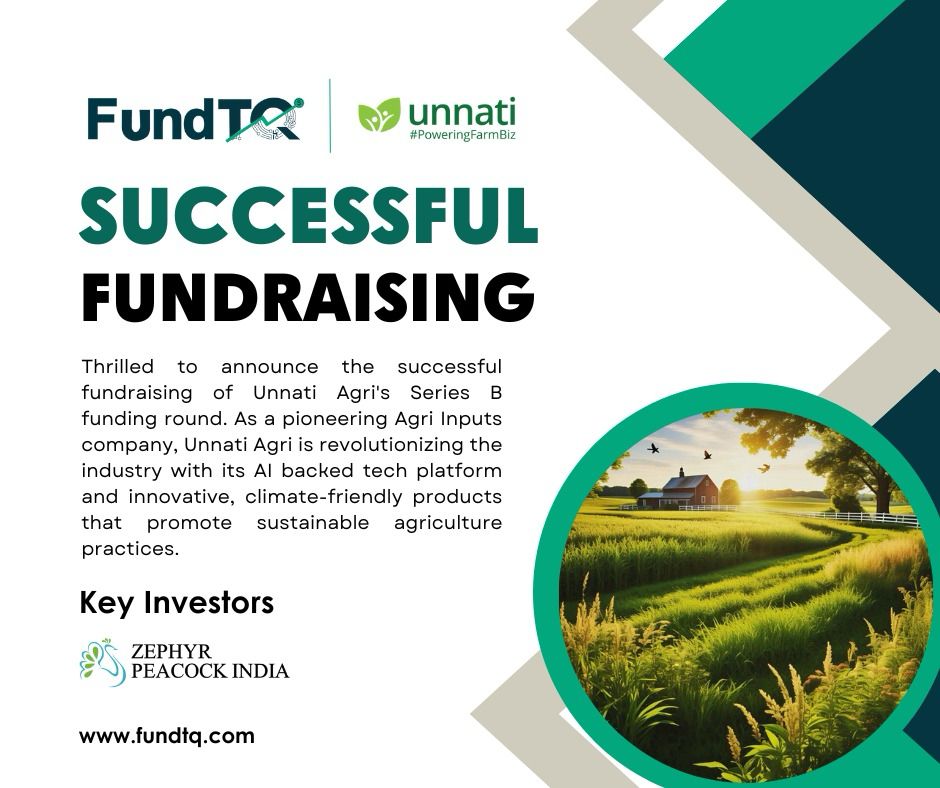
Unnati Agri (Akshamala Solutions Pvt Ltd), a leading player in the Agri-Input tech space, has successfully raised a part of their Series B Round. This investment is announced as a part of the Rs. 100Cr, which they are currently raising. The amount was invested with a participation from Zephyr Peacock along with participation of some other investors. Zephyr Peacock is a Mumbai-based investor renowned for its commitment to sustainable and high-growth businesses.. This fundraise will help Unnati to further strengthen its operations through their own brands portfolio and by acquiring companies in a similar space. Currently, the Company is aggressively working on launching their own portfolio of organic products.

Unnati Agri has established itself as one of the Leading players in the agricultural landscape with its focus on agri-inputs supply with climate sustainability. The company specializes in seeds, fertilizers, and agrochemicals, with a strong focus on environmentally conscious solutions that foster long-term agricultural growth. Unnati’s products cater to the needs of farmers, ensuring high-quality, sustainable, and efficient solutions that contribute to better yields while promoting ecological balance. The AI-based platform assists in managing inventory and mentions the appropriate mix of various formulations based on crop needs.

The funds raised will be directed towards driving Unnati’s organic growth with increasing contribution of its own brand products combined with the strategic acquisitions of other agri-input companies to expand its product portfolio and market reach. The Company is now openly looking for new companies to acquire in agri-inputs category which can help Unnati grow inorganically. This combination of organic growth and acquisition strategy is expected to boost Unnati’s position in the rapidly evolving agri-tech sector and accelerate its impact in promoting climate-resilient agricultural practices.

FundTQ is acting as an exclusive advisor to this Transaction and for acquisitions of the companies by Unnati.

Commenting on this growth initiative, Aanchal Mahani, Growth Partner at FundTQ said, “Unnati Agri’s move of successful fundraise is not just a transaction; it’s a strategic investment that positions the company for a bright and sustainable future. By capitalizing on the funds generated, Unnati is poised to make a significant impact in the agritech space, while simultaneously enabling Farmers To Always Make The Right Choice. Unnati is not just a platform, however it is helping India to become self-sustainable in terms of its agri inputs rather than depending on China”

This strategic move reinforces Unnati Agri’s mission to revolutionize the agriculture sector, create value for its stakeholders, and contribute to the global movement toward climate-smart agricultural solutions. As the agri-tech industry continues to evolve, Unnati’s commitment to growth and sustainability positions it for long-term success in both the Indian and global markets.


About FundTQ

FundTQ, established in 2016, operates as an Investment Banking firm, offering a comprehensive range of services encompassing M&A, VC/PE syndication, Tax Advisory, and Due Diligence Support. The company is driven by a success-oriented approach and places a strong emphasis on the successful conclusion of each transaction in its portfolio.

FundTQ is positioned amongst the Top 10 Investment Banks, due to its profound expertise in various diversified industries and an exceptional track record in both domestic and cross-border transactions. The diverse client base that FundTQ serves stands as a testimony to its capability to support startups and MSMEs at every stage of their journey, from securing growth stage funding to facilitating substantial transactions and providing expert M&A advisory services.

In last years FundTQ closed Alofut Beverages investment by Emami, NautiNati acquisition by Aditya Birla, among others


Unnati Funding

FundTQ Executes Series B Transaction for Unnati with Zephyr Peacock Participation


Unnati Agri (Akshamala Solutions Pvt Ltd), a leading player in the Agri-Input tech space, has successfully raised a part of their Series B Round. This investment is announced as a part of the Rs. 100Cr, which they are currently raising. The amount was invested with a participation from Zephyr Peacock along with participation of some other investors. Zephyr Peacock is a Mumbai-based investor renowned for its commitment to sustainable and high-growth businesses.. This fundraise will help Unnati to further strengthen its operations through their own brands portfolio and by acquiring companies in a similar space. Currently, the Company is aggressively working on launching their own portfolio of organic products.

Unnati Agri has established itself as one of the Leading players in the agricultural landscape with its focus on agri-inputs supply with climate sustainability. The company specializes in seeds, fertilizers, and agrochemicals, with a strong focus on environmentally conscious solutions that foster long-term agricultural growth. Unnati’s products cater to the needs of farmers, ensuring high-quality, sustainable, and efficient solutions that contribute to better yields while promoting ecological balance. The AI-based platform assists in managing inventory and mentions the appropriate mix of various formulations based on crop needs.

The funds raised will be directed towards driving Unnati’s organic growth with increasing contribution of its own brand products combined with the strategic acquisitions of other agri-input companies to expand its product portfolio and market reach. The Company is now openly looking for new companies to acquire in agri-inputs category which can help Unnati grow inorganically. This combination of organic growth and acquisition strategy is expected to boost Unnati’s position in the rapidly evolving agri-tech sector and accelerate its impact in promoting climate-resilient agricultural practices.

FundTQ is acting as an exclusive advisor to this Transaction and for acquisitions of the companies by Unnati.

Commenting on this growth initiative, Aanchal Mahani, Growth Partner at FundTQ said, “Unnati Agri’s move of successful fundraise is not just a transaction; it’s a strategic investment that positions the company for a bright and sustainable future. By capitalizing on the funds generated, Unnati is poised to make a significant impact in the agritech space, while simultaneously enabling Farmers To Always Make The Right Choice. Unnati is not just a platform, however it is helping India to become self-sustainable in terms of its agri inputs rather than depending on China”

This strategic move reinforces Unnati Agri’s mission to revolutionize the agriculture sector, create value for its stakeholders, and contribute to the global movement toward climate-smart agricultural solutions. As the agri-tech industry continues to evolve, Unnati’s commitment to growth and sustainability positions it for long-term success in both the Indian and global markets.

About FundTQ

FundTQ, established in 2016, operates as an Investment Banking firm, offering a comprehensive range of services encompassing M&A, VC/PE syndication, Tax Advisory, and Due Diligence Support. The company is driven by a success-oriented approach and places a strong emphasis on the successful conclusion of each transaction in its portfolio.

FundTQ is positioned amongst the Top 10 Investment Banks, due to its profound expertise in various diversified industries and an exceptional track record in both domestic and cross-border transactions. The diverse client base that FundTQ serves stands as a testimony to its capability to support startups and MSMEs at every stage of their journey, from securing growth stage funding to facilitating substantial transactions and providing expert M&A advisory services.

In last years FundTQ closed Alofut Beverages investment by Emami, NautiNati acquisition by Aditya Birla, among others


FundTQ acted as the deal advisor to Axiom Ayurveda

FundTQ Advises Axiom Ayurveda on Emami’s 73.5% Majority Stake Acquisition | Deal Alert

FundTQ Advises Axiom Ayurveda
Some deals are transactions. Some are journeys.
This one was both. FundTQ Advises Axiom Ayurveda on Emami’s 73.5% Majority Stake Acquisition

FundTQ Investment Advisory is proud to have acted as the exclusive deal advisor to Axiom Ayurveda on Emami’s acquisition of a 73.5% majority stake in the brand — one of the most significant Ayurveda M&A transactions in recent years, and one of the most personally meaningful mandates the FundTQ team has been part of.

About Axiom Ayurveda

Axiom Ayurveda is a purpose-driven Ayurvedic brand that has built genuine consumer trust over the years through science-backed formulations, authentic positioning, and a deep commitment to the wellness category. The brand’s growth story is not just one of revenue — it is one of conviction, consistency, and category leadership in a space that demands both authenticity and agility.

About the Transaction

FMCG major Emami Limited — one of India’s most respected consumer goods companies with a strong legacy in health and wellness — acquired a 73.5% majority stake in Axiom Ayurveda, signalling a strong strategic bet on the premium Ayurveda segment.

For Emami, this acquisition represents a meaningful addition to its wellness portfolio. For Axiom Ayurveda, it marks the beginning of a new chapter — one backed by institutional strength, distribution muscle, and the kind of long-term support that allows a brand to truly scale.

FundTQ’s Role in the Transaction

FundTQ’s involvement with Axiom Ayurveda spans nearly 2–3 years — long before the deal was on the table.

That is the nature of transactions at this level. They require relationship-building, patient positioning, financial narrative development, and the kind of ongoing strategic alignment that does not happen in a few months.

The FundTQ team worked alongside the Axiom Ayurveda leadership through every stage — understanding the brand’s DNA, sharpening the investor and acquirer story, identifying the right strategic fit, and navigating the full complexity of a majority stake transaction from first conversation to final close.

Reflecting on the journey, the FundTQ team shared:

“Axiom Ayurveda is a brand built on real conviction. From our very first interaction, it was clear this wasn’t just a business — it was a purpose. Transactions of this nature demand patience, precision, and complete trust between all parties. We’re grateful to have been chosen as partners on this journey and are excited about what lies ahead for the brand under Emami’s leadership.”

A Founder Who Made the Difference

No deal of this nature closes without the right person at the helm.

Rishabh Gupta stands out as one of the most remarkable founders FundTQ has had the privilege of working with. His clarity of thought, depth of understanding of his own business, and the composure with which he navigated every stage of this multi-year process was exceptional.

The kind of founder energy that makes advisors want to give their absolute best — because you know the person across the table deserves nothing less.
Working alongside him was not just professionally enriching. It was genuinely inspiring.

What This Deal Reflects

The Axiom Ayurveda–Emami transaction is a strong signal for the Indian Ayurveda and wellness category. It validates what the best founders in this space have always known — that authentic brands, built with purpose and patience, attract the right partners at the right time.

It also reflects a truth that FundTQ carries into every mandate: great outcomes don’t happen overnight. They happen because someone kept showing up, every single day — refining, aligning, and never losing sight of the end goal.

To the entire Axiom Ayurveda team — congratulations. You earned every bit of this.
To Emami — welcome as partners. The best is yet to come.
And to every founder reading this — if you are building something real, with conviction, the right outcome will find you. Stay the course.

FundTQ Investment Advisory is a leading investment banking firm advising growth-stage consumer brands on M&A, fundraising, and strategic transactions. To explore how FundTQ can support your next deal, write to us at deals@fundtq.com

Get business Funding

Investment Banking Advisors for Consumer Brands

Top Investment Banks Specializing in Consumer & Retail Companies [You Should Know]

If you’re a founder or CEO of a consumer brand looking to raise capital, explore a merger, or prepare for a strategic exit — the investment bank you choose can make or break your outcome. Not every bank understands consumer businesses. Unit economics, brand equity, multichannel presence, DTC margins, retail expansion timelines — these are things a generalist banker might overlook entirely. A specialist advisory who lives and breathes consumer deals? They’ll know exactly how to position your business to the right investors before the first deck goes out.

This guide breaks down what investment banking advisors for consumer brands actually do, what to look for, and who the leading names are in 2026.

get funding for business

What Does an Investment Banking Advisor Do for Consumer Brands?

A consumer brands investment banking advisor assists firms in making high-stakes financial deals, such as capital raises, mergers and acquisitions, partnerships with private equity and strategic exits.

“investment banking advisory process for consumer brands including fundraising, M&A and deal execution stepsIn the case of consumer businesses in particular, this implies:

  • Converting brand narrative and growth path into investor-friendly financial reports.
  • Finding and targeting the appropriate strategic or financial buyers/investors.
  • Running structured deal processes that generate competitive tension and better valuations
  • Deal structure, earn-out, working capital, and terms of advice.
  • Balancing the expectations of the founders with reality in the market.

Most advisors do not simply get you a deal. They construct the narrative that makes you get the deal you desire.

Why Consumer Brands Need Sector-Specialist Advisors

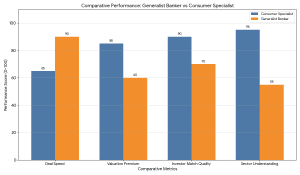
One of the most subtle areas of investment banking is consumer. Valuations are not financial in nature but are based on brand momentum, customer retention statistics, category tailwinds, and channel mix. Any generalist banker selling your D2C skincare brand in the manner in which they would sell a SaaS company is a red flag.

comparison of generalist vs consumer specialist investment bankers showing valuation and deal efficiency differencesA sector-specialist can offer the following:

  1. Deep buyer relationships: They understand which PE funds are actively investing into consumers, which strategies are acquisitive, and which family offices closed consumer deals in the recent past.
  2. Benchmarking fluency: They are able to position your EBITDA margins, CAC:LTV ratios and repeat purchase rates as opposed to the right comps, not generic industry averages.
  3. Narrative expertise: They know how to turn a base of loyal customers, high NPS, or regional cult following into a thesis that will drive valuation.
  4. Speed and credibility: An established consumer banking consultant receives a faster reply from senior investors. It is important that access is important when time is of the essence.

If you’re speaking to generalist bankers right now, you might be leaving valuation on the table.
Speak to a consumer-focused advisor before you commit to a process.

get funding button

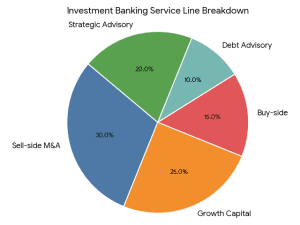
Types of Investment Banking Services for Consumer Companies

distribution of investment banking services for consumer companies including M&A, fundraising and strategic advisoryThese are the typical things that these advisors will provide depending on your stage and objectives:

  1. Sell-Side M&A Advisory – Assisting owners of consumer brand businesses to sell all or a portion of their business to an acquirer or financial sponsor. Composed of complete process management, buyer outreach, and negotiation.
  2. Buy-Side Advisory – Assistance to consumer companies in the identification and acquisition of target businesses to drive growth or venture into new categories.
  3. Growth Capital Raises — Organized fundraising events to brands that are seeking Series B, Series C, or growth equity – specifically applicable to brands with 50Cr to 500Cr of revenue.
  4. Private Equity Recapitalisation – Assisting founders to partially exit and a PE partner to scale-up further.
  5. Strategic Advisory and Investor Readiness – Pre-deal preparation, such as financial model cleanup, story development, pitch deck preparation, and due diligence preparation.
  6. Debt Advisory – Structured debt to fund inventory, capex growth or working capital requirements.

What the Best Investment Banking Firms for Consumer Brands Have in Common

The leading investment banking advisors to consumer sector companies across global markets and emerging markets are generally characterized by a couple of traits:

top investment banking advisors for consumer brands

  1. Proven deal track record in consumer: Not only one or two deals – but an ongoing flow of closed deals in food and beverage, beauty, clothing, retail, pet care and lifestyle.
  2. Availability of appropriate sources of capital: It can be consumer-oriented PE funds, category conviction family offices, or strategic acquirers actively constructing portfolios.
  3. Founder-first communication style: Top consultants simplify complicated financial terms using simple language. When your banker is unable to explain to you how to structure a deal, that is an issue.
  4. Full-process discipline: They do not drop the ball between the initial NDA and final close as they handle the schedules, follow-ups, investor inquiries, and legal arrangements.
  5. Good regional and international networks: Of particular significance when you are a brand that has cross-border intentions or you are seeking to attract foreign capital.

Leading Investment Banking Advisors for Consumer Brands in 2026

Global Bulge-Bracket and Mid-Market Banks:

Goldman Sachs, Morgan Stanley, and JPMorgan do the biggest consumer M&A deals in the world – billion-dollar brand acquisitions, FMCG megadeals, and IPOs of existing consumer conglomerates. These companies are normally contracted by high-end consumer companies with revenues of more than 500M+.

Lazard and Evercore are self-governing consultants that are robust in consumer and retail practices. Their reputation is doing good deals and they are usually called upon when it comes to cross-border consumer M&A which is a complicated one.

Harris Williams, William Blair, Lincoln International occupy the sweet spot between the market and are known to be especially effective in consumer and retail deals in the 50M to 500M enterprise value. Harris Williams specifically has a rich consumer goods and retail team boasting of high deal flow.

Houlihan Lokey is a restructuring and M&A practice that is becoming more and more active in consumer deals, especially in distressed retail scenarios and carve-outs.

Emerging Market and India-Focused Consumer Advisors

For growth-stage consumer brands in India — particularly those targeting PE fundraises or strategic exits in the ₹25Cr–₹500Cr range — the relevant landscape looks different.

Firms like Avendus Capital, o3 Capital, and Equirus have historically been active in Indian consumer brand transactions. More recently, boutique investment advisory firms with deep sector expertise have stepped in to serve the undeserved mid-market — founders who are too large for angel networks but too small for large bulge-bracket attention.

FundTQ Investment Advisory, backed by partners from EY, KPMG, and PwC, works specifically with growth-stage consumer founders across D2C, FMCG, retail, and lifestyle categories. The firm’s focus is investor readiness, financial modelling, deal structuring, and connecting founders with the right global and domestic investors at the right stage — without the noise of a large bank process that prioritises mid-market mandates.

How to Evaluate an Investment Banking Advisor for Your Consumer Brand

These are some questions to ask before signing an engagement letter:

1. What number of consumer deals have you closed within the past 24 months?

Request particular examples -type of company, deal size, buyer profile. A good counselor will possess an obvious answer.

2. Who will be working on my deal at your place?

In big banks, business is pitched by senior partners and junior analysts are operating the process. You know who is running your mandate on a daily basis.

3. Who are your investors or buyers that you would target with my business?

A trustworthy adviser must be in a position to name certain funds or strategies on the spot – not to respond vaguely on account of a broad spectrum of investors.

4. What is your average deal time?

The average time between mandate and close (consumer brand transactions) is between 4 to 9 months. Be cautious of those advisors that boast of abnormally quick results.

5. What do you consider to be the primary risks or challenges in my deal?

The most good counselors are those who tell the truth about the difficult ones. When an advisor simply tells you what you want to hear, it is a danger sign.

6. What is your fee structure?

Normal engagement is a retainer and a success fee (usually 2 to 5 percent of deal value in mid-market deals). Get both of these parts straight.

Common Mistakes Consumer Brand Founders Make When Choosing an Advisor

  • Selection based on brand name. Your 100Cr consumer brand might not receive the attention of a top-tier global bank. Prioritisation of mandates is a reality.
  • Failure to verify sector specificity. Request deals that are specific to your vertical and not simply consumer. Some bankers with closed food deals may not have any insight into beauty or pet care dynamics.
  • Skipping reference checks. Interview at least two or three founders who have been with the advisor in the past. Enquire about responsiveness, honesty, and what they would have done differently.
  • Signing too early. Do not make a commitment to an advisor until you are investor-ready. Premature process may scald ties with investors that you will require at a later stage.
  • Overlooking investor preparedness disparity. Most founders come to investment banks with dirty financials, a good use of money story, or a revised cap table. This significantly slows down the process and may impact on valuation.

Frequently Asked Questions – FAQ

Q. What is an investment banking advisor for consumer brands?
An investment banking advisory for consumer brands is a financial intermediary that helps consumer companies raise capital, execute mergers and acquisitions, or manage strategic exits. They bring sector expertise, investor relationships, and deal structuring skills specific to the consumer sector.

Q. When should a consumer brand engage an investment banker?
Ideally 6 to 12 months before you need capital or want to close a deal. This gives time for investor readiness work, process preparation, and building investor interest without pressure.

Q. What size of company needs an investment banking advisor?
There’s no hard threshold, but most investment banking advisors engage companies with revenues of ₹10Cr or above, or those seeking to raise ₹5Cr or more. Below this, the economics of a full banking mandate may not make sense and alternative fundraising routes are more appropriate.

Q. How much do investment banking advisors charge for consumer deals?
Fee structures vary but typically include a monthly retainer (₹2–5 lakhs per month for mid-market) and a success fee of 2–5% of the total deal value upon closing.

Q. What’s the difference between a financial advisor and an investment banker for consumer brands?
A financial advisor typically offers ongoing financial planning or wealth management services. An investment banker is transaction-focused — engaged specifically to execute a deal such as a fundraise, acquisition, or exit.

Still have questions about your situation?

Reach out with your specifics — we’ll give you a clear, honest perspective.

Talk to expert

The Bottom Line

The right investment banking advisor for your consumer brand isn’t necessarily the biggest name in the room. It’s the advisor who understands your category, knows the right investors, can tell your story compellingly, and will stay fully engaged through every stage of the process. Consumer brands live or die by relationships — with customers, with retailers, and yes, with investors. Your banking advisor is an extension of that relationship.
Choose someone who treats your deal like their most important mandate. Because for you, it is.

Are you a consumer brand founder exploring a fundraise or strategic transaction?

FundTQ Investment Advisory works with growth-stage consumer companies across D2C, FMCG, retail, and lifestyle — helping founders get investor-ready, build compelling financial narratives, and connect with the right capital partners globally.

Get business Funding

Funding for B2B Marketplace Startup

Funding for B2B Marketplace Startups: A Strategic Guide from an Investment Banking Perspective

The B2B marketplace model has become one of the most attractive startup categories for venture capital investors. Platforms that connect suppliers, distributors, and enterprise buyers can scale rapidly once marketplace liquidity is achieved.

With 8+ years of experience in an investment banking setting where I consulted startups on venture capital, growth funding, and strategic funding, I have work experience with founders developing marketplace businesses in industries including logistics, agri-tech, SaaS procurement platforms, and manufacturing supply chains. One thing is obvious at the very beginning: investors do not invest in marketplaces the same way as in traditional startups.

This guide will take you through the process by which investors will analyze B2B marketplace startups, the financial data that will be most important, and the fundraising approaches founders should consider at the time of Seed to Series B.

What Investors Look for Before Funding a B2B Marketplace

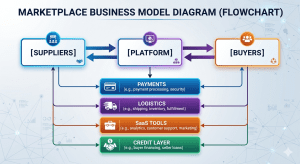
B2B marketplace business model connecting suppliers buyers and services
A B2B marketplace is the process of joining businesses (suppliers and buyers) via an online platform to be able to be involved in transactions, procurement, or services.

Popular examples include:

  1. Alibaba Group – International B2B wholesale.
  2. IndiaMART is the biggest B2B marketplace of suppliers in India.
  3. Udaan – B2B marketplace of wholesale retailers.

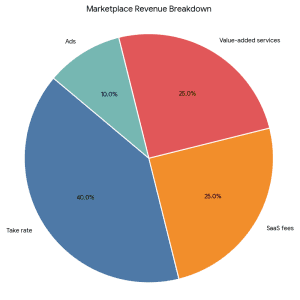
Revenue generated by these platforms is by:

B2B marketplace revenue streams pie chart take rate SaaS services

  • Take rate on transactions
  • SaaS subscription fees
  • Value added services (logistics, payments, credit)
  • Advertisement and promotion of suppliers.

Under the perspective of the investor, the portfolio of the marketplace has a strong liquidity, network effects, and scalable unit economics.

Key Metrics Investors Evaluate Before Funding

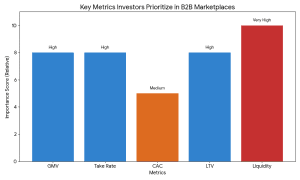
In venture capital discussions, founders often focus only on GMV growth, but experienced investors dig much deeper.

key investor metrics like GMV CAC LTV take rate and liquidity importanceHere are the financial indicators investment firms analyze during fundraising.

1. Gross Merchandise Value (GMV)

GMV is the overall value of the transaction that is made in the platform.

  • A high GMV signals:
  • strong market demand
  • active supply and demand involvement.
  • transaction scale

Nonetheless, investors consider GMV and revenue capture.

2. Take Rate

Take rate is the percentage of GMV captured as revenue.

Example:

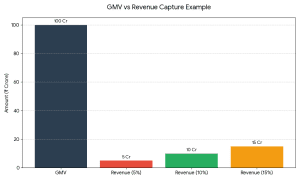
If your marketplace processes ₹100 crore GMV and charges 10% commission, revenue becomes ₹10 crore.

Healthy B2B marketplaces typically maintain 5–20% take rates, depending on industry complexity.

GMV vs revenue based on marketplace take rate3. Customer Acquisition Cost (CAC)

CAC is the cost involved in bringing on board a new buyer or supplier.

It includes:

  • Sales team expenses
  • Marketing spend
  • Onboarding incentives

Low CAC enhances profitability and scalability.

4. Lifetime Value (LTV)

LTV is a metric that calculates the cumulative revenue of a customer.

Investors generally expect:

LTV : CAC ≥ 3

It means that the market is creating sustainable customer value.

5. Marketplace Liquidity

Liquidity is a factor that determines the ease at which buyers and sellers carry out transactions in the platform.

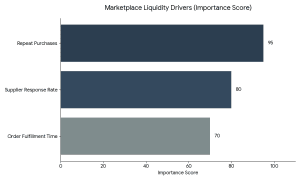
Key indicators include:

  • Order fulfillment time
  • Supplier response rate
  • Repeat purchase frequency

marketplace liquidity factors like repeat purchases and fulfillment timeMarketplaces cannot scale without liquidity even in the presence of good marketing.

Funding Stages for B2B Marketplace Startups

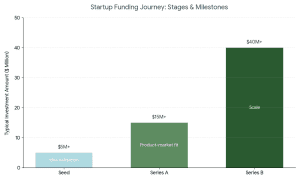
Most successful marketplace companies follow a multi-stage fundraising journey.

startup funding stage1. Seed Funding

Seed-stage investors are concerned with testing the idea of the marketplace.

Typical investors include:

  1. Angel investors
  2. Early-stage venture capital funds.
  3. Accelerators

Founders must demonstrate:

  • First-time supplier recruitment.
  • Early GMV traction
  • Strong market problem

Pitch deck templates and financial projections of high quality dramatically enhance the success of the fundraising at this point.

2. Series A Funding

The investors in series A seek to be convinced that the marketplace model is effective.

They expect:

  • Growing transaction volume
  • Improving unit economics
  • Repeat user engagement

Business valuation software and financial models are commonly employed by many startups to support their valuation in negotiations. The wholesale marketplace Udaan, for instance, attracted significant initial capital after showing a fast rate of building up supplier networks.

3. Series B and Growth Capital

Investors at this stage analyze the potential of scalability and leadership.

They analyze:

  • Contribution margins
  • Revenue scalability
  • Geographic growth possibility.

Investment Banking Firm in Mumbai or other advisory firms may collaborate with growth-stage companies to develop large funding rounds. For example, large marketplaces often partner with investment banking firms to structure funding rounds and connect with institutional investors.

Strategic Fundraising Strategies for Marketplace Founders

Raising capital successfully requires more than just growth metrics. Investors want to see strategic thinking and disciplined execution.

1. Focus on Liquidity Before Expansion

Most founders get into various markets prematurely.

Investors will want to see startups that capture one niche market, and only then they build on strong transaction density and expand later.

2. Strengthen Unit Economics

Founders should optimize before raising venture capital:

  • CAC efficiency
  • LTV growth
  • contribution margins

Effective unit economics minimizes the risk of investors.

3. Build Investor-Ready Financial Models

Professional investors want extensive financial analysis such as:

  • 5-year revenue projections
  • GMV growth modeling
  • Cohort analysis
  • Contribution margin predictions.

To make investor-grade financial models, many founders employ investment banking services.

Funding Opportunities Across Emerging Marketplace Sectors

B2B marketplaces are expanding across many industries, creating new funding opportunities.

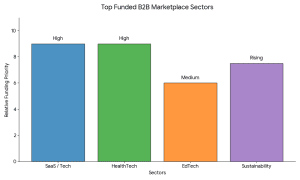
top funded b2b sectors like saas healthtech edtech and sustainabilityExamples include:

1. Technology Platforms
Enterprise marketplaces often raise funding for AI SaaS Startup platforms connecting businesses with automation solutions.

2. Healthcare Networks

Healthcare digital procurement networks are receiving Funding for HealthTech Startup programs that offer connections between hospitals, pharmacies and suppliers.

3. Education Platforms

B2B EdTech market places are becoming rife with Funding for EdTech Startup ecosystems linking institutions, teachers, and content providers.

4.Sustainable Supply Chains

Niche sectors being supported by investors include:

  1. Investment in Organic Food Companies markets.
  2. Financing battery recycling startup platforms.

Such businesses are enjoying ESG-led trends in investment.

Example: B2B Fashion Marketplace Expansion

Consider a startup seeking Strategic Funding for Clothing Business suppliers.

1 Phase:

  • Onboard 300 verified manufacturers
  • Generate ₹30 crore GMV

2 Phase:

  • Integrate logistics and payments
  • Increase take rate from 5% to 12%

3 Phase:

Investors evaluate whether the platform can build defensible supplier networks and repeat purchasing behaviour.

Role of Investment Banking Advisors in Startup Funding

Fundraising becomes complicated as market places expand. Startups are assisted by investment banking advisors on:

  1. Valuation analysis
  2. Investor outreach
  3. Deal structuring
  4. Negotiation of the venture capital firms.

Collaboration with seasoned advisors is a great way of enhancing the likelihood of successfully raising institutional capital.

Common Risks Investors Watch in Marketplace Startups

Despite strong potential, B2B marketplaces also carry structural risks.

  • Supplier Fragmentation
    Industries that are highly fragmented need to be onboarded heavily.
  • Disinter-mediation Risk
    Buyers and sellers can conduct off-platform transactions beyond the connection.
  • Thin Margins
    Take rates can set growth of revenue down.

Powerful founders tackle these threats through platform services like payments, logistics and financing.

Final Thoughts

B2B marketplaces can also become platforms of infrastructure in the industry, which can generate a massive value to buyers and suppliers. But to raise funds, founders will have to prove:

  1. Good marketplace liquidity.
  2. Scalable unit economics
  3. Defensible network effects
  4. Predictable revenue growth

B2B marketplace startups are likely to find venture capital, growth equity, and institutional investors with the right strategy and financial preparation.

Frequently Asked Questions (FAQs)

1. How do B2B marketplace startups raise funding?
The majority of B2B marketplaces are financed by way of seed funds, Series A, Series B, and growth capital investments by angel investors, venture capital funds, and institutional investors.

2. What metrics are most important for marketplace investors?
Key metrics include:

  • GMV
  • CAC
  • LTV
  • Take rate
  • Contribution margin
  • Marketplace liquidity.

3. How much funding do B2B marketplaces typically raise?
Seed rounds tend to be between $500K to 5M, whereas growth-stage marketplaces are capable of raising 20M+ Series B rounds.

4. Why are investors interested in B2B marketplaces?
Network effects, scalable revenue streams, and massive market opportunities are the characteristics of B2B market places that attract venture capital investors.

Get business Funding

Funding for HealthTech Startup

Funding for HealthTech Startup: Get Strategic Funding – Complete Fundraising Guide

Funding for HealthTech Startup

A HealthTech startup is not an easy task to build. The actual process of raising money towards one is even more difficult. It is not just a product you are selling, you are dealing with FDA regulations, hospital sales cycles, insurance reimbursement and clinical evidence simultaneously.

The good news? The market is robust into 2026-2027. Investors are returning, and they are being highly picky. They desire evidence, not possibility. This guide reveals to you what they are seeking and how to present it to them, in language easily understood.

What’s Happening in HealthTech Funding in 2026

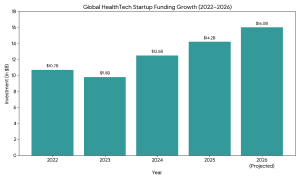
HealthTech fundraising recovered with a vengeance after a downturn in 20222023. In 2025, US digital health startups experienced the most investments in history, with an amount of 14.2 billion, and this trend is carrying over to 2026. But money is becoming concentrated. Less dealings, larger checks, and a much stricter purse on which companies receive funding.

HealthTech startup funding growthHere’s where investors are putting their money right now:

HealthTech funding

  • AI is the biggest story right now. In early 2025, nine of eleven mega-deals (over $100M) were sold to AI-driven healthcare startups. Some firms such as Abridge that help physicians save 3 hours a day in documentation became unicorns quickly. When your product utilizes AI in a clinically meaningful manner, then that is a big advantage.
  • Specialisation beats broad platforms. As reported by Galen Growth (2026), 62% of the highest-funded startups in the first stage are very narrow and specific — not general wellness. Deep focus defeats “we solve everything.”
  • Operational health tools are exploding. Startups to handle hospital administration – scheduling, billing, prior auth, clinical documentation – are receiving substantial investment due to the need by health systems to be efficient.

What investors are avoiding in 2026: DTC health apps with no enterprise path, subscription wellness without clinical proof, and anything described as “Uber for healthcare” without a reimbursement model.

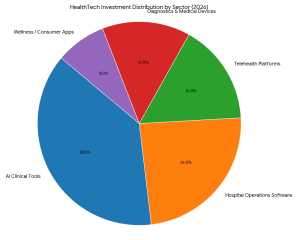
healthtech investment distribution ai healthcare telehealth hospital software fundingThe Four Funding Stages — Where Do You Fit?

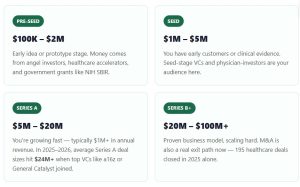
Approaching the wrong investor for your stage is one of the most common and costly mistakes founders make. Here’s a simple breakdown:

Funding Stages

Free money most founders don’t know about:
NIH SBIR/STTR grants provide up to 2M without any equity to HealthTech startups. When your product is clinical or scientific, this is among the most intelligent first steps you may take. It finances early validation and conveys credibility to future VCs.

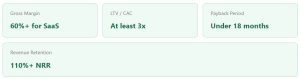
The Numbers Every Investor Will Ask About:

You don’t need to be a finance expert — but you do need to know these numbers coldly. Every investor will ask, and vague answers kill deals

Numbers Every Investor

In Simple Words:

  1. Gross Margin – this is the amount of money you retain after rendering your service. Better is healthier business.
  2. LTV/CAC – is the lifetime value of a customer worth more than 3 times its cost? 3x is the lowest the investors are willing to accept.
  3. Payback Period – How many months before a customer recovers what you spent to acquire them? Shorter is better.
  4. NRR (Net Revenue Retention) – are current customers spending more as time goes on? 110 or above is yes and this is good news to investors.

Get Funding for HealthTech Startup

FDA and Compliance — Don’t Avoid This Conversation

In their pitch, most founders omit regulation. That’s a mistake. Regulatory risk is priced in regardless of the situation – therefore, you are better showing that you considered it thoroughly.

Before your first investor meeting, the three questions to answer are:

  1. Is my product an FDA-regulated medical product or AI tool?
  2. If yes – what is my approval route and how long should it take?
  3. Is my product billable to doctors? (Known as reimbursement – this is a big issue to investors.)

Already have FDA clearance? It will also increase your valuation by at least $2-5 million, since you have eliminated the largest risk that investors fear.

Selling to hospitals? They will inquire about HIPAA compliance, data security and SOC 2 certification and will not sign until they are sure they are assured. Get this sorted prior to your Series A – hopefully before your seed round if you can.

Also Read: Fundraising for Healthcare 

How to Run Your Fundraiser the Right Way?

The majority of founders use fundraising as a random meeting. Those who grow quicker take it as an organized plan with a definite schedule.

Talk to many investors at the same time
Not one, not one, not one after another — that can make a seed grow round between 3 months and a year. Contact 20-40 investors simultaneously. When your pitch is sharp, play on your highest-priority targets first before moving on to your lower-priority targets.

Create honest urgency
It is fully alright to inform other people that you have some active discussions going on when one of the investors begins taking things seriously. This is natural and moral – and it makes everybody move faster.

Your pitch deck is a business document, not a brochure

Keep it to 10–12 slides. The ones that are important to investors in 2026:

  1. The clinical problem — backed by real data, not your opinion
  2. Your solution and how it actually works in a clinical workflow
  3. How big the market is — be specific, not just “$500 billion”
  4. How you make money and who pays (payer, provider, employer, consumer?)
  5. Your traction — revenue, growth rate, hospital or payer logos
  6. Your regulatory plan — show you’ve thought about it
  7. Your team — clinical + technical + commercial is the winning combo
  8. How much you’re raising and exactly what you’ll use it for.

HealthTech Companies Raise Capital

Who to Approach — Investors & Accelerators in 2026

Targeting the right investor for your stage saves months of wasted effort. Here’s who’s active right now:

Healthcare VC firms by stage

  1. Seed: HealthX Ventures, Flare Capital Partners, Rock Health.
  2. Round A/B: FundTQ, General Catalyst, a16z Bio, GV (Google Ventures), Bessemer Venture Partners, Transformation Capital.
  3. Growth: OrbiMed, Foresite Capitals, Deerfield Management, RA Capital.
  4. Corporate VCs: Optum Ventures, Kaiser Permanente Ventures, CVS Health Ventures, Johnson & Johnson Innovation, Medtronic Ventures

Worth knowing: in 2025–2026, mega funds like General Catalyst and a16z participated in nearly 80% of the largest deals. When they join a round, average deal sizes jump significantly — so a warm intro to these firms is worth a lot.

Accelerators worth your time:

  1. Rock Health: the most respected digital health company.
  2. Y Combinator: 36 HealthTech startups in recent batches, almost all AI-oriented.
  3. MATTER (Chicago): has ties to large hospital networks, including Northwestern Medicine.
  4. MassChallenge HealthTech: none of the equity, robust Boston clinical ecosystem.
  5. Cedars-Sinai Accelerator: direct clinical validation access run by the hospital.
  6. HIMSS Emerge (HIMSS26): It is excellent in seeing health system investors and payer partners in person.

Read About: The Best Healthcare Investment Banking Firms [Updated List]

Common Questions About Funding for HealthTech Startup in 2026

1. How much should I raise at seed stage in 2026?
Usually $1M–$5M. Target 18-24 months runway and tie the amount to certain milestones – normally to $1M+ annual recurring revenue which would make you eligible to talk Series A. No more than necessary, additional dilution at this point is expensive.

2. Do I need FDA approval before talking to investors?
No — but you need a clear plan. FDA clearance already existing companies have valuations that grow at much higher rates (often 2040% higher) since the largest uncertainty has been eliminated. Though you do not have it, know your regulatory route, your approximate schedule and cost. Unclear responses are an alarm to investors.

3. How long will the fundraising process take?
The time of seed rounds is usually 3-6 months. Series A takes 4–9 months. HealthTech is slower than standard tech fundraising, as investors will root deeper in your clinical and regulatory side. The most effective way of reducing that time is by running parallel conversations with 20-40 investors simultaneously and not one at a time.

4. Is it possible to raise money without equity?
Yes. NIH SBIR/STTR grants include $150K-2M no strings attached -no equity, no repayment. When you are earning more than 500K in revenue, revenue-based funding sources such as Lighter Capital are available where they provide loans to companies based on future revenue without requiring you to sell any ownership. These are clever aids to make between equity rounds to lengthen your runway.

5. Is the IPO market back for HealthTech?
It’s reopening. In 2025, five digital health firms such as Hinge Health and Omada Health had broken a three-year IPO dry spell. All other dealings are also rampaging with 195 deals in 2025 (up 61%). To founders, this represents the fact that there exist more ways out than there were two years ago which also makes investors more open to write checks knowing that there is a way out to return.

Get business Funding

funding for D2C Beauty Brands

Funding for D2C Beauty Brands: What Founders and Investors Need to Know in 2026–2027

By a Senior Investment Banking Professional | 8+ Years in Venture Capital & Growth Financing

Bottom Line Up Front: Capital is available for D2C beauty brands in 2026–2027 — but only for founders who demonstrate financial discipline, authentic differentiation, and unit economics that actually work. This guide cuts through the noise and tells you exactly what investors want to see, what metrics matter, and how to raise successfully at every stage.

The State of D2C Beauty Funding Right Now

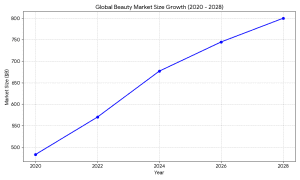
The beauty and personal care market in the world is projected to reach 800 billion dollars by 2028. Therein, direct-to-consumer beauty is among the most vigorously financed consumer verticals but the regulations have changed since the 20192022 funding craze.

global beauty market growth projection to 800 billion by 2028Post-ZIRP reality check:

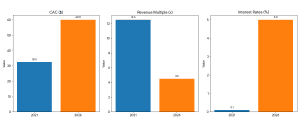
  • CAC on Meta and Google doubled or tripled following iOS 14.5 privacy alterations.
  • Interest rates had risen to 5%+, making inventory financing costly.
  • Investors abandoned growth-at-all costs to unit economics discipline.
  • Compression of revenue multiples – the 10x-15x ARR values of 2021 have disappeared.

venture capital shift from growth at all costs to profitability after 2021The brands in the closing round today have three characteristics in common: a brand story that can be defended, a healthy repeat customer, and a founder who can discuss their numbers fluently. In that case, capital is at your disposal.

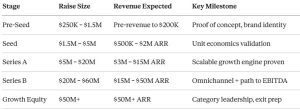
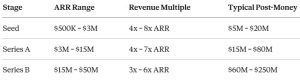
Funding Stages: What’s Expected at Each Level

Funding Stages

The honest truth about seed in 2026: It is hard to find pre-revenue beauty brands that raise institutional seed capital. Investors desire 6-12 months of sales information that portrays that actual customers purchase, re-buy and refer. A beautiful brand with no customers would be more fundable than even 300K in revenue with a 35 percent 60-day repurchase rate.

The 5 Metrics That Make or Break Your Fundraise

1. Customer Acquisition Cost (CAC)
Formula: Total Sales & Marketing Spend ÷ New Customers Acquired

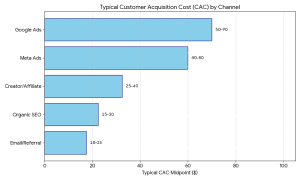
The defensible CAC of a product with a 4080 AOV is CAC3080 in case of beauty brands on Meta/Google in 2026. Above $100 CAC on sub-$50 AOV? That’s a structural red flag. The highest-ranking brands also exhibit a decreasing blended CAC with organic channels (creator affiliate, email, referral, SEO) increasing in the size of the acquisition.

d2c beauty customer acquisition cost by marketing channel2. Customer Lifetime Value (LTV)
Formula: AOV × Purchase Frequency × Customer Lifespan × Gross Margin

Don’t show projected LTV. Display real cohort data – how customers who got 6,12 and 18 months ago are really performing. Investors do not put much trust in modeled LTV; cohort evidence is what gets deals to get done.

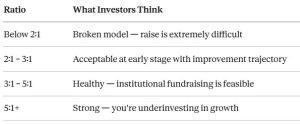
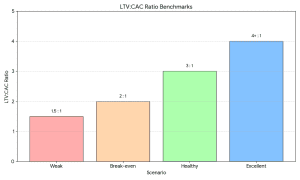
3. LTV:CAC Ratio — The North Star

LTV:CAC Ratio

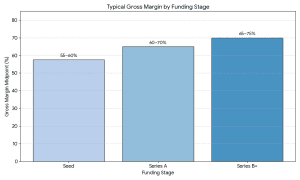
ideal ltv cac ratio benchmark for d2c brands4. Gross Margin
Beauty brands should target:

  1. Seed stage: 55–60%
  2. Series A: 60–70%
  3. Series B+: 65–75%

gross margin benchmarks for venture backed beauty brandsThe automatic pass of most institutional investors is below 50% gross margin. It is no longer possible to have the room to finance acquisition, overhead and profitability at the same time.

5. Contribution Margin
Formula: Revenue – COGS – Variable Marketing – Variable Fulfillment

This is the most honest signal of economic health. A brand can show 65% gross margin but negative contribution margin if CAC and fulfillment are excessive. Series A investors in 2026 expect contribution margin positivity — ideally 15–25% per order.

What Investors Actually Evaluate: The 4-Pillar Framework

Pillar 1: Brand Differentiation
The most widespread investor pass of all: “Why should this brand exist, and why can we have it in 18 months at Sephora as the house brand? What forms a genuine moat: proprietary formulation, clinical efficacy information, the genuine founder-to-consumer relationship, and an owned (email, SMS, subscription) rather than rented (Instagram followers) community.

Pillar 2: Unit Economics Health
Covered above. The brief one: you cannot march through your CAC, LTV, gross margin, and contribution margin without memorizing it, cohort data to support it, then you are not prepared to have an institutional conversation.

Pillar 3: Team and Operational Capability
Beauty is an operations company. Brands that have been developed through marketing are killed by supply chain failures, stockouts and 3PL disasters. Investors seek founders which have real CPG or beauty operating experience, or a team that fulfill those gaps in a credible way.

Pillar 4: Market Size and Exit Optionality
No VC would be investing in a brand that is a peak of 15M in revenue. Investors are underwriting a journey to strategic purchase (L’Oréal, Unilever, Shiseido, Estee Lauder, P&G) or category leadership at scale. The question your pitch should respond to is: Who will be buying this brand, and at what price, in 5-7 years?

Skincare Pitch Deck
Funding Sources: Matching Capital to Your Stage

1. Angel Investors and Pre-Seed

The most outstanding beauty angels are former beauty executives, CPG operators, and founders that have already left. They come with capital and distribution relationship, introduction of retail and formulation credibility.

Location: Cosmoprof North America, CEW events, BeautyMatter NEXT, AngelList syndicates, warm LinkedIn introductions with current portfolio founders.

2. Seed VCs Active in Beauty

At seed, Forerunner Ventures, CircleUp Growth Partners, XRC Labs, and consumer-themed micro-funds are the most active. The trick here is to reach investors with a current portfolio consisting of brands adjacent to yours – evidence that they have a thesis consistent with yours.

3. Series A/B Funds

The active Series A/B investors in beauty and personal care include Prelude Growth Partners, Alliance Consumer Growth, Stripes Group, General Catalyst (consumer), and New Enterprise Associates.

4. Strategic Corporate Investors

Various conglomerates have venture arms, which invest and open doors:

  1. Unilever Ventures personal care and wellness, seed to growth.
  2. L’Oréal BOLD – disruptive brand innovation and beauty technology.
  3. Shiseido Ventures (SBVC)skincare startup and beauty innovation.
  4. LVMH Luxury Ventures – high and luxury beauty positioning.

A major warning: Strategic investment with L’Oréal could dilute your alternatives with other acquirers such as Estée Lauder or Unilever. Know the strategic implications prior to signing.

Also Read: Startup Funding in India: A Complete Guide

5. Non-Dilutive Alternatives Worth Knowing

Revenue-Based Financing (RBF): Clearco, Wayflyer, Pipe, and Capchase are offering $100K-5M at a percentage of monthly revenue. Ideally applicable to inventory financing and performance marketing scale-up not general working capital. APR must be effective greater than 60; it should only be deployed in high-ROI, short-payback applications.

Purchase Order Financing: PO financing is offered to brands launching in Sephora, Ulta or Target with a substantial initial PO so that you can fund production along a confirmed purchase order and still the equity is not diluted. One of the most important tools beauty founders realize when it is too late.

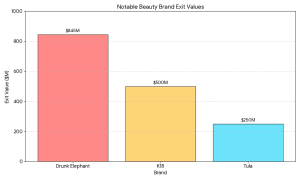
Valuation Reality Check: 2026–2027 Benchmarks

major beauty brand acquisitions drunk elephant k18 tulaLTV:CAC Ratio

Valuation premium drivers: Subscription revenue of above 30% of mix, gross margin of above 65, proprietary formulation or IP, founder exit history, and omnichannel presence have significant multiple premiums.

Contextual exits Similar exits in the recent past:

  1. K18 → Unilever (2023): $500M+ -disciplined unit economics, scale quickly.
  2. Tula → Procter & Gamble (2022): ~$250M+
  3. Drunk Elephant→ Shiseido (2019):~845M, 10x revenue.

It is these that the investors are simulating when they consider your brand.

The Fundraising Playbook: 3 Things That Separate Closers from Pitchers

1. Prepare for 90 Days Before Your First Investor Conversation
People who put in the effort to close rounds fast are founders who are planning to raise money like a product launch, and not improvisation.

  • Recalculate P&L with contribution margin visibility.
  • Create tables of cohort analysis (by month of acquisition, 6/12/18 months out)
  • Calculate CAC channel by channel rather than blended.
  • Prepare a 24-month cash flow base/bull/bear.
  • Diligence Prepare genuine responses to the 10 most difficult questions.

2. Target Investors With Thesis Precision

The quickest way to 60 rejections and a de-motivated founder is a spray-and-pray approach to reaching out to investors. Each outreach should respond: Does this fund have a consumer thesis? Have they made previous investments in beauty? Is the amount and level of my stage and check size appropriate to their fund? Half the number of targeted warm-introduction outreaches will beat 200 cold emails every time.

3. Create Competitive Dynamics — Don’t Negotiate in a Vacuum
Investors act when they are in a hurry. Organize a process with a set-out date. Get several investors interested at the same time, not in different stages. Be open concerning competitive interest. The commitment by a lead investor promotes all the subsequent conversations between co-investors.

5 Fundraising Mistakes That Kill Beauty Rounds

  1. Starting investor conversations before your data is ready. First impressions in venture are durable. Wait until your traction is undeniable.
  2. Raising at 2021-era valuations. Investors know the comps. Overpriced rounds stall or die.
  3. 90%+ paid acquisition dependency. If your entire growth engine is Meta/Google, one algorithm change ends the business. Investors model this risk heavily.
  4. No cohort analysis. Asking for a Series A without cohort data is like asking for a mortgage without a credit score.
  5. Underestimating the timeline. Seed rounds take 3–6 months. Series A takes 4–9 months. Founders running on 60 days of runway negotiate from desperation — and investors know it.

Quick-Reference FAQ

Q. How much should I raise at seed?
1.5M to 5M, in size to allow you 18-24 months to achieve Series A-ready performance (5M-10M ARR, 3:1+ LTV:CAC, 60-percent gross margin).

Q. Do I need retail before raising a Series A?
No – but a signed retail term sheet makes the story count in a real sense. Retail growth that is unplanned and places stress on working capital is a warning as opposed to a qualification.

Q. What gross margin do I need for institutional investors?
55% to be in conversation; 60% needs to be taken seriously at Series A.

Q. How do investors evaluate a beauty brand’s moat?
There are four dimensions, which include: formulation defensibility, brand equity depth (owned community, not rented followers), distribution advantage, and founder authenticity.

Q. Should I use a placement agent for my raise?
In the case of seed and Series A, run it yourself with strong advisors. Placement agents impose some real value on Series B+ ($25M+) where process complexity warrants the fee of 3-5%.

The Bottom Line

D2C beauty is among the most attractive consumer investment categories in 2026-2027 – the fundraising environment rewards preparation, financial fluent, and genuine differentiation. Investors will find capital founders who have a command of their unit economics as well as brand narrative, who create owned communities and not rented audiences and who come to investors with conviction supported by data.

The ones who do not will realize that a beautiful brand and an excellent founder story is no longer sufficient.

Get business Funding

funding for AI SaaS Startup

Funding for AI SaaS Startups: A Strategic Guide to Raising Capital (2026)

Building an AI SaaS startup today is easier than ever—but raising capital for it is harder than most founders expect. Over the last 11+ years working in investment banking and startup fundraising, I’ve helped early-stage and growth-stage companies raise capital from angel investors, venture capital firms, and growth funds. One pattern appears again and again:

Great technology does not guarantee funding.
Investors fund scalable business models, strong metrics, and clear market opportunities.

This guide breaks down how AI SaaS startups actually get funded, what investors look for at each stage, and how founders can strategically raise capital. If you’re building an AI-powered SaaS product, this article will help you understand the funding landscape—from pre-seed to Series B and beyond.

The AI SaaS Funding Landscape in 2026

The combination of AI + SaaS (Software as a Service) is one of the most attractive startup categories today.
Why investors love AI SaaS:

  • Recurring revenue (sub model)
  • High scalability
  • Strong margins
  • Global distribution
  • Data network effects

But the market is also competitive. Investors are seeking serious differentiation and actual traction.

Typical funding journey:

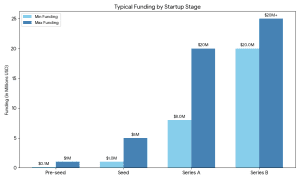
Typical funding journeyFor AI SaaS startups, early traction matters more than hype.

Understanding the AI SaaS Business Model

Before investors fund you, they evaluate whether your business model is scalable.
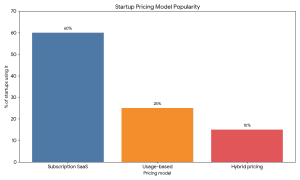
Typical AI SaaS revenue models include:

AI SaaS Business Model1. Subscription SaaS
Monthly or yearly subscription.

Examples:

  1. Automation tools of AI marketing.
  2. AI CRM software
  3. AI productivity tools

2. Usage-Based Pricing
Common in AI infrastructure.

Examples:

  • API calls
  • AI inference usage
  • GPU compute consumption

3. Hybrid Pricing
Subscription + usage pricing.

Example:
Base plan + more AI credits.

Shareholders would like a stable revenue pattern with growth prospects.

Key Funding Stages for AI SaaS Startups

1. Pre-Seed Funding

Goal: Build the initial product (MVP).
Typical investors:

  1. Angel investors
  2. Startup accelerators
  3. Friends & family
  4. Early-stage venture funds

List of famous accelerators:

  • Y Combinator
  • Techstars

What investors expect:

  • Strong founding team
  • Technical capability
  • Clear AI use case
  • Prototype or MVP

Common indicators in this stage:

  1. Early beta users
  2. Initial product validation
  3. Clear problem statement

2. Series A Funding

Goal: Prove product-market fit.
Typical raise: $8M – $20M
SaaS metrics have become a priority to investors.

Important metrics include:

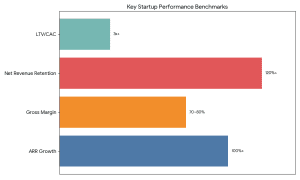
investors evaluate including LTV CAC ratio NRR and ARR growth1. ARR (Annual Recurring Revenue)
Investors prefer:
$2M – $5M ARR minimum
Strong growth (100%+ YoY)

2. CAC (Customer Acquisition Cost)
The cost per customer of acquisition.

3. LTV (Lifetime Value)
One customer expected to bring in a total revenue.
A good SaaS company tends to possess:
LTV / CAC ratio ≥ 3

4. Net Revenue Retention (NRR)
Measures expansion revenue.
Strong AI SaaS firms tend to possess:
NRR > 120%

3. Series B and Growth Funding

At this stage, investors focus on scaling and market leadership.

Funding is used for:

  • International expansion
  • Enterprise sales teams
  • Product development
  • AI infrastructure

Typical requirements:

  1. ARR: $10M+
  2. Proven business model
  3. Strong retention

Growth investors include:

  • Late-stage venture capital
  • Private equity
  • Growth funds

How Investors Evaluate AI SaaS Startups

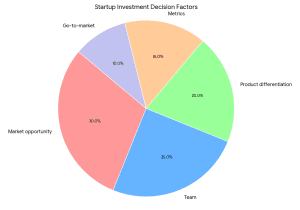
Investors typically evaluate startups across five core pillars.

how venture capital investors evaluate AI SaaS startups1. Market Opportunity (TAM)

TAM = Total Addressable Market.
Investors desire big markets.

Example:
The AI SaaS categories that have been funded:

  • AI productivity tools
  • AI developer platforms
  • AI marketing automation
  • AI healthcare software

Big market = Bigger Exit Opportunity.

2. Product Differentiation

Many AI startups fail because they rely solely on existing AI models.
Investors look for:

  1. Proprietary data
  2. AI workflows
  3. Custom models
  4. Unique user experience

A strong moat includes:

  • Data advantage
  • Workflow lock-in
  • Integration ecosystem

3. Founding Team

Investors invest heavily in founders.
They evaluate:

  • Domain expertise
  • Technical capability
  • Execution speed
  • Founder-market fit

The founders of many funded AI startups have worked at companies such as:

  1. Google
  2. OpenAI
  3. Microsoft

However, good founders may be of any type so long as they portray execution.

4. SaaS Metrics

For AI SaaS startups, investors closely track:
Important metrics:

  1. ARR growth
  2. CAC payback period
  3. LTV/CAC ratio
  4. Churn rate
  5. Gross margin

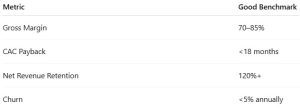
Healthy SaaS benchmarks:
Healthy SaaS benchmarks

5. Go-to-Market Strategy

Great products fail without distribution.
Investors want to see:

  • Product-led growth
  • Sales motion
  • Channel partnerships
  • Community adoption

Popular GTM models of AI SaaS:

  1. Freemium model
  2. Developer API adoption
  3. Enterprise sales
  4. Marketplace integrations

Startup Valuation for AI SaaS Companies

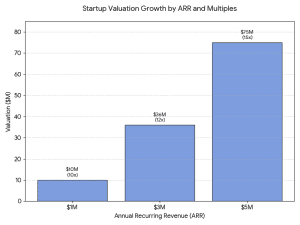
Valuation depends on growth and revenue multiples.

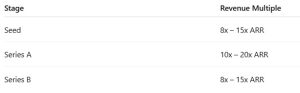
AI SaaS valuation multiples based on annual recurring revenue ARRFor SaaS startups:
Typical revenue multiples:
SaaS startups revenue multiples

Example:

Startup ARR = $3M
Series A multiple = 12x

Estimated valuation: $36M
However, AI hype can temporarily increase multiples.

Strategic Fundraising Advice (From Investment Banking Experience)

Here are practical strategies founders often overlook.

1. Raise Before You Need It

Fundraising takes 4–6 months.
This is to start when you have 12 months of runway.

2. Establish Relationships with Investors.

Investors usually finance founders that they are familiar with.
Strategies:

  1. Share quarterly updates
  2. Attend startup events
  3. Warm introductions

3. Focus on One Clear Metric

The most successful startups point out a single metric.
Examples:

  • Fast ARR growth
  • Massive user adoption
  • Enterprise customer pipeline.
  • Transparency attracts investor confidence.

4. Build a Strong Data Room

Before fundraising, prepare:

  1. Pitch deck
  2. Financial model
  3. SaaS metrics dashboard
  4. Customer pipeline
  5. Product roadmap

Deals are accelerated by professional preparation.

5. Do not Raise the Wrong Investors.

The mischief of investors gives rise to long term problems.

Choose investors who:

  • Understand SaaS
  • Support founders
  • Add network value

Financial Model for SaaS CompanyCommon Fundraising Mistakes AI SaaS Founders Make

Mistake 1: Raising Too Early
It is hard to raise money without traction.

Focus first on:

  • MVP
  • Early customers
  • Product-market fit

Mistake 2: Overbuilding AI

Most founders create AI functionality that is not necessary to customers.
Focus on: Solving real problems.

Error 3: Weak Go-to-Market Strategy.

  1. Technology by itself does not sell.
  2. Distribution matters more.

Error 4: Unrealistic Valuation.

Overpriced seed rounds may damage subsequent financing rounds.
Be realistic.

Best Funding Sources for AI SaaS Startups

Founders should explore multiple funding sources.

1. Angel Investors

Perfect in pre-seed and seed rounds.
Advantages:

  • Flexible
  • Founder friendly

2. Venture Capital

Best for scalable startups.
VC investors bring:

  • Capital
  • Network
  • strategic guidance

3. Startup Accelerators

Programs provide:

  • Small funding
  • Mentorship
  • Investor access

4. Venture Debt

Later-stage SaaS companies used it to extend the runway.

The Future of AI SaaS Funding

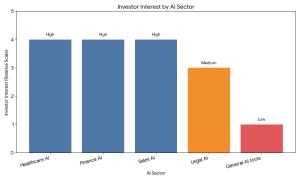
Venture capital investment interest in vertical AI SaaS industries like healthcare finance and salesSeveral trends are shaping AI startup funding.
Key trends:

  1. Infrastructure investments in AI.
  2. Vertical AI SaaS
  3. AI copilots for industries
  4. AI developer platforms

Investors are no longer interested in general AI tools, but rather industry solutions.
Example verticals:

  • Healthcare AI
  • Legal AI
  • Finance AI
  • Sales AI

Vertical AI SaaS startups are another area that is getting keen investment by funds.

Final Thoughts

Raising funding for an AI SaaS startup is not just about building great technology.
Investors evaluate:

  1. Market size
  2. Revenue traction
  3. SaaS metrics
  4. Founder execution
  5. Go-to-market strategy

The founders who succeed are those who combine technology vision with strong business fundamentals. If you focus on solving real problems, building recurring revenue, and demonstrating growth, funding opportunities will follow.

FAQs: AI SaaS Startup Funding

Q. How much funding do AI SaaS startups usually raise?

Typical ranges:

  1. Pre-Seed: $100K – $1M
  2. Seed: $1M – $5M
  3. Series A: $8M – $20M
  4. Series B: $20M+

Real capital is based on traction, market size and caliber of the team.

Q. What metrics do investors look for in AI SaaS startups?

Key SaaS metrics include:

  • ARR (Annual Recurring Revenue)
  • LTV/CAC ratio
  • Net Revenue Retention
  • Churn rate
  • Gross margin
  • CAC payback period

These ratios represent scalability and profitability.

Q. How long does startup fundraising take?
Common fundraising schedules:

  1. Seed round: 3–4 months
  2. Series A: 4–6 months

The process can be reduced greatly through preparation.

Q. What is the best funding stage to raise capital?

The best time is when you have:

  • Early traction
  • Strong growth
  • Clear product-market fit

Better valuations are achieved by raising capital during momentum.

Q. Do AI startups get higher valuations than traditional SaaS?

Yes, sometimes when:

  • The startup possesses proprietary AI models.
  • There is strong user growth
  • The market size is big.

Nonetheless, long-term valuations remain pegged on revenue and growth metrics.

Get business Funding