
funding for AI SaaS Startup

Funding for AI SaaS Startups: A Strategic Guide to Raising Capital (2026)

Building an AI SaaS startup today is easier than ever—but raising capital for it is harder than most founders expect. Over the last 11+ years working in investment banking and startup fundraising, I’ve helped early-stage and growth-stage companies raise capital from angel investors, venture capital firms, and growth funds. One pattern appears again and again:

Great technology does not guarantee funding.
Investors fund scalable business models, strong metrics, and clear market opportunities.

This guide breaks down how AI SaaS startups actually get funded, what investors look for at each stage, and how founders can strategically raise capital. If you’re building an AI-powered SaaS product, this article will help you understand the funding landscape—from pre-seed to Series B and beyond.

The AI SaaS Funding Landscape in 2026

The combination of AI + SaaS (Software as a Service) is one of the most attractive startup categories today.
Why investors love AI SaaS:

  • Recurring revenue (sub model)
  • High scalability
  • Strong margins
  • Global distribution
  • Data network effects

But the market is also competitive. Investors are seeking serious differentiation and actual traction.

Typical funding journey:
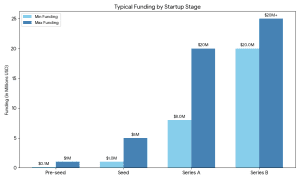
Typical funding journeyFor AI SaaS startups, early traction matters more than hype.

Understanding the AI SaaS Business Model

Before investors fund you, they evaluate whether your business model is scalable.
Typical AI SaaS revenue models include:
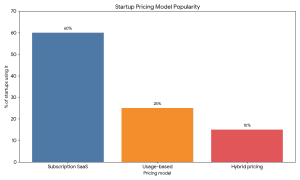
AI SaaS Business Model1. Subscription SaaS
Monthly or yearly subscription.

Examples:

  1. Automation tools of AI marketing.
  2. AI CRM software
  3. AI productivity tools

2. Usage-Based Pricing
Common in AI infrastructure.

Examples:

  • API calls
  • AI inference usage
  • GPU compute consumption

3. Hybrid Pricing
Subscription + usage pricing.

Example:
Base plan + more AI credits.

Shareholders would like a stable revenue pattern with growth prospects.

Key Funding Stages for AI SaaS Startups

1. Pre-Seed Funding

Goal: Build the initial product (MVP).
Typical investors:

  1. Angel investors
  2. Startup accelerators
  3. Friends & family
  4. Early-stage venture funds

List of famous accelerators:

  • Y Combinator
  • Techstars

What investors expect:

  • Strong founding team
  • Technical capability
  • Clear AI use case
  • Prototype or MVP

Common indicators in this stage:

  1. Early beta users
  2. Initial product validation
  3. Clear problem statement

2. Series A Funding

Goal: Prove product-market fit.
Typical raise: $8M – $20M
SaaS metrics have become a priority to investors.

Important metrics include:
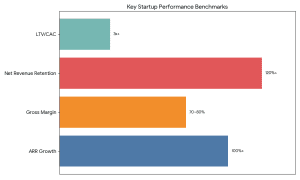
investors evaluate including LTV CAC ratio NRR and ARR growth1. ARR (Annual Recurring Revenue)
Investors prefer:
$2M – $5M ARR minimum
Strong growth (100%+ YoY)

2. CAC (Customer Acquisition Cost)
The cost per customer of acquisition.

3. LTV (Lifetime Value)
One customer expected to bring in a total revenue.
A good SaaS company tends to possess:
LTV / CAC ratio ≥ 3

4. Net Revenue Retention (NRR)
Measures expansion revenue.
Strong AI SaaS firms tend to possess:
NRR > 120%

3. Series B and Growth Funding

At this stage, investors focus on scaling and market leadership.

Funding is used for:

  • International expansion
  • Enterprise sales teams
  • Product development
  • AI infrastructure

Typical requirements:

  1. ARR: $10M+
  2. Proven business model
  3. Strong retention

Growth investors include:

  • Late-stage venture capital
  • Private equity
  • Growth funds

How Investors Evaluate AI SaaS Startups

Investors typically evaluate startups across five core pillars.
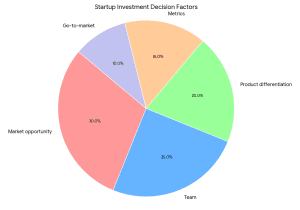
how venture capital investors evaluate AI SaaS startups1. Market Opportunity (TAM)

TAM = Total Addressable Market.
Investors desire big markets.

Example:
The AI SaaS categories that have been funded:

  • AI productivity tools
  • AI developer platforms
  • AI marketing automation
  • AI healthcare software

Big market = Bigger Exit Opportunity.

2. Product Differentiation

Many AI startups fail because they rely solely on existing AI models.
Investors look for:

  1. Proprietary data
  2. AI workflows
  3. Custom models
  4. Unique user experience

A strong moat includes:

  • Data advantage
  • Workflow lock-in
  • Integration ecosystem

3. Founding Team

Investors invest heavily in founders.
They evaluate:

  • Domain expertise
  • Technical capability
  • Execution speed
  • Founder-market fit

The founders of many funded AI startups have worked at companies such as:

  1. Google
  2. OpenAI
  3. Microsoft

However, good founders may be of any type so long as they portray execution.

4. SaaS Metrics

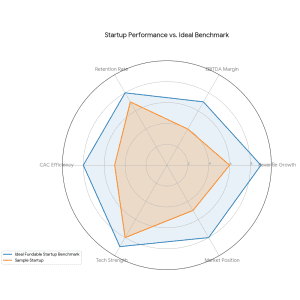
For AI SaaS startups, investors closely track:
Important metrics:

  1. ARR growth
  2. CAC payback period
  3. LTV/CAC ratio
  4. Churn rate
  5. Gross margin

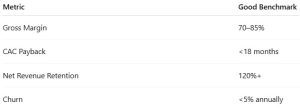
Healthy SaaS benchmarks:
Healthy SaaS benchmarks

5. Go-to-Market Strategy

Great products fail without distribution.
Investors want to see:

  • Product-led growth
  • Sales motion
  • Channel partnerships
  • Community adoption

Popular GTM models of AI SaaS:

  1. Freemium model
  2. Developer API adoption
  3. Enterprise sales
  4. Marketplace integrations

Startup Valuation for AI SaaS Companies

Valuation depends on growth and revenue multiples.
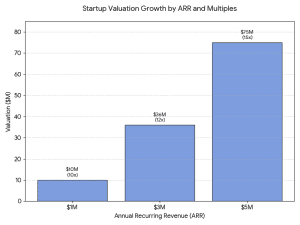
AI SaaS valuation multiples based on annual recurring revenue ARRFor SaaS startups:
Typical revenue multiples:
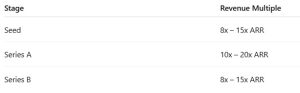
SaaS startups revenue multiples

Example:

Startup ARR = $3M
Series A multiple = 12x

Estimated valuation: $36M
However, AI hype can temporarily increase multiples.

Strategic Fundraising Advice (From Investment Banking Experience)

Here are practical strategies founders often overlook.

1. Raise Before You Need It

Fundraising takes 4–6 months.
This is to start when you have 12 months of runway.

2. Establish Relationships with Investors.

Investors usually finance founders that they are familiar with.
Strategies:

  1. Share quarterly updates
  2. Attend startup events
  3. Warm introductions

3. Focus on One Clear Metric

The most successful startups point out a single metric.
Examples:

  • Fast ARR growth
  • Massive user adoption
  • Enterprise customer pipeline.
  • Transparency attracts investor confidence.

4. Build a Strong Data Room

Before fundraising, prepare:

  1. Pitch deck
  2. Financial model
  3. SaaS metrics dashboard
  4. Customer pipeline
  5. Product roadmap

Deals are accelerated by professional preparation.

5. Do not Raise the Wrong Investors.

The mischief of investors gives rise to long term problems.

Choose investors who:

  • Understand SaaS
  • Support founders
  • Add network value

Financial Model for SaaS CompanyCommon Fundraising Mistakes AI SaaS Founders Make

Mistake 1: Raising Too Early
It is hard to raise money without traction.

Focus first on:

  • MVP
  • Early customers
  • Product-market fit

Mistake 2: Overbuilding AI

Most founders create AI functionality that is not necessary to customers.
Focus on: Solving real problems.

Error 3: Weak Go-to-Market Strategy.

  1. Technology by itself does not sell.
  2. Distribution matters more.

Error 4: Unrealistic Valuation.

Overpriced seed rounds may damage subsequent financing rounds.
Be realistic.

Best Funding Sources for AI SaaS Startups

Founders should explore multiple funding sources.

1. Angel Investors

Perfect in pre-seed and seed rounds.
Advantages:

  • Flexible
  • Founder friendly

2. Venture Capital

Best for scalable startups.
VC investors bring:

  • Capital
  • Network
  • strategic guidance

3. Startup Accelerators

Programs provide:

  • Small funding
  • Mentorship
  • Investor access

4. Venture Debt

Later-stage SaaS companies used it to extend the runway.

The Future of AI SaaS Funding
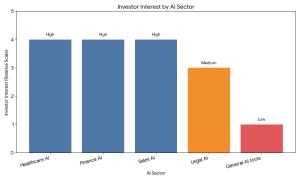
Venture capital investment interest in vertical AI SaaS industries like healthcare finance and salesSeveral trends are shaping AI startup funding.
Key trends:

  1. Infrastructure investments in AI.
  2. Vertical AI SaaS
  3. AI copilots for industries
  4. AI developer platforms

Investors are no longer interested in general AI tools, but rather industry solutions.
Example verticals:

  • Healthcare AI
  • Legal AI
  • Finance AI
  • Sales AI

Vertical AI SaaS startups are another area that is getting keen investment by funds.

Final Thoughts

Raising funding for an AI SaaS startup is not just about building great technology.
Investors evaluate:

  1. Market size
  2. Revenue traction
  3. SaaS metrics
  4. Founder execution
  5. Go-to-market strategy

The founders who succeed are those who combine technology vision with strong business fundamentals. If you focus on solving real problems, building recurring revenue, and demonstrating growth, funding opportunities will follow.

FAQs: AI SaaS Startup Funding

Q. How much funding do AI SaaS startups usually raise?

Typical ranges:

  1. Pre-Seed: $100K – $1M
  2. Seed: $1M – $5M
  3. Series A: $8M – $20M
  4. Series B: $20M+

Real capital is based on traction, market size and caliber of the team.

Q. What metrics do investors look for in AI SaaS startups?

Key SaaS metrics include:

  • ARR (Annual Recurring Revenue)
  • LTV/CAC ratio
  • Net Revenue Retention
  • Churn rate
  • Gross margin
  • CAC payback period

These ratios represent scalability and profitability.

Q. How long does startup fundraising take?
Common fundraising schedules:

  1. Seed round: 3–4 months
  2. Series A: 4–6 months

The process can be reduced greatly through preparation.

Q. What is the best funding stage to raise capital?

The best time is when you have:

  • Early traction
  • Strong growth
  • Clear product-market fit

Better valuations are achieved by raising capital during momentum.

Q. Do AI startups get higher valuations than traditional SaaS?

Yes, sometimes when:

  • The startup possesses proprietary AI models.
  • There is strong user growth
  • The market size is big.

Nonetheless, long-term valuations remain pegged on revenue and growth metrics.

Get business Funding

funding for e commerce business

Funding for eCommerce Business: A Complete Guide from an Investment Banking Perspective

The global eCommerce industry is expanding rapidly. With worldwide online retail sales projected to cross trillions annually, entrepreneurs are rushing to build digital-first brands. However, the biggest challenge most founders face is funding for e commerce business growth.

My experience of 8+ years working in an investment banking organization that advises startups, investors, and corporate clients has provided me with insights on how the proper funding plan can make a small eCommerce startup a scalable brand. Conversely, I have also witnessed some good businesses that failed just because they selected the wrong funding structure.

Global eCommerce industry growthThe following is a comprehensive guide on how to raise capital on an eCommerce business, which entails the sources of funds, the expectation of investors, strategies of valuation, and steps that can be taken to raise capital effectively.
Understanding Funding for eCommerce Business

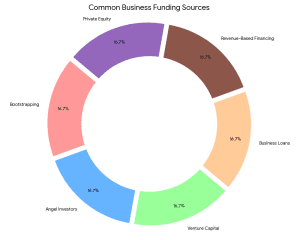
ECommerce Funding refers to the process of raising funds to initiate, run or expand an online store. The sources of this funding might include:

  1. Bootstrapping
  2. Venture capital
  3. Angel investors
  4. Startup business loans
  5. Revenue-based financing
  6. Private equity
  7. Strategic acquisitions

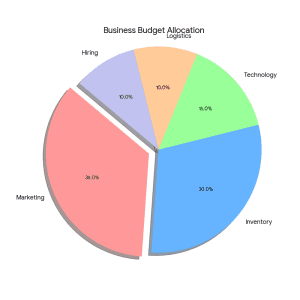
The eCommerce business, as opposed to the traditional retail, needs capital on digital marketing, inventory, logistics, technological infrastructure, and customer acquisition.

In investment banking terms, the three most fundable eCommerce startups have exhibited the following aspects:

  • Scalable business model
  • Strong unit economics
  • Clear growth strategy

Investors would like to know the rate at which a business can transition between acquiring customers and becoming profitable.

Why eCommerce Businesses Need Funding

Funding marketing, software tools, branding is also necessary even in dropshipping business.

Major Areas of Funding Application.

eCommerce startup cost breakdown1. Inventory Procurement

The majority of eCommerce companies demand initial capital on suppliers and manufacturers.

2. Digital Marketing

Customers acquisition in terms of:

  • Paid ads
  • Influencer marketing
  • SEO
  • Social media campaigns

Frequently constitutes 30-40% of start up expenses.

3. Technology Infrastructure

This includes:

  • Development of eCommerce platform.
  • Payment gateways
  • CRM systems
  • Analytics tools

4. Logistics & Fulfillment

Warehousing, packaging and shipping systems need operational capital.

5. Hiring & Team Expansion

Scaling needs experts in:

  • Marketing
  • Operations
  • Product development
  • Customer support

Most eCommerce startups find it difficult to grow past initial traction unless adequately funded.

Types of Funding for eCommerce Businesses

different funding sources for eCommerce startupsUnderstanding the different funding sources for eCommerce startups helps founders choose the right capital strategy.

1. Bootstrapping (Self-Funding)

Bootstrapping refers to the process of using personal savings or initial revenue to build your business.

Advantages:

  • Full ownership
  • No investor pressure
  • Financial discipline

Disadvantages:

  • Limited scalability
  • Slower growth

Bootstrapping is most effective with low inventory eCommerce or digital product models.

2. Angel Investors

Angel investors are wealthy individuals who invest in startups.

They typically invest: $25,000 – $500,000

eCommerce startups usually start with first external financing by the angel investors.

What Angels Look For

  • Strong founder story
  • Product-market fit
  • Scalable business model
  • Clear growth strategy

Free Pitch Deck Templates can be extremely helpful when founders are going to pitch their business to angel investors.

3. Venture Capital for eCommerce Startups

Venture capital firms make investments in the high growth eCommerce companies that have big market potential.

Typical VC investments: $500K – $10M+

VCs focus on businesses with:

  • Rapid customer growth
  • High lifetime value (LTV)
  • Strong brand positioning

It is important to have an organized startup fundraising plan and investor-ready pitch deck in order to attract venture capital.

4. Startup Business Loans

Another funding source is business loans.

These include:

  1. Bank loans
  2. SBA loans
  3. Fintech lending platforms
  4. Working capital loans

Advantages

  • Retain equity
  • Predictable repayment

Disadvantages

  • Interest payments
  • Documents and rigorous eligibility.

ECommerce models that are inventory-intensive and with predictable revenue benefit well with business loans.

5. Revenue-Based Financing

Revenue based financing is a method that enables startups to pay investors a percentage of the monthly revenue.

Benefits include:

  • No equity dilution
  • Flexible repayment

This model is used in the popular DTC (Direct-to-Consumer) brands.

6. Private Equity Funding

PE firms invest in the existing eCommerce firms that have a proven revenue base.

Typical requirements:

  • $5M+ revenue
  • Strong EBITDA margins
  • Scalable infrastructure

Such companies tend to offer funds and strategic direction and operational enhancements.

7. Mergers & Acquisitions

Most successful eCommerce brands ultimately attract capital by means of strategic acquisition or mergers.

Merger and acquisition services to founders assist:

  • Identify buyers
  • Negotiate deal structures
  • Maximize company valuation

It is typical of brands that are sold on Amazon, Shopify, or DTC.

How Investors Evaluate eCommerce Startups

investors evaluate in eCommerce startupsAs someone involved in investment banking services, I can confirm that investors evaluate startups using several critical metrics.

  1. Customer Acquisition Cost (CAC).
    CAC is an indicator of the cost of a customer.
    Reduced CAC enhances profitability and investor confidence.
  2. Lifetime Value (LTV)
    LTV represents all the revenue made by a customer.
    Investors would like businesses that have:
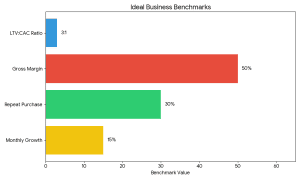
    LTV : CAC ratio ≥ 3
  3. Gross Margin
    Startups can reinvest because of high margins. Ideally, 50%+ gross margins in eCommerce businesses are desired by most investors.
  4. Repeat Purchase Rate
    Good brand loyalty enhances sustainability of business.
  5. Market Opportunity
    The TAM is analyzed by the investors when it comes to long-term scalability.

How to Prepare for eCommerce Startup Fundraising

Successful startup fundraising requires preparation and strategic positioning.

Step 1: Build a Financial Model

An effective financial model must have:

  1. Revenue projections
  2. Cost structure
  3. Cash flow forecasts
  4. Unit economics

Business valuation software can be used to enable founders to estimate company value appropriately.

Step 2: Design an Attractive Pitch Deck.

A good pitch deck must consist of:

  1. Problem & solution
  2. Market opportunity
  3. Business model
  4. Traction
  5. Financial projections
  6. Funding requirements

A great number of founders begin with free pitch deck templates and edit them to suit investors.

Step 3: Find the Valuation of Your Business.

Valuation depends on:

  1. Revenue growth
  2. Market potential
  3. Profit margins
  4. Competitive advantage

Start up eCommerce ventures are normally assessed at:

  • Revenue multiples
  • Similar analysis of the company.
  • Discounted cash flow models

Step 4: Find the Right Investors.

All investors do not invest in eCommerce.
Target investors that specialize in:

  • DTC brands
  • Retail tech
  • Consumer startups

The advisors in investment banking usually assist founders to meet with the relevant investors.

Step 5: Establish Investor Relationships.

Fundraising is not a pitching thing only.
Effective founders are concerned with:

  • Developing investor relations.
  • Consistent traction is shown.
  • Reporting progress on a periodic basis.

Common Mistakes eCommerce Founders Make While Raising Funds

Over the years, I have seen many startups fail in the fundraising process due to avoidable mistakes.

  1. Overvaluing the Business
    Delusional valuations drive away the investors.
  2. Weak Financial Projections
    Investors will not accept guesses but projections based on data.
  3. Poor Pitch Deck
    With an ineffective pitch deck, it may be rejected at the first sight.
  4. Ignoring Unit Economics
    Most founders are driven by their revenues without paying attention to profitability measures.
  5. Attacking the wrong Investors.
    One of the least considered factors of start-up fundraising is investor targeting.

Expert Tips for Raising Funding for an eCommerce Business

Based on my experience advising founders and investors, here are practical strategies:

1. Target Brand Differentiation.
Investors are rarely interested in generic stores.
Create a good brand story and product differentiation.

2. Demonstrate Early Traction
Even small metrics help:

  1. 5,000+ customers
  2. $10K monthly revenue
  3. Strong repeat purchase rate

3. Optimize Unit Economics
Demonstrate to the investors that you have a business that can be scaled and profitable.

4. Leverage Strategic Advisors.
Cooperation with companies that provide investment banking services can assist startups:

  1. Structure deals
  2. Negotiate valuation
  3. Access investor networks

The Future of eCommerce Funding

The funding landscape for eCommerce startups is evolving rapidly.

Key trends include:

  • Emergence of revenue-based financing.
  • Greater emphasis on profitable expansion.
  • Expansion of Amazon brand aggregators.
  • Artificial intelligence business valuation software.
  • Investment in cross-border eCommerce.

Modern investors focus on sustainable growth rather than aggressive growth.

Conclusion

Funding an eCommerce business is not just about raising capital — it is about choosing the right financial strategy to support long-term growth. Entrepreneurs who prepare strong financial models, create compelling pitch decks, and demonstrate solid unit economics significantly improve their chances of securing investment.
From my experience in investment banking services and startup advisory, the most successful founders treat fundraising as a strategic process rather than a one-time event. By combining the right funding sources with strong execution, eCommerce entrepreneurs can build scalable, high-value digital brands.

Get business Funding
Frequently Asked Questions (FAQ)

Q. How do I get funding for an eCommerce startup?
You may raise funds by:

  1. Angel investors
  2. Venture capital firms
  3. Startup business loans
  4. Revenue-based financing
  5. Crowdfunding

An excellent startup funding plan and pitch deck will greatly enhance the chances of being funded.

Q. Can I get a business loan for an eCommerce business?
Yes. Most of the banks and fintech lenders provide startup business loans to eCommerce based businesses, particularly where a company has consistent revenue or inventory assets.

Q. What do investors look for in an eCommerce startup?
Investors usually consider:

  1. Customer acquisition cost (CAC)
  2. Lifetime value (LTV)
  3. Gross margins
  4. Market size
  5. Growth potential
  6. Brand differentiation

Q. How much funding do eCommerce startups need?

The start-up eCommerce ventures generally raise between:
Between 50,000 and 2 million dollars based on inventory needs and marketing costs.

Q. What is the best funding option for eCommerce businesses?

The best funding option depends on your business stage:

  • Bootstrapping → early stage
  • Angel investors → product validation
  • Venture capital → scaling
  • Business loans → inventory expansion
  • Private equity → large-scale growth

Q. How do I value my eCommerce startup?

You can calculate valuation based on:

  1. Revenue multiples
  2. Similar company profile.
  3. Discounted cash flow models
  4. High-end business valuation software.

funding-for-edtech-startup

Secure Investment for Your Coaching Institute | EdTech Platform Funding [2026]

Funding for an EdTech platform refers to raising capital from angel investors, venture capital firms, private equity funds, or strategic investors to scale technology, marketing, operations, and student acquisition for an online learning or coaching business in India.

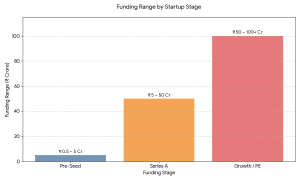
Funding typically ranges from ₹50 lakh (early stage) to ₹100+ crore (growth stage) depending on revenue, traction, and profitability.

Why EdTech Funding in India Is Rebounding in 2026

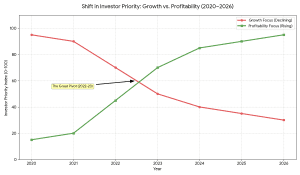
EdTech investor trend India 2020 to 2026The education technology market in India has reached a disciplined development level. Following aggressive growth by competitors such as:
Traders have ceased to focus on growth at all costs and:

  • Profitability
  • Sustainable CAC
  • Strong retention
  • Hybrid learning models
  • AI-powered personalization

This opens the doors to serious coaching institutes and the organised online learning start ups.

How Much Funding Can an EdTech Startup Raise in India?

EdTech Startup Funding Stages in India 2026Early Stage (Pre-seed / Seed)
₹50 lakh – ₹5 crore
Focus: MVP, first traction, content creation.

Series A
₹5 crore – ₹50 crore
Focus: Tech + marketing up-scaling.

Growth / PE Stage
₹50 crore – ₹100+ crore
Focus: Growth, buy-overs, profitability.

How Investors Evaluate EdTech Startups (2026 Framework)

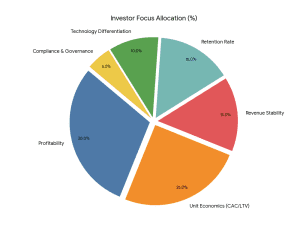
Investor criteria for EdTech startup funding IndiaInvestors assess:

  1. Revenue Model Stability
  2. Student Acquisition Cost (CAC)
  3. Lifetime Value (LTV)
  4. Monthly Recurring Revenue (MRR).
  5. EBITDA Margins
  6. Retention Rate (More than 60% desirable)
  7. Technology Differentiation
  8. Regular compliance in the Securities and Exchange Board of India (structured investments).

How to Calculate Valuation of an EdTech Platform

What Is the Valuation Multiple for EdTech in India?

The EdTech startups usually sell at a multiplier of 3x-8x based on profitability and growth rate. The institutes of coaching that are EBITDA-positive are able to get a higher structured valuation.

Initial estimates can be done using a business valuation calculator – however, institutional investors will need:

  • Discounted cash flow (DCF) analysis.
  • Similar transaction analysis.
  • Benchmarking of revenue multiple.
  • Cap table structuring

Professional investment banking services guarantee alignment of valuation with the market comparables.

EdTech startup investmentHow to Prepare a Winning Pitch Deck for EdTech Funding

A pitch deck with high conversion should have:

  1. Problem & Market Gap
  2. Solution & Differentiation
  3. Market Size (TAM, SAM, SOM)
  4. Traction Metrics
  5. Unit Economics
  6. Revenue Model
  7. Technology Stack
  8. Competitive Positioning
  9. Financial Projections (35 years)
  10.  Fund Utilization

Institutional-grade pitch deck templates enhance clarity and confidence of the investor.

Role of Investment Banking Services in Startup Funding in India

Self-equity raises dilute valuation and slows down the process. Structured investment banking services include:

  1. Identification of strategic investors.
  2. Valuation advisory
  3. Financial modeling
  4. Term sheet negotiation
  5. Due diligence management
  6. Deal closure execution

It usually leads to valuation increase and accelerated funding cycles (3-6 months).

Who Should Raise Funding?

You should consider funding when:

  1. You are an online-expanding coaching institute.
  2. You are earning 1 crore and above in a year.
  3. You are EBITDA positive
  4. You want to scale nationally
  5. It is a LMS constructed using AI.
  6. You plan acquisitions

Step-by-Step Process to Secure EdTech Funding

Step 1: Financial Structuring
Prepare projections, clean financials, audit accounts.

Step 2: Valuation Strategy
Compared to EdTech counterparts in India.

Step 3: Investor Targeting
PE, strategic buyers, Angels, VCs.

Step 4: Data Room Preparation

  1. Financials
  2. Cap table
  3. Compliance documents
  4. KPI dashboards

Step 5: Term Sheet Negotiation

 6: Due Diligence & Fund Closure.

Common Mistakes EdTech Founders Make

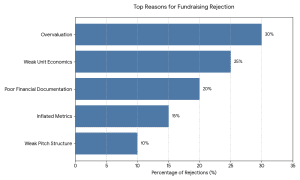
Common mistakes in EdTech startup funding India

  • Overvaluation expectations
  • Weak unit economics
  • Inflated user metrics
  • Poor pitch structure
  • There was no distinct roadmap of profitability.

The investors in 2026 are more interested in cash flow discipline than vanity growth.

FAQs – Funding for EdTech Platform

Q. What is the minimum revenue required to raise funding?

No definite qualification exists, but serious investors are attracted to startups with ₹50 lakh and higher annual revenue and good growth rates.

Q. How long does it take to raise startup funding in India?
As short as 360 days in case financial records and pitching materials are available.

Q. Can a coaching institute get private equity funding?

Yes. Potential investors like the private equity are usually interested in profitable coaching institutes with scalable hybrid models.

Q. Is valuation negotiable?
The valuation would be based on the growth rate, profitability, investor demand, and strength of negotiations.

Why 2026 Is the Right Time to Raise EdTech Funding

  • Attention to sustainable models by investors.
  • Valuation augmented with AI.
  • Acquisition exits are formed through consolidation.
  • Better regulatory transparency.

India is also among the most dynamic markets in digital education in the world.

Final Strategic Insight

Being investment banking advisors in the education and digital platform business in India, we see that investors have today begun to reward profitability, disciplined growth, and well-organized governance. The founders of EdTech that develop institutional grade financial models and strategy positioning get much more favorable funding conditions.

Ready to Secure Funding for Your EdTech Platform?

Strategic funding is not just capital — it’s valuation optimization, negotiation leverage, and scalable growth positioning. If you’re planning startup funding in India, ensure your financials, valuation strategy, and investor approach are institutionally structured.

Because in 2026 — only disciplined EdTech platforms get premium funding.

Get business Funding

Funding For Food Sector

How to Get Strategic Funding for Food Sector Businesses (Complete Guide)

Food is one of the most robust and fast-growing sectors across the world. Organic agriculture and food processing, D2C brands and cloud kitchens: entrepreneurs are actively looking to raise funds in the Food Sector Businesses to grow operations, scale distribution, and better brand positioning.

As someone with 8+ years of experience in the investment banking services sector and consulting startups in food, FMCG, and agribusiness sectors, I have personally observed what makes fund-able food businesses and those that can never raise capital.

This complete guide will walk you through:

  • Types of funding available
  • How investors evaluate food businesses
  • Strategic startup fundraising process
  • Documents you must prepare
  • Common mistakes to avoid
  • Expert insights on valuation & scaling

Types of Funding AvailableWhy the Food Sector Attracts Strategic Investors
The food industry offers:

  • Consistent consumer demand
  • High scalability potential
  • Good exit (M&A and IPO) opportunities.
  • Increase in the demand of organic and health products.

Specifically, Investment in organic Food Industry has also grown considerably with the growing health consciousness and sustainability trend.

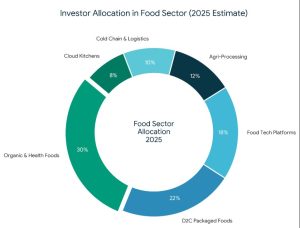
Investors are now investing in more than restaurants they are:

  • Organic food brands
  • Plant-based startups
  • Food tech platforms
  • Cold chain logistics
  • Agri-processing units
  • D2C packaged food brands

Investor Interest by Food SegmentWhat Is Strategic Funding For The Food Sector?
Strategic funding refers to capital raised by investment by investors who do not just bring money.

They bring:

  • Distribution networks
  • Industry expertise
  • Operational support
  • Market access
  • Brand positioning support

In contrast to the traditional loans, the strategic investors are interested in equity, long-term growth, and value creation.

1. Seed & Angel Investment

Best for:

  • Early-stage startups
  • MVP stage food brands
  • D2C organic food companies

The amount of startup fundraising that is usually backed by angels is 25L-2Cr (depending on location).

2. Venture Capital (VC Funding)

Suitable for:

  • Brands of growing packaged foods.
  • Food tech platforms
  • Organic food startups that are scalable.

VCs typically invest when:

  • Revenue traction is visible
  • Unit economics are becoming better.
  • There is a high fit of a founder-market.

3. Private Equity (PE)

Best for:

  • Mature food processing factories.
  • Local brands are expanding in the country.
  • Companies that have 20Cr+ turnover (varying).

PE firms give much attention to profitability and growth potential.

4. Bank & Institutional Debt

Ideal for:

  • Machinery purchase
  • Working capital
  • Factory expansion

Debt however needs fixed cash flow and security.

Step-by-Step Process to Raise Funding For Food Sector

Step 1: Validate Product-Market Fit

Prior to pitching investors, inquire:

  • Is there repeat purchase?
  • Are premium prices being charged to customers?
  • Is gross margin sustainable?

Businesses that fail in the food industry do not fail due to lack of funds instead of them failing in market validation.

Step 2: Prepare Financial Projections

Investors expect:

  • 3–5 year projections
  • Revenue model clarity
  • EBITDA margin roadmap
  • Working capital cycle analysis.

Estimate: Use a professional business valuation calculator to estimate:

  • Pre-money valuation
  • Equity dilution
  • Investment requirement

This prevents unrealistic valuation viewpoints in the context of startup money-raising.

Step 3: Prepare an Investor Ready Pitch Deck.

Your pitch deck must include:

  1. Problem statement
  2. Solution
  3. Market size (TAM/SAM/SOM)
  4. Business model
  5. Revenue traction
  6. Unit economics
  7. Competitive landscape
  8. Growth strategy
  9. Financial projections
  10. Funding ask & utilization

The pitch deck templates that are of high quality with a focus on food startups enhance rates of conversion by investors significantly.

Step 4: Due Diligence Preparation.

Investors will verify:

  1. FSSAI licenses
  2. Supply chain agreements
  3. Vendor contracts
  4. Founder background
  5. Compliance & taxation
  6. Financial statements

Due diligence is simplified and the probability of deal closures is enhanced with the help of professional investment banking services.

How Investors Evaluate Food Businesses

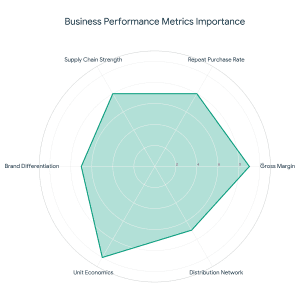
How Investors Evaluate Food BusinessesAs an adviser to food startups, investors are interested in:
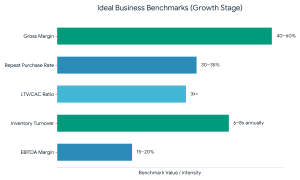
1. Gross Margin
The average gross margins of healthy food brands are 40-60% (depending on models).

2. Repeat Purchase Rate
Repeat rate of 3035 or more in D2C brands will be appealing.

3. Distribution Strategy

  • Offline retail presence
  • Modern trade partnerships
  • Positioning based on online marketplace.

4. Supply Chain Strength
Of particular importance in Funding in Organic Food Companies, which is a place where the authenticity of the sources counts.

5. Brand Differentiation
Premium Valuation Organic, preservative-free, plant-based, gluten-free positioning tend to appeal to higher values.

Funding in Organic Food Companies: Why Investors Love It

As an adviser to food startups, investors are interested in:

1. Gross Margin
The average gross margins of healthy food brands are 4060% (depending on models).

2. Repeat Purchase Rate
Repeat rate of 3035 or more in D2C brands will be appealing.

3. Distribution Strategy
Offline retail presence
Modern trade partnerships
Positioning based on online marketplace.

4. Supply Chain Strength
Of particular importance in Funding in Organic Food Companies, which is a place where the authenticity of the sources counts.

5. Brand Differentiation
Premium Valuation Organic, preservative-free, plant-based, gluten-free positioning tend to appeal to higher values.

Common Mistakes While Raising Funding For Food Sector

  • Overestimating valuation
  • Weak unit economics
  • Poor inventory management
  • Not taking into account the working capital cycles.
  • Standard pitch deck templates which are not customized.
  • Attacking investors without warm introductions.

How Investment Banking Services Add Value

Professional investment banking can:

  • Plan the fundraising process.
  • Prepare financial models
  • Conduct valuation analysis
  • Find the suitable investor type.
  • Negotiate term sheets
  • Deal execution.

Food sector fundraising is relationship based. It does not have the same importance as strategic positioning compared to mass investor outreach.

Key Metrics You Must Track Before Fundraising

The most important metrics that you should monitor prior to fundraising.

  • Cost of Acquiring Customer (CAC)
  • Lifetime Value (LTV)
  • Gross margin
  • Burn rate
  • Inventory turnover ratio
  • Break-even timeline

How Much Equity Should You Dilute?Even the most effective startup fundraising will not work without a powerful grip on these numbers.

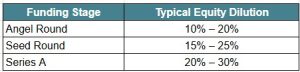
How Much Equity Should You Dilute?

The founders at an early stage tend to dilute:

  • 10–20% in seed round
  • 15–25% in Series A

A business valuation calculator is a tool to consider with care so as not to over dilute the company to the point that future funding round is restricted.

Final Thoughts:

You should raise funding if:

  • You have validated demand
  • Margins are scalable
  • You want rapid expansion
  • You must have strategic alliances.

Avoid funding if:

  • Unit economics are broken
  • You have no operational control.
  • Cash flow is unstable
Conclusion:

Finding Money in Food Sector companies will not be as simple as a thought. It demands:

  • Financial discipline
  • Market validation
  • Strategic positioning
  • Professional documentation
  • Strong negotiation

As more people are interested in Funding in Organic Food Companies and scalable D2C food brands, it is a good moment to raise capital now, assuming your fundamentals are sound.

When you go about the startup fundraising process in a strategic manner, utilise investment banking services appropriately, and make all the necessary preparation in terms of proper valuation tools and pitch deck templates, your food business will be able to attract the right investors and grow in a sustainable manner.

Frequently Asked Questions (FAQs)

1. What is the best way to get funding for food sector startups?
The best way to secure Funding For Food Sector startups is by validating product-market fit, preparing financial projections, building investor-ready pitch deck templates, and targeting strategic investors aligned with your food category.

2. How do investors evaluate food businesses?
Funding For Food Sector startups can be obtained best when you validate product-market fit, develop financial predictions, create investor-ready pitch deck templates and identify strategic investors who fit your food category.

3.Is funding available for organic food companies?

Investors evaluate:

  • Gross margin
  • Repeat purchase rate
  • Supply chain efficiency
  • Unit economics
  • Brand differentiation
  • Scalability potential

Professional investment banking facilitates the finances appropriately in advance of meetings with investors.

4. Is funding available for organic food companies?
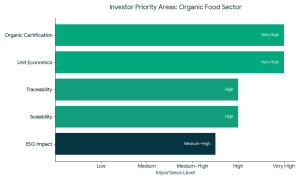
Organic Food Companies are increasing their funding because of the increasing demand in sustainable and health oriented products. Certification authenticity, margin sustainability and traceable sourcing are the priorities of investors.

5. Do I need a pitch deck to raise funds?

Yes. Strong pitch deck templates significantly increase startup fundraising success rates by presenting financial clarity, growth road-map, and competitive advantage.

Get business Funding

Strategic Funding for Clothing Business

What Is The Best Way To Fund A Clothing Brand | Complete Guide

Starting a fashion brand is artistic. Scaling it is financial. When you are trying to find the most effective way to finance a clothing brand, this entire guide will show you how to find strategic funding used in clothing business, which capital structure to use, and how to position your brand to achieve long-time profitability.

Be it a D2C clothing company, a sustainable fashion brand or a high end designer, when you get access to the appropriate investment banking services, it can turn your growth endeavours around.

Why Strategic Funding for Clothing Business Matters

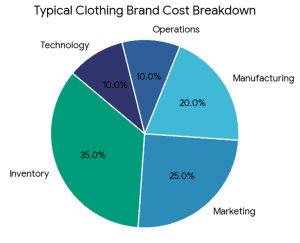
The fashion industry is capital intensive. Regular inflow of capital is important in sourcing fabrics and inventory management, marketing and retail expansion.

Strategic funding is not all about collecting money. It involves:

  • Organized capital planning.
  • Business appraisal.
  • Investor targeting
  • Financial modeling
  • Growth advisory

Strategic financing of clothing business unlike traditional loans ties capital to your expansion road-map.

Capital allocation breakdown for strategic funding for clothing businessWhat Is the Best Way to Fund a Clothing Brand?
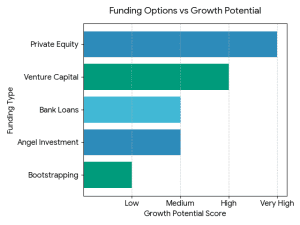
strategic funding for clothing businessIt does not have a single, universal answer. The optimal financing source will be based on:
  • Brand stage (idea, MVP, scaling, expansion)
  • Revenue traction
  • Gross margins
  • Marketplace distribution model (D2C, retail, marketplace)
  • Working capital requirements.

The best funding options are as listed below:

1. Bootstrapping (Early Stage Validation)

  • Self-funding is effective at:
  • Prototype development
  • A small number of collection launches.
  • Market testing

It retains the ownership but restricts scalability.

2. Angel Investment

Angel investors will generally invest in:

  • Startups in fashion at the early stage.
  • D2C brands that are highly branded.
  • Environmentally friendly clothing businesses.

It is also in India, where cities such as Mumbai, Bengaluru, and Delhi are active in terms of providing support to fashion and lifestyle brands through the angel networks.

3. Venture Capital (High Growth Brands)

If your clothing brand shows:

  • Strong unit economics
  • Repeat customers
  • High LTV/CAC ratio
  • 3x–5x annual growth

You can appeal to such VC companies as Sequoia Capital India or Accel India.

This fits in with brands which have national or global expansion.

4. Bank loans and current capital.

In the case of fashion companies that require high inventory to operate, organized bank loans such as the State Bank of India can be used to finance:

  • Seasonal stock
  • Machinery
  • Manufacturing units

Nevertheless, collateral and credit history are important.

5. Private Equity (Established Brands)

Securities are typically bought and held within a portfolio owned by a single investor or collective of investors (such as a family or investment firm). Private Equity (Established Brands): Securities are usually purchased and held in a portfolio owned by an individual investment or group of investors (a family or investment firm).

Provided that your clothing business generates:

  • ₹10+ crore revenue
  • EBITDA stability
  • Strong brand recall

Funding by the private equity can be faster:

  • Store expansion
  • International distribution
  • M&A opportunities

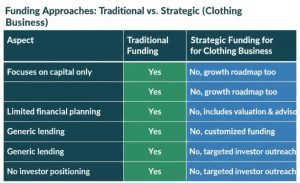
Strategic Funding vs Traditional Funding

Strategic Funding vs Traditional Funding
Strategic funding integrates
investment banking services, valuation advisory, and capital structuring.

How Investment Banking Services Help Clothing Brands

Professional investment banking services offer:

1  Business Valuation

Experts calculate: using a business valuation calculator.

  • Revenue multiples
  • EBITDA multiples
  • DCF valuation
  • Comparable brand analysis

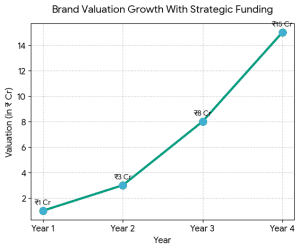
This makes sure that you do not water down equity.

Clothing brand valuation growth after strategic funding2. Financial Modeling & Projections

Investors expect:

  • 3–5 year projections
  • Break-even analysis
  • Working capital cycle
  • Inventory turnover ratios

Effective financial modelling enhances the probability of funding.

3. Pitch Deck Preparation

Professionally designed pitch deck templates are:

  • Market size
  • Problem & solution
  • Product differentiation
  • Competitive landscape
  • Financial projections
  • Funding ask & use of funds

An outstanding pitch makes the investor really interested.

Startup Funding in India: Why Fashion Is Attractive

Indian fashion startup funding growth trendThe Indian fashion and D2C market is growing because:
  • Rising disposable income
  • E-commerce penetration
  • Influencer-driven commerce
  • Sustainable fashion trends

Government programs such as Startup India have enhanced access to startup funding in India particularly to consumer brands.

Step-by-Step Guide to Secure Strategic Funding for Clothing Business

Step 1: Capital Requirement: Defining Capital Requirement.

Break down funding need into:

  • Inventory purchase
  • Marketing budget
  • Hiring
  • Warehousing
  • Technology

Step 2: Business Valuation.

  • Instruct a business valuation calculator or employ valuation experts.
  • The problem of overvaluation is frightening to investors. Underestimation is detrimental to founders.

Step 3: Prepare Investor-Ready Documentation

You need:

  • Pitch deck
  • Financial model
  • Cap table
  • Business plan
  • Legal compliance documents

Step 4: Identify the Right Investors

Fashion is not understood by every investor.
Target:

  • Consumer-focused VCs
  • Angel investors that are lifestyle-oriented.
  • D2C funds

Step 5: Negotiate Smartly

Key negotiation areas:

  • Valuation
  • Equity dilution
  • Board rights
  • Exit clauses
  • Liquidation preference

Professional investment banking services are essential in this place.

How Much Funding Does a Clothing Brand Need?

Approximate funding requirement:

clothing brand funding

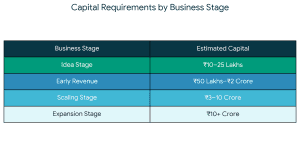
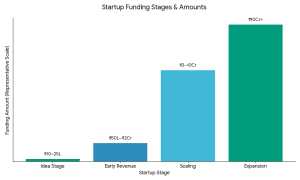
Actual requirement depends on production model and growth strategy.

Funding requirement by stage for strategic funding for clothing businessWhy Strategic Funding Is Better Than Just Capital
Strategic funding provides:

  1. Industry connections
  2. Supply chain partnerships
  3. Distribution support Retail distribution support
  4. Brand-building advisory
  5. Exit planning

It will turn your clothing business into an investable, scalable asset.

Final Thoughts

Attaining strategic funding of clothing business does not merely entail walking to investors. It demands:

  • Accurate valuation
  • Strong financial planning
  • Presentation of pitch by the professionals.
  • Targeted investor strategy

To achieve sustainable scaling, you can collaborate with professionals that provide investment banking services, valuation advisory, and financing to increase your scaling chances significantly. Fashion is creative. Funding should be strategic.

Frequently Asked Questions (FAQs)

Q1. What is the best way to fund a clothing brand in India?
The most suitable method is dependent on your stage. Angel funding should be considered by early-stage brands and venture capital or private equity under Indian structure startup funding frameworks by scaling brands.

Q2. What is my clothing brand valuation?
One can take help of a business valuation calculator or visit valuation specialists who use revenue multiple or DCF techniques.

Q3. Do investors invest in small fashion business startups?
Yes, particularly when you demonstrate good branding, niche positioning and scaled D2C opportunities.

Q4. What documents are required for strategic funding?
Pitch deck, financial projections, cap table, compliance documents, and valuation report.

If you are planning to raise strategic funding for clothing business, now is the time to structure your growth roadmap professionally and attract the right capital partners.

Get business Funding

funding for battery recycling startup

Proven Ways to Secure Investment for Battery Recycling Projects

Battery recycling is one of the most appealing cleantech opportunities today as the world is transitioning to electric vehicles, renewable energy storage, and circular economies. Scaling up of recycling operation is however expensive in terms of capital, cutting-edge technology and right investors. Whether you are looking to raise funding to start a battery recycling business, this guide can help find out who to consider, how to make the pitch, and how to find capital – which could be an angel investor or venture capital, or private equity.

What Is Funding for a Battery Recycling Startup?

Funding of a battery recycling startup Capital raised to develop, scale, or commercialize technologies to recover valuable materials (lithium, cobalt, nickel, and manganese) in used batteries.

The funding is usually in support of:

  • Technology development and pilot plants.
  • Infrastructure collection and logistics.
  • Environmental permits and regulatory compliance.
  • Processing facilities on a commercial scale.
  • Current assets and human resources.

Why Battery Recycling Startups Are Attracting Investors

Recycling of batteries is no longer a niche concept; it is a strategic requirement.

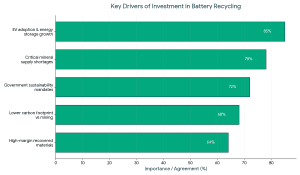
The Major Investor Drivers.

  1. Critical shortage of critical minerals.
  2. Mandates of government sustainability.
  3. Quick EV and energy storage implementation.
  4. Reduced carbon footprint compared to mining.
  5. Recovered materials of high margin.

Key drivers attracting investors to battery recycling startupsConsequently, the investment in battery recycling startups has taken precedence in clean-tech centric funds and ESG investors, as well as industry actors with a strategic agenda.

Battery Recycle Sector Market Research
Types of Funding for Battery Recycling Startups

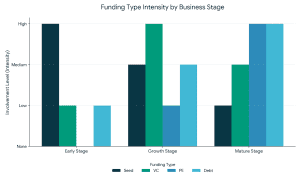
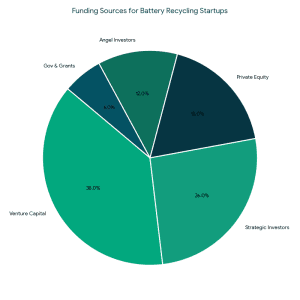
Funding sources for battery recycling startups1. Angel Investors for Battery Recycling
Angel investors normally invest in early-stage ventures with outstanding technical resources and a definite commercialization abilities.

Best fit for:

  • Pre-seed and seed stages
  • Pilot projects
  • Proprietary recycling technologies.
  • Seek experienced angels who have experience in:
  • Clean energy
  • Advanced manufacturing
  • Materials science

This round frequently coincides with early accelerators and startup funding.

2. Venture Capital for Battery Recycling

Battery recycling venture capital targets transformative technologies that have global market opportunities.

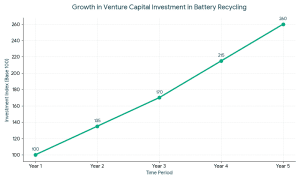
Venture capital investment growth in battery recyclingVCs typically invest when:

  • The technology is validated
  • Unit economics are proven
  • There’s a clear path to scale
  • VC firms often evaluate:
  • IP defensibility
  • Strategy of sourcing feedstock.
  • Long term offtake contracts.

When you intend to raise Series A funding, you should have airtight traction, revenue model, and scalability story.

3. Private Equity Battery Recycling Investment

Investors In PEBs concentrate on later-stage businesses or businesses with high assets.

Ideal for:

  • Commercial-scale plants
  • Expansion capital
  • M&A-driven growth

PE firms prioritize:

  • Stable cash flows
  • Established operational efficiency.
  • Long-term supply contracts

This type of battery recycling business financing is optimal when your company can be predictable in revenue.

4. Cleantech & Strategic Investors

Recycling of battery startups by Cleantech battery investors typically entail:

  • Automotive OEMs
  • Battery manufacturers
  • Mining and material companies.

They do not only invest to get returns but they also invest to secure supply chains.

Strategic investors are able to offer:

  • Guaranteed feedstock
  • Long-term buy contracts.
  • Technical partnerships

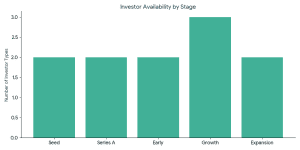
Best Investors for Battery Recycling Startups

Best investors for battery recycling startups by stageThe ideal investors in battery recycling startups usually have the following characteristics:
  • Extensive knowledge on sustainability economics.
  • Long-term capital horizon
  • Specialization in operation within an industry.

Types of investors to target:

  • Climate-focused VC funds
  • ESG private equity firms
  • Industrial strategic investors.
  • Specialized green funds

Proven Ways to Secure Investment for Battery Recycling Projects

1. Build a Compelling Investment Narrative

Investors do not simply invest in technology, but they invest in vision and implementation.

Your story must answer clearly:

  1. What problem are you solving?
  2. What is special about your solution compared to other solutions?
  3. What is the profitability of your model?

Powerful stories work well when they are backed up with good business valuation calculator reports and with realistic financial assumptions.

2. Prepare an Investor-Ready Pitch Deck

Your pitch deck must be concise, data-backed, and outcome-focused.

Key slides to include:

  • Drivers of market size and demand.
  • Technology differentiation
  • Revenue model
  • Unit economics
  • Regulatory advantage

It is better to use professional pitch deck templates or free pitch deck templates which will ensure that your presentation aligns with what the investors expect.

3. Demonstrate Commercial Viability Early

The investors in battery recycling are demanding.

Ways to show traction:

  • Signed MOUs or LOIs
  • Pilot plant performance data.
  • Strategic partnerships
  • Government approvals

This goes a long way in enhancing access to battery recycling startups at superior valuations.

4. Leverage Investment Banking & Advisory Support

Expert advisors assist you:

  • Find the appropriate investor mix.
  • Hybrid funding or structured equity.
  • Position your firm at the right place.

The early use of investment banking services may help to minimize dilution and shorten fundraising timelines.

5. Optimize for Regional Funding Ecosystems

In case you are operating in emerging markets, access to fundraising of startups in India or other regional ecosystems can open:

  • Government-backed capital
  • Sustainability-linked funding
  • Home-based strategic investors.

This strategy serves as an addition to larger start-up fundraising efforts in the world.

How Much Capital Does a Battery Recycling Startup Need?

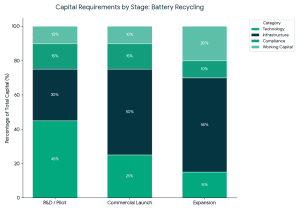
Capital requirements by stage for battery recycling startupsCapital requirements vary by stage:

Stage

Typical Capital Range

R&D / Pilot

Low to mid seven figures

Commercial Launch

Mid to high eight figures

Expansion

Nine figures+

Accessing the right capital for battery recycling startup depends on aligning the funding stage with investor expectations.

Common Mistakes to Avoid When Raising Battery Recycling Startup Funding

  • Expert projection of short-term margins.
  • Disregard of regulatory schedules.
  • Poor sourcing of feedstock.
  • Poor cost modeling
  • Reaching off-centered investors.

By not falling into these traps, it enhances success rates in battery recycling startup investors talks.

Final Thoughts:

Finding the capital to finance battery recycling startup ventures is no longer a matter of money but one of selecting investors with technology, regulation and long-term sustainability economics knowledge.

Founders who combine:

  • Strong execution
  • Clear financial discipline
  • Strategic alignment between investors.

are the ones that are constructing the future of profitable, scalable battery recycling companies. When you are going to raise startup funding, plan early, position, and take fund raising as a long-term relationship and not a transaction.

Frequently Asked Questions (FAQs)

1. How can I get funding for a battery recycling startup?
To fund a battery recycling company, you would go to angel investors, venture capital companies, cleantech funds or strategic players in the industry once you have proven your technology, unit economics, and supply chain.

2. What investors are interested in battery recycling startups?
Investors at Battery recycling startups are generally cleantech VCs, and private equity funds, as well as angel investors, ESG funds, and strategic Investors like battery manufacturers and EV companies.

3. Is venture capital suitable for battery recycling startups?
Yes, battery recycling venture capital fits start-ups that have a scalable technology, defensible IP, and a road to commercial production and profitability.

4. How much capital does a battery recycling startup need?
The initial capital requirements of a battery recycling business start-up are dependent on the size -pilot projects require less capital investment, whereas commercial plants need considerably more capital investment due to the infrastructure and compliance expenses.

5. What do investors look for in battery recycling business funding?
When investing in the battery recycling business, investors consider efficiency in technology, regulatory preparedness, the availability of feedstock, margins on recovered materials, and sustainable demand.

Get business Funding

Funding in Organic Food Companies

Funding in Organic Food Companies – How to Raise Smart Capital for Sustainable Growth

The organic food industry is no longer a niche but it is now a rapidly expanding global market based on health consciousness, sustainability aspirations and conscious consumerism. With the increasing demand, investments in organic food start-ups and established brands have emerged as one of the major necessities that start ups and established brands seek to grow their operations, maintain their supply chain, and venture into new markets.

This guide is split up into how to get funding in organic food companies, organic food companies can attract strategic capital, what investors seek, and how to make your business successful in the long term. This article will make it clear and real-life whether you are a startup founder, MSME owner, or you have a growth-stage brand.

Why Funding Is Critical for Organic Food Companies

Organic food companies have their own problems unlike the conventional food companies. The increased sourcing costs, certifications, eco-friendly packaging, and increased supply chains translate to the need to have the appropriate funding.

The main reasons why organic food companies require financing:

  • Certified organic production on a large scale.
  • Investing in sustainable sourcing and farming.
  • Cold chain and logistics construction.
  • Distribution (retail, D2C, exports) expansion.
  • Consumer education and brand building.
  • Having regulatory and certification requirements met.

Organic food companies can not only survive on strategic funding, but also grow profitably and responsibly.

Market Opportunity: Why Investors Are Interested in Organic Food

Global organic food market growth forecast showing 13–15 percent CAGRStrong market fundamentals are leading to increased support of organic and clean-label food brands by investors.
The main industry statistics (India and global):

  • The organic food market is expected to increase at a rate of ~13–15% CAGR per annum in the global market in the coming 10 years.
  • The organic food market in India is fuelled by the increased urban demand, exports and government support.
  • Product lines such as organic staples, packaged foods, baby food, dairy alternatives, and functional foods are gaining a lot of ground.

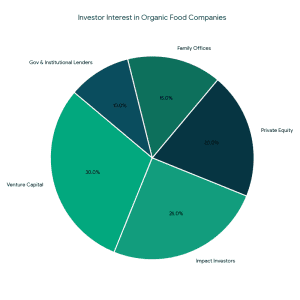
Increase in organic food companies renders financing appealing to:

  • Venture capital firms
  • Impact investors
  • Private equity funds
  • Family offices
  • Institutional and governmental lenders.

Investor distribution in organic food companies including VC impact and private equityTypes of Funding Available for Organic Food Companies
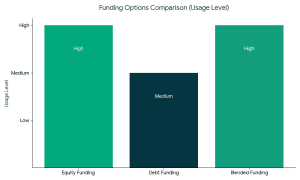
Choosing the right funding structure is as important as raising capital itself.

Funding Options for Organic Food Companies1. Equity Funding

Equity financing refers to selling a part of your company to investors.

Best for:

  • Organic food startups in their early and growth stages.
  • Highly differentiated and scalable brands.

Common equity investors:

  1. Angel investors
  2. Venture capital funds
  3. Impact and ESG-investors.

2. Debt Funding

Debt funding involves loans that have to be repaid at interest.

Best for:

  • Working capital needs
  • Machinery, processing units or warehouse expansion.

Options include:

  1. Bank loans
  2. NBFC funding
  3. Government-backed schemes
  4. Supply chain financing

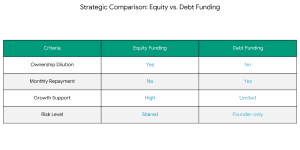
3. Blended & Strategic Funding

Most organic food businesses today are mixed financing, i.e. equity, debt and grants. This brings about dilution minimisation and the availability of adequate capital to grow.

What Investors Look for in Organic Food Companies

What Investors Look for in Organic Food CompaniesThe founders should meet the expectations of the investors to raise funds successfully in organic food companies.
Key evaluation criteria:

  • Certified organic sourcing and traceability.
  • Well-established network of farmers/suppliers.
  • Crystal-cut unit economics and margins.
  • The distribution and production model can be expanded.
  • Consumer trust and brand positioning.
  • ESG and sustainability influence.
  • Standards of regulatory compliance and food safety.

Investors do not fund products only, but they fund systems, processes and the long-term vision.

How to Prepare Your Organic Food Business for Funding

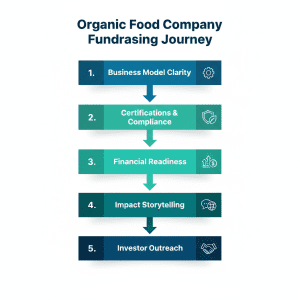
Steps to prepare organic food companies for fundingPreparation is the biggest differentiation between funded and unfunded companies.
1. Build a Strong Business Model

Clearly define:

  • Customer segments and target market.
  • Pricing and margins
  • Distribution channels (B2B, D2C, retail, exports)

2. Ensure Compliance & Certifications

Investors would like to see companies with:

3. Financial Readiness

You should have your financials of:

  • Clean bookkeeping
  • Revenue projections
  • Cash flow visibility
  • Clear use of funds

4. Impact Storytelling

Impact investing is closely related to organic food funding.
Highlight:

  • Farmer empowerment
  • Environmental benefits
  • Reduced chemical usage
  • Green efforts in packaging.

Strategic Funding vs. Traditional Funding

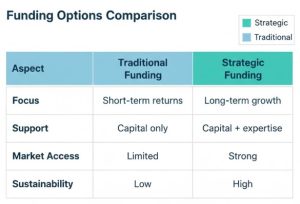
Strategic funding versus traditional funding for organic food companiesNot all capital is equal.

Traditional funding focuses on:

  • Short-term returns
  • Financial metrics only

Strategic funding offers:

  • Industry expertise
  • Market access
  • Supply chain support
  • Long-term growth alignment

In the case of organic food firms, strategic funding can provide better benefits as compared to capital investments.

Role of Funding Advisory Platforms in Organic Food Funding

Managing investors, paperwork and negotiation is sometimes tricky – particularly among agricultural or food entrepreneurs.

It is here that funding support mechanisms such as FundTQ-style advisory models can be of value by:

  1. Finding the appropriate funding mix.
  2. Reaching interested investors.
  3. Efficiency in the structuring of equity and debt.
  4. Enhancing investor preparation.
  5. Shortening fundraising time and risk.

Professional funding assistance allows organic food companies to concentrate on development rather than the documentation.

Common Mistakes to Avoid While Raising Funding

Most organic food startups fail because of some mistakes, which can be avoided:

  • Early overvaluation of the company.
  • Weak financial planning
  • Ignoring unit economics
  • The wrong kind of capital is raised.
  • Absence of compliance records.

By shunning these traps it will enhance your possibility of successful funding and sustainability.

Key Takeaways

  1. Companies that produce organic foods need strategic funds because of the increased sourcing and compliance expenses.
  2. Totally certified, scalable and impact-driven organic food corporations are what the investors like.
  3. There are equity, debt, government schemes and blended finance funding options.
  4. Good unit economics and traceability enhance success in funding.
  5. Long-term operational and market value is added by strategic funding partners.
Final Thoughts:

Funding in Organic Food Companies is the process of raising funds, whether in equity, debt, or a combination of both, to facilitate production, processing, certification, distribution, and growth of organic food businesses. Strategic financing assists organic food firms to cope with increased input prices, comply with certification, grow sustainably and create lasting growth of the investor and invitee alignment.

Frequently Asked Questions (FAQ)

Q. What is funding in organic food companies?
Investment in organic food companies is the act of attracting financial resources to execute organic farming, food processing, certification, branding and market development. Such funding can be provided by investors, lenders, or government programs on sustainability and clean food systems.

Q. Why do organic food companies need strategic funding?
Costs of production, supply chain and stringent certification are more in case of organic food companies. Strategic funding does not just offer capital but also industry experience, supply chain financing and long-term expansion alignment.

Q. What types of funding are available for organic food companies?
Companies of organic food can increase:

  1. Angel investor and venture capital funding of equity.
  2. Funding of debts using banks, NBFCs and government schemes.
  3. Hybrid financing of equity, debt and grants.
  4. The correct combination will vary with the level of development and capital requirement of the company.

Q. What do investors look for when funding organic food companies?
Investors usually consider:

  1. Organic certification and regulations.
  2. Traceability and sustainable sourcing.
  3. Business and distribution models that are scalable.
  4. Good financial discipline and unit economics.
  5. ESG and the environment.

Q. What is strategic funding in organic food businesses?
Strategic funding is the capital provided by investors or other institutions that provide more to the money, including industry contacts, expertise in operations and long term support in the market.

Q. How do organic food companies get funding?
Companies in organic food are funded with the help of making compliant financials and obtaining organic certifications, proving sustainable sourcing, and approaching the appropriate mix of investors, lenders, or government schemes based on their stage of growth.

Get business Funding

why startups fail to raise funding

Top Reasons Startups Fail to Raise Funds (And How to Fix Them)

Fundraising is one of the most significant-and difficult-steps of a startup life cycle. Although creative, enthusiastic founders, and expanding markets, the proportion of startups that raise funds remains small. The first step to correct the situation and make the business investor-ready is to understand why startups cannot attract funding. I have spent more than 10 years as an expert in the finance and startup ecosystem and have analysed hundreds of failed and successful fundraising campaigns. The patterns are clear. It is not necessary that most funding gets rejected. Let’s break down the top reasons why startups fail to raise funding, and more importantly, how to fix them.

Top Reasons Startups Fail to Raise Funds: [Fix]

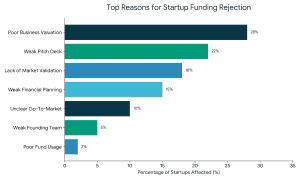
Reasons Startups Fail to Raise Funds

1. Poor Business Valuation

An unrealistic business valuation is one of the most frequent causes of failure in raising money in startups.

Why It Fails

  • Overvalued stocks drive away investors.
  • No information to support revenues forecasts.
  • Founders mix up potential and proof.

When investing in startups, investors consider traction, revenue, market size, and risk. In case your valuation does not match industry standards, it will automatically be a weak pitch.

How to Fix It

  • Take a Startup Valuation Calculator to approximate a data-driven valuation.
  • Compared to other startups in your industry.
  • Value change depending on stage of funding (pre-seed, seed, Series A)

👉 Pro Tip: A fair valuation is a sign of maturity and market knowledge and not the lack of it.

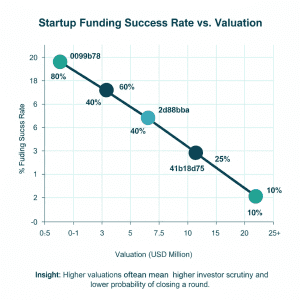
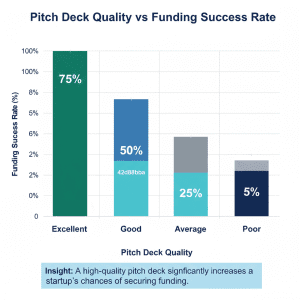
higher valuation reduces startup funding success rate2. Weak or Incomplete Pitch Deck

Another significant cause of failure of startups to attract funding is a poorly designed pitch deck.

Why It Fails:

  • Excessive wording, lack of clarity.
  • Lacking important slides (traction, financials, go-to-market strategy).
  • Inconsistent storytelling

Hundreds of decks are discussed by investors. Unless you’re talking about value in the first 2-3 minutes, it is over.

How to Fix It

  • Automated pitch deck templates, investor friendly.
  • Follow a proven structure:
    – Problem
    – Solution
    – Market opportunity
    – Traction
    – Business model
    – Financials
    – Team
  • Keep it pictorially tidy and fact based.

Pitch deck optimisation is frequently provided by modern fundraising services, and they should be used where necessary.

Weak or Incomplete Pitch Deck3. Lack of Market Validation

A lot of founders have the view that a great idea is all. It’s not.

Why It Fails

  • Investors do not invest ideas, but proven businesses.
  • Common red flags:
  • No paying customers
  • No user growth metrics

There is no actual market feedback.

This is one of the fundamental reasons why startups are not able to raise financing, particularly at seed and Series A levels.

How to Fix It

  • Confirm demand MVPs or pilot programs.
  • Display traction: users, sales, interaction, retention.
  • Don’t use assumptions, use real metrics.

Even little pushes large promises aside.

traction matters more than ideas4. Weak Financial Planning and Projections
Poor financial clarity is also another important factor that causes of why startups fail to raise funding.

Why It Fails

  • Impractical forecasts on revenue.
  • None of the knowledge about burn rate.
  • Lacking unit economics (CAC, LTV, margins).

Investors would like to understand the flow of money in your business- and how their finances will be spent.

How to Fix It

  • Establish open financial models.
  • Given cash flow, runway and expenses are to be explained clearly.
  • Make projections and the business-valuation meet.

Financial preparedness can be greatly enhanced by subcontracting professional fundraising.

5. Unclear Go-To-Market Strategy

Any product that has no single route to the customers is a dangerous investment.

Why It Fails

  • “We’ll market later” mindset
  • No business acquisition plan.
  • Lack of knowledge of the target audience.

Such uncertainty is one of the biggest causes of ” why startups fail to raise funding” particularly in competitive markets.

How to Fix It

  • Develop your perfect customer profile (ICP)
  • Discuss how you get and keep users.
  • Demonstrate channels of scalable acquisition.

Investors require transparency, not speculation.

6. Weak Founding Team or Skill Gaps

Investors do not only invest in ideas, but also in people.

Why It Fails

  • No-support sole founders.
  • Lack of technical or financial knowledge.
  • No advisory board or mentors

A weak team increases the risk of its execution which directly involves funding decisions.

How to Fix It

  • Assemble a balancing founding team.
  • Add experienced advisors
  • Point out appropriate previous achievements.

An effective team will be able to cover the early uncertainty.

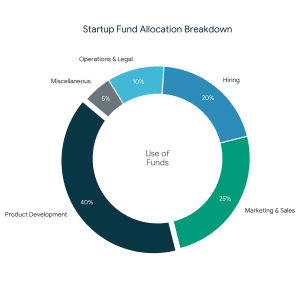
7. No Clear Use of Funds

The explanation of how the money will be used is one of the least considered reasons why startups fail to raise funding.

Why It Fails

  • Vague spending plans
  • Capital milestones absent.
  • Lack of rationality on the investment.

The question that is put before investors is: What happens after I invest?

How to Fix It

  • Split budget (product, promotion, recruiting)
  • Connect funding with growth targets.
  • Demonstrate how capital increases scale.

Clarity builds trust.

startup fund allocation8. Not Investor-Ready or Poor Timing
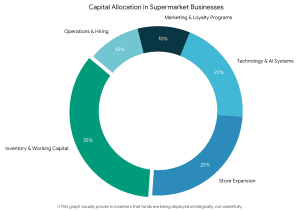
Startups fail sometimes not due to being bad- but rather due to being early.

Why It Fails

  • Pitching before traction
  • Targeting the wrong type of investors.
  • Ignoring market conditions

This is a subtle yet actual cause of failure to raise funding by startups.

How to Fix It

  • Target investors that matched your stage and industry.
  • Traction milestone time fundraising.
  • Create months to come to raise.

Preparation is power.

Final Thoughts:

The knowledge of why startups fail to fund has shaped the strategic advantage of the founders. The biggest mistakes are not when there are no ideas- but when there is insufficient preparation, validation and clarity.

Key Takeaways

  • Pricing Realism Use a Startup Valuation Calculator.
  • Use automated pitch deck templates.
  • Focus on traction, not hype
  • Enhance financial planning and storytelling.
  • Think of professional fundraising providers.

Raising money is not an accident, it is a process. Plug the holes, narrate a better tale and investors will hear.

FAQs – Frequently Asked Questions

1. Why does a startup fail to fund even when there is a good idea?

The majority of startups do not get financed since investors employ execution, traction, and validation in preference of ideas. A good idea lacking market demand, business valuation, and a go to market strategy elevates the risk of investment, and thus there is no likelihood of getting investment.

2. Why do startups fail to raise funding the most?

Unrealistic valuation is the greatest cause of failure by startups to raise funds. Startups that are overrated and which lack underlying revenues, traction, or other such metrics usually tend to lose investor confidence at an early stage of the pitch process.

3. Is business valuation important in startup fundraising?

Valuation of business is essential. Valuation helps investors to evaluate risk, dilution of ownership, and potential of returns. When a Startup Valuation Calculator is used, founders will be able to show a data-based and plausible valuation that will be within the market norms.

4. Will a bad pitch deck lead to a loss of funding opportunities by startups?

Yes. One of the best fundraising killers is a weak pitch deck. The structure is improper, it lacks clarity, or it does not contain the financials, and the investors become disengaged very fast. Automated pitch deck templates will make sure that your deck is up to investor expectations and storytelling.

5. Are investors investing in startups that are non-revenue generating?

Yes- but only when there is great traction, i.e. user growth, pilot customers, strategic alliance or the market validation. Unrevenue startups should be supported by data rather than assumptions.

7. Are fundraising services worth hiring by startups?

Yes, particularly when it comes to first-time founders. Professional fundraising services assist in valuation, pitch decks, targeting investors, and modeling finances, eliminating expensive errors and increasing the conversion rate.

Get business Funding

FutureCure Health raises Rs 104 Cr

FutureCure Health Raises ₹104 Cr in Funding Round Led by Carnelian Asset Management

One of the biggest milestones in FutureCure Health‘s growth journey took place when Carnelian Asset Management LLP led a ₹104 crore ($11.5 million) financing round in FutureCure Health. Other investors also participated in the round, further cementing belief in the tech-centered strategy of super-specialty healthcare by the company.

FutureCure Health raises Rs 104 Cr

Image Source: Entrackr


It is a business fundraise, which is a continuation of a previous round of $4 million in 2022, led by Kotak Alternate Asset Management, RVCF Ventures and Unicorn India Ventures. The rising importance of investment banking services and institutional capital in the scaling of healthcare innovation can also be observed through such structured funding activity.

Expanding NeuroEquilibrium’s Vertigo Care Platform

Developed in 2015 by Rajneesh Bhandari and Anita Bhandari. FutureCure Health has one wholly owned subsidiary named NeuroEquilibrium. Which specializes in the diagnosis and treatment of vertigo and dizziness. In contrast to the traditional symptom-oriented treatment. NeuroEquilibrium will detect the underlying cause, whether it is inner ear, brain or balance channels, and provides long-term treatment.

The new capital will be invested in increasing access to the diagnosis and treatment of vertigo in India and international markets. The platform has served and continues to serve over 150,000 patients already with more than 300 clinics in India and other 16 countries where it is not in operation, where the global gap in neuro-otology care is critical.

Technology, Scale, and the Future of Healthcare

NeuroEquilibrium is expanding precision care outside major cities by integrating sophisticated diagnostics, remote platforms on the cloud, and deep-tech innovation. The company plans to address the lack of specialist doctors due to scalable technology as it goes on to expand its range to chronic lifestyle diseases like migraine and diabetes.

To a small number of founders and healthcare startups considering business fundraising . This round is a good illustration of how a clear clinical focus, strong technology. Prepared investor documents, such as free pitch deck templates, can yield high-quality capital and expedite impact-driven growth.

Get business Funding


get-equity-funding-for-supermarket

Equity Funding for Supermarkets: The Ultimate Investor-Ready Funding Guide

Supermarket business is no longer about shelves and check counters. The modern-day supermarkets are information-based retail companies that operate on AI demand prediction, robotic inventory management, analytics of loyalty, and multichannel selling. Simple equity financing of supermarkets is increasingly the financing method of choice among many founders and retail chains to scale quickly without the burden of debt—investors in supermarkets provide capital in exchange for a share in ownership as opposed to requiring (monthly) repayments. This guide reveals all the details of how to equity funding for supermarket, what investors seek, equity amount to provide, and how to create a bankable startup financial overview that will help to impress investors.

What Is Equity Funding for a Supermarket?

Equity funding of supermarket business involves raising funds by selling a share of the business to:

  • Angel investors
  • Venture capital firms
  • Private equity funds
  • The strategic retail or technology investors.

Unlike loans, equity funding:

  • Has no EMI or interest
  • Sustains the growth in the long run.
  • Brings in a strategic skill and belief.

Why Are Investors Actively Funding Supermarkets?

Investors Actively Funding Supermarkets

capital allocation in supermarket


Types of Equity Funding for Retail & Supermarkets

1. Angel Investors

  • Early-stage capital
  • In many cases retail or FMCG professionals.
  • Invest ₹50L–₹5Cr

2. Venture Capital (VC)

  • Growth-focused
  • Show interest in AI-enabled supermarkets.
  • Funding AI startups is often overlapping.

3. Private Equity (PE)

  • Middle to late-stage supermarket chains.
  • Target profitability and growth.

4. Strategic Retail Investors

  • Logistics firms
  • FMCG brands
  • Retail tech platforms

How Much Equity Should You Give Away?

Industry Benchmark

Industry-Benchmark-get-equity-funding-for-supermarket

Over-dilution early is a red flag. Investors prefer founders with long-term control.

What Investors Look for in Supermarket Equity Funding

1. Strong Unit Economics

  • Gross margins (18%–35%)
  • Shrinkage control
  • Vendor credit cycles

2. AI & Technology Adoption

  • Demand forecasting
  • Smart inventory management
  • Analytics of customer behavior.

This is where AI startup-style thinking funding provides supermarkets with a competitive advantage.

3. Clear Expansion Strategy

  • Store rollout plan
  • Franchise-company owned model.
  • Dark stores and fast commerce preparedness.

How to Build a Winning Startup Financial Model

Equity funding cannot be provided without the use of a professional start-up financial model.

Must-Have Sheets:

  • Profit & Loss (5 years)
  • Cash Flow Statement
  • Balance Sheet
  • Store-level unit economics
  • Break-even analysis
  • Investor IRR & exit scenarios

Tools Used by Professionals

  • Financial modeling in Excel
  • Scenario analysis, sensitivity analysis.
  • Automated dashboards

Majority of the rejections occur as a result of poor financial models rather than the poor ideas.

Pitch Deck That Converts Investors

The questions your pitch deck will answer are:

  • Why supermarkets now?
  • Why your brand?
  • How do you scale profitably?
  • Where will the equity funding be applied?
  • Opportunities of exit by investors.

👉 Free pitch deck templates are a starting point with no avenue of customisation.

Role of Investment Banking Advisory Services

Professional investment bank advisory services highly enhance the success of business funding by:

  • Organizing the correct equity deal
  • Understanding how to appreciate your supermarket.
  • Finding of strategic investors.
  • Negotiating and term sheets management.

In the case of tech-enabled supermarkets, technology investment banking service can be seen as a middle ground between retail investors and AI investors.

Common Mistakes to Avoid
  • Fundraising without a financial model.
  • Over-/under-valuing the business.
  • Negligence in governance and compliance.
  • Selling it more like a kirana shop than a retailing business that can be scaled.
Equity Funding vs Debt Funding for Supermarkets

get-equity-funding-for-supermarketFor fast expansion, equity funding for retail business is superior.

Frequently Asked Questions (FAQ)

Q. Is equity financing suitable in supermarkets?

Yes. The cash flow is predictable in supermarkets and therefore, this makes them attractive to the equity investors, as the operations are not strained by debt.

Q. Are supermarkets able to obtain business funding like AI startups?

Yes. AI inventory, pricing, and personification by Supermarkets tend to be a draw to AI startup-oriented investors.

Q. What are the documents needed in equity financing?

  • Financial model
  • Pitch deck
  • Business plan
  • Cap table
  • Compliance documents

Final Thoughts:

If your supermarket is:

  • Scalable
  • Tech-enabled
  • Financially disciplined
  • Expansion-ready

Equity financing of supermarkets is therefore amongst the most effective growth strategies that can be used today. Through an appropriate financial model of startup, pitch deck and advisory services, the supermarkets are able to raise capital just like tech-driven businesses of today.

Get business Funding