Eternal investment in Blinkit

Eternal’s ₹600 Cr Investment Boosts Blinkit’s 2025 Funding to ₹2,600 Cr

Eternal Limited (previously Zomato Limited) has invested ₹600 crore in its booming subsidiary, Blinkit, in a significant step to the quick commerce industry in India. This makes Blinkit fund 2025 a total of 2600 crore, and it is clear that Eternal is still working on its non-food vertical, which is the primary growth engine of the company currently.

blinkit funding

Image Source: Entrackr

Eternal Investment in Blinkit Strengthens Quick Commerce Leadership

The new capital was through the issue of 3,733 equity shares at 16,07,161 apiece as per the filings of the Registrar of Companies (RoC). It is a continuation of earlier investments in 2025 of 500 crore in January and 1500 crore in February and an investment of 400 crore in mid 2024. The capital assists Blinkit in inventory-based model, dark stores growth, and improvement of the delivery infrastructure. Blinkit has increased revenue substantially by booking the full value of goods sold but profitability has been challenged because operating costs are high.

This strategic capital of Eternal indicates its belief in the ability of Blinkit to dominate the competitive Indian instant delivery sector, against its competitors like Swiggy Instamart, Zepto, and the BB Now of BigBasket, and new market entrants by the offline retail chains.

Blinkit Drives Revenue Growth Amid Profitability Pressure

The growth of Eternal support can be seen in Q2 FY26 outcomes. Eternal has posted an operating revenue of 13,590 crore which is almost three times less than that of the identical quarter of the previous year. Blinkit contributed 9,891 crore or approximately three-quarters of the revenues, and the food delivery segment contributed 2,485 crore. Although there was a good revenue, consolidated net profit decreased by 63 per cent every year to 65 crore. Growth expenses such as set up of dark stores, levels of inventory, and logistics of delivering the goods remain a strain to the bottom line.

Also Get: Free Pitch Deck Templates for Startups

The business environment is still capital intensive. The rivals are growing intensely: Swiggy has permission to increase up to 10,000 crore, BigBasket has been able to get a 200 crore debt and Zepto has been able to raise 450 million of funds led by CalPERS. Ongoing Eternal investment in Blinkit will enable the company to remain on the growth path and compete off competitors as well as enhance service and delivery efficiency.

Bottom Line

The investment by Eternal is an indication that it is strategically shifting its focus to non-food high-frequency products, which diversify its revenue and establish Blinkit on the market. The capital will enable Blinkit to expand business, improve customer experience, and maximize the speed of delivery, which are essential to achieve the success in the competitive market of instant commerce.

Although the issues associated with profitability include the cost of expansion, in the long term, it is quite possible that Blinkit will have a monopoly in the Indian quick commerce market. Long term investment will put the company in a growth, innovation and enhanced presence in the market that is fast evolving.

Get business Funding

Wealth-Tech Investment Trends: Wealthy Raises Rs 130 Cr for Rapid Expansion

Wealth-management firm Wealthy raises Rs 130 Cr ($14.5 million) in Series B financing, headed by Bertelsmann India Investments. Shepherd’s Hill Group and Alpha Wave Global, who are already investors in the company, also joined this round, which once again boosted investor confidence towards the growth path of the company.

Wealthy raises Rs 130 Cr

Image Source: Entrackr

This was the most recent funding to Wealthy, who has raised approximately 30 million in the past including a prior Series B round of Rs 45 crore 5.4 million) by the Alpha Wave Incubation Fund operated by Falcon Edge. The current round proceeds will be used to increase advisor network, improve product stack and expand into new markets of Wealthy. The funds will also enable the company to enhance its technology platform and compliance systems as its platform extends its product offerings.

About Wealthy and Its Growth

Wealthy was established in 2015 and is an online financial product marketplace and independent financial advisors distribution platform. Through the platform, advisors can sell a broad portfolio of wealth products, such as mutual funds, insurance, fixed deposits, bonds, and others, with the help of its powerful technology stack.

Wealthy has experienced a high growth in Assets Under Management (AUM) whereby over the last three years, the Assets Under Management (AUM) have increased three times to reach the current level of Rs 5,000 crore, which tells of a booming business. It has 20 offices in India currently, and dominates in major cities in India, including Bengaluru, Mumbai, Hyderabad, Ahmedabad, Surat, Jaipur, Gurugram, Delhi, Faridabad, Ghaziabad, Lucknow, Kanpur and Kolkata. The platform makes transactions of above Rs 300 crore monthly and collaborates with over 6000 mutual fund distributors to serve over 100,000 clients.

TheKredible, Wealthy raises Rs 130 Cr at a time when the company has increased its revenue, moving up to Rs 14.5 crore in FY24 to Rs 25 crore in FY25. Nonetheless, the company posted a net loss of Rs 35 crore last fiscal year, which is lower than the previous year, i.e., FY24 of 24 crore, indicating the current investment in scaling operations and broadening the reach.

Funding Trends in Wealth Management

India has recorded stable funding in the wealth management sector in 2025. Notable examples include:

  • Dezerv Raise $40M in a primary round co-leaded by Premji Invest and Accel Global Growth Fund.
  • Stable Money, a Bengaluru-based firm raised 20 million dollars under the leadership of Fundamentum Partnership.
  • Syfe raised a $80 million Series C round.
  • Neo in its last stages of equity share raising of $19m.

With this Series B round, Wealthy strengthens its market leadership, expands its advisor base, and advances its digital platform. The financing is a sign of investor confidence in the use of technology in managing wealth and rising demand of available financial products in India.

Finally, the news that Wealthy raises Rs 130 Cr reiterates that the firm is still on the ascent in the wealth-tech segment. With its ability to scale operations, enhance technology infrastructure and gain access to more cities in India, Wealthy is defining the future of digital wealth management, and financial planning and investment advice are now more accessible than ever.

Get business Funding

EaseMyTrip Q2 FY26 results

EaseMyTrip’s Revenue Slips to ₹118 Cr in Q2 FY26; Posts ₹36 Cr Loss

EaseMyTrip (EMT), the online travel agent, experienced a decrease in revenues during Q2 FY26, with ₹118 3 crore in operating revenue and a net loss of 36 3 crore. EaseMyTrip Q2 FY26 results show that the online travel agent (EMT) experienced a decrease in revenues during Q2 FY26, reporting ₹118.3 crore in operating revenue and a net loss of ₹36.3 crore. This marks a sharp contrast to the profit of ₹26.8 crore in the same quarter last year, highlighting the challenges the company faces in its core business amid rising costs.

easemytrip

Image Source: Entrackr

Revenue Decline Driven by Air Ticketing Drop

The air ticketing that generates most of the revenue of EaseMyTrip dropped to 72 crore, a year on year decline of 22 percent. Hotel and holiday packages also added 32 crore which is approximately 27% of the total revenue. The company made more money by other sources but made a total income of 126.5 crores during the quarter which was less than 150 crores in Q2 FY25.

Rising Costs Push Company Into Loss

EaseMyTrip had growth expenses of 67% YoY, largely as a result of increment in employee, service and advertisement costs. Spending on employees went up by a fixed margin of 24% to ₹31.crore. Another exceptional item of the company that also contributed to the quarterly loss was an exceptional item of 51 crore about a General Sales Agent (GSA) agreement with an airline under UDAAN scheme.

EaseMyTrip Q2 FY26 results Image Source: Entrackr

Non-Air and International Business Growth

Although the setback was experienced, certain segments reported encouraging growth:

  • Hotel and holiday bookings shot up by 93% YoY, which suggested good momentum with non-air verticals.
  • There was a 16 percent growth in the number of bookings of train, bus, and mobility services.
  • Global growth, particularly in Dubai, was a strength: gross booking income increased over 3 times to 361.7 decision-making.

This early success can be attributed to the fact that EaseMyTrip is successful in its EMT 2.0 strategy to diversify its revenue collected by flights.

Operational Resilience Shows Through EBITDA

Net profit became negative, EBITDA has increased sequentially by 76.3% to 12.1 crore (with a margin of 9.6). It means that its revenue pressures are not hurting its operational efficiency implying that it will become profitable provided cost management is maintained.

Strategic Moves and Leadership Changes

EaseMyTrip will keep investing in growth and infrastructure:

  • Purchased half of a hotel in London and 100 per cent of a Gurugram commercial property.
  • Enhanced management that has a new CTO and CMO.
  • Consented to a purchase of 514 crore of preferred equity shares by non-promoters.

These activities are in line with the vision of the company to develop a complete stack travel platform to cover hotels, holidays and international markets.

Looking Ahead

The Q2 FY26 performance of EaseMyTrip is a mixed story, with a decline in the core business and one-time losses counterbalanced by an increase in the non-air vertical and international market. In case the company is able to maintain these high-margin segments and control the expenses, the long-term prospects of profitability are still optimistic on the negative note.

Get business Funding

Tech Startup Funding

How to Get Tech Startup Funding: A Practical Guide for Founders

Launching a tech start up is fun- but to bring an idea into a successful business needs funding. Be it a new AI tool or SaaS solution, or a hardware solution, funding is necessary to grow operations, recruit talent, and roll out your product. This manual demonstrates how to raise money through tech startup funding, and has steps to follow that are relevant to the current tech ecosystem.

Why Tech Startups Need Funding?

Technology startups have a higher initial expense than traditional businesses because of:

  • Software development, hardware development, AI development.
  • Cloud infrastructure or servers.
  • Recruiting engineers, designers and marketing staff.
  • Regulatory and compliance standards.

Even the best technological ideas may come to a halt without adequate funding. That is the reason why any founder needs to know how the funding can be made and what the investors expect.

#1 Step: Identify the Right Type of Funding

The initial step in raising tech startup funding is to understand what type of funding suits your startup and its objectives:

  1. Bootstrapping: Financing operations with own savings or revenue. Ideal for early-stage ideas.
  2. Friends and Family: Minimal investments made by immediate acquaintances. Useful in development of proof-of-concept or prototype.
  3. Angel Investors: Seasoned investors that contribute investments in the form of equity. Often provide mentorship.
  4. Venture Capital (VC): Investments in startups of high potential growth. VCs will fund high amounts but with high equity and quick returns.
  5. Government Grants and Programs Non-dilutive funding to encourage innovation.
  6. Crowdfunding: Seek direct financing of potential clients via such platforms as Kickstarter or Indiegogo.
  7. Corporate Partnerships: Resources or investment by well-known companies in order to collaborate or get early access.

AI Insight: The new AI can assist the founders to find out potential investors, fund raise trends, and even pitch deck optimization to predict what will attract investors according to previous funding records.

#2 Step: Build a Strong Business Plan

Investors desire to have a road map. The following things should be included in your business plan:

  • Problem & Solution: What is your tech a solution to, and why is it special?
  • Market Opportunity: Growth trends, competitors and total addressable market.
  • Model: How are you going to make money with your startup? Subscription, licensing, free-mium, etc.
  • Product Roadmap: Product development milestones and schedules.
  • Team Credentials: Why your team can create the vision.
  • Financial Projections: Financing requirements, expenses and revenue.

Pro Tip: AI tools such as business plan generators can assist you to organise your plan in the most effective way and can simulate growth conditions to investors.

Learn About: Technology investment banking services

#3 Step: Craft a Winning Pitch Deck

Your startup’s first impression is a pitch deck. An AI-intensive solution will be able to study the existing successful pitches in order to maximise content and visuals. Key slides include:

  • Introduction and Problem: Straight forward and clear.
  • Solution: The value positioning of your product.
  • Market Opportunity: Factual and valid.
  • Traction: Start-user, revenue, partnerships.
  • Business Model: How you raise money.
  • Team & Advisors: Be competent and reliable.
  • Funding Ask Finance: Be clear as to how the funding will expedite growth.

Tip: Keep it under 15 slides. Your deck can also be automatically generated by AI tools into graphs, charts and competitor analysis.

free pitch deck templates
#4 Step: Demonstrate Traction

Startups with the potential of success are invested in by investors. Traction can include:

  • The increase or the usage metrics of the users.
  • Revenue or pre-orders
  • Beta program success
  • Joint ventures or alliances.

Small, initial traction can do major wonders to investor confidence. AI analytics can monitor user behaviour, growth patterns, and retention, and thus it is simpler to provide definite displays of traction.

#5 Step: Leverage Networks and Platforms

Funding is a matter of who you have connections with rather than what you have accomplished. Network expansion strategies:

  • Startup Incubators and Accelerators: Y Combinator, Techstars and others offer mentorship and funds.
  • Angel Networks VC Platforms: AngelList, Crunchbase, and LinkedIn may help you find investors.
  • Tech Conferences and Meetups: Pitch events, Hackathons, and workshops are also good in terms of exposure.

AI Insight: AI-powered tools will assist to find investors best suited to your startup business, location, and funding round and save time and chances of success.

#6 Step: Choose the Right Funding Option

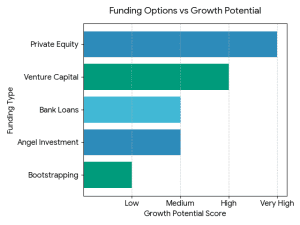
Here’s how to match funding types with startup stages:

match funding types with startup stages

Choosing the right option prevents unnecessary equity loss and aligns your growth trajectory with investor expectations.

#7 Step: Avoid Common Pitfalls

  • VC too soon: Prioritise traction.
  • Failure to take legal and financial structuring: Unambiguous contracts and equity arrangements will avoid conflicts.
  • Disregard of investor feedback: Relevant ideas, although financial assistance may not be as timely.
  • Weak story telling: The investors must relate to your vision both emotionally and logically.

#8 Step: Leverage AI to Boost Funding Success

Artificial intelligence will be able to assist where conventional technology fails:

  • Investor Research: AI is used to conduct a scan of databases with investors who are likely to finance your industry.
  • Pitch Deck Optimization: Predictive technology proposes slides, images, and messages that resonate.
  • Financial Forecasting: AI thinks over various scenarios to reinforce predictions.
  • Market validation: AI software processes user response, trends, and sentiment to justify market demand.

AI can be used strategically to save time and reduce risk and enhance investor credibility.


Final Thoughts

Funding tech startups is not a random event. Focus on:

  • Competence in your stage of start-up.
  • Selecting the appropriate financing sources.
  • Developing an effective business strategy and traction measures.
  • Preparing a persuasive pitch deck.
  • Using AI and networks to their advantage.

This is an efficient and confidence-based way for founders to get tech startup funding in order to transform innovative ideas into scalable and successful businesses.

Get business Funding

technology investment banking services

What is Technology Investment Banking? Key Insights for Investors & Professionals

Technology investment banking services are essential in determining the growth paths of startups and scale-ups and established tech companies in the rapidly changing digital economy of the present times. You are an investor who needs to find opportunities with high returns, a tech entrepreneur who needs to evaluate capital sources, or you are a professional who needs to negotiate a deal in the field of M&A. The area of technology investment banking is crucial to your understanding.

The article is a detailed guide to technology venture capital services, including mergers and acquisitions (M&A), venture capital and strategic advisory among others. We also investigate the effect of these services on the stakeholders providing practical information on how to receive maximum value and reduce risks.

How Technology Investment Banking Drives Growth?

Technology investment banking services refer to a diversity of financial advisory and capital-raising services unique to the technology sector. technology investment banking for startups is centred on firms in the software, hardware, cloud computing, artificial intelligence, cyber-security, fin-tech, biotech and other high-growth technology sectors unlike traditional investment banking that provides service to many industries.

Key services typically include:

1. Mergers & Acquisitions (M&A) Advisory

  • Technology investment banks provide advice to companies on how they should buy, sell or merge with other tech firms.
  • Services involve valuation analysis, due diligence, deal structuring and negotiation support.
  • Scenario: A Cloud-computing startup that wishes to be acquired by a larger enterprise software company would use the services of M&A advisory to help in giving a fair valuation and smooth deal.

2. Venture Capital & Private Equity Placement

  • These banks assist the technology firms in seeking financing through venture capital (VC) founders or/and private equity (PE) founders.
  • They design investment rounds, develop pitch materials, and match the entrepreneurs with the applicable investors.
  • Examples: A fin-tech startup raising Series B could hire one of the technology investment banks in order to attract strategic investors and good terms of the deal.

3. Strategic Advisory & Corporate Finance Services

  • In addition to deals, technology investment banks offer long-term strategic planning, such as capital structure planning, positioning in the market, and growth planning.
  • They help in financial modelling, risk analysis and strategic decision making of start ups and mature technology companies.

4. Debt & Equity Capital Markets Services

  • Technology investment banks help companies to access capital markets in case they are planning to issue stocks or bonds.
  • They provide advice on IPO preparation, secondary issues, and issuing convertible debt and making sure it complies with regulations and investor trust.

business valuation software

Why Tech Companies Need Investment Banking Expertise

Any investment or expansion of a technology business presents a high risk since markets are dynamic, innovations are cyclic, and competition is intense. The investment banking services alleviate these risks by offering:

  • Valuation Experience: Tech firms frequently possess intangible resources (such as IP, proprietary algorithms and software platforms). The correct valuation of these cannot be done without expert knowledge.
  • Availability of Capital: Banks introduce firms to investors who are knowledgeable of the peculiarities of technology markets.
  • Strategic Guidance: Senior bankers provide market trends, market positioning and exit strategies.
  • Regulatory Compliance: Tech transactions can comprise cross border transactions, data privacy, and IP. Investment banks will make sure that all the legal and regulatory frameworks are followed.

Leading Technology Investment Banks Shaping the Industry

A number of the upper-end investment banks and boutique firms are focused on transactions in technology:

  • Goldman Sachs and Morgan Stanley: Multinational technology M&A advisory and public offerings.
  • FundTQ – Investment Banking Services: Specialises in technology deals with, advising on growth capital, mergers and acquisitions and strategic equity.
  • Qatalyst Partners & Allen & Company: Boutique firms that have intense emphasis on high-growth technology deals.
  • SVB Securities (previously Silicon Valley Bank): Provides venture capital and growth equity advisory services to tech startups.

Every company has a distinct set of industry knowledge, investor links and deal experience, and they are important collaborators to technology firms desiring to pursue a strategy of growth.

How Technology Firms Leverage M&A for Growth

A fundamental service of technology investment banking is mergers and acquisition. They help companies to increase market share, purchase new technologies, or merge with each other.

Key M&A trends in tech include:

  • Consolidation of Cloud Computing (SaaS): There is a trend of merging of many SaaS companies to expand their product and grow in a very short period.
  • Acquisitions of AI and Machine Learning: Bigger companies tend to purchase startups that have sophisticated AI to increase innovation rate.
  • Cross-Border Deals: Technology companies are becoming more eager to engage in international M&A as a way of finding new markets and new sources of revenue.

A technology investment bank is used to package these transactions in the best interest of value creation and risk reduction, fair valuations, and complex negotiations.

Venture Capital and Technology Investment Banking

Venture capital is a saviour to new technical firms. VC funding is achieved through tech investment banking consultants which:

  • Finding the right investors in line with the vision of the company.
  • Organising investment rounds to make the most out of capital.
  • Working out conditions that will ensure we have an equitable control of the business by the founders and investors.

To investors, the technology investment banks offer deal flow, due diligence and market intelligence and aid in determining which startups have a high growth potential.

How Technology Investment Banks Boost Client Profitability

Investment banking services offered in technology have the effect of creating value in that they:

  • Market Intelligence: Data analytics, industry reports, and networks allow banks to discover opportunities to grow and competitive threats.
  • Financial Engineering: Deal structuring by the experts is efficient on tax and optimal allocation of capital as well as risk reduction.
  • Investor Confidence: Credible advisory will improve investor confidence which will make fundraising easier and more successful.
  • Exit Optimization: In the case of startups; banks recommend IPOs, secondary sales, or strategic acquisitions to make the most out of the shareholders.

free pitch deck templates

Questions to Ask Potential Technology Investment Banks Before Signing

The choice of a technology investment bank is an important issue. Key factors include:

  • Experience in Industry: You wish to find companies that have substantial experience in your technology line.
  • Track Record: Assess previous transactions, values realised and successful fund-raises.
  • Network Access: The network of investor and strategic partners of a bank can break or make a deal.
  • Advice Quality: Sound advice in valuation, deal structuring and negotiation is essential.

The involvement of an appropriate partner may make a huge difference in terms of growth, startup funding results, and market position.

Future of Technology Investment Banking

Investment banking technology is changing at a very fast rate:

  • AI-based Deal Analysis: Artificial intelligence is now employed in valuation modeling, risk, and trend prediction on the market.
  • Emergence of SPACs: Special Purpose Acquisition Companies are offering other ways in order to take tech companies public.
  • Cross-Border Digital Ecosystems: World technology convergence is creating sophisticated M&A and investment prospects.
  • Sustainable and Impact Investing: Investors are giving preference to ESG-complaint technological companies and this is changing the practices of banking advisors.

These trends indicate that technology investment banking is going to be a high-value dynamic sector that is constantly evolving according to innovation and market changes.

Conclusion

Tech companies, investors, and professionals in the modern complex digital economy cannot do without technology M&A advisory services. Whether it is M&A advisory and venture capital placement, or strategic corporate finance and capital market services. These banks are the providers of the expertise, networks and guidance that lead to growth, finance and optimisation of the exits.

To investors, engaging an experienced technology investment bank would open up high growth opportunities and risk avoidance. It guarantees business people strategic direction, ideal valuation as well as effective raising of capital. This is because with the ever-evolving technology in the industries. The role technology funding and advisory services plays in the future of innovation and investment will be even more vital.

Get Business Funding for Small Business

What’s the Best Way to Get Funding for a Small Business in India?

To open or grow a business, passion alone is not enough but the proper financial aid is needed. Small business funding opportunities are higher than ever before in 2026. Whether it is a new idea or expansion of an already formed business, understanding how to raise funds to start a small business or grow an existing one is the difference between success and failure.

Here in this guide we are going to discuss the most effective methods of acquiring funding of small business, primary sources, government programs, and intelligent methods of obtaining the correct kind of capital to suit your requirements.

Understanding Small Business Funding in 2026

It is important to first define what small business financing is before we plunge into the specific sources of funding.

Small business funding is any financial support to start ups or small business ventures to meet costs including:

  • Inventory or product development.
  • Hiring employees
  • Marketing and technological advancement.
  • Current assets or working capital.

As the global startup ecosystem is thriving, the need for funding assistance to small enterprises has never been greater. Governments, banks and individuals who just want to invest their money are all providing resources on how to support small funding to an idea of business that has potential.

Why Funding Matters for Small Businesses?

Securing capital early can:

  • Increase cash flow and maintain business.
  • Grow faster by making investment in tools, talent and marketing possible.
  • Grow popularity among suppliers and customers.
  • Less risk through the diversification of sources of financial support.

To put it in a nutshell, the idea of starting a small business can become a successful company with the knowledge of how to raise funds.

Top 10 Ways to Get Funding for Small Business in 2026

1. Government Grants and Schemes

Governments of all countries, such as small business or startup funding in India, provide grants, subsidies and low-interest loans to entrepreneurs.

Examples include:

  • MSME Loan Schemes in India
  • Startup India Seed Fund Scheme (SISFS).
  • Pradhan Mantri Mudra Yojana (PMMY) – small business micro-loans.
  • Small Business Administration (SBA) Loans of the U.S.

It is among the most suitable funding sources of a small business as it is usually associated with lower repayment.

2. Bank Loans

The traditional banks have still continued to be a trusted provider of loans to the small business. 

You can apply for:

  • Term loans (used to pay in installments over time).
  • Working capital loans (to cover cash flow)
  • Equipment financing

To increase approval, a well-developed business plan demonstrating profitability, market analysis, and ability to repay should be prepared.

3. Microfinance and NBFCs

Microfinance institutions and Non-Banking Financial Companies (NBFCs) will provide assistance in the event that you do not have collateral or a good credit history. They issue small financing business loans on flexible conditions, particularly in the developing markets.

This suits those entrepreneurs who want to get financial assistance to develop small businesses in the rural or semi-urban environment.

4. Angel Investors

Angel investors are also individual investors who risk using their personal funds in startups that have potential. By 2026, it is only a few clicks to find investors that focus on your industry by using digital platforms such as LetsVenture, AngelList, and SeedInvest.This is among the most effective small business funding choices in the case of a startup.

5. Venture Capital (VC)

In case your business has high growth potential, VC firms can provide huge funding rounds. They usually invest in the areas of technology, fintech, healthcare, and sustainability.

Although it implies relinquishing part of the ownership, the mentorship and exposure VCs will offer may accelerate the process of growth, and it is one of the most effective methods of obtaining funds to run a small business with scalability in mind.

6. Crowdfunding Platforms

Crowdfunding is a popular alternative source of funding. There are platforms such as Kickstarter, Indiegogo or GoFundMe that enable you to fundraise through the crowd.

You can provide first-time availability of products or benefits to supporters. It is a creative and democratic method of securing small funding business assistance without conventional loans or investors.

free pitch deck templates
7. Business Incubators and Accelerators

There are numerous incubators and accelerators that provide funding assistance to the small business ventures as well as mentoring, network, and space. Cash-based investor programs such as Y Combinator, Techstars, and Startup India Hub are business development programs.

Becoming an accelerator may be a game-changer to startups that want to obtain small business financing and develop.

8. Corporate Partnerships and Mutual Funds

Investment programs or small business mutual funds are managed by some large corporations to foster innovation. As an example, businesses can invest in startups that do not cannibalize their product ecosystem.

Not only can these partnerships provide funding to small businesses, they can also include technical expertise and market access.

9. Trade Credit and Supplier Financing

In case your business is dependent on suppliers, you can enter into a trade credit agreement which will enable you to pay after selling goods. It is a less known but efficient source of small business funds that can be used to handle stock without the initial expenses.

10. Bootstrapping

Bootstrapping refers to funding your business with personal savings / revenue. Though it restricts start-up capital, it provides complete control and eliminates debt.

This is an ideal choice in small business entrepreneurs that would wish to remain lean and autonomous and only seek outside business capital later.

Types of Funding for Small Businesses

Understanding the types of funding for small businesses helps you choose the right one:

Types of Funding for Small Businesses

Choosing the right type depends on your stage, risk tolerance, and repayment capacity.

How to Prepare Before Applying for Funding?

These are the main steps to follow before you can apply any type of small business funding:

  • Develop a powerful business strategy- Prepare your vision, market size, competition and financial predictions.
  • Develop your credit history- Good credit increases your loan chances.
  • Prepare financial records – Have tax returns, invoices and bank statements on hand.
  • Find the appropriate source of funds to use- You cannot use any blindly; you must find what suits you.
  • Show traction Evidence of customers, revenue/social proof increases investor confidence.

With proper preparation, you will be the best among the applicants who are in need of business finance to start small businesses.

Small Business Funding in India: 2026 Outlook

The startup environment in India is still booming amidst a boom in financing small business in India.

Key trends include:

  • E-loan services that have immediate approval.
  • Innovation grants and seed funds that are supported by the government.
  • The emergence of new fintech lenders, such as Razorpay Capital and KredX.

These advancements have rendered funding of small business easier than ever before with or without the conventional banking relations.

Challenges in Securing Funding

The opportunities are high but the entrepreneurs encounter struggles like:

  • Limited credit history
  • Insufficient collateral
  • Strong competition in terms of grants and VC funding.
  • Complex documentation

To overcome these, it needs to be persistent, have a network and learn the language of investors. Keep in mind, however, that it is not only about securing funds, but securing the right kind of funds to your small business.

business valuation software
Tips to Increase Funding Success

  • Network: Partake business and pitch events.
  • Use social proof: Focus on testimonials or awards.
  • Small and Big: Firstly get microfunding, and then grow.
  • Expand digital capabilities: Razorpay, ClearTax, Khatabook will assist in financial management and credit development.

As much as you might be starting afresh, these tips can help in streamlining your small funding business venture.

Conclusion: Choose Smart, Start Strong

It is not that there is a single best way of funding a small business in 2026; it is all based on what you want to achieve and the industry you are in and the level of risk you are ready to undertake. There are dozens of options of small business funding, starting with government grants and mutual funds and going to crowdfunding and angel investment. It is all about preparation: create a great plan, network, and strategize. And with the proper strategy, you will be able to attract business funding to grow your small business and make your dream of becoming an entrepreneur a real thing.

Learn about 9 Ways of Fundraising for Startups in India

Key Takeaway

Funding your small business is no longer about luck — it’s about strategy, research, and choosing the right mix of financing sources.

Raise Series A Funding

How to Raise Series A Funding in India (2025 Guide)

The Raise Series A Funding is an important step in the life of a startup that wants to grow beyond its initial momentum. Although seed funding assists to prove the fit of your product-market, Series A is regarding growth through expansion, gaining more customers, and maintaining sustainability.

The Indian startup ecosystem is also very competitive and data-driven in 2025. The investors are not just focusing on revenue anymore, they desire scale business models, clear unit economics, strong leadership teams, and robust growth strategies.

Composing a detailed FundTQ (one of the leading investment banking and fundraising advisory firms in India) guide takes founders through the preparation process to close off your Series A round, trends, important documents and timelines.

What Is Series A Funding?

The initial major institutional round of venture capital is Series A financing that a start-up company receives following demonstration of a sound concept and momentum.

Investors in Series A expect:

  • A clear problem-solution fit
  • Existence of market demand and traction.
  • A repeatable and scalable business model.
  • An effective and creative founding team.

Purpose of Series A funding:

  • Hire and scale your team
  • Expand products or services
  • Enter new markets
  • Improve operational abilities.

Concisely, Series A converts an idea that has been tested into a business that is ready to grow.

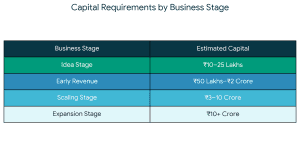
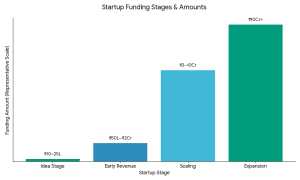
Series A Funding Size and Valuation in India

Series A funding amounts vary by sector, traction, and investor appetite. Typical ranges are:

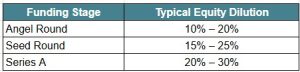
Series A Funding Size

Tip: FundTQ helps startups determine realistic Raise Series A Funding amounts and optimal valuations using data-driven financial modeling.

Step-by-Step Guide to Raising Series A Funding

Step 1: Strengthen Your Business Foundation
Make sure your fundamentals are good before approaching investors:

  • Market Opportunity: Identify your TAM, SAM, and SOM.
  • Business Model Clarity: Show how to make money and keep it going.
  • Traction Metrics: User growth, revenue, retention rates, CAC, LTV, engagement metrics.
  • Unit Economics: Focus on gross margins, burn rate and profitability potential.

FundTQ optimises financial forecasts and business models to fulfil the expectations of investors.

Step 2: Build a Comprehensive Business Plan

Your business plan must narrate the facts about your startup story:

  • Executive summary & vision
  • Problem-solution analysis
  • Market research/competitive environment.
  • Business model & revenue plan.
  • Financial estimates (35 years)
  • Risk analysis & mitigation
  • Scaling and expansion road-map.

FundTQ prepares investor-ready business plans that are in line with VC and PE requirements.

business valuation software

Step 3: Create a Winning Pitch Deck

The first thing people see is your pitch deck. Essential slides include:

  • Issue and marketing need.
  • Solution (product/service)
  • Product demo or screenshots
  • Traction & milestones
  • Market Strategy and Competitive Advantage.
  • Financials & projections
  • Team and advisors
  • Financing needs and expenditure.

The FundTQ produces brief, attractive decks that are compliant with the international VC standards.

pitch deck templates for Raise Series A Funding
Step 4: Identify and Target the Right Investors

Not every investor fits so perfectly. Focus on:

  • Venture Capital Firms: Accel, Sequoia, Nexus, Chiratae.
  • Corporate Investors: Google for start-ups, Reliance Ventures.
  • Family Offices & HNIs: Best in niche and first mover.
  • Impact Funds: climate tech, healthtech and education ESG funds.

FundTQ offers selective access to investors in India and elsewhere in the world.

Step 5: Prepare for Due Diligence
Investors will verify:

  • Legal documents and registration of the company.
  • Tax filing and financial statements.
  • Cap table and equity structure.
  • IP ownership & customer contracts.
  • Regulatory compliance.

In order to facilitate due diligence, FundTQ performs pre-investment audits and establishes a virtual data room to facilitate the audit.

Step 6: Outreach and Investor Meetings

  • Provide a brief preview or summary.
  • Deliver your pitch deck through safe links.
  • Organize schedule and product demos.
  • Track follow-ups using a CRM

FundTQ deals with investor outreach and meetings in order to optimize interaction.

Step 7: Term Sheet Negotiation

A term sheet outlines:

  • Valuation and dilution of equity.
  • Board organization and control.
  • Rights & obligations
  • Exit terms

FundTQ gets good terms while ensuring that the founders maintain control.

Step 8: Investor-Led Due Diligence

Investors carry out intensive audits:

  • Card-related reviews and revenue recognition.
  • IP validation and legal audits.
  • Customer & vendor references
  • Compliance checks

FundTQ manages the coordination of all the teams in smooth due diligence.

Step 9: Closing the Round

Final steps:

  • Sign definitive agreements
  • Transfer of funds and allocation of shares.
  • Regulatory filings
  • Public announcement

FundTQ warrants conformity and smooth integration of post-funding.

Key Documents Required for Series A

Key Documents Required for Series A

Timeline to Close Series A

Timeline to Close Series A


Trends in Series A Funding (2025 & Beyond)

  • AI-based Startups: AI and automation have high investor interest.
  • Profitability & Sustainable Growth: Healthy unit economics a priority.
  • Alternative Financing Models: Equity + Debt or revenue based financing.
  • International Investment Preference: US and SE Asian VCs are making more investments in India.
  • Corporate Governance & Transparency: Clean cap tables and reporting is compulsory.

 Why Partner with FundTQ

FundTQ provides the entire ecosystem of startups in need of funding:

  • End-to-end fundraising consultancy (Series A to and past)
  • Investment banking services (valuation, deal structuring, due diligence)
  • M&A advisory (sell side and buy side)
  • Support of pitch deck and financial modeling.
  • Investor relations and introductions.

Why FundTQ?

  • Successful history of Series A funding.
  • Availability of the best investors in India and around the world.
  • Professional financial and legal consultation of the closures.
  • Evidence-based decision-making and valuation.

FundTQ enables the founders to work on growth and handle the complexities of fundraising.

Ready to Raise Series A Funding?

For founders scaling their business in 2025, FundTQ makes the fundraising journey seamless. From financial modeling and pitch deck creation to curated investor introductions and deal closure, FundTQ provides end-to-end fundraising and investment banking support.

Contact us

What is Financial Modeling

Financial Modeling Explained: The Complete Guide for Beginners & Professionals

Have you ever been asking yourself, What is financial modeling? you are in the right place. Financial modeling is an important skill in finance, investment, entrepreneurship, and any other person who wants to make financial decisions based on data. With this all-in-one guide, you will dissect all information you need to know about financial modeling- starting with the basics, up to advanced concepts and on a step by step basis.

What is Financial Modeling?

One of the most prizes though least comprehended skills in financial analysis is financial modeling. Financial modeling aims at integrating accounting, finance, and business metrics in order to make a forecast about future outcomes of the business.

A financial model is plainly speaking a spreadsheet typically developed in Microsoft Excel, which predicts the financial performance of a business over an extended period. The projection is usually made on the past performance of the company, as well as the assumptions with respect to the future and needs creation of an income statement, balance sheet, cash flow statement, and supportive schedules (one of many types of approaches to financial statement modeling).

It is possible to develop more sophisticated models based on it such as discounted cash flow analysis (DCF model), leveraged buyout (LBO), mergers and acquisitions (M&A), and sensitivity analysis. An illustration of a financial modelling in Excel is provided below:

What is Financial Modeling


Core Highlights

– What is Financial modelling: It is a combination of accounting, finance and business metrics to develop a projection on the future outcome of a company.

– Financial modeling is mainly aimed at accurately modeling the future of a company in terms of financial performance.

– Modelling can be applied in valuing firms, in establishing whether to raise capital or to expand the business through acquisitions or organic growth.

What Is the Purpose of a Financial Model and How Is It Used?

Financial models are of numerous types and have a broad variety of applications. A financial model is applied to the output to use in decision-making and conducting a financial analysis, both internally and externally. Decisions are made using financial models regarding:

  • Capital raising (debt and/or equity).
  • Acquisitions (businesses and /or assets)
  • Expanding the business in-house (i.e. new stores, new markets, etc.).
  • Disposing of the assets and business units.
  • Budgeting and forecasting (planning the future years)
  • Capital investment (what projects to invest in priority)
  • Valuing a business
  • Ratio analysis/ financial statement analysis.
  • Management accounting

Types of Financial Models

Financial Model

It is important to understand various types of financial models to be able to apply them. In the most frequent forms it is:

  1. Three-Statement Model: Combines income, balance, and cash flow statements.
  2. Discounted Cash Flow (DCF) Model: This is a model applied in valuation, which relies on anticipated cash flow and discount rates.
  3. Merger and Acquisition (M&A) Model: This is an analysis of the financial effect of a merger or acquisition.
  4. Budget Model: Assists firms in projecting income and expense.
  5. Leveraged Buyout (LBO) Model: It is the acquisition financing that is based on the debt financing.
  6. Forecasting Model: Estimating future revenue, costs and other significant measures of the project.

Steps to Build a Financial Model – Simple Way

Financial modeling is an important financial skill among finance practitioners, investors and business analysts. A properly designed model facilitates decision-making, valuation, budgeting as well as analysis of investments. These steps are to be followed in order to develop a trustworthy and precise financial model.

financial model template

1. Define the Objective

Defining the purpose of the financial model is important before creating it. Is it designed to be business valued, budgeted, forecasted or an investment analysis tool? The purpose defines how your model will be written, how detailed it will be and what kind of products it will give. Having a goal is a way of keeping your model focused and actionable.

2. Collect Historical Data

Prepare full historical financial statements, that is, income statements, balance sheets, and cash flow statements. Identify key performance indicators (KPIs) including revenue growth, gross margins, operating expenses, and capital expenditures. The basis of your model is made by accurate historical data, and enhances the reliability of forecasting.

3. Make Assumptions

Make real and information-based assumptions about your model, such as:

  • Revenue growth rates
  • Cost projections
  • Capital expenditures (CapEx)
  • The interest rates and financing costs.

Write clearly on what you assume, with reference where necessary. Clear assumptions make the difference between credibility and enable other people to comprehend and believe in your model.

Learn about: Financial Model for BPO Company

4. Design the Model

Develop a logical structure of your financial model:

  • Inputs: History and assumptions.
  • Formulas and projections: Calculations.
  • Outputs: Critical results, measures, and graphics.

Be clean in layout, colour coding and standard formatting. An effective model enhances usability and minimise errors and makes it easier to be reviewed by other people.

5. Forecast Financial Statements

Prepare the main financial statements according to your assumptions:

  • Income Statement: Revenue, costs and net profit.
  • Balance Sheet: Assets, liabilities, and equity.
  • Cash Flow Statement: operating, investing and financing.

Make your forecasts coherent and interrelated. Any modification in assumptions ought to automatically update all statements.

6. Perform Analysis

Discuss the implications of your model:

  • Financial ratios: The profitability ratios, liquidity ratios, and leverage ratios.
  • Scenario analysis: best-case, worst-case and base-case scenarios.
  • Sensitivity analysis: Evaluate the effect of variation in assumptions.

This is done to determine the risks, opportunities and the key drivers of values.

7. Review & Validate

Check the accuracy and logical consistency of your model:

  • Check formulas and calculations.
  • Compare past statistics with real statements.
  • Make sure that the assumptions are fair and fair.

It involves peer review or external validation which provides extra credibility.

Pro Tip: Maintain Transparency

Trust is essential in your financial model, and transparency is the key to it. Clarify assumptions, sources, and methodology in a clear manner in order to make stakeholders recognise the importance of your analysis. Not only that increases the confidence in your conclusions but also increases your professional credibility.

business valuation software
Tools for Financial Modeling

While Excel remains the most popular tool, other software enhances modeling efficiency:

  • Microsoft Excel
  • Google Sheets
  • Specialised Tools

Common Mistakes to Avoid

  • Over-complicating formulas
  • Ignoring historical trends
  • Based on impractical assumptions.
  • Lack of conducting scenario analysis.
  • Failing to update the model on a regular basis.

Note: All financial models are as good as the assumptions and data on which they are based.

Bottom Line

Financial modeling is an effective tool that enables the professionals to make quality financial decisions. Learning about its forms, elements, and optimal practices, both novices and specialists can utilize the potential of financial data to the fullest extent.

Financial modeling is the backbone of modern finance whether you are predicting revenue, valuing a business or looking into the investments. Begin training nowadays, and convert raw data into strategic knowledge.

Healthcare Investment Banking

The Best Healthcare Investment Banking Firms [Updated List]

The global healthcare sector is one of the most dynamic and complex industries, shaped by innovation, regulation, and demographics. This blog outlines a comprehensive guide through healthcare investment banking, the specialised financial world that drives changes and why it holds vital importance in today’s economy.

What is Healthcare Investment Banking?

Healthcare Investment Banking or HIB is a special segment of investment banking sectors that specialises exclusively in providing financial advisory services to organisations working within the diverse healthcare industry. These include pharmaceutical companies, biotech firms, regulatory services, medical device manufacturers, healthcare service providers (hospitals, clinics, nursing homes), and healthcare IT firms.

Healthcare Investment Banking provides a varied area of services. Key services include:

  1. Mergers and Acquisitions (M&A) Advisory: Advising the healthcare sector on buying, selling or merging with other entities to achieve strategic goals, expand market presence or acquire new technologies/products.
  2. Capital Growth: Investment Banks help healthcare companies raise capital through debt and equity markets including Initial Public Offering (IPOs). Follow-on offerings, private placements and debt financing to fund overall growth, to fund overall growth and Research and Development (R&D) expansion.
  3. Strategic Advisory: Provides able guidance on critical corporate finance matters like financial restructuring, joint ventures, spin-offs and divestitures.
  4. Valuation Services: Conducting a detailed financial analysis to evaluate the fair value of assets, businesses or intellectual property for transactional or reporting purposes.

Why Healthcare Investment Banking Matters?

The support and strategic planning that investment banking provides is crucial for the continued evolution and stability of the global healthcare system.

  1. Innovation and R&D: When a company decides to bring a new medical device or a new drug to the market, it requires a huge amount of financial commitment. Investment Banks in this regard helps raise capital and fund extensive, high-risk R&D pipelines, and clinical trials. Without this funding, life saving innovations would stall.
  2. Mergers and Acquisitions (M&A): M&A is an important characteristic of the healthcare sector. Investment banks advise on these critical deals.
  3. Regulatory Complexity: Investment Banks bring with them special knowledge and expertise to structure deals that comply with the complex rules of the healthcare industry. The healthcare industry is heavily scrutinised and regulated by bodies like FDA, CMS, and other international equivalents. This makes sure that transactions don’t run afoul of antitrust laws or healthcare-specific regulations.
  4. Global Growth: Investment Banking Firms help the healthcare sector in cross-border deals and capital flows. It globalises access to new medical technologies and care models.

How to get into Healthcare Investment Banking: Prerequisites and Background

For a successful career in Healthcare Investment Banking (HIB) strategic planning and effective decision making is the key to success. 

Educational Background

  • For undergraduate majors, the most common and preferred subjects are finance, accounting, economics or business as they help develop a basic foundation and understanding of corporate finance, valuation and statement analysis.
  • A post graduate background with an MBA for professionals changing careers or are from non-traditional backgrounds from top tier b-schools is helpful. Programs like Masters in Finance (MFin) are also relevant alternatives, equally resourceful and helpful.

Internships

  • Internships are arguably the most important and critical factor in securing a full-time position in healthcare investment banking. They serve practical experience, corporate exposure and a training period.
  • Seeking summer analyst programs at specific healthcare boutique firms is specifically important.

Specified Knowledge

  • Specialised knowledge about the field is necessary. Both technical and industry knowledge are essential. Nuanced technical expertise and practical industrial experience help handle the sector’s unique assets and business models.
  • A person who is well versed in advanced financial modeling, who is proficient in all standard valuation methodologies (DCF, comparables, precedent transactions) who has an understanding of effectively applying them is always preferred.
  • In depth industrial knowledge of the healthcare ecosystem is equally crucial.
  • Understanding the four main HIB sub-sectors is also important in dealing with the overall HIB dynamics.
      1) Biopharma
    2) Medical Devices and Diagnostics (MedTech)
    3) Healthcare Services
    4) Healthcare IT

The Top Healthcare Banking Firms in 2025

The future of investment banking in healthcare in 2025 is an ever-changing story, as technology advances in biotech, digital health, and worldwide calls to medical technologies keep growing. The investment banks that have an experience of the sector. Have become very important in the future of healthcare financing, mergers, and offering to the public. The following is a closer examination of the leading companies that will dominate healthcare investment banking in 2025 each with an excellent advisory service, deal execution and strategic insight.

Also Read: 7 Effective Tips to Secure Funding for Medical Device Startup

#1 Goldman Sachs

Goldman Sachs, being one of the largest investment banks across the world, continues to hold a dominating position in the healthcare industry. The company still consults on billion-dollar biotech mergers, pharmaceutical IPOs, and acquisitions of enormous healthcare technology firms. Goldman Sachs is highly preferred by healthcare companies to grow strategically and raise capital due to its international network, advanced market intelligence, and investor relations.

#2 FundTQ – Healthcare Investment Banking Division

FundTQ is a unique healthcare investment banking company that is focused solely on life sciences and the health system ecosystem. The division offers strategic partnerships, venture capital, and growth capital deals along with expert advisory service in M&A. What distinguishes FundTQ is its robust understanding of the industry, data-driven valuation models, and close partnership with healthcare innovators, both small biotech startups and established medtech businesses. The emphasis on precision, partnership, and performance has made FundTQ a trusted company as far as healthcare investment banking is concerned, at least, in 2025 and beyond.

#3 Morgan Stanley

With its strategic precision and innovative approach, Morgan Stanley continues to provide excellent solutions for healthcare clients around the world. The firm’s healthcare investment banking practice is expert in equity and debt financing, cross-border mergers and strategic restructuring. By combining cutting-edge analytics and insights into the global market, Morgan Stanley empowers healthcare companies to navigate the complexities of the financial landscape with clarity and confidence.

#4 Bank of America Merrill Lynch

A world leader in corporate finance, Bank of America provides a robust portfolio of healthcare advisory services spanning the spectrum from capital raising to mergers & acquisitions. Its specialized healthcare business specializes in pharmaceuticals, healthcare services and biotechnology, offering clients unmatched access to capital markets and financial structuring expertise. The company’s combination of banking expertise and industry knowledge makes it a leading player in the field of healthcare investment banking in 2025.

#5 Lazard

With a long standing history and an independent model of advice. Lazard provides high value strategic advice to healthcare companies around the globe. Its healthcare practice deals with intricate M&A, restructuring, and capital advisory deals. Enabling clients to make well-informed decisions that fuel sustainable growth. Lazard’s reputation for trust, independence and analytical depth continue to make it one of the most admired names in healthcare investment banking.

#6 Evercore Partners

As one of the world’s leading independent advisory firms, Evercore Partners has elite sector expertise in healthcare. The firm’s healthcare investment banking group is consistently ranked as one of the most active in biotech and life sciences deal activity. Evercore’s client-centric approach, coupled with analytical depth and senior-level involvement, guarantees exceptional results for clients seeking transformative healthcare deals.

#7 Centerview Partners

Centerview’s healthcare team continues to be a leader in advising on some of the largest and most complex dealings in the global healthcare industry. With a deep focus on long-term strategy and operational excellence. Centerview’s senior bankers provide unparalleled advisory services in pharmaceuticals, biotechnology and healthcare services. Their commitment to precision and collaborative solutions distinguishes them in a competitive market.

Trends Driving Healthcare Investment Banking in 2025

The five major trends that are significantly shaping the healthcare Investment Banking sector are 

  1. Telemedicine and Digital Health
    The shift to the hybrid care models and the massive investment in AI driven solutions like diagnostics,workflow automation, and other AI-driven tools. Are consolidating the fragmentation of the digital health market. Deals which focus on integrating technology for greater efficiency and value based care are preferred.
  2. Biotech Innovation
    This is driven by the want to replenish pipelines, big pharma companies are pursuing a “string of pearls”  strategy. Acquiring early to mid stage biotech assets in high growth areas like oncology, immunology and rare diseases. IPO activity for quality, differentiated biotech firms is expected to gradually pick up.
  3. Aging population
    Demographics are boosting demand and investment in the sectors that cater to the needs of elderly and senior citizens. Home health services, senior living facilities and specialised medical devices and pharmaceuticals for chronic conditions.
  4. Global M&A Activity
    Following a period of volatility, M&A is set for a strong comeback exaggerated with corporate cash reserves and a need for strategic scaling. Mid-sized deals and cross border transactions are highly concentrated as companies seek to optimize portfolios and mitigate supply chain risk.
  5. Healthcare IT
    Technology cuts production costs and improves the experience of patients. This drives investment in cybersecurity, revenue cycle management (RCM) automation and data analysis to achieve efficiency in operations for providers and payers.

business valuation software
Choosing the Right HIB

Selection of the right HIB for your company is critical to maximising transaction value and success.

Key Criteria include 

  1. Sector Expertise
    Banks with deep, specialised focus with able sub-sector experience in the past. Recent relevant deal history demonstrates an understanding of nuanced industry drivers and valuation benchmarks.
  2. Deal History
    A strong expert history of successful transactions that are similar to what a company is looking for provides credibility and confidence. Analysing the bank’s ability to secure favorable valuations and structure complex deals.
  3. Investor Network
    The overall network of investors or relevant strategic buyers, private equity firms and institutional investors is paramount. A strong network ensures competitive tension and increases the pool of potential partners or acquirers.
  4. Global reach
    For companies with cross border aspirations an investment bank with global reach and proven experience is essential. Presence and relevant experience it is essential to navigate regulatory and geopolitical complexities in different markets.
get medical startup funding
Final Thoughts

The healthcare Investment Banking scenario in 2025 is defined by innovation and consolidation. As technology develops, care delivery and large multinational corporations and large multinational corporations seek to secure future revenue streams. Companies must ally with an investment bank that possesses deep sector knowledge, an efficient team, extensive investor network, and technology-driven services.

To learn more about FundTQ’s Healthcare investment banking services, visit FundTQ’s Services Page or contact our advisory team.

Mergers and Acquisitions

Mergers & Acquisitions Explained: The Role of Investment Banks in M&A Deals

In the modern business environment where business entities are in high competition and striving to achieve faster growth, diversify operations, and enhance market presence, business entities seek Mergers and Acquisitions (M&A) to achieve their objectives. Globalization and aggression among competitors in industries is causing M&A activity to extend across different industries and the size of businesses. Companies seek investment banks to navigate through such complex transactions so as to unlock the maximum value.

These financial institutions play a crucial and often decisive role in executing M&A deals successfully.

What Are Mergers and Acquisitions?

Mergers and Acquisitions (M&A) refer to the process where companies or their key assets are combined through financial transactions. This can happen in several ways:

  • Buy and fully absorb another company
  • Merge with another company to create a new combined entity
  • Acquire some or all of another company’s major assets
  • Make a tender offer to purchase the company’s shares directly from shareholders
  • It may carry out a hostile takeover, even without the target company’s approval

All these methods fall under M&A activities, as part of broader SME growth strategies,  where businesses are combined or restructured. The term M&A also refers to the specialized departments in financial institutions that help plan, advise on, or conduct these transactions.

What Do Investment Banks Do in M&A Deals?

During the stages of M&A, various strategic, financial, legal, and operational issues must be handled. A well-organized, professional structure has been ensured through the involvement of investment banks. These are the roles that are normally executed:

1. Deal Origination and Strategy

Investment banks conduct extensive research on the industry, and through networking, as well as their databases, suitable targets or buyers have been identified. Strategic justification of the deal has also been carried out, such as the identification of synergies and matching them to the long-term corporate interests.

2. Company Valuation

Fair valuations have been determined using financial models and analysis of previous transactions to create precedent and discounted cash flow (DCF) products to determine fair valuations. Valuation services offered through mergers and acquisitions services have helped stakeholders understand both standalone and synergistic values.

3. Diligence Organization

Investment banks have orchestrated due diligence processes that have been financial, legal, tax, commercial, and operational in nature. Outside experts in third-party companies are often called in to do the specialist work, and it has been managed centrally by the bank on matters of coordination and integration of the results.

4. A Deal Plan

Designers structured equity swaps along with asset purchases, stock leveraged buyouts, equity mergers, and stock-for-stock mergers. They considered taxation, regulatory compliance, and future exit routes during the process.

5. Negotiation & Execution

The investment bank has facilitated the discussion of the price, payment terms, representations, warranties, and indemnities. It has also addressed legal documentation, coordination with various parties, including lawyers, accountants, regulators, etc.

At every phase, Strategic insights have always been combined with tactical focus at each step to make sure that there is not only alignment between stakeholders but also an optimal result.

Buy-Side vs. Sell-Side Advisory in M&A

Investment banks can be retained by either party in a transaction. They provide two distinct, yet related, services:

Buy-Side Advisory

On the buy side, the investment bank has worked with companies or investors looking to acquire other businesses. This has involved:

  • Initial outreach and maintaining confidentiality.
  • Conducting valuation and detailed business project operations. 
  • Negotiating and ensuring the transaction closes. 
  • Buy-side engagements are usually sought after by the private equity firms, large enterprises, or multinational companies, looking to acquire to expand.

Sell-Side Advisory

With sell-side engagements, the investment bank has been retained by companies, founders, or institutional shareholders looking to sell either a whole or partial stake in their company. Their responsibilities included:

  • Creating investment teasers and information memorandum
  • Run competitive bidding processes
  • Filtering potential buyers and communicating
  • Managing due diligence and closing the transaction

During the sell-side process, keeping information private, working efficiently, and realising value have been the main priorities.

Buy-side modeling vs sell-side modeling :

Investment bankers on the sell-side and private equity professionals on the buy-side build M&A models to estimate transactions. Bankers create models that they share with potential buyers of the business. These models must be highly presentable, easy to understand, and usable by all involved parties. Although this model will be provided to firms on the buy side by the banks, they will usually develop their financial model to have 100 percent assurance in the analysis.

Why Companies Rely on Investment Banks for M&A?

M&A are always a high-stakes transaction. They require financial expertise, industry comprehension, and negotiation skills. Organizations, especially ones with limited internal resources, have relied upon investment banks for:

1. Expertise

All relevant disciplines – finance, the law, tax, and regulation have been roofed under one supplier. They have read market dynamics and the mood of investors to help companies make better decisions.

2. Access

Relationships with types of investors, corporate, and private equity firms have allowed investment banks to develop qualified leads and generate competition in the auction.

3. Confidentiality

Investment banks have handled sensitive information discreetly to prevent speculation in the marketplace and disruption internally. They have consistently enforced NDAs are more importantly controlled who sees the buyers’ list so companies can maintain their strategic opportunities for as long as possible.

4. Efficiency

They have managed the timeline, from documentation all the way through to scheduling and negotiation. We expedited processes that typically take months, reducing the risk of execution

5. Negotiation Power

Effective support for companies during the negotiations has been provided by the bankers as strategic advisors – this added the correct dose of neutrality. This has enabled companies to have the proper level of rational pricing discussions and improved negotiations.

Conclusion: 

The world of M&A has been shaped by the shifting markets, changing regulations, and increasing investor movements of the day. In this complicated environment, successful deal results have depended heavily on someone skilled in the advisory role that investment banking services provide.

For businesses, at any stage, whether it’s mergers, acquisitions, or fundraising, an accurate valuation process goes hand-in-hand with effective deal structure and strategy! 

Try FundTQ’s free business valuation calculator to get instant insights, industry benchmarks, and investor-ready reports.

Key Takeaways:

  • Companies merge through strategic processes, and acquisitions result in changes of ownership carried out deliberately.
  • An investment bank is very important in all the processes, such as sourcing, valuation, due diligence, structuring, and execution of the deals.
  • Investment banks are advisers on either the buy-side or the sell-side.
  • Companies rely on investment banks for their expertise, market access, confidentiality, efficiency, and bargaining power.

FAQs

1. What is the role of investment banks in M&A?
Investment banks recommend mergers, design them, and provide the same. They also give valuation, due diligence coordination, strategic analysis, and due diligence to the negotiations. 

2. What does a buy-side value-added investment bank do in M&A?
Added value was brought by them, such as identifying the appropriate acquisition targets, negotiating acceptable terms, and finally seeing that due diligence and the closing of the transaction take place well. 

3. Is it just large companies that can avail of M&A services?
Mid-market and emerging companies actively engage mergers and acquisition advisory services to pursue strategic expansion, exit strategies, or reorganisations.

4. What then is the difference between consulting and investment banking when it comes to M&A?
Investment banks specialise in making deals, valuations, and capital structuring. The consulting firms, in turn, are more interested in the post-merger integration and business strategy. 

5. Is it possible to use investment banks in cross-border M&A?
Yes. Global investment banks have capabilities of crossing borders, such as compliance knowledge, cultural alignment assistance, and a global network of investors.