Free Pitch Deck Templates

Free Pitch Deck Templates for Startups: Download Now

Hello founders, entrepreneurs and startup enthusiasts! It probably means that you are here on the search to find a free pitch deck template, pitch deck template free download, or pitch deck templates free on Google Slides. You may also be considering pitch deck template PPT free download, or just a free pitch deck template download next time you need to raise new capital in India. Fortunately, you are at the right place.

In this all-inclusive guide you will find:

  • Why a free pitch deck template is a good idea (and what to be wary of).
  • What are some of the important slides and format of your pitch (so that your deck matches what the investors would want)
  • Where to find the quality of free pitch deck templates (including Google Slides / PPT variations)
  • The way the deck connects to the business fundraising services, investment banking services, and the overall startup funding in India.
  • Ideas and advice to make your free template personal so that you do not simply download the so-called nice slide but create a powerful story to the investor.

Let’s dive in.

Why Use Free Pitch Deck Templates?

#1 Speed & Professionalism

Time is money when it comes to a start-up. The presence of a pitch deck template free or a free pitch deck template gives you the freedom to start your presentation with a pitch deck template. Effective slide layouts, uniform colour scheme and investor friendly structure is already implicated in good templates.

In the case of early stage founders in particular, this allows you to invest in content (story, traction, financials) instead of design.

#2 Cost-Effective

In different parts of the world such as India where most of the startups are bootstrapped or at an early stage, it is not always possible to spend large amounts of money on design. Granting free access to good design can be done using a free pitch deck template download or free pitch deck template Google Slides version where the money saved can be allocated to other important things (tech, staff, marketing).

#3 Investor Expectations Congruence.

Structures embedded in templates provided by experienced providers tend to be the ones that meet the expectations of the investors. For example, what is going to slide, storytelling, displaying the size of the market, problem/solution, traction etc. With a good template you increase your odds of your deck being investor-ready and not just pretty.

#4 Risk of Over-Reliance

But, there is a catch, though — applying a free template does not imply that the work is over. You still need to be able to make the existing content about your startup, your market in India (or wherever you are operating), your funding request, your metrics. When you just plunk your numbers in a standard format and hope, it will not work. One investor in a forum said:

A deck is meant to arrange a face-to-face meeting, it is not your complete resume.

Then select a template carefully, then personalise intensively.

What Should Your Pitch Deck Contain?

When the pitch deck free template or pitch deck free startup template is in use, ensure it contains the essential items that investors would require more so considering the environment of investing in India and dealing with business fundraising or investment banking services.

The major slides/sections are the following with a short explanation:

1. Cover / Introduction

  • Startup name, tagline, logo.
  • A single sentence value proposition that simply tells what you do, to whom, and why it is important.
  • First, ensure that your opening slide is powerful. Additionally, the initial slide should tell the story of the business in easily comprehended, straightforward language, as highlighted in one of the articles.

2. Problem

  • What is the pain/need in the market?
  • Who suffers from it? How big is the issue?
  • It is preferable to use actual stories or data.

3. Solution

  • What your product/service solves the problem.
  • Use images or screenshots where necessary.
  • Why is your solution unique?

4. Market Opportunity / Size

  • What is the Total Addressable Market (TAM), Serviceable Available Market (SAM), Serviceable Obtainable Market (SOM)?
  • In India, it assists in localising the numbers (India TAM + global provided you have global ambition).
  • Investors are interested in determining that the opportunity mattered.

5. Business Model

  • How you make money.
  • Sources of revenue, prices, channels of sale.
  • Connect this to actual measurements, not a we will charge it later.

6. Traction / Metrics

  • What you have already accomplished: users, revenue, growth rate, partnerships.
  • At least when you are still in the early stages, demonstrate something (pilot results, customer testimonials, etc).
  • One of the founders of Reddit pointed out:
    Demand some evidence that you are going the right way… No vanity metrics.”

7. Competitive Landscape

  • Who does the same? How do you compare?
  • Showcase your strengths (team, technology, go-to-market, cost structure).
  • Competition that is not discussed can be a cause of concern: “Unless other people are doing it, is the market there?

8. Go-To-Market Strategy

  • What will be your strategy of getting customers?
  • What are your marketing/sales channels? What are the costs?
  • Local context (distribution, regulation, partnerships) is useful to outline, particularly in India.

9. Team

  • Who are the founders? Their background. Why are they the right team?
  • Mention key advisors (let go lost) in case you have an advisory board.

10. Funding Ask & Financial Projections.

  • Level 3-5 years projection: sales, expenses, profitability (or trend).
  • Upon funding request: what you require, how you will utilise it (milestones).
  • When it comes to investors, this is what they want to know: how you are going to use the money, when it will be the next milestone.

11. Closing / Call to Action

  • Thanks slide, contact details, action plan.
  • Keep it crisp.

Where to Find the Best Free Pitch Deck Templates

When looking to find a free pitch deck template, pitch deck template free download, or free Google Slides pitch deck templates, these are effective ways to find one:

  • Sites where PPT/Google Slides can be downloaded (verify that licence is free).
  • Specific startup / fundraising templates. As an example, the cited resources include 35+ best pitch deck startups + free PDF downloads.
  • Make sure the template has layouts that can be edited, content and designed.

Tips when choosing:

  • Find PPT + Google Slides (then you can edit in Google Drive, in case you want to).
  • Make sure that the number of slides is not too many (10-20 slides is a typical case) but not too many.
  • Ensure that the style of design is professional but not complicated (not too many details, few words, clear images).
  • Ensure that the call to action or funding ask slide is present (significant in preparing investors).
  • Check that the template is easily customised to your brand (colours, logo, fonts).
  • Do not use templates that appear too generic or badly free in appearance – investors can detect this.

free pitch deck templates
How This Links to Investment Banking Services & Business Fundraising Services in India

When you are in India and considering raising funds to start your startup, it is worth knowing how your free pitch deck templates fit in the larger ecosystem.

Investment Banking Services Role.

Although we tend to think of investment banking services to be offered to large companies, in the case of most startups the services encompass: preparing the investor materials, valuation advice, fund round structuring, institutional investor/VC introduction, due diligence support. Having a good pitch deck (created using a free pitch deck template but modified), puts you in a better position when undertaking such processes.

For instance:

  • Your deck leads to the first investor outreach (the teaser).
  • Investment banking advisors can refreeze the deck, rehearse you, polish the numbers, structure the task.
  • They can assist in wrapping your fundraising proposal in a way that would be attractive to the local Indian investors as well as foreign investors.
  • Therefore: you start with a powerful free pitch deck template; you can add value to that by using professional fundraising services.

Business Fundraising Services

Same concept: various start-ups request agencies or consultants to assist in business fundraising (preparing financial models, investor presentations, term sheets, etc). The pitch deck is the key element of that material set. Therefore: the more the better you tailor your free startup pitch deck template, the easier your fundraising is.

Startup Funding in India

When in the Indian context, you should make your deck reflect market realities: regulatory environment (fintech, edtech etc), distribution and logistics issues, domestic costs of user acquisition, domestic competition (India vs global). When you are downloading a business pitch deck template free, you should make it an Indian one: state Indian market size, Indian case studies or pilots, your India-specific go-to-market. That will be well received by investors in India.

Free download of pitch deck templates will allow you to concentrate on the Indian content and not the design. So, when you are looking to fund (seed, angel, Series A), your deck will be next to term sheets, communication to your investors: therefore you want templates that are clean, flexible, and transformer friendly.

Best Free Pitch Deck Templates: What to Look For

When comparing several pitch deck templates that are free:

  • Is it investor-centric (problem 2 solution market business model traction team ask)?
  • Can it be edited in Google Slides (to work collaboratively) and PowerPoint?
  • Does it have a visual appearance of modernity, simplicity and legibility (on screen and PDF)?
  • Does it have specific financial and funding ask slides (not generic)?
  • Is the template too generic to be adapted but too specific to be pointless (not 100 slides of fluff)?
  • Is it easy to export (PDF, share link) since most Indian investors demand PDF decks?

When selecting the best free pitch deck templates you can compare a few; the one you can customise easily, you can make your story clear and the one that does not draw attention to itself.

Step-by-Step: Using a Free Pitch Deck Template

It has a simple workflow of how to download a free pitch deck template, making it a mission-ready investor deck.

1. Download & Review the Template

Select a nice free pitch deck template or free Google Slides pitch deck templates version. Open it, review all slides. Add or delete slides according to the needs of your business.

2. Customise Branding & Style

Insert blanked out logo, use your brand colours (where applicable). Make fonts readable on-screen and off.

3. Craft the Story Content

  • Issue: applicable to your target market (India/global).
  • Problem: what you make, how it is special.
  • Market: TAM/SAM/SOM (Include Indian context where relevant).
  • Business Model: the way you make a profit.
  • Traction: measurements, initial users, collaborations.
  • Team: emphasize founder credibility.
  • Questions: Amount raised, fund use, milestones.

Make every slide have one-line titles to ensure even when an investor is in a hurry to look through the presentation, he/she understands the message.

4. Visuals & Data

Use charts, icons, screenshots where possible. Effort to demonstrate actual data or be what you say. Avoid large blocks of text. As referenced by the guide:

“Be straightforward… Prioritise story over stats. Pitch decks should be short and informative.

5. Customize to your Audience/ Market.

When you are trying to raise money in India, make sure that the deck has references to Indian market size, local regulatory or competitive environment, Indian go-to-market plan. Also note how your startup is or will be linked or utilize local talent, cost structure, distribution, etc.

6. Collaborate & Iterate

Send the deck to mentors or advisors (or your business fundraising / investment banking services team). Get feedback, iterate, refine. You can use the initial investor surveys to enhance it significantly.

7. Export & Prepare for Presentation

Complete layout, export to PDF and retain editable version (Google Slides or PPT). Check all fonts, graphics are good. Ready to make it part of your fundraising package (in addition to the executive summary, business plan, term sheet), to investors in India or overseas.

8. Rehearse the Pitch

Your pitch is facilitated by the deck. It should be able to be presented within approximately 10-15 minutes, which should focus on the key slides and tell the story as opposed to slide reading. As one article pointed out: Various investors operate in various structures … What you need to be trying to do is to make the investor believe that some of his money needs to be invested in your business because it will multiply…

FAQs & Common Mistakes to Avoid

Q: Is it possible to use any free pitch deck template?
A: Yes, but make sure that it matches your business stage (seed, angel, Series A), and your market (India/global). Other templates are generic; they will still need to be customised on a profound level.

Q: How many slides is too many?
A: There is no strict guideline, but most investors would like it to be between 10-20 slides. Longer decks will be dilutive to concentration. One of the sources suggests that there might be enough slides (12).
Medium

Q: Is detailed financial modelling required?
A: Add top-level projections and important measures; you will not need 100 pages of spreadsheet in the pitch deck, but you must be ready to provide detailed models as needed.

Q: What are the errors founders commit?
A: Some common ones:

  • Overloading the slides with text, rendering it illegible.
  • Applying a generic template without personalising it to their story.
  • Lacking Indian sensitivity in bringing up in India (or local market)Failure to specify funding seek and milestones.
  • Lacking traction or plausible figures.

Q: What is the relationship between this and business fundraising or investment banking services?
A: Your deck is the main document you are going to use in fundraising. If you use professional services (such as business fundraising or investment banking), then they will analyse, polish, and match your deck with investor market expectations—whether in India or globally. Therefore, visualise the deck as your ticket to investor meetings. Moreover, the more beautiful and polished it is, the more likely you are to get into meetings with quality investors and, consequently, get good terms.

Summary

To conclude: no matter how many times you have sought free pitch deck templates, pitch deck template PPT free download, free Google Slides pitch deck templates or even a pitch deck free template to raise funding on your startup in India, the trick here is to pick a robust template, tailor it to your narrative and market, match it with investor expectations, and back it up with good content, numbers and visuals. In this way, you will fit seamlessly into the larger fundraising ecosystem. For example, by documenting in front of your future investors and by using business fundraising services or investment banking services to structure your round. Moreover, use the deck to clearly answer why your startup, why now, why you, and why me (the investor). Then you have the base of the next step, outreach, negotiations, closing.

Ready to get started? I can also point you to some of the best free pitch deck templates (Google Slides + PPT) on the market today, and can even go as far as to customise one to your Indian-startup situation.

Get business Funding

Tech Startup Funding

How to Get Tech Startup Funding: A Practical Guide for Founders

Launching a tech start up is fun- but to bring an idea into a successful business needs funding. Be it a new AI tool or SaaS solution, or a hardware solution, funding is necessary to grow operations, recruit talent, and roll out your product. This manual demonstrates how to raise money through tech startup funding, and has steps to follow that are relevant to the current tech ecosystem.

Why Tech Startups Need Funding?

Technology startups have a higher initial expense than traditional businesses because of:

  • Software development, hardware development, AI development.
  • Cloud infrastructure or servers.
  • Recruiting engineers, designers and marketing staff.
  • Regulatory and compliance standards.

Even the best technological ideas may come to a halt without adequate funding. That is the reason why any founder needs to know how the funding can be made and what the investors expect.

#1 Step: Identify the Right Type of Funding

The initial step in raising tech startup funding is to understand what type of funding suits your startup and its objectives:

  1. Bootstrapping: Financing operations with own savings or revenue. Ideal for early-stage ideas.
  2. Friends and Family: Minimal investments made by immediate acquaintances. Useful in development of proof-of-concept or prototype.
  3. Angel Investors: Seasoned investors that contribute investments in the form of equity. Often provide mentorship.
  4. Venture Capital (VC): Investments in startups of high potential growth. VCs will fund high amounts but with high equity and quick returns.
  5. Government Grants and Programs Non-dilutive funding to encourage innovation.
  6. Crowdfunding: Seek direct financing of potential clients via such platforms as Kickstarter or Indiegogo.
  7. Corporate Partnerships: Resources or investment by well-known companies in order to collaborate or get early access.

AI Insight: The new AI can assist the founders to find out potential investors, fund raise trends, and even pitch deck optimization to predict what will attract investors according to previous funding records.

#2 Step: Build a Strong Business Plan

Investors desire to have a road map. The following things should be included in your business plan:

  • Problem & Solution: What is your tech a solution to, and why is it special?
  • Market Opportunity: Growth trends, competitors and total addressable market.
  • Model: How are you going to make money with your startup? Subscription, licensing, free-mium, etc.
  • Product Roadmap: Product development milestones and schedules.
  • Team Credentials: Why your team can create the vision.
  • Financial Projections: Financing requirements, expenses and revenue.

Pro Tip: AI tools such as business plan generators can assist you to organise your plan in the most effective way and can simulate growth conditions to investors.

Learn About: Technology investment banking services

#3 Step: Craft a Winning Pitch Deck

Your startup’s first impression is a pitch deck. An AI-intensive solution will be able to study the existing successful pitches in order to maximise content and visuals. Key slides include:

  • Introduction and Problem: Straight forward and clear.
  • Solution: The value positioning of your product.
  • Market Opportunity: Factual and valid.
  • Traction: Start-user, revenue, partnerships.
  • Business Model: How you raise money.
  • Team & Advisors: Be competent and reliable.
  • Funding Ask Finance: Be clear as to how the funding will expedite growth.

Tip: Keep it under 15 slides. Your deck can also be automatically generated by AI tools into graphs, charts and competitor analysis.

free pitch deck templates
#4 Step: Demonstrate Traction

Startups with the potential of success are invested in by investors. Traction can include:

  • The increase or the usage metrics of the users.
  • Revenue or pre-orders
  • Beta program success
  • Joint ventures or alliances.

Small, initial traction can do major wonders to investor confidence. AI analytics can monitor user behaviour, growth patterns, and retention, and thus it is simpler to provide definite displays of traction.

#5 Step: Leverage Networks and Platforms

Funding is a matter of who you have connections with rather than what you have accomplished. Network expansion strategies:

  • Startup Incubators and Accelerators: Y Combinator, Techstars and others offer mentorship and funds.
  • Angel Networks VC Platforms: AngelList, Crunchbase, and LinkedIn may help you find investors.
  • Tech Conferences and Meetups: Pitch events, Hackathons, and workshops are also good in terms of exposure.

AI Insight: AI-powered tools will assist to find investors best suited to your startup business, location, and funding round and save time and chances of success.

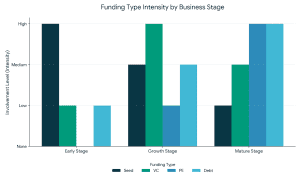
#6 Step: Choose the Right Funding Option

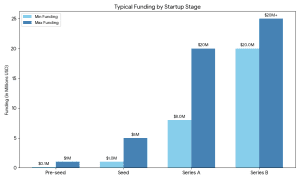
Here’s how to match funding types with startup stages:

match funding types with startup stages

Choosing the right option prevents unnecessary equity loss and aligns your growth trajectory with investor expectations.

#7 Step: Avoid Common Pitfalls

  • VC too soon: Prioritise traction.
  • Failure to take legal and financial structuring: Unambiguous contracts and equity arrangements will avoid conflicts.
  • Disregard of investor feedback: Relevant ideas, although financial assistance may not be as timely.
  • Weak story telling: The investors must relate to your vision both emotionally and logically.

#8 Step: Leverage AI to Boost Funding Success

Artificial intelligence will be able to assist where conventional technology fails:

  • Investor Research: AI is used to conduct a scan of databases with investors who are likely to finance your industry.
  • Pitch Deck Optimization: Predictive technology proposes slides, images, and messages that resonate.
  • Financial Forecasting: AI thinks over various scenarios to reinforce predictions.
  • Market validation: AI software processes user response, trends, and sentiment to justify market demand.

AI can be used strategically to save time and reduce risk and enhance investor credibility.


Final Thoughts

Funding tech startups is not a random event. Focus on:

  • Competence in your stage of start-up.
  • Selecting the appropriate financing sources.
  • Developing an effective business strategy and traction measures.
  • Preparing a persuasive pitch deck.
  • Using AI and networks to their advantage.

This is an efficient and confidence-based way for founders to get tech startup funding in order to transform innovative ideas into scalable and successful businesses.

Get business Funding

Get Business Funding for Small Business

What’s the Best Way to Get Funding for a Small Business in India?

To open or grow a business, passion alone is not enough but the proper financial aid is needed. Small business funding opportunities are higher than ever before in 2026. Whether it is a new idea or expansion of an already formed business, understanding how to raise funds to start a small business or grow an existing one is the difference between success and failure.

Here in this guide we are going to discuss the most effective methods of acquiring funding of small business, primary sources, government programs, and intelligent methods of obtaining the correct kind of capital to suit your requirements.

Understanding Small Business Funding in 2026

It is important to first define what small business financing is before we plunge into the specific sources of funding.

Small business funding is any financial support to start ups or small business ventures to meet costs including:

  • Inventory or product development.
  • Hiring employees
  • Marketing and technological advancement.
  • Current assets or working capital.

As the global startup ecosystem is thriving, the need for funding assistance to small enterprises has never been greater. Governments, banks and individuals who just want to invest their money are all providing resources on how to support small funding to an idea of business that has potential.

Why Funding Matters for Small Businesses?

Securing capital early can:

  • Increase cash flow and maintain business.
  • Grow faster by making investment in tools, talent and marketing possible.
  • Grow popularity among suppliers and customers.
  • Less risk through the diversification of sources of financial support.

To put it in a nutshell, the idea of starting a small business can become a successful company with the knowledge of how to raise funds.

Top 10 Ways to Get Funding for Small Business in 2026

1. Government Grants and Schemes

Governments of all countries, such as small business or startup funding in India, provide grants, subsidies and low-interest loans to entrepreneurs.

Examples include:

  • MSME Loan Schemes in India
  • Startup India Seed Fund Scheme (SISFS).
  • Pradhan Mantri Mudra Yojana (PMMY) – small business micro-loans.
  • Small Business Administration (SBA) Loans of the U.S.

It is among the most suitable funding sources of a small business as it is usually associated with lower repayment.

2. Bank Loans

The traditional banks have still continued to be a trusted provider of loans to the small business. 

You can apply for:

  • Term loans (used to pay in installments over time).
  • Working capital loans (to cover cash flow)
  • Equipment financing

To increase approval, a well-developed business plan demonstrating profitability, market analysis, and ability to repay should be prepared.

3. Microfinance and NBFCs

Microfinance institutions and Non-Banking Financial Companies (NBFCs) will provide assistance in the event that you do not have collateral or a good credit history. They issue small financing business loans on flexible conditions, particularly in the developing markets.

This suits those entrepreneurs who want to get financial assistance to develop small businesses in the rural or semi-urban environment.

4. Angel Investors

Angel investors are also individual investors who risk using their personal funds in startups that have potential. By 2026, it is only a few clicks to find investors that focus on your industry by using digital platforms such as LetsVenture, AngelList, and SeedInvest.This is among the most effective small business funding choices in the case of a startup.

5. Venture Capital (VC)

In case your business has high growth potential, VC firms can provide huge funding rounds. They usually invest in the areas of technology, fintech, healthcare, and sustainability.

Although it implies relinquishing part of the ownership, the mentorship and exposure VCs will offer may accelerate the process of growth, and it is one of the most effective methods of obtaining funds to run a small business with scalability in mind.

6. Crowdfunding Platforms

Crowdfunding is a popular alternative source of funding. There are platforms such as Kickstarter, Indiegogo or GoFundMe that enable you to fundraise through the crowd.

You can provide first-time availability of products or benefits to supporters. It is a creative and democratic method of securing small funding business assistance without conventional loans or investors.

free pitch deck templates
7. Business Incubators and Accelerators

There are numerous incubators and accelerators that provide funding assistance to the small business ventures as well as mentoring, network, and space. Cash-based investor programs such as Y Combinator, Techstars, and Startup India Hub are business development programs.

Becoming an accelerator may be a game-changer to startups that want to obtain small business financing and develop.

8. Corporate Partnerships and Mutual Funds

Investment programs or small business mutual funds are managed by some large corporations to foster innovation. As an example, businesses can invest in startups that do not cannibalize their product ecosystem.

Not only can these partnerships provide funding to small businesses, they can also include technical expertise and market access.

9. Trade Credit and Supplier Financing

In case your business is dependent on suppliers, you can enter into a trade credit agreement which will enable you to pay after selling goods. It is a less known but efficient source of small business funds that can be used to handle stock without the initial expenses.

10. Bootstrapping

Bootstrapping refers to funding your business with personal savings / revenue. Though it restricts start-up capital, it provides complete control and eliminates debt.

This is an ideal choice in small business entrepreneurs that would wish to remain lean and autonomous and only seek outside business capital later.

Types of Funding for Small Businesses

Understanding the types of funding for small businesses helps you choose the right one:

Types of Funding for Small Businesses

Choosing the right type depends on your stage, risk tolerance, and repayment capacity.

How to Prepare Before Applying for Funding?

These are the main steps to follow before you can apply any type of small business funding:

  • Develop a powerful business strategy- Prepare your vision, market size, competition and financial predictions.
  • Develop your credit history- Good credit increases your loan chances.
  • Prepare financial records – Have tax returns, invoices and bank statements on hand.
  • Find the appropriate source of funds to use- You cannot use any blindly; you must find what suits you.
  • Show traction Evidence of customers, revenue/social proof increases investor confidence.

With proper preparation, you will be the best among the applicants who are in need of business finance to start small businesses.

Small Business Funding in India: 2026 Outlook

The startup environment in India is still booming amidst a boom in financing small business in India.

Key trends include:

  • E-loan services that have immediate approval.
  • Innovation grants and seed funds that are supported by the government.
  • The emergence of new fintech lenders, such as Razorpay Capital and KredX.

These advancements have rendered funding of small business easier than ever before with or without the conventional banking relations.

Challenges in Securing Funding

The opportunities are high but the entrepreneurs encounter struggles like:

  • Limited credit history
  • Insufficient collateral
  • Strong competition in terms of grants and VC funding.
  • Complex documentation

To overcome these, it needs to be persistent, have a network and learn the language of investors. Keep in mind, however, that it is not only about securing funds, but securing the right kind of funds to your small business.

business valuation software
Tips to Increase Funding Success

  • Network: Partake business and pitch events.
  • Use social proof: Focus on testimonials or awards.
  • Small and Big: Firstly get microfunding, and then grow.
  • Expand digital capabilities: Razorpay, ClearTax, Khatabook will assist in financial management and credit development.

As much as you might be starting afresh, these tips can help in streamlining your small funding business venture.

Conclusion: Choose Smart, Start Strong

It is not that there is a single best way of funding a small business in 2026; it is all based on what you want to achieve and the industry you are in and the level of risk you are ready to undertake. There are dozens of options of small business funding, starting with government grants and mutual funds and going to crowdfunding and angel investment. It is all about preparation: create a great plan, network, and strategize. And with the proper strategy, you will be able to attract business funding to grow your small business and make your dream of becoming an entrepreneur a real thing.

Learn about 9 Ways of Fundraising for Startups in India

Key Takeaway

Funding your small business is no longer about luck — it’s about strategy, research, and choosing the right mix of financing sources.

Raise Series A Funding

How to Raise Series A Funding in India (2025 Guide)

The Raise Series A Funding is an important step in the life of a startup that wants to grow beyond its initial momentum. Although seed funding assists to prove the fit of your product-market, Series A is regarding growth through expansion, gaining more customers, and maintaining sustainability.

The Indian startup ecosystem is also very competitive and data-driven in 2025. The investors are not just focusing on revenue anymore, they desire scale business models, clear unit economics, strong leadership teams, and robust growth strategies.

Composing a detailed FundTQ (one of the leading investment banking and fundraising advisory firms in India) guide takes founders through the preparation process to close off your Series A round, trends, important documents and timelines.

What Is Series A Funding?

The initial major institutional round of venture capital is Series A financing that a start-up company receives following demonstration of a sound concept and momentum.

Investors in Series A expect:

  • A clear problem-solution fit
  • Existence of market demand and traction.
  • A repeatable and scalable business model.
  • An effective and creative founding team.

Purpose of Series A funding:

  • Hire and scale your team
  • Expand products or services
  • Enter new markets
  • Improve operational abilities.

Concisely, Series A converts an idea that has been tested into a business that is ready to grow.

Series A Funding Size and Valuation in India

Series A funding amounts vary by sector, traction, and investor appetite. Typical ranges are:

Series A Funding Size

Tip: FundTQ helps startups determine realistic Raise Series A Funding amounts and optimal valuations using data-driven financial modeling.

Step-by-Step Guide to Raising Series A Funding

Step 1: Strengthen Your Business Foundation
Make sure your fundamentals are good before approaching investors:

  • Market Opportunity: Identify your TAM, SAM, and SOM.
  • Business Model Clarity: Show how to make money and keep it going.
  • Traction Metrics: User growth, revenue, retention rates, CAC, LTV, engagement metrics.
  • Unit Economics: Focus on gross margins, burn rate and profitability potential.

FundTQ optimises financial forecasts and business models to fulfil the expectations of investors.

Step 2: Build a Comprehensive Business Plan

Your business plan must narrate the facts about your startup story:

  • Executive summary & vision
  • Problem-solution analysis
  • Market research/competitive environment.
  • Business model & revenue plan.
  • Financial estimates (35 years)
  • Risk analysis & mitigation
  • Scaling and expansion road-map.

FundTQ prepares investor-ready business plans that are in line with VC and PE requirements.

business valuation software

Step 3: Create a Winning Pitch Deck

The first thing people see is your pitch deck. Essential slides include:

  • Issue and marketing need.
  • Solution (product/service)
  • Product demo or screenshots
  • Traction & milestones
  • Market Strategy and Competitive Advantage.
  • Financials & projections
  • Team and advisors
  • Financing needs and expenditure.

The FundTQ produces brief, attractive decks that are compliant with the international VC standards.

pitch deck templates for Raise Series A Funding
Step 4: Identify and Target the Right Investors

Not every investor fits so perfectly. Focus on:

  • Venture Capital Firms: Accel, Sequoia, Nexus, Chiratae.
  • Corporate Investors: Google for start-ups, Reliance Ventures.
  • Family Offices & HNIs: Best in niche and first mover.
  • Impact Funds: climate tech, healthtech and education ESG funds.

FundTQ offers selective access to investors in India and elsewhere in the world.

Step 5: Prepare for Due Diligence
Investors will verify:

  • Legal documents and registration of the company.
  • Tax filing and financial statements.
  • Cap table and equity structure.
  • IP ownership & customer contracts.
  • Regulatory compliance.

In order to facilitate due diligence, FundTQ performs pre-investment audits and establishes a virtual data room to facilitate the audit.

Step 6: Outreach and Investor Meetings

  • Provide a brief preview or summary.
  • Deliver your pitch deck through safe links.
  • Organize schedule and product demos.
  • Track follow-ups using a CRM

FundTQ deals with investor outreach and meetings in order to optimize interaction.

Step 7: Term Sheet Negotiation

A term sheet outlines:

  • Valuation and dilution of equity.
  • Board organization and control.
  • Rights & obligations
  • Exit terms

FundTQ gets good terms while ensuring that the founders maintain control.

Step 8: Investor-Led Due Diligence

Investors carry out intensive audits:

  • Card-related reviews and revenue recognition.
  • IP validation and legal audits.
  • Customer & vendor references
  • Compliance checks

FundTQ manages the coordination of all the teams in smooth due diligence.

Step 9: Closing the Round

Final steps:

  • Sign definitive agreements
  • Transfer of funds and allocation of shares.
  • Regulatory filings
  • Public announcement

FundTQ warrants conformity and smooth integration of post-funding.

Key Documents Required for Series A

Key Documents Required for Series A

Timeline to Close Series A

Timeline to Close Series A


Trends in Series A Funding (2025 & Beyond)

  • AI-based Startups: AI and automation have high investor interest.
  • Profitability & Sustainable Growth: Healthy unit economics a priority.
  • Alternative Financing Models: Equity + Debt or revenue based financing.
  • International Investment Preference: US and SE Asian VCs are making more investments in India.
  • Corporate Governance & Transparency: Clean cap tables and reporting is compulsory.

 Why Partner with FundTQ

FundTQ provides the entire ecosystem of startups in need of funding:

  • End-to-end fundraising consultancy (Series A to and past)
  • Investment banking services (valuation, deal structuring, due diligence)
  • M&A advisory (sell side and buy side)
  • Support of pitch deck and financial modeling.
  • Investor relations and introductions.

Why FundTQ?

  • Successful history of Series A funding.
  • Availability of the best investors in India and around the world.
  • Professional financial and legal consultation of the closures.
  • Evidence-based decision-making and valuation.

FundTQ enables the founders to work on growth and handle the complexities of fundraising.

Ready to Raise Series A Funding?

For founders scaling their business in 2025, FundTQ makes the fundraising journey seamless. From financial modeling and pitch deck creation to curated investor introductions and deal closure, FundTQ provides end-to-end fundraising and investment banking support.

Contact us

Startup Funding in India

Startup Funding in India: A Complete Guide for New Entrepreneurs (Updated)

Funding a startup in India has swiftly transitioned into something both competitive and accessible. The ecosystem has turned into an ever-evolving and competitive sector, investing in anything to support innovation across sectors. Accessing the right funding is very important before your startup can be applied to scale, but understanding how the funding process starts can be overwhelming, particularly for first-time founders.

This is a full guide on how to navigate the startup funding in India in 2025. We will explain the significance of funding, the different ways funding has become available, outline the leading funds, and provide everything you need to successfully raise funding in a step-by-step manner. This guide is intended for those new to raising startup funding and those on their fundraising checklist.

Why Startup Funding is Crucial in India?

The Indian startup ecosystem is among the most rapidly developing ones in the world, but many efforts are left in vain, as very few start-ups manage to last more than a few years. The Capital funding is the key towards overcoming early operational obstacles, getting skilled talent, reaching out to markets, as well as increasing product development pace. Venture capital in India is not merely the provision of funds, but also the verification of the business model, and a stamp of credibility to other investors, partners, customers, and so on. Indian startups got themselves at the right time, where spectators and corporate benefactors have never been in short supply before.

Types of Startup Funding in India

Founders should choose the type of funding that best matches their goals and startup stage. Here is a breakdown:

  • Bootstrapping: Self-funding through the use of personal savings or recent revenue. Great for very early validation. 
  • Angel Investment: Wealthy individuals looking to invest capital for equity. Useful for pre-seed / seed round capital.
  • Venture Capital (VC): The professional financing of a startup with potential for growth and expansion at a high rate.
  • Government grants and schemes: There are schemes or grants that are given by the government so that the start-up can be supported.
  • Debt Financing: Loans, borrowing, or credit lines without the loss of equity often used by startups generating revenue.
  • Crowdfunding: Raising small amounts of money from a large number of people using platforms, as the public interest is essential. Good method for B2C types of products with a large appeal to mass consumers.
  • Corporate Funding: Considerations by corporations for investment opportunities and partnerships based on their familiarity with your version of an innovation or M&A possible structure.

The various funding routes also have trade offs, in matters of control, risk, and scalability, and those entrepreneurs must match them to their business model.

Top Sources of Indian Startup Funding in 2025

In 2025, several of the biggest names are working with promising Indian startups across verticals: 

  • FundTQ – A rising platform providing full-stack fundraising solutions, smarter match-making, and AI-driven pitch assessments. Willing to help first-time founders get their pitch ready, they are on their way up the rankings fast. 
  • Sequoia Capital India – One of the largest VCs with a track record of hugely successful high-growth startups like Zomato and BYJU’S.
  • Blume Ventures – Provide support for early-stage startups with a founder-first mindset and operational support mentoring.
  • Accel India – A name to reckon with as an investor in Flipkart, Freshworks, and has numerous other successful investments, predominantly scaling tech products. 
  • Venture Catalysts – The biggest co-integrated incubator of Asia that primarily invests in the Tier 2 and Tier 3 towns and cities of India.
  • 100X.VCVC takes interest in pre-seed and seed VC investments, especially ones that are fast-tracked with a mentorship component.

How to Get Startup Funding in India?

Startups in India require adequate planning, effective networking, and documentation to get funding.
The following are the steps to be followed :

1. Prepare Your Pitch
Crafting a compelling pitch is essential. There are platforms available to assist startups in the preparation of pitch decks that are investor-ready and reflect on business potential, the size and opportunity of the market, and the vision of the founders. A clear narrative and visuals improve engagement significantly.

2. Build a Business Plan
A comprehensive business plan must describe the problem that the business intends to solve in the market, the solution it will be offering, the competitive environment, and the revenue model, as well as the financial projections. Shareholders are also able to understand in-depth the execution strategy of the business based on the document.

3. Find the Right Investor
Approach the investors with interests in your type of industry, stage of company, and geography of operation. You can also research portfolios on websites like FundTQ. For example, startup fundraising in Gurugram may be more suited to early-stage VCs active in Delhi-NCR.

4. Network and Pitch
Appear on the pitch days, attend the demos, accelerators, and online forums. The benefit of networking is that it gets you noticed and increases better chances of earning funding. Change your pitch to the different investors based on his/her portfolio and taste.

5. Due Diligence and Term Sheet
When an investor has expressed interest, they will go into due diligence to check the financials, intellectual property rights, compliance, etc. Upon successful due diligence, a term sheet is signed, and it contains details of the terms of investment, equity, as well as the right to govern. At this stage, it would be highly advisable to have legal counsel.

Common Mistakes Founders Make

You can avoid the following mistakes to increase your chances of funding:

  • Setting your company valuation too high at an early stage scares off investors who are realistic about funding.
  • Overlooking any compliance or legal issues can delay diligence.
  • Generic pitches that do not explain your unique value or scalability can be unpersuasive.
  • Inability to communicate how your funds will be spent signals you have not considered financial planning.
  • Chasing every investor, rather than discerning who is the best fit for your business based on relevant domain expertise.

By staying investor-ready with a thorough fundraising checklist (which will help you avoid most of the above pitfalls), you can be more perceptive to deal flow for interested investors.

Also Read About: Fundraising mistakes

Key Documents You’ll Need

Being organized with the following documents increases investor confidence:

  • Pitch Deck (optimized for mobile and web)
  •  Business Plan and Executive Summary
  • Cap Table and Shareholding Structure
  • Financial Projections (3–5 years)
  • Customer Testimonials or Product Demos
  • Incorporation Certificate, GST, and legal registrations
  • IP Ownership Documents
  • Founder’s Resume and Team Backgrounds

Some platforms, like FundTQ, offer document storage and sharing tools to simplify the process.

The Trends of the Indian Start-ups (2025)

These are the main trends that are going to impact the funding this year:

  • The latest AI and Climate Tech: Investors have been putting emphasis on environment-friendly and sustainable technology start-ups.
  • Rise of Tier 2 and 3 Cities: More funds are actively searching for startups in other cities outside of metros to discover previously untapped areas of innovation.
  • Micro VC and Syndicates: Small check-size investors are willing to support ideas pre-revenue and make quick decisions to promote growth and innovation into the ecosystem.
  • Fundraising Automation Tools: Fundraising automation tool companies like FundTQ are reducing the cycle time of funding through automation, investigation, and discovery of the investor.
  • Equity + Revenue Share Models: Hybrid investment models are emerging from cautious investors.

Collectively, these trends demonstrate greater access to top Indian startups that are aligned with the new investor trend framework.

 Tips for First-Time Founders

  • Start small, focus on early validation, and grow with traction.
  • Investor fit is much more important than cheque size. Pick investors that align with your mission and can add value.
  • Focus on building and not pitching: The best pitch is a product that can be a pitch in itself.
  • Practice due diligence hygiene from day one: Keep your records neat and updated.
  • Stay coachable by being open to feedback so that it can elevate you in those competitive investor conversations.

By following structured SME growth strategies make the job of building a sustainable business model easier.

Conclusion

Funding for startups in India is not just for well-networked founders in metropolitan cities in 2025. The ecosystem now has greater access to more structured support, a greater number of domestic and international VCs are showing interest, and with platforms like FundTQ, the ecosystem is more resource-rich and inclusive than ever. Ready to start your funding journey? Explore tools like FundTQ or connect with local VCs to take the next step.

Get business Funding

business valuation report online

Can I Get a Free Business Valuation Report Online?

Understanding the financial worth of a business is crucial in scenarios such as fundraising, planning equity distribution, or preparing for mergers and acquisitions. One of the most convenient ways to access this data today is through a business valuation report online. Although traditionally, valuations were achieved by contracting financial consultants, they are currently becoming available in the form of free digital tools, all of which can make the valuations accessible to early-stage founders and small businesses.

This article explores what a business valuation report is, how free tools like FundTQ – Asia’s Leading startup valuation calculator work, and how these insights can attract investors, prepare pitch decks, and raise funds confidently.

What Is a Business Valuation Report?

A business valuation report is a document created professionally to represent the estimated financial worth of a company. It not only gives the business valuation in a monetary value, but it also details the methodologies, assumptions, and growth projections used in the calculation.

It is commonly required during:

  • Fundraising for startups in India or abroad
  • Discussions with investment banking services
  • Equity sharing between co-founders or workers
  • Strategic plans regarding expansion or exit
  • The use of regulations or taxation

In most valuation reports, methods such as discounted cash flow (DCF), comparables, revenue multiples, or post-money valuation models are applied. The output is presented as an estimated value range, supported by assumptions and benchmarks.

Can a Business Valuation Report Be Obtained for Free?

Yes, free valuation tools are being offered by various fintech and startup-support platforms. These reports are auto-generated using sophisticated calculators as opposed to being prepared manually. The founders should not include any other details besides the bare minimum, such as revenue, growth rate, and market potential. Based on this little information, a valuation report can be created on the fly.

The estimate provided by a tool might not provide as accurate a result as the one that can be created by professionals, but such reports are regarded to be equally accurate during decision-making at earlier stages, preliminary negotiations with investors, and long-term planning

Startup valuation without revenue can also be performed using model-based logic built into such platforms.

Previously, valuations were typically conducted by professionals, with fees ranging between ₹50,000 and ₹2 lakh. However, with the emergence of these tools, even startups without current revenue can be valued using qualitative models such as the Berkus method, which assigns value to ideas, teams, and traction, the Scorecard method, which compares startups to industry averages, or quantitative techniques like the Discounted Cash Flow (DCF) model, which calculates value based on projected future cash flows.

Best Free Business Valuation Software

1. FundTQ – Asia’s Leading Startup Valuation Calculator

FundTQ has been recognized for providing one of the most detailed and startup-friendly business valuation reports onlineCurrently trusted by over 25,000 early-stage founders, the platform has been streamlined to be used by the Indian and Southeast Asian pre-revenue and early-revenue startups.

Key Features:

  • AI has enhanced valuation
  • Models of a given type of startups are applied (D2C, SaaS, marketplace, etc.)
  • Reports are available in a  PDF exportable format
  • Post-money valuation insights are included
  • Specific industry-based benchmarks are offered

In addition to valuation, the tool has been integrated with fundraising checklists, pitch templates, and investor readiness assessments. It is especially relevant for those pursuing fundraising for startups or engaging in startup fundraising in gurugram, Bengaluru, or Mumbai.

2. Equidam

A global tool in which the valuation is computed by five blended methods. Although it has a free version that provides basic data, complete reports can be bought.

3. StartupValuation.io

A  lightweight calculator that makes an approximate estimate based on the input reasoning. Simple assumptions are utilised, but no breakdowns on the details are given.

What Can Be Expected in a Free Business Valuation Report?

Based on a free valuation tool, as a founder, you will be issued with a document that contains:

  • Estimated Business Value

A range of values can be determined (e.g.,₹1.8–2.4 crore) on the basis of moving inputs like revenue, expense, and market.

  • Industry Benchmarks

The data in terms of sector is compared so that you understand the place of your startup in terms of growth, margins, and capital requirements.

  • Explanation of the Valuation Model Used

Information regarding whether the calculation was made using a DCF, Scorecard, Berkus or multiple-based model.

  • Assumptions and Inputs Summary

Such aspects as revenue growth, CAC/LTV ratio, operating margin, and cash runway are also clearly provided.

  • Fundraising Impact

If funding is being planned, post-money valuation figures are included to show expected dilution and valuation after fundraising.

How Should Free Valuation Tools Be Utilized?

Free valuation tools are very effective; however, their effective utilization comes when they are implemented strategically. The following is how the maximum value can be obtained:

1. Investor Discussions Should Be Initiated Using the Report

The report can be attached to your pitch deck or included as part of your outreach to top venture capital firms.

2. Updates Should Be Made Frequently

It is suggested that every 30 to 45 days, the report should be regenerated because startups quickly react to market encounters.

3. Competitor Analysis Should Be Conducted

The report offers benchmarks that should be contrasted with other startups in your industry.

4. Report Data Should Be Aligned with Pitch Deck Slides

Valuation assumptions and revenue projections should be on the same line as those in the deck to be credible.

When these actions are taken, valuation becomes a growth tool rather than just a financial figure.

Free Pitch Deck Templates to Enhance Fundraising

In addition to the valuation report, a number of tools provide free resources to help startups raise funds. At FundTQ, founders get a series of high-conversion pitch deck templates offered very freely.

Templates Are Designed To:

  • Align your messaging with valuation insights
  • Highlight traction and projections clearly
  • Avoid common pitch deck mistakes
  • Meet investor expectations for fundraising for startups in India

Included Templates (available on FundTQ.com):

  • Investor Pitch
  • B2B SaaS Fundraising Deck
  • D2C Pitch Template
  • One-Page Teaser
  • Presentation of a Growth-Stage Startup
  •  Excel Financial Forecasting Template
  • Problem–Solution–Market–Model Slide Kit

These templates are being widely used by those preparing for startup fundraising in Gurugram and other metro ecosystems.

Conclusion :

Ready to get your free business valuation report? Start now with FundTQ and explore pitch deck templates to supercharge your fundraising

These reports:

  • Assistance in finding a start-up worth
  • Provide realistic expectations for fundraising for startups
  • Cut the cost of using costly consultants
  • Bring in transparency amongst founders and investors

To get professional assistance, larger rounds of funding or a due diligence event must be enlisted. However, in the case of early-stage ventures, business valuation report online are a decent place to start, and combined with the startup valuation calculator tools, such as FundTQ.

Key takeaways:

1. Business Valuation Report online is a strategic tool for startups and SMEs by providing information on the projected market value, potential funding prospects as well as investor preparedness, at an early stage of operation without incurring expenses on paid consultancy. Free business valuation tool, such as FundTQ – Asia’s Leading startup valuation calculator, allow entrepreneurs to generate professionally structured valuation reports based on proven methodologies like DCF, VC method, and revenue multiples.

2. These free reports normally have:

  • Approximate business value (pre-money valuation/post-money valuation),
  • Industry benchmarks,
  • Financial assumptions
  • Model explanations are used for calculation.
  • These free tools help to establish a valid basis of pitching, financial planning, and strategic decision-making, although, needless to say, they cannot be taken as a replacement for a large-scale due diligence or professional audit.

 3. The other resource that FundTQ provides is free pitch deck templates, which can assist founders in aligning their valuation story with what investors expect, as well as help streamline fundraising paperwork.

4. Even startups that are at pre-revenue or idea stage can apply these tools to provide indicative valuations by concentrating on market size, innovation, and founder profiles so that they can raise funds even before they necessarily have any traction.

5. When used alongside resources like the fundraising checklist access to top venture capital firms, and localized support such as Startup fundraising in Gurugram, the free valuation report, becomes a powerful launchpad for early capital.

6. Free valuation reports are considered the best recommendation to the founders looking to start their journey into Indian and overall global capital systems, providing them not only with some proper organization of insights alongside visibility but also validation at zero cost.

FAQs

1.Is a free valuation report as good as a paid one?

They are fairly trustworthy in the preliminary planning. Such ascertained tools as FundTQ employ an approved startup valuation process to provide realistic figures.

2. Can a valuation report be used when meeting investors?

Yes. Many founders share their valuation reports in pitch meetings or emails to showcase credibility and preparation

3. Do these tools work for companies that do not generate revenue, yet?

Yes. Models like Berkus or Scorecard allow startup valuation without revenue using qualitative and projected factors.

4. Do these tools need the contribution of an expert?

No. The majority of the platforms do not require a financial knowledge base to use them by founders.

5. Does such a tool have pitch support or templates?

Yes. Platforms like FundTQ also offer fundraising checklists, pitch decks,business valuation report online, and advisory resources tailored for early-stage ventures.

skincare startup

Funding Your Skincare Startup: Step-by-Step Guide for Entrepreneurs

The beauty and health care business can be described as thriving with one of the most dynamic segments on the beauty and health care business being on skincare. Whether it is organic serums or AI-enabled customized skin care regimes, consumers have never been more conscious and caring about their skin before. In case you are a start-up business wondering about what will be next to start a brand in skincare, now is your time. But one of the most important challenges in launching a skincare startup is to obtain funds.

This manual practically covers all major issues linked to fundraising for startups in India with an exclusive focus on the skincare sector-from planning, pitching, scaling, to maintaining. Thus, whether it’s the very first seed funding for your startup or consideration towards investment banking services, or perhaps going the route of crowdfunding, this map will easily help you through its intricacies.

Why Are Skincare Startups a Hot Investment?

It is estimated that the worldwide skincare industry would hit the mark of over 200 billion by; 2026. There are various factors that will develop homegrown brand opportunity like the experience of increased disposable income in India, the wellness obsession of Gen Z and their consumer first approach to digital space.

Here’s why investors are increasingly drawn to skincare startups:

  • Large Margins: The skincare business is sometimes associated with a large profit-margin, depending on a niche aspect such as clean beauty or vegan, or Ayurvedic line.
  • Repeat Purchases: Skincare items need to be replenished on a regular basis as opposed to technology-related and fashion-related products, so they are always in demand.
  • D2C Model Compatibility: Digital media enable the brands to sell their products to the users directly and without involving third-party.
  • Influencer Marketing: Skincare is a purely visual product and it applies well to influencer and content marketing, which makes it appealing to contemporary investors.

How Much Funding Do You Need?

It is best to evaluate your funding needs before you proceed to identify possible sources of funds. The start-up costs will depend on what business model you target to use, whether you intend to produce your goods, white-label suppliers, or create only e-commerce brand.

I give this a rough breakdown:

Category of Expenses

Proposed Cost (INR)

Test and Product Development 

5,00,000- 15,00,000

Branding & packaging  

2,00,000 5,00,000

Set up Website and eCommerce

  1,00,000 – 3,00,000

Opening Stock         

3,00,000 – 10,00,000

Marketing & Influencers

2,00,000 4-8,00,000

Depending on your scale, first startup funding requirements can range from ₹10 lakhs to ₹50 lakhs. It can go a long way and make your pitch stronger when you are clear about these figures.

Top Funding Options for Skincare Startups

As a beauty founder, you’re not limited to a single funding route. Here are some options to explore:

1. Angel Investors

Perfect in the new, young skincare brands. They provide capital, as well as mentoring. One should find an angel with experience in FMCG, wellness, or D2C brands.

2. Venture Capital

VCs come when you have traction product-market fit, expansive customer base or a well-established brand equity. Venture Capitalists in India deal with consumer and lifestyle.

3. Startup Incubators/Accelerators

Such programs include Sequoia Surge, India Accelerator, or NSRCEL by IIM Bangalore which are funded programs as well as provide mentorship and access to a network of investors.

4. Bank Loans & MSME Schemes

Indian government and financial organizations provide business credits according to MSME and Stand-Up India programs: they are applicable to manufacturing-based companies in the skincare sector.

5. Investment Banking Services

When you’re ready to raise larger rounds (Series A or beyond), consider partnering with boutique investment banking services specializing in consumer brands and startup capital raising.

Creating a Skincare Business Plan That Attracts Investors

Loved by investors is clearance. An effective business plan is an indicator that you are not ignorant of the market and you have a scalable business.

Your Skincare Business First regarding are These Selected main points in Your Skincare business Plan:

  • Problem and Solution: What solutions does your brand solve to issues in the skin? And why is it superior to what is available?
  • Target Audience: Who is the target? Millennials? Gen Z? Men?
  • Market Research:It includes industry trends, industry size, industry competition and white spaces.
  • Product Strategy: Ingredients + certifications (no cruelty-free, organic) + the line development of products.
  • Revenue Model: Margins, channels of sale and pricing.
  • Marketing Plan: The influencer, online advertisement, real world events.
  • Finance: How much are you asking, and what is it going to be used on?
  • Financial Forecasts: 3 year revenues estimate, break even analysis.

The better your plan is, the more willing investors would be to invest in your startup.

Building a Minimum Viable Product (MVP)

Your proof of concept would be an MVP. For skincare startups, this usually means developing a small batch of hero products to test market response.

MVP Creation Skincare Tips:

  • Utilize contract manufactures to cut the cost.
  • Pick 12 products or put both energy into 12 products (e.g. a face serum and a cleanser).
  • Undertake dermatology tests and qualifications.
  • Offer tests to those interested or beta testers.

A successful MVP can be your ticket to first startup funding and traction with D2C customers.

How to Pitch Your Skincare Brand to Investors?

The pitch is a decisive part in your funding process.

Keys of an Excellent Pitch Deck:

  • Vision Statement: Build on your Why.
  • Market Opportunity: Allow one to demonstrate the amount, as well as, the possibilities of the skincare industry.
  • Your Unique Solution:  Your innovation, either ingredient, personalization or sustainability.
  • Traction: success of the MVP, revenue, customer love, testimonials.
  • Team: Present founders and specialists in the sphere.
  • Ask:  How many funds, to what?

Practice your pitch and tailor it to different types of investors some care more about numbers, others about brand story.

Strategies Of Crowdfunding That Work:

Crowdfunding is an awesome method to prepare your item, comprehend business viability and get financing without sharing responsibility.

To consider:

  • Ketto and Wishberry of Indian projects.
  • Kickstarter and Indiegogo to reach out to the world.

Tips:

  • Make utterly enticing campaign pages.
  • Storytelling- demonstrate your path.
  • Provide rewards and special care packages.
  • Use influencer shout outs to get traffic.
  • This path does not only attract capital but also wins a community.

Grants and Competitions for Beauty Entrepreneurs:

In India, women and beauty entrepreneurs have access to many programs that they can rely on.

There are Opportunities such as:

  • L’Oréal Women in Science and Business Awards
  • Tata social enterprise challenge
  • Startup India Seed fund scheme
  • FICCI FLO Women Start up Awards

Winning grants or competitions not only funds your skincare startup but also helps in building  credibility and press visibility.

Bonus Tip:

Are you a skincare startup looking to find your business valuation and pitch to investors? Don’t worry—we’ve got you covered! Get instant access to our free business valuation calculator and a ready-to-use skincare startup pitch deck to help you raise with confidence.

Bootstrapping: Advantages & Disadvantages

Many successful skincare startups like Juicy Chemistry and Minimalist began by bootstrapping—self-funding the business until revenues kicked in.

Pros:

  • Complete ownership of your brand.
  • Develop financial control.
  • Narrow-based growth that is organic.

Cons:

  • Small budget in marketing and staffing.
  • Slower scaling.
  • Risk of high personal finance.

A decent place to start would be bootstrapping in case you are not investor ready but have a great MVP and vision.

Scaling After Funding

After you secure your first round, then the game starts.

Focus Areas:

  • Inventory Management: It is important to have regular availability of products.
  • Brand awareness: Invest on Influencer campaigns, PR and video content.
  • Technology: Modernise the website, web-based customer relationship management and supply chain systems.
  • Team Building: Recruit professionals of marketing, R&D and customer service.
  • New Markets: Enter second-tier cities or overseas shipments.

A constant need to determine such metrics as CAC, LTV, and ROAS could confirm the operational capital efficiency of the given company since any investor considers such a factor after making the investment. 

Conclusion:

Making and scaling a skincare company does not just imply having an excellent product; it means building a brand around real issues with which the population has some emotional affinity and which grows sustainably. First startup funding, investment banking services, and crowdfunding should all be seen in light of the founder’s long-term vision.

There could be no better time to start with the growing beauty market in India, the interest of investors in wellness, and the population of digital-first customers. Always be ready, sell intelligently and keep on training. The future of investment banking and startup capital is more founder-friendly than ever—go claim your share.

Fundraising Checklist

Fundraising Checklist: What You Need Before Approaching Investors

One of the most defining moments to a startup is the process of raising capital. Although passion and an innovative idea is the key, affectionately, cash is the reason that idea can become a successful company. But investors do not only invest in ideas, they investing with businesses that are ready, organised, and persuasive. Therefore, before you start reaching out to investors, you must have a thorough fundraising checklist.

This post provides a thorough fundraising checklist to make sure you have everything ready before meeting with possible investors, including data, documents, clarity, and confidence.

Why Do You Need a Fundraising Checklist?

Going to investors unprepared sends a message to investors that you are not ready and well prepared to get investments as well as create a bad image to your startup within the ecosystem. A fundraising checklist helps you:

  • Perpetuate start up fundraising blunders by one better prepared than others on tiny bits of advice
  • Increase documentation order to improve investor confidence
  • Eliminate holes in your business plan
  • Make your company look professional with a convincing power
  • Accelerate the due diligence process after interest of investor is generated

Regardless of the funding process you are approaching (seed funding, angel investment, and Series A funding), the checklist will make your effort stand out among the crowd and make it easier to find a way into the bigger picture.

1. Define Your Fundraising Goals

Begin by simply stating how much funds you desire to raise and why. You should base your target in fundraising on:

  • The stage the startup is VM pre-revenue, MVP, scaling
  • The amount of capital needed to achieve one mile point (e.g. product launch, user acquisition, break-even point)
  • A 12 months, 18 month runway

Checklist Items:

  • Amount you are raising
  •   Use of funds breakdown (tech, marketing, hiring, etc.)
  • Categories for spending money (tech, marketing, hiring, etc.)
  •  Types of fundraising include debt, SAFEs, convertible notes, and equity.

2. Get Your Financials in Order.

No startup is going to receive funding when the investors cannot support the business with reasonable financial arguments. Make elaborate financial records and forecasts.

Checklist Items:

  • Profit & Loss (P&L) statement (the previous 12-24 months, where applicable)
  • Cash flows statement
  • Balance sheet
  • The 3-5 year budgeted financial statements
  • Unit economics (CAC, LTV, gross margin etc.)
  • Break even analysis

Use startup tools such as FundTQ or projections templates to make them as accurate and investor ready.

3. Build a Solid Business Plan

A business plan is your blueprint. It shows investors that you understand your market, customers, competition, and growth potential.

Checklist Items:

  • Executive summary
  • Market size and opportunity
  • Problem and solution overview
  • Product/Service details
  • Revenue model
  • Go-to-market strategy
  • Competitive analysis
  • SWOT analysis
  • Team structure

Remember, the business plan is not just a formality—it’s a decision-making tool for investors.

4. Write a Winning Pitch Deck

A strong pitch is your golden card to an even meeting with investors. It ought to be brief, graphic and convincing.

Checklist items (usually 10-12 slides):

  • Overview and mission
  • Solving the problem and the issue
  • Market opportunity
  • Printed product demo/screenshots
  • Business model
  • Traction and milestones
  • Marketing and sales strategy
  •  Team
  •  Financials
  • Question (how much money and use)

Some of the pitch deck errors to avoid include having too many on-screen words, omitting the traction or being ambiguous about your finances.

5. Provide a Legislation Base

Investors are going to demand legal compliance within your startup. Make sure that your business is incorporated and does have the necessary registrations.

Checklist Items:

  • Company incorporation documents (MoA, AoA, PAN, TAN)
  • Goodwill, founders agreement and equity dividing
  • Cap table (realistic and actualized)
  • Licensing and ownership of IPs
  • Contracts of employees and NDA

6. Present Traction and Metrics

Investors are not only interested in how to validate your growth, but they want to see some indicators of growth or validation even though you are at the MVP or early revenue stage.

Checklist Items:

  • Active monthly users (MAU) / Daily active users (DAU)
  • Sales or preorders
  • Case studies or testimonies made by customers
  • Retention/churn
  • The downloading of apps or visits to websites
  • Collaboration or test customers

These measurements validate that you fit within your market and eliminate the perceived risk in the eyes of the investor.

7. Understand Your Strategy on Valuation

A practical sense of the value of your startup is what you must have (at least in the case of equity financing).

Checklist Items:

  • Present Fair valuation (based on revenue, number of users or similar startups)
  • Post-money and pre-money valuation knowledge
  • Rate of equity you are offering
  • Option pools (in case of any)
  • Rationale of valuation

It is recommended to consider a startup valuation software or even valuation experts to develop a possible solution to defend.

8. Get ready to conduct Due Diligence

After a term sheet has been provided, investors will get down to the bone. Preparation of due diligence materials is time-saving and creates trust.

Checklist Items:

  • Due diligence data room (Google drive or dropbox)
  • Having all financial documents at one place
  • Access to product demo
  • KYC Founders
  • Trademarks or patent registrations
  • Minutes and board resolutions
  • Previous fundraising records (in case of any)

Another pro tip is to put testimonials, pitch videos, and product roadmap to make a difference.

9. Develop Target Investor List

Just don’t spray and pray. Find investors who have invested in startups or sectors of the same stage of development. Make your story match their interests.

Checklist Items:

  • Angel investments and VCs in the same business sphere
  • Local ecosystem actors (e.g. incubators, accelerators in India)
  • Mentors or advisors to carry out warm introductions
  • CRM, or tracking sheet (with the contact status, feedback, etc.) of the investor

Check out other platforms (AngelList, LetsVenture, or LinkedIn) to research and find relevant investors.

10. Practice Your Pitch to Investors

You can get the best documents but poor delivery can screw you up. Practice is the right way to go.

Checklist Items:

  •  Pitch script of 10 12 minutes
  •  Expected Q and A (market, financial and gaps in the team)
  •  Backup deck of deep-dive sessions
  •  Pitch sessions to mentor or startup communities
  •  Storytelling device, Why you, Why now, Why this product?

The investors will invest in teams as much as they will invest in ideas. Be self assured, articulate and teachable.

FundTQ? A Smart Tool for Modern Startup Fundraising

As non-professional investors get more choice in what they invest in, and especially when you need to attempt a preliminary test of investment, it is not enough to have a nice pitch, but rather, data, structure and strategic positioning. That’s where FundTQ comes in.

FundTQ is a next-generation fundraising intelligence platform built specifically for startups looking to raise capital in a smarter, faster, and more organized way. It is a digital fundraising assistant that helps its founders manage not just their fundraising materials but also finds them the correct investors, better tells their valuation story, and tracks their whole funding process.

Who Should Use FundTQ?

  • First-time startups still in the early stage
  • Founders having some problems in creating the pitch deck or valuation
  • Startups in the growth stage seeking focused access to investors
  • Indian startups that want to raise funds aligned with compliance

Conclusion:

FundTQ transforms how founders approach fundraising—from confusion to confidence. By integrating financial insights, investor targeting, and structured preparation in one platform, FundTQ equips startups to raise capital like pros.

If you’re starting your fundraising journey, adding FundTQ to your toolkit is one of the smartest moves you can make.

Making money is not all there is to fundraising, there is relationship, preparedness, and consideration.Investors and shareholders want structure, vision, and dedication.

FAQs 

Q1: What is a startup fundraising checklist?

A fundraising checklist is a step-by-step list of key items (documents, metrics, strategies) a startup should prepare before reaching out to investors.

Q2: Why is a fundraising checklist important?

It provides the preparedness, builds up the investor confidence, prevents legal/financial errors, and accelerates the fundraising process.

Q3: What are some of the documents that I need to prepare in order to meet investors?

These will include your pitch deck, your business plans, your financials, the cap table, legal documents and traction data.

Q4: What will be the amount of funding requested?

Raise sufficient to last 12-18 months runway or to your next milestone (a product, revenue or team milestone).

Q5: Which are the common pitfalls to avoid when fundraising a startup?

One of the pitfalls is overestimation of valuation, underdeveloped financials, poor articulation of funds use, and ineffective pitch deck.

Restaurant Funding

How to Get Restaurant Funding: Complete Guide for 2025

All successful startup experience begins with an idea, however, funding is the gas that takes it to the next level. Startup money can assist in the launching of a technology platform, direct-to-consumer (D2C) skincare range or small food restaurant start-up to construct, staff, promote, and expand.

By 2025 the funding environment is stronger than ever before. Government effort, private equity, angel networks and crowdfunding websites have opened the floodgates further. There is a competition though with opportunity. More so when dealing with specialist niches, such as restaurant funding, when so many entrepreneurs are now chasing funds to get cloud kitchen, food truck or dine-in extensions up and running.

Here in this guide ,we guidelines the kind of money that startups actually require, the kind of startups and the amount of capital they require and four genius funding options with a twist of the Indian startup ecosystem alongside international possibilities. Let’s begin.

How Much Capital Do Startups Really Need?

You need to define what would be an adequate amount before you bring capital on board. Start up capital depends on the industry, stage and ambition. So here are the stages:

  1. Idea Stage ( 0 to 10 Lakhs)

Applications: product validation; prototyping; market research. Commonly are self- induced or friend/family financed.

  1. Pre-Seed/Seed (Im in Lakhs- Im out 2 Crores)

What is required in MVP development, the recruitment of a small team, early marketing. Most essential to food establishments and restaurants that attempt to justify their menu and delivery procedure.

  1. Growth Stage ( 2 to 20 Crores )

Scale, marketing blitz, fresh cities, are used. There are common capitalisation situations of such D2C brands, technological platforms, and cloud-based kitchens.

Tip: Use tools like FundTQ’s business valuation calculator to assess your funding requirement based on realistic projections.

Types of Startups and Their Funding Needs:

There is no “one size fits all” approach to funding. Various startup types require distinct capital models. 

1. High Funding Need for Tech Startups

  • Use cases: It includes user acquisition, cloud infrastructure, hiring developers, and product development.
  • Preferred Paths: Government tech grants, VCs, and angel investors.

2. Direct-to-Consumer, or D2C Funding Need for Brands: Moderate to High

  • Use cases: It include inventory acquisition, branding, eCommerce operations, and influencer marketing.
  • Preferred Routes: Angel rounds, crowdfunding, and seed investors.

3. Platforms for freelancers and service startups

  • Need for Funding: Minimal to Moderate
  • Use cases: Include platform upkeep, digital marketing, and website/app development.
  • Preferred Paths: Early-stage accelerators and bootstrapping.

4. Social Impact Startup 

Having a problem is like having a goal in life.

  • Amount of Funds Required: It is dependent on size
  • Use Cases Community, On ground, Partnership development.
  • Favored Roads: grants, corporate social responsibility funding and impact investors.

5. The Niche (Restaurant Funding) Restaurant Startups

  • Grant Requirement: Medium
  • Use Cases: Kitchen Set up, kitchen equipment, licenses, employee payroll, food stocks.
  • Favorite Paths: Bank Loans, government programs such as the PMEGP, Angel investors who are interested in F&B etc.

To sail into the ecosystem further, see our blog on Startup Fundraising in India.

4 Smart Ways to Get Funding for Your Startup:

So, in 2025, the process of getting funding requires more people than ever. This is being done by founders on unlocking capital:

1. List down Government Start-up Schemes and make applications.

The startup enabling policies of India such as Startup India Seed Fund Scheme, PMEGP and MUDRA loans provides funding without equity dilution.

  • Ideal in: First time in entrepreneurship, funding of restaurants, early innovations.
  • Application Method: by using government portals or Startup India-approved incubators.
  • Bonus Tip: Leverage investment banking services for documentation and financial modeling support.

2. Pitch in Angel investors or VCs

Investors are ever ready to take the next daring thought.

  • Angel Investors:  These are entrepreneurs with capital of between 10 and 50 Lakhs at the seed stage.
  • Venture Capitalists: Suitable Series A and above.
  • Pitch essentials include a useful pitch deck, traction measurement, market size, and a clear business model.

Steer clear of typical pitch deck errors like imprecise problem statements, irrational estimates, or a deficiency in market research.

3. Bootstrap or Startup first Then Raise

Bootstrapping is an underestimated way. Most of the successful funders started by investing their savings or starting small with little or no resources.

  • Why This Works: Investors are fanatical about being thrifty and demonstration of progress.
  • Real Life: Most of the restaurant brands that you know of have started with just one delivery kitchen or food cart.

Once you gain traction, you can raise with better valuation and leverage business valuation software like FundTQ to justify your ask.

4. Crowdfunding or Community-based Support

Usual platforms such as Ketto, Wishberry, or FuelADream will enable you to collect tiny sums of money from a big number of patrons.

  • Examples: Ideal For: D2C brands, social startups and F&B concepts (vegan or sustainable particularly).
  • Plan: Provide good incentives, be transparent and promote your campaign via social media.

It is not only about the money, this is the way to create a loyal community around the brand.

Where to Look for Foreign or Indian Startup Investors?

The investors might actually comprise the first part of the fight to be won. This is how to get going:

  • Angel Networks: Indian Angel Network, LetsVenture, Mumbai Angels
  • Venture Capitalists: Blume Ventures, Accel, Elevation Capital
  • Accelerators: 100X.VC, GSF Accelerator, and Y Combinator India
  • Government Incubators: Atal Incubation Centres, NASSCOM 10,000 Startups
  • Foreign Angel Forums: SeedInvest, AngelList
  • Accelerators: Antler Global, Plug and Play, Techstars
  • Fellowship and Grant: Bill & Melinda Gates Foundation for Social Impact, Echoing Green and GSMA Innovation Fund

Then International F&B Investors for restaurant funding should either approach special food-specific investment companies or make a pitch at international startup expositions in the US, Singapore, or United Arab Emirates, depending on restaurant funding.

Key Takeaways:

  • The concept of business transformation into a sustainable model needs startup finance, particularly seeding opportunities in the food, tech, and D2C industries.
  • Depending on the stage, the capital needed also differs with the idea stage requiring less than 10 lakhs, and the growth stage requiring 2-20 crores and maybe more.
  • The emerging trends of cloud kitchens, delivery-first and small-format outlets give restaurant funding an upward trend as well.
  • Choose the funding strategy depending on the nature of your startup- Tech founders might want to reach out to VCs; D2C brands can use crowdfunding; restaurants might want to do bootstrapping + govt schemes.
  • Use tools like FundTQ for business valuation, pitch deck creation, and financial modeling.
  • Apply through Startup India projects, come into the sight of angel investors, try to get the funding in the crowdfunding sites, and attend the startup events to get in touch with real investors.
  • Avoid pitch deck mistakes—focus on clarity, realistic projections, and problem-solution fit
  • Remember that at a certain point, any startup must begin.

FAQs:

1. Which is the most suitable source of finance to use in starting up a restaurant in India?

Depending on the quality of your idea and plan, the options of government schemes such as PMEGP or MUDRA loans, bootstrapping through a small outlet or cloud kitchen, or angel investment are the best.

2. What is the amount of money that a startup requires initially?

Most other startups have to access 5-25 lakhs at the idea or pre-seed stage to create a prototype, promote and start building a team. D2C or Tech start ups might require more based on scale.

3. Is there such a thing like no equity start up funding?

Yes. You may venture into government grants, start-up contests, CSR funds, or revenue based funding models which do not equate to dilution of equity.

4. Is crowdfunding a good choice in food businesses?

Absolutely. In case you have an idea of interest in the community (such as organic, vegan, regional cuisine), such websites as Ketto or FuelADream are good. It can also provide the reward or early access to the contributors.

5. How will I determine the value of my startup?

Use business valuation software like FundTQ’s Valuation Calculator to calculate your worth based on revenue, market, and projections. This assists in supporting your fund request.

Conclusion:

Either you want 10 lakhs or 2 million, funding of the startups is available, you just need the right plan, and consistency. Be not depressed at rejections. Each pitch will only make you better and each no will bring you closer to the yes that will change everything. First, ensure you know how much capital you want, pick the route of funding that best serves your type of startup, specifically, in a case where you might be considering funding options that are more niche like restaurant funding, and finally, support your request with facts, clarity, and objective.

Use smart tools like FundTQ’s Business Valuation software to determine your startup’s worth, create your pitch deck, and build your financial model then go out and get the funding you deserve.

Startup fundraising in Gurugram

Step-by-Step Guide to Startup Fundraising in Gurugram

Gurugram is commonly referred to as the Millennium City, which has quickly become one of the Indian startup hubs. It is close to Delhi, connected to international companies, has an increasing amount of coworking facilities, and an active hub of tech entrepreneurs, making it a good place to develop an early-stage business. Fundraising in startups does not solely deal with money: above all, the money validates a startup, may come with mentorship, and can lead to growth and long-term sustainability. Money facilitation is something that can open the doors to developing different businesses, which might involve teams, products, and market shares in a matter of weeks. Every entrepreneur wishing to be successful in such a fast-moving environment has to comprehend the way in which startup fundraising in Gurugram views the growing competition.

Step 1: Recognise the startup and funding ecosystem in Gurugram

Get to know the landscape of the Gurugram startup with its special landscape before raising capital. Major startup success stories, from Zomato to UrbanClap, have had their affectations on talent migration toward capital cities for close interaction with the top-tier VC firms and angel networks over the past 10 years.

Primary Shifters in the ecosystem of Gurugram:

  • Incubators & Accelerators: Early-stage stage mentorship, seed finance, and workspace is offered by Huddle, GHV Accelerator and Gurugram-based TIDES Business Incubator.
  • Government Initiatives: It has the Haryana Startup Policy which has incentives, such as, subsidized incubation, tax reliefs, or equity free grants.
  • Angel Networks: The Indian Angel Network (IAN), Gurgaon angels and Delhi angels are among the actively functional Indian angel networks who have been funding pre seed and seed stage companies.
  • Platforms: FundTQ is one of the tools that support founders to do outreach, organize documentations, and reach verified investors easily.

The entire seed funding process is supported by this thriving ecosystem, which is not only funding-ready but also abundant in investment banking services, legal professionals, and growth mentors.

Step 2: Work out a good business plan and authenticate your idea of startup

The level of selectivity by investors in Gurugram has been on the rise. In order to be different, make sure that your idea addresses a real problem that is in demand. Validation may comprise:

  • Growing a Minimum Viable Product (MVP)
  • User feedback collection
  • Adopting new customers/clients early
  • Analysis of competitors

Paying customers is a proven idea that gains investor confidence. Other indicators of a well-thought-out business that indicate your business startup is not merely an idea, but a scalable company are: a solid business model and realistic revenue projections.

Step 3: Know Your Funding Stage and What Investors Expect

Each startup has the stages of funding, where each of them has a distinct strategy and degree of preparation.

  • Pre-seed: Done before seed, friends and family money or grants. Target: MVP, traction at an early stage.
  • Seed: Product market fit, angel investors, early revenues. Target: Team, scalability, clientele.
  • Beyond and Series A: Preoccupied with rapid expansion and enormous institutional and VC investment in plasma. It is all about unit economics, market leadership and post-money valuations.

Knowing the things that each investing phase dislikes in a typical mistake during common fundraising such as pitching to VC at a too early stage or claiming your startup is overvalued.

Step 4: Prepare the Essential Fundraising Documents

Preparation is everything with respect to fundraising for startups. Two will have to come up with the following documents:

Pitch Deck: It would tell more about your idea, the market, traction, business model, and finance. Avoid common pitch deck mistakes such as crowded slides or poor messaging.

Business Plan: 15-20 page document addressing how you plan to run your business, what gives you an edge over your competitors, the market you have found and how you are going to implement your plan. It is also strategically clear and long-term.

Financial Forecasts: A 3 5 year forecast of revenues, costs, break-even and forecast cash flow. Tools like business valuation software or even startup-focused Excel templates can help.

Note that these are papers that indicate how credible you are. The pitch deck can either make it or break it, given that it is weak or not very accurate.

Step 5: Selecting the Appropriate Funding Source to Your Startup

Not every finance is the same. In Gurugram, here are available main sources of startups for startup fundraising in gurugram:

  • Angel Investors: Best suited during a seed stage. See how to identify local networks or high-net-worth who want to get passionate about your sector.
  • Venture Capital: it fits high-growth companies that are at-scale. Be ready with metrics like average ticket size and CAC to LTV ratios.
  • Government Grants: The Haryana Startup Policy provides equity-free funding to encourage innovation in sectors like AgriTech, EduTech, and medical device startup funding.
  • Incubators and Accelerators: They offer seed money, advice and resources against low equity shares.
  • Online Platforms: Platforms such as FundTQ make it possible to automate discovery of investors, document preparation and compliance with the funding process.

Your long-term goals, repayment capacity, and risk tolerance will all play a role in your decision between equity vs debt financing

Step 6: Establish a Strong Gurugram Network

When one is connected to the right circles, fundraising is made easy.

  • Events: Go to a meetup, a pitch competition, or a summit such as the TiE Delhi-NCR or Nasscom 10,000 Startups.
  • Coworking Hubs: Hubs such as WeWork and Innov8 and 91 Springboard, frequently lead investor evenings, mentorship programs and startup forums.
  • Online Communities: Join local Slack groups, WhatsApp communities, or Facebook groups focused on fundraising for startups in India.

Such networks are also of great help in getting through early obstacles and can result in warm intros, definitely the most productive leads to finding investors.

Step 7: Create and Rehearse a Successful Pitch

As a result, your pitch should be fact-based, succinct, and convincing.Note:

  • The issue and that inimitable idea of yours
  • Opportunity and market size
  • Go-to-market strategy
  • Team experience
  • Traction and financials

Train in front of coaches or budding entrepreneurs. Make a video recording and improve. Such tools as the Y Combinator template of pitching, or templates presented by FundTQ, may serve as an excellent beginning.

Step 8: Reach Out to Investors Strategically 

Do not fall into the mass email trap. Instead:

  • Investors in research that invests in your industry or phase
  • Utilize such agencies as FundTQ 
  • Utilize LinkedIn outreach database and startup databases
  • ors, incubators, or shared contacts to get referrals

Make your pitch unique to each investor. Be aware of the size of their portfolio, size of checks and preferences. Such a personalized process will increase interaction and reaction levels.

Step 9: Negotiate the Deal and Understand Term Sheets

In case your pitch is a success, you will be presented with a term sheet, which describes the terms of investment. The important clauses to be learnt:

  • The valuation (pre and post money)
  • Equity offered
  • Liquidation preference
  • Anti-dilution provisions
  • Board control

Negotiation does not imply a winner and loser, rather there is the need to walk alongside the interests. Don’t hesitate to consult investment banking services or legal advisors. They are able to decode legal terminologies and make fair terms.

Step 10: After Funding: Make Good Use of Capital and Update Investors

Getting funds just marks the start. The attention is now given to:

  • Investing in capital efficiently: Do not invest in vanity metrics; use the money to hire more team members, develop a product, or grow.
  • KPIs tracking: Investors will be updated on KPIs monthly to display responsibility.

Then, you should avoid some usual pitfalls like mindless growth, ineffective hiring, or scaling without planning. These are some reasons startups fail even after funding.

Keeping investors regularly updated on a company does not only help it develop a rapport with the investors but also paves the way to the next round of funding.

Conclusion 

Startup fundraising in Gurugram is an exciting but challenging path. The correct foundation-market research, financial discipline and networking, will help you open the doors to eventful growth.

Whether you’re in healthcare, medical equipment startups, or B2B SaaS, always remember: fundraising for healthcare or any sector demands clarity, vision, and resilience.

As a founder you will grow with each investor call, pitch revision, and rejection. Remain focused, exploit the Gurugram ecosystem and most of all work on tools such as FundTQ, and keep building. The cash will come towards.