LOHUM Pre-Series C

LOHUM Pre-Series C: How the Battery Recycling Startup Is Scaling Up

LOHUM Pre Series C Funding: $15M Raise

Battery recycling and sustainable energy-tech startup LOHUM is already preparing to enter its next stage of growth as it readies to raise Rs 131.4 crore (around 15 million dollars) in a pre-Series C round. Growth I9 Opportunity LLP will lead the LOHUM pre series C funding round, with the participation of other strong investors such as Baring Private Equity, Singularity Growth and Asiana Fund among others.

LOHUM Pre-Series C

Source: Entrackr

This new capital is only several months following the $54 million Series B funding earned by the company in March 2024, which indicates favorable investor belief in the business model and fast-growing business of LOHUM.

LOHUM’s board approved the issuance of 748 pre-Series C CCPS at an issue price of Rs 17,56,714 each. The growth i9 opportunity llp will come in with 31.8 crore, Baring private equity will come in with 25.12 crore, Samriddhi Sehgal will come in with 13.35 crore, Asiana fund will come in with 12.12 crore, Rainbow investments and a pool of 18 angel investors.

The company will use the new funds for capital expenditure, marketing, and other corporate purposes. Entrackr estimates LOHUM’s post-money valuation at Rs 4,265 crore (approximately $485 million).

Get Battery Recycle Sector Market Research:

Battery Recycle Sector Market ResearchLOHUM was founded in 2018 and creates next-gen lithium-ion mobility and energy solutions. Which provide batteries with several life cycles by way of repurposing and recycling. The company boasts of being among the biggest manufacturers of sustainable energy-transition materials. In India with its system of ecosystems of battery recycling, raw-material refining and reuse.

To date, LOHUM has already collected more than 120 million dollars. With the support of such large investors as Baring Equity, Singularity Growth, and Cactus Partners. The Delhi-based startup has also presented good financial results. The year-on-year growth in operating revenue reached 72 percent. Reaching a high of Rs 529 crore in FY 24, and profits increased. More than 3 times, reaching Rs 28 crore.

The recent pre-Series C infusion positions LOHUM to expand its recycling capacity, strengthen its supply chain, and accelerate India’s shift to cleaner energy.

Get business Funding

Tech Startup Funding

How to Get Tech Startup Funding: A Practical Guide for Founders

Launching a tech start up is fun- but to bring an idea into a successful business needs funding. Be it a new AI tool or SaaS solution, or a hardware solution, funding is necessary to grow operations, recruit talent, and roll out your product. This manual demonstrates how to raise money through tech startup funding, and has steps to follow that are relevant to the current tech ecosystem.

Why Tech Startups Need Funding?

Technology startups have a higher initial expense than traditional businesses because of:
  • Software development, hardware development, AI development.
  • Cloud infrastructure or servers.
  • Recruiting engineers, designers and marketing staff.
  • Regulatory and compliance standards.

Even the best technological ideas may come to a halt without adequate funding. That is the reason why any founder needs to know how the funding can be made and what the investors expect.

#1 Step: Identify the Right Type of Funding

The initial step in raising tech startup funding is to understand what type of funding suits your startup and its objectives:

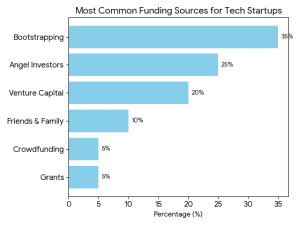
  1. Bootstrapping: Financing operations with own savings or revenue. Ideal for early-stage ideas.
  2. Friends and Family: Minimal investments made by immediate acquaintances. Useful in development of proof-of-concept or prototype.
  3. Angel Investors: Seasoned investors that contribute investments in the form of equity. Often provide mentorship.
  4. Venture Capital (VC): Investments in startups of high potential growth. VCs will fund high amounts but with high equity and quick returns.
  5. Government Grants and Programs Non-dilutive funding to encourage innovation.
  6. Crowdfunding: Seek direct financing of potential clients via such platforms as Kickstarter or Indiegogo.
  7. Corporate Partnerships: Resources or investment by well-known companies in order to collaborate or get early access.

AI Insight: The new AI can assist the founders to find out potential investors, fund raise trends, and even pitch deck optimization to predict what will attract investors according to previous funding records.

#2 Step: Build a Strong Business Plan

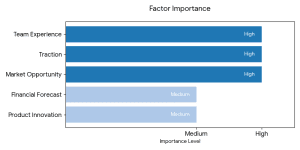
Investors desire to have a road map. The following things should be included in your business plan:

  • Problem & Solution: What is your tech a solution to, and why is it special?
  • Market Opportunity: Growth trends, competitors and total addressable market.
  • Model: How are you going to make money with your startup? Subscription, licensing, free-mium, etc.
  • Product Roadmap: Product development milestones and schedules.
  • Team Credentials: Why your team can create the vision.
  • Financial Projections: Financing requirements, expenses and revenue.

Pro Tip: AI tools such as business plan generators can assist you to organise your plan in the most effective way and can simulate growth conditions to investors.

Learn About: Technology investment banking services

#3 Step: Craft a Winning Pitch Deck

Your startup’s first impression is a pitch deck. An AI-intensive solution will be able to study the existing successful pitches in order to maximise content and visuals. Key slides include:

  • Introduction and Problem: Straight forward and clear.
  • Solution: The value positioning of your product.
  • Market Opportunity: Factual and valid.
  • Traction: Start-user, revenue, partnerships.
  • Business Model: How you raise money.
  • Team & Advisors: Be competent and reliable.
  • Funding Ask Finance: Be clear as to how the funding will expedite growth.

Tip: Keep it under 15 slides. Your deck can also be automatically generated by AI tools into graphs, charts and competitor analysis.

free pitch deck templates
#4 Step: Demonstrate Traction

Startups with the potential of success are invested in by investors. Traction can include:

  • The increase or the usage metrics of the users.
  • Revenue or pre-orders
  • Beta program success
  • Joint ventures or alliances.

Small, initial traction can do major wonders to investor confidence. AI analytics can monitor user behaviour, growth patterns, and retention, and thus it is simpler to provide definite displays of traction.

#5 Step: Leverage Networks and Platforms

Funding is a matter of who you have connections with rather than what you have accomplished. Network expansion strategies:

  • Startup Incubators and Accelerators: Y Combinator, Techstars and others offer mentorship and funds.
  • Angel Networks VC Platforms: AngelList, Crunchbase, and LinkedIn may help you find investors.
  • Tech Conferences and Meetups: Pitch events, Hackathons, and workshops are also good in terms of exposure.

AI Insight: AI-powered tools will assist to find investors best suited to your startup business, location, and funding round and save time and chances of success.

#6 Step: Choose the Right Funding Option

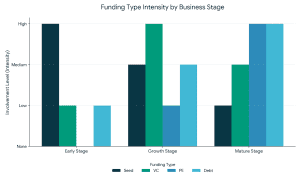
Here’s how to match funding types with startup stages:

match funding types with startup stages

Choosing the right option prevents unnecessary equity loss and aligns your growth trajectory with investor expectations.

#7 Step: Avoid Common Pitfalls

  • VC too soon: Prioritise traction.
  • Failure to take legal and financial structuring: Unambiguous contracts and equity arrangements will avoid conflicts.
  • Disregard of investor feedback: Relevant ideas, although financial assistance may not be as timely.
  • Weak story telling: The investors must relate to your vision both emotionally and logically.

#8 Step: Leverage AI to Boost Funding Success

Artificial intelligence will be able to assist where conventional technology fails:

  • Investor Research: AI is used to conduct a scan of databases with investors who are likely to finance your industry.
  • Pitch Deck Optimization: Predictive technology proposes slides, images, and messages that resonate.
  • Financial Forecasting: AI thinks over various scenarios to reinforce predictions.
  • Market validation: AI software processes user response, trends, and sentiment to justify market demand.

AI can be used strategically to save time and reduce risk and enhance investor credibility.


Final Thoughts

Funding tech startups is not a random event. Focus on:

  • Competence in your stage of start-up.
  • Selecting the appropriate financing sources.
  • Developing an effective business strategy and traction measures.
  • Preparing a persuasive pitch deck.
  • Using AI and networks to their advantage.

This is an efficient and confidence-based way for founders to get tech startup funding in order to transform innovative ideas into scalable and successful businesses.

Get business Funding

Funding Readiness Checklist

Funding Readiness Checklist: Prepare Your Business for Investment in 2025 & Beyond

One of the most transforming moves that a business can make is the act of raising capital. Yet the brutal truth is: most of the startups and middle market businesses do not raise funding not because their idea is not a good idea but because they are not an investable company. It is here that the funding readiness checklist comes in. It is a step by step guide that will make your business ready to impress investors, raise funds effectively, and grow successfully not just in 2025 but in 2026.

You will find a realistic, practical checklist in this guide, which includes financials, legal preparedness, team, market strategy, fundraising planning, and others. You will have just the answer to know how to get your business ready to be invested in without fear.

Why a Funding Readiness Checklist Critical?

Hundreds of pitch decks are received by investors on a monthly basis. It is the matter of preparation that is the difference between success and rejection.

A Funding Readiness Checklist can assist you:

  • State your business professionally.
  • Present all the required documents and information investors require.
  • Don’t make expensive errors to cripple funding.
  • Develop investor confidence and trust.

Imagine it as a pre-flight checklist – one step will result in postponement or risk of funding.

Pro Tip: Start preparing early. Investors notice when founders are proactive about 2025–2026 funding

business valuation software
Key Sections of a Funding Readiness Checklist

There are six important areas that a solid Funding Readiness Checklist must cover. Let’s break them down:

1. Financial Preparedness

Numbers are important to investors. Your finances should also be correct, open as well as proactive.

Checklist items:

  • Financial statements ( Income Statement, Balance Sheet, Cash Flow) audited or reviewed.
  • Projections and forecasts of 2025 and 2026.
  • Unit economics and burn rate (startups).
  • Equity structure and cap table.
  • Debt obligations and liabilities.

Why it is important: Clean and well-organised finances are a source of confidence and show that your business is able to grow sustainably.

2. Business Model Clarity

Shareholders would like to know how your company generates value.

Checklist items:

  • Clear value proposition
  • Pricing strategy and revenue model.
  • Market and customer acquisition.
  • Differentiation and competitive landscape.
  • Potential to expand threefold between 2025 and beyond.

3. Legal & Compliance Readiness

No other thing can destroy the confidence of the investors as much as the legal or regulatory problem.

Checklist items:

  • Registration and licenses of businesses. (Check Now)
  • Ownership of intellectual property and patent.
  • Hiring agreements and contracts.
  • Impending litigation or regulation issues.

4. Management Team & Governance

Investors are not investing in ideas only.

Checklist items:

  • Relevant experienced key team members.
  • Advisory board or mentors
  • Governance structure
  • Clearly defined roles and responsibilities.

Tip: Spotlight accomplishments, past exits or industry experience – this develops competence and power.

5. Market & Growth Strategy

Investors desire to see that your business can grow.

Checklist items:

  • Total Addressable Market (TAM) and Serviceable Available Market (SAM).
  • Go-to-market (GTM) strategy for 2025–2026
  • Customer Acquisition Cost (CAC) and Lifetime Value (LTV).
  • New markets, or new product lines expansion.

6. Fundraising Strategy

Lastly, your checklist must describe your fundraising strategy.

Checklist items:

  • Type and amount of targeted investment (equity, debt, convertible notes)
  • Optimal types of investors (VC, angel, PE, strategic)
  • Investor pitch and investor presentation.
  • Timeline and milestones
  • Contingency plans

Common Mistakes Founders Make

Founders are known to trip even with a checklist.

Avoid these pitfalls:

  • Unfinished or dishevelled financials – destroys credibility.
  • Excessive projecting of market size – investors like real projections.
  • Ignoring legal preparation IP or compliance can come to a halt.
  • Overlooking deadlines -The raising of funds will consume more time than anticipated.
  • Poor team presentation- investors emphasise on how things are done rather than what is said.

Hint: Your checklist will help you to cover every area and avoid such mistakes when approaching investors.

Read About: How to Raise Series A Funding in India (2025 Guide)

How to Use Your Funding Readiness Checklist Effectively

  • Timing is everything – Now preparing 20252026 funding rounds.
  • Check all the parts- Do not omit any part.
  • Seek professional consultation – It may be advisable to seek professional advice such as FundTQ to figure out the gaps.
  • Communicate frequently – Markets, finances and strategy change; revisit on a quarterly basis.
  • Get your team in line – distribute the checklist across the team and make sure everyone is on board.

free pitch deck templates
Bonus Tips for 2025–2026 Funding Success

  • Storytelling with data: Investors are obsessed with graphs and numbers.
  • Online presence: Have a professional LinkedIn and Web site.
  • Scenario planning: “Make best-case and worst-case funding estimates.
  • Know your numbers: Be prepared to tell financials in a comprehensive fashion.
  • Regular follow-ups: Reflective follow-up messages are a sign of professionalism.

Learn About: 9 Ways of Fundraising for Startups in India

FAQs

Q1: What is a Funding Readiness Checklist?

A: It is a guide on how founders should make their business investable, including financials, legal preparation, team, market plan, and fundraising.

Q2: At what time do I begin preparing a funding round?

A: 6-12 months before you are having the fundraising. This checklist will be useful in 20252026 planning.

Q3: Is it possible to operate with the same checklist with equity and debt financing?

A: Yes, the core readiness items are applicable to both, however, your section of fundraising strategy can vary.

Q4: What is the frequency of checking the checklist?

A: Quarterly changes will be recommended to capture financial changes, market trends and staff growth.

Bottom Line

Like in business, relying on raising capital, it is preparation and not a matter of luck. A Funding Readiness Checklist is a way to make sure that your business is organized, believable and that it is investor-ready by 2025 and 2026. This guide will help you minimise risks, speed up your startup funding process, and come out as a confident, credible founder before investors.

Next Step: Download our complete Funding Readiness Checklist (2025-2026) and determine your company investor readiness in the present.

Get Your Funding Readiness Checklist

Raise Series A Funding

How to Raise Series A Funding in India (2025 Guide)

The Raise Series A Funding is an important step in the life of a startup that wants to grow beyond its initial momentum. Although seed funding assists to prove the fit of your product-market, Series A is regarding growth through expansion, gaining more customers, and maintaining sustainability.

The Indian startup ecosystem is also very competitive and data-driven in 2025. The investors are not just focusing on revenue anymore, they desire scale business models, clear unit economics, strong leadership teams, and robust growth strategies.

Composing a detailed FundTQ (one of the leading investment banking and fundraising advisory firms in India) guide takes founders through the preparation process to close off your Series A round, trends, important documents and timelines.

What Is Series A Funding?

The initial major institutional round of venture capital is Series A financing that a start-up company receives following demonstration of a sound concept and momentum.

Investors in Series A expect:

  • A clear problem-solution fit
  • Existence of market demand and traction.
  • A repeatable and scalable business model.
  • An effective and creative founding team.

Purpose of Series A funding:

  • Hire and scale your team
  • Expand products or services
  • Enter new markets
  • Improve operational abilities.

Concisely, Series A converts an idea that has been tested into a business that is ready to grow.

Series A Funding Size and Valuation in India

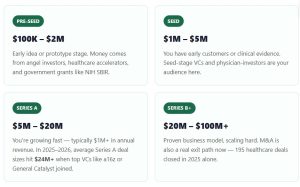
Series A funding amounts vary by sector, traction, and investor appetite. Typical ranges are:

Series A Funding Size

Tip: FundTQ helps startups determine realistic Raise Series A Funding amounts and optimal valuations using data-driven financial modeling.

Step-by-Step Guide to Raising Series A Funding

Step 1: Strengthen Your Business Foundation
Make sure your fundamentals are good before approaching investors:

  • Market Opportunity: Identify your TAM, SAM, and SOM.
  • Business Model Clarity: Show how to make money and keep it going.
  • Traction Metrics: User growth, revenue, retention rates, CAC, LTV, engagement metrics.
  • Unit Economics: Focus on gross margins, burn rate and profitability potential.

FundTQ optimises financial forecasts and business models to fulfil the expectations of investors.

Step 2: Build a Comprehensive Business Plan

Your business plan must narrate the facts about your startup story:

  • Executive summary & vision
  • Problem-solution analysis
  • Market research/competitive environment.
  • Business model & revenue plan.
  • Financial estimates (35 years)
  • Risk analysis & mitigation
  • Scaling and expansion road-map.

FundTQ prepares investor-ready business plans that are in line with VC and PE requirements.

business valuation software

Step 3: Create a Winning Pitch Deck

The first thing people see is your pitch deck. Essential slides include:

  • Issue and marketing need.
  • Solution (product/service)
  • Product demo or screenshots
  • Traction & milestones
  • Market Strategy and Competitive Advantage.
  • Financials & projections
  • Team and advisors
  • Financing needs and expenditure.

The FundTQ produces brief, attractive decks that are compliant with the international VC standards.

pitch deck templates for Raise Series A Funding
Step 4: Identify and Target the Right Investors

Not every investor fits so perfectly. Focus on:

  • Venture Capital Firms: Accel, Sequoia, Nexus, Chiratae.
  • Corporate Investors: Google for start-ups, Reliance Ventures.
  • Family Offices & HNIs: Best in niche and first mover.
  • Impact Funds: climate tech, healthtech and education ESG funds.

FundTQ offers selective access to investors in India and elsewhere in the world.

Step 5: Prepare for Due Diligence
Investors will verify:

  • Legal documents and registration of the company.
  • Tax filing and financial statements.
  • Cap table and equity structure.
  • IP ownership & customer contracts.
  • Regulatory compliance.

In order to facilitate due diligence, FundTQ performs pre-investment audits and establishes a virtual data room to facilitate the audit.

Step 6: Outreach and Investor Meetings

  • Provide a brief preview or summary.
  • Deliver your pitch deck through safe links.
  • Organize schedule and product demos.
  • Track follow-ups using a CRM

FundTQ deals with investor outreach and meetings in order to optimize interaction.

Step 7: Term Sheet Negotiation

A term sheet outlines:

  • Valuation and dilution of equity.
  • Board organization and control.
  • Rights & obligations
  • Exit terms

FundTQ gets good terms while ensuring that the founders maintain control.

Step 8: Investor-Led Due Diligence

Investors carry out intensive audits:

  • Card-related reviews and revenue recognition.
  • IP validation and legal audits.
  • Customer & vendor references
  • Compliance checks

FundTQ manages the coordination of all the teams in smooth due diligence.

Step 9: Closing the Round

Final steps:

  • Sign definitive agreements
  • Transfer of funds and allocation of shares.
  • Regulatory filings
  • Public announcement

FundTQ warrants conformity and smooth integration of post-funding.

Key Documents Required for Series A

Key Documents Required for Series A

Timeline to Close Series A

Timeline to Close Series A


Trends in Series A Funding (2025 & Beyond)

  • AI-based Startups: AI and automation have high investor interest.
  • Profitability & Sustainable Growth: Healthy unit economics a priority.
  • Alternative Financing Models: Equity + Debt or revenue based financing.
  • International Investment Preference: US and SE Asian VCs are making more investments in India.
  • Corporate Governance & Transparency: Clean cap tables and reporting is compulsory.

 Why Partner with FundTQ

FundTQ provides the entire ecosystem of startups in need of funding:

  • End-to-end fundraising consultancy (Series A to and past)
  • Investment banking services (valuation, deal structuring, due diligence)
  • M&A advisory (sell side and buy side)
  • Support of pitch deck and financial modeling.
  • Investor relations and introductions.

Why FundTQ?

  • Successful history of Series A funding.
  • Availability of the best investors in India and around the world.
  • Professional financial and legal consultation of the closures.
  • Evidence-based decision-making and valuation.

FundTQ enables the founders to work on growth and handle the complexities of fundraising.

Ready to Raise Series A Funding?

For founders scaling their business in 2025, FundTQ makes the fundraising journey seamless. From financial modeling and pitch deck creation to curated investor introductions and deal closure, FundTQ provides end-to-end fundraising and investment banking support.

Contact us

Fundraising Checklist

Fundraising Checklist: What You Need Before Approaching Investors

One of the most defining moments to a startup is the process of raising capital. Although passion and an innovative idea is the key, affectionately, cash is the reason that idea can become a successful company. But investors do not only invest in ideas, they investing with businesses that are ready, organised, and persuasive. Therefore, before you start reaching out to investors, you must have a thorough fundraising checklist.

This post provides a thorough fundraising checklist to make sure you have everything ready before meeting with possible investors, including data, documents, clarity, and confidence.

Why Do You Need a Fundraising Checklist?

Going to investors unprepared sends a message to investors that you are not ready and well prepared to get investments as well as create a bad image to your startup within the ecosystem. A fundraising checklist helps you:

  • Perpetuate start up fundraising blunders by one better prepared than others on tiny bits of advice
  • Increase documentation order to improve investor confidence
  • Eliminate holes in your business plan
  • Make your company look professional with a convincing power
  • Accelerate the due diligence process after interest of investor is generated

Regardless of the funding process you are approaching (seed funding, angel investment, and Series A funding), the checklist will make your effort stand out among the crowd and make it easier to find a way into the bigger picture.

1. Define Your Fundraising Goals

Begin by simply stating how much funds you desire to raise and why. You should base your target in fundraising on:

  • The stage the startup is VM pre-revenue, MVP, scaling
  • The amount of capital needed to achieve one mile point (e.g. product launch, user acquisition, break-even point)
  • A 12 months, 18 month runway

Checklist Items:

  • Amount you are raising
  •   Use of funds breakdown (tech, marketing, hiring, etc.)
  • Categories for spending money (tech, marketing, hiring, etc.)
  •  Types of fundraising include debt, SAFEs, convertible notes, and equity.

2. Get Your Financials in Order.

No startup is going to receive funding when the investors cannot support the business with reasonable financial arguments. Make elaborate financial records and forecasts.

Checklist Items:

  • Profit & Loss (P&L) statement (the previous 12-24 months, where applicable)
  • Cash flows statement
  • Balance sheet
  • The 3-5 year budgeted financial statements
  • Unit economics (CAC, LTV, gross margin etc.)
  • Break even analysis

Use startup tools such as FundTQ or projections templates to make them as accurate and investor ready.

3. Build a Solid Business Plan

A business plan is your blueprint. It shows investors that you understand your market, customers, competition, and growth potential.

Checklist Items:

  • Executive summary
  • Market size and opportunity
  • Problem and solution overview
  • Product/Service details
  • Revenue model
  • Go-to-market strategy
  • Competitive analysis
  • SWOT analysis
  • Team structure

Remember, the business plan is not just a formality—it’s a decision-making tool for investors.

4. Write a Winning Pitch Deck

A strong pitch is your golden card to an even meeting with investors. It ought to be brief, graphic and convincing.

Checklist items (usually 10-12 slides):

  • Overview and mission
  • Solving the problem and the issue
  • Market opportunity
  • Printed product demo/screenshots
  • Business model
  • Traction and milestones
  • Marketing and sales strategy
  •  Team
  •  Financials
  • Question (how much money and use)

Some of the pitch deck errors to avoid include having too many on-screen words, omitting the traction or being ambiguous about your finances.

5. Provide a Legislation Base

Investors are going to demand legal compliance within your startup. Make sure that your business is incorporated and does have the necessary registrations.

Checklist Items:

  • Company incorporation documents (MoA, AoA, PAN, TAN)
  • Goodwill, founders agreement and equity dividing
  • Cap table (realistic and actualized)
  • Licensing and ownership of IPs
  • Contracts of employees and NDA

6. Present Traction and Metrics

Investors are not only interested in how to validate your growth, but they want to see some indicators of growth or validation even though you are at the MVP or early revenue stage.

Checklist Items:

  • Active monthly users (MAU) / Daily active users (DAU)
  • Sales or preorders
  • Case studies or testimonies made by customers
  • Retention/churn
  • The downloading of apps or visits to websites
  • Collaboration or test customers

These measurements validate that you fit within your market and eliminate the perceived risk in the eyes of the investor.

7. Understand Your Strategy on Valuation

A practical sense of the value of your startup is what you must have (at least in the case of equity financing).

Checklist Items:

  • Present Fair valuation (based on revenue, number of users or similar startups)
  • Post-money and pre-money valuation knowledge
  • Rate of equity you are offering
  • Option pools (in case of any)
  • Rationale of valuation

It is recommended to consider a startup valuation software or even valuation experts to develop a possible solution to defend.

8. Get ready to conduct Due Diligence

After a term sheet has been provided, investors will get down to the bone. Preparation of due diligence materials is time-saving and creates trust.

Checklist Items:

  • Due diligence data room (Google drive or dropbox)
  • Having all financial documents at one place
  • Access to product demo
  • KYC Founders
  • Trademarks or patent registrations
  • Minutes and board resolutions
  • Previous fundraising records (in case of any)

Another pro tip is to put testimonials, pitch videos, and product roadmap to make a difference.

9. Develop Target Investor List

Just don’t spray and pray. Find investors who have invested in startups or sectors of the same stage of development. Make your story match their interests.

Checklist Items:

  • Angel investments and VCs in the same business sphere
  • Local ecosystem actors (e.g. incubators, accelerators in India)
  • Mentors or advisors to carry out warm introductions
  • CRM, or tracking sheet (with the contact status, feedback, etc.) of the investor

Check out other platforms (AngelList, LetsVenture, or LinkedIn) to research and find relevant investors.

10. Practice Your Pitch to Investors

You can get the best documents but poor delivery can screw you up. Practice is the right way to go.

Checklist Items:

  •  Pitch script of 10 12 minutes
  •  Expected Q and A (market, financial and gaps in the team)
  •  Backup deck of deep-dive sessions
  •  Pitch sessions to mentor or startup communities
  •  Storytelling device, Why you, Why now, Why this product?

The investors will invest in teams as much as they will invest in ideas. Be self assured, articulate and teachable.

FundTQ? A Smart Tool for Modern Startup Fundraising

As non-professional investors get more choice in what they invest in, and especially when you need to attempt a preliminary test of investment, it is not enough to have a nice pitch, but rather, data, structure and strategic positioning. That’s where FundTQ comes in.

FundTQ is a next-generation fundraising intelligence platform built specifically for startups looking to raise capital in a smarter, faster, and more organized way. It is a digital fundraising assistant that helps its founders manage not just their fundraising materials but also finds them the correct investors, better tells their valuation story, and tracks their whole funding process.

Who Should Use FundTQ?

  • First-time startups still in the early stage
  • Founders having some problems in creating the pitch deck or valuation
  • Startups in the growth stage seeking focused access to investors
  • Indian startups that want to raise funds aligned with compliance

Conclusion:

FundTQ transforms how founders approach fundraising—from confusion to confidence. By integrating financial insights, investor targeting, and structured preparation in one platform, FundTQ equips startups to raise capital like pros.

If you’re starting your fundraising journey, adding FundTQ to your toolkit is one of the smartest moves you can make.

Making money is not all there is to fundraising, there is relationship, preparedness, and consideration.Investors and shareholders want structure, vision, and dedication.

FAQs 

Q1: What is a startup fundraising checklist?

A fundraising checklist is a step-by-step list of key items (documents, metrics, strategies) a startup should prepare before reaching out to investors.

Q2: Why is a fundraising checklist important?

It provides the preparedness, builds up the investor confidence, prevents legal/financial errors, and accelerates the fundraising process.

Q3: What are some of the documents that I need to prepare in order to meet investors?

These will include your pitch deck, your business plans, your financials, the cap table, legal documents and traction data.

Q4: What will be the amount of funding requested?

Raise sufficient to last 12-18 months runway or to your next milestone (a product, revenue or team milestone).

Q5: Which are the common pitfalls to avoid when fundraising a startup?

One of the pitfalls is overestimation of valuation, underdeveloped financials, poor articulation of funds use, and ineffective pitch deck.

Restaurant Funding

How to Get Restaurant Funding: Complete Guide for 2025

All successful startup experience begins with an idea, however, funding is the gas that takes it to the next level. Startup money can assist in the launching of a technology platform, direct-to-consumer (D2C) skincare range or small food restaurant start-up to construct, staff, promote, and expand.

By 2025 the funding environment is stronger than ever before. Government effort, private equity, angel networks and crowdfunding websites have opened the floodgates further. There is a competition though with opportunity. More so when dealing with specialist niches, such as restaurant funding, when so many entrepreneurs are now chasing funds to get cloud kitchen, food truck or dine-in extensions up and running.

Here in this guide ,we guidelines the kind of money that startups actually require, the kind of startups and the amount of capital they require and four genius funding options with a twist of the Indian startup ecosystem alongside international possibilities. Let’s begin.

How Much Capital Do Startups Really Need?

You need to define what would be an adequate amount before you bring capital on board. Start up capital depends on the industry, stage and ambition. So here are the stages:

  1. Idea Stage ( 0 to 10 Lakhs)

Applications: product validation; prototyping; market research. Commonly are self- induced or friend/family financed.

  1. Pre-Seed/Seed (Im in Lakhs- Im out 2 Crores)

What is required in MVP development, the recruitment of a small team, early marketing. Most essential to food establishments and restaurants that attempt to justify their menu and delivery procedure.

  1. Growth Stage ( 2 to 20 Crores )

Scale, marketing blitz, fresh cities, are used. There are common capitalisation situations of such D2C brands, technological platforms, and cloud-based kitchens.

Tip: Use tools like FundTQ’s business valuation calculator to assess your funding requirement based on realistic projections.

Types of Startups and Their Funding Needs:

There is no “one size fits all” approach to funding. Various startup types require distinct capital models. 

1. High Funding Need for Tech Startups

  • Use cases: It includes user acquisition, cloud infrastructure, hiring developers, and product development.
  • Preferred Paths: Government tech grants, VCs, and angel investors.

2. Direct-to-Consumer, or D2C Funding Need for Brands: Moderate to High

  • Use cases: It include inventory acquisition, branding, eCommerce operations, and influencer marketing.
  • Preferred Routes: Angel rounds, crowdfunding, and seed investors.

3. Platforms for freelancers and service startups

  • Need for Funding: Minimal to Moderate
  • Use cases: Include platform upkeep, digital marketing, and website/app development.
  • Preferred Paths: Early-stage accelerators and bootstrapping.

4. Social Impact Startup 

Having a problem is like having a goal in life.

  • Amount of Funds Required: It is dependent on size
  • Use Cases Community, On ground, Partnership development.
  • Favored Roads: grants, corporate social responsibility funding and impact investors.

5. The Niche (Restaurant Funding) Restaurant Startups

  • Grant Requirement: Medium
  • Use Cases: Kitchen Set up, kitchen equipment, licenses, employee payroll, food stocks.
  • Favorite Paths: Bank Loans, government programs such as the PMEGP, Angel investors who are interested in F&B etc.

To sail into the ecosystem further, see our blog on Startup Fundraising in India.

4 Smart Ways to Get Funding for Your Startup:

So, in 2025, the process of getting funding requires more people than ever. This is being done by founders on unlocking capital:

1. List down Government Start-up Schemes and make applications.

The startup enabling policies of India such as Startup India Seed Fund Scheme, PMEGP and MUDRA loans provides funding without equity dilution.

  • Ideal in: First time in entrepreneurship, funding of restaurants, early innovations.
  • Application Method: by using government portals or Startup India-approved incubators.
  • Bonus Tip: Leverage investment banking services for documentation and financial modeling support.

2. Pitch in Angel investors or VCs

Investors are ever ready to take the next daring thought.

  • Angel Investors:  These are entrepreneurs with capital of between 10 and 50 Lakhs at the seed stage.
  • Venture Capitalists: Suitable Series A and above.
  • Pitch essentials include a useful pitch deck, traction measurement, market size, and a clear business model.

Steer clear of typical pitch deck errors like imprecise problem statements, irrational estimates, or a deficiency in market research.

3. Bootstrap or Startup first Then Raise

Bootstrapping is an underestimated way. Most of the successful funders started by investing their savings or starting small with little or no resources.

  • Why This Works: Investors are fanatical about being thrifty and demonstration of progress.
  • Real Life: Most of the restaurant brands that you know of have started with just one delivery kitchen or food cart.

Once you gain traction, you can raise with better valuation and leverage business valuation software like FundTQ to justify your ask.

4. Crowdfunding or Community-based Support

Usual platforms such as Ketto, Wishberry, or FuelADream will enable you to collect tiny sums of money from a big number of patrons.

  • Examples: Ideal For: D2C brands, social startups and F&B concepts (vegan or sustainable particularly).
  • Plan: Provide good incentives, be transparent and promote your campaign via social media.

It is not only about the money, this is the way to create a loyal community around the brand.

Where to Look for Foreign or Indian Startup Investors?

The investors might actually comprise the first part of the fight to be won. This is how to get going:

  • Angel Networks: Indian Angel Network, LetsVenture, Mumbai Angels
  • Venture Capitalists: Blume Ventures, Accel, Elevation Capital
  • Accelerators: 100X.VC, GSF Accelerator, and Y Combinator India
  • Government Incubators: Atal Incubation Centres, NASSCOM 10,000 Startups
  • Foreign Angel Forums: SeedInvest, AngelList
  • Accelerators: Antler Global, Plug and Play, Techstars
  • Fellowship and Grant: Bill & Melinda Gates Foundation for Social Impact, Echoing Green and GSMA Innovation Fund

Then International F&B Investors for restaurant funding should either approach special food-specific investment companies or make a pitch at international startup expositions in the US, Singapore, or United Arab Emirates, depending on restaurant funding.

Key Takeaways:

  • The concept of business transformation into a sustainable model needs startup finance, particularly seeding opportunities in the food, tech, and D2C industries.
  • Depending on the stage, the capital needed also differs with the idea stage requiring less than 10 lakhs, and the growth stage requiring 2-20 crores and maybe more.
  • The emerging trends of cloud kitchens, delivery-first and small-format outlets give restaurant funding an upward trend as well.
  • Choose the funding strategy depending on the nature of your startup- Tech founders might want to reach out to VCs; D2C brands can use crowdfunding; restaurants might want to do bootstrapping + govt schemes.
  • Use tools like FundTQ for business valuation, pitch deck creation, and financial modeling.
  • Apply through Startup India projects, come into the sight of angel investors, try to get the funding in the crowdfunding sites, and attend the startup events to get in touch with real investors.
  • Avoid pitch deck mistakes—focus on clarity, realistic projections, and problem-solution fit
  • Remember that at a certain point, any startup must begin.

FAQs:

1. Which is the most suitable source of finance to use in starting up a restaurant in India?

Depending on the quality of your idea and plan, the options of government schemes such as PMEGP or MUDRA loans, bootstrapping through a small outlet or cloud kitchen, or angel investment are the best.

2. What is the amount of money that a startup requires initially?

Most other startups have to access 5-25 lakhs at the idea or pre-seed stage to create a prototype, promote and start building a team. D2C or Tech start ups might require more based on scale.

3. Is there such a thing like no equity start up funding?

Yes. You may venture into government grants, start-up contests, CSR funds, or revenue based funding models which do not equate to dilution of equity.

4. Is crowdfunding a good choice in food businesses?

Absolutely. In case you have an idea of interest in the community (such as organic, vegan, regional cuisine), such websites as Ketto or FuelADream are good. It can also provide the reward or early access to the contributors.

5. How will I determine the value of my startup?

Use business valuation software like FundTQ’s Valuation Calculator to calculate your worth based on revenue, market, and projections. This assists in supporting your fund request.

Conclusion:

Either you want 10 lakhs or 2 million, funding of the startups is available, you just need the right plan, and consistency. Be not depressed at rejections. Each pitch will only make you better and each no will bring you closer to the yes that will change everything. First, ensure you know how much capital you want, pick the route of funding that best serves your type of startup, specifically, in a case where you might be considering funding options that are more niche like restaurant funding, and finally, support your request with facts, clarity, and objective.

Use smart tools like FundTQ’s Business Valuation software to determine your startup’s worth, create your pitch deck, and build your financial model then go out and get the funding you deserve.

Startup fundraising in Gurugram

Step-by-Step Guide to Startup Fundraising in Gurugram

Gurugram is commonly referred to as the Millennium City, which has quickly become one of the Indian startup hubs. It is close to Delhi, connected to international companies, has an increasing amount of coworking facilities, and an active hub of tech entrepreneurs, making it a good place to develop an early-stage business. Fundraising in startups does not solely deal with money: above all, the money validates a startup, may come with mentorship, and can lead to growth and long-term sustainability. Money facilitation is something that can open the doors to developing different businesses, which might involve teams, products, and market shares in a matter of weeks. Every entrepreneur wishing to be successful in such a fast-moving environment has to comprehend the way in which startup fundraising in Gurugram views the growing competition.

Step 1: Recognise the startup and funding ecosystem in Gurugram

Get to know the landscape of the Gurugram startup with its special landscape before raising capital. Major startup success stories, from Zomato to UrbanClap, have had their affectations on talent migration toward capital cities for close interaction with the top-tier VC firms and angel networks over the past 10 years.

Primary Shifters in the ecosystem of Gurugram:

  • Incubators & Accelerators: Early-stage stage mentorship, seed finance, and workspace is offered by Huddle, GHV Accelerator and Gurugram-based TIDES Business Incubator.
  • Government Initiatives: It has the Haryana Startup Policy which has incentives, such as, subsidized incubation, tax reliefs, or equity free grants.
  • Angel Networks: The Indian Angel Network (IAN), Gurgaon angels and Delhi angels are among the actively functional Indian angel networks who have been funding pre seed and seed stage companies.
  • Platforms: FundTQ is one of the tools that support founders to do outreach, organize documentations, and reach verified investors easily.

The entire seed funding process is supported by this thriving ecosystem, which is not only funding-ready but also abundant in investment banking services, legal professionals, and growth mentors.

Step 2: Work out a good business plan and authenticate your idea of startup

The level of selectivity by investors in Gurugram has been on the rise. In order to be different, make sure that your idea addresses a real problem that is in demand. Validation may comprise:

  • Growing a Minimum Viable Product (MVP)
  • User feedback collection
  • Adopting new customers/clients early
  • Analysis of competitors

Paying customers is a proven idea that gains investor confidence. Other indicators of a well-thought-out business that indicate your business startup is not merely an idea, but a scalable company are: a solid business model and realistic revenue projections.

Step 3: Know Your Funding Stage and What Investors Expect

Each startup has the stages of funding, where each of them has a distinct strategy and degree of preparation.

  • Pre-seed: Done before seed, friends and family money or grants. Target: MVP, traction at an early stage.
  • Seed: Product market fit, angel investors, early revenues. Target: Team, scalability, clientele.
  • Beyond and Series A: Preoccupied with rapid expansion and enormous institutional and VC investment in plasma. It is all about unit economics, market leadership and post-money valuations.

Knowing the things that each investing phase dislikes in a typical mistake during common fundraising such as pitching to VC at a too early stage or claiming your startup is overvalued.

Step 4: Prepare the Essential Fundraising Documents

Preparation is everything with respect to fundraising for startups. Two will have to come up with the following documents:

Pitch Deck: It would tell more about your idea, the market, traction, business model, and finance. Avoid common pitch deck mistakes such as crowded slides or poor messaging.

Business Plan: 15-20 page document addressing how you plan to run your business, what gives you an edge over your competitors, the market you have found and how you are going to implement your plan. It is also strategically clear and long-term.

Financial Forecasts: A 3 5 year forecast of revenues, costs, break-even and forecast cash flow. Tools like business valuation software or even startup-focused Excel templates can help.

Note that these are papers that indicate how credible you are. The pitch deck can either make it or break it, given that it is weak or not very accurate.

Step 5: Selecting the Appropriate Funding Source to Your Startup

Not every finance is the same. In Gurugram, here are available main sources of startups for startup fundraising in gurugram:

  • Angel Investors: Best suited during a seed stage. See how to identify local networks or high-net-worth who want to get passionate about your sector.
  • Venture Capital: it fits high-growth companies that are at-scale. Be ready with metrics like average ticket size and CAC to LTV ratios.
  • Government Grants: The Haryana Startup Policy provides equity-free funding to encourage innovation in sectors like AgriTech, EduTech, and medical device startup funding.
  • Incubators and Accelerators: They offer seed money, advice and resources against low equity shares.
  • Online Platforms: Platforms such as FundTQ make it possible to automate discovery of investors, document preparation and compliance with the funding process.

Your long-term goals, repayment capacity, and risk tolerance will all play a role in your decision between equity vs debt financing

Step 6: Establish a Strong Gurugram Network

When one is connected to the right circles, fundraising is made easy.

  • Events: Go to a meetup, a pitch competition, or a summit such as the TiE Delhi-NCR or Nasscom 10,000 Startups.
  • Coworking Hubs: Hubs such as WeWork and Innov8 and 91 Springboard, frequently lead investor evenings, mentorship programs and startup forums.
  • Online Communities: Join local Slack groups, WhatsApp communities, or Facebook groups focused on fundraising for startups in India.

Such networks are also of great help in getting through early obstacles and can result in warm intros, definitely the most productive leads to finding investors.

Step 7: Create and Rehearse a Successful Pitch

As a result, your pitch should be fact-based, succinct, and convincing.Note:

  • The issue and that inimitable idea of yours
  • Opportunity and market size
  • Go-to-market strategy
  • Team experience
  • Traction and financials

Train in front of coaches or budding entrepreneurs. Make a video recording and improve. Such tools as the Y Combinator template of pitching, or templates presented by FundTQ, may serve as an excellent beginning.

Step 8: Reach Out to Investors Strategically 

Do not fall into the mass email trap. Instead:

  • Investors in research that invests in your industry or phase
  • Utilize such agencies as FundTQ 
  • Utilize LinkedIn outreach database and startup databases
  • ors, incubators, or shared contacts to get referrals

Make your pitch unique to each investor. Be aware of the size of their portfolio, size of checks and preferences. Such a personalized process will increase interaction and reaction levels.

Step 9: Negotiate the Deal and Understand Term Sheets

In case your pitch is a success, you will be presented with a term sheet, which describes the terms of investment. The important clauses to be learnt:

  • The valuation (pre and post money)
  • Equity offered
  • Liquidation preference
  • Anti-dilution provisions
  • Board control

Negotiation does not imply a winner and loser, rather there is the need to walk alongside the interests. Don’t hesitate to consult investment banking services or legal advisors. They are able to decode legal terminologies and make fair terms.

Step 10: After Funding: Make Good Use of Capital and Update Investors

Getting funds just marks the start. The attention is now given to:

  • Investing in capital efficiently: Do not invest in vanity metrics; use the money to hire more team members, develop a product, or grow.
  • KPIs tracking: Investors will be updated on KPIs monthly to display responsibility.

Then, you should avoid some usual pitfalls like mindless growth, ineffective hiring, or scaling without planning. These are some reasons startups fail even after funding.

Keeping investors regularly updated on a company does not only help it develop a rapport with the investors but also paves the way to the next round of funding.

Conclusion 

Startup fundraising in Gurugram is an exciting but challenging path. The correct foundation-market research, financial discipline and networking, will help you open the doors to eventful growth.

Whether you’re in healthcare, medical equipment startups, or B2B SaaS, always remember: fundraising for healthcare or any sector demands clarity, vision, and resilience.

As a founder you will grow with each investor call, pitch revision, and rejection. Remain focused, exploit the Gurugram ecosystem and most of all work on tools such as FundTQ, and keep building. The cash will come towards.

First Startup Funding

My First Startup Funding: What Worked (and What Didn’t)

Raising your first startup funding isn’t a straight path. It is a combination of ambition and confusion and being haphazard a lot. I thought having a great idea was enough. Spoiler alert- it was not. The next thing was an uncontrollable ride of funding errors, pitch fails and then, success.

Here’s what worked, what did not and how to raise smarter.

The Vision That Started It All

My B2B SaaS product was created to help small manufacturers optimize their supply chain with the idea of cleaning up the procurement process plaguing so many small and medium-sized enterprises through thousands of stories told to me. It is an exciting thought, and with investment banking being the future of the startup world, it felt like money was within a pitch.

What I had:

  • Passion which would stop a room
    I trusted the issue that was being resolved and was passionate about creating something that could make a difference. I can say countless words about our vision. However, passion though significant, does not seal deals.
  • Minimum Viable Product (MVP)
    We had an operational model. It was not exactly beautiful, but it demonstrated that we were able to perform. In fundraising for startups, even a basic MVP can be your biggest asset early on.
  • One Progressive Customer
    One of our SMEs had begun utilising our platform and this gave us a small insight into product-market fit. Just a single customer will tell a lot to some kinds of investors as long as you emphasize it properly.
  • A Two Person Founder Team
    As a team, we were very lean, committed and wearing many hats, including just me and my co-founder. We were skilled technically and in the domain and we were full time.

However, as it turned out to me later, those elements are not enough to get you funded.

What I lacked:

  •  A Strategy for Business Valuation
    I was at a loss for words when an investor inquired about the value of our business. I hadn’t even researched business valuation software or known what determines a startup’s value, particularly for a non-profit organization. I discovered the hard way that narrative, traction, and benchmarks are just as important to valuation as numbers. I later used the free business valuation tool from FundTQ, which provided me with a range that was reasonable and suitable for investors.
  • A Pitch Deck That Is Precise and Powerful
    Our initial pitch deck was a complete mess, with slides that were overly wordy, lacked a visual narrative, and lacked important components like financial projections, expectations for post-money valuation, and a well-defined go-to-market plan. The errors were typical of a pitch deck. No investor made it through.
  • Investor Intelligence
    I was emailing VCs blindly,without knowing their average ticket size, sector focus, or investment stage. I was unaware that locating investors is a real skill that calls for investigation, customisation, and knowledge of what each investor is actually seeking.
  •  Unaware of Investment Banks
    I was not aware of the role of Investment Banking Services into start-up financing. Did they perform the role of  Middlemen? Advisors? All I understood was that they were threatening, and I did not know how and when to address them.

What Didn’t Work ?(Mistakes I Made Early On)

  • Absence of a clear value proposition
    I was unable to sum up our product in a single sentence. That is an issue. Certain investor types seek clarity. Without clarity, there would be no funding.
  • Weak First Impression = Poor Pitch Deck
    We skipped over the basics— I hadn’t read up on pitch deck mistakes, and it showed. I left out essential slides like go-to-market strategy, unit economics and post money valuation expectations.
  • No prepared business valuation
    When an angel investor asked, “What’s your startup worth?”I went into a panic. I had no data. Software for zero business valuation. No responses.
  •  Constructed a poor pitch to investors
    I was sending Series B-focused VCs decks. I had no idea how to locate investors who fit into niche markets like medical equipment startups or seed funding.

A big lesson? Investor fit is important.

What Finally Worked?

After a few rejections, I paused. I stopped pitching and started listening. And that made all the difference.

  • Refined My Pitch Deck (Thanks to Templates)
    I discovered well-structured templates of pitch decks that founders can use and restructure my entire story. Every slide served a definite purpose: there were the problem statements, the financial projections. The narrative was flowing now and investors remained with the deck up to the end.
  • Understood My Business Valuation
    Using FundTQ’s free Business Valuation Tool, I finally got a realistic idea of what my business was worth—even without revenue. The tool provided me with a ballpark, using the market standards, founder risk and average ticket size in our industry.
  • Built an Advisory Boards
    I brought in two experienced mentors as advisors—one from manufacturing, one from investment banking services. Their connections gave me opportunities that I would not have realised.
  • Proof of Traction
    We acquired two retaining customers and enhanced the retention rates. It wasn’t scale yet, but it was validation—something all types of investors look for, especially in fundraising for startups in India.
  • Investor Fit
    I quit looking at VCs and enrolled in a local startup network where I discovered two angel investors. We had a common space as they had invested in medical start-up equipment previously. This orientation altered the whole mood of our discussions.

The “Yes” That Changed Everything!

It took five months of cold emails, personal introductions, investor meetings, and 12 rejections until I got to hear the words every founder was hoping to hear: We are in. Not a mega-round, with 50 lakhs of seed funding  in the form of equity. Still, it was sufficient to draw out some runway and recruit a sales team, as well as plan a bigger round. The initial “yes” not only confirmed my business, but all the failures that I had gone through.

The learning? It is not enough to find somebody to give you the check, but to find the alignment with the investors, trust, and non-money value.

Final Takeaways for First-Time Founders:

If you’re preparing to raise your first startup funding, here’s what I wish I knew at the beginning:

  • Stop chasing  funding—chase clarity. Learn about your customers, your business model and your vision. Confidence is created through clarity.
  • Take advantage of the appropriate tools. FundTQ’s business valuation software helped me estimate valuation credibly. Do not wing it but support it with data.
  • Get the right people to talk to. Not every money is good money. Seek out investors that match your stage, vision and industry.
  • Show traction. A success even in minor victories is important. All those lead to a reduction in perceived risk: early customers, back orders, use cases.
  • Don’t get discouraged. All the no takes you to an improved yes. Remain strong, and take lessons about rejection.

The other essential point which should be comprehended is that both fundraising vs bootstrapping  are acceptable, depending on the desired rate of growth, on your level of risk aversion and on the market in which you operate.

Ready to Raise Your First Startup Funding?

Here’s how you can begin the right way:

  • Determine the value of your company first. Try the free Business Valuation Tool from FundTQ.
  • Tell your story correctly. Get FundTQ’s  Founders’ Pitch Deck Templates here.
  • Recognise the expectations of investors. Discover the differences between Equity vs Debt Financing as well as the seed funding process.
  • Make contact with the appropriate individuals. Learn how to locate investors by round size and sector.
  • To begin with, if you’re entering deep tech, building a medical device startup, or scaling SME strategies, make the most of your first round of funding with a strong plan.

Conclusion:

In fact, proving that you have created something worthwhile is far more important than merely impressing investors with hype when trying to secure your first startup funding. Rejections are inevitable. Of course, the fundraising process will have mistakes. But money is not the only thing which makes belief to rise higher, but the combination of clarity, traction, and storytelling.

And this is all the difference.

medical equipment startups

Investing in Medical Equipment Startups: Trends & Opportunities [2025]

The healthcare sector is undergoing a significant transformation, with medical equipment startups playing a pivotal role in redefining diagnosis, treatment, and patient care. The startups are investing big time in the year 2025, their growth is associated with innovation and the fact that it attracts even the developed nations as well as the emerging economies. With the number of AI-based technology devoted to diagnostic and surgical tools, the medical equipment market is rapidly changing the industry and transforming the quality of treatment.

This is occasioning a profitable venture to investors-particularly in an ageing global population and with greater demand on remote healthcare technologies. This blog explores why medical equipment startups are gaining momentum, the top investment trends in 2025, what investors should look for, how to value these startups, and how tools like FundTQ’s valuation software and pitch deck templates can help founders and investors alike.

Why Medical Equipment Startups Are Gaining Traction?

The sharp rise in medical equipment startups isn’t a fluke. It is an outcome of a combination of socio-economic, regulatory and technology trends that beg the further disruption and expansion of the industry.

1. Aging Population

The world over, population aged 60 years and more is increasing at a greater rate than any other age bracket. The UN predicts that by 2030 one in every six people will be aged 60 years or older. Such a population change is putting a strain on the need of managing chronic diseases, mobility products, diagnostics, and equipment required in the care of an elderly population. Medical equipment startups are stepping in with solutions tailored to this rising need.

2. Regulatory Support

The world over, governments are appreciating the importance of MedTech innovation. Startups in such countries as the U.S., India, and Germany have access to:

  • Accelerated review of life-saving medical gadgets.
  • Innovation grants and R&D tax credits.
  • Industry-public partnerships that finance clinical trials, or field deployments.

Such cross-border investment and collaboration stimulation, as well as a means of lowering the time-to-market, is also achieved through such policy-level approvals.

3. Technological Integration

The introduction of new technologies – such as AI, IOT, and robotics – has altered the picture of medical equipment. Devices today are more intelligent, smaller and more customised. The augmentation of medicine and data science has been establishing new horizons, namely in early detection and tracking of unattended patients in real-time.

4. Global Health Preparedness

The wide availability of medical equipment, especially scalable, was something highlighted during the COVID-19 pandemic. The world is once again paying attention to the resilience of health systems post-pandemic, which leads to spending lots of money on startups that can provide affordable and scalable solutions.

Key Investment Trends in 2025

The market of niche technologies in medical equipment startups  is  going through the roof in 2025. Investors are targeting scalable tech-enabled gadgets that have good IP potential and are of international uses.

Digital Diagnostics Machines

In focus are startups that come up with imaging, pathology, and screening tools based on AI. They are able to assist doctors to identify peculiarities sooner and more efficiently, eliminate mistakes in diagnosing or determine it with a better result, benefiting the patient. There are already multi-million-dollar medical device startup funding rounds across the whole world in AI-powered radiology platforms.

Wearable and Portable Devices

An emerging trend of health directed towards wellness is due to the rise in the amount of usable health technology, including ECG monitors, glucose sensors, and portable spirometers. Consumer and institutional interest of start-ups is lightweight, wireless, and data-integrated consumer-based technology devices to supervise patients in the home environment. 

Surgery and Rehabilitation Robotics

Venture capitalists and hospital networks are becoming more willing to invest in surgical robotics startups, including those that sell robotic arms which enable minimally invasive surgery. Likewise, robot rehabilitation startups concentrating on taking care of patients that had suffered a stroke or experienced trauma are becoming focal position players in post-surgery care.

IVD or In-vitro Diagnostic Tools

New companies providing point- of care diagnosis products and molecular testing systems are transforming the way diseases such as cancer, diabetes, and infectious diseases are detected, at early stages. Global investor interests are growing across Asia-Pacific and Latin America due to the need to develop cost-efficient high-speed tools of IVD.

What Investors Look For?

Investing in medical equipment startups is not just about the tech; it’s about the complete package. These are priorities of smart investors:

  • Clinical validation: The ability of the start-ups to show efficacy with trials or pilot studies catches the confidence of the investors.
  • Regulatory Roadmap: An easy route to FDA, CE or CDSCO approval is essential.
  • Scalability: The products must be scalable so that they can be massively produced and accepted in different territories.
  • Intellectual Property: The patent of certain proprietary technologies greatly contributes to the increase in valuation and a desire to invest.
  • Experienced Team: It is massive that the founding team is well rounded with experience both in the healthcare sector, engineering, and business background, too.
  • Reimbursement Potential: In many cases, goods that have insurance reimbursements do gain a quicker reception to the market.

Also Read: How to do Fundraising for Healthcare Startup?

Valuing a Medical Equipment Startup:

The MedTech world presents a challenge in valuation, as well, with product development processes that take years and regulatory situations that may remain unclear. Nevertheless, a variety of variables assists both investors and founders in coming up with a reasonable price:

  • Technology Readiness Level (TRL): The further into commercialization a startup besides capital goals are, the higher its valuation tends to be.
  • Clinical Efficacy, Regulatory Status: Successful clinical trial models are market-valued on a high scale.
  • Revenue Model: Recurring revenue models (e.g. SaaS with hardware integration) will improve valuation.
  • Market Potential: The bigger the addressable markets, the greater the multiples of valuation.

Strategic Partnerships and Distribution Channels

One of the underrated success factors for medical equipment startups is the strength of their distribution and partnership network. The device, no matter how innovative, can not only falter, unless the proper channel is found to reach the hospitals, the clinics or the end-users.

What It Matters:

  • Clinics & Hospitals are places that potentially could benefit hurried into emerging systems (such as EHRs), so distribution partnerships with health care information technology suppliers are essential.
  • Channel partners and Medical Distributors assist startups to scale quicker through communities by a procedure called piggybacking, utilizing the precedent logistics and compliance networks.
  • Partnerships with Pharma & Insurance Companies can help  to increase adoption and  bundle devices in with treatment protocols, or coverage plans.

Once firms have letters of intent (LOIs), memorandums of understanding (MoUs) or initial sales contracts, startups are ahead of competition to the investors because it indicates that they are ready to go to the market.

Use FundTQ’s Free Business Valuation Software:

To simplify the valuation process, FundTQ offers a free business valuation software tailored for startups, including those in medical and healthcare domains. The computer tool can carry complex calculations of various business and market dynamics including revenue predictions, R&D pipeline, and competition to arrive at a data-justified valuation within minutes.

Advantages of using FundTQ’s valuation tool:

  • Venture capital friendly having healthcare specific variables
  • Simple dashboard and real time information
  • This can be helpful when it comes to medical startup funding discussions, and pitches with investors
  • Smart, to use, with reports available to download

An Effective Presentation to Investors: The power of a Good Presentation Deck

Even the most groundbreaking product can be overlooked without a compelling pitch. When presenting a medical equipment startup to investors, founders should focus on:

  • Problem-Solution Fit: Make sure to clearly state the healthcare problem and how your device addresses it.
  • Clinical and Technical Evidence: Display clinical data, certification or research association.
  • Go-to-Market Strategy: Give a detailed plan on how you will reach the hospitals, clinics or direct consumers.
  • Regulatory Milestones: write the previous and future approval processes.
  • Financial Projections: Give viable projections and the capital needs.

Use FundTQ’s Pitch Deck Templates:

Creating a pitch deck that resonates with MedTech investors is easier with FundTQ’s custom pitch deck templates designed specifically for medical and healthcare startups.

Advantages of FundTQ’s Pitch Deck Templates:

  • Slides dedicated to the industry (clinical trials, certifications, reimbursement plans)
  • Graphical highlights to add more value to the investors
  • Editable formats (Power Point, google slides)
  • Saves time and ensures a professional presentation

Conclusion:

The landscape for medical equipment startups in 2025 is buzzing with opportunity. Increasing demand for healthcare services, regulatory favorability, and technological advancement make it a prosperous market to founders or investors. But to make more informed decisions as someone investing, or someone in need of capital. You must have a good deal of knowledge on product-market fit, clinical validation, and value creation.

Startups can benefit from tools like FundTQ’s free valuation software and customized pitch deck templates, helping them attract the right investors and articulate their vision with clarity. To investors, the sector provides them with an opportunity not only in terms of getting financial returns. Also in terms of making significant contributions to meaningful healthcare innovation.

In the not-so-perfect world, which is rapidly becoming both health-conscious and technology-oriented, investing in the right medical equipment startups can thus prove to be the most intelligent move in 2025.

medical startup funding

How to Raise Funding for a Medical Startup: Complete Guide

The healthcare sector is on the rise, and the current technological advancements in the field of biotechnology, telemedicine, digital health, and diagnostics driven by AI redesign the healthcare provision. But when it comes to medical startups, the situation is different. And a list of challenges associated with medical startups includes maximal R&D expenses, addressable regulatory challenges, and the long runway to profitability. That’s why medical startup funding is critical to transforming your healthcare vision into reality.

Whether you are a provider of a medtech product, a digital health app or a biotech platform, this primer will put you through what you should know on how to raise money on your medical start up in 2025.

Why Do Medical Startups Need Funding?

Starting a medical company and growing it needs a lot of money. In contrast to the traditional tech startups, medical enterprises have to encounter:

Research and Development (R&D): Prototyping requires upfront investments between clinical trials, lab tests, and prototyping.

Time to Market:medical products may require a long time to become commercially viable and there is a challenge of sustaining themselves without outside support.

Regulatory Approvals: Obtaining regulatory approvals of these authorities such as CDSCO (India), FDA (U.S.) or EMA (EU) is a time- consuming and expensive process.

Recruitment of Experts: Be it medical-related personnel, regulatory consultants and lawyers, costs are high when employing expertise.

The best medical concepts can never become a reality without funding and even the most revolutionary medical ideas will never be available to patients, given lack of enough  Medical Startups funding.

Also Read: Funding Sources for Medical Device Startups

Types of Funding Available for Medical Startups:

1. Bootstrapping

Bootstrapping can be defined as personal saving or re-investment of early revenues. This will exert complete control over you and has no equity dilution but would be appropriate mostly at an initial stage.

Optimal Uses: MVP creation, basic research and confirmation.

2. Grants and Government Programs

There are a number of government organizations that provide non dilutive grants to medical start-ups involved in solving public health problems or which are involved in innovation.

Examples:

India: There is provision of seed and equity assistance in BIRAC (Biotechnology Industry Research Assistance Council).

International: SBIR/STTR (U.S), Horizon Europe (EU).

Advantages: There is no equity loss; they can be accompanied by mentorship and networking.

Disadvantages: Good job opportunities but it is competitive in the process needed to apply to it and time-absorbing.

3. Angel Investors

Angel investors are people with high net worth that invest in startups at the early stage in exchange for an ownership share. Investors in medical industries usually have a background in that industry and can provide knowledge of the industry.

Hint: Try to focus on angel networks with a life sciences/medtech focus (e.g. Indian Angel Network, HealthTech Angels).

4. Venture Capital (VC)

Venture capitalists fund medical startups at scale, and are only interested in growth-ready based ones with intellectual property or proven traction.

  • Advantages: Capitals, networks and strategic advice.
  • Disadvantages: Dilution of equity and extreme growth pressure.
  • The prominent healthcare VCs in India and world are the following:
  • India India Life Sciences Fund, Bharat Innovation Fund
  • Global: OrbiMed, Sequoia Healthcare, Sofinnova Partners

5. Strategic Partnerships

Hospitals, health insurance companies, and pharmaceutical companies will usually invest in or joint venture with possible medical startups.

Scenario: A chain of hospitals purchasing the coinvestment in a remote patient monitoring-based startup.

6. Crowdfunding

In a more efficient way, the crowdfunding equity can also be used (Tyke or SeedInvest) or reward-based campaigns (Kickstarter, Indiegogo) that can give the funds collected and confirm demand on the market.

Use Case: Suitable to medical gadgets or health-related products that could be sold directly to the consumer.

Read More: How to do Fundraising for Healthcare Startup?

How to Prepare for Medical Startup Funding?

1. Conduct a Business Valuation

Find out what you start up is worth before you go out to investors. Investors will be interested in knowing how they came to the conclusion of valuation.

Make use of such tools as:

When it comes to very young startups, pay attention to the size of the potential market, IP property, and experience of the team of people who are launching it.

2. Compile a Good Presentation

An attractive pitch deck must include:

  • Problem-solution
  • Market opportunity
  • Product overview
  • Clinical validation or scientific validation
  • Business model
  • Go-to-market tactics
  • Estimates of finances
  • Regulatory strategy
  • Ask & utilization of funds

Your introduction needs to be fine tuned to medical investors who realise that longer time frame, as well as regulator risk, is a factor.

3. Proof Your Concept

Present data that your product is effective and has a true solution. Examples include:

  • Hospital pilot projects
  • Buyer letters of intent
  • Finished feasibility studies or clinical trials
  • Validation removes the risk aspect on the side of the investor.

4. Learn the Regulatory Environment

Your financing strategy should take into consideration timing and expenses regarding authorization by such organizations as:

  • CDSCO -Central Drug Standard Control organization (India)
  • FDA- Food and drug Administration (USA)
  • CE Marking- EU

When there is a roadmap toward compliance, investors will feel confident.

Where to Find Investors for Medical Startups?

Finding an appropriate investor is fifty percent of the game. Start here:

1. Start-up Accelerators and Incubators

Such programs provide seed capital, mentoring and access to investors.

India Examples:

  • BIRAC’s BioNEST
  • KIIT-TBI (medtech)
  • Social health innovations- Villgro

Global Examples:

  • Y Combinator (Healthcare batch)
  • IndieBio
  • JLABS Johnson and Johnson

2. VC Firms in healthcare

Conduct quality research of the VCs portfolio as well and pitch only to those that have made prior investments in healthcare or even medtech.

3. AngelList & LinkedIn

Promote a good reputation and interface with prospective investors. Strategically use filters in order to reach out to sector-wise and geographic-wise investors.

4. Events and Demo Days

Sell your idea:

The cool thing about all these platforms is that you can develop visibility and warm introductions.

Common Mistakes to Avoid

  • Possibility of Overvaluation: It is also possible to over- Value without product-market fit and put a potential investor off.
  • Understating Regulatory Costs: Omission of the regulatory strategy may be a warning sign.
  • Unclear Go-to-Market Plan: You need to make a vague point on how you will get customers.
  • Ignoring Clinical Validation: In the majority of medical startups, the possibility of testing and/or proving concepts is a must.
  • Bad Financial Predictions: Unrealistic and baseless financial predictions can kill the interest of the investor.

get medical startup funding
Tools to Help You Raise Medical Startup Funding

Make use of these resources to expedite the fundraising process:

1. Business Valuation Software

  • Business Valuation Tool By FundTQ
  • These platforms assist you in utilizing industry-accepted models to demonstrate the worth of your startup.

2. Pitch Deck Templates

  • Pitch Deck Templates by FundTQ
  • Slidebean
  • Startup Decks on Canva
  • Sequoia’s Pitch Deck Template (medical customization)
  • These aid in organizing your narrative and producing decks that are suitable for investors.

3. Predictive Financial Model Templates (for SaaS & MedTech)

  • Excel Templates for CFI
  • As appropriate, incorporate R&D expenses, regulatory schedules, and reimbursement plans into your models.

How FundTQ Helps with Medical Startup Funding?

FundTQ is an effective fundraising enablement tool that makes the capital-raising process seamless as far as early-stage medical startups are concerned. Tailored specifically for sectors like healthcare, medtech, and biotech, FundTQ connects founders with curated investors who have a strong interest in medical startup funding. The platform provides more than platform-level matchmaking capability, with functionality to create investor-ready-made pitch decks and bespoke financial models, taking into account clinical development pathways, regulatory approval processes, market entry plans, and the like. FundTQ assists startups to ensure that they have due diligence level documentary preparation as they make a very strong, compliant, and professional pursuit case before the investor. Regardless of whether you are looking into angel investment, venture capital, or venture partners, the FundTQ company will help you simplify the whole process and increase the likelihood of a successful medical startup funding round tremendously.

Final Thoughts

It’s both a science and an art to raise for medical startups funding  in 2025. There has never been a better moment to look for funding as long as you are ready because healthcare innovation is attracting the attention of investors worldwide. Make demonstrating clinical value, long-term scalability, and regulatory readiness your top priorities.Adopting that traction into grant realities, you begin angel or VC stage funding. Avoid the common pitfalls in the absence of the correct resources and ingenuity in fund-raising.

Whether we’re talking about an AI-based healthcare solution, a diagnostic platform, or a life-saving device, funding will be important for expanding your impact. With the right strategy, your medical startup funding may save some lives and move your idea onto the innovation platform.