Fundraising for startups in India in 2026 is not simply a capital-sourcing exercise — it is a strategic decision with long-term consequences for your ownership, valuation, and growth trajectory. India now ranks as the third-largest startup ecosystem globally by startup count, yet the funding environment has tightened. Investors are more selective, due diligence is deeper, and founders who approach fundraising without a clear structure are losing rounds they should be winning. This guide breaks down nine fundraising methods, when to use each, and what Indian investors are actually evaluating right now.
At FundTQ — ranked among India’s Top 5 investment banks by Venture Intelligence and with 200+ closed transactions — we work with founders across consumer, healthcare, and industrial sectors navigating exactly these decisions. Whether you are raising your first angel round or structuring a ₹100 Cr growth capital mandate, the route you choose now will define your cap table for years.
——————————————————————
Not sure which funding route fits your stage?
FundTQ’s advisory team has closed 200+ transactions across Indian startups.

What Is Fundraising for Startups in India?
Fundraising refers to the process of raising money to enable startups to develop products, recruit talent, get customers, and grow operations. There are equity, debt, grants and hybrid financing models of startups in India, depending on the stage, traction, and business model.
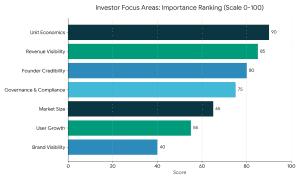
Quick Insight: 2026 investors are less focused on growth metrics and more on unit economics, founder credibility, governance, and revenue visibility.
 9 Ways of Fundraising for Startups in India

1. Angel Investors
Angel investors are individuals of high net worth who take part in the early startup companies as equity investors. In addition to capital, they too tend to be mentors, open networks, and strategists. Angel networks such as Indian Angel Network and Mumbai Angels are organized groups of people in India that assist seed and pre-seed startups.
Best for:
- Idea to MVP stage
- First external funding
- Founder-led businesses
Founder Tip:
In 2026, founders will need a track record of successful execution as well as articulate go-to-market plans. In our experience advising 200+ deals, angel rounds are most effective when the founder has a clear 18-month milestone plan to show the next funding trigger — not just a pitch deck.
2. Venture Capital (VC) Funding
Venture capital firms make investments in high traction and scalability opportunities. VC financing promotes aggressive expansion but contains governance, reporting, and exit demands. Best VC funds that finance Indian startups are Peak XV Partners (formerly Sequoia Capital India) and Accel.
Best for:
- Seed to Series C stages
- Scalable, tech-enabled models.
- Rapid market expansion
What VCs expect in 2026:
In 2026, Indian VC firms are prioritizing clean cap tables, strong unit economics, and either predictable revenue growth or clear usage momentum. Governance matters more than it did three years ago — founders who have never managed investor reporting often get caught off guard. FundTQ has advised equity fundraising mandates across consumer and healthcare sectors, and the single biggest pattern we observe: founders who arrive with investor-ready financials consistently close faster than those who don’t — in our experience across 200+ transactions, the difference is often measured in months.
3. Government Schemes for Startup Funding
The Government of India still contributes significantly to startup financing with grants, credit facilities, and equity. Most of the major programs involve Startup India, Atal Innovation Mission, and SIDBI.
Advantages:
- Lower dilution
- Subsidized loans or grants
- Founder-friendly terms
Best for:
Deeptech, industrial, social impact, and innovation startups.
4. Crowdfunding Platforms
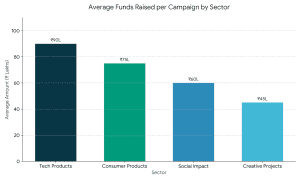
Crowdfunding enables startups to obtain small sums of money with a vast following using the web. It is effective with consumer brands, social ventures and creative products. Popular Indian platforms are Ketto, Wishberry and FuelADream.
Best for:
- Product validation
- Community-driven brands
- Early customer acquisition
5. Startup Accelerators and Incubators
Accelerators and incubators offer seed capital, mentoring, and access to investors. These programs are very selective and at the same time very valuable to the first-time founders. Global programs like Y Combinator and Techstars are open to Indian founders; notable India-based options include T-Hub, NASSCOM 10000 Startups, and iCreate.
Best for:
- Pre-seed startups
- Founders in need of organization.
- Early investor visibility
6. Bank Loans and NBFC Financing
Finance via banks and NBFCs provides the founders with the opportunity to finance their businesses without dilution of capital. By 2026, there will be increased financial institutions that have startup-specific products. ICICI Bank and NBFCs are institutions that offer working capital and growth loans.
Best for:
- Revenue-generating startups
- Asset-light businesses
- Short-term capital needs
————————————————-
Need help structuring a debt or hybrid raise?
FundTQ works with revenue-generating businesses on non-dilutive and blended capital mandates.

7. Bootstrapping
Bootstrapping refers to starting a business with self-funds or company income. Most of the successful Indian startups such as Zerodha started in the same manner.
Advantages:
- Full ownership
- Good financial discipline.
- Increased trust with future investors.
Best for:
SaaS, services, and profitable models.
8. Revenue-Based Financing (RBF)
Revenue-based funding enables start ups to pay back capital with a percentage of monthly revenue without equity dilution. D2C and SaaS startups are fond of Indian platforms, such as Klub and GetVantage.
Best for:
- Predictable cash flows
- Growth marketing spend
- Founder-friendly funding
9. Corporate Venture Funds
Strategic venture arms are ventures that are invested in by large corporations to foster innovation and partnerships. They are Reliance Jio, Tata Capital, and Google (via Gradient Ventures).
Best for:
- Strategic alignment
- Market access
- Enterprise credibility
How to Choose the Right Fundraising Option:
Ask yourself:
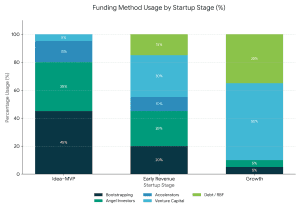
Choosing the right fundraising method comes down to four variables: your current stage, your revenue profile, how much equity you are willing to give up, and the speed at which you need capital. A pre-revenue founder chasing VC money will waste six months; a profitable founder bootstrapping when a strategic acquirer is circling will undervalue themselves. The right answer is rarely one source — growth-stage fundraises in India increasingly use a combination of equity and non-dilutive funding to optimise dilution while maintaining growth velocity. If you are unsure where to start, a preliminary valuation and funding strategy assessment can save you months of misdirected outreach.
startup fundraising timeline in India
Frequently Asked Questions – FAQs
Q. What are the most effective ways of fundraising for startups in India in 2026?
The most effective fundraising routes in 2026 depend on stage. Pre-revenue startups typically access angel investors, government grants (Startup India, SIDBI), or accelerator programs. Revenue-generating businesses have a broader set of options: venture capital for high-growth models, revenue-based financing (RBF) for D2C and SaaS companies with predictable cash flows, and bank or NBFC debt for asset-light businesses seeking non-dilutive capital. Founders at the ₹5 Cr–₹100 Cr revenue range increasingly benefit from investment banking advisory to access structured fundraises rather than relying on warm introductions alone.
Q. How long does startup fundraising take in India?
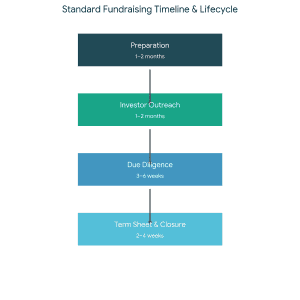
A typical fundraising cycle in India runs between 3 and 9 months from initial outreach to term sheet. Angel rounds at the pre-seed stage can close faster — sometimes in 6–8 weeks with the right network. Series A and beyond typically take 4–6 months minimum, accounting for due diligence, legal structuring, and regulatory filings. Founders who arrive with investor-ready financials, a clear data room, and a well-structured pitch deck consistently close faster than those who prepare on the fly.
Q. Can Indian startups raise capital without giving up equity?
Yes. Non-dilutive funding options for Indian startups include government grants under schemes like Startup India and the Atal Innovation Mission, working capital loans from banks and NBFCs, revenue-based financing platforms such as Klub and GetVantage, and in some cases, strategic corporate partnerships that provide capital without equity transfer. The suitability of non-dilutive funding depends on revenue stability and the startup’s ability to service repayment — it works best for companies with 12+ months of consistent cash flow.
Key Takeaways
- Startup fundraising in India takes time, planning, and commitment.
- The investors of 2026 appreciate sustainability and not hype.
- Founders are expected to combine sources of funds at various phases of growth.
- Good fundamentals draw in improved capital on improved terms.
Need Expert Fundraising Support?
Most founders who come to FundTQ have already spent 3–6 months in the market with limited traction. The issue is rarely the business — it is positioning, investor targeting, or pitch structure. FundTQ has advised over 200 transactions in India’s mid-market, including the Emami–Axiom Ayurveda acquisition (up to ₹200 Cr) and multiple growth capital raises in consumer, healthcare, and industrial sectors.
—————————————————-
If you are actively fundraising or planning to go to market in the next 6 months, start with a structured advisory conversation.




Comments (07)