Funding Your Skincare Startup: Step-by-Step Guide for Entrepreneurs
Looking to raise funding for your skincare startup in India? Here’s a complete step-by-step guide covering how much funding you need, where to get it, and how to pitch investors successfully. Whether it is organic serums or AI-enabled customized skin care regimes, consumers have never been more conscious and caring about their skin before. If you’re planning to start a skincare brand in India, this is one of the best times to enter the market. But one of the most important challenges in launching a skincare startup is to obtain funds.
This guide covers everything you need to know about fundraising for startups in India—from planning and pitching to scaling your business. Thus, whether it’s the very first seed funding for your startup or consideration towards investment banking services, or perhaps going the route of crowdfunding, this map will easily help you through its intricacies.
Get Funding for Your Skincare Startup
Want to know exactly how much funding your skincare startup can raise? Share your details and get a free funding assessment from our team.

Why Are Skincare Startups a Hot Investment?
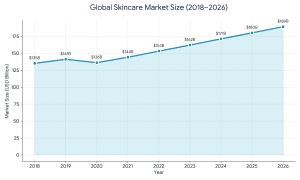
The skincare industry is projected to cross $200 billion by 2026, driven by rising disposable incomes, wellness awareness, and digital-first consumer behavior.
This growth is creating strong opportunities for new skincare brands, especially in niches like clean beauty, Ayurvedic skincare, and personalized products. There are various factors that will develop homegrown brand opportunity like the experience of increased disposable income in India, the wellness obsession of Gen Z and their consumer first approach to digital space.
Here’s why investors are increasingly drawn to skincare startups:
- Large Margins: The skincare business is sometimes associated with a large profit-margin, depending on a niche aspect such as clean beauty or vegan, or Ayurvedic line.
- Repeat Purchases: Skincare items need to be replenished on a regular basis as opposed to technology-related and fashion-related products, so they are always in demand.
- D2C Model Compatibility: Digital media enable the brands to sell their products to the users directly and without involving third-party.
- Influencer Marketing: Skincare is a purely visual product and it applies well to influencer and content marketing, which makes it appealing to contemporary investors.
How Much Funding Does a Skincare Startup Need in India?
It is best to evaluate your funding needs before you proceed to identify possible sources of funds. The start-up costs will depend on what business model you target to use, whether you intend to produce your goods, white-label suppliers, or create only e-commerce brand.
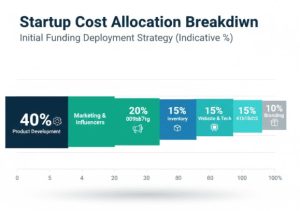 Here’s a realistic cost breakdown for launching a skincare startup in India:
|
Category of Expenses |
Proposed Cost (INR) |
|
Test and Product Development |
5,00,000- 15,00,000 |
|
Branding & packaging |
2,00,000 5,00,000 |
|
Set up Website and eCommerce |
1,00,000 – 3,00,000 |
|
Opening Stock |
3,00,000 – 10,00,000 |
|
Marketing & Influencers |
2,00,000 4-8,00,000 |
Depending on your scale, first startup funding requirements can range from ₹10 lakhs to ₹50 lakhs. It can go a long way and make your pitch stronger when you are clear about these figures.
Know exactly how much funding your startup needs
Get a customized financial plan & valuation
Top Funding Options for Skincare Startups
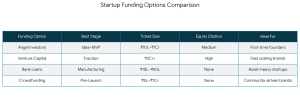 As a beauty founder, you’re not limited to a single funding route. Here are some options to explore:
1. Angel Investors
Perfect in the new, young skincare brands. They provide capital, as well as mentoring. One should find an angel with experience in FMCG, wellness, or D2C brands.
2. Venture Capital
VCs come when you have traction product-market fit, expansive customer base or a well-established brand equity. Venture Capitalists in India deal with consumer and lifestyle.
3. Startup Incubators/Accelerators
Such programs include Sequoia Surge, India Accelerator, or NSRCEL by IIM Bangalore which are funded programs as well as provide mentorship and access to a network of investors.
4. Bank Loans & MSME Schemes
Indian government and financial organizations provide business credits according to MSME and Stand-Up India programs: they are applicable to manufacturing-based companies in the skincare sector.
5. Investment Banking Services
When you’re ready to raise larger rounds (Series A or beyond), consider partnering with boutique investment banking services specializing in consumer brands and startup capital raising.
Not sure which funding is right for you?
We help you choose & connect with the right investors.

Creating a Skincare Business Plan That Attracts Investors
Investors look for clarity, scalability, and strong market demand in your business plan. An effective business plan is an indicator that you are not ignorant of the market and you have a scalable business.
Your Skincare Business First regarding are These Selected main points in Your Skincare business Plan:
- Problem and Solution: What solutions does your brand solve to issues in the skin? And why is it superior to what is available?
- Target Audience: Who is the target? Millennials? Gen Z? Men?
- Market Research:It includes industry trends, industry size, industry competition and white spaces.
- Product Strategy: Ingredients + certifications (no cruelty-free, organic) + the line development of products.
- Revenue Model: Margins, channels of sale and pricing.
- Marketing Plan: The influencer, online advertisement, real world events.
- Finance: How much are you asking, and what is it going to be used on?
- Financial Forecasts: 3 year revenues estimate, break even analysis.
The better your plan is, the more willing investors would be to invest in your startup.
Building a Minimum Viable Product (MVP)
Before raising funds, you should build a Minimum Viable Product (MVP) — a small set of products that helps validate demand and attract early customers. Your proof of concept would be an MVP. For skincare startups, this usually means developing a small batch of hero products to test market response.
MVP Creation Skincare Tips:
- Utilize contract manufactures to cut the cost.
- Pick 12 products or put both energy into 12 products (e.g. a face serum and a cleanser).
- Undertake dermatology tests and qualifications.
- Offer tests to those interested or beta testers.
A successful MVP can be your ticket to first startup funding and traction with D2C customers.
How to Pitch Your Skincare Brand to Investors?
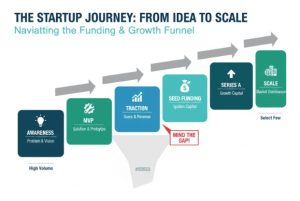 The pitch is a decisive part in your funding process.
Keys of an Excellent Pitch Deck:
- Vision Statement: Build on your Why.
- Market Opportunity: Allow one to demonstrate the amount, as well as, the possibilities of the skincare industry.
- Your Unique Solution: Your innovation, either ingredient, personalization or sustainability.
- Traction: success of the MVP, revenue, customer love, testimonials.
- Team: Present founders and specialists in the sphere.
- Ask: How many funds, to what?
Practice your pitch and tailor it to different types of investors some care more about numbers, others about brand story.
Strategies Of Crowdfunding That Work:
Crowdfunding is an awesome method to prepare your item, comprehend business viability and get financing without sharing responsibility.
To consider:
- Ketto and Wishberry of Indian projects.
- Kickstarter and Indiegogo to reach out to the world.
Tips:
- Make utterly enticing campaign pages.
- Storytelling- demonstrate your path.
- Provide rewards and special care packages.
- Use influencer shout outs to get traffic.
- This path does not only attract capital but also wins a community.
Grants and Competitions for Beauty Entrepreneurs:
In India, women and beauty entrepreneurs have access to many programs that they can rely on.
There are Opportunities such as:
- L’Oréal Women in Science and Business Awards
- Tata social enterprise challenge
- Startup India Seed fund scheme
- FICCI FLO Women Start up Awards
Winning grants or competitions not only funds your skincare startup but also helps in building credibility and press visibility.
Bonus Tip:
Bootstrapping: Advantages & Disadvantages
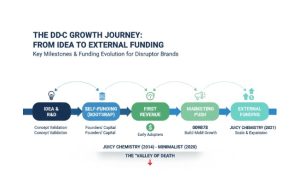
Many successful skincare startups like Juicy Chemistry and Minimalist began by bootstrapping—self-funding the business until revenues kicked in.
 Pros:
Pros:
- Complete ownership of your brand.
- Develop financial control.
- Narrow-based growth that is organic.
Cons:
- Small budget in marketing and staffing.
- Slower scaling.
- Risk of high personal finance.
A decent place to start would be bootstrapping in case you are not investor ready but have a great MVP and vision.
Scaling After Funding
After you secure your first round, then the game starts.
Focus Areas:
- Inventory Management: It is important to have regular availability of products.
- Brand awareness: Invest on Influencer campaigns, PR and video content.
- Technology: Modernise the website, web-based customer relationship management and supply chain systems.
- Team Building: Recruit professionals of marketing, R&D and customer service.
- New Markets: Enter second-tier cities or overseas shipments.
A constant need to determine such metrics as CAC, LTV, and ROAS could confirm the operational capital efficiency of the given company since any investor considers such a factor after making the investment.
Conclusion:
Making and scaling a skincare company does not just imply having an excellent product; it means building a brand around real issues with which the population has some emotional affinity and which grows sustainably. First startup funding, investment banking services, and crowdfunding should all be seen in light of the founder’s long-term vision.
There could be no better time to start with the growing beauty market in India, the interest of investors in wellness, and the population of digital-first customers. Always be ready, sell intelligently and keep on training. The future of investment banking and startup capital is more founder-friendly than ever—go claim your share.

FAQs: Funding for Skincare Startups
Q1. How do I get funding for a skincare startup in India?
You can raise funds through angel investors, venture capital, crowdfunding, or MSME loans.
Q2. How much funding is needed to start a skincare brand?
Typically ₹10 lakh to ₹50 lakh depending on scale.
Q3. Do investors invest in early-stage skincare brands?
Yes, especially if you have a strong MVP, traction, or unique positioning.
We work with D2C and consumer brands to help them raise funding, build financial models, and connect with the right investors.