Get Business Funding for Small Business

What’s the Best Way to Get Funding for a Small Business in India?

To open or grow a business, passion alone is not enough but the proper financial aid is needed. Small business funding opportunities are higher than ever before in 2026. Whether it is a new idea or expansion of an already formed business, understanding how to raise funds to start a small business or grow an existing one is the difference between success and failure.

Here in this guide we are going to discuss the most effective methods of acquiring funding of small business, primary sources, government programs, and intelligent methods of obtaining the correct kind of capital to suit your requirements.

Understanding Small Business Funding in 2026

It is important to first define what small business financing is before we plunge into the specific sources of funding.

Small business funding is any financial support to start ups or small business ventures to meet costs including:

  • Inventory or product development.
  • Hiring employees
  • Marketing and technological advancement.
  • Current assets or working capital.

As the global startup ecosystem is thriving, the need for funding assistance to small enterprises has never been greater. Governments, banks and individuals who just want to invest their money are all providing resources on how to support small funding to an idea of business that has potential.

Why Funding Matters for Small Businesses?

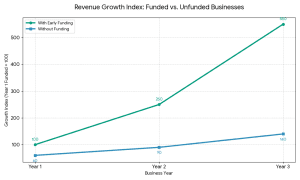
Why Funding Matters for Small Businesses

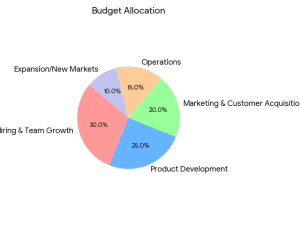
Growth comparison between funded and non-funded small businesses

Securing capital early can:

  • Increase cash flow and maintain business.
  • Grow faster by making investment in tools, talent and marketing possible.
  • Grow popularity among suppliers and customers.
  • Less risk through the diversification of sources of financial support.

To put it in a nutshell, the idea of starting a small business can become a successful company with the knowledge of how to raise funds.

Top 10 Ways to Get Funding for Small Business in 2026

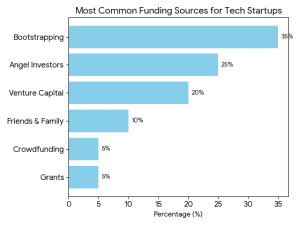
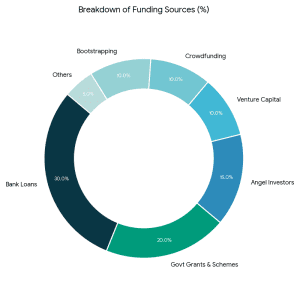
sources of small business funding

Common sources of small business funding globally in 2026

1. Government Grants and Schemes

Governments of all countries, such as small business or startup funding in India, provide grants, subsidies and low-interest loans to entrepreneurs.

Examples include:

  • MSME Loan Schemes in India
  • Startup India Seed Fund Scheme (SISFS).
  • Pradhan Mantri Mudra Yojana (PMMY) – small business micro-loans.
  • Small Business Administration (SBA) Loans of the U.S.

It is among the most suitable funding sources of a small business as it is usually associated with lower repayment.

2. Bank Loans

The traditional banks have still continued to be a trusted provider of loans to the small business. 

You can apply for:

  • Term loans (used to pay in installments over time).
  • Working capital loans (to cover cash flow)
  • Equipment financing

To increase approval, a well-developed business plan demonstrating profitability, market analysis, and ability to repay should be prepared.

3. Microfinance and NBFCs

Microfinance institutions and Non-Banking Financial Companies (NBFCs) will provide assistance in the event that you do not have collateral or a good credit history. They issue small financing business loans on flexible conditions, particularly in the developing markets.

This suits those entrepreneurs who want to get financial assistance to develop small businesses in the rural or semi-urban environment.

4. Angel Investors

Angel investors are also individual investors who risk using their personal funds in startups that have potential. By 2026, it is only a few clicks to find investors that focus on your industry by using digital platforms such as LetsVenture, AngelList, and SeedInvest.This is among the most effective small business funding choices in the case of a startup.

5. Venture Capital (VC)

In case your business has high growth potential, VC firms can provide huge funding rounds. They usually invest in the areas of technology, fintech, healthcare, and sustainability.

Although it implies relinquishing part of the ownership, the mentorship and exposure VCs will offer may accelerate the process of growth, and it is one of the most effective methods of obtaining funds to run a small business with scalability in mind.

6. Crowdfunding Platforms

Crowdfunding is a popular alternative source of funding. There are platforms such as Kickstarter, Indiegogo or GoFundMe that enable you to fundraise through the crowd.

You can provide first-time availability of products or benefits to supporters. It is a creative and democratic method of securing small funding business assistance without conventional loans or investors.

free pitch deck templates
7. Business Incubators and Accelerators

There are numerous incubators and accelerators that provide funding assistance to the small business ventures as well as mentoring, network, and space. Cash-based investor programs such as Y Combinator, Techstars, and Startup India Hub are business development programs.

Becoming an accelerator may be a game-changer to startups that want to obtain small business financing and develop.

8. Corporate Partnerships and Mutual Funds

Investment programs or small business mutual funds are managed by some large corporations to foster innovation. As an example, businesses can invest in startups that do not cannibalize their product ecosystem.

Not only can these partnerships provide funding to small businesses, they can also include technical expertise and market access.

9. Trade Credit and Supplier Financing

In case your business is dependent on suppliers, you can enter into a trade credit agreement which will enable you to pay after selling goods. It is a less known but efficient source of small business funds that can be used to handle stock without the initial expenses.

10. Bootstrapping

Bootstrapping refers to funding your business with personal savings / revenue. Though it restricts start-up capital, it provides complete control and eliminates debt.

This is an ideal choice in small business entrepreneurs that would wish to remain lean and autonomous and only seek outside business capital later.

Types of Funding for Small Businesses

Understanding the types of funding for small businesses helps you choose the right one:

Types of Funding for Small Businesses

Choosing the right type depends on your stage, risk tolerance, and repayment capacity.

How to Prepare Before Applying for Funding?

These are the main steps to follow before you can apply any type of small business funding:

  • Develop a powerful business strategy- Prepare your vision, market size, competition and financial predictions.
  • Develop your credit history- Good credit increases your loan chances.
  • Prepare financial records – Have tax returns, invoices and bank statements on hand.
  • Find the appropriate source of funds to use- You cannot use any blindly; you must find what suits you.
  • Show traction Evidence of customers, revenue/social proof increases investor confidence.

With proper preparation, you will be the best among the applicants who are in need of business finance to start small businesses.

Small Business Funding in India: 2026 Outlook

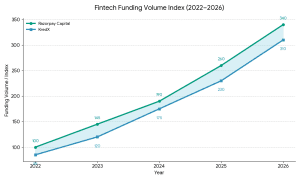
Growth of Small Business Funding in India

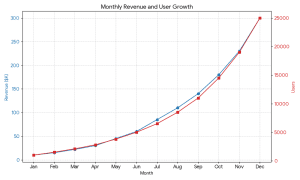
The line graph visualizing the projected funding volume index for fintech lenders like Razorpay Capital and KredX (2022–2026) has been created.

The startup environment in India is still booming amidst a boom in financing small business in India.

Key trends include:

  • E-loan services that have immediate approval.
  • Innovation grants and seed funds that are supported by the government.
  • The emergence of new fintech lenders, such as Razorpay Capital and KredX.

These advancements have rendered funding of small business easier than ever before with or without the conventional banking relations.

Challenges in Securing Funding

The opportunities are high but the entrepreneurs encounter struggles like:

  • Limited credit history
  • Insufficient collateral
  • Strong competition in terms of grants and VC funding.
  • Complex documentation

To overcome these, it needs to be persistent, have a network and learn the language of investors. Keep in mind, however, that it is not only about securing funds, but securing the right kind of funds to your small business.

business valuation software
Tips to Increase Funding Success

  • Network: Partake business and pitch events.
  • Use social proof: Focus on testimonials or awards.
  • Small and Big: Firstly get microfunding, and then grow.
  • Expand digital capabilities: Razorpay, ClearTax, Khatabook will assist in financial management and credit development.

As much as you might be starting afresh, these tips can help in streamlining your small funding business venture.

Conclusion: Choose Smart, Start Strong

It is not that there is a single best way of funding a small business in 2026; it is all based on what you want to achieve and the industry you are in and the level of risk you are ready to undertake. There are dozens of options of small business funding, starting with government grants and mutual funds and going to crowdfunding and angel investment. It is all about preparation: create a great plan, network, and strategize. And with the proper strategy, you will be able to attract business funding to grow your small business and make your dream of becoming an entrepreneur a real thing.

Learn about 9 Ways of Fundraising for Startups in India

Key Takeaway

Funding your small business is no longer about luck — it’s about strategy, research, and choosing the right mix of financing sources.

Raise Series A Funding

How to Raise Series A Funding in India (2025 Guide)

The Raise Series A Funding is an important step in the life of a startup that wants to grow beyond its initial momentum. Although seed funding assists to prove the fit of your product-market, Series A is regarding growth through expansion, gaining more customers, and maintaining sustainability.

The Indian startup ecosystem is also very competitive and data-driven in 2025. The investors are not just focusing on revenue anymore, they desire scale business models, clear unit economics, strong leadership teams, and robust growth strategies.

Composing a detailed FundTQ (one of the leading investment banking and fundraising advisory firms in India) guide takes founders through the preparation process to close off your Series A round, trends, important documents and timelines.

What Is Series A Funding?

The initial major institutional round of venture capital is Series A financing that a start-up company receives following demonstration of a sound concept and momentum.

Investors in Series A expect:

  • A clear problem-solution fit
  • Existence of market demand and traction.
  • A repeatable and scalable business model.
  • An effective and creative founding team.

Purpose of Series A funding:

  • Hire and scale your team
  • Expand products or services
  • Enter new markets
  • Improve operational abilities.

Concisely, Series A converts an idea that has been tested into a business that is ready to grow.

Series A Funding Size and Valuation in India

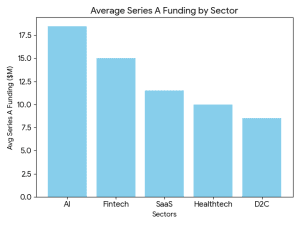
Series A funding amounts vary by sector, traction, and investor appetite. Typical ranges are:

Series A Funding Size

Tip: FundTQ helps startups determine realistic Raise Series A Funding amounts and optimal valuations using data-driven financial modeling.

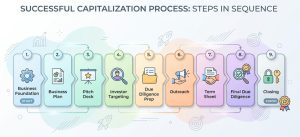
Step-by-Step Guide to Raising Series A Funding

Step 1: Strengthen Your Business Foundation
Make sure your fundamentals are good before approaching investors:

  • Market Opportunity: Identify your TAM, SAM, and SOM.
  • Business Model Clarity: Show how to make money and keep it going.
  • Traction Metrics: User growth, revenue, retention rates, CAC, LTV, engagement metrics.
  • Unit Economics: Focus on gross margins, burn rate and profitability potential.

FundTQ optimises financial forecasts and business models to fulfil the expectations of investors.

Step 2: Build a Comprehensive Business Plan

Your business plan must narrate the facts about your startup story:

  • Executive summary & vision
  • Problem-solution analysis
  • Market research/competitive environment.
  • Business model & revenue plan.
  • Financial estimates (35 years)
  • Risk analysis & mitigation
  • Scaling and expansion road-map.

FundTQ prepares investor-ready business plans that are in line with VC and PE requirements.

business valuation software

Step 3: Create a Winning Pitch Deck

The first thing people see is your pitch deck. Essential slides include:

  • Issue and marketing need.
  • Solution (product/service)
  • Product demo or screenshots
  • Traction & milestones
  • Market Strategy and Competitive Advantage.
  • Financials & projections
  • Team and advisors
  • Financing needs and expenditure.

The FundTQ produces brief, attractive decks that are compliant with the international VC standards.

pitch deck templates for Raise Series A Funding
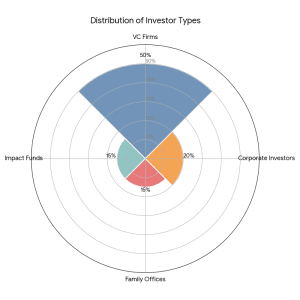
Step 4: Identify and Target the Right Investors

Not every investor fits so perfectly. Focus on:

  • Venture Capital Firms: Accel, Sequoia, Nexus, Chiratae.
  • Corporate Investors: Google for start-ups, Reliance Ventures.
  • Family Offices & HNIs: Best in niche and first mover.
  • Impact Funds: climate tech, healthtech and education ESG funds.

FundTQ offers selective access to investors in India and elsewhere in the world.

Step 5: Prepare for Due Diligence
Investors will verify:

  • Legal documents and registration of the company.
  • Tax filing and financial statements.
  • Cap table and equity structure.
  • IP ownership & customer contracts.
  • Regulatory compliance.

In order to facilitate due diligence, FundTQ performs pre-investment audits and establishes a virtual data room to facilitate the audit.

Step 6: Outreach and Investor Meetings

  • Provide a brief preview or summary.
  • Deliver your pitch deck through safe links.
  • Organize schedule and product demos.
  • Track follow-ups using a CRM

FundTQ deals with investor outreach and meetings in order to optimize interaction.

Step 7: Term Sheet Negotiation

A term sheet outlines:

  • Valuation and dilution of equity.
  • Board organization and control.
  • Rights & obligations
  • Exit terms

FundTQ gets good terms while ensuring that the founders maintain control.

Step 8: Investor-Led Due Diligence

Investors carry out intensive audits:

  • Card-related reviews and revenue recognition.
  • IP validation and legal audits.
  • Customer & vendor references
  • Compliance checks

FundTQ manages the coordination of all the teams in smooth due diligence.

Step 9: Closing the Round

Final steps:

  • Sign definitive agreements
  • Transfer of funds and allocation of shares.
  • Regulatory filings
  • Public announcement

FundTQ warrants conformity and smooth integration of post-funding.

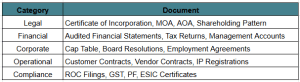
Key Documents Required for Series A

Key Documents Required for Series A

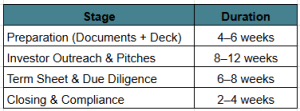
Timeline to Close Series A

Timeline to Close Series A


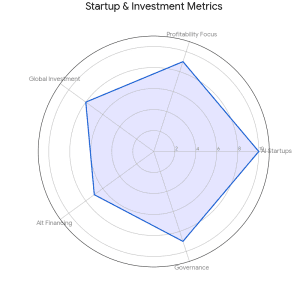
Trends in Series A Funding (2025 & Beyond)

  • AI-based Startups: AI and automation have high investor interest.
  • Profitability & Sustainable Growth: Healthy unit economics a priority.
  • Alternative Financing Models: Equity + Debt or revenue based financing.
  • International Investment Preference: US and SE Asian VCs are making more investments in India.
  • Corporate Governance & Transparency: Clean cap tables and reporting is compulsory.

 Why Partner with FundTQ

FundTQ provides the entire ecosystem of startups in need of funding:

  • End-to-end fundraising consultancy (Series A to and past)
  • Investment banking services (valuation, deal structuring, due diligence)
  • M&A advisory (sell side and buy side)
  • Support of pitch deck and financial modeling.
  • Investor relations and introductions.

Why FundTQ?

  • Successful history of Series A funding.
  • Availability of the best investors in India and around the world.
  • Professional financial and legal consultation of the closures.
  • Evidence-based decision-making and valuation.

FundTQ enables the founders to work on growth and handle the complexities of fundraising.

Ready to Raise Series A Funding?

For founders scaling their business in 2025, FundTQ makes the fundraising journey seamless. From financial modeling and pitch deck creation to curated investor introductions and deal closure, FundTQ provides end-to-end fundraising and investment banking support.

Contact us

What is Financial Modeling

Financial Modeling Explained: The Complete Guide for Beginners & Professionals

Have you ever been asking yourself, What is financial modeling? you are in the right place. Financial modeling is an important skill in finance, investment, entrepreneurship, and any other person who wants to make financial decisions based on data. With this all-in-one guide, you will dissect all information you need to know about financial modeling- starting with the basics, up to advanced concepts and on a step by step basis.

What is Financial Modeling?

One of the most prizes though least comprehended skills in financial analysis is financial modeling. Financial modeling aims at integrating accounting, finance, and business metrics in order to make a forecast about future outcomes of the business.

A financial model is plainly speaking a spreadsheet typically developed in Microsoft Excel, which predicts the financial performance of a business over an extended period. The projection is usually made on the past performance of the company, as well as the assumptions with respect to the future and needs creation of an income statement, balance sheet, cash flow statement, and supportive schedules (one of many types of approaches to financial statement modeling).

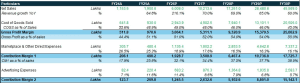
It is possible to develop more sophisticated models based on it such as discounted cash flow analysis (DCF model), leveraged buyout (LBO), mergers and acquisitions (M&A), and sensitivity analysis. An illustration of a financial modelling in Excel is provided below:

What is Financial Modeling


Core Highlights

– What is Financial modelling: It is a combination of accounting, finance and business metrics to develop a projection on the future outcome of a company.

– Financial modeling is mainly aimed at accurately modeling the future of a company in terms of financial performance.

– Modelling can be applied in valuing firms, in establishing whether to raise capital or to expand the business through acquisitions or organic growth.

What Is the Purpose of a Financial Model and How Is It Used?

Financial models are of numerous types and have a broad variety of applications. A financial model is applied to the output to use in decision-making and conducting a financial analysis, both internally and externally. Decisions are made using financial models regarding:

  • Capital raising (debt and/or equity).
  • Acquisitions (businesses and /or assets)
  • Expanding the business in-house (i.e. new stores, new markets, etc.).
  • Disposing of the assets and business units.
  • Budgeting and forecasting (planning the future years)
  • Capital investment (what projects to invest in priority)
  • Valuing a business
  • Ratio analysis/ financial statement analysis.
  • Management accounting

Types of Financial Models

Financial Model

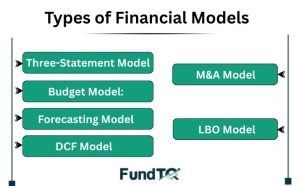
It is important to understand various types of financial models to be able to apply them. In the most frequent forms it is:

  1. Three-Statement Model: Combines income, balance, and cash flow statements.
  2. Discounted Cash Flow (DCF) Model: This is a model applied in valuation, which relies on anticipated cash flow and discount rates.
  3. Merger and Acquisition (M&A) Model: This is an analysis of the financial effect of a merger or acquisition.
  4. Budget Model: Assists firms in projecting income and expense.
  5. Leveraged Buyout (LBO) Model: It is the acquisition financing that is based on the debt financing.
  6. Forecasting Model: Estimating future revenue, costs and other significant measures of the project.

Steps to Build a Financial Model – Simple Way

Financial modeling is an important financial skill among finance practitioners, investors and business analysts. A properly designed model facilitates decision-making, valuation, budgeting as well as analysis of investments. These steps are to be followed in order to develop a trustworthy and precise financial model.

financial model template

1. Define the Objective

Defining the purpose of the financial model is important before creating it. Is it designed to be business valued, budgeted, forecasted or an investment analysis tool? The purpose defines how your model will be written, how detailed it will be and what kind of products it will give. Having a goal is a way of keeping your model focused and actionable.

2. Collect Historical Data

Prepare full historical financial statements, that is, income statements, balance sheets, and cash flow statements. Identify key performance indicators (KPIs) including revenue growth, gross margins, operating expenses, and capital expenditures. The basis of your model is made by accurate historical data, and enhances the reliability of forecasting.

3. Make Assumptions

Make real and information-based assumptions about your model, such as:

  • Revenue growth rates
  • Cost projections
  • Capital expenditures (CapEx)
  • The interest rates and financing costs.

Write clearly on what you assume, with reference where necessary. Clear assumptions make the difference between credibility and enable other people to comprehend and believe in your model.

Learn about: Financial Model for BPO Company

4. Design the Model

Develop a logical structure of your financial model:

  • Inputs: History and assumptions.
  • Formulas and projections: Calculations.
  • Outputs: Critical results, measures, and graphics.

Be clean in layout, colour coding and standard formatting. An effective model enhances usability and minimise errors and makes it easier to be reviewed by other people.

5. Forecast Financial Statements

Prepare the main financial statements according to your assumptions:

  • Income Statement: Revenue, costs and net profit.
  • Balance Sheet: Assets, liabilities, and equity.
  • Cash Flow Statement: operating, investing and financing.

Make your forecasts coherent and interrelated. Any modification in assumptions ought to automatically update all statements.

6. Perform Analysis

Discuss the implications of your model:

  • Financial ratios: The profitability ratios, liquidity ratios, and leverage ratios.
  • Scenario analysis: best-case, worst-case and base-case scenarios.
  • Sensitivity analysis: Evaluate the effect of variation in assumptions.

This is done to determine the risks, opportunities and the key drivers of values.

7. Review & Validate

Check the accuracy and logical consistency of your model:

  • Check formulas and calculations.
  • Compare past statistics with real statements.
  • Make sure that the assumptions are fair and fair.

It involves peer review or external validation which provides extra credibility.

Pro Tip: Maintain Transparency

Trust is essential in your financial model, and transparency is the key to it. Clarify assumptions, sources, and methodology in a clear manner in order to make stakeholders recognise the importance of your analysis. Not only that increases the confidence in your conclusions but also increases your professional credibility.

business valuation software
Tools for Financial Modeling

While Excel remains the most popular tool, other software enhances modeling efficiency:

  • Microsoft Excel
  • Google Sheets
  • Specialised Tools

Common Mistakes to Avoid

  • Over-complicating formulas
  • Ignoring historical trends
  • Based on impractical assumptions.
  • Lack of conducting scenario analysis.
  • Failing to update the model on a regular basis.

Note: All financial models are as good as the assumptions and data on which they are based.

Bottom Line

Financial modeling is an effective tool that enables the professionals to make quality financial decisions. Learning about its forms, elements, and optimal practices, both novices and specialists can utilize the potential of financial data to the fullest extent.

Financial modeling is the backbone of modern finance whether you are predicting revenue, valuing a business or looking into the investments. Begin training nowadays, and convert raw data into strategic knowledge.

Healthcare Investment Banking

The Best Healthcare Investment Banking Firms [Updated List]

The global healthcare sector is one of the most dynamic and complex industries, shaped by innovation, regulation, and demographics. This blog outlines a comprehensive guide through healthcare investment banking, the specialised financial world that drives changes and why it holds vital importance in today’s economy.

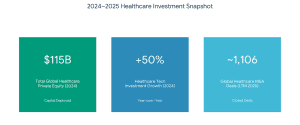
Global investment in healthcareWhat is Healthcare Investment Banking?

Healthcare Investment Banking or HIB is a special segment of investment banking sectors that specialises exclusively in providing financial advisory services to organisations working within the diverse healthcare industry. These include pharmaceutical companies, biotech firms, regulatory services, medical device manufacturers, healthcare service providers (hospitals, clinics, nursing homes), and healthcare IT firms.

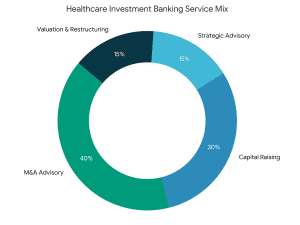
healthcare investment banking servicesHealthcare Investment Banking provides a varied area of services. Key services include:

  1. Mergers and Acquisitions (M&A) Advisory: Advising the healthcare sector on buying, selling or merging with other entities to achieve strategic goals, expand market presence or acquire new technologies/products.
  2. Capital Growth: Investment Banks help healthcare companies raise capital through debt and equity markets including Initial Public Offering (IPOs). Follow-on offerings, private placements and debt financing to fund overall growth, to fund overall growth and Research and Development (R&D) expansion.
  3. Strategic Advisory: Provides able guidance on critical corporate finance matters like financial restructuring, joint ventures, spin-offs and divestitures.
  4. Valuation Services: Conducting a detailed financial analysis to evaluate the fair value of assets, businesses or intellectual property for transactional or reporting purposes.
Healthcare Investment Banking

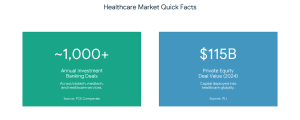
Core reasons healthcare IB is sought after: high deal value and diversified deal flow.

Why Healthcare Investment Banking Matters?

The support and strategic planning that investment banking provides is crucial for the continued evolution and stability of the global healthcare system.

  1. Innovation and R&D: When a company decides to bring a new medical device or a new drug to the market, it requires a huge amount of financial commitment. Investment Banks in this regard helps raise capital and fund extensive, high-risk R&D pipelines, and clinical trials. Without this funding, life saving innovations would stall.
  2. Mergers and Acquisitions (M&A): M&A is an important characteristic of the healthcare sector. Investment banks advise on these critical deals.
  3. Regulatory Complexity: Investment Banks bring with them special knowledge and expertise to structure deals that comply with the complex rules of the healthcare industry. The healthcare industry is heavily scrutinised and regulated by bodies like FDA, CMS, and other international equivalents. This makes sure that transactions don’t run afoul of antitrust laws or healthcare-specific regulations.
  4. Global Growth: Investment Banking Firms help the healthcare sector in cross-border deals and capital flows. It globalises access to new medical technologies and care models.

How to get into Healthcare Investment Banking: Prerequisites and Background

For a successful career in Healthcare Investment Banking (HIB) strategic planning and effective decision making is the key to success. 

Educational Background

  • For undergraduate majors, the most common and preferred subjects are finance, accounting, economics or business as they help develop a basic foundation and understanding of corporate finance, valuation and statement analysis.
  • A post graduate background with an MBA for professionals changing careers or are from non-traditional backgrounds from top tier b-schools is helpful. Programs like Masters in Finance (MFin) are also relevant alternatives, equally resourceful and helpful.

Internships

  • Internships are arguably the most important and critical factor in securing a full-time position in healthcare investment banking. They serve practical experience, corporate exposure and a training period.
  • Seeking summer analyst programs at specific healthcare boutique firms is specifically important.

Specified Knowledge

  • Specialised knowledge about the field is necessary. Both technical and industry knowledge are essential. Nuanced technical expertise and practical industrial experience help handle the sector’s unique assets and business models.
  • A person who is well versed in advanced financial modeling, who is proficient in all standard valuation methodologies (DCF, comparables, precedent transactions) who has an understanding of effectively applying them is always preferred.
  • In depth industrial knowledge of the healthcare ecosystem is equally crucial.
  • Understanding the four main HIB sub-sectors is also important in dealing with the overall HIB dynamics.
      1) Biopharma
    2) Medical Devices and Diagnostics (MedTech)
    3) Healthcare Services
    4) Healthcare IT

The Top Healthcare Banking Firms in 2025

The future of investment banking in healthcare in 2025 is an ever-changing story, as technology advances in biotech, digital health, and worldwide calls to medical technologies keep growing. The investment banks that have an experience of the sector. Have become very important in the future of healthcare financing, mergers, and offering to the public. The following is a closer examination of the leading companies that will dominate healthcare investment banking in 2025 each with an excellent advisory service, deal execution and strategic insight.

Also Read: 7 Effective Tips to Secure Funding for Medical Device Startup

#1 Goldman Sachs

Goldman Sachs, being one of the largest investment banks across the world, continues to hold a dominating position in the healthcare industry. The company still consults on billion-dollar biotech mergers, pharmaceutical IPOs, and acquisitions of enormous healthcare technology firms. Goldman Sachs is highly preferred by healthcare companies to grow strategically and raise capital due to its international network, advanced market intelligence, and investor relations.

#2 FundTQ – Healthcare Investment Banking Division

FundTQ is a unique healthcare investment banking company that is focused solely on life sciences and the health system ecosystem. The division offers strategic partnerships, venture capital, and growth capital deals along with expert advisory service in M&A. What distinguishes FundTQ is its robust understanding of the industry, data-driven valuation models, and close partnership with healthcare innovators, both small biotech startups and established medtech businesses. The emphasis on precision, partnership, and performance has made FundTQ a trusted company as far as healthcare investment banking is concerned, at least, in 2025 and beyond.

#3 Morgan Stanley

With its strategic precision and innovative approach, Morgan Stanley continues to provide excellent solutions for healthcare clients around the world. The firm’s healthcare investment banking practice is expert in equity and debt financing, cross-border mergers and strategic restructuring. By combining cutting-edge analytics and insights into the global market, Morgan Stanley empowers healthcare companies to navigate the complexities of the financial landscape with clarity and confidence.

#4 Bank of America Merrill Lynch

A world leader in corporate finance, Bank of America provides a robust portfolio of healthcare advisory services spanning the spectrum from capital raising to mergers & acquisitions. Its specialized healthcare business specializes in pharmaceuticals, healthcare services and biotechnology, offering clients unmatched access to capital markets and financial structuring expertise. The company’s combination of banking expertise and industry knowledge makes it a leading player in the field of healthcare investment banking in 2025.

#5 Lazard

With a long standing history and an independent model of advice. Lazard provides high value strategic advice to healthcare companies around the globe. Its healthcare practice deals with intricate M&A, restructuring, and capital advisory deals. Enabling clients to make well-informed decisions that fuel sustainable growth. Lazard’s reputation for trust, independence and analytical depth continue to make it one of the most admired names in healthcare investment banking.

#6 Evercore Partners

As one of the world’s leading independent advisory firms, Evercore Partners has elite sector expertise in healthcare. The firm’s healthcare investment banking group is consistently ranked as one of the most active in biotech and life sciences deal activity. Evercore’s client-centric approach, coupled with analytical depth and senior-level involvement, guarantees exceptional results for clients seeking transformative healthcare deals.

#7 Centerview Partners

Centerview’s healthcare team continues to be a leader in advising on some of the largest and most complex dealings in the global healthcare industry. With a deep focus on long-term strategy and operational excellence. Centerview’s senior bankers provide unparalleled advisory services in pharmaceuticals, biotechnology and healthcare services. Their commitment to precision and collaborative solutions distinguishes them in a competitive market.

Trends Driving Healthcare Investment Banking in 2025

The five major trends that are significantly shaping the healthcare Investment Banking sector are 

  1. Telemedicine and Digital Health
    The shift to the hybrid care models and the massive investment in AI driven solutions like diagnostics,workflow automation, and other AI-driven tools. Are consolidating the fragmentation of the digital health market. Deals which focus on integrating technology for greater efficiency and value based care are preferred.
  2. Biotech Innovation
    This is driven by the want to replenish pipelines, big pharma companies are pursuing a “string of pearls”  strategy. Acquiring early to mid stage biotech assets in high growth areas like oncology, immunology and rare diseases. IPO activity for quality, differentiated biotech firms is expected to gradually pick up.
  3. Aging population
    Demographics are boosting demand and investment in the sectors that cater to the needs of elderly and senior citizens. Home health services, senior living facilities and specialised medical devices and pharmaceuticals for chronic conditions.
  4. Global M&A Activity
    Following a period of volatility, M&A is set for a strong comeback exaggerated with corporate cash reserves and a need for strategic scaling. Mid-sized deals and cross border transactions are highly concentrated as companies seek to optimize portfolios and mitigate supply chain risk.
  5. Healthcare IT
    Technology cuts production costs and improves the experience of patients. This drives investment in cybersecurity, revenue cycle management (RCM) automation and data analysis to achieve efficiency in operations for providers and payers.

business valuation software
Choosing the Right HIB

Selection of the right HIB for your company is critical to maximising transaction value and success.

Key Criteria include 

  1. Sector Expertise
    Banks with deep, specialised focus with able sub-sector experience in the past. Recent relevant deal history demonstrates an understanding of nuanced industry drivers and valuation benchmarks.
  2. Deal History
    A strong expert history of successful transactions that are similar to what a company is looking for provides credibility and confidence. Analysing the bank’s ability to secure favorable valuations and structure complex deals.
  3. Investor Network
    The overall network of investors or relevant strategic buyers, private equity firms and institutional investors is paramount. A strong network ensures competitive tension and increases the pool of potential partners or acquirers.
  4. Global reach
    For companies with cross border aspirations an investment bank with global reach and proven experience is essential. Presence and relevant experience it is essential to navigate regulatory and geopolitical complexities in different markets.
get medical startup funding
Final Thoughts

The healthcare Investment Banking scenario in 2025 is defined by innovation and consolidation. As technology develops, care delivery and large multinational corporations and large multinational corporations seek to secure future revenue streams. Companies must ally with an investment bank that possesses deep sector knowledge, an efficient team, extensive investor network, and technology-driven services.

To learn more about FundTQ’s Healthcare investment banking services, visit FundTQ’s Services Page or contact our advisory team.

Mergers and Acquisitions

Mergers & Acquisitions Explained: The Role of Investment Banks in M&A Deals

In the modern business environment where business entities are in high competition and striving to achieve faster growth, diversify operations, and enhance market presence, business entities seek Mergers and Acquisitions (M&A) to achieve their objectives. Globalization and aggression among competitors in industries is causing M&A activity to extend across different industries and the size of businesses. Companies seek investment banks to navigate through such complex transactions so as to unlock the maximum value.

These financial institutions play a crucial and often decisive role in executing M&A deals successfully.

What Are Mergers and Acquisitions?

Mergers and Acquisitions (M&A) refer to the process where companies or their key assets are combined through financial transactions. This can happen in several ways:

  • Buy and fully absorb another company
  • Merge with another company to create a new combined entity
  • Acquire some or all of another company’s major assets
  • Make a tender offer to purchase the company’s shares directly from shareholders
  • It may carry out a hostile takeover, even without the target company’s approval

All these methods fall under M&A activities, as part of broader SME growth strategies,  where businesses are combined or restructured. The term M&A also refers to the specialized departments in financial institutions that help plan, advise on, or conduct these transactions.

What Do Investment Banks Do in M&A Deals?

During the stages of M&A, various strategic, financial, legal, and operational issues must be handled. A well-organized, professional structure has been ensured through the involvement of investment banks. These are the roles that are normally executed:

1. Deal Origination and Strategy

Investment banks conduct extensive research on the industry, and through networking, as well as their databases, suitable targets or buyers have been identified. Strategic justification of the deal has also been carried out, such as the identification of synergies and matching them to the long-term corporate interests.

2. Company Valuation

Fair valuations have been determined using financial models and analysis of previous transactions to create precedent and discounted cash flow (DCF) products to determine fair valuations. Valuation services offered through mergers and acquisitions services have helped stakeholders understand both standalone and synergistic values.

3. Diligence Organization

Investment banks have orchestrated due diligence processes that have been financial, legal, tax, commercial, and operational in nature. Outside experts in third-party companies are often called in to do the specialist work, and it has been managed centrally by the bank on matters of coordination and integration of the results.

4. A Deal Plan

Designers structured equity swaps along with asset purchases, stock leveraged buyouts, equity mergers, and stock-for-stock mergers. They considered taxation, regulatory compliance, and future exit routes during the process.

5. Negotiation & Execution

The investment bank has facilitated the discussion of the price, payment terms, representations, warranties, and indemnities. It has also addressed legal documentation, coordination with various parties, including lawyers, accountants, regulators, etc.

At every phase, Strategic insights have always been combined with tactical focus at each step to make sure that there is not only alignment between stakeholders but also an optimal result.

Buy-Side vs. Sell-Side Advisory in M&A

Investment banks can be retained by either party in a transaction. They provide two distinct, yet related, services:

Buy-Side Advisory

On the buy side, the investment bank has worked with companies or investors looking to acquire other businesses. This has involved:

  • Initial outreach and maintaining confidentiality.
  • Conducting valuation and detailed business project operations. 
  • Negotiating and ensuring the transaction closes. 
  • Buy-side engagements are usually sought after by the private equity firms, large enterprises, or multinational companies, looking to acquire to expand.

Sell-Side Advisory

With sell-side engagements, the investment bank has been retained by companies, founders, or institutional shareholders looking to sell either a whole or partial stake in their company. Their responsibilities included:

  • Creating investment teasers and information memorandum
  • Run competitive bidding processes
  • Filtering potential buyers and communicating
  • Managing due diligence and closing the transaction

During the sell-side process, keeping information private, working efficiently, and realising value have been the main priorities.

Buy-side modeling vs sell-side modeling :

Investment bankers on the sell-side and private equity professionals on the buy-side build M&A models to estimate transactions. Bankers create models that they share with potential buyers of the business. These models must be highly presentable, easy to understand, and usable by all involved parties. Although this model will be provided to firms on the buy side by the banks, they will usually develop their financial model to have 100 percent assurance in the analysis.

Why Companies Rely on Investment Banks for M&A?

M&A are always a high-stakes transaction. They require financial expertise, industry comprehension, and negotiation skills. Organizations, especially ones with limited internal resources, have relied upon investment banks for:

1. Expertise

All relevant disciplines – finance, the law, tax, and regulation have been roofed under one supplier. They have read market dynamics and the mood of investors to help companies make better decisions.

2. Access

Relationships with types of investors, corporate, and private equity firms have allowed investment banks to develop qualified leads and generate competition in the auction.

3. Confidentiality

Investment banks have handled sensitive information discreetly to prevent speculation in the marketplace and disruption internally. They have consistently enforced NDAs are more importantly controlled who sees the buyers’ list so companies can maintain their strategic opportunities for as long as possible.

4. Efficiency

They have managed the timeline, from documentation all the way through to scheduling and negotiation. We expedited processes that typically take months, reducing the risk of execution

5. Negotiation Power

Effective support for companies during the negotiations has been provided by the bankers as strategic advisors – this added the correct dose of neutrality. This has enabled companies to have the proper level of rational pricing discussions and improved negotiations.

Conclusion: 

The world of M&A has been shaped by the shifting markets, changing regulations, and increasing investor movements of the day. In this complicated environment, successful deal results have depended heavily on someone skilled in the advisory role that investment banking services provide.

For businesses, at any stage, whether it’s mergers, acquisitions, or fundraising, an accurate valuation process goes hand-in-hand with effective deal structure and strategy! 

Try FundTQ’s free business valuation calculator to get instant insights, industry benchmarks, and investor-ready reports.

Key Takeaways:

  • Companies merge through strategic processes, and acquisitions result in changes of ownership carried out deliberately.
  • An investment bank is very important in all the processes, such as sourcing, valuation, due diligence, structuring, and execution of the deals.
  • Investment banks are advisers on either the buy-side or the sell-side.
  • Companies rely on investment banks for their expertise, market access, confidentiality, efficiency, and bargaining power.

FAQs

1. What is the role of investment banks in M&A?
Investment banks recommend mergers, design them, and provide the same. They also give valuation, due diligence coordination, strategic analysis, and due diligence to the negotiations. 

2. What does a buy-side value-added investment bank do in M&A?
Added value was brought by them, such as identifying the appropriate acquisition targets, negotiating acceptable terms, and finally seeing that due diligence and the closing of the transaction take place well. 

3. Is it just large companies that can avail of M&A services?
Mid-market and emerging companies actively engage mergers and acquisition advisory services to pursue strategic expansion, exit strategies, or reorganisations.

4. What then is the difference between consulting and investment banking when it comes to M&A?
Investment banks specialise in making deals, valuations, and capital structuring. The consulting firms, in turn, are more interested in the post-merger integration and business strategy. 

5. Is it possible to use investment banks in cross-border M&A?
Yes. Global investment banks have capabilities of crossing borders, such as compliance knowledge, cultural alignment assistance, and a global network of investors. 

business valuation report online

Can I Get a Free Business Valuation Report Online?

Understanding the financial worth of a business is crucial in scenarios such as fundraising, planning equity distribution, or preparing for mergers and acquisitions. One of the most convenient ways to access this data today is through a business valuation report online. Although traditionally, valuations were achieved by contracting financial consultants, they are currently becoming available in the form of free digital tools, all of which can make the valuations accessible to early-stage founders and small businesses.

This article explores what a business valuation report is, how free tools like FundTQ – Asia’s Leading startup valuation calculator work, and how these insights can attract investors, prepare pitch decks, and raise funds confidently.

What Is a Business Valuation Report?

A business valuation report is a document created professionally to represent the estimated financial worth of a company. It not only gives the business valuation in a monetary value, but it also details the methodologies, assumptions, and growth projections used in the calculation.

It is commonly required during:

  • Fundraising for startups in India or abroad
  • Discussions with investment banking services
  • Equity sharing between co-founders or workers
  • Strategic plans regarding expansion or exit
  • The use of regulations or taxation

In most valuation reports, methods such as discounted cash flow (DCF), comparables, revenue multiples, or post-money valuation models are applied. The output is presented as an estimated value range, supported by assumptions and benchmarks.

Can a Business Valuation Report Be Obtained for Free?

Yes, free valuation tools are being offered by various fintech and startup-support platforms. These reports are auto-generated using sophisticated calculators as opposed to being prepared manually. The founders should not include any other details besides the bare minimum, such as revenue, growth rate, and market potential. Based on this little information, a valuation report can be created on the fly.

The estimate provided by a tool might not provide as accurate a result as the one that can be created by professionals, but such reports are regarded to be equally accurate during decision-making at earlier stages, preliminary negotiations with investors, and long-term planning

Startup valuation without revenue can also be performed using model-based logic built into such platforms.

Previously, valuations were typically conducted by professionals, with fees ranging between ₹50,000 and ₹2 lakh. However, with the emergence of these tools, even startups without current revenue can be valued using qualitative models such as the Berkus method, which assigns value to ideas, teams, and traction, the Scorecard method, which compares startups to industry averages, or quantitative techniques like the Discounted Cash Flow (DCF) model, which calculates value based on projected future cash flows.

Best Free Business Valuation Software

1. FundTQ – Asia’s Leading Startup Valuation Calculator

FundTQ has been recognized for providing one of the most detailed and startup-friendly business valuation reports onlineCurrently trusted by over 25,000 early-stage founders, the platform has been streamlined to be used by the Indian and Southeast Asian pre-revenue and early-revenue startups.

Key Features:

  • AI has enhanced valuation
  • Models of a given type of startups are applied (D2C, SaaS, marketplace, etc.)
  • Reports are available in a  PDF exportable format
  • Post-money valuation insights are included
  • Specific industry-based benchmarks are offered

In addition to valuation, the tool has been integrated with fundraising checklists, pitch templates, and investor readiness assessments. It is especially relevant for those pursuing fundraising for startups or engaging in startup fundraising in gurugram, Bengaluru, or Mumbai.

2. Equidam

A global tool in which the valuation is computed by five blended methods. Although it has a free version that provides basic data, complete reports can be bought.

3. StartupValuation.io

A  lightweight calculator that makes an approximate estimate based on the input reasoning. Simple assumptions are utilised, but no breakdowns on the details are given.

What Can Be Expected in a Free Business Valuation Report?

Based on a free valuation tool, as a founder, you will be issued with a document that contains:

  • Estimated Business Value

A range of values can be determined (e.g.,₹1.8–2.4 crore) on the basis of moving inputs like revenue, expense, and market.

  • Industry Benchmarks

The data in terms of sector is compared so that you understand the place of your startup in terms of growth, margins, and capital requirements.

  • Explanation of the Valuation Model Used

Information regarding whether the calculation was made using a DCF, Scorecard, Berkus or multiple-based model.

  • Assumptions and Inputs Summary

Such aspects as revenue growth, CAC/LTV ratio, operating margin, and cash runway are also clearly provided.

  • Fundraising Impact

If funding is being planned, post-money valuation figures are included to show expected dilution and valuation after fundraising.

How Should Free Valuation Tools Be Utilized?

Free valuation tools are very effective; however, their effective utilization comes when they are implemented strategically. The following is how the maximum value can be obtained:

1. Investor Discussions Should Be Initiated Using the Report

The report can be attached to your pitch deck or included as part of your outreach to top venture capital firms.

2. Updates Should Be Made Frequently

It is suggested that every 30 to 45 days, the report should be regenerated because startups quickly react to market encounters.

3. Competitor Analysis Should Be Conducted

The report offers benchmarks that should be contrasted with other startups in your industry.

4. Report Data Should Be Aligned with Pitch Deck Slides

Valuation assumptions and revenue projections should be on the same line as those in the deck to be credible.

When these actions are taken, valuation becomes a growth tool rather than just a financial figure.

Free Pitch Deck Templates to Enhance Fundraising

In addition to the valuation report, a number of tools provide free resources to help startups raise funds. At FundTQ, founders get a series of high-conversion pitch deck templates offered very freely.

Templates Are Designed To:

  • Align your messaging with valuation insights
  • Highlight traction and projections clearly
  • Avoid common pitch deck mistakes
  • Meet investor expectations for fundraising for startups in India

Included Templates (available on FundTQ.com):

  • Investor Pitch
  • B2B SaaS Fundraising Deck
  • D2C Pitch Template
  • One-Page Teaser
  • Presentation of a Growth-Stage Startup
  •  Excel Financial Forecasting Template
  • Problem–Solution–Market–Model Slide Kit

These templates are being widely used by those preparing for startup fundraising in Gurugram and other metro ecosystems.

Conclusion :

Ready to get your free business valuation report? Start now with FundTQ and explore pitch deck templates to supercharge your fundraising

These reports:

  • Assistance in finding a start-up worth
  • Provide realistic expectations for fundraising for startups
  • Cut the cost of using costly consultants
  • Bring in transparency amongst founders and investors

To get professional assistance, larger rounds of funding or a due diligence event must be enlisted. However, in the case of early-stage ventures, business valuation report online are a decent place to start, and combined with the startup valuation calculator tools, such as FundTQ.

Key takeaways:

1. Business Valuation Report online is a strategic tool for startups and SMEs by providing information on the projected market value, potential funding prospects as well as investor preparedness, at an early stage of operation without incurring expenses on paid consultancy. Free business valuation tool, such as FundTQ – Asia’s Leading startup valuation calculator, allow entrepreneurs to generate professionally structured valuation reports based on proven methodologies like DCF, VC method, and revenue multiples.

2. These free reports normally have:

  • Approximate business value (pre-money valuation/post-money valuation),
  • Industry benchmarks,
  • Financial assumptions
  • Model explanations are used for calculation.
  • These free tools help to establish a valid basis of pitching, financial planning, and strategic decision-making, although, needless to say, they cannot be taken as a replacement for a large-scale due diligence or professional audit.

 3. The other resource that FundTQ provides is free pitch deck templates, which can assist founders in aligning their valuation story with what investors expect, as well as help streamline fundraising paperwork.

4. Even startups that are at pre-revenue or idea stage can apply these tools to provide indicative valuations by concentrating on market size, innovation, and founder profiles so that they can raise funds even before they necessarily have any traction.

5. When used alongside resources like the fundraising checklist access to top venture capital firms, and localized support such as Startup fundraising in Gurugram, the free valuation report, becomes a powerful launchpad for early capital.

6. Free valuation reports are considered the best recommendation to the founders looking to start their journey into Indian and overall global capital systems, providing them not only with some proper organization of insights alongside visibility but also validation at zero cost.

FAQs

1.Is a free valuation report as good as a paid one?

They are fairly trustworthy in the preliminary planning. Such ascertained tools as FundTQ employ an approved startup valuation process to provide realistic figures.

2. Can a valuation report be used when meeting investors?

Yes. Many founders share their valuation reports in pitch meetings or emails to showcase credibility and preparation

3. Do these tools work for companies that do not generate revenue, yet?

Yes. Models like Berkus or Scorecard allow startup valuation without revenue using qualitative and projected factors.

4. Do these tools need the contribution of an expert?

No. The majority of the platforms do not require a financial knowledge base to use them by founders.

5. Does such a tool have pitch support or templates?

Yes. Platforms like FundTQ also offer fundraising checklists, pitch decks,business valuation report online, and advisory resources tailored for early-stage ventures.


Startup Valuation Calculator

Asia’s Leading Startup Valuation Calculator (Free to Use!)

In competitive startup ecosystem valuation has ceased being merely a number but, having become a strategic asset. As a founder, it is very necessary to understand the true value of their venture as a confidence builder to investors, and fetching the right capital to invest in the venture and making informed business decisions at all stages of maturity. To support this need, FundTQ offers a robust, free-to-use, and founder-focused Startup Valuation Calculator, designed specifically for the nuances of the Asian market. Whether you’re preparing for first startup funding, validating your financials for a VC pitch, or refining your business roadmap, this intelligent tool delivers reliable, real-time valuation within minutes empowering startups with clarity, credibility, and confidence.

Why Accurate Valuation Matters for Startups?

Valuing your startup is not all about attaching a price on your idea. It is all about showing the world something believable based on numbers. That is why it is important:

Establish Trust amongst Investors
A well-grounded valuation enhances trust among investors by showcasing a balanced view of potential and risk. It demonstrates your readiness for fundraising for startups in India and beyond.

Make Attainable Goals
Getting to know your value will enable you to achieve fundraising goals that you are able to raise and select the appropriate instrument, whether it is equality, debt or convertible notes.

Make It Easy to Negotiate
Data-driven valuation puts founders on the same level with investors, eliminating confusion about valued prices and shortening decision time..

Obtain Transparency and Clarity
Regardless of whether you opt to employ talent through stock options or giving them founder equity it is easier when the valuation is proper to communicate ownership, and expectations.

With fundraising for startups becoming more competitive across Asia, having a valuation tool that’s tailored to local markets is no longer optional rather it’s essential.

What Is FundTQ’s Startup Valuation Calculator?

Startup Valuation Calculator by FundTQ is the next-gen tool developed solely by founders of the Asian region. It harmonies the process between the international valuation techniques and local start-up realities.

Instant Real Time Valuation in Minutes

There is no waiting for consultants. It only takes a few minutes to put in your business data and get a professionally prepared court-ready data-driven valuation report at any place and around the clock.

Asian Markets oriented

FundTQ actively tailors startup valuations to dynamic markets like India, Southeast Asia, and MENA by accounting for local traction, regulatory frameworks, and regional cost structures.

Robust Valuation Technique

The tool uses valuation methods that are globally accepted and among them include:

  • Discounted CashFlow (DCF)
  • Risk Factor aggregation.
  • Scorecard Valuation
  • Berkus Method
  • Venture Capital Kaizen method

Also Read: Business Valuation Simplified: Step-by-Step with Online Calculators

Free & User Friendly

Unlike complex business valuation software, FundTQ’s platform is intuitive, educational, and completely free,making it accessible for all founders, regardless of financial background.

Step-by-Step Walk through of FundTQ’s Valuation Calculator:

So, here are four simple steps to the accurate startup valuation:

1 Step -Enter Business Fundamentals

  • Provide such details as industry, pre or post-revenue stage of business, business model (B2B, B2C) and the strength of your team.

 2 Step – Advanced Metrics (Optional)

  • Add such financial KPIs as monthly burn rate, annual recurring revenue (ARR), EBITDA, customer acquisition cost (CAC), and market size. These assist in fine tuning of precision.

3 Step -Select Valuation Method (s)

Choose one, or several methods depending on your level:

  • Early-stage? completely Try Berkus or Scorecard Method.
  • Revenue-generating? Just use DCF or VC Method
  • Uncertain future? Carry out the Risk Factor Summation.

4 Step- Create Valuation Report

Get a report that you can download containing:

  • Rationale-valuation range
  • Methodology breakdown
  • Best-case and worst-case sensitivity analysis We perform a best-case and worst-case sensitivity analysis because we want to draw on the total experience of all the companies that have successfully implemented S.
  • Investor-readiness score

This makes it easier to prepare for fundraising for startups in India and beyond.

Why FundTQ Stands Out?

There are a lot of start up tools available in the market, so why use FundTQ startup valuation calculator?

Asia Driven Algorithm

Regional factors are usually ignored in global calculators. FundTQ incorporates region-tailored growth benchmarks, exit multiples as well as risk premiums.

Various Valuation Models

You can compare 4 6 states and come up with a valid valuation range, being dependent on one methodology will not present an accurate valuation range.

Educational Insights

Founders receive contextual explanations for each valuation figure, making it a great learning resource for those new to investment banking concepts.

No Hidden Cost Policy

There are no paywalls, allowance on surprise charges. The valuation calculator of FundTQ is and will remain free to startups.

Secure and Confidential

Every data is encrypted, and your reporting on valuations is available to you. Your confidential data would not be at risk.

Real-World Impact by Industry:

FundTQ’s valuation tool has been used by over 10,000 startups across diverse sectors. Here’s a glimpse of how it’s driving value across industries:

Industry

Use Case

Valuation Driver

SaaS                 Pre-Series A funding ARR, churn rate, CAC
E-commerce                   Seed-stage pitch deck GMV, repeat customer rate
Healthtech Grant proposal + early VC outreach Patient acquisition, IP value
Fintech Institutional investment (Series A+) Reg compliance, revenue scale
Agritech Valuation for government incubation program Pilot success, market linkages

Regardless of your vertical, FundTQ assists in checking your valuation against the realistic market expectations.

How to Use It Effectively?

Maximize the value of FundTQ’s startup Valuation Calculator tool by following these key guidelines:

Keep Your Financials Ready

Although you may not be able to build out detailed modeling at the early stages of building your company, compiling some simple estimates (such as what you estimate your revenue to be, the breakdown of costs, and burn rate) is going to sharpen up your outcome.

Understand the Methods

The tool tells about every approach, still, it is helpful to know a bit about valuation models. This makes your story more strong at investor meetings.

Use the Report in Pitch Decks

In your pitch deck, you can include the final valuation report, to make the investor trust you. Financial viability is excellent to mark.

 Recalculate Quarterly

Your valuation has to grow with your startup. Track the effects of the growth of your business on value on the calculator on a regular basis.

FAQs About Business Valuation Software:

Q1: Is FundTQ valuation calculator a permanently free tool?

Yes, it is constructed with founders in mind and is also free of charge–no trials and cost entanglements.

Q2: Is it applicable to several startups?

Absolutely. You are able to create numerous reports in the industry and at varying stages of funding.

Q3: What can I do when my startup does not bring revenue?

No problem! FundTQ maintains pre-revenue valuation schemes such as Berkus and Scorecard.

Q4: Is it applicable outside India?

Sure, it is optimized to be used in Asia (Southeast Asia, UAE, and so on), but its practices are approved worldwide.

Q5: Is this an alternative to recruiting a financial advisor?

Not entirely. This can be regarded as an intelligent way to begin. For deeper negotiations and equity structuring, pairing it with expert investment banking advice is recommended.

Conclusion:

Valuation in the case of startups is usually viewed as intricate, subjective and scary. However, it does not need to be so with the Startup Valuation Calculator provided by FundTQ. Within minutes, you will have an investor ready, credible valuation that captures your business potential and the situation in the area you are doing business in. Whether you’re preparing for first startup funding, understanding your current growth trajectory, or exploring future rounds of fundraising for startups, this tool empowers you with clarity and confidence.

Valuing your business is easy when done with FundTQ. The valuation journey starts today: Ensure that your business valuation is accurate and representative by using our free-to-use startup valuation solution, specifically, designed to be founder-friendly. Want to understand how this ties into the broader future of investment banking? Accurate startup valuation is progressively being the start line of information based capital implementation conclusions.

Startup Funding Stages

7 Key Startup Funding Stages and What Investors Expect at Each

Raising capital is one of the most critical and often most confusing challenges faced by early-stage founders. Questions such as ‘When should I raise my first round?’ or ‘What do investors expect at each stage?’ often go unanswered due to a lack of a clear roadmap.” Clarity is intended to be provided by this article to the Startup Funding Stages, helping founders understand what each round involves, who the typical investors are, what expectations they have, and how to position the company for success at each stage.

Whether you have an idea to prove, an IPO to plan with, or even funds that you want to raise, Insights needed to raise the capital are provided by this guide.

By the end of this guide,a clear concept will be received by you about what the 7 major Startup Funding Stages, between the Pre-Seed and IPO labels are and how to ensure that your startup story of growth meets what the investors expect along the way in the fundraising process.

1. Pre-Seed Stage

What Is It?

The pre-seed stage is the initial step of the startup funding stages. The business idea now is at its primary stage. The founders might be in the process of building a minimal viable product (MVP), a market research, or need to validate their idea.

Sources of Funding:

  • Personal savings
  •  Friends  and family
  • Accelerators/incubators Startups
  • Government grants or academic finances

Investor Expectations:

The investors during this phase are placing their bets at the  founder’s vision and abilities and not on hard metrics. 

They typically expect:

  • A  compelling idea with real world relevance.
  • Founders with domain expertise and commitment
  • The preliminary market research or problem verification

Tips:

  • Focus on details how the problem is stated and what is  your distinctive solution.
  • Create a functional and  simple MVP or otherwise a prototype .enough to demonstrate feasibility
  • Attend an accelerator to gain  access to early stage-mentorship and financing.

2. Seed Stage

What Is It?

The seed stage marks the transition from idea to execution. This is where startups are still working on their product, getting early adopters, and refining on their business model .

Sources of Funding:

  • Angel investors
  • Seed venture capital (VC)/
  • Crowdfunding platforms
  • Accelerator programs

Investor Expectations:

Seed investors look for market size/market potential and early traction. The critical expectations are the following:

  • The working version 1 or the MVP of the product.
  • Positive feedback  by the users or pilot outcomes.
  • Specification of target market.
  • Scalable business revenue model.

Tips:

  • Obtain early adopter feedback to prove your product-market fit.
  • Create a concise  pitch deck that features the issue, market size, traction and financing requirements.
  • Explain how the right amount of funds  will speed up the growth.

3. Series A

What Is It?

The Series A funding is the first major institutional capital that assists startups to optimise their product and establish a solid foundation  to scale.

Sources of Funding:

  • Early-stage oriented venture capital firms (VCs)
  • Strategic investors in corporations
  • Big angel groups

Investor Expectations:

The Series A investors demand a good business model and measurable growth .

They typically expect:

  • Product-market fit
  • Regular user activity and increases in revenues
  • A clear go-to-market strategy
  • Key  staff recruitments taken or planned

Tips:

  • Focus on traction measurements like the number of active users, retention and revenue per month
  • Invest in developing the processes of operation and increasing your market size
  • Compose financial forecasts of detailed financial shows and KPIs of performance

Also Read: FCFF vs FCFE – Understanding Key Differences And Applications

4. Series B

What is it?

When startups reach the Series B-stage , they develop the ability to expand  in previously unexplored markets, hire more  employees and grow operations. The product has been tested and it is now time to optimize it with regard to efficiency and market penetrations.

Sources of Funding:

  • The larger  venture capital firms.
  • Interested parties that include private equity funds that have an interest in growth-stage firms

Investor Expectations:

Investors in series B would like to see proof of scale-up. Their normal expectation is:

  • Unit economics and Proven business model
  • Increasing retention-based customer base
  • Effective avenues of acquiring customers
  • Market performance Competitive advantage in the market

Tips:

  • Track and report important performance outcomes such as CAC, LTV, burn rate and runway
  • Empower leadership through professionals
  • Invest money in further marketing, customer service, and product development

Bonus Tip:

Are you a founder seeking funding but unsure how to determine your business’s value or craft a compelling pitch deck? Don’t worry—FundtQ has you covered! Access our free business valuation calculator and startup pitch deck templates to accurately assess your company’s worth and present a polished, investor-ready pitch—all without the stress.

5. The Series C and Beyond

What Is It?

Series C and subsequent rounds are meant to expand aggressively, engage in acquiring competitors , or preparing for an eventual IPO. At this point, the startup is already a very well established  company.

Sources of Funding:

  • Late-stage VCs
  • Hedge funds
  • Investment banks
  • Corporate investors

Investor Expectations:

These investors seek low-risk, high-return opportunities. What they expect is:

  • Large revenues and  high margins
  • The geographic expansion plans or the vertical expansion plans
  • Acquisition possibility or partnerships
  • A preparation exit or strategic exit to the public markets

Tips:

  • Make your company competitive as a market leader within its segment.
  • Build powerful governance and compliance models.
  • Get set to carry out due diligence practices  following the landmark.

6. Mezzanine Financing / Bridge Round

Mezzanine or bridge financing is interim financing between rounds of later stage financing or immediately before IPO. It is used  to address cash flow shortages or finance short term strategy objectives.

 Sources of Funding:

  • Convertible debt from Existing investors 
  • Venture debt investors or private equity 
  • Strategic partners

Investor Expectations:

Bridge round investors demand a definite schedule of liquidity or follow up round.

  • Revenue-generating business
  • Exit or IPO related defined milestones
  • Debt repayment capability (not in case of equity)

Tips:

  • Be transparent about the reason for the necessity of the bridge.
  • Provide decent convertible terms should equity not be right away available.
  • Demonstrate the result of this round in a milestone next step.

Have a look at: My First Startup Funding: What Worked (and What Didn’t)

7. Exit or Initial Public Offering (IPO)

What Is It?

Initial Public Offering (IPO) is a process in which a company that is privately owned issues its stocks on a publicly traded stock market. However, start-ups can take an exit route; through acquisition, merger or management buy-offs.

Sources of Funding:

  • Investors in the public market (IPOs)
  • Buy out of a corporation or a private equity (in M&A)

Investor Expectations:

At such a level, investors demand a pay to be made on their previous investments. They seek:

  • Stable growth of revenues and profits
  • Firm market positioning and image Brand recognition
  • Expandable operations and riskless operations
  • Open corporate governance

Tips:

  • Contract with skilled investment bankers and lawyers.
  • Standardise your financial reporting to a standard used by the public marketplace.
  • When exiting, consider timing  and market conditions.

Final Thoughts

Each and every  phase in the startup funding stages represents a new chapter in your company’s journey offering not just capital, but strategic guidance, networking opportunities, and the validation needed to grow.Although the confusion between bootstrapping and getting ready to embark on an IPO may begin, knowing what investors would like to see at each stage can help the founders have a better guide ahead.

Successful startups do not easily chart straight upwards. However, given adequate preparation and proper alignment of strategy to the expectations of investors as well as adjusting and aligning your strategies, you can make your way through the funding world with great confidence and get the resources needed which will enable you to bring your vision into reality.

skincare startup

Funding Your Skincare Startup: Step-by-Step Guide for Entrepreneurs

The beauty and health care business can be described as thriving with one of the most dynamic segments on the beauty and health care business being on skincare. Whether it is organic serums or AI-enabled customized skin care regimes, consumers have never been more conscious and caring about their skin before. In case you are a start-up business wondering about what will be next to start a brand in skincare, now is your time. But one of the most important challenges in launching a skincare startup is to obtain funds.

This manual practically covers all major issues linked to fundraising for startups in India with an exclusive focus on the skincare sector-from planning, pitching, scaling, to maintaining. Thus, whether it’s the very first seed funding for your startup or consideration towards investment banking services, or perhaps going the route of crowdfunding, this map will easily help you through its intricacies.

Why Are Skincare Startups a Hot Investment?

It is estimated that the worldwide skincare industry would hit the mark of over 200 billion by; 2026. There are various factors that will develop homegrown brand opportunity like the experience of increased disposable income in India, the wellness obsession of Gen Z and their consumer first approach to digital space.

Here’s why investors are increasingly drawn to skincare startups:

  • Large Margins: The skincare business is sometimes associated with a large profit-margin, depending on a niche aspect such as clean beauty or vegan, or Ayurvedic line.
  • Repeat Purchases: Skincare items need to be replenished on a regular basis as opposed to technology-related and fashion-related products, so they are always in demand.
  • D2C Model Compatibility: Digital media enable the brands to sell their products to the users directly and without involving third-party.
  • Influencer Marketing: Skincare is a purely visual product and it applies well to influencer and content marketing, which makes it appealing to contemporary investors.

How Much Funding Do You Need?

It is best to evaluate your funding needs before you proceed to identify possible sources of funds. The start-up costs will depend on what business model you target to use, whether you intend to produce your goods, white-label suppliers, or create only e-commerce brand.

I give this a rough breakdown:

Category of Expenses

Proposed Cost (INR)

Test and Product Development 

5,00,000- 15,00,000

Branding & packaging  

2,00,000 5,00,000

Set up Website and eCommerce

  1,00,000 – 3,00,000

Opening Stock         

3,00,000 – 10,00,000

Marketing & Influencers

2,00,000 4-8,00,000

Depending on your scale, first startup funding requirements can range from ₹10 lakhs to ₹50 lakhs. It can go a long way and make your pitch stronger when you are clear about these figures.

Top Funding Options for Skincare Startups

As a beauty founder, you’re not limited to a single funding route. Here are some options to explore:

1. Angel Investors

Perfect in the new, young skincare brands. They provide capital, as well as mentoring. One should find an angel with experience in FMCG, wellness, or D2C brands.

2. Venture Capital

VCs come when you have traction product-market fit, expansive customer base or a well-established brand equity. Venture Capitalists in India deal with consumer and lifestyle.

3. Startup Incubators/Accelerators

Such programs include Sequoia Surge, India Accelerator, or NSRCEL by IIM Bangalore which are funded programs as well as provide mentorship and access to a network of investors.

4. Bank Loans & MSME Schemes

Indian government and financial organizations provide business credits according to MSME and Stand-Up India programs: they are applicable to manufacturing-based companies in the skincare sector.

5. Investment Banking Services

When you’re ready to raise larger rounds (Series A or beyond), consider partnering with boutique investment banking services specializing in consumer brands and startup capital raising.

Creating a Skincare Business Plan That Attracts Investors

Loved by investors is clearance. An effective business plan is an indicator that you are not ignorant of the market and you have a scalable business.

Your Skincare Business First regarding are These Selected main points in Your Skincare business Plan:

  • Problem and Solution: What solutions does your brand solve to issues in the skin? And why is it superior to what is available?
  • Target Audience: Who is the target? Millennials? Gen Z? Men?
  • Market Research:It includes industry trends, industry size, industry competition and white spaces.
  • Product Strategy: Ingredients + certifications (no cruelty-free, organic) + the line development of products.
  • Revenue Model: Margins, channels of sale and pricing.
  • Marketing Plan: The influencer, online advertisement, real world events.
  • Finance: How much are you asking, and what is it going to be used on?
  • Financial Forecasts: 3 year revenues estimate, break even analysis.

The better your plan is, the more willing investors would be to invest in your startup.

Building a Minimum Viable Product (MVP)

Your proof of concept would be an MVP. For skincare startups, this usually means developing a small batch of hero products to test market response.

MVP Creation Skincare Tips:

  • Utilize contract manufactures to cut the cost.
  • Pick 12 products or put both energy into 12 products (e.g. a face serum and a cleanser).
  • Undertake dermatology tests and qualifications.
  • Offer tests to those interested or beta testers.

A successful MVP can be your ticket to first startup funding and traction with D2C customers.

How to Pitch Your Skincare Brand to Investors?

The pitch is a decisive part in your funding process.

Keys of an Excellent Pitch Deck:

  • Vision Statement: Build on your Why.
  • Market Opportunity: Allow one to demonstrate the amount, as well as, the possibilities of the skincare industry.
  • Your Unique Solution:  Your innovation, either ingredient, personalization or sustainability.
  • Traction: success of the MVP, revenue, customer love, testimonials.
  • Team: Present founders and specialists in the sphere.
  • Ask:  How many funds, to what?

Practice your pitch and tailor it to different types of investors some care more about numbers, others about brand story.

Strategies Of Crowdfunding That Work:

Crowdfunding is an awesome method to prepare your item, comprehend business viability and get financing without sharing responsibility.

To consider:

  • Ketto and Wishberry of Indian projects.
  • Kickstarter and Indiegogo to reach out to the world.

Tips:

  • Make utterly enticing campaign pages.
  • Storytelling- demonstrate your path.
  • Provide rewards and special care packages.
  • Use influencer shout outs to get traffic.
  • This path does not only attract capital but also wins a community.

Grants and Competitions for Beauty Entrepreneurs:

In India, women and beauty entrepreneurs have access to many programs that they can rely on.

There are Opportunities such as:

  • L’Oréal Women in Science and Business Awards
  • Tata social enterprise challenge
  • Startup India Seed fund scheme
  • FICCI FLO Women Start up Awards

Winning grants or competitions not only funds your skincare startup but also helps in building  credibility and press visibility.

Bonus Tip:

Are you a skincare startup looking to find your business valuation and pitch to investors? Don’t worry—we’ve got you covered! Get instant access to our free business valuation calculator and a ready-to-use skincare startup pitch deck to help you raise with confidence.

Bootstrapping: Advantages & Disadvantages

Many successful skincare startups like Juicy Chemistry and Minimalist began by bootstrapping—self-funding the business until revenues kicked in.

Pros:

  • Complete ownership of your brand.
  • Develop financial control.
  • Narrow-based growth that is organic.

Cons:

  • Small budget in marketing and staffing.
  • Slower scaling.
  • Risk of high personal finance.

A decent place to start would be bootstrapping in case you are not investor ready but have a great MVP and vision.

Scaling After Funding

After you secure your first round, then the game starts.

Focus Areas:

  • Inventory Management: It is important to have regular availability of products.
  • Brand awareness: Invest on Influencer campaigns, PR and video content.
  • Technology: Modernise the website, web-based customer relationship management and supply chain systems.
  • Team Building: Recruit professionals of marketing, R&D and customer service.
  • New Markets: Enter second-tier cities or overseas shipments.

A constant need to determine such metrics as CAC, LTV, and ROAS could confirm the operational capital efficiency of the given company since any investor considers such a factor after making the investment. 

Conclusion:

Making and scaling a skincare company does not just imply having an excellent product; it means building a brand around real issues with which the population has some emotional affinity and which grows sustainably. First startup funding, investment banking services, and crowdfunding should all be seen in light of the founder’s long-term vision.

There could be no better time to start with the growing beauty market in India, the interest of investors in wellness, and the population of digital-first customers. Always be ready, sell intelligently and keep on training. The future of investment banking and startup capital is more founder-friendly than ever—go claim your share.

Fundraising Checklist

Fundraising Checklist: What You Need Before Approaching Investors

One of the most defining moments to a startup is the process of raising capital. Although passion and an innovative idea is the key, affectionately, cash is the reason that idea can become a successful company. But investors do not only invest in ideas, they investing with businesses that are ready, organised, and persuasive. Therefore, before you start reaching out to investors, you must have a thorough fundraising checklist.

This post provides a thorough fundraising checklist to make sure you have everything ready before meeting with possible investors, including data, documents, clarity, and confidence.

Why Do You Need a Fundraising Checklist?

Going to investors unprepared sends a message to investors that you are not ready and well prepared to get investments as well as create a bad image to your startup within the ecosystem. A fundraising checklist helps you:

  • Perpetuate start up fundraising blunders by one better prepared than others on tiny bits of advice
  • Increase documentation order to improve investor confidence
  • Eliminate holes in your business plan
  • Make your company look professional with a convincing power
  • Accelerate the due diligence process after interest of investor is generated

Regardless of the funding process you are approaching (seed funding, angel investment, and Series A funding), the checklist will make your effort stand out among the crowd and make it easier to find a way into the bigger picture.

1. Define Your Fundraising Goals

Begin by simply stating how much funds you desire to raise and why. You should base your target in fundraising on:

  • The stage the startup is VM pre-revenue, MVP, scaling
  • The amount of capital needed to achieve one mile point (e.g. product launch, user acquisition, break-even point)
  • A 12 months, 18 month runway

Checklist Items:

  • Amount you are raising
  •   Use of funds breakdown (tech, marketing, hiring, etc.)
  • Categories for spending money (tech, marketing, hiring, etc.)
  •  Types of fundraising include debt, SAFEs, convertible notes, and equity.

2. Get Your Financials in Order.

No startup is going to receive funding when the investors cannot support the business with reasonable financial arguments. Make elaborate financial records and forecasts.

Checklist Items:

  • Profit & Loss (P&L) statement (the previous 12-24 months, where applicable)
  • Cash flows statement
  • Balance sheet
  • The 3-5 year budgeted financial statements
  • Unit economics (CAC, LTV, gross margin etc.)
  • Break even analysis

Use startup tools such as FundTQ or projections templates to make them as accurate and investor ready.

3. Build a Solid Business Plan

A business plan is your blueprint. It shows investors that you understand your market, customers, competition, and growth potential.

Checklist Items:

  • Executive summary
  • Market size and opportunity
  • Problem and solution overview
  • Product/Service details
  • Revenue model
  • Go-to-market strategy
  • Competitive analysis
  • SWOT analysis
  • Team structure

Remember, the business plan is not just a formality—it’s a decision-making tool for investors.

4. Write a Winning Pitch Deck

A strong pitch is your golden card to an even meeting with investors. It ought to be brief, graphic and convincing.

Checklist items (usually 10-12 slides):

  • Overview and mission
  • Solving the problem and the issue
  • Market opportunity
  • Printed product demo/screenshots
  • Business model
  • Traction and milestones
  • Marketing and sales strategy
  •  Team
  •  Financials
  • Question (how much money and use)

Some of the pitch deck errors to avoid include having too many on-screen words, omitting the traction or being ambiguous about your finances.

5. Provide a Legislation Base

Investors are going to demand legal compliance within your startup. Make sure that your business is incorporated and does have the necessary registrations.

Checklist Items:

  • Company incorporation documents (MoA, AoA, PAN, TAN)
  • Goodwill, founders agreement and equity dividing
  • Cap table (realistic and actualized)
  • Licensing and ownership of IPs
  • Contracts of employees and NDA

6. Present Traction and Metrics

Investors are not only interested in how to validate your growth, but they want to see some indicators of growth or validation even though you are at the MVP or early revenue stage.

Checklist Items:

  • Active monthly users (MAU) / Daily active users (DAU)
  • Sales or preorders
  • Case studies or testimonies made by customers
  • Retention/churn
  • The downloading of apps or visits to websites
  • Collaboration or test customers

These measurements validate that you fit within your market and eliminate the perceived risk in the eyes of the investor.

7. Understand Your Strategy on Valuation

A practical sense of the value of your startup is what you must have (at least in the case of equity financing).

Checklist Items:

  • Present Fair valuation (based on revenue, number of users or similar startups)
  • Post-money and pre-money valuation knowledge
  • Rate of equity you are offering
  • Option pools (in case of any)
  • Rationale of valuation

It is recommended to consider a startup valuation software or even valuation experts to develop a possible solution to defend.

8. Get ready to conduct Due Diligence

After a term sheet has been provided, investors will get down to the bone. Preparation of due diligence materials is time-saving and creates trust.

Checklist Items:

  • Due diligence data room (Google drive or dropbox)
  • Having all financial documents at one place
  • Access to product demo
  • KYC Founders
  • Trademarks or patent registrations
  • Minutes and board resolutions
  • Previous fundraising records (in case of any)

Another pro tip is to put testimonials, pitch videos, and product roadmap to make a difference.

9. Develop Target Investor List

Just don’t spray and pray. Find investors who have invested in startups or sectors of the same stage of development. Make your story match their interests.

Checklist Items:

  • Angel investments and VCs in the same business sphere
  • Local ecosystem actors (e.g. incubators, accelerators in India)
  • Mentors or advisors to carry out warm introductions
  • CRM, or tracking sheet (with the contact status, feedback, etc.) of the investor

Check out other platforms (AngelList, LetsVenture, or LinkedIn) to research and find relevant investors.

10. Practice Your Pitch to Investors

You can get the best documents but poor delivery can screw you up. Practice is the right way to go.

Checklist Items:

  •  Pitch script of 10 12 minutes
  •  Expected Q and A (market, financial and gaps in the team)
  •  Backup deck of deep-dive sessions
  •  Pitch sessions to mentor or startup communities
  •  Storytelling device, Why you, Why now, Why this product?

The investors will invest in teams as much as they will invest in ideas. Be self assured, articulate and teachable.

FundTQ? A Smart Tool for Modern Startup Fundraising

As non-professional investors get more choice in what they invest in, and especially when you need to attempt a preliminary test of investment, it is not enough to have a nice pitch, but rather, data, structure and strategic positioning. That’s where FundTQ comes in.

FundTQ is a next-generation fundraising intelligence platform built specifically for startups looking to raise capital in a smarter, faster, and more organized way. It is a digital fundraising assistant that helps its founders manage not just their fundraising materials but also finds them the correct investors, better tells their valuation story, and tracks their whole funding process.

Who Should Use FundTQ?

  • First-time startups still in the early stage
  • Founders having some problems in creating the pitch deck or valuation
  • Startups in the growth stage seeking focused access to investors
  • Indian startups that want to raise funds aligned with compliance

Conclusion:

FundTQ transforms how founders approach fundraising—from confusion to confidence. By integrating financial insights, investor targeting, and structured preparation in one platform, FundTQ equips startups to raise capital like pros.

If you’re starting your fundraising journey, adding FundTQ to your toolkit is one of the smartest moves you can make.

Making money is not all there is to fundraising, there is relationship, preparedness, and consideration.Investors and shareholders want structure, vision, and dedication.

FAQs 

Q1: What is a startup fundraising checklist?

A fundraising checklist is a step-by-step list of key items (documents, metrics, strategies) a startup should prepare before reaching out to investors.

Q2: Why is a fundraising checklist important?

It provides the preparedness, builds up the investor confidence, prevents legal/financial errors, and accelerates the fundraising process.

Q3: What are some of the documents that I need to prepare in order to meet investors?

These will include your pitch deck, your business plans, your financials, the cap table, legal documents and traction data.

Q4: What will be the amount of funding requested?

Raise sufficient to last 12-18 months runway or to your next milestone (a product, revenue or team milestone).

Q5: Which are the common pitfalls to avoid when fundraising a startup?

One of the pitfalls is overestimation of valuation, underdeveloped financials, poor articulation of funds use, and ineffective pitch deck.